7 Elements That Make a TikTok Shop Fashion Video Convert

Learn how hooks, styling, authentic demonstrations, shoppable overlays, and strategic calls to action turn fashion views into TikTok Shop purchases.
What makes a TikTok Shop product video convert is a clear product promise, visible proof, and a fast path from interest to purchase.
Key Takeaway: What makes a TikTok Shop product video convert is a clear product promise, immediate visual proof, relatable styling or fit demonstrations, social credibility, and a simple call to action that makes purchasing easy.
7 Elements That Make a TikTok Shop Fashion Video Convert
A TikTok Shop fashion video converts when the viewer understands what the product is, why it fits their problem, how it looks in use, and what to do next before attention moves elsewhere. The strongest videos are not miniature fashion films. They are compact selling systems built around product clarity, visual evidence, buyer relevance, and repeated testing.
The title promises seven elements, but execution requires more than seven isolated ideas. This listicle breaks the process into ten actionable tips covering the opening frame, product demonstration, styling, trust, scripting, captions, variation, and measurement.
What makes a TikTok Shop product video convert: A conversion-focused video combines an immediate product-specific hook, accurate visual presentation, useful demonstrations, credible context, and a direct shopping path.
A fashion video can look polished and still fail commercially. It can have strong views and weak product clicks. It can generate clicks and still lose orders because the viewer cannot judge fit, material, sizing, or use.
Conversion improves when every creative decision answers a buying question.
The principles below apply to apparel, accessories, personalized jewelry, bags, shoes, and fashion-adjacent products sold through TikTok Shop.
1. Open With the Buyer’s Specific Problem
The first sentence and first visual should identify a problem the product solves.
A generic opening such as “Here is a cute new top” creates no reason to continue watching. A stronger opening connects the product to a concrete buyer concern:
- “Need a polished outfit that does not feel restrictive?”
- “This necklace makes a personalized gift without guessing their size.”
- “The problem with most white shirts is what happens under bright light.”
- “If your jeans fit at the waist but not the hips, watch this.”
- “This is the dress for dinners when you want shape without a tight fit.”
The point is not to write louder copy. The point is to make the viewer recognize themselves.
Use one problem per video
A single product often solves several problems, but one video should lead with one. If a dress is comfortable, wrinkle-resistant, flattering, and suitable for travel, each benefit deserves its own creative version rather than a crowded script.
A focused angle makes the visual sequence easier to build:
- State the buyer problem.
- Show the product as the answer.
Demonstrate the relevant feature. 4. Give a styling or use example. 5. Direct the viewer to the product page.
This structure also makes performance easier to interpret. If one angle outperforms another, you learn something about demand rather than producing a creative bundle with no clear variable.
Match the hook to the product category
Different fashion categories need different opening tensions.
| Product category | Useful opening problem | Proof to show |
|---|---|---|
| Tops | Fit, opacity, layering, comfort | Front, side, fabric movement, neckline |
| Dresses | Occasion, silhouette, ease of styling | Full-body view, waistline, movement |
| Personalized jewelry | Gift uncertainty, customization | Name or initials, close-up, packaging if available |
| Jeans | Waist gap, stretch, rise, shape | Waistband, seated movement, front and side view |
| Bags | Organization, capacity, outfit compatibility | Interior, pockets, worn scale |
| Shoes | Comfort, styling range, proportion | On-foot view, outfit pairings, sole and shape |
| Outerwear | Warmth, layering, structure | Open and closed styling, sleeve movement |
A hook should never promise evidence the video cannot show. If the opening says “fits a fuller bust,” the video needs a relevant front or side view. If it says “holds everything,” show the items inside the bag.
Build a hook library, not one master script
Create a short list of repeatable angles for each product:
- Problem solved
- Buyer identity
- Occasion
- Styling transformation
- Feature demonstration
- Comparison with a common frustration
- Gift use case
Then produce a separate video for each angle. This approach turns one product page into a testing programme instead of a single creative bet.
See it: real Alvin's Club Studio sample videos
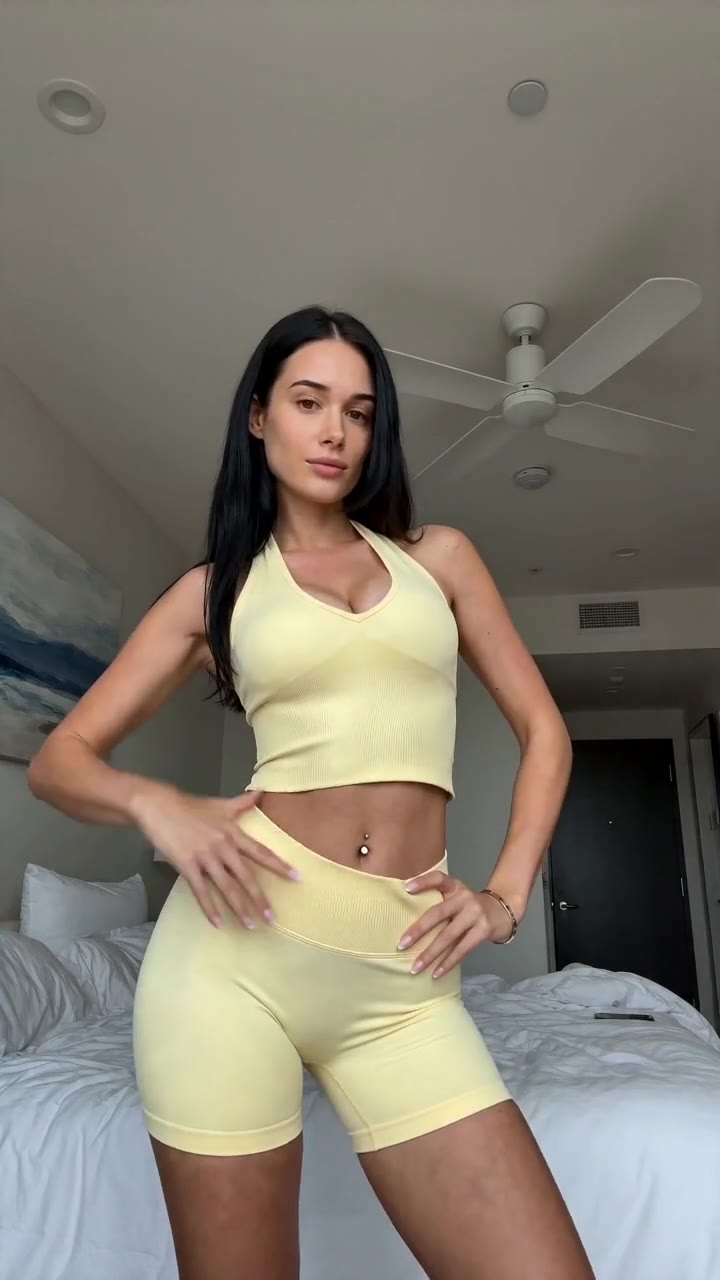 ▶ Sunny yellow halter neck top try-on
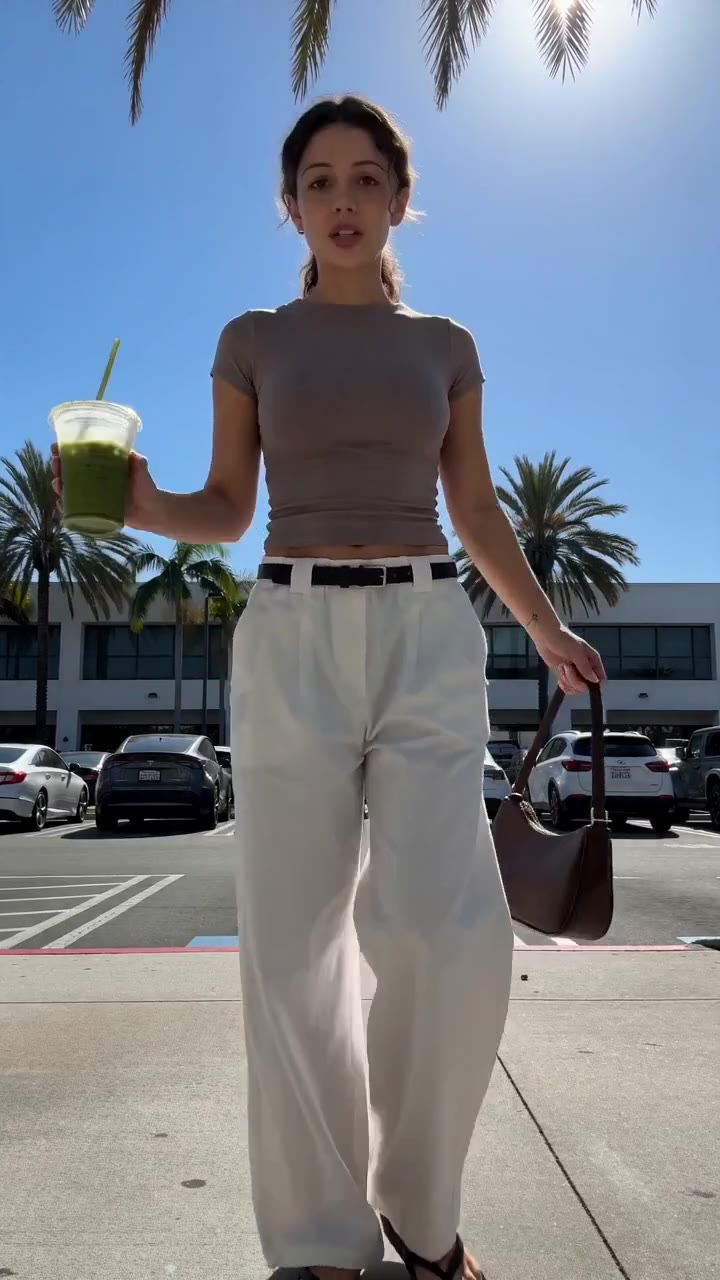 ▶ Chic white wide-leg trousers styling
See all samples and make your first video free →
2. Show the Product Before You Explain It
The viewer should see the product clearly before the script asks for attention.
Fashion sellers often lead with a talking head, abstract lifestyle footage, or an animated introduction. Those choices delay the answer to the viewer’s most basic question: what is being sold?
The opening frame should usually contain:
- The product in a recognizable view
- A person or model wearing it when scale or fit matters
- A short text overlay tied to the product problem
- Enough contrast for the product details to remain visible
The product does not need to occupy every pixel. It does need to be identifiable immediately.
Avoid decorative openings
A slow rack focus, empty room, logo animation, or unrelated lifestyle shot consumes the most valuable part of the video. Those elements can work later, but they should not replace product identification.
For a personalized necklace, open with the pendant close to camera and the name or initials visible. For a chair, open with the full chair in a room context, then move to upholstery and structure. For a dress, open with a complete silhouette before cutting to details.
Use the first frame as a product-page thumbnail
The opening frame has two jobs:
- Stop the scroll.
- Set accurate expectations.
If the first frame is heavily cropped or stylized, the viewer may not understand the product until the video is nearly over. This weakens both attention and shopping intent.
A practical test is to pause the video at the opening frame and ask:
- Can a viewer identify the product category?
- Can they tell who it is for?
- Can they understand the central promise?
- Does the frame accurately represent the product page?
If the answer is no, revise the opening before changing the music or visual effects.
3. Demonstrate the Feature That Removes Purchase Risk
Conversion improves when the video proves the feature that makes the buyer hesitate.
Fashion purchases carry uncertainty because the buyer cannot touch the fabric, try the garment on, inspect the finish, or judge scale in person. A product video has limited time to reduce that uncertainty.
The correct feature to demonstrate is not always the product’s most impressive feature. It is the feature most likely to block the purchase.
Find the hesitation in the product page
Review the product page and identify questions a buyer would ask before ordering:
- Is the fabric sheer?
- Does the item stretch?
- Is the fit oversized or close to the body?
- Does the clasp look secure?
- How large is the pendant?
- Does the bag fit a phone, wallet, and keys?
- Is the chair wide enough for the intended use?
- Does the garment layer under a jacket?
- Does the color match the listing photos?
Turn each question into a visual proof point.
Demonstrate, do not simply label
A text overlay saying “stretchy fabric” is weaker than showing the fabric move across the body. “Spacious interior” is weaker than showing specific items placed inside the bag. “Personalized” is weaker than showing the name or initials clearly.
Useful demonstrations include:
- Front, side, and back views
- Walking, sitting, reaching, or turning
- Close-ups of texture, stitching, hardware, and clasps
- Open-and-closed views
- Before-and-after styling
- Scale shown on a model
- Multiple outfit pairings
- Product detail beside a familiar object, where appropriate
Stay faithful to the source product
AI-generated visuals can help sellers create product videos without arranging a physical shoot, but accuracy remains the seller’s responsibility. Check the finished video for:
- Shape changes
- Incorrect colors
- Wrong text or personalization
- Altered patterns
- Missing hardware
- Distorted hands or accessories
- Inaccurate garment length
- Impossible closures or seams
The goal is not to make the product look more dramatic than it is. The goal is to make the product easier to judge.
For a deeper production workflow, see Turn Fashion Product Photos Into TikTok Shop Videos With AI.
4. Give the Viewer a Complete Outfit Formula
Fashion converts more easily when the viewer can picture the product in a real outfit.
A product may look attractive in isolation and still fail to trigger a purchase because the viewer cannot imagine how to wear it. Outfit context reduces that mental work.
The best styling guidance is specific. Avoid vague language such as “style it with anything.” Show one or two combinations that match the product’s actual use case.
Outfit Formula: polished everyday dress
- Top: The featured dress, shown in its complete silhouette
- Bottom: Not applicable; use the dress as the base
- Shoes: Low-profile flats or clean sneakers for daytime
- Accessories: Small earrings, a compact bag, and a light layer
Outfit Formula: personalized initial necklace
- Top: Plain crew-neck tee or fine-knit sweater
- Bottom: Straight-leg jeans or tailored trousers
- Shoes: Loafers, ballet flats, or minimal sneakers
- Accessories: One additional delicate chain only if the pendant remains readable
Outfit Formula: statement blouse
- Top: The featured blouse
- Bottom: High-rise straight-leg trousers or a simple midi skirt
- Shoes: Pointed flats or low heels
- Accessories: Small earrings and a structured bag
These formulas give the viewer a ready-made use case. They also prevent the video from becoming a sequence of disconnected product shots.
Use contrast carefully
A styling contrast can make the product’s versatility visible:
- Workday to dinner
- Casual to polished
- Warm-weather to layered
- Minimal to statement
- Daytime to event
Show the featured item remaining constant while the supporting pieces change. This gives the viewer a reason to believe the product will earn repeated use.
Do versus Don’t for fashion styling videos
| Do | Don’t |
|---|---|
| Show one clear outfit formula | Present a random collection of garments |
| Keep the featured product visible | Let accessories dominate the frame |
| Explain why the pairing works | Use “goes with everything” without examples |
| Match styling to the product’s price and audience | Build an unrealistic editorial look |
| Show proportions from a useful distance | Use only close-ups for a full garment |
| Use contrast to demonstrate versatility | Change every item at once |
The styling should help the buyer make a decision, not display the creator’s personal taste.
5. Use Voiceover and Captions to Carry Different Jobs
Voiceover should explain the buying reason while captions make the product legible without sound.
TikTok viewing conditions vary. Some viewers hear the audio clearly, some watch silently, and others only catch fragments while scrolling. A strong video remains understandable through the visual layer, the spoken layer, and the caption layer.
Do not duplicate every word across all three. Assign each channel a role.
A practical division of labour
- Visuals: Show the product, fit, scale, movement, and details.
- Voiceover: Explain the problem, benefit, and use case.
- On-screen captions: Reinforce key facts and guide attention.
- Product-page information: Handle specifications, variants, and full purchasing details.
For example:
- Visual: side view while the model sits
- Voiceover: “The stretch gives you room to move without losing the shape.”
- Caption: “Stretch waistband”
- Product page: full material, size, and care information
Write spoken lines for listening
Voiceover should sound like a person helping a buyer decide, not like a product catalogue:
“I would wear this blouse when I want a polished outfit without building one from several layers. The neckline gives it structure, while the relaxed body keeps it comfortable through a full day.”
This is stronger than:
“This women’s blouse features a fashionable neckline and comfortable material.”
The first sentence describes a buying situation. The second repeats generic listing language.
Keep captions concrete
Strong captions answer practical questions:
- “Full-length fit”
- “Side view”
- “Adjustable strap”
- “Personalized with initials”
- “Soft stretch fabric”
- “Two styling options”
- “Interior pocket”
- “Check available sizes”
Avoid filling every frame with decorative text. Overlays should guide attention toward the information that affects purchase confidence.
Match language to the buyer
Studio supports voiceover in English, Spanish, and Brazilian Portuguese. That matters when the seller’s customer base spans language markets, but the translation must preserve the buying meaning rather than convert words mechanically.
A useful localization check asks:
- Does the phrase sound natural to the target audience?
- Are sizing and fit terms understood locally?
- Does the tone match the category?
- Are personalization instructions clear?
- Does the caption remain readable on a phone?
A localized voiceover with awkward phrasing creates distance. A concise, natural script creates recognition.
👗 Selling online? Turn any product link into a ready-to-post shoppable video — no shoot, no samples. Try Alvin's Club Studio free → Your first video is free, then from $3 a video.
6. Make Fit and Scale Impossible to Misread
A fashion buyer needs enough perspective to estimate fit, proportion, and scale.
A close-up can make jewelry details attractive but hide pendant size. A full-body shot can show a dress silhouette but hide fabric texture. Conversion depends on using both views in a deliberate sequence.
Use a fit-proof sequence
For apparel, a useful sequence is:
- Full front view
- Side or three-quarter view
Movement or seated view 4. Detail close-up 5. Alternate styling or final product shot
This sequence answers different questions without requiring a long explanation.
For jewelry:
- Worn at a natural distance
- Close-up of personalization
Side or movement view 4. Scale reference through the full outfit 5. Final close-up and product-page direction
For bags:
- Worn on the body
- Interior capacity
Hardware and closure 4. Strap or handle detail 5. Outfit context
Never hide the least flattering but relevant view
A conversion-focused video should not rely on flattering angles that obscure important information. If the garment is cropped, show where it ends. If the necklace is delicate, show its actual scale.
If a bag is compact, do not imply that it carries a large laptop.
Accurate expectations protect both conversion quality and post-purchase satisfaction. The objective is not simply to earn a click. It is to earn a click from a viewer who understands what they are buying.
Use model consistency
When producing multiple videos for one product, keep the visual facts stable:
- Same product color
- Same length
- Same personalization
- Same major fit characteristics
- Same hardware
- Same product proportions
Changing the model or scene is useful for testing the creative angle. Changing the product itself creates confusion and weakens trust.
7. Build a Direct, Specific Shopping Path
A viewer should know what to do next and why the product page is worth opening.
A soft ending such as “What do you think?” invites engagement but does not necessarily create shopping intent. A product video needs a clear next step tied to the information the viewer has just seen.
Examples include:
- “Open the product page to check the available sizes.”
- “Tap through to choose the name or initials.”
- “See the available colors on the product page.”
- “Open the listing for the full measurements.”
- “Check the product page for the current options.”
This is not aggressive selling. It is navigation.
Connect the call to action to the unresolved question
A generic call to action is weaker than one that completes the demonstration:
- If the video shows personalization, direct the viewer to choose their personalization.
- If the video shows fit, direct them to check the size options.
- If the video shows a bag’s capacity, direct them to review dimensions.
- If the video shows multiple colors, direct them to view available variants.
The call to action should not introduce a new claim. It should move the viewer to the next logical step.
Avoid unsupported urgency
Do not manufacture scarcity or use pressure the product page cannot support. The video should stand on its own through clarity and relevance.
The strongest direct response is often simple:
“Tap the product to see the available options.”
That line works because the viewer already knows what the product is and why it matters.
8. Produce Variations Instead of Betting on One Video
One product needs multiple creative hypotheses because conversion depends on the buyer angle, not only the product.
A single video cannot reveal whether the product failed, the hook failed, the styling failed, or the demonstration failed. Variation separates those questions.
Change one major variable at a time
Useful variables include:
- Opening problem
- First visual
- Voiceover angle
- Model or persona
- Outfit context
- Detail order
- Caption emphasis
- Closing line
- Music or sound design
Keep the product facts consistent while changing the creative variable. If everything changes between versions, the result becomes difficult to interpret.
Build a simple variation matrix
| Version | Opening angle | Main proof | Best buyer question |
|---|---|---|---|
| A | Comfort problem | Movement and seated view | Will I wear this all day? |
| B | Styling problem | Two outfit formulas | How will I wear it? |
| C | Fit problem | Front, side, and length | How will it sit on my body? |
| D | Occasion problem | Day-to-evening styling | Where can I wear it? |
| E | Gift problem | Close-up and personalization | Will this feel personal? |
This structure helps sellers avoid making five versions that all say the same thing.
Use creative volume to fight fatigue
A product does not have one permanent winning message. Audience response changes as viewers see similar content, contexts shift, and the platform distributes videos to different pockets of demand.
The answer is not endless novelty for its own sake. It is a steady supply of credible ways to show the same product:
- New use case
- New styling combination
- New buyer problem
- New model persona
- New opening frame
- New proof sequence
This is where production efficiency matters. Traditional shoots make every new angle expensive because each version may require scheduling, samples, models, filming, editing, and reshoots. A product-video workflow built from a link or a small set of product photos reduces the operational burden.
Sellers exploring the cost side can read How Much Does a UGC Video Cost for Fashion Brands in 2026?.
9. Design the Video Around TikTok Shop’s Buying Context
A TikTok Shop video should behave like a product demonstration, not a brand commercial copied into a feed.
A conventional fashion campaign often prioritizes atmosphere, identity, and visual polish. Those qualities can help, but TikTok Shop requires a faster connection between discovery and product evaluation.
The viewer may encounter the video:
- While browsing entertainment
- After seeing another product
- Through an affiliate account
- In a recommendation feed
- As paid creative
- Near competing products
The creative therefore needs to work without a long brand introduction.
Put selling information inside the entertainment
A useful product video does not separate “content” from “selling” as if they are opposites. Demonstration is the entertainment when the product is relevant.
Examples:
- A bag-packing sequence creates a capacity demonstration.
- A desk-to-dinner change creates a styling demonstration.
- A close-up of personalization creates a gift reveal.
- A fit check creates a body-movement demonstration.
- A three-way outfit sequence creates a versatility demonstration.
The viewer receives a useful answer while watching. That is more durable than relying on a dramatic opening with no product substance.
Use the account persona deliberately
Different personas create different expectations:
- A practical shopper can explain fit and value.
- A gift-focused persona can frame personalization and occasions.
- A minimalist dresser can demonstrate repeat styling.
- A trend-aware persona can show current outfit combinations without relying on banned or unsupported trend claims.
- A professional wardrobe persona can show workday use.
The persona should reinforce the buyer problem. A mismatched persona creates attention without relevance.
Label AI-generated videos when posted
AI-generated product videos must be labelled as AI-generated when posted. This does not remove the need for product accuracy. Sellers should review the rendered video before publishing, especially when it contains text, personalization, hands, jewelry, patterns, or detailed garment construction.
AI is most useful here as a production method for testing product angles at volume. It is not a reason to skip quality control.
10. Measure the Funnel in the Correct Order
Diagnose the stage where viewers stop before changing the creative.
A product video can fail at several different points:
- The viewer does not stop.
- The viewer watches but does not understand the product.
The viewer understands it but does not open the product page. 4. The viewer opens the page but does not purchase. 5. The viewer purchases but receives an expectation mismatch.
Each problem needs a different response.
A practical diagnostic table
| Observed problem | Likely creative issue | First change to test |
|---|---|---|
| Weak initial attention | Opening frame or hook lacks relevance | Show product and problem immediately |
| Strong attention, weak product interest | Product promise is unclear | Add a specific use case |
| Product interest, weak page visits | Call to action lacks direction | Connect CTA to a buyer question |
| Page visits, weak orders | Product page, price, fit, or trust issue | Improve listing clarity and proof |
| Orders with dissatisfaction | Video overpromises or misrepresents | Review accuracy and expectation setting |
| Performance fades over time | Creative fatigue | Produce new angles and personas |
Do not solve a product-page problem by endlessly rewriting the hook. Do not solve a weak opening by changing the price in the video. Diagnose the stage first.
Review the video and listing together
A TikTok Shop conversion does not belong to the video alone. The video creates the expectation; the product page confirms or breaks it.
Check whether both surfaces agree on:
- Product color
- Product name
- Sizing
- Materials
- Customization options
- Delivery information
- Included items
- Product dimensions
- Images and video claims
A mismatch creates friction even when the video itself performs well.
Keep a test log
For every version, record:
- Product
- Hook
- Main benefit
- Visual proof
- Model or persona
- Voiceover language
- Caption angle
- Call to action
- Posting context
- Outcome observed
The log turns content production into a learning system. Without it, sellers repeatedly recreate similar ideas and cannot tell which variable contributed to performance.
Key Comparison: What Makes a TikTok Shop Product Video Convert?
| Tip | Best for | Main buyer question answered | Effort | Common mistake |
|---|---|---|---|---|
| Lead with a specific problem | Competitive fashion categories | “Is this relevant to me?” | Low | Using a generic product introduction |
| Show the product immediately | New or unfamiliar products | “What is being sold?” | Low | Delaying the product with lifestyle footage |
| Demonstrate the risk-removing feature | Fit-sensitive apparel and accessories | “What could disappoint me?” | Medium | Listing benefits without visual proof |
| Use an outfit formula | Apparel and styling products | “How would I wear it?” | Medium | Showing random combinations |
| Separate voiceover and captions | Silent or mixed viewing contexts | “What matters about this product?” | Low | Repeating cluttered copy everywhere |
| Show fit and scale clearly | Clothing, jewelry, shoes, bags | “What will this look like in real life?” | Medium | Hiding proportion behind close-ups |
| Give a direct shopping path | Product-led videos | “What should I do next?” | Low | Ending with an engagement-only question |
| Produce creative variations | Products with testing potential | “Which angle matters most?” | Medium | Changing every variable at once |
| Match the TikTok Shop context | Affiliate and commerce content | “Why should I care while scrolling?” | Medium | Reusing a slow campaign commercial |
| Diagnose the funnel | Existing sellers with performance data | “Where is the buying process breaking?” | Medium | Blaming the hook for every problem |
A 10-Minute Pre-Publish Checklist
Before posting a TikTok Shop fashion video, check the following:
Product accuracy
- Is the product shape consistent with the listing?
- Is the color accurate?
- Are all personalization details correct?
- Are materials, patterns, and hardware represented honestly?
- Does the model wear the product in a physically plausible way?
Buyer clarity
- Does the opening identify the product or buyer problem?
- Is the main benefit specific?
- Does the video show the feature that removes purchase risk?
- Can the viewer judge fit, scale, or proportion?
- Is the use case obvious?
Creative structure
- Does the first visual show the product quickly?
- Does the voiceover sound like useful buying advice?
- Are captions readable and concrete?
- Does the video include an outfit formula or use example?
- Does the final line direct the viewer to a relevant product-page action?
Compliance and trust
- Is the video labelled as AI-generated when required?
- Are there unsupported claims?
- Does the video imply scarcity or results the listing does not support?
- Does the product page match the video?
- Has a seller checked the rendered video frame by frame?
Why Finished Product Videos Beat Generic AI Experiments
Generic AI video tools often transfer the hardest work to the seller. The seller still has to write prompts, repair product inconsistencies, generate multiple attempts, select the usable render, add a script, record or generate voiceover, write captions, and prepare hashtags.
That workflow creates a hidden cost: attention spent managing production instead of learning which product angle sells.
A commerce-native workflow starts from the product itself. Paste a product page link or upload one to three product photos, choose an eight-, twelve-, or fifteen-second format, and receive a finished vertical video with script, voiceover, caption, and hashtags in about ten minutes.
The distinction matters because a video is not finished when the AI generates motion. It is finished when the seller can review a coherent selling asset built around the actual product.
Studio is built only for selling products rather than general AI video creation. It supports self-serve categories including clothing, personalized jewelry, chairs, and furniture; other categories are handled through the managed programme.
The pay-per-video model also fits testing better than a subscription workflow: the first video is free without a card, followed by individual pricing for eight-, twelve-, and fifteen-second videos, with lower rates available through credit packs. Credits do not expire, and failed renders or stopped scripts are free.
How Should Sellers Apply These Tips Across a Product Catalogue?
Start with products that have a clear buyer problem and enough visual information to demonstrate. Apparel with obvious fit questions, personalized jewelry with visible customization, and bags with clear capacity are strong candidates because the video can show evidence rather than rely on abstract claims.
Then build a repeatable production sequence:
- Select a product with a clear use case.
- Identify the main buyer hesitation.
Write three distinct hooks. 4. Choose one proof sequence for each hook. 5. Build one outfit or use formula. 6.
Render multiple versions. 7. Review every frame for product accuracy. 8. Label AI-generated content when posted. 9.
Track where viewers stop in the funnel. 10. Produce the next variation based on the learning.
This process is more reliable than trying to create one perfect video. The purpose of testing is not to prove that every product can sell through any creative. The purpose is to discover which buyer, use case, proof point, and presentation create the strongest match.
Conclusion: What Makes a TikTok Shop Product Video Convert?
What makes a TikTok Shop product video convert is not visual polish alone; it is the disciplined connection between a buyer problem, accurate product proof, useful styling, and a direct shopping path.
The most actionable priorities are:
- Open with a specific problem.
- Show the product immediately.
- Demonstrate the feature that reduces hesitation.
- Give the viewer a complete outfit or use formula.
- Use voiceover and captions for separate purposes.
- Make fit and scale easy to judge.
- Direct the viewer to the next product-page action.
- Produce variations instead of trusting one creative.
- Match the format to TikTok Shop browsing behaviour.
- Diagnose the conversion funnel before changing the video.
Alvin’s Club Studio turns a product link into a ready-to-post shoppable video in about 10 minutes — no shoot, no samples. Make your first video free →
Summary
- What makes a TikTok Shop product video convert is a clear product promise, visible proof, and a fast path from interest to purchase.
- High-converting fashion videos immediately show what the product is, who it suits, and how it solves a buyer’s problem.
- Demonstrating fit, material, styling, size, and real-world use helps viewers answer key purchase questions before clicking.
- Effective videos use accurate visuals, credible context, concise scripts, readable captions, and direct calls to shop.
- Testing different hooks, demonstrations, styling angles, and creative variations reveals which elements drive product clicks and orders.
Key Takeaways
- What makes a TikTok Shop product video convert is a clear product promise, visible proof, and a fast path from interest to purchase.
- Key Takeaway:
- what the product is, why it fits their problem, how it looks in use, and what to do next
- ten actionable tips
- What makes a TikTok Shop product video convert:
Frequently Asked Questions
What makes a TikTok Shop fashion video effective?
A TikTok Shop fashion video is effective when it presents a clear product benefit, shows the clothing on a real person, and makes the next purchase step obvious. Strong videos quickly connect the item to a specific need, such as better fit, versatile styling, comfort, or seasonal wear.
How does product demonstration increase TikTok Shop conversions?
Product demonstration increases TikTok Shop conversions by giving viewers visible proof of the item’s fit, fabric, movement, and overall appearance. Showing the garment from multiple angles and in realistic use helps reduce uncertainty before purchase.
Is TikTok Shop fashion video content worth investing in?
TikTok Shop fashion video content is worth investing in when the videos are designed around products with clear demand and compelling visual benefits. Short demonstrations, try-ons, and styling examples can build trust faster than static product images while directing viewers straight to checkout.
Can a TikTok Shop fashion video show clothing fit accurately?
A TikTok Shop fashion video can show clothing fit accurately by including the creator’s measurements, size worn, body movement, and close-up views of the garment. Honest details about stretch, length, fabric weight, and sizing help shoppers make more confident decisions.
Why does a clear call to action matter in TikTok Shop videos?
A clear call to action matters because interested viewers may leave without purchasing if they do not know what to do next. Direct instructions such as tapping the product link, selecting a size, or checking a limited-time offer create a faster path from attention to checkout.
Related on Alvin's Club Studio
- Make TikTok Shop videos from a product link
- What AI UGC videos cost
- TikTok Shop affiliate videos without samples
About the author
Building Alvin's Club Studio — an AI agent that turns a product link into a shoppable video for TikTok Shop, Shopify and DTC sellers. Writing about what makes product videos sell.
Credentials
- Founder at Alvin's Club (Echooo E-Commerce Canada Ltd.)
- Writes on shoppable video and e-commerce growth at blog.alvinsclub.ai
X / @alvinsclub · LinkedIn · alvinsclub.ai
From the Alvin's Club Studio team — an AI agent that turns a product link into a ready-to-post shoppable video. First video free, then from $3.
Related Articles
- Turn Fashion Product Photos Into TikTok Shop Videos With AI
- How Much Does a UGC Video Cost for Fashion Brands in 2026?
- How AI Helps Fashion Affiliates Create TikTok Shop Videos Without Samples
- The Best AI Wardrobe Apps for Shopping Your Closet
- We Tried the Best AI Tools for Finding a Dress From a Photo
- How to Build a Digital Wardrobe Faster With AI and Your Own Style
- AI Styling Tools Compared: Which Ones Link to Retail Products?
- Use AI to Find the Clothes You Spot on TV
- What Is Demna AI Used For in Modern Fashion Design?
- 7 Steps in Demna’s AI Workflow for Fashion Product Development