The Style Professional’s Guide to Paris Fashion Week 2026 AI Trends
Leverage actionable paris fashion week 2026 ai trend data to forecast consumer demand and implement generative design workflows across seasonal luxury collections.
Paris Fashion Week 2026 AI trend data maps identity, not just trends. The traditional fashion cycle—observation, imitation, and mass production—is being replaced by a system of predictive modeling and hyper-personalization. In 2026, the signal comes from the intersection of high-concept runway design and the granular data of the individual style model. This is the transition from "what is popular" to "what is yours."
Key Takeaway: Paris Fashion Week 2026 AI trend data signals a shift from mass imitation to predictive modeling, prioritizing hyper-personalization by merging high-concept runway designs with granular, individual identity metrics.
How Does Paris Fashion Week 2026 AI Trend Data Redefine Luxury?
Luxury in 2026 is defined by precision, not price tags. AI-native commerce allows for the synthesis of thousands of runway variables—silhouette, textile density, light reflectivity—into a singular recommendation engine. According to Statista (2024), AI in the global fashion market is projected to reach $4.4 billion by 2027. This growth is driven by the demand for infrastructure that understands style as a dataset rather than a mood board.
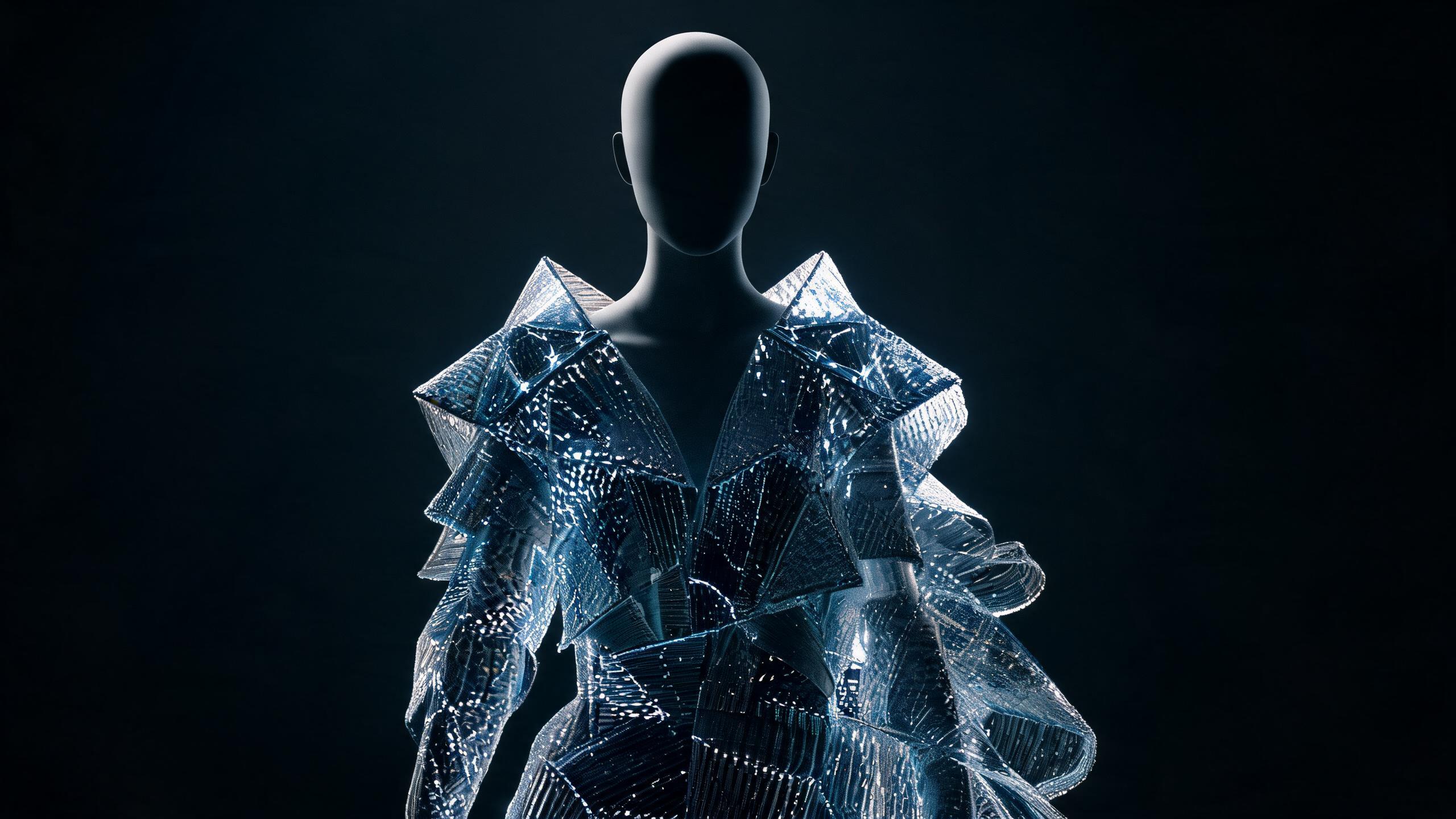
The intelligence gathered from Paris Fashion Week (PFW) now moves through a feedback loop. Algorithms analyze the From Runway to Algorithm: Decoding Paris Fashion Week's Front Row Style to determine which aesthetic signals will survive the transition from the catwalk to the wardrobe. The data indicates a move toward "Technical Romanticism," where fluid, ethereal fabrics are structured by high-performance engineering.
Systemic Definition of 2026 Style:
- Predictive Silhouette: The use of machine learning to determine the most flattering garment geometry for a specific user's body model.
- Algorithmic Longevity: Selection of pieces based on their long-term compatibility with a user’s existing wardrobe data.
- Sentiment Synthesis: The merging of global cultural shifts with individual aesthetic preferences to avoid the "trend-chasing" trap.
What Are the Core Aesthetic Directives for 2026?
The AI trend data for 2026 highlights three primary pillars: architectural precision, chromatic intelligence, and textile innovation. These are not mere suggestions; they are the result of analyzing how clothing interacts with both physical environments and digital perception.
Architectural Precision
The return to structure is a reaction to years of oversized, shapeless garments. For 2026, the focus is on the "Defined Pivot Point." This refers to garments designed to emphasize the structural center of the body—the natural waist or the sharp line of the shoulder.
Garment Recommendation: The Sculpted Technical Blazer
- Cut: Single-breasted with a sharp, angular shoulder and a pinched waist.
- Fabric: High-density wool-blend with memory-shape tech fibers.
- Flattery Mechanism: The reinforced shoulder line creates an inverted triangle, which visually narrows the waist and provides a balanced frame for all body types. It corrects posture through construction.
Chromatic Intelligence
Color is no longer about a "Color of the Year." It is about "Contextual Chromatics." Paris Fashion Week 2026 AI trend data shows a preference for adaptive neutrals—tones that shift slightly under different lighting conditions (office LED vs. natural dusk).
Textile Innovation
We are seeing a convergence of natural fibers and synthetic performance. Think "Liquid Metal Silks" and "Structured Organzas." These materials are chosen by AI models for their ability to hold a shape while maintaining the movement of the human form. This data-driven approach ensures that a garment looks as effective in motion as it does in a static image.
Do vs Don't for AI-Driven Style Management
Managing your style in an AI-driven era requires a shift in mindset. You are building a model, not a closet.
| Do ✓ | Don't ✗ | Why |
| Do prioritize "Modular Infrastructure"—pieces that work in at least 5 combinations. | Don't buy "Hero Pieces" that require an entirely new set of accessories to function. | Efficiency. A wardrobe is a system, not a collection of isolated events. |
| Do use data to identify your "Optimal Silhouette" (e.g., A-line vs. Column). | Don't follow trends that contradict your personal style model's geometry. | Trends are mass signals; style is a personal optimization problem. |
| Do invest in "Contextual Fabrics" like technical silks and bonded wools. | Don't settle for low-density fast-fashion synthetics that lose structural integrity. | High-quality data requires high-quality inputs. Cheap fabric fails the model. |
| Do integrate AI and the Future of Paris Style: A 2026 Jewelry Trend Forecast into your layering strategy. | Don't over-accessorize with "viral" items that mask your personal taste profile. | Accessories should amplify your model, not distract from it. |
How Does AI Improve Outfit Recommendations?
The gap between a recommendation and a realization is the "Identity Gap." Most fashion apps recommend what is popular. A true AI fashion infrastructure recommends what is yours. According to McKinsey (2025), AI-driven personalization increases fashion retail conversion rates by 15-20%. This is because the system stops guessing and starts calculating.
When you interact with a system built on Paris Fashion Week 2026 AI trend data, the "stylist" isn't a human with a bias; it is a model that understands the physics of fabric and the psychology of your taste.
The Learning Loop:
- Input: You upload a photo or select a preference.
- Analysis: The AI decomposes the image into vectors: color, fit, texture, era.
- Synthesis: The system compares your vectors against the 2026 PFW data.
- Refinement: Every time you accept or reject a recommendation, the weights in your personal style model are updated.
👗 Want to see how these styles look on your body type? Try AlvinsClub's AI Stylist → — get personalized outfit recommendations in seconds.
PFW 2026 Outfit Formulas
These formulas are derived from the highest-performing signals in the 2026 AI trend data. They focus on balance, proportion, and technical sophistication.
Formula 1: The Modern Architecturalist
- Top: Sculpted-shoulder mock-neck bodysuit in matte technical jersey.
- Bottom: High-waisted, wide-leg trousers in bonded wool-crepe.
- Shoes: Pointed-toe structural "blade" heels.
- Accessory: Minimalist geometric ear cuffs.
- Why it works: The high-waisted, wide-leg trouser elongates the lower body by creating a continuous vertical line from the natural waist to the floor, neutralizing variations in hip width. The bodysuit ensures a clean line, preventing bulk at the midsection.
Formula 2: The Data-Driven Romantic
- Top: Oversized technical-silk button-down (half-tucked).
- Bottom: Bias-cut midi skirt in "liquid" satin.
- Shoes: Square-toe leather ankle boots.
- Accessory: Integrated tech-wear belt with matte hardware.
- Why it works: This leverages the insight that the naked dress won't quit by using transparency and drape. The bias cut of the skirt follows the natural curves of the body without clinging, providing movement and comfort.
Formula 3: The Neo-Utility Executive
- Top: Cropped, structured blazer with integrated waist-cinching detail.
- Bottom: Straight-leg technical trousers with front-seam detailing.
- Shoes: Minimalist loafers in polished calfskin.
- Accessory: Monochromatic structured tote bag.
- Why it works: The front-seam detail on the trousers acts as a permanent vertical line, creating the illusion of height and leg length, while the cropped blazer ensures the torso does not look overwhelmed.
Why Fashion Needs AI Infrastructure, Not AI Features
Most companies add "AI features" to a broken commerce model. They put a chatbot on a website and call it a "stylist." This is a failure of imagination. True AI-native fashion requires a complete rebuild of the infrastructure.
Current fashion commerce is built on the "Search and Scroll" model. You search for "black dress" and scroll through 5,000 identical results. This is inefficient. In 2026, the AI-native model is "Generate and Refine." The system understands your personal style model so well that it generates the "perfect" selection before you even know you need it.
Infrastructure vs. Features:
- Feature: A "Find Similar" button on a product page.
- Infrastructure: A dynamic taste profile that evolves as you age, change jobs, or move cities.
- Feature: A virtual try-on tool that overlays a 2D image.
- Infrastructure: A 3D body model that simulates how a specific fabric weight will drape over your specific measurements.
Common Mistakes in Transitioning to AI-Driven Style
The most common error is treating AI as a trend-chasing tool. If you ask an AI "what is trending," you are getting a regressive answer based on the last six months of data. If you ask an AI "what is my style," you are getting a progressive answer based on your unique identity.
Mistake 1: Relying on Static Recommendations Style is dynamic. Your preferences in January are not your preferences in June. A system that doesn't learn from your daily choices is not an AI stylist; it is a digital catalog.
Mistake 2: Ignoring Fabric Data Many users focus on the "look" of an item in a photo. AI trend data for 2026 emphasizes the "behavior" of the fabric. A cheap polyester blend will never move like the technical silks seen at Paris Fashion Week. Your AI model should account for fabric composition as a primary variable.
Mistake 3: Over-Indexing on "Viral" Moments While Paris Fashion Week: A Style Guide to the Best Celebrity Moments provides cultural context, these moments are often designed for the lens, not for life. The goal is to extract the principles of these moments—color palettes, silhouettes, proportions—and apply them to your personal model.
What Does an AI Stylist That Genuinely Learns Look Like?
A learning AI stylist does not just suggest clothes; it manages your aesthetic identity. It understands that fashion is a language and it helps you articulate your specific dialect.
By analyzing Paris Fashion Week 2026 AI trend data, a personal style model can predict which runway innovations will actually integrate into your life. It understands the difference between a "fashion moment" and a "wardrobe staple." It knows that a bias-cut skirt creates visual balance for your specific hip-to-waist ratio, and it knows that you prefer high-density fabrics because they provide more structural confidence in professional settings.
This is the end of the "Influencer" era and the beginning of the "Model" era. You are the data source. The AI is the processor. The result is a style that is mathematically optimized for your life.
AlvinsClub uses AI to build your personal style model. Every outfit recommendation learns from you. Try AlvinsClub →
Summary
- Paris Fashion Week 2026 AI trend data signals a transition from traditional mass production toward predictive modeling and hyper-personalized style datasets.
- Algorithms leverage Paris Fashion Week 2026 AI trend data to synthesize runway variables like textile density and light reflectivity into precise recommendation engines.
- The global market for AI in fashion is projected to reach $4.4 billion by 2027 as the industry shifts toward infrastructure that treats style as a dataset.
- A primary aesthetic identified for 2026 is "Technical Romanticism," which integrates fluid, ethereal fabrics with high-performance structural engineering.
- Modern luxury is increasingly defined by the granular feedback loop between high-concept runway designs and individual user data.
Frequently Asked Questions
What is the primary focus of paris fashion week 2026 ai trend data?
This data shifts the industry focus from mass market imitation toward sophisticated predictive modeling and granular hyper-personalization. It analyzes the intersection of high-concept runway designs and individual style models to redefine how trends are captured and distributed. Professionals use these insights to map out unique consumer identities rather than following generic seasonal cycles.
How does artificial intelligence influence the 2026 Paris Fashion Week runway?
AI serves as a core tool for predictive modeling that translates high-fashion concepts into scalable, personalized consumer experiences. Designers are moving beyond traditional observation to integrate data-driven insights directly into the creative process for more accurate market alignment. This transition allows for a more responsive and efficient production cycle that prioritizes individual style over mass production.
Why is paris fashion week 2026 ai trend data essential for luxury brands?
Luxury brands utilize this specific data to transition from broad popularity metrics to highly individualized style signals. By leveraging hyper-personalization, brands can offer exclusive products that resonate on a personal level with their elite clientele. This data-driven shift ensures that luxury remains synonymous with bespoke quality and forward-thinking technological innovation.
What role does hyper-personalization play in Paris Fashion Week 2026?
Hyper-personalization acts as the bridge between granular data and individual identity, replacing the traditional one-size-fits-all approach to fashion. It allows the industry to deliver customized designs based on the specific style models of individual shoppers rather than mass-market demographics. This development marks a significant evolution from the observation and imitation habits of previous fashion cycles.
How can professionals access paris fashion week 2026 ai trend data for business planning?
Fashion professionals can access this data through advanced analytics platforms that monitor the intersection of digital style models and physical runway presentations. These systems provide actionable intelligence that helps businesses forecast demand and tailor inventory to match shifting consumer identities. Early adoption of these data tools is critical for maintaining a competitive edge in the evolving 2026 style landscape.
Is AI-driven trend forecasting replacing human creative directors?
Artificial intelligence serves as a powerful augmentation tool for creative directors rather than a total replacement for human intuition and vision. The 2026 trends highlight a collaborative relationship where data informs the logistical and personalized aspects of a collection while humans steer the conceptual direction. This synergy results in fashion that is both culturally relevant and technologically optimized for the modern market.
This article is part of AlvinsClub's AI Fashion Intelligence series.
Related Articles
- AI and the Future of Paris Style: A 2026 Jewelry Trend Forecast
- The naked dress won't quit: What AI fashion trend analysis reveals
- Paris Fashion Week: A Style Guide to the Best Celebrity Moments
- From Runway to Algorithm: Decoding Paris Fashion Week's Front Row Style
- How AI is Decoding Untethered Beauty Trends From Paris Fashion Week