How to wear the most influential AI fashion trends of winter 2026
A deep dive into top AI fashion trends for winter 2026 and what it means for modern fashion.
Style is no longer a consensus; it is a calculation. The transition from seasonal cycles to real-time algorithmic generation has fundamentally altered how garments are conceived, manufactured, and worn. By the time we reach the peak of the next cycle, the concept of a "trend" will have shifted from a collective mandate to a personal data output. Understanding the top AI fashion trends for winter 2026 requires moving past the superficial layer of "digital aesthetics" and into the functional reality of style intelligence. This is not about what is popular on a runway; it is about what is optimal for your personal style model.
The Infrastructure of Personal Style Models
The most significant shift in the coming years is the death of the generic recommendation. Most fashion platforms today suggest items based on what other people bought. This is a failure of logic. In winter 2026, the baseline for any wardrobe is the Personal Style Model (PSM). A PSM is a dynamic data structure that maps your aesthetic preferences, physiological requirements, and environmental context against a global database of garment geometry.
To wear the top AI fashion trends for winter 2026, you must first stop treating clothes as isolated purchases and begin treating them as components of a system. The trend is not a specific color or cut; the trend is the integration of your clothing into a learning loop. When your wardrobe is managed by a style model, every piece of knitwear or outerwear is selected because it satisfies a specific coefficient in your personal taste profile.
Step 1: Auditing Your Latent Aesthetic Space
Before the winter season begins, your AI infrastructure analyzes your previous winter cycles. It identifies the gap between what you wore and what actually functioned. The first step in implementing 2026 trends is identifying your "latent aesthetic space"—the intersection of the styles you gravitate toward and the physical realities of your winter environment. You are not looking for a "vibe"; you are looking for a pattern.
Step 2: Training the Wardrobe Feedback Loop
Every time you decline a recommendation or keep a garment for more than three seasons, your model learns. For winter 2026, the trend is high-fidelity feedback. You must engage with your AI stylist not as a catalog, but as an evolving mirror of your identity. If the system suggests a structural wool coat, and you reject it, the system must understand if the failure was in the material density, the shoulder construction, or the visual weight.
Generative Knitwear and Optimized Neural Patterns
Traditional knitwear is limited by the imagination of a human designer and the constraints of standard industrial looms. The top AI fashion trends for winter 2026 introduce "Neural-Knitwear." These are garments where the knit pattern is not merely a decorative choice but a generative solution to heat retention and breathability.
Designers are now using neural networks to simulate how heat escapes the human body in sub-zero temperatures. The resulting patterns are complex, non-repeating fractals that place high-density yarn in areas requiring warmth and open-cell structures where the body needs to vent moisture.
How to Wear Neural Patterns
When selecting neural-knit pieces, look for "gradient density." These garments do not have uniform textures. A sweater might transition from a heavy, tight weave at the chest to a porous, lattice-like structure under the arms. To wear this trend effectively, you must abandon the idea of "flat" colors. The visual interest of 2026 knitwear comes from the mathematical complexity of the weave itself.
Technical Layering Logic
Wearing generative knitwear requires a shift in layering. Because these garments are engineered to manage heat internally, the old "three-layer" rule is becoming obsolete. A single neural-knit layer can often replace both a base and a mid-layer. The goal is a streamlined silhouette that achieves higher thermal efficiency with less mass.
Algorithmic Layering: From Guesswork to Thermal Logic
The fashion industry has spent decades selling "the look" of winter. In 2026, we are selling the logic of winter. Algorithmic layering is a top AI fashion trend that treats your outfit as a thermal stack. Instead of choosing a coat because it looks good with a scarf, the selection is made by calculating the R-value (thermal resistance) of each combined layer.
Implementing the Thermal Stack
To wear this trend, you need to view your wardrobe through the lens of performance variables.
- The Base Equation: Your first layer must be moisture-wicking but also data-compliant—meaning it should be a known variable in your style model’s calculation.
- The Variable Mid-Layer: This is where generative aesthetics meet utility. Use AI-driven recommendations to select mid-layers that fill the specific thermal gaps left by your outerwear.
- The Protective Shell: The outer layer in 2026 is no longer a static piece of fabric. It is a membrane selected by your AI to withstand specific predicted weather patterns based on your GPS history.
Why Most Layering Fails
Most people fail at winter fashion because they prioritize the external shell while ignoring the microclimate between their skin and their clothes. AI-driven fashion intelligence solves this by predicting how your body temperature will fluctuate based on your planned activity level and the ambient temperature. If you are walking to an office in 20-degree weather, your "stack" will be different than if you are standing on a train platform. The trend is the precision of the calculation.
Dynamic Texture Synthesis and Bio-Mimetic Materials
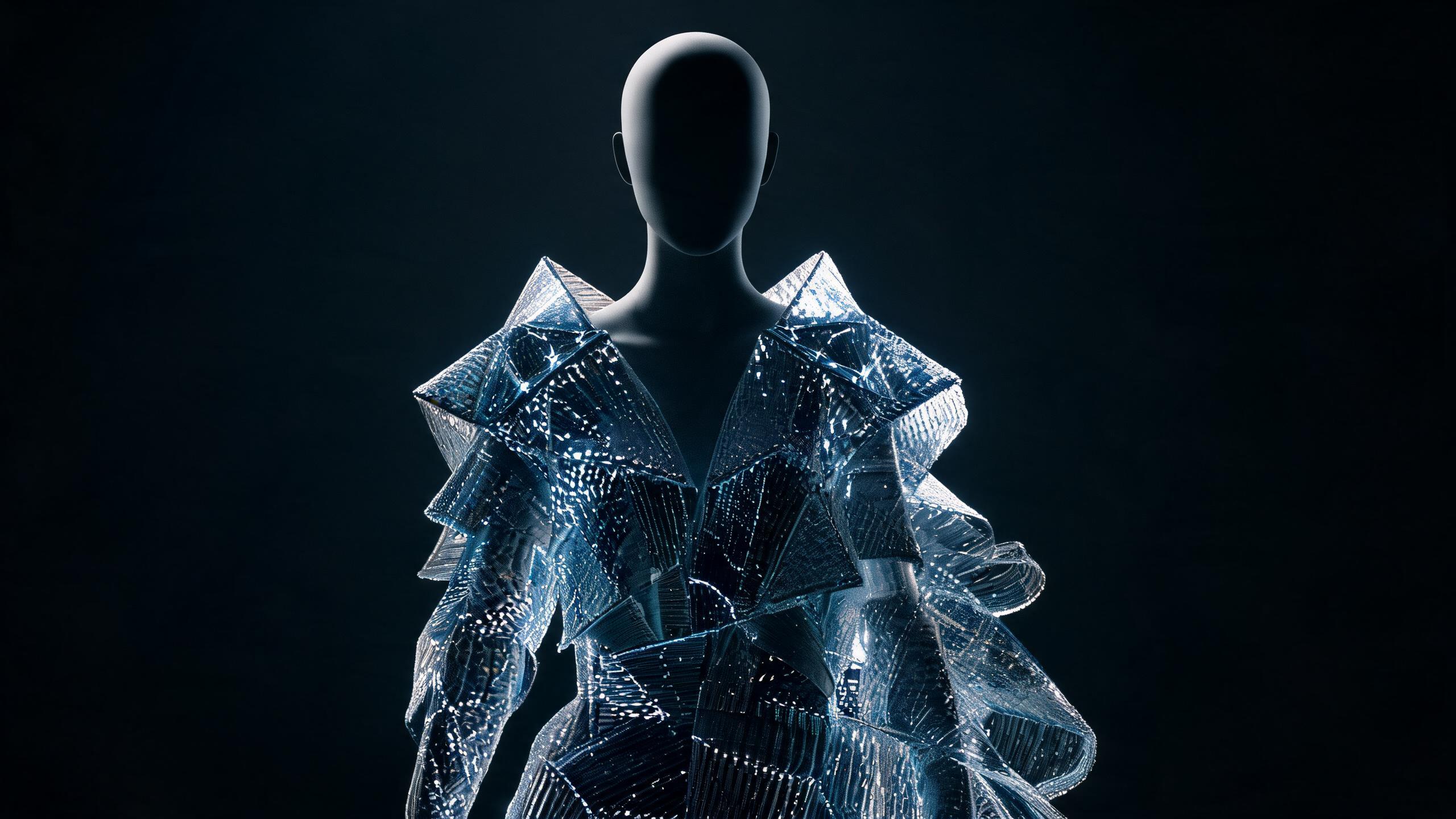
One of the most visually striking top AI fashion trends for winter 2026 is the rise of dynamic texture synthesis. We are moving away from traditional textiles like standard polyester or basic wool. Instead, we are seeing materials that have been designed at the molecular level by AI to mimic biological structures.
These materials often have "active" textures. For example, a coat might have a surface that closes its pores when it detects moisture or opens them when it detects a rise in body heat. This is not science fiction; it is the result of AI-led material science that has finally reached the consumer market.
Integrating Synthetic Textures
To wear these materials, you must lean into the "non-natural" aesthetic. These fabrics do not drape like traditional cotton or silk. They have a structural memory. When you wear a bio-mimetic shell, you are wearing a piece of engineering. Pair these high-tech textures with classic natural fibers like cashmere to create a contrast between the organic and the synthesized.
The Longevity of AI-Designed Materials
A major benefit of these trends is durability. AI models are used to simulate years of wear and tear in seconds, allowing designers to reinforce stress points that human eyes would miss. Buying into 2026 trends means buying into a longer lifecycle. Your wardrobe becomes a collection of high-performance assets rather than a pile of disposable trends.
The Decline of the Trend and the Rise of the Identity
This is where we must challenge the industry consensus. Every fashion magazine will tell you that the "top AI fashion trends for winter 2026" involve specific colors—perhaps a certain shade of hyper-saturated blue or a muted "lunar" grey. They are wrong.
The concept of a global color trend is a marketing tactic designed to hide the inefficiency of mass production. When a factory makes five million red sweaters, they must convince the world that red is "in." AI-native commerce destroys this model. Because production is becoming more localized and on-demand, the only trend that matters is the one that fits your model.
Style as an Identity Model
In 2026, "being on trend" means your clothing is perfectly synchronized with your personal style model. If your model indicates a preference for brutalist silhouettes and monochromatic palettes, the AI will not suggest a "trending" floral puffer jacket. It will instead find the most advanced iteration of the brutalist aesthetic available.
Breaking the Cycle of Trend-Chasing
How do you wear this "trend"? By refusing to chase it. The most sophisticated users of AI fashion intelligence are those whose wardrobes remain consistent while their technology evolves. You are not looking for the new thing; you are looking for the better version of your thing. This is the ultimate expression of style intelligence.
Predictive Maintenance and Wardrobe Evolution
Winter wardrobes are traditionally high-maintenance. Heavy coats need cleaning, knits need de-pilling, and boots need weatherproofing. A key trend for winter 2026 is the integration of predictive maintenance into your fashion infrastructure.
Your style model doesn't just suggest what to wear; it tracks the "health" of your garments. Based on the frequency of wear and the environmental conditions it has been exposed to, your AI stylist will tell you when a garment’s thermal integrity is compromised or when a material is reaching its failure point.
Step-by-Step Wardrobe Evolution:
- Usage Tracking: Every time you wear a piece, it is logged into your style model.
- Stress Analysis: The AI calculates the environmental stress (salt, moisture, friction) the garment has endured.
- Automated Replacement: Before a coat fails in the middle of February, your system identifies a replacement that matches your evolved taste profile and the specific technical requirements of your lifestyle.
The Gap Between Personalization and Reality
The fashion industry loves to use the word "personalization." However, for most brands, personalization is just a fancy word for "we showed you a product similar to the one you clicked on." This is not intelligence; it is a basic sorting algorithm.
The reality of top AI fashion trends for winter 2026 is much more rigorous. True personalization requires a deep understanding of garment construction. It requires knowing the difference between a raglan sleeve and a set-in sleeve, and how those choices affect the wearer’s range of motion and silhouette. It requires a system that understands that "size" is a flawed metric and that "fit" is a three-dimensional mapping problem.
Future-Proofing Your Winter Aesthetic
As we approach 2026, the distinction between "tech-wear" and "fashion" will dissolve. Every garment will be a tech-garment because every garment will be the product of an AI-driven supply chain. To stay ahead of the curve, you must adopt the mindset of an engineer.
Focus on the variables:
- Weight-to-Warmth Ratio: How much heat are you getting per gram of fabric?
- Data Fidelity: How well does your AI stylist actually know your body and your preferences?
- Systemic Cohesion: Do your clothes work together as a functional unit, or are they a collection of disparate parts?
The most influential trend of winter 2026 isn't a garment. It's the intelligence that chose it for you. We are moving toward a future where "shopping" is replaced by "curation," and "trends" are replaced by "optimizations." The question is no longer "What is everyone wearing?" but "What is the optimal version of me this winter?"
AlvinsClub builds the infrastructure for this transition. By creating a personal style model for every user, we ensure that your wardrobe is never a reflection of a fleeting trend, but a precise manifestation of your evolving identity. Every recommendation is a data point in your style's evolution. Is your wardrobe a collection of trends, or is it a model?
AlvinsClub uses AI to build your personal style model. Every outfit recommendation learns from you. Try AlvinsClub →
Related Articles
- AI Fashion Trends 2026 For Sustainable Brands: What's Changing in 2026
- Traditional vs AI-Powered Top 10 AI Wardrobe Apps For Minimalist Fashion: Which Approach Wins?
- Why Top AI Powered Fashion Platforms For Brands Fails (And How to Fix It)
- How to Use AI to Build the Ultimate 2026 Festival Wardrobe
- Generative AI For Custom Clothing Design Trends: What's Changing in 2026