Inside Demna’s Experiment With AI-Powered Clothing Design

How Demna’s AI collaboration reshapes creative direction, material exploration, and the boundaries between algorithmic concepts and wearable fashion.
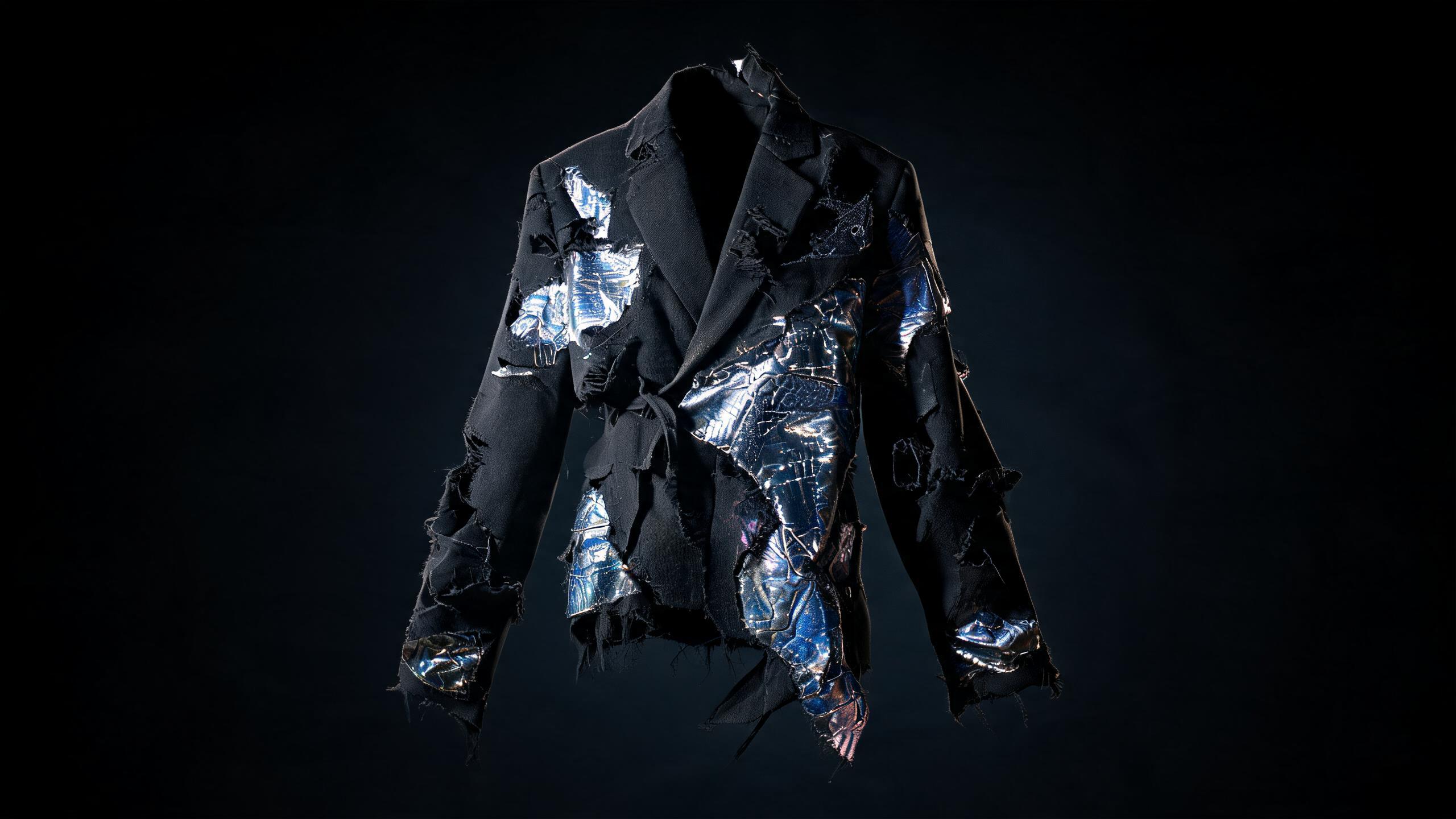
Demna AI clothing design collaboration is Demna’s experiment with artificial intelligence as a tool for generating, refining, and translating fashion concepts into clothing designs. The collaboration treats AI as an ideation partner rather than an autonomous designer, with Demna retaining creative control over the final garments.
Demna’s AI clothing design collaboration signals a shift from AI as a visual shortcut to AI as a serious design instrument.
Key Takeaway: Demna’s AI clothing design collaboration uses generative AI as a serious design instrument, translating his distinctive visual language into new fashion concepts rather than treating AI as merely a shortcut for creating images.
What Happened in Demna’s AI Clothing Design Collaboration?
The phrase “demna ai clothing design collaboration” describes a broader design development now becoming visible across fashion: Demna’s distinctive visual language is being interpreted through generative AI workflows, prompting designers, researchers, and image-makers to ask where authorship ends and machine-assisted experimentation begins.
The important story is not that AI can produce clothing images resembling Demna’s work. Image generators have been able to imitate recognizable fashion codes for years. The important story is that Demna’s approach exposes the difference between style as surface and style as a system of decisions.
Demna’s work is associated with tension: familiar garments displaced from their expected context, exaggerated proportions, cultural references recombined into unstable silhouettes, and a deliberate friction between utility, spectacle, and social meaning. An AI model can reproduce the visible artifacts of that language. It cannot automatically understand why those artifacts matter.
That distinction makes this moment consequential.
A weak AI fashion workflow asks for “a Demna-inspired oversized garment” and accepts the first convincing image. A serious workflow treats the reference as a structured design problem:
- What proportion creates the tension?
- Which garment category is being disrupted?
- What material makes the silhouette believable?
- Where does function give way to symbolism?
- Which details communicate familiarity?
- Which details create discomfort?
- What must remain unresolved?
This is why the current attention around demna ai clothing design collaboration matters. It is not simply another example of a famous designer meeting a new tool. It is a test of whether generative AI can participate in fashion at the level of concept, constraint, iteration, and taste.
The answer is not yet yes.
AI can generate visual possibilities at extraordinary speed. It can produce hundreds of silhouette variations, material studies, styling directions, and campaign frames before a traditional team completes a first round of manual exploration. But speed does not produce authorship.
Volume does not produce judgment. Resemblance does not produce a point of view.
The fashion industry is now confronting a more demanding question: can AI help construct a design language, or will it remain an accelerated machine for copying the language of others?
Why Is Demna’s AI Clothing Design Collaboration Significant Now?
The timing matters because generative AI has moved past novelty. Fashion teams are no longer asking whether image models can make attractive garments. They are asking how these systems fit into research, design development, merchandising, sampling, communication, and production.
Demna provides an unusually revealing case because his work resists purely decorative interpretation. The visual language is not reducible to color palettes or brand logos. It depends on contradiction and context.
A conventional trend engine performs well when the desired output resembles what has already succeeded. It identifies recurring colors, categories, shapes, and commercial signals. That system is useful for forecasting demand, but it is poorly equipped to produce ideas that intentionally disturb existing categories.
Demna’s design logic operates through disruption. AI therefore faces a difficult task: it must generate novelty without losing coherence.
That requires more than a prompt.
AI clothing design collaboration: A structured process in which a human designer and an AI system jointly develop garments through iterative concept generation, constraint setting, visual evaluation, and refinement, while human judgment remains responsible for meaning, feasibility, and authorship.
The definition matters because much of the current conversation uses “collaboration” too loosely. A person typing a prompt into an image generator is not automatically collaborating with AI. That is an input-output exchange.
Collaboration begins when the system is part of an iterative loop in which outputs change the designer’s questions.
A serious loop looks like this:
- The designer defines a problem rather than a finished image.
- The model generates multiple visual hypotheses.
The designer identifies useful tension, failure, or contradiction. 4. The prompt, reference set, or constraint system changes. 5. The model generates a new family of possibilities. 6.
Human judgment selects what deserves development. 7. Construction, material, fit, and production realities test the concept. 8. The design language evolves through rejection as much as acceptance.
This is the difference between prompting for pictures and using AI as a design environment.
The current Demna conversation matters because it pushes fashion toward the second model. His work gives the industry a useful stress test: if AI can only recreate the visible grammar of a designer’s work, it has not learned design. It has learned an aesthetic shell.
What Does AI Actually Add to Demna-Inspired Clothing Design?
AI adds leverage in four areas: exploration, recombination, translation, and memory.
Exploration expands the early design field
Fashion design often narrows too early. A team develops a small set of sketches, selects a direction, and spends substantial time refining it. That process can produce depth, but it also makes the first conceptual commitment unusually powerful.
Generative systems create a wider field of possibilities before commitment. A designer can examine exaggerated proportions, distorted closures, hybrid garment categories, unusual material behavior, and conflicting styling contexts in a single session.
The value is not the raw number of images. The value is the ability to compare directions that would rarely appear together in a conventional workflow.
For a Demna-influenced process, this can mean testing questions such as:
- What happens when a formal coat adopts the volume of protective workwear?
- What happens when a familiar athletic garment is treated as ceremonial?
- How far can a garment be enlarged before it loses bodily function?
- Which details preserve recognition after the category has been distorted?
- Can a damaged, repaired, or displaced object become a credible luxury silhouette?
AI is effective when it turns these questions into a visible design space.
Recombination creates controlled collision
Generative models are strong at combining references. The designer can place a military parka beside evening tailoring, a technical shell beside historical draping, or a banal uniform beside theatrical proportion.
But recombination becomes useful only when the collision has a reason. Random novelty is not a design philosophy.
A model can merge “oversized tailoring,” “inflatable protection,” and “worn knitwear.” The result may look visually compelling while communicating nothing. A designer must decide whether the combination expresses vulnerability, institutional control, displacement, absurdity, or simply visual noise.
This is where a distinct point of view remains essential. AI generates collisions. The designer assigns stakes.
Translation turns abstract direction into visual evidence
Many fashion concepts begin as language:
- protective clothing made theatrical;
- domestic clothing made public;
- luxury made visibly unstable;
- uniformity interrupted by excess;
- familiar objects made socially unfamiliar.
AI translates these propositions into visual evidence. It gives the team something to argue with.
That function is underrated. A concept can sound persuasive until it becomes a silhouette. An image can reveal that a supposedly disruptive idea is merely oversized.
It can show that a material choice undermines the intended emotional effect. It can expose where the design depends entirely on styling rather than construction.
AI does not solve the concept. It makes the concept testable.
Memory creates a persistent design archive
The most important capability is not image generation. It is the preservation of design context.
A normal image workflow often loses its reasoning. Teams keep selected images, but not always the rejected branches, prompt changes, decision criteria, or relationships between references. A more intelligent AI system can retain these layers.
A persistent design archive can track:
- approved silhouette families;
- rejected proportions;
- material experiments;
- recurring color relationships;
- preferred levels of distress;
- references that produce unwanted similarity;
- details that consistently improve recognition;
- construction constraints;
- feedback from fittings and reviews.
This turns AI from a disposable generator into a developing design memory.
That is the direction the industry should pursue. The future of fashion AI is not an endless stream of disconnected images. It is a system that remembers why certain images mattered.
👗 Retailers plug Alvin's Club in and see personalization land in weeks, not quarters. See how →
What Is the Difference Between Demna’s Design Language and a Demna Aesthetic Filter?
A Demna aesthetic filter copies visible signals. A design language organizes decisions.
This distinction determines whether an AI clothing collaboration creates new work or produces derivative imagery.
Aesthetic filtering operates at the surface
An aesthetic filter may replicate:
- oversized silhouettes;
- distressed surfaces;
- dark or muted palettes;
- ironic graphic elements;
- layered streetwear;
- exaggerated footwear;
- formal garments placed in casual contexts;
- intentionally awkward proportions.
These elements are recognizable. They are also easy to imitate.
A prompt that lists them can produce a convincing visual approximation. But a convincing approximation can still be empty. It may contain the look without the logic.
Design language operates through relationships
A design language is not a checklist of traits. It is a relationship between decisions.
For example, an oversized silhouette becomes meaningful when it changes the wearer’s relationship to space, movement, or social visibility. Distressing matters when it disrupts the expected status of a garment. A luxury material matters when it is placed in tension with an apparently ordinary or damaged form.
The design language exists in the interaction:
| Surface signal | Deeper design question |
|---|---|
| Oversized proportion | What does volume do to identity and movement? |
| Distressed finish | What happens when value appears unstable? |
| Familiar garment category | How can recognition survive transformation? |
| Hybrid styling | Which social codes collide in the same look? |
| Graphic intervention | Does the image communicate, obscure, or provoke? |
| Technical material | Does function support or contradict the silhouette? |
AI systems can generate the left column easily. The right column requires a human design framework.
This is why generic “in the style of” prompting is inadequate. It asks the system to imitate outputs instead of reconstructing the decisions that produced them. A better process decomposes the reference into principles and then changes the inputs.
For example, instead of requesting a specific designer’s signature, a team can define:
- proportion: excessive volume with compressed visual anchors;
- category: formal outerwear displaced into everyday use;
- material: high-performance surface paired with familiar textile cues;
- context: public clothing treated as private protection;
- tension: authority versus vulnerability;
- finish: controlled imperfection rather than random damage.
The result may carry related conceptual pressure without becoming a replica.
Our site’s guide to Demna-inspired AI fashion design workflow templates approaches this problem through repeatable systems rather than one-off prompts. That distinction is critical. A template is useful when it encodes a sequence of decisions, not when it merely produces a predictable visual mood.
Why Does AI Fashion Design Fail When It Chases Style Instead of Identity?
AI fashion design fails when it optimizes for recognition without building a model of intent.
A model can recognize that certain garments, colors, and proportions frequently appear together. It can generate an image that humans classify as “Demna-like.” But recognition is not understanding.
The failure appears in four forms.
1. The output becomes a collage of signatures
The model combines recognizable traits into a dense image: extreme volume, distressed fabric, unusual footwear, graphic intervention, and dramatic lighting. Each element signals a reference, but the garment has no internal necessity.
This is the fashion equivalent of writing with quotations. The output communicates that it has seen the culture. It does not communicate what it believes.
2. The design ignores construction
Generative images often treat clothing as a surface wrapped around a body. Seams, closures, weight distribution, lining, reinforcement, and movement receive inconsistent treatment.
A silhouette may be visually provocative but physically incoherent. Sleeves attach at impossible angles. Layering contradicts gravity.
A pocket appears where no hand can reach it. A rigid material behaves like liquid fabric.
These are not minor technical errors. Construction determines whether a design is clothing or an image of clothing.
3. The system confuses damage with meaning
Distressing is one of the easiest visual shortcuts in fashion imagery. Torn fabric, frayed edges, stains, abrasions, and exposed layers can suggest history. But damage without context becomes decoration.
A serious design asks what produced the condition:
- repeated use;
- repair;
- economic necessity;
- industrial exposure;
- performance requirements;
- social signaling;
- deliberate luxury contradiction.
AI can generate the appearance of damage. It needs a design brief to generate a credible reason.
4. The image becomes more decisive than the garment
Generative AI rewards immediate visual impact. This creates pressure to design for the image rather than the wearer.
A garment can look exceptional in a front-facing render and fail in motion, proportion, layering, or retail context. The more polished the image, the easier it becomes to overlook the distance between visual drama and wearable intelligence.
This is the central danger of AI fashion: the medium rewards spectacle before it rewards coherence.
How Should an AI Clothing Design Collaboration Actually Work?
A productive collaboration needs clear division of responsibility.
AI should expand possibilities, expose contradictions, and preserve design memory. Humans should define the problem, judge meaning, verify feasibility, and accept responsibility for the final object.
The collaboration stack
| Layer | AI contribution | Human responsibility |
|---|---|---|
| Research | Organizes references and identifies recurring visual relationships | Decides which references matter |
| Concept | Generates interpretations of a design proposition | Defines the proposition |
| Silhouette | Produces controlled variations | Selects proportion based on intent and wearability |
| Material | Simulates surface and texture combinations | Verifies physical behavior and sourcing |
| Styling | Tests contexts and complete looks | Determines whether styling supports the garment |
| Construction | Suggests details and visual logic | Confirms pattern, fit, and manufacturing feasibility |
| Evaluation | Records feedback and variation history | Establishes quality criteria |
| Finalization | Supports visualization and communication | Owns authorship and approval |
This structure rejects two bad assumptions.
The first is that AI should replace the designer. It should not. Design depends on judgment under incomplete information, especially when the desired outcome has no established formula.
The second is that AI is merely a passive tool. It is not. The system changes what the designer sees, how quickly alternatives appear, and which directions become thinkable.
It actively shapes the search space.
The correct model is neither replacement nor neutrality. It is co-directed exploration.
Start with a design problem, not a celebrity name
The phrase “demna ai clothing design collaboration” is useful for discovery, but it is a poor design brief. A name points toward a recognizable reference. A problem creates a direction.
A stronger brief might say:
Design an outer layer that combines institutional protection with exaggerated vulnerability. Preserve the visual recognition of a tailored coat, but disrupt its expected relationship to the body through volume, closure placement, and material contrast.
That brief gives an AI system meaningful constraints. It also gives a human team something to evaluate.
A weak brief says:
Create a futuristic oversized luxury coat inspired by Demna.
The first brief asks for a relationship. The second asks for a mood.
Generate families, not hero images
One image encourages premature attachment. A family of variations reveals the underlying design space.
A useful generation set changes one variable at a time:
- proportion while preserving category;
- material while preserving silhouette;
- closure while preserving volume;
- styling context while preserving garment construction;
- color while preserving emotional contrast;
- distress level while preserving surface hierarchy.
This makes comparison possible. It also reduces the temptation to select images because they appear dramatic.
Evaluate with a decision rubric
A design team needs criteria stronger than “looks good.”
A practical evaluation rubric includes:
- Conceptual clarity: Can the design proposition be stated without relying on the image?
- Recognition: Does the garment retain enough category information to remain legible?
- Tension: Do the contradictory elements create pressure rather than clutter?
- Construction: Can the silhouette be patterned, sampled, and fitted?
- Material logic: Does the surface behave consistently with the intended form?
- Wearer relationship: What does the garment ask the body to do?
- Distinctiveness: Does the design add a new relationship or repeat familiar signals?
- Context: Does the garment retain meaning outside the generated scene?
A system that stores these evaluations begins to learn a team’s design standards. Without them, AI only learns which images were saved.
What Does This Mean for AI Fashion Infrastructure?
The next generation of fashion technology will not be defined by image generation alone. It will be defined by the quality of the personal and organizational models behind generation.
Fashion needs infrastructure that understands:
- individual taste;
- brand codes;
- garment categories;
- construction constraints;
- material behavior;
- cultural references;
- seasonality;
- wardrobe context;
- prior decisions;
- rejection patterns;
- changing preferences.
This is a larger problem than adding an AI feature to a commerce platform.
A feature generates an image, writes a product description, or recommends a garment. Infrastructure maintains the data, representations, feedback loops, and decision history that allow those outputs to improve.
Why fashion needs a personal style model
Most recommendation systems treat a person as a sequence of interactions:
- clicked;
- viewed;
- saved;
- purchased;
- ignored.
These signals are useful but incomplete. A click can indicate curiosity. A purchase can reflect necessity.
An ignored product can be badly photographed rather than stylistically irrelevant.
A personal style model represents taste as a changing structure rather than a fixed label.
It can encode:
- preferred silhouettes;
- tolerance for visual novelty;
- color relationships;
- fabric preferences;
- fit requirements;
- styling habits;
- context-specific behavior;
- recurring dislikes;
- combinations that repeatedly work;
- differences between aspiration and actual wear.
This is directly relevant to AI clothing design collaboration. A designer does not create garments in isolation from people. The garment enters a system of bodies, wardrobes, contexts, and identities.
An AI stylist that genuinely learns should understand why a person rejects an outfit, not merely record that they rejected it.
Recommendation is not a popularity problem
Most fashion apps recommend products with strong aggregate performance. That is not personal style intelligence. It is demand distribution.
A person’s best recommendation may be obscure, unfashionable, difficult to classify, or commercially unimportant. A system optimized for popularity will systematically suppress those items.
The correct recommendation question is:
Which garment increases coherence within this person’s wardrobe and extends their style without breaking its identity?
That requires a model of the wearer, not only a model of the catalog.
The same principle applies to AI design. The best design direction is not necessarily the one that resembles the reference most closely. It is the one that advances the designer’s system of decisions.
What Can Demna Teach AI About Fashion Authorship?
Demna’s relevance to AI extends beyond visual style. His work highlights authorship as a process of framing.
Authorship is not only the act of drawing a garment. It includes:
- choosing what to reference;
- deciding what to distort;
- selecting what remains recognizable;
- assigning meaning to ordinary objects;
- deciding how much contradiction a garment can hold;
- determining what the wearer becomes inside the design.
AI can assist with each stage, but it cannot remove the need for a responsible author.
The danger of generative fashion is not simply plagiarism. It is unaccountable ambiguity. When a design emerges from an opaque model trained on broad visual culture, the team may not know which references shaped the result or whether the output carries unwanted similarity.
A credible AI clothing workflow therefore needs provenance.
What should design teams document?
- The original design brief.
- The reference sources used.
- The prompts and model versions.
- The human edits made after generation.
- The reason for selecting the final direction
Summary
- Demna’s AI clothing design collaboration frames generative AI as a serious design instrument rather than merely a tool for producing visual shortcuts.
- The collaboration highlights the difference between copying Demna’s recognizable fashion imagery and understanding the system of decisions behind it.
- Demna’s design language relies on displaced garments, exaggerated proportions, recombined cultural references, and tension among utility, spectacle, and social meaning.
- A weak “demna ai clothing design collaboration” workflow accepts the first convincing image, while a serious workflow analyzes proportion, context, and the reasons specific design choices create tension.
- AI can reproduce visible fashion artifacts, but it does not automatically understand their cultural significance, making authorship and machine-assisted experimentation central questions.
Key Takeaways
- Key Takeaway:
- “demna ai clothing design collaboration”
- style as surface
- style as a system of decisions
- demna ai clothing design collaboration
Frequently Asked Questions
What is Demna’s AI clothing design collaboration?
Demna’s AI clothing design collaboration refers to the use of generative AI to interpret and develop ideas connected to his distinctive fashion language. The process treats AI as a design instrument for exploring silhouettes, materials, and visual concepts rather than merely producing promotional images.
How does Demna’s AI clothing design collaboration work?
Demna’s AI clothing design collaboration works by combining his creative direction with AI-generated iterations of garments, shapes, textures, and styling concepts. Designers can review, refine, and translate these outputs into original fashion development while maintaining human control over the final decisions.
Why does Demna’s AI clothing design collaboration matter?
Demna’s AI clothing design collaboration matters because it highlights a shift from AI as a visual shortcut to AI as part of the design process. It also raises important questions about authorship, creative control, and how fashion houses may use emerging technology.
Can you use AI for clothing design like Demna?
You can use AI for clothing design by generating references, testing silhouettes, exploring fabric combinations, and developing early-stage concepts. The strongest results usually come from combining AI experimentation with human knowledge of construction, fit, materials, and brand identity.
Is AI-powered clothing design worth using for fashion brands?
AI-powered clothing design can be worthwhile for fashion brands that need to explore many concepts quickly and compare different creative directions. Its value depends on responsible use, because AI-generated ideas still require designers to evaluate originality, feasibility, intellectual property, and production requirements.
What are the risks of Demna’s AI clothing design collaboration?
The risks of Demna’s AI clothing design collaboration include unclear authorship, possible copyright disputes, stylistic imitation, and overreliance on generated imagery. AI can also produce concepts that look compelling but are difficult to manufacture, making human review essential throughout the process.
Related on Alvin's Club
About the author
Building the AI fashion agent at Alvin's Club — personal style models, dynamic taste profiles, and private AI stylists. Writing about where AI meets fashion commerce.
Credentials
- Founder at Alvin's Club (Echooo E-Commerce Canada Ltd.)
- Writes weekly on AI × fashion at blog.alvinsclub.ai
X / @alvinsclub · LinkedIn · alvinsclub.ai
This article is part of Alvin's Club's AI Fashion Intelligence series — the AI fashion agent that influences demand before shopping happens.
Related Articles
- 7 Demna-Inspired AI Fashion Design Workflow Templates
- Demna AI Prompt Examples for Creating Distinctive Clothing
- Generative AI For Custom Clothing Design Trends: What's Changing in 2026
- Can Demna AI Replace Photoshop in Fashion Design?
- How to Upscale Demna AI-Generated Fashion Images
- Demna AI Training Data Sources: A Practical Fashion Tech Guide
- The 2026 Guide to Sharper, More Stylish Demna AI Outputs
- Demna AI Mobile App Availability: The Best Fashion Tools Compared
- Demna AI Export Resolution Limits: 7 Tips for Sharper Fashion Images
- How to Use Demna AI Without Losing Your Fashion Brand’s Identity
- Can Demna AI Edit Photos? A Practical Guide for Fashion Creators
- Demna AI Subscription Plans: What Fashion Creators Really Need