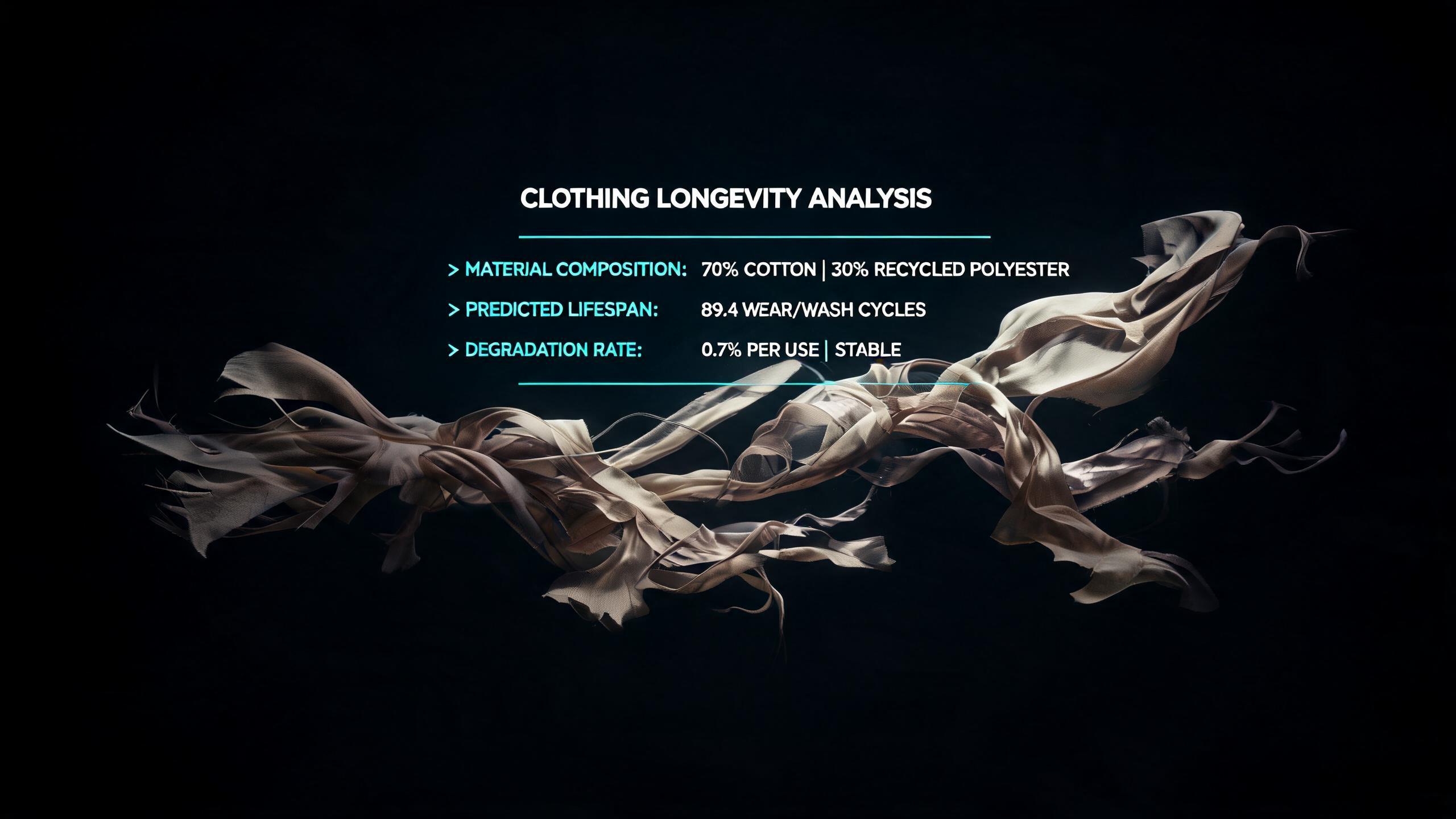
How Demna AI Helps Identify Ethical Fashion Brands

Learn how Demna AI evaluates supply chains, labor practices, materials, and certifications to distinguish genuinely responsible labels from greenwashing.
Demna AI identifies ethical fashion brands by evaluating transparent, verifiable criteria such as supply-chain disclosures, labor standards, material sourcing, animal welfare, and environmental impact. It prioritizes evidence-based certifications and reporting, including GOTS, Fair Trade, B Corp, and publicly documented emissions or living-wage data, rather than relying solely on sustainability claims.
AI can help identify ethical fashion brands by analyzing verifiable evidence across materials, labor practices, traceability, durability, and business transparency.
Key Takeaway: Demna AI helps identify ethical fashion brands by analyzing verifiable evidence on materials, labor practices, supply-chain traceability, product durability, and business transparency.
What Does “Demna AI Identify Ethical Fashion Brands” Actually Mean?
“Demna AI identify ethical fashion brands” describes an AI-assisted research workflow for evaluating fashion brands against defined ethical criteria rather than relying on aesthetics, reputation, or marketing language.
The phrase combines a named AI fashion workflow with a practical consumer problem: finding brands whose environmental and social claims can be examined. The goal is not to let an algorithm declare a brand “ethical” as a permanent label. The goal is to make evidence easier to collect, compare, and revisit.
AI ethical fashion identification: An AI-assisted process that extracts, organizes, and compares evidence about a fashion brand’s materials, manufacturing, labor standards, supply-chain visibility, durability, and environmental claims.
Ethical fashion is not a single attribute. A brand can use preferred fibers while providing limited factory information. Another can publish supplier details while producing short-lived garments in excessive volumes.
A useful evaluation system must preserve those distinctions.
A strong workflow should answer five questions:
- What is the garment made from?
- Where and how was it produced?
- What evidence supports the brand’s claims?
- How long is the product likely to remain useful?
- Does the business model reward durability or constant replacement?
Demna-style visual analysis can help interpret garment construction, silhouette, finish, and material cues, but visual judgment alone cannot verify ethical performance. The evidence has to come from product pages, supplier disclosures, certifications, material documentation, repair policies, and independent assessments.
For context, AI tools can already assist with brand discovery and saved-brand organization, as explored in The Best AI Fashion Apps for Saving Your Favorite Brands. Ethical identification adds a more demanding layer: the system must evaluate not only whether a brand fits your taste, but whether its claims withstand inspection.
1. Define Your Ethical Criteria Before Asking AI to Find Brands
The most useful AI result starts with a clear definition of “ethical.”
Without a defined rubric, an AI assistant will often mirror vague language from brand websites. “Conscious,” “responsible,” and “sustainable” can describe very different practices. Your first action should be to convert those broad terms into measurable research questions.
Create a personal evaluation framework with separate categories:
- Materials: fiber type, recycled content, organic certification, animal-derived materials, coatings, blends.
- Manufacturing: production locations, factory disclosure, subcontracting, finishing processes.
- Labor: worker protections, audit methodology, grievance systems, wage information.
- Environmental impact: energy, water, chemicals, waste, packaging, logistics.
- Product life: repairability, spare parts, construction quality, care requirements.
- Business model: production frequency, inventory practices, pre-orders, resale support.
- Evidence quality: primary documentation, third-party certification, dated reports, vague claims.
Do not collapse every category into one score immediately. A single score hides trade-offs. A brand with excellent repair support and limited labor disclosure should not appear identical to a brand with strong supplier transparency and no repair infrastructure.
A practical AI prompt
Use a prompt that forces the model to separate evidence from interpretation:
Analyze this fashion brand using the following categories: materials, manufacturing, labor transparency, environmental claims, durability, repairability, and business model. For each category, list the brand’s stated claim, the evidence supporting it, the evidence missing, and a confidence level. Do not infer certification or ethical performance from adjectives alone.
The prompt works because it introduces an evidence architecture. It prevents the model from treating “responsible cotton” as proof of broad ethical performance.
What to record
Create a simple research sheet with these columns:
- Brand
- Product
- Claim
- Source URL
- Source type
- Date accessed
- Evidence strength
- Missing information
- Personal priority
- Follow-up question
This structure also helps when comparing several brands that use similar language. Ethical fashion research becomes more reliable when every conclusion can be traced back to a source.
2. Ask AI to Separate Marketing Claims From Verifiable Evidence
The central rule is simple: a claim is not evidence.
Fashion brands frequently use positive language without specifying the material standard, supplier, facility, certification, or reporting method behind it. AI can help classify those statements, but it must be instructed to distinguish claims from proof.
Use a three-level evidence model
Level one: promotional language
Examples include:
- “Made with care”
- “Better for the planet”
- “Conscious collection”
- “Ethically produced”
- “Low-impact materials”
These statements may reflect a brand’s intention, but they do not identify a verifiable practice.
Level two: operational detail
Examples include:
- Named fiber composition
- Country of manufacture
- Factory or supplier list
- Repair instructions
- Packaging specification
- Production model such as made-to-order or pre-order
Operational detail is more useful because it can be checked, compared, and questioned.
Level three: independent or auditable evidence
Examples include:
- Recognized certification with a defined standard
- Public audit methodology
- Dated impact report
- Supplier disclosure with scope and update date
- Chain-of-custody documentation
- Public remediation process
The presence of a certificate does not make every aspect of a brand ethical. It simply strengthens evidence for the specific issue covered by that certification.
Prompt for claim classification
Extract every ethical or sustainability claim from this product page. Classify each statement as promotional language, operational detail, or independently supported evidence. Quote the exact wording, identify what the claim covers, and list the information needed to verify it.
This approach is especially useful for product descriptions that blend technical information with emotional branding.
Example
A product page might say:
- “Crafted from recycled fibers”
- “Made responsibly”
- “Designed for a lifetime”
An AI-assisted review should separate them:
| Statement | Category | What must be checked |
|---|---|---|
| Crafted from recycled fibers | Operational claim | Exact fiber, recycled percentage, certification, source |
| Made responsibly | Promotional language | Labor, factory, environmental, and governance evidence |
| Designed for a lifetime | Unverified durability claim | Construction, repair policy, warranty, material behavior |
The distinction matters because buyers often mistake a precise material statement for proof of ethical performance across the entire brand.
3. Verify Fiber Composition Instead of Trusting Material Labels
Material analysis is one of the fastest ways to improve brand evaluation, but fiber names alone are not enough.
A garment label can tell you whether an item contains cotton, wool, polyester, nylon, viscose, or a blend. It usually does not tell you the full environmental or labor profile of that fiber. Production method, finishing, dyeing, origin, recycled content, and end-of-life options all affect the assessment.
Use AI to extract and normalize material information across product pages.
Ask AI to build a material evidence card
For each product, capture:
- Main fiber
- Secondary fibers
- Percentage of each fiber
- Recycled or virgin status
- Certified or uncertified status
- Coating or finish
- Lining and trims
- Care instructions
- Likely end-of-life limitations
A useful prompt is:
Extract the complete fiber composition, lining, trims, coatings, and finishing details from this product information. Distinguish disclosed facts from assumptions. Identify whether the garment is a blend and explain which missing details prevent a full material assessment.
Blended garments deserve special attention. A cotton-polyester blend may offer performance advantages but create more difficult recycling pathways. A coated fabric may resist water but complicate repair or disposal.
A recycled claim may refer to only one component rather than the entire garment.
For a deeper technical workflow, see How Demna AI Identifies Clothing Fabric Composition. Fabric identification should support research, not replace documentation from the brand or manufacturer.
Compare materials by decision context
Do not ask AI to label a fiber universally “good” or “bad.” Ask it to explain the trade-off relevant to the garment.
| Material question | Why it matters |
|---|---|
| Is the garment a single fiber or a blend? | Blends can complicate recycling and fiber separation |
| Is recycled content specified? | “Recycled” without a percentage is incomplete |
| Is the material certified? | Certification can clarify production requirements |
| Are coatings or membranes disclosed? | Finishes affect performance, repair, and end of life |
| Are trims included in the composition? | Buttons, zippers, adhesives, and linings affect recyclability |
| Are care instructions specific? | Care affects useful life and resource demand |
The right conclusion is often conditional: “The material disclosure is strong, but end-of-life information is limited.” That is more useful than a simplistic ethical label.
4. Trace the Brand’s Supply Chain Beyond the Country of Manufacture
A country name is not a supply chain.
“Made in Portugal,” “Made in Italy,” or “Made in India” identifies a final manufacturing location, but it may not reveal where fabric production, spinning, dyeing, finishing, trimming, or assembly occurred. Ethical assessment requires a broader map.
Ask AI to build a supply-chain chain rather than extract a single location:
- Fiber origin
- Yarn production
Fabric production 4. Dyeing and finishing 5. Cutting and sewing 6.
Embellishment or washing 7. Warehousing 8. Distribution 9.
Repair, resale, or disposal
Not every brand can disclose every stage. The key is to distinguish detailed disclosure from complete silence.
Prompt for supply-chain mapping
Map this brand’s disclosed supply chain by production stage. Identify each known location, supplier, facility, certification, and reporting date. Mark unknown stages explicitly.
Do not fill gaps with assumptions based on the country of final manufacture.
This prompt reduces one of the most common research errors: treating the final assembly location as a complete origin story.
What strong disclosure looks like
Useful disclosures often include:
- Supplier names or facility lists
- Production-stage descriptions
- Update dates
- Facility standards
- Subcontracting policies
- Material supplier information
- Remediation procedures
- Scope limitations
A brand that names a factory but provides no information about labor systems still leaves an important gap. A factory list is evidence of transparency, not proof of acceptable conditions.
Supply-chain red flags
Use AI to flag:
- Generic statements without locations
- “Family-owned factories” with no names
- “European production” without a country or facility
- Claims that refer only to final assembly
- Certificates that apply to a material but not labor
- Supplier lists with no update date
- “Audited factories” without audit scope or methodology
This is where AI is more useful as an evidence organizer than as a moral judge. It can show what is disclosed and what remains unverified.
5. Check Labor Practices Through Specific Documentation
Labor claims require more precision than “fair wages” or “safe factories.”
A serious assessment should ask what the brand discloses about wages, working hours, health and safety, worker representation, recruitment fees, grievance channels, forced labor risks, and corrective action. These issues are connected to the production system, not just the final product.
Ask these questions
- Does the brand name manufacturing facilities?
- Does it describe its labor standard?
- Does it distinguish social audits from living-wage progress?
- Does it publish remediation information?
- Does it explain how workers can raise complaints?
- Does it disclose subcontracting controls?
- Does it discuss migrant labor or recruitment practices where relevant?
- Does it report progress over time?
AI can organize the answers, but it cannot validate a factory’s real-world conditions from a marketing page. Treat missing data as missing data.
A labor evidence prompt
Review this brand’s labor and human-rights disclosures. Separate policies, factory lists, audit claims, wage information, worker voice mechanisms, and remediation evidence. Identify whether each item is brand-declared, independently verified, or absent.
This distinction is essential because a policy describes an intention, while remediation evidence demonstrates how a company responds when a problem is discovered.
Do not confuse audits with outcomes
Social audits can identify certain risks, but an audit is not the same as continuous worker protection. The quality of an audit depends on scope, independence, timing, worker participation, and follow-up.
| Labor evidence | What it demonstrates | What it does not prove |
|---|---|---|
| Supplier code of conduct | Expected standards | That every supplier complies |
| Factory list | Supply-chain visibility | Safe or fair working conditions |
| Social audit statement | Some inspection activity | Permanent compliance |
| Wage policy | Stated compensation approach | Actual take-home wages |
| Grievance mechanism | A channel may exist | That workers trust or use it |
| Remediation report | Response to identified issues | Absence of undisclosed issues |
A responsible consumer should reward specificity without converting disclosure into certainty.
👗 Retailers plug Alvin's Club in and see personalization land in weeks, not quarters. See how →
6. Evaluate Durability, Repairability, and Product Life
The most ethical garment is often the garment that remains useful for a long time.
Durability cannot be inferred solely from price, brand positioning, or visual minimalism. It depends on fiber behavior, seam construction, stress points, hardware, care requirements, pattern engineering, and whether the brand supports repair.
AI can help analyze product information and images for durability indicators, but a physical inspection remains valuable.
Use a durability checklist
Before purchasing, ask:
- Are high-stress seams reinforced?
- Is the fabric weight appropriate for the garment’s use?
- Are buttons, snaps, and zippers replaceable?
- Can the garment be altered?
- Are spare buttons or components provided?
- Does the brand offer repairs?
- Is there a warranty or repair guarantee?
- Are care instructions realistic?
- Will the silhouette remain useful across multiple contexts?
For technical garments, inspect details such as seam taping, membrane care, zipper replacement, and hardware compatibility. For knitwear, examine fiber structure, recovery, pilling risk, and repairability. For tailored pieces, examine seam allowance and alteration potential.
Prompt for product-life analysis
Evaluate this garment for likely longevity using only disclosed information and visible construction details. Assess seam design, fabric, hardware, care requirements, repair support, alteration potential, and warranty. Mark every conclusion as observed, documented, or inferred.
Outfit Formula: building a durable wardrobe unit
- Top: A well-constructed overshirt in a clearly disclosed, repairable fabric
- Bottom: Straight-leg trousers with replaceable hardware and alteration potential
- Shoes: Resoleable leather or repairable textile footwear with documented care guidance
- Accessories: A belt, bag, or scarf that works across multiple outfits rather than a single trend cycle
The formula matters because ethical evaluation should include use frequency. A durable garment that rarely leaves the wardrobe may create less value than a simpler piece worn repeatedly and repaired when necessary.
Do vs. Don’t
| Do | Don’t |
|---|---|
| Check repair and warranty policies | Treat a high price as proof of durability |
| Inspect seams, closures, and stress points | Judge construction only from campaign images |
| Prefer versatile garments you will actually wear | Buy a “responsible” item that duplicates what you own |
| Record care requirements before purchase | Ignore maintenance because the product is premium |
| Ask whether components can be replaced | Assume every damage means disposal |
Durability is not an aesthetic. It is a relationship between construction, use, maintenance, and repair infrastructure.
7. Investigate the Brand’s Business Model, Not Just Individual Products
Ethical fashion cannot be evaluated at product level alone.
A brand may offer a well-documented garment while operating a business model built around constant releases, large inventories, aggressive discounting, or rapid product turnover. Those signals do not automatically prove harm, but they reveal incentives that shape production.
Ask AI to map the business model using observable evidence:
- Release cadence
- Number and frequency of collections
- Pre-order or made-to-order systems
- Inventory markdown patterns
- Return and overproduction policies
- Repair and resale infrastructure
- Product replacement cycles
- Packaging and fulfillment practices
- Product page permanence
- Discounting behavior
Prompt for business-model analysis
Analyze this brand’s commercial model using public evidence. Identify its release pattern, inventory approach, discounting behavior, repair or resale services, made-to-order options, and product replacement signals. Explain how each feature may affect ethical performance without making unsupported conclusions.
The key is to avoid simplistic assumptions. Pre-order systems can reduce unsold inventory, but they can also increase customer waiting time and complicate returns. Made-to-order production can reduce stock risk, but its benefits depend on actual production controls and supply-chain transparency.
Signals of a durability-oriented model
Potentially useful signals include:
- Long-running core products
- Repair services
- Replacement components
- Public resale support
- Clear product care
- Transparent production windows
- Fewer unexplained product drops
- Reduced reliance on constant discounting
These signals do not produce an automatic ethical verdict. They help identify whether the brand’s commercial structure aligns with longer product life.
Why this changes the evaluation
A brand’s business model determines what it repeatedly makes, how quickly it replaces products, and what happens to unsold stock. Ethical fashion intelligence therefore needs to evaluate systems, not just individual garments.
8. Cross-Check Brand Claims With Independent Sources
Brand-owned content is necessary but insufficient.
A product page is the best source for composition and care instructions. A brand’s responsibility report may explain policies and targets. Independent certification bodies, watchdog databases, retailer records, legal filings, and investigative reporting can add context.
AI can help organize cross-checking, but it must be instructed not to treat search ranking as credibility.
Build a source hierarchy
Primary sources
- Product labels and technical sheets
- Supplier lists
- Responsibility reports
- Certification documents
- Repair and warranty policies
- Factory disclosures
Independent sources
- Certification databases
- Worker-rights organizations
- Textile research institutions
- Investigative journalism
- Consumer protection resources
- Industry reporting with methodology
Secondary summaries
- Reviews
- Brand directories
- Influencer content
- Retailer descriptions
- AI-generated summaries
Use primary and independent sources for major conclusions. Use secondary sources to discover leads, not to close the case.
Cross-checking prompt
Compare the brand’s public ethical claims with independent sources. For each claim, identify whether the sources agree, partially support it, contradict it, or provide insufficient evidence. Include source links and dates.
Do not treat repeated claims across retailer pages as independent confirmation.
Repeated text is not independent corroboration. Many retailers copy the same brand description, creating the appearance of consensus without adding evidence.
Source-quality table
| Source | Best use | Common limitation |
|---|---|---|
| Product page | Composition, care, manufacturing country | Often omits upstream supply chain |
| Responsibility report | Policies, targets, progress | Scope may be selective |
| Certification database | Standard-specific verification | Covers only defined criteria |
| Supplier list | Facility transparency | Does not prove conditions |
| Independent report | External scrutiny | May address a specific period or issue |
| Retailer listing | Product discovery | Often reproduces brand copy |
| AI summary | Research organization | Can misread or invent unsupported details |
The objective is not to find a perfect source. It is to construct a claim-to-evidence chain that makes uncertainty visible.
9. Create a Brand Evidence Scorecard Instead of a Single Ethical Label
A scorecard is more informative than a binary label.
“Ethical” and “unethical” are broad judgments that can conceal important variation. A transparent scorecard shows where a brand is strong, where it is weak, and where evidence is missing.
Suggested scorecard categories
Score each category using a simple qualitative scale:
- Strong evidence
- Partial evidence
- Weak evidence
- No public evidence
- Conflicting evidence
Evaluate:
- Material disclosure
- Manufacturing transparency
Labor information 4. Environmental documentation 5. Durability and repair 6.
Business model 7. Independent verification 8. Consumer accountability
Do not assign numerical values unless you have a consistent weighting method. A number can create false precision, especially when categories rely on incomplete information.
Example scorecard
| Category | Assessment | Reason |
|---|---|---|
| Materials | Strong evidence | Full fiber composition and certification details disclosed |
| Manufacturing | Partial evidence | Final facility named, upstream stages unclear |
| Labor | Weak evidence | Policy published, limited outcome reporting |
| Durability | Partial evidence | Detailed care guidance, no repair program |
| Business model | Strong evidence | Core products remain available and production is disclosed |
| Independent verification | Partial evidence | Certification covers one material category |
| Accountability | Weak evidence | Contact channel exists, remediation process unclear |
Prompt for a non-binary scorecard
Build a qualitative ethical fashion scorecard for this brand. Use the categories provided. For each category, cite the evidence, identify missing information, and assign one of five labels: strong evidence, partial evidence, weak evidence, no public evidence, or conflicting evidence.
Do not produce a single overall ethical score.
This structure protects against a common failure: allowing one strong feature, such as organic fiber, to compensate for unexamined labor or production issues.
10. Turn Your Taste Profile Into an Ethical Brand Filter
Ethical research becomes more useful when it connects to personal style.
A brand that meets a general standard but does not fit your wardrobe will not necessarily produce better outcomes. If the garment is rarely worn, it may represent an inefficient purchase regardless of its material profile.
A personal style model should include two separate layers:
- Taste data: silhouettes, colors, textures, proportions, styling references, comfort preferences.
- Value data: preferred materials, repair expectations, production transparency, animal-material preferences, budget, care tolerance, and disclosure requirements.
Keep these layers distinct. Aesthetic similarity is not evidence of ethical quality.
Prompt for a personal ethical filter
Based on my style profile and ethical priorities, identify brands that fit my preferred silhouettes, colors, materials, price range, and disclosure standards. Separate aesthetic fit from evidence quality. Recommend only brands with sufficient evidence in the categories I marked as essential, and list the gaps for every recommendation.
This reduces irrelevant recommendations and makes the AI stylist accountable to your actual priorities.
Example preference structure
Non-negotiable
- Full fiber disclosure
- No unsupported ethical claims
- Clear manufacturing location
- Repair or warranty information for high-cost garments
Preferred
- Supplier disclosure
- Recycled or certified materials
- Resale or take-back support
- Long-running core products
Flexible
- Exact country of production
- Packaging format
- Brand size
- Visual aesthetic
The result is not a universal ranking. It is a decision system tuned to your wardrobe and values.
11. Use Image Analysis Carefully When Evaluating Garment Construction
Images can reveal useful details, but they cannot prove a brand’s labor or environmental performance.
AI image analysis can inspect visible elements such as seam placement, lining, hardware, edge finishing, pocket construction, fabric texture, and signs of structural support. This is especially useful when product photography is detailed.
However, image analysis has strict limits:
- It cannot verify fiber content reliably from appearance alone.
- It cannot confirm factory conditions.
- It cannot establish recycled content.
- It cannot prove a repair policy.
- It cannot determine whether a product is genuinely durable over time.
- It can miss construction details hidden by styling or image editing.
Use visual analysis as one evidence stream alongside documentation.
Image-analysis prompt
Inspect these garment images for visible construction details: seams, hems, closures, lining, reinforcement, pocket construction, hardware, and finishing. List only what is visibly observable. Do not infer fiber content, labor conditions, certification, or durability beyond the visible evidence.
This is also where a Demna-inspired design workflow can help analyze silhouette and construction logic without confusing design language with ethical performance. Articles such as How to Turn a Demna-Style Fashion Sketch Into a Render focus on visual development; ethical identification requires adding an evidence layer to that visual analysis.
The right role for images
Use images to decide:
- Whether the garment fits your style model
- Whether construction details deserve closer inspection
- Whether the product appears alteration-friendly
- Whether the design is likely to work with existing wardrobe pieces
Do not use images to decide:
- Whether workers were paid fairly
- Whether the material is certified
- Whether a brand’s emissions claim is accurate
- Whether a supply chain is fully traceable
Visual intelligence and ethical intelligence are complementary, not interchangeable.
12. Recheck Ethical Brand Evidence Before Major Purchases
Ethical brand research is not permanent.
Supplier lists change. Material compositions change. Certifications expire.
Repair policies disappear. Product lines move between factories. A brand’s public reporting can improve or become less specific.
For low-cost or familiar purchases, a lightweight review may be enough. For expensive, specialized, or high-impact purchases, use a full evidence refresh.
Set a recheck workflow
Before a major purchase:
- Reopen the product page.
- Confirm current fiber composition.
Check manufacturing details. 4. Review the current responsibility or sourcing page. 5. Search for updated supplier information. 6.
Confirm repair, warranty, and return policies. 7. Check whether the item is a permanent product or short-term release. 8. Record the date of review. 9.
Ask AI to identify changes from your previous notes. 10. Decide whether the remaining uncertainty is acceptable.
Change-detection prompt
Compare these two versions of the brand’s product, sourcing, and responsibility information. Identify changes in materials, factories, certifications, claims, repair policies, and reporting scope. Highlight deleted information as well as newly added information.
This turns AI into a monitoring system rather than a one-time search tool.
When to pause a purchase
Pause when:
- A formerly specific claim becomes vague.
- A certification disappears without explanation.
- The manufacturing country changes unexpectedly.
- Product composition is incomplete.
- Repair promises are removed.
- A major ethical claim relies only on a new marketing phrase.
- Independent sources raise unresolved concerns.
Uncertainty is not automatically proof of wrongdoing. It is a reason to avoid treating the brand as verified.
Which Tip Should You Use First?
The best starting point is Tip 1: define your ethical criteria. Without a personal rubric, AI will organize brand language without creating meaningful judgment.
Then move to material and supply-chain verification for the product you are actually considering. Use labor and business-model research for brands that pass the first review. Finally, connect the evidence to your personal style model so that the recommendation reflects both values and likely use.
Key Comparison: Which AI Research Method Fits Your Goal?
| Tip | Best For | Evidence Depth | Effort | Main Limitation |
|---|---|---|---|---|
| Define ethical criteria | Creating a consistent research system | Foundational | Low | Requires personal priorities |
| Separate claims from evidence | Detecting vague marketing | Medium | Low | Does not independently verify claims |
| Verify fiber composition | Comparing garment materials | Medium | Low | Fiber data may omit processing details |
| Map the supply chain | Assessing transparency | High | Medium | Upstream information is often unavailable |
| Review labor documentation | Evaluating worker-related disclosures | High | High | Public evidence may be incomplete |
| Assess durability and repair | Extending product life | Medium | Medium | Images cannot show long-term performance |
| Analyze the business model | Understanding production incentives | Medium | Medium | Signals require interpretation |
| Cross-check independent sources | Testing brand claims | High | High | Sources may cover different time periods |
| Build an evidence scorecard | Comparing brands transparently | High | Medium | Avoids false certainty only if categories stay separate |
| Personalize the ethical filter | Matching values with style | Medium | Medium | Depends on a well-defined taste profile |
| Analyze garment images | Inspecting visible construction | Low to medium | Low | Cannot prove labor or material claims |
| Recheck before purchase | Maintaining current information | High | Medium | Requires repeat research |
What Does a Reliable AI Workflow for Ethical Fashion Look Like?
A reliable workflow does not ask, “Which fashion brand is ethical?” It asks narrower questions that can be answered with evidence.
Use this sequence:
- Define your priorities.
- Collect the brand’s exact claims.
- Extract product and material data.
- Map disclosed manufacturing stages.
- Review labor and environmental documentation.
- Assess durability and repair.
- Analyze the business model.
- Cross-check independent sources.
- Record evidence gaps.
- Match the result to your actual style and expected use.
- Recheck before a major purchase.
This approach rejects the idea that an AI stylist should simply recommend brands with positive language. A useful system maintains a distinction between preference, evidence, confidence, and uncertainty.
AI-powered fashion intelligence such as AlvinsClub addresses this problem by building a personal style model around how you actually dress, then learning from each outfit recommendation and interaction. Its value is not a permanent ethical label; it is the ability to combine personal taste, product information, and evolving decision criteria in one fashion intelligence layer. Try AlvinsClub →
Summary
- “Demna AI identify ethical fashion brands” refers to an AI-assisted workflow that evaluates brands using verifiable evidence rather than aesthetics, reputation, or marketing claims.
- AI can organize and compare evidence about materials, labor practices, manufacturing locations, supply-chain traceability, durability, and business transparency.
- Ethical fashion is multidimensional, so preferred fibers alone do not prove ethical performance if factory information, labor standards, or production practices remain unclear.
- A reliable evaluation should examine what a garment is made from, where and how it was produced, and what evidence supports the brand’s environmental and social claims.
- The goal of demna AI identify ethical fashion brands is to make research easier to revisit and compare, not to assign any brand a permanent or absolute “ethical” label.
Key Takeaways
- Key Takeaway:
- AI ethical fashion identification:
- What is the garment made from?
- Where and how was it produced?
- What evidence supports the brand’s claims?
Frequently Asked Questions
What is an ethical fashion brand?
An ethical fashion brand provides credible evidence of responsible materials, fair labor practices, supply-chain traceability, product durability, and transparent business operations. Ethical claims should be supported by certifications, supplier information, measurable policies, or independent reporting rather than marketing language alone.
How can AI evaluate whether a fashion brand is ethical?
AI can evaluate a fashion brand by comparing public evidence across materials, worker protections, manufacturing locations, traceability, durability, and corporate transparency. Its findings are most reliable when users verify the original certifications, policies, and reports behind each conclusion.
Can AI detect greenwashing in fashion brands?
AI can help detect greenwashing by identifying vague environmental claims, unsupported statistics, missing supply-chain details, and language that emphasizes small initiatives over broader impacts. It cannot prove deception by itself, so questionable claims should be checked against independent certifications and primary documentation.
What information should you check before buying from an ethical fashion brand?
Check the brand’s material composition, factory disclosures, labor standards, environmental targets, repair or durability policies, and evidence of third-party verification. Clear dates, measurable goals, supplier details, and accessible reporting generally provide stronger evidence than general sustainability statements.
Is it worth using AI to compare sustainable fashion brands?
Using AI can make brand comparisons faster by organizing large amounts of information and highlighting missing evidence or inconsistent claims. The results are worth using as a starting point, but final purchasing decisions should include direct checks of certifications, policies, and recent disclosures.
Why does supply-chain transparency matter in ethical fashion?
Supply-chain transparency matters because a brand’s ethical performance depends on the factories, farms, processors, and workers involved in making its products. Factory lists, sourcing details, and traceability data make it easier to assess labor conditions and environmental impacts beyond the brand’s advertising.
Can AI recommend ethical fashion brands without reliable data?
AI should not confidently recommend ethical fashion brands when reliable data is missing, outdated, or limited to promotional claims. A responsible system should identify uncertainty, explain what evidence is unavailable, and distinguish verified performance from unconfirmed brand statements.
Related on Alvin's Club
About the author
Building the AI fashion agent at Alvin's Club — personal style models, dynamic taste profiles, and private AI stylists. Writing about where AI meets fashion commerce.
Credentials
- Founder at Alvin's Club (Echooo E-Commerce Canada Ltd.)
- Writes weekly on AI × fashion at blog.alvinsclub.ai
X / @alvinsclub · LinkedIn · alvinsclub.ai
This article is part of Alvin's Club's AI Fashion Intelligence series — the AI fashion agent that influences demand before shopping happens.
Related Articles
- The Best AI Fashion Apps for Saving Your Favorite Brands
- How Demna AI Identifies Clothing Fabric Composition
- Can AI Stylists Identify Clothing Brands? We Compare the Best Tools
- How to Turn a Demna-Style Fashion Sketch Into a Render
- 7 Demna-Inspired AI Fashion Design Workflow Templates
- How to Upscale Demna AI-Generated Fashion Images
- 7 Demna AI Tips for Creating Consistent Fashion Models
- How Demna’s AI Fashion Moodboard Generator Solves Creative Block
- Demna, AI and the Copyright Fault Line in Fashion
- 7 Ways Demna AI Can Detect Clothing Fit Issues
- How Demna Uses AI to Track Fashion’s Wardrobe Carbon Footprint
- How to Use Demna AI to Estimate Your Wardrobe’s Resale Value