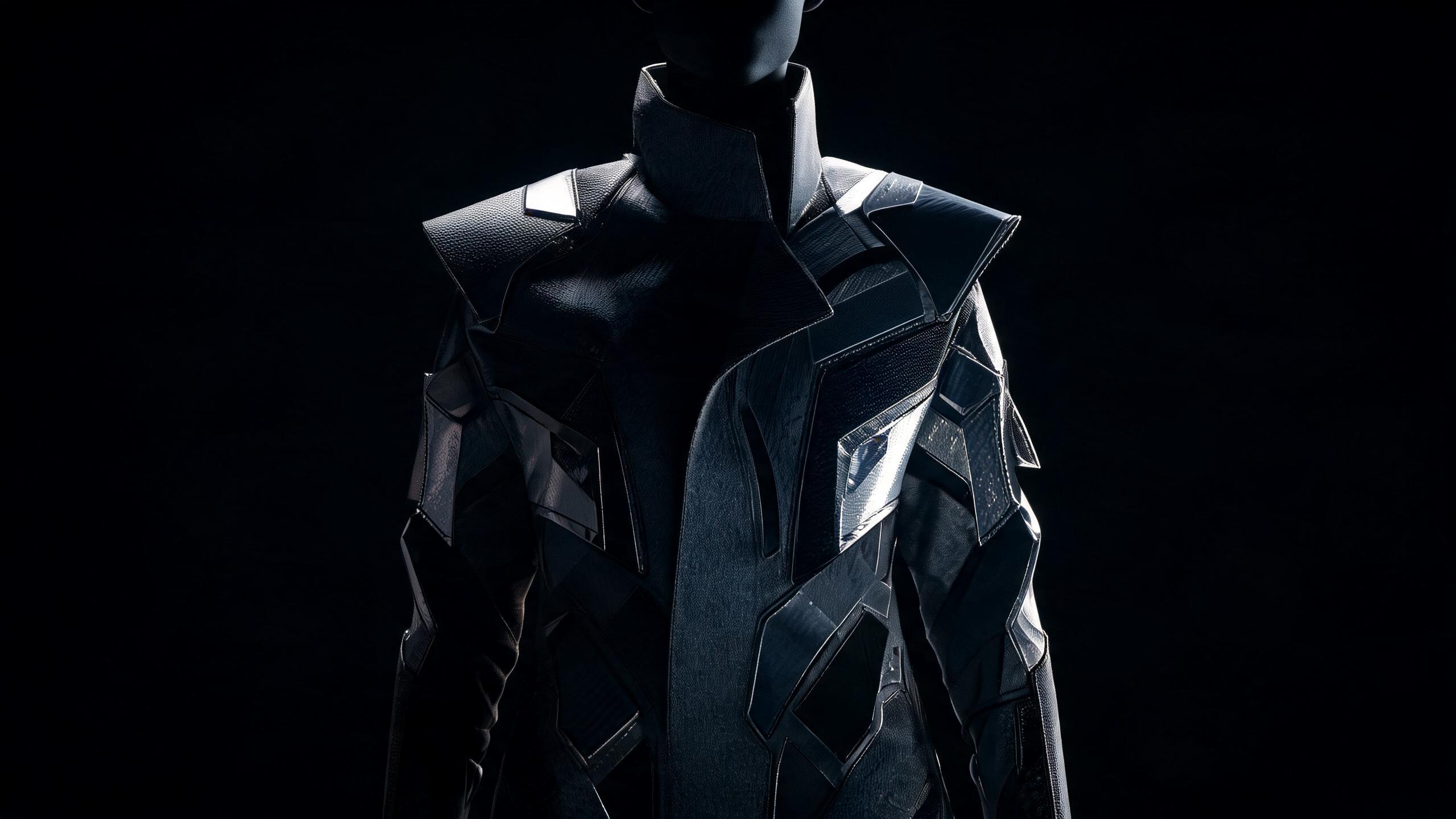
Generative AI For Custom Clothing Design Trends: What's Changing in 2026
A deep dive into generative AI for custom clothing design trends and what it means for modern fashion.
Fashion is no longer a product. It is an inference. For decades, the industry operated on a speculative model: design a thousand pieces, manufacture a million, and hope the market consumes sixty percent of them. This system is mathematically broken and environmentally terminal. By 2026, the dominant force in the industry will shift from mass production to generative AI for custom clothing design trends, turning the traditional supply chain into a real-time responsiveness loop.
The transition from static inventory to generative design marks the end of "one-size-fits-all" trends. We are moving toward a future where a garment does not exist until a style model predicts its necessity. This is not about adding a chatbot to a checkout page; it is about rebuilding the fundamental architecture of how humans interact with cloth.
The End of Static Inventory and the Rise of Parametric Design
The traditional SKU (Stock Keeping Unit) is becoming an obsolete data structure. In the current model, a brand creates a fixed design, and the consumer’s only choice is whether to buy it. By 2026, generative AI for custom clothing design trends will replace the SKU with a "design seed"—a parametric model that adjusts based on individual user data.
Parametric design allows for infinite variations of a single concept. A jacket is no longer a single file; it is a set of constraints—fabric weight, drape, seam placement—that can be manipulated by an algorithm to fit the specific aesthetic and physical requirements of the buyer. This shift solves the industry’s greatest liability: deadstock. When designs are generated and validated digitally before a single thread is cut, the risk of overproduction disappears.
Infrastructure is the bottleneck here, not creativity. The industry needs systems capable of translating generative outputs into manufacturing instructions without human intervention. We are seeing the emergence of "Inference-on-Demand" manufacturing, where the AI doesn't just design the garment but also generates the laser-cutting patterns and assembly sequences. This is the first major trend of 2026: the death of the "collection" in favor of the "continuous stream."
Personal Style Models: Moving Beyond Recommendation Engines
Most fashion platforms today use primitive recommendation systems. They look at what you bought last month and show you more of the same. This is not intelligence; it is a feedback loop that stifles personal growth. Real generative AI for custom clothing design trends requires a personal style model—a dynamic digital twin of an individual's taste, lifestyle, and physical dimensions.
A personal style model is not a list of preferences. It is a predictive engine. It understands that while you may wear black to work, you prefer earth tones for travel, and your silhouette preference shifts based on the climate. In 2026, the most valuable asset a consumer will own is their style model. This data layer will sit between the user and the entire fashion market, acting as a filter and a creator.
Instead of browsing a catalog of 10,000 items, the user will interact with a curated feed of generative designs created specifically for their style model. The AI doesn't ask "What do you want to buy?" It says "Based on your upcoming schedule and evolving taste, this is what should exist for you." This is the difference between a storefront and a personalized design studio.
Generative AI for Custom Clothing Design Trends: The Physics of Virtual Try-On
One of the primary reasons for high return rates in e-commerce is the gap between a 2D image and a 3D body. Current virtual try-on technology often feels like a sticker placed over a photo. This is changing. The next wave of generative AI for custom clothing design trends focuses on the physics of textiles—how silk flows compared to heavy denim, and how those fabrics interact with a moving human form.
By 2026, generative models will incorporate Neural Radiance Fields (NeRFs) and advanced physics engines to provide photorealistic simulations. When a user "tries on" a generative design, they aren't seeing a guess; they are seeing a high-fidelity simulation of how that specific textile will behave on their specific anatomy.
This technical advancement removes the friction of "fit uncertainty." When the generative design is pixel-perfect and the manufacturing is automated to those exact specifications, the concept of a "size" becomes irrelevant. Clothing will be measured in coordinates, not small, medium, or large.
The Shift from Trend-Chasing to Identity Engineering
Fashion has historically been a top-down industry. Creative directors at legacy houses decide the "look" of the season, and the rest of the world follows. Generative AI flips this hierarchy. We are entering the era of Identity Engineering, where trends emerge from the bottom up, driven by the collective inferences of millions of individual style models.
In this landscape, "trending" doesn't mean a specific item is popular. It means a specific aesthetic logic is gaining traction. Generative AI allows users to lean into these logics while maintaining their unique style parameters. You can participate in a "trend" without wearing the same uniform as everyone else. The AI handles the synthesis of the collective mood and the individual identity.
This creates a more diverse and fragmented fashion landscape. By 2026, the idea of a "universal trend" will be seen as a relic of the mass-media age. Diversity of design is the natural output of generative systems.
Algorithmic Fit and the Solution to the Return Crisis
The environmental cost of fashion returns is staggering. Billions of dollars in inventory are burned or landfilled every year because the fit was wrong. This is an information problem. Generative AI for custom clothing design trends provides the solution by closing the data gap between design and delivery.
Algorithmic fit uses computer vision and generative modeling to map a user's body with millimeter precision. This data is then used to "morph" generative designs in real-time. If the AI detects a specific shoulder slope or waist-to-hip ratio, it adjusts the design’s internal geometry before the user even sees it.
This isn't just about custom tailoring; it's about "preventative design." The system refuses to generate a garment that it knows will not perform well on the user’s body. By 2026, the goal for AI-native fashion infrastructure is a zero-percent return rate. This is only possible when the design is a direct function of the user’s biological and aesthetic data.
Zero-Waste Design through Generative Precision
Sustainability in fashion is usually a marketing gimmick. "Organic cotton" doesn't matter if you are still overproducing five million t-shirts that no one wants. True sustainability is a computational challenge. Generative AI for custom clothing design trends enables a zero-waste design philosophy by ensuring that every garment produced has a pre-determined owner and a high probability of long-term utility.
Generative AI can also optimize for "material efficiency" during the design phase. An algorithm can arrange pattern pieces on a bolt of fabric to minimize scrap in a way that no human designer could. When combined with on-demand additive manufacturing or 3D knitting, the waste in the production process drops to near zero.
In 2026, "luxury" will be defined by the precision of the system, not the heritage of the brand. A garment that is perfectly generated, perfectly fitted, and perfectly matched to an individual's style model is inherently more valuable than a mass-produced item with a high-end logo.
The Infrastructure Gap: Why Fashion Apps Are Failing
Most current fashion apps are trying to bolt AI features onto a legacy retail stack. This is why they fail to deliver real value. You cannot achieve true personalization on top of a database built for mass-market shipping.
The industry needs AI-native infrastructure. This means a move away from "shopping carts" and toward "intelligence layers." The infrastructure of 2026 will be a continuous loop of:
- Data ingestion (user behavior, body scans, environmental context).
- Style model updating (how the user's taste is evolving).
- Generative design (creating the garment).
- Automated manufacturing (bringing it to life).
This is not a retail problem. It is an engineering problem. The companies that succeed will be those that treat fashion as a data science, not a creative arts project. The "creative" part of fashion is being offloaded to the AI, allowing humans to focus on the "direction" and the "experience."
What to Expect in 2026: The New Commerce Reality
By 2026, the act of "shopping" will be unrecognizable. The friction of searching, filtering, and wondering if something will fit will be gone. Instead, users will interact with a generative stream of clothing that feels like an extension of their own identity.
We will see the rise of "Style Sovereignty," where individuals own their style models and can port them between different platforms and designers. The power will shift from the brands that produce clothes to the platforms that manage the intelligence.
The focus will move from "What is trending?" to "What is my model generating today?" This is a more honest and efficient way to handle human expression. Fashion has always been about identity; generative AI finally provides the tools to make that identity precise.
The old model of fashion was about convincing you to want what everyone else had. The new model, driven by generative AI for custom clothing design trends, is about giving you exactly what you didn't know you needed. It is a shift from persuasion to prediction.
AlvinsClub uses AI to build your personal style model. Every outfit recommendation learns from you. Try AlvinsClub →
Related Articles
- How Generative AI Is Changing Fashion Design 2025: What's Changing in 2026
- The Ultimate Best AI Wardrobe Assistant For Capsule Wardrobes Style Guide
- Why Festival Outfit Planner AI For Coachella 2026 Fails (And How to Fix It)
- The Ultimate AI Clothes Organizer For Minimalist Capsule Wardrobe Style Guide
- Why AI Powered Fashion Commerce For Sustainable Brands Fails (And How to Fix It)