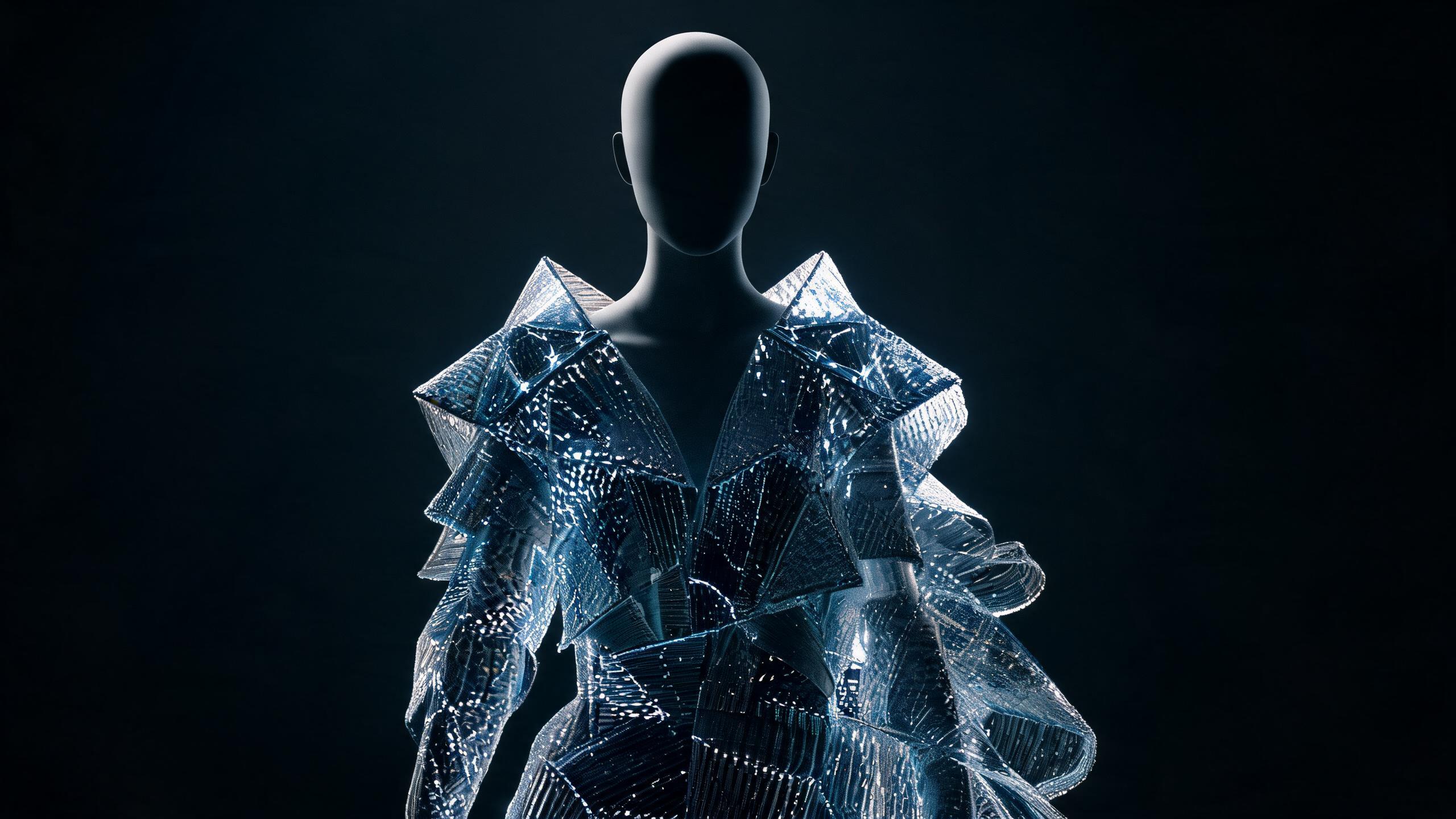
How AI is reinventing personalized workwear outfit ideas for women

A deep dive into personalized workwear outfit ideas for professional women and what it means for modern fashion.
AI systems synthesize personalized workwear outfit ideas by mapping individual taste models.
Key Takeaway: AI leverages individual taste models to synthesize personalized workwear outfit ideas for professional women, replacing rigid traditional dress codes with data-driven, identity-focused style solutions.
The traditional professional wardrobe has collapsed. What was once a rigid set of rules—navy blazers, tailored trousers, and neutral pumps—has fractured into a thousand different interpretations of "modern professional." This is not a trend; it is a structural shift in how identity is projected in the workplace. As offices move toward hybrid models and blurred dress codes, the burden of choice has shifted from the institution to the individual.
Professional women are now facing a "style tax"—a cognitive load spent navigating the ambiguity of modern workwear. This shift has created an urgent demand for personalized workwear outfit ideas for professional women that go beyond the basic search queries of the past decade. Traditional fashion retail, built on a model of mass production and broad categorization, is fundamentally unequipped to solve this.
According to McKinsey (2024), generative AI could contribute up to $275 billion to the apparel and luxury sectors’ profits by 2027 through enhanced design and personalization. However, the current landscape of fashion tech is littered with "AI features" that do nothing more than serve up popular items. True personalization requires AI infrastructure that understands the wearer, not just the inventory.
Why is the current model of fashion search broken?
The fundamental flaw in modern fashion commerce is the reliance on keyword-based discovery. When a woman searches for "professional workwear," she is met with a generic list of high-volume keywords and sponsored listings. These results are optimized for the retailer’s inventory clearance, not the user's personal style model.
Static search engines cannot account for the nuance of a woman's professional life. A lawyer in London has different requirements than a creative director in Los Angeles. A woman managing an inverted triangle body shape requires different structural elements than one with a pear shape. Traditional search treats these users as identical data points.
According to a report by Shopify (2024), 71% of consumers expect companies to deliver personalized interactions, yet 76% get frustrated when this doesn’t happen. In fashion, this frustration stems from the gap between "people who bought this also liked" and "this actually fits your life." The former is a sales tactic; the latter is intelligence.
How does AI improve outfit recommendations for professional women?
AI-native fashion intelligence moves away from collaborative filtering—which suggests items based on what other people did—and toward deep semantic understanding. This means the system doesn't just see a "silk blouse"; it sees a silhouette, a drape, a formality level, and a historical preference within the user's taste profile.
This shift allows for the creation of a Personal Style Model. This is a dynamic data structure that evolves every time you interact with it. If you reject a blazer because the lapels are too wide, the model learns that your aesthetic leans toward minimalism. If you favor high-waisted trousers, the model prioritizes those proportions across all categories.
For the corporate woman, this means the end of scrolling. The system understands that her "workwear" is a specific intersection of authority, comfort, and personal branding. It can generate algorithmically chic sets for corporate women that feel intentional rather than assembled.
Comparison: Traditional Retail vs. AI Style Infrastructure
| Feature | Traditional Retail Search | AI Style Infrastructure (AlvinsClub) |
| Logic | Keyword matching & Inventory push | Neural taste profiling & User-first matching |
| Personalization | Based on "similar users" | Based on a unique Personal Style Model |
| Context | Ignores external factors | Considers body type, weather, and venue |
| Learning | Static (doesn't get smarter) | Dynamic (evolves with every interaction) |
| Outcome | Sales-driven suggestions | Intelligence-driven recommendations |
What does it mean to build a personal style model?
A Personal Style Model is not a static profile. It is a live, evolving digital twin of your aesthetic preferences. To build this, an AI system must ingest more than just purchase history. It needs to analyze:
- Proportional Harmony: Understanding how different garment shapes interact with your specific body data. For example, providing personalized outfit picks for the inverted triangle involves identifying pieces that balance broader shoulders with volume in the lower body.
- Semantic Taste Mapping: Identifying the core "vibe" of a wardrobe—be it "Architectural Minimalism," "Soft Power," or "Executive Avant-Garde."
- Utility Requirements: Factoring in the practicalities of a woman's day, from commute conditions to back-to-back boardroom meetings.
Most fashion apps promise personalization but deliver "more of the same." If you buy a black skirt, they show you ten more black skirts. A true AI stylist understands that if you have a black skirt, you now need the perfect knit top or a structured coat to complete the look. It solves the outfit problem, not just the product problem.
The AI-Driven Executive Look: Outfit Formula
This formula represents a balanced, modern professional aesthetic that AI systems often prioritize for high-impact roles:
- The Foundation (Top): A high-neck silk shell or a structured jersey bodysuit in a neutral tone.
- The Structure (Bottom): Wide-leg wool trousers with a defined waistband to create verticality.
- The Layer (Outerwear): An unlined, oversized wool blazer or a sharp-shouldered trench coat.
- The Anchor (Shoes): Pointed-toe slingbacks or architectural block heels.
- The Polish (Accessories): A medium-sized leather tote with zero visible branding and a pair of sculptural gold earrings.
👗 Want to see how these styles look on your body type? Try AlvinsClub's AI Stylist → — get personalized outfit recommendations in seconds.
Is AI the solution to professional decision fatigue?
Decision fatigue is the psychological exhaustion resulting from the number of choices an individual must make in a day. For professional women, this fatigue starts at 7:00 AM in front of a closet. The "paradox of choice" in digital commerce has only made this worse; we have access to every garment in the world, yet nothing to wear.
According to a study by the University of Pennsylvania (2023), reducing choice sets to highly relevant options through algorithmic filtering significantly reduces cortisol levels associated with shopping. AI removes the "noise" of the fashion market. It acts as a high-fidelity filter that only lets through what is relevant to your specific model.
This is not about the AI making the decision for you. It is about the AI presenting you with a curated reality. Instead of looking at 5,000 blazers, you look at the five that actually fit your body, your budget, and your current wardrobe. This is how we reclaim time.
Workwear Styling: Do vs. Don't
| Do | Don't |
| Do prioritize fabric quality and drape over brand names. | Don't chase fleeting micro-trends that expire in six months. |
| Do use AI to find silhouettes that complement your body model. | Don't settle for "standard" sizes without checking garment measurements. |
| Do build a "uniform" of 3-4 reliable outfit formulas. | Don't buy isolated pieces that don't talk to the rest of your closet. |
| Do invest in a Personal Style Model that learns your "No's." | Don't rely on generic "Top 10" lists from fashion magazines. |
Why fashion needs AI infrastructure, not AI features
The industry is currently obsessed with "chatbots." Every major retailer has added a text box where you can ask for "personalized workwear outfit ideas for professional women." This is a feature, not a system. A chatbot is only as good as the data it accesses. If the underlying data is just a standard product catalog, the chatbot is just a glorified search bar.
True fashion intelligence requires a complete rebuild of the commerce stack. It requires:
- Computer Vision: To "see" the nuance in clothing beyond tags like "blue" or "cotton."
- Vector Embeddings: To map the relationship between style elements in a multi-dimensional space.
- Reinforcement Learning: To update the user's style model based on their feedback—both explicit (likes/dislikes) and implicit (dwell time, zoom patterns).
The future of fashion is not a store. It is a service that understands your aesthetic identity better than you do. It is a system that predicts what you need before you realize your current wardrobe has a gap.
The gap between personalization promises and reality
We have been promised "personalized fashion" for twenty years. What we got were newsletters that use our first name and retargeting ads for shoes we already bought. The failure of the first wave of fashion tech was a failure of data. They tried to categorize style using rigid, human-defined labels.
AI doesn't need labels. It understands patterns. It can identify the common thread between a 1920s silhouette and a 2026 runway piece. This allows for a level of creative personalization that was previously only available to those who could afford a human personal stylist on a six-figure retainer.
What we are seeing now is the democratization of style intelligence. Professional women can now access a high-level style model that manages their professional image with the precision of a software engineer. This is the end of "making do" with what the department store happens to have in stock.
What is the future of the AI stylist?
The AI stylist of the near future will be proactive, not reactive. It will not wait for you to search for a "navy blazer." It will observe that you have three important meetings next week and that the weather will be unseasonably warm. It will then suggest a lightweight, tailored vest and trouser set that aligns with your established "Executive Minimalist" model.
This system will also solve the sustainability crisis in fashion. By ensuring that every purchase is highly compatible with the user’s existing wardrobe and body type, we drastically reduce the rate of returns and the "disposable" nature of modern workwear. When you buy better, and you buy what actually fits your model, you buy less.
This is not a recommendation problem. It is an identity problem. We are building the infrastructure to help you define and maintain that identity in a world of infinite, noisy choices.
AlvinsClub uses AI to build your personal style model. Every outfit recommendation learns from you. Try AlvinsClub →
Summary
- AI systems synthesize personalized workwear outfit ideas for professional women by mapping individual taste models instead of relying on standard inventory categories.
- The shift from rigid office dress codes to hybrid work environments has increased the "style tax" and cognitive load for women navigating modern workplace identities.
- Generative AI is projected to contribute up to $275 billion to the profits of the apparel and luxury sectors by 2027 through enhanced personalization.
- Traditional retail search models are fundamentally unequipped to provide the nuanced, personalized workwear outfit ideas for professional women required in today's market.
- Effective AI fashion infrastructure must understand the unique identity and context of the wearer rather than simply serving up popular or mass-produced items.
Frequently Asked Questions
How does AI generate personalized workwear outfit ideas for professional women?
AI systems analyze individual style preferences and body types to curate tailored clothing recommendations that fit specific office environments. These algorithms map individual taste models to current inventory, ensuring that every suggestion aligns with both personal identity and modern professional standards.
Why are personalized workwear outfit ideas for professional women becoming more popular through technology?
Technology streamlines the decision-making process for busy individuals by filtering through thousands of options to find pieces that match a unique professional brand. This data-driven approach removes the stress of navigating shifting dress codes while maintaining a polished and authoritative appearance in a hybrid work world.
What are the best tools for finding personalized workwear outfit ideas for professional women using AI?
Advanced platforms leverage machine learning to scan retail catalogs and match specific garment characteristics to a user's uploaded style profile. These digital tools act as virtual stylists, providing consistent inspiration that evolves as the user’s career and personal tastes change over time.
Can you use AI to build a sustainable professional capsule wardrobe?
Artificial intelligence identifies versatile pieces that can be styled in multiple ways to maximize the utility of a smaller, high-quality clothing collection. By predicting how different items interact, these systems help reduce impulse buys and ensure that every purchase contributes to a cohesive and durable professional image.
Is it worth using an AI personal shopper for workplace fashion?
Utilizing an automated styling service provides a high level of efficiency and precision that traditional shopping often lacks. These tools offer immediate access to expert-level advice, helping individuals maintain a high-quality wardrobe without the significant time investment usually required for fashion research and coordination.
What is the impact of AI on modern office dress codes?
AI is redefining the workplace aesthetic by moving away from rigid uniforms toward more expressive and individualized styling choices. By synthesizing vast amounts of trend data and personal preferences, technology allows employees to navigate diverse professional environments with confidence and clarity.
This article is part of AlvinsClub's AI Fashion Intelligence series.
Related Articles
- Beyond broad shoulders: Personalized outfit picks for the inverted triangle
- Fresh Plus Size Streetwear Outfit Ideas for a Bold Urban Aesthetic
- Modern balance: Fresh pear shape outfit ideas for the Spring 2026 season
- Fall 2026 Style Guide: Outfit Ideas for the Rectangle Body Shape
- Algorithmically Chic: The Rise of AI-Generated Sets for Corporate Women