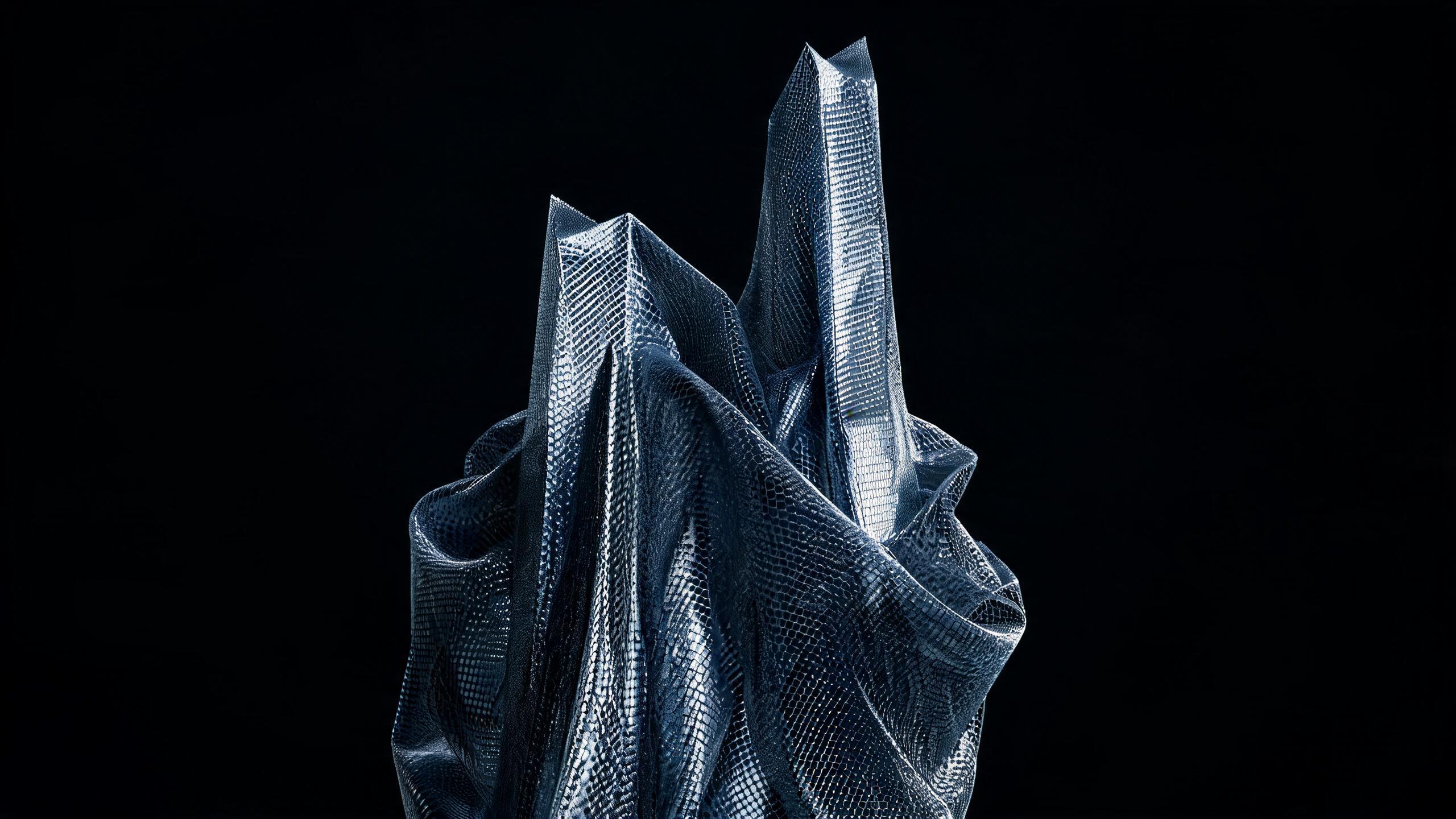
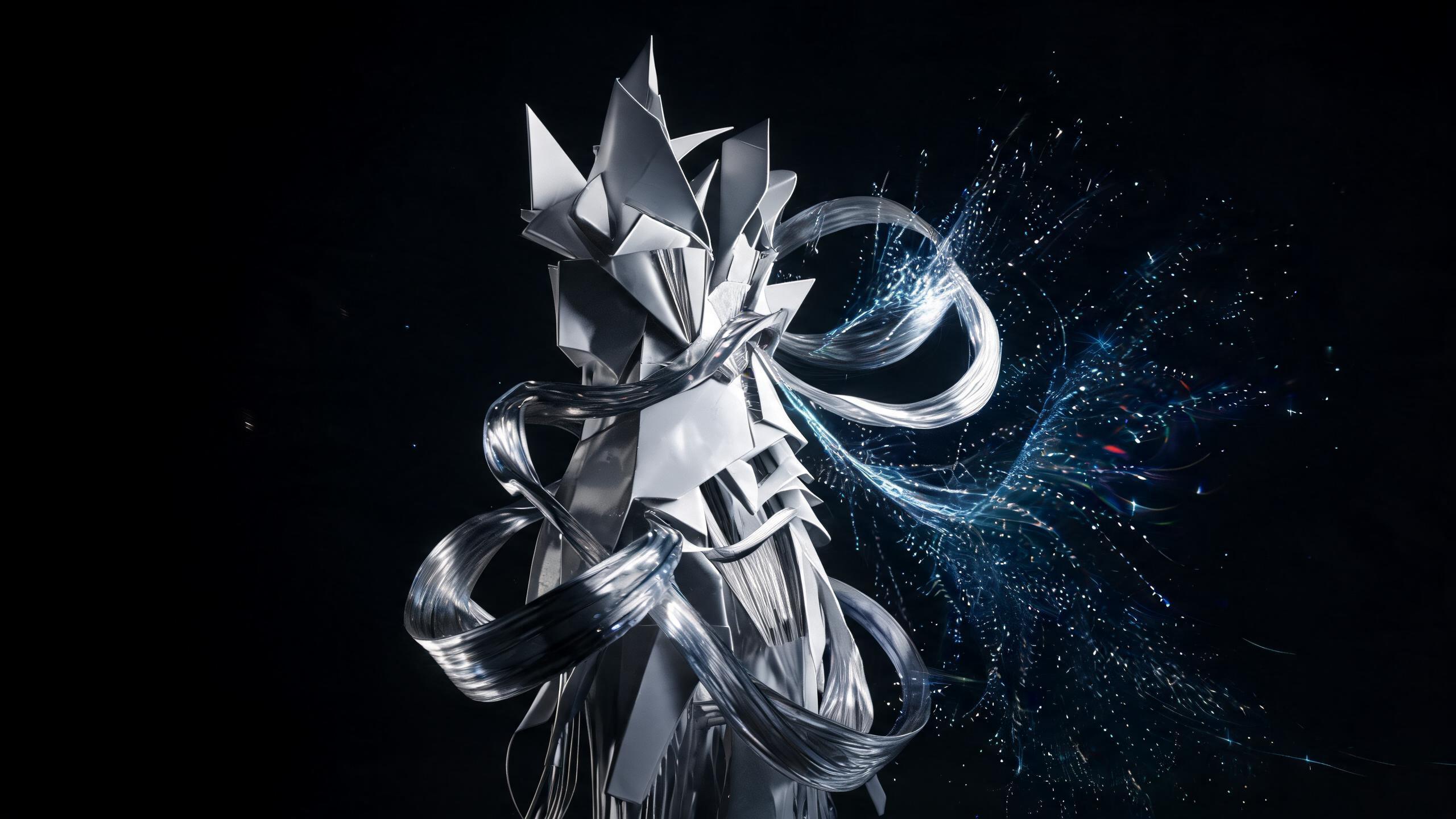
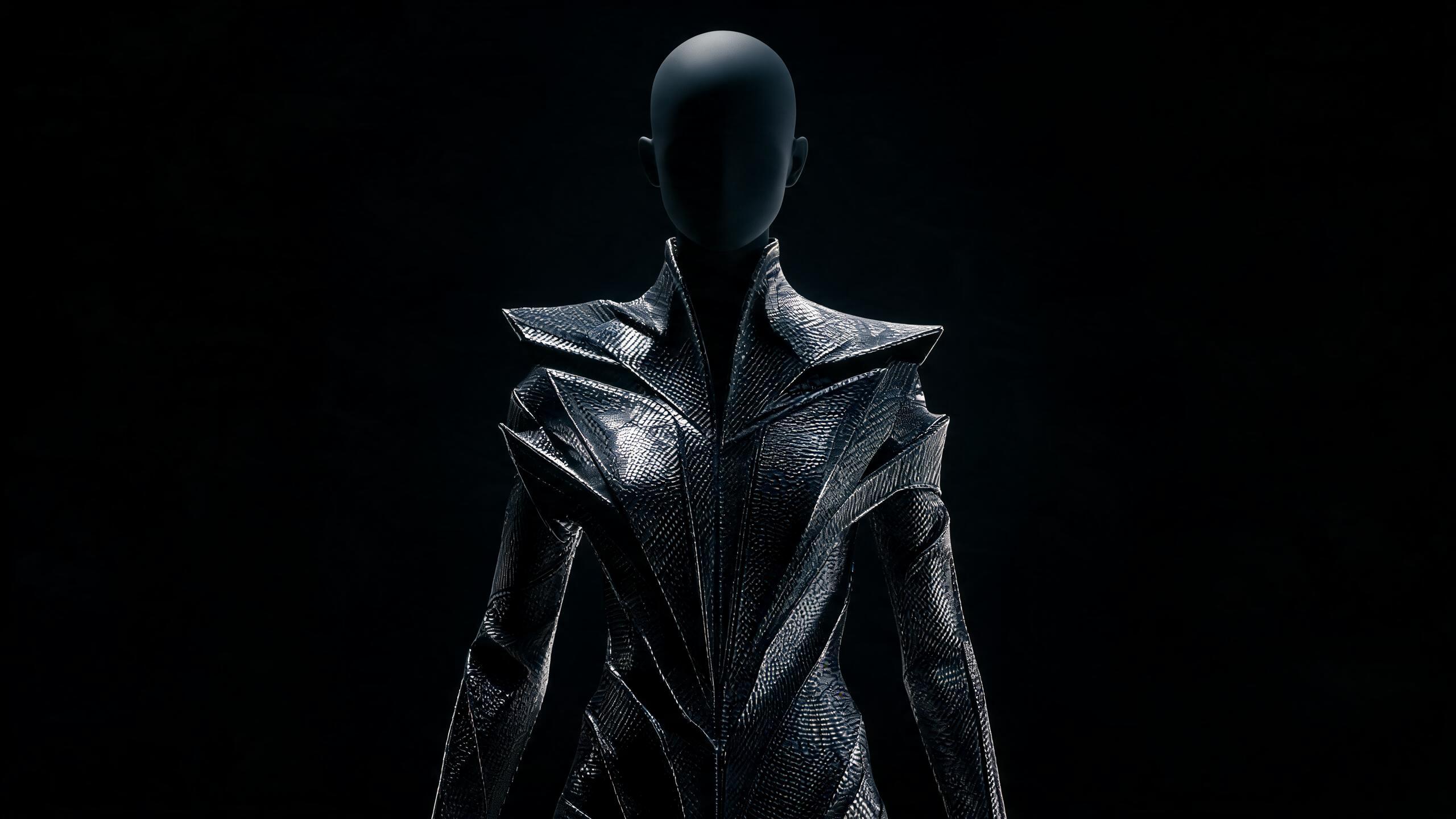
What Demna’s AI Accessory Prompts Reveal About Fashion’s Future

Explore how Demna’s AI-generated accessory concepts reshape creative direction, material experimentation, and the boundaries between digital prototypes and production.
Demna AI prompts for accessories are text instructions that direct generative-AI systems to visualize fashion accessories using Demna’s characteristic design language, including exaggerated proportions, irony, and streetwear references. Their significance lies in demonstrating how prompt-driven tools convert a designer’s aesthetic codes into repeatable digital concepts, compressing early accessory ideation from hours of manual sketching into minutes.
What Demna’s AI Accessory Prompts Reveal About Fashion’s Future
Key Takeaway: Demna’s AI accessory prompts reveal that fashion’s future lies in encoding a designer’s taste, cultural references, and material logic into precise creative direction—not simply generating images.
Demna’s AI accessory prompts reveal that fashion’s next advantage will come from encoding taste, not generating images.
The search for demna ai prompts for accessories signals a larger shift in how fashion knowledge travels. Designers, stylists, product teams, students, and image-makers are no longer searching only for references to bags, eyewear, jewelry, belts, or shoes. They are searching for a repeatable method for turning an aesthetic worldview into machine-readable instructions.
That distinction matters.
A conventional fashion reference shows an outcome. A prompt attempts to expose the system behind the outcome: proportion, material tension, visual disruption, context, styling logic, and the relationship between an object and the body. The prompt is not merely a request for an accessory image.
It is an attempt to reconstruct a design language.
The real news is not that AI can generate a striking accessory. Generative systems have been producing striking images for years. The important development is that fashion is beginning to treat prompts as creative infrastructure.
Demna’s influence makes this visible because his design language is unusually legible through contrast. Oversized against delicate. Familiar against distorted.
Ordinary against confrontational. Utility against theatricality. A Demna-inspired prompt can therefore function as a compact design brief, but only if it describes relationships rather than decorative adjectives.
This is where the current search wave becomes useful—and misleading.
Most people asking for demna ai prompts for accessories want a shortcut to an aesthetic. What they actually need is a framework for analyzing why an accessory feels specific, contemporary, and culturally charged. Copying surface cues produces a costume.
Modeling the underlying decisions produces a new object.
Our position is direct: AI will not make fashion more original by producing more images. It will make fashion more original by making taste explicit, testable, and continuously learnable.
What Happened With Demna, AI, and Accessory Prompts?
The current interest in Demna-oriented AI prompts reflects the convergence of three forces:
- Designers are using generative tools during early concept development.
- Search users are looking for named aesthetic systems rather than generic prompt formulas.
- Accessories have become ideal test objects for AI-assisted fashion ideation.
Accessories are particularly compatible with image generation because they can be isolated, repeated, styled, recolored, and compared without requiring an entire collection. A bag can be rendered across materials and scales. A shoe can be tested against different silhouettes.
A pair of sunglasses can shift the perceived identity of an entire look.
That makes accessories an efficient laboratory for style intelligence.
A prompt such as “futuristic black handbag” communicates very little. It identifies a category and a color, but not a point of view. A stronger prompt specifies the object’s behavioral role:
- Does the bag interrupt the silhouette or disappear into it?
- Is the material meant to look luxurious, industrial, synthetic, damaged, or ambiguous?
- Does the object appear functional, ceremonial, absurd, or hostile?
- Is the scale wearable, exaggerated, compressed, or deliberately inconvenient?
- Does it create tension with the clothing or complete the clothing’s logic?
These questions turn prompting into design analysis.
The name “Demna” acts as a compressed reference to a wider system of decisions. Yet the name alone is insufficient. A model can imitate recognizable visual signals without understanding the design problem.
It can generate a large black bag, distorted footwear, oversized eyewear, or logo-heavy styling while missing the more important issue: what contradiction is the accessory introducing?
That contradiction is often where the design lives.
Why Are Accessories the First Serious Prompting Test?
Clothing distributes meaning across many components. Accessories concentrate it.
A coat can communicate through cut, volume, closure, fabrication, and movement. An accessory must often communicate through a smaller set of variables:
- Silhouette
- Scale
- Material
- Attachment
- Surface treatment
- Relationship to the body
- Relationship to the rest of the look
Because those variables are concentrated, the output is easier to judge. A generated accessory either creates a compelling tension or collapses into a generic object.
This makes accessory prompting a useful diagnostic for AI systems. If a model can only produce “cool” accessories through familiar brand codes, it has not learned fashion intelligence. It has learned visual association.
The difference is critical:
| Approach | What it produces | Main weakness | What a stronger system does |
|---|---|---|---|
| Keyword prompting | Objects with broad aesthetic labels | Generic outputs and inconsistent direction | Converts taste into structured design constraints |
| Brand-name prompting | Outputs associated with a recognizable designer | Surface imitation and attribution risk | Extracts abstract principles without copying protected expression |
| Reference-image prompting | Variations near a visual source | Limited conceptual distance | Preserves relationships while exploring new forms |
| Iterative design prompting | A sequence of controlled experiments | Requires memory across generations | Tracks what the user accepts, rejects, and repeats |
| Personal style modeling | Recommendations aligned with one person’s taste | Needs richer feedback than likes | Learns stable preferences and changing context |
The search wave around demna ai prompts for accessories is therefore less about one designer and more about the limits of generic prompting. Users are asking for a name because names compress complexity. The next generation of tools must unpack that complexity.
Why Do Demna AI Accessory Prompts Matter Now?
Fashion AI has spent too long treating image generation as the final objective. That framing is incomplete.
An image is an output. A fashion system needs to understand the chain of decisions that produces the output.
Demna-oriented prompting matters now because it exposes the gap between visual resemblance and design intelligence. A generated accessory can resemble a known aesthetic while failing as a product concept. It can be visually dramatic but technically incoherent, commercially irrelevant, difficult to manufacture, or disconnected from the wearer’s actual wardrobe.
This is the same problem that affects recommendation engines. A platform can identify that a user clicked on oversized boots, dark sunglasses, and deconstructed bags. That does not mean it understands why the user liked them.
The system may confuse:
- Interest with purchase intent
- Novelty with preference
- Recognition with desire
- A single experiment with durable taste
- Aesthetic admiration with personal wearability
Fashion requires a model of intent, not merely a record of interaction.
A useful accessory prompt should therefore include at least four layers:
1. The Object Layer
This defines what is being created:
- Bag
- Shoe
- Belt
- Eyewear
- Jewelry
- Headwear
- Glove
- Technical accessory
2. The Formal Layer
This defines how the object behaves visually:
- Compressed or expanded
- Rigid or fluid
- Symmetrical or unstable
- Minimal or overloaded
- Familiar or ambiguous
- Integrated or detached from the body
3. The Material Layer
This defines the physical reading:
- Matte coated textile
- Molded polymer
- Polished metal
- Distressed leather
- Translucent resin
- Brushed technical fabric
- Unexpected composite
4. The Cultural Layer
This defines what the object implies:
- Institutional
- Domestic
- Protective
- Corporate
- Athletic
- Ceremonial
- Industrial
- Disposable
- Luxury-coded
- Anti-luxury
Weak prompts stop at the object layer. Strong prompts connect all four.
What Do Demna AI Prompts for Accessories Actually Teach Us?
The most valuable lesson is that style emerges from controlled conflict.
A recognizable design language rarely depends on one isolated feature. It depends on recurring tensions that remain coherent across products. In accessory design, these tensions can be translated into prompt logic without copying a specific product.
Consider the following design tensions:
- A delicate object rendered at an aggressive scale
- A formal object made from visibly utilitarian material
- A protective object that appears physically vulnerable
- A familiar category with an unfamiliar method of attachment
- A luxury form treated with industrial bluntness
- A functional object that becomes socially inconvenient
- A polished surface interrupted by evidence of use
- A minimal silhouette carrying excessive visual weight
These are not instructions to copy a runway item. They are abstract design operations.
That is the difference between style extraction and style imitation.
A prompt built around operations has more generative potential because it can produce multiple categories. The same tension can guide a bag, shoe, belt, or pair of glasses. A prompt built around surface descriptors tends to produce one recognizable image and then degrade into repetition.
Definition Box
Demna AI accessory prompting: A method of directing generative AI to explore accessories through contrasting proportions, materials, cultural references, and relationships to the body, rather than relying on a designer’s name as a shortcut for visual imitation.
This definition matters because the designer’s name should function as a research signal, not a substitute for thinking.
What Makes an Accessory Prompt Specific?
Specificity does not mean adding more adjectives. It means assigning a role to every meaningful constraint.
Compare these two prompts:
Generic:
Create a futuristic black handbag with a bold shape and high-fashion styling.
Structured:
Design a compact shoulder bag whose proportions feel too dense for its size. Use a matte technical surface interrupted by one polished metal component. The strap should attach in a way that makes the bag appear slightly misaligned with the torso.
Keep the silhouette severe and recognizable, but avoid literal references to existing luxury products. Style it with oversized outerwear and restrained footwear in a neutral urban setting. The object should feel functional at first glance and psychologically unsettling on closer inspection.
The second prompt does not guarantee a strong output. It does something more important: it establishes a testable hypothesis.
The designer can now ask:
- Did the object feel too dense?
- Was the attachment point visibly misaligned?
- Did the material contrast survive rendering?
- Did the styling support the accessory?
- Was the tension readable without explanation?
This creates a feedback loop.
👗 Retailers plug Alvin's Club in and see personalization land in weeks, not quarters. See how →
How Should You Build Demna-Inspired AI Accessory Prompts?
A useful prompt workflow moves from diagnosis to generation, then from generation to evaluation.
Step 1: Define the Accessory’s Contradiction
Start with the tension, not the category.
Examples:
- A protective bag that looks fragile
- A formal shoe with visibly aggressive construction
- A delicate necklace scaled like industrial hardware
- A practical belt that behaves like architectural structure
- A familiar tote made visually difficult to carry
This prevents the model from producing a generic category object.
Step 2: Set the Proportion System
Proportion is one of the strongest style signals in fashion.
Specify:
- Relation to the body
- Relation to the garment
- Width-to-height ratio
- Visual center of gravity
- Distance from the body
- Degree of exaggeration
- Whether the object compresses or expands the silhouette
Avoid vague language such as “oversized” unless you explain what becomes oversized and why.
For example:
A narrow vertical bag extending from hip to below the knee, creating a rigid interruption in a broad coat silhouette.
That instruction is more useful than “an oversized bag.”
Step 3: Assign Material Behavior
Material should not be treated as color plus texture. It should be described through behavior.
Ask:
- Does it hold a sharp edge?
- Does it collapse?
- Does it reflect the environment?
- Does it absorb light?
- Does it reveal stress?
- Does it appear soft but behave rigidly?
- Does it look expensive, disposable, clinical, or improvised?
A strong material instruction might read:
Use a coated textile with a dry, light-absorbing surface, but place one highly reflective structural insert where the object bends.
This establishes contrast and a physical event.
Step 4: Define the Relationship to the Body
An accessory becomes fashion when it changes how the body is read.
Specify whether it:
- Extends the body
- Conceals part of the body
- Distracts from the body
- Frames the face
- Distorts posture
- Creates asymmetry
- Restricts movement
- Appears attached through an unexpected point
The body relationship should be intentional, even when the object is presented in a product-only image.
Step 5: Control the Styling Context
The same accessory can communicate different ideas depending on styling.
State:
- Garment volume
- Color temperature
- Footwear attitude
- Background architecture
- Lighting
- Pose
- Camera distance
- Degree of editorial abstraction
If the object is meant to feel socially disruptive, an overly polished studio setup can neutralize it. If it is meant to feel like a product prototype, excessive editorial drama can hide its construction.
Step 6: Add Exclusions
Negative constraints are essential because image models default toward familiar fashion signals.
Useful exclusions include:
- No recognizable logos
- No direct reproduction of existing products
- No generic futuristic chrome
- No ornamental excess without function
- No symmetrical product layout
- No conventional luxury campaign styling
- No decorative hardware added only for visual noise
Exclusions are not anti-creative. They preserve the design hypothesis.
Step 7: Generate in Families, Not Singular Images
One image invites attachment to an accident. A family of outputs reveals the design system.
Generate variations across:
- Scale
- Attachment
- Material
- Wearability
- Styling context
- Color restraint
- Degree of distortion
The goal is not to choose the prettiest image. The goal is to identify which variables consistently produce the intended effect.
Step 8: Record Decisions
A serious AI workflow needs memory.
For each iteration, record:
- What changed
- What improved
- What failed
- Which feature became generic
- Which feature created identity
- Whether the object remained coherent across views
- Whether the idea belongs to the accessory or only to the image
This is where prompting becomes a design system instead of a sequence of disconnected experiments.
Our earlier analysis of Demna’s seven-step AI workflow for fashion product development develops this principle further: AI works best when it supports a sequence of decisions rather than replacing the decision-maker.
What Is an Effective Prompt Framework for Accessories?
The following framework can be reused across categories while preserving a distinct design position.
Prompt Architecture
- Category: What is the object?
- Contradiction: What tension defines it?
- Proportion: How does it alter the silhouette?
- Material behavior: How does its surface and structure behave?
- Attachment: How does it connect to the body?
- Cultural reference: What world does it imply?
- Styling context: What makes the idea legible?
- Exclusions: What familiar solutions must be avoided?
- Evaluation criterion: What must the output prove?
Example: Bag
Create a compact crossbody bag built around the contradiction of protection and exposure. The body should be rigid and architectural, while one side reveals a vulnerable folded seam. Use a matte black technical material with a single translucent panel that exposes no contents but suggests transparency.
Position the strap attachment slightly above the natural center of gravity so the bag sits with controlled instability. Style it against oversized neutral outerwear with flat, severe footwear. Avoid logos, ornamental chains, conventional quilted luxury codes, and generic cyberpunk styling.
The final object must feel immediately functional but visually difficult to classify.
Example: Eyewear
Design narrow protective eyewear that appears engineered for a task unrelated to fashion. Use a continuous smoked lens with a blunt matte frame and one visible structural interruption at the bridge. The silhouette should compress the face rather than enlarge it.
Pair it with an oversized tailored coat and minimal jewelry. Avoid sportswear references, mirrored surfaces, decorative branding, and exaggerated futuristic geometry. The object must change the perceived attitude of the wearer without becoming theatrical.
Example: Shoe
Create a low-profile shoe with the visual authority of industrial equipment and the comfort logic of everyday footwear. Use a dense rubber sole that extends beyond the upper in one direction, creating a subtle imbalance. The upper should be plain, almost anonymous, with one unexpected fastening mechanism.
Keep the palette near-black and gray. Avoid recognizable sneaker panels, visible logos, exaggerated technical details, and trend-coded color blocking. The shoe must appear ordinary from a distance and structurally strange up close.
Example: Jewelry
Design a single neck object that treats jewelry as a rigid protective device. Use a cold, non-reflective material with one polished edge that catches light only when the wearer moves. Keep the form close to the neck but avoid delicate ornament.
The object should create a slight visual interruption between skin and garment. Style it with a large soft coat and a plain knit. Avoid gemstones, conventional chains, ornamental repetition, and historical costume references.
The piece must feel personal, defensive, and difficult to categorize.
What Is the Difference Between a Prompt and a Personal Style Model?
A prompt is an instruction. A personal style model is a memory system.
This distinction separates AI-assisted image production from AI-native fashion intelligence.
A prompt tells a model what to generate now. A personal style model stores evidence about what a person repeatedly chooses, rejects, tolerates, saves, wears, and abandons. It can distinguish between a user’s aspirational taste and practical behavior.
That difference becomes decisive when accessories enter the wardrobe.
A person may save sculptural bags but wear only compact crossbody styles. They may admire severe eyewear but reject anything that limits peripheral vision. They may respond positively to exaggerated shoes in editorial imagery but consistently choose low-profile footwear for daily use.
A useful system should not flatten those signals into “likes black accessories.”
It should understand:
- Aesthetic preference: What attracts attention
- Functional preference: What survives actual use
- Context preference: What works for specific environments
- Risk tolerance: How much novelty feels acceptable
- Silhouette preference: What proportions feel right on the body
- Material preference: What surfaces feel credible or desirable
- Temporal preference: What remains appealing after novelty fades
Key Comparison: Prompting Versus Style Intelligence
| Dimension | One-off prompting | Personal style model |
|---|---|---|
| Main purpose | Generate an image or concept | Understand and predict individual taste |
| Memory | Usually limited to the current session | Accumulates feedback across interactions |
| User input | Explicit text instruction | Text, images, behavior, wardrobe, context, feedback |
| Output | A visual possibility | A ranked recommendation or evolving design direction |
| Treatment of contradiction | Often accidental | Modeled as part of the user’s taste |
| Adaptation | Manual prompt revision | Continuous learning from acceptance and rejection |
| Success metric | Visual appeal | Relevance, use, satisfaction, and repeat alignment |
| Main failure | Generic or derivative output | Misreading identity, context, or changing preference |
The future of fashion AI depends on combining both.
Prompts are useful because they expose creative intent. Personal models are useful because they expose individual consistency. Together, they create a system that can generate ideas without losing the person.
Why Does Generic Personalization Fail in Fashion?
Fashion platforms often describe personalization as if it were a solved problem. It is not.
A recommendation engine that shows products based on clicks and purchases can optimize engagement while misunderstanding style. A user’s history contains many reasons for interaction:
- Research
- Comparison
- Gift shopping
- Temporary curiosity
- Editorial interest
- Price monitoring
- Social influence
- Genuine desire
- Practical necessity
Treating every signal as equal produces distorted taste profiles.
This is particularly visible with accessories because accessory purchases are episodic and context-dependent
Summary
- Demna’s AI accessory prompts show that fashion’s next advantage may come from encoding taste and design logic rather than simply generating images.
- Searches for demna ai prompts for accessories reflect growing demand for repeatable methods that translate an aesthetic worldview into machine-readable instructions.
- Unlike conventional references, prompts can expose an accessory’s proportions, materials, disruption, context, styling logic, and relationship to the body.
- Demna’s design language is especially adaptable to prompts because it relies on clear contrasts, including oversized versus delicate, familiar versus distorted, and utility versus theatricality.
- The demna ai prompts for accessories trend suggests that fashion is beginning to treat prompts as creative infrastructure and compact design briefs.
Key Takeaways
- Key Takeaway:
- demna ai prompts for accessories
- creative infrastructure
- AI will not make fashion more original by producing more images. It will make fashion more original by making taste explicit, testable, and continuously learnable.
- what contradiction is the accessory introducing?
Frequently Asked Questions
What are Demna AI prompts for accessories?
Demna AI prompts for accessories are detailed text instructions that translate a distinct fashion viewpoint into concepts for bags, eyewear, jewelry, belts, and shoes. They typically define shape, materials, proportions, styling, mood, and visual references rather than simply naming an accessory.
How do Demna AI prompts for accessories shape fashion design?
Demna AI prompts for accessories shape fashion design by encoding taste, tension, and context into a repeatable creative process. This helps designers generate concepts that feel intentional and connected to a broader visual language.
Can you use Demna AI prompts for accessories in Midjourney?
You can use Demna AI prompts for accessories in Midjourney by adapting descriptive details into a clear image-generation prompt. Add information about composition, lighting, materials, silhouette, styling, and aspect ratio to produce more controlled results.
Why does Demna’s approach to AI matter for fashion’s future?
Demna’s approach matters because it suggests that fashion’s advantage will come from directing AI with strong creative judgment rather than generating random images. The most valuable prompts communicate a recognizable point of view that can guide products, campaigns, and visual development.
Is it worth learning Demna AI prompts for accessories?
Learning Demna AI prompts for accessories is worthwhile for designers, stylists, students, and image-makers who want a repeatable way to explore accessory concepts. The skill is most useful when prompts are treated as a method for expressing taste, not as a shortcut to finished design.
Related on Alvin's Club
About the author
Building the AI fashion agent at Alvin's Club — personal style models, dynamic taste profiles, and private AI stylists. Writing about where AI meets fashion commerce.
Credentials
- Founder at Alvin's Club (Echooo E-Commerce Canada Ltd.)
- Writes weekly on AI × fashion at blog.alvinsclub.ai
X / @alvinsclub · LinkedIn · alvinsclub.ai
This article is part of Alvin's Club's AI Fashion Intelligence series — the AI fashion agent that influences demand before shopping happens.
Related Articles
- Demna AI Prompt Examples for Creating Distinctive Clothing
- 7 Steps in Demna’s AI Workflow for Fashion Product Development
- Demna, AI and the Copyright Fault Line in Fashion
- How Demna’s AI Fashion Moodboard Generator Solves Creative Block
- How Demna Uses AI to Solve Virtual Garment Prototyping Challenges
- How Demna AI Turns Fashion Ideas Into Complete Outfit Concepts
- How AI Is Revolutionizing Personal Fashion
- The Ultimate Virtual Try-on AI Accuracy Compared To Real Fitting Style Guide
- Traditional vs AI-Powered Fulham Vs Tottenham: Which Approach Wins?
- Traditional vs AI-Powered Man United Vs Crystal Palace: Which Approach Wins?
- Traditional vs AI-Powered Best AI Wardrobe Assistant For Organizing Your Clothes: Which Approach Wins?
- The Ultimate Personalized AI Fashion Assistant Vs Manual Style Boards Style Guide