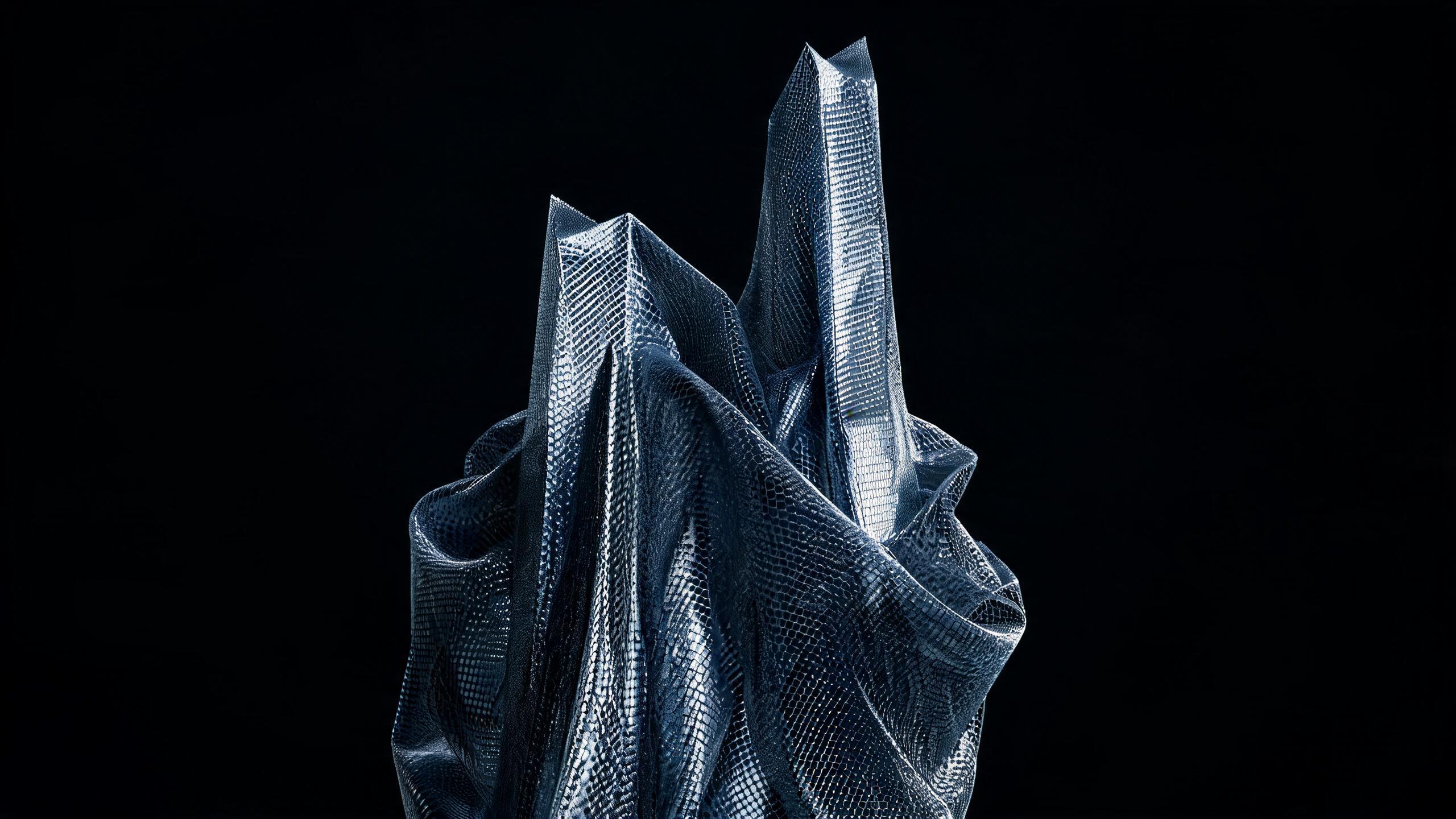
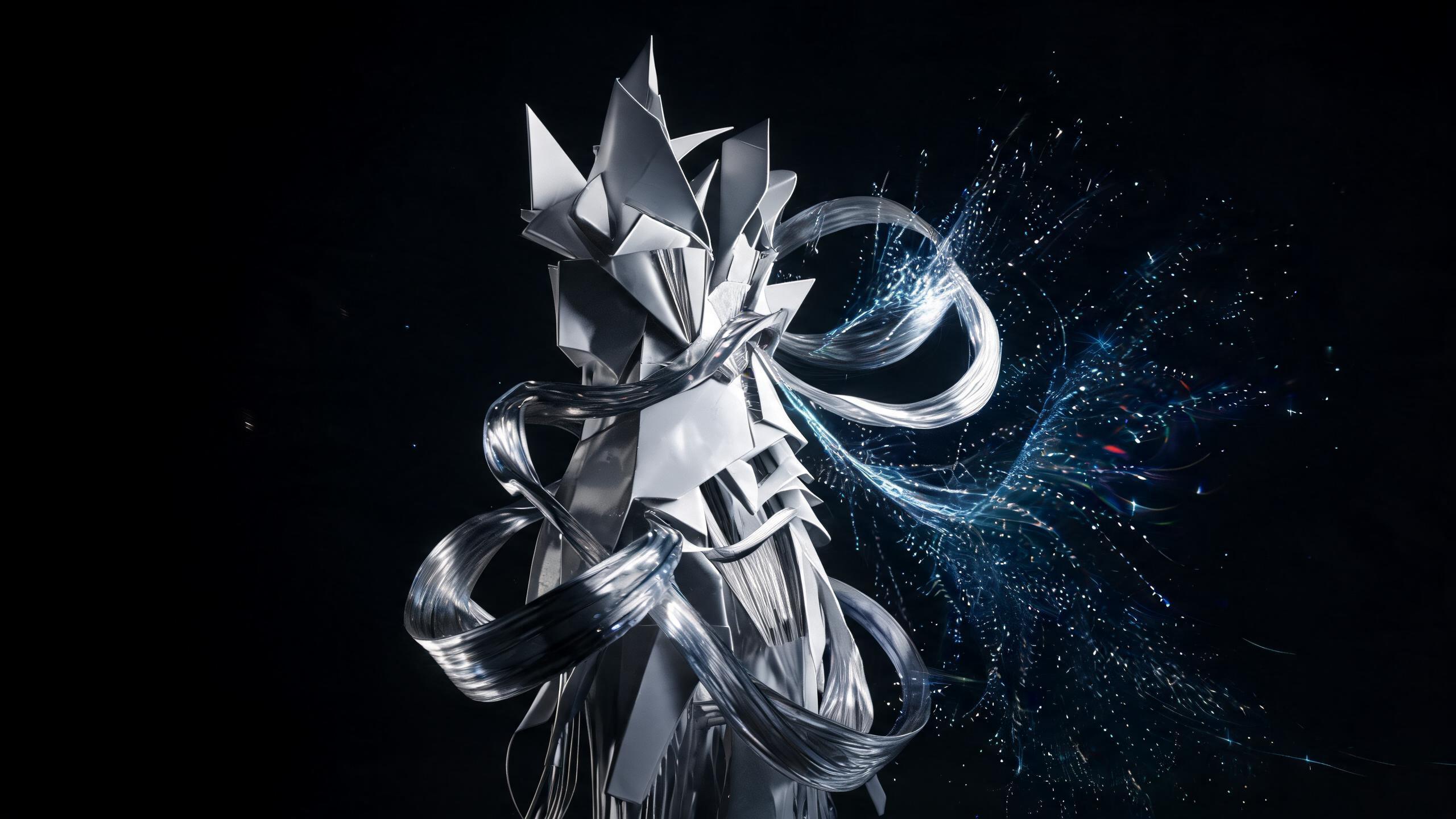
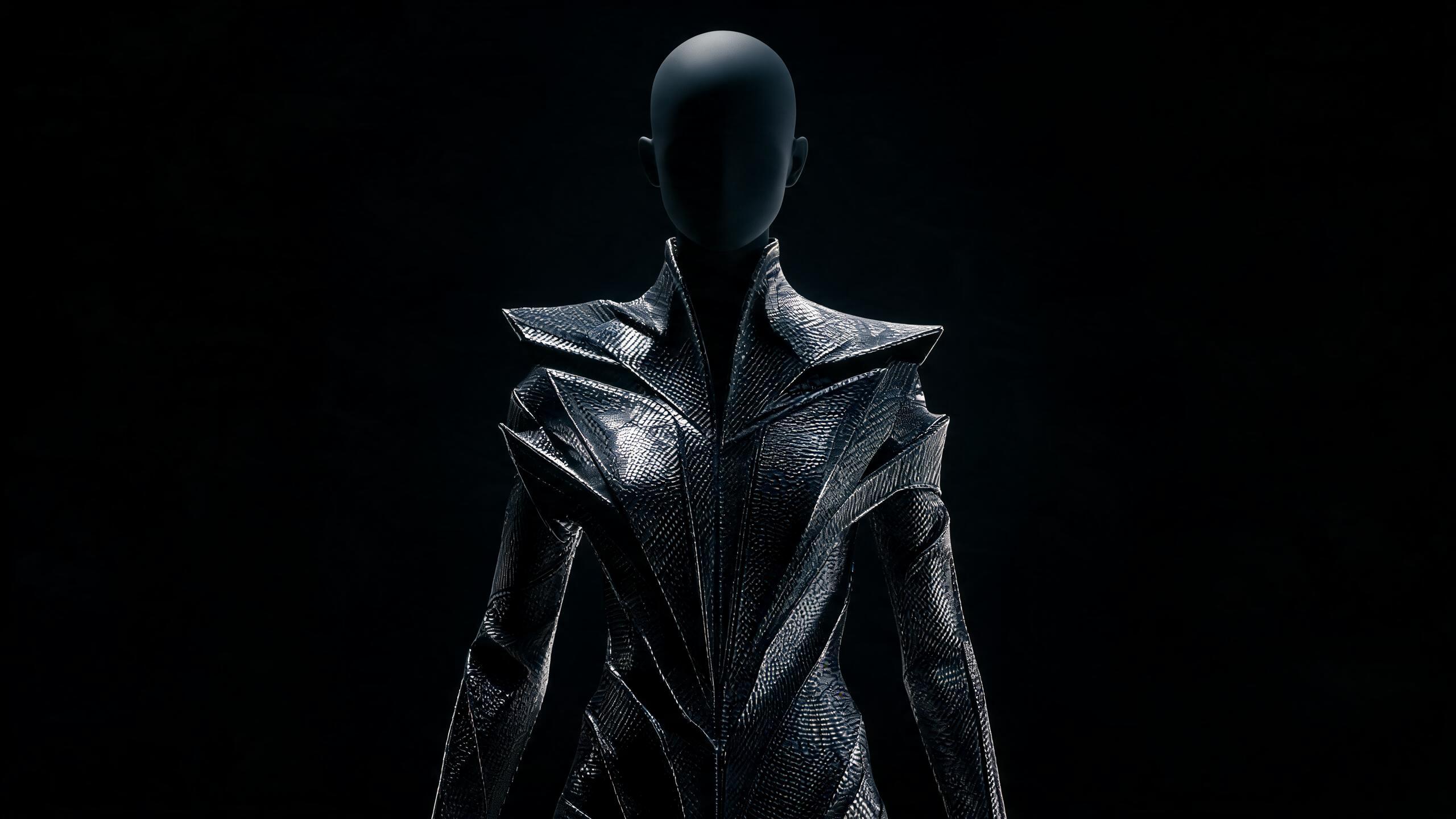
How Demna Uses AI to Solve Virtual Garment Prototyping Challenges

Discover how Demna AI streamlines digital sampling, refines silhouettes, and reduces costly iterations before virtual designs reach production.
Demna AI virtual garment prototyping is the use of artificial intelligence to generate, visualize, and refine digital clothing designs before physical samples are produced. It addresses fit, drape, material, and construction challenges by accelerating iteration and reducing reliance on costly physical prototypes, with digital workflows enabling designers to evaluate multiple variations in minutes rather than weeks.
How Demna Uses AI to Solve Virtual Garment Prototyping Challenges
Key Takeaway: Demna AI virtual garment prototyping uses AI to translate design intent into testable digital garments, helping teams evaluate silhouette, construction, and material behavior before creating physical samples while preserving creative authorship.
Demna AI virtual garment prototyping is a workflow that converts design intent into testable digital garments before physical sampling begins. The core challenge is not generating attractive fashion images; it is preserving silhouette, construction, material behavior, and creative authorship across every stage of product development.
Virtual garment prototyping promises to reduce waste, shorten development cycles, and help designers evaluate more alternatives before committing to fabric, labor, and factory capacity. Yet most systems still treat clothing as a flat image problem. They generate a convincing front view, but fail to represent what makes a garment real: seam logic, tension, weight, drape, fit, movement, and manufacturing constraints.
Demna’s approach addresses this gap by treating AI as a design reasoning layer, not a moodboard generator. The system begins with a creative brief, translates visual references into structured garment attributes, simulates construction and material behavior, evaluates the result against the original intent, and stores feedback for future iterations.
This distinction matters because virtual prototyping only creates value when the digital garment remains useful after the image is generated. A beautiful render that cannot inform patternmaking, costing, fitting, or production is not a prototype. It is a visual suggestion.
What Is the Core Problem in Virtual Garment Prototyping?
The core problem is that most virtual garment systems optimize for visual plausibility instead of product fidelity.
A generated image can appear to show a tailored jacket, a sculptural coat, or a layered knit. But appearance alone does not confirm whether the garment has:
- A coherent pattern structure
- Realistic seam placement
- Correct fabric weight
- Plausible tension and compression
- Accurate fit across different bodies
- Manufacturable closures and finishes
- Stable proportions across views
- Consistent behavior in motion
Traditional fashion development already separates these concerns across multiple tools and teams. Designers work with sketches and references. Patternmakers translate ideas into two-dimensional pieces.
Technical designers define construction details. Sample rooms produce physical garments. Fit teams assess the result on bodies.
Merchandising and production teams then evaluate cost, material availability, and scale.
AI-generated fashion imagery often collapses this entire chain into one visual output. That creates speed at the beginning and ambiguity everywhere else.
Virtual garment prototyping: The digital creation and evaluation of a garment’s silhouette, construction, material behavior, and fit before physical sampling or production.
A valid virtual prototype must do more than resemble a garment. It must function as a shared object between creative direction, technical development, fitting, and production.
Why Does Demna AI Virtual Garment Prototyping Matter?
Demna’s work is useful as a reference point because the design language depends heavily on proportion, distortion, surface treatment, layering, and controlled tension. These characteristics are difficult to describe through generic fashion prompts.
A prompt such as “oversized black coat with exaggerated shoulders” does not contain enough information to reproduce a specific design intention. It leaves unresolved questions:
- How far do the shoulders extend beyond the natural body?
- Does the volume come from padding, internal structure, or fabric stiffness?
- Does the coat taper toward the hem or remain rectangular?
- Where does the collar begin relative to the shoulder line?
- How does the sleeve attach to the armhole?
- Is the fabric dense enough to hold the shape?
- Does the garment remain dramatic when viewed from the side?
- Can the silhouette be built without collapsing during movement?
Demna AI virtual garment prototyping treats these questions as structured variables. The system does not simply ask an image model to imitate a reference. It decomposes the design into a set of linked decisions that can be changed independently.
For example, an oversized coat can be represented through:
| Design layer | Variables the system must preserve |
|---|---|
| Silhouette | Shoulder width, body volume, hem shape, length, taper |
| Construction | Panel lines, seams, darts, vents, closures |
| Material | Weight, stiffness, elasticity, surface reflectivity |
| Fit | Ease, armhole depth, sleeve pitch, body balance |
| Styling | Layering, footwear, accessories, posture |
| Production | Fabric yield, seam complexity, finishing requirements |
| Evaluation | Front, side, back, motion, and body-size consistency |
This structure creates a critical shift. The AI stops acting like a content generator and starts acting like a fashion development system.
Why Do Common Virtual Prototyping Approaches Fail?
Image Generation Confuses Appearance With Construction
Image-generation systems are excellent at producing visual coherence. They are not automatically reliable at preserving garment engineering.
A model may generate a jacket with a convincing lapel from the front, then alter the lapel shape in the side view. It may introduce extra pockets, remove a vent, change the sleeve attachment, or produce different button spacing in each output. The image looks plausible in isolation, but the garment fails as a consistent object.
This happens because the model predicts pixels, not pattern pieces. It does not inherently understand that a collar must connect to a neckline, that a sleeve must attach to an armhole, or that a pocket opening must maintain a stable relationship to the garment’s body.
The problem becomes more severe when the design includes unusual proportions. Conventional garments contain visual patterns that image models have seen repeatedly. Distorted or highly specific silhouettes require the system to preserve relationships that are less common in training data.
Single-View Generation Hides Structural Errors
A front-facing image can conceal errors in depth, balance, and construction.
A coat may look oversized from the front while remaining narrow through the side. A skirt may appear fluid while having no credible volume distribution. A sleeve may look sculptural but fail to connect naturally to the shoulder.
These errors appear when the garment is rotated, placed on another body, or shown in motion.
Virtual prototyping therefore requires multi-view consistency as a core capability. The system must generate and compare:
- Front view
- Back view
Side view 4. Three-quarter view 5. Seated or walking position 6.
Layered styling context 7. Multiple body proportions
If each view is generated independently, the system creates a collection of related images rather than one garment.
Generic Prompts Flatten Design Identity
Prompt-based workflows tend to produce the language of fashion without preserving the designer’s reasoning.
Words such as “deconstructed,” “architectural,” “minimal,” or “oversized” carry different meanings depending on the designer, collection, material, and context. A generic model often translates them into familiar visual conventions. The result may look fashionable while losing the exact tension that made the initial concept distinctive.
This is why AI styling and AI product development require more than vocabulary. They require a persistent model of intent.
The system must remember that a designer prefers:
- A specific shoulder-to-waist relationship
- Controlled asymmetry instead of random asymmetry
- Volume concentrated in one area
- Surface contrast between matte and reflective materials
- A particular relationship between tailoring and distortion
- Repetition of certain construction motifs
- Specific limits on ornament, color, or hardware
Without this memory, every generation starts from zero.
2D Sketches Do Not Contain Enough Manufacturing Information
A sketch communicates emphasis, not necessarily construction.
The drawing may show a long vertical seam, but not indicate whether it is a princess seam, a panel join, or a decorative line. It may show volume without revealing how that volume is supported. It may represent an unusual hem but omit the internal facing, reinforcement, or closure required to produce it.
AI can infer missing details, but inference is not the same as design authority. If the system silently invents construction, it can create a visually attractive prototype that misrepresents the designer’s intention.
The solution is to make missing information explicit. The AI should identify uncertainty, propose alternatives, and ask for a decision rather than hide ambiguity inside a polished image.
Physical Sampling Arrives Too Late in the Process
Physical samples remain essential because cloth behaves differently from a digital approximation. However, physical sampling is an expensive and slow way to discover basic design errors.
A first sample can reveal that:
- The shoulder volume overwhelms the wearer
- The fabric cannot support the intended shape
- A sleeve restricts movement
- The front closure pulls incorrectly
- The hem twists
- The layering creates unwanted bulk
- A detail is too complex for the target cost
Virtual prototyping cannot replace physical fitting, but it can move many low-value decisions earlier. The goal is not to eliminate reality. The goal is to reserve physical sampling for decisions that genuinely require physical evidence.
👗 Retailers plug Alvin's Club in and see personalization land in weeks, not quarters. See how →
What Are the Root Causes Behind These Failures?
Fashion Data Is Fragmented Across Representations
Fashion information exists in incompatible forms:
- Sketches
- Technical flats
- Measurement charts
- Pattern files
- Fabric specifications
- Sample photographs
- Fit comments
- Product descriptions
- Sales feedback
- Returns data
- Stylist notes
- Customer behavior
A typical AI system sees only a portion of this information. It may receive an image and prompt, but not the measurement logic or fitting history behind the garment.
A reliable virtual prototyping system needs a unified garment representation. This representation should connect visual, geometric, material, and commercial information.
The same garment attribute should be traceable across the workflow. For example:
- “Extended shoulder” in the creative brief
- Shoulder point coordinates in the digital pattern
- Sleeve pitch in the technical specification
- Ease allowance in the fit model
- Fabric support requirement in material selection
- Fit feedback from the physical sample
When these objects remain disconnected, AI can generate outputs but cannot reason over the full product.
Fabric Is Not a Texture Layer
Many digital fashion workflows treat material as a surface image applied to a shape. That approach ignores mechanical behavior.
Fabric properties influence:
- Drape
- Recovery
- Stretch
- Compression
- Wrinkling
- Friction
- Shear
- Bending
- Reflection
- Thermal bulk
- Edge behavior
A stiff wool and a fluid viscose can share the same color and pattern while producing radically different silhouettes. A transparent mesh and a dense jersey can occupy the same region but require different layering and finishing decisions.
Material intelligence therefore needs two linked layers:
- Visual material identity: color, weave, texture, reflectivity, transparency
- Physical material behavior: weight, stiffness, stretch, recovery, bending, drape
A digital garment that captures only the first layer is a rendering, not a reliable prototype.
Fit Is Relational, Not Absolute
Fit cannot be represented by one body measurement or one avatar.
A garment’s fit depends on the relationship between:
- Body geometry
- Garment geometry
- Ease distribution
- Posture
- Movement
- Layering
- Fabric behavior
- Intended silhouette
An oversized jacket may be intentionally loose through the torso but precise at the neck and cuff. A fitted dress may allow ease at the hip while maintaining tension across the bust. A sculptural garment may deliberately depart from anatomical alignment.
AI needs to distinguish design intent from fit error. A large shoulder is not necessarily a mistake. A sleeve that cannot move is.
A collapsed hem may be intentional in a soft fabric but unacceptable in a structured one.
Feedback Is Usually Unstructured
Fit comments often arrive as informal notes:
- “Too tight in the arm”
- “Make it more dramatic”
- “The back feels heavy”
- “Shoulder needs to sit higher”
- “Reduce bulk at the waist”
These statements contain valuable information, but they are difficult for a model to reuse unless translated into structured attributes.
A learning system should convert feedback into categories such as:
| Feedback type | Example interpretation |
|---|---|
| Measurement | Increase bicep ease |
| Proportion | Raise shoulder line |
| Material | Use a stiffer fabric |
| Construction | Rework sleeve attachment |
| Styling | Reduce lower-layer volume |
| Intent | Preserve exaggerated shoulder effect |
| Comfort | Reduce restriction during arm movement |
This translation creates a memory that can improve future outputs.
How Should Demna AI Virtual Garment Prototyping Work?
The solution is a staged workflow that separates creative interpretation, garment construction, simulation, evaluation, and learning.
Step 1: Convert the Brief Into a Design Specification
The first step is not image generation. It is brief parsing.
The AI should extract the design intent into explicit fields:
- Primary silhouette
- Secondary silhouette
- Proportion priorities
- Construction signatures
- Material direction
- Color relationships
- Layering order
- Intended movement
- Non-negotiable details
- Acceptable variations
- Prohibited interpretations
A useful brief has both positive and negative constraints.
Positive constraints describe what must appear:
- Extended shoulder line
- Long vertical body
- High neck
- Controlled asymmetry
- Matte outer shell
- Visible front closure
Negative constraints describe what must not appear:
- No decorative quilting
- No rounded sportswear shoulder
- No cropped proportion
- No random hardware
- No excessive surface graphics
Negative constraints are essential because generative systems tend to add familiar fashion signals when the brief is underspecified.
Step 2: Build a Personal or Project-Specific Style Model
A style model should represent more than an image archive. It should encode recurring relationships.
For a Demna-oriented workflow, the model might track:
- Preferred silhouette distortion
- Repeated use of volume
- Relationship between concealment and exposure
- Tailoring references
- Treatment of familiar garments
- Preferred color restraint
- Use of contrast
- Degree of deconstruction
- Balance between recognizability and estrangement
The model should separate style invariants from collection variables.
| Style invariant | Collection variable |
|---|---|
| Preference for strong proportion shifts | Seasonal color palette |
| Controlled tension between familiar and strange | Fabric selection |
| Emphasis on silhouette | Specific garment category |
| Deliberate volume placement | Print or surface treatment |
| Clear visual hierarchy | Collection-specific styling |
This prevents the system from copying a single past look. It learns the logic beneath the look.
The same principle appears in broader AI fashion development. The 7 Steps in Demna’s AI Workflow for Fashion Product Development describes how a structured AI workflow can connect concept development with product decisions rather than treating ideation as an isolated image task.
Step 3: Generate Garment Architecture Before Surface Detail
The system should create a structural blockout before adding texture, print, or styling.
The blockout defines:
- Body volume
- Shoulder geometry
- Sleeve architecture
- Neckline
- Hemline
- Closure position
- Major panels
- Layering order
- Approximate ease
At this stage, the output should look intentionally plain. That is a feature, not a weakness. Surface detail can distract reviewers from structural errors.
A practical review sequence is:
- Review silhouette in a neutral material
- Review construction lines
Review multi-view consistency 4. Review motion and posture 5. Add material behavior 6.
Add color and surface treatment 7. Add styling context
This order mirrors how product decisions affect one another. If the silhouette is wrong, a more realistic texture only makes the wrong decision harder to see.
Step 4: Map Digital Construction to Pattern Logic
A virtual prototype becomes more useful when its geometry is connected to pattern logic.
The AI does not need to replace a patternmaker. It needs to expose the relationship between the visual concept and the construction system.
For each major design element, the system should identify a plausible construction method.
| Visual intention | Possible construction logic |
|---|---|
| Extended shoulder | Pad, internal support, shaped sleeve head, layered panel |
| Cocoon body | Curved side seams, controlled ease, shaped hem |
| Asymmetric front | Offset closure, overlapping panels, irregular dart system |
| Sculptural sleeve | Volume block, gathered cap, internal support, engineered seam |
| Draped front | Bias panel, pleat system, soft overlay, controlled fullness |
| Distorted hem | Uneven pattern edge, shaped facing, weighted finish |
The system should present these as alternatives rather than pretending that one inferred method is correct.
A human technical expert can then select the preferred route. That decision becomes training data for future projects.
Step 5: Simulate Material Behavior
Once the architecture is stable, the system should simulate material behavior.
A useful material profile includes:
- Fiber or material family
- Weight category
- Stretch direction
- Recovery behavior
- Bending stiffness
- Surface friction
- Transparency
- Reflectance
- Wrinkle tendency
- Edge stability
- Shrinkage risk
- Layer interaction
Material simulation should evaluate the garment in several contexts:
- Standing posture
- Walking posture
- Seated posture
- Arm movement
- Layered styling
- Close-up surface view
- Side and back views
The goal is not perfect prediction. The goal is to identify decisions that require physical validation.
This distinction keeps AI in the correct role. It can rank risks, expose inconsistencies, and suggest alternatives. It should not convert uncertain simulation into false certainty.
Step 6: Test the Prototype Across Bodies and Poses
A garment that works on one avatar may fail across the intended size range.
The system should test:
- Different heights
- Different shoulder widths
- Different torso lengths
- Different hip-to-waist relationships
- Different postures
- Different movement patterns
- Different layering configurations
The evaluation must preserve the intended silhouette while identifying where the garment loses balance.
A useful test asks two separate questions:
- Does the garment remain recognizably the same design?
- Does the garment remain wearable and technically coherent?
These questions should not be merged. A design can preserve its identity while producing fit problems, and a technically stable garment can lose its identity through over-standardization.
For readers comparing digital fit tools, the article The Ultimate Virtual Try-on AI Accuracy Compared To Real Fitting Style Guide offers a useful distinction between visual try-on confidence and real fitting evidence. The same distinction applies to virtual prototyping.
Step 7: Create an Evaluation Loop With Explicit Scoring
AI needs an evaluation framework that reflects fashion priorities.
A prototype can be reviewed across these dimensions:
| Evaluation dimension | Core question |
|---|---|
| Intent fidelity | Does the output preserve the brief? |
| Silhouette | Is the proportion intentional and stable? |
| Construction | Are seams, closures, and joins plausible? |
| Material behavior | Does the textile support the shape? |
| Fit | Does the garment balance across bodies and poses? |
| Consistency | Is it the same garment across views? |
| Production readiness | Can the concept move toward sampling? |
| Distinctiveness | Does it avoid generic model outputs? |
A simple qualitative scale can classify each dimension as:
- Ready for next-stage development
- Requires targeted revision
- Requires structural rework
- Insufficient evidence
The system should also record the reason behind each rating. “Silhouette failed” is less useful than “shoulder volume is correct from the front but collapses in side view because the body lacks supporting structure.”
Step 8: Use Human Review as Training Data
Human review should not disappear into a comment thread.
Every approved or rejected output can teach the system:
- Which silhouette variations were accepted
- Which construction methods were preferred
- Which material substitutions preserved intent
- Which fit problems were tolerated
- Which details were consistently removed
- Which
Summary
- Demna AI virtual garment prototyping translates creative intent into testable digital garments before physical sampling begins.
- The approach treats AI as a design-reasoning layer that structures briefs, references, construction details, material behavior, and iterative feedback.
- Unlike image-generation systems focused on attractive front views, the workflow accounts for seam logic, tension, weight, drape, fit, movement, and manufacturing constraints.
- Virtual prototypes create value only when they support patternmaking, costing, fitting, and production rather than serving solely as visual suggestions.
- The workflow can reduce material waste and development time by enabling designers to evaluate more garment alternatives before committing physical resources.
Key Takeaways
- Key Takeaway:
- Demna AI virtual garment prototyping is a workflow that converts design intent into testable digital garments before physical sampling begins.
- design reasoning layer
- Virtual garment prototyping:
- fashion development system
Frequently Asked Questions
What is Demna AI virtual garment prototyping?
Demna AI virtual garment prototyping uses artificial intelligence to turn design concepts into testable digital garments before physical samples are produced. It helps teams evaluate silhouette, construction, proportions, and material behavior while preserving the designer’s creative intent.
How does Demna AI virtual garment prototyping reduce fashion sampling costs?
Demna AI virtual garment prototyping reduces costs by identifying design and construction issues before fabric, labor, and shipping are used for physical samples. Designers can compare variations digitally, refine fit and materials, and send fewer prototypes into production.
Is it worth using AI for virtual garment prototyping?
AI-assisted virtual garment prototyping is worth considering when fashion teams need faster iteration, lower development waste, and more consistent design testing. Its value depends on accurate digital patterns, realistic material simulation, and human review of the AI-generated results.
Can you preserve creative authorship with Demna AI virtual garment prototyping?
Creative authorship can be preserved when Demna AI virtual garment prototyping supports the designer rather than replacing artistic decisions. AI can accelerate visualization and technical testing, while designers remain responsible for the silhouette, construction, materials, and final creative direction.
Related on Alvin's Club
About the author
Building the AI fashion agent at Alvin's Club — personal style models, dynamic taste profiles, and private AI stylists. Writing about where AI meets fashion commerce.
Credentials
- Founder at Alvin's Club (Echooo E-Commerce Canada Ltd.)
- Writes weekly on AI × fashion at blog.alvinsclub.ai
X / @alvinsclub · LinkedIn · alvinsclub.ai
This article is part of Alvin's Club's AI Fashion Intelligence series — the AI fashion agent that influences demand before shopping happens.
Related Articles
- 7 Steps in Demna’s AI Workflow for Fashion Product Development
- How Demna AI Turns Fashion Ideas Into Complete Outfit Concepts
- Demna, AI and the Copyright Fault Line in Fashion
- The Ultimate Virtual Try-on AI Accuracy Compared To Real Fitting Style Guide
- 10 AI Virtual Stylist Vs Professional Personal Shopper Tips You Need to Know
- The Ultimate Virtual Dressing Room Vs AI Style Assistant Style Guide
- From Code to Couture: The Best AI for Virtual Fashion Shows in 2026
- How AI Is Revolutionizing Personal Fashion
- Traditional vs AI-Powered Fulham Vs Tottenham: Which Approach Wins?
- Traditional vs AI-Powered Man United Vs Crystal Palace: Which Approach Wins?
- Traditional vs AI-Powered Best AI Wardrobe Assistant For Organizing Your Clothes: Which Approach Wins?
- The Ultimate Personalized AI Fashion Assistant Vs Manual Style Boards Style Guide