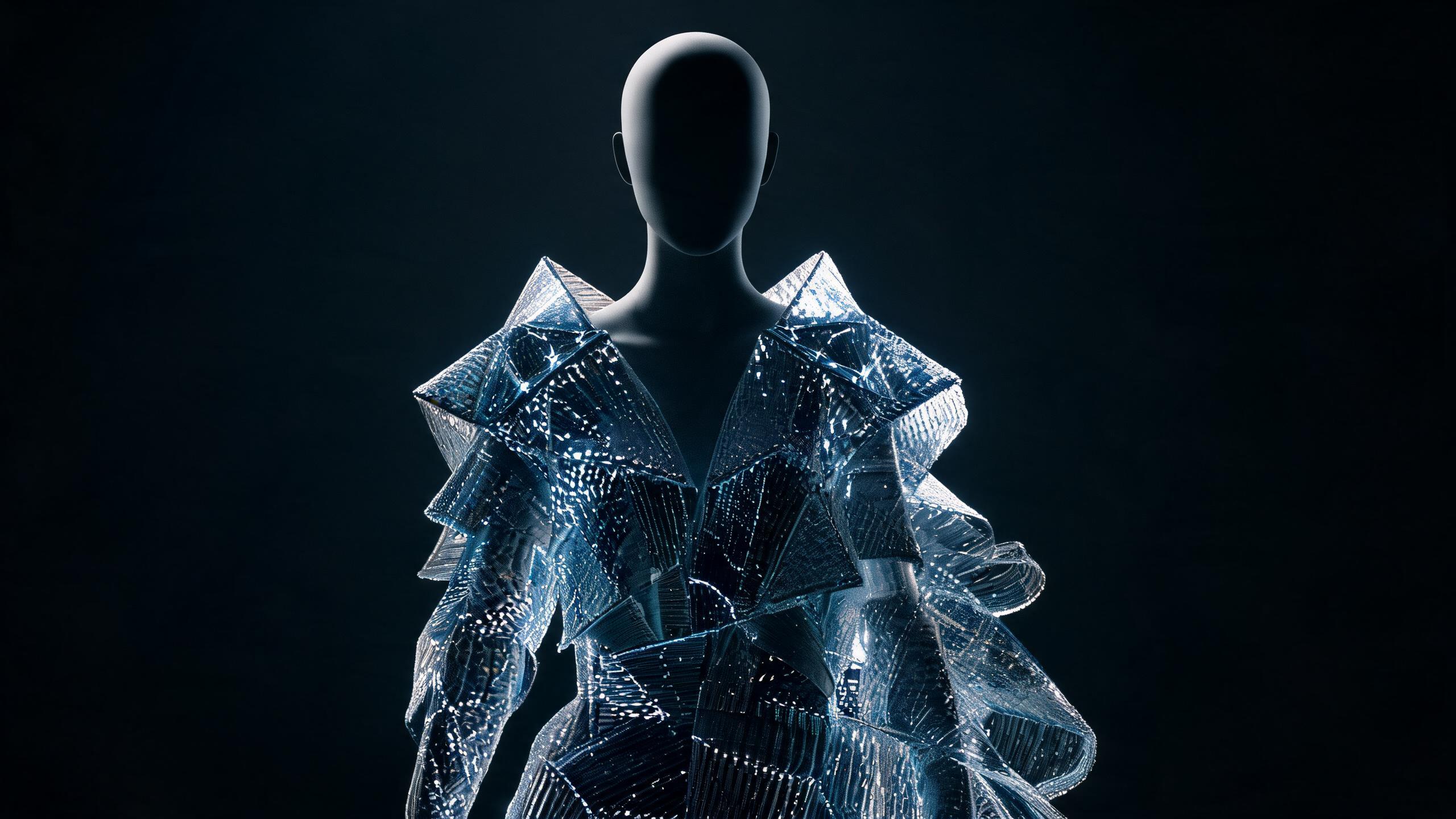
The New Atelier: Measuring AI's Impact on Luxury Fashion Houses in 2024

A deep dive into ai impact on luxury fashion houses 2024 and what it means for modern fashion.
AI is the new infrastructure of the global luxury fashion house. AI impact on luxury fashion houses 2024 is defined by the transition from experimental generative art to the integration of proprietary taste models into the core creative and operational workflows of heritage brands. While the industry previously viewed machine learning as a tool for logistics or inventory management, 2024 marks the year AI entered the atelier, challenging the traditional definition of craftsmanship and exclusivity.
Key Takeaway: The ai impact on luxury fashion houses 2024 is defined by the integration of proprietary taste models into core creative and operational workflows, moving beyond experimental generative art to become foundational brand infrastructure.
What is the current state of AI adoption in luxury fashion?
The luxury sector is undergoing a quiet but aggressive technological overhaul. In early 2024, major conglomerates like LVMH and Kering intensified their partnerships with technology giants to build private, secure AI environments. These are not public-facing chatbots; they are internal "style engines" trained on decades of archival data, sketches, and textile patterns. According to McKinsey (2024), generative AI could add $150 billion to $275 billion to the apparel, fashion, and luxury sectors' operating profits within the next three to five years.
This shift is driven by a realization: the "human touch" in luxury is no longer enough to manage the complexity of global demand and fragmented consumer tastes. Luxury houses are now using AI to bridge the gap between their heritage and a digitally-native clientele. The impact is seen in three primary areas: predictive design, hyper-personalized clienteling, and supply chain circularity.
Why does AI-driven predictive design matter for luxury?
Predictive design is not about letting an algorithm replace a Creative Director. It is about augmenting the creative process with data-driven guardrails. In 2024, luxury brands began using AI to analyze historical performance against emerging cultural signals to determine which "archival revivals" will resonate with Gen Z and Gen Alpha. This reduces the risk of overproduction—a significant reputational hazard in an era of environmental scrutiny.
Term: Style Model A proprietary neural network trained on a specific brand’s aesthetic DNA, used to generate new design iterations that remain mathematically consistent with the brand’s history.
| Feature | Legacy Luxury Approach | AI-Native Luxury Approach |
| Design Inspiration | Creative Director's intuition and mood boards. | Intuition augmented by archival pattern recognition. |
| Trend Response | 6-month lead times based on runway cycles. | Real-time adjustment to regional taste shifts. |
| Inventory | Mass production of seasonal "it-bags." | Demand-aware production and localized assortments. |
| Customer Insight | General demographic segmentation. | Individualized style models for every high-net-worth client. |
How are luxury houses using AI to redefine exclusivity?
Exclusivity in the 20th century was defined by scarcity and price. In 2024, exclusivity is defined by relevance. A product is only "luxury" if it feels uniquely curated for the individual. This is where the AI impact on luxury fashion houses 2024 becomes most visible: the death of the generic recommendation.
According to a report by Bain & Company (2024), 70% of luxury purchases are influenced by digital interactions, yet only a fraction of those interactions feel personalized. Luxury houses are correcting this by deploying "Digital Twins" of their physical ateliers. These systems allow VICs (Very Important Clients) to preview bespoke garments on their own 3D avatars, tailored by AI to their specific measurements and previous style preferences.
This level of personalization is a direct evolution of the traditional boutique experience. You can see this progression in our analysis of the AI-driven future of luxury fashion retail in 2026, where the store becomes a data-capture node rather than just a point of sale.
The rise of the AI stylist in luxury clienteling
Luxury houses are moving away from basic CRM systems toward "AI Stylists" that assist human sales associates. These tools analyze a client's social media presence, past purchase history, and even the local weather of their upcoming travel destinations to suggest the perfect wardrobe. This is not trend-chasing; it is style intelligence. For instance, brands are now using AI tricks to decode celebrity style from Paris Fashion Week 2024 to immediately offer similar, elevated alternatives to their clients before the trend even hits the mass market.
Outfit Formula: The 2024 AI-Augmented Executive Look
- Top: Bespoke silk-blend knit, color-matched by AI to the wearer's skin tone.
- Bottom: Technical wool trousers, patterns adjusted for 3D-scanned body proportions.
- Shoes: Hand-finished leather loafers, with internal architecture optimized for gait analysis.
- Accessories: A limited-run timepiece whose design was optimized for ergonomic weight distribution via generative design.
👗 Want to see how these styles look on your body type? Try AlvinsClub's AI Stylist → — get personalized outfit recommendations in seconds.
Is AI a threat to the "Atelier" and human craftsmanship?
The most common criticism of AI in luxury is that it devalues the "soul" of the garment. This is a misunderstanding of the technology. AI does not sew the seam; it ensures the seam is placed where the customer actually needs it. The "Atelier" of 2024 is a hybrid space where artisans use AI-generated blueprints to execute complex patterns that were previously too time-consuming or mathematically difficult to calculate by hand.
Luxury houses that resist this shift risk obsolescence. The friction between "handmade" and "AI-designed" is a false dichotomy. The most successful houses are those that treat AI as a new type of textile—a raw material that can be shaped, refined, and elevated by human expertise.
How does AI impact the supply chain of luxury goods?
Luxury supply chains are notoriously opaque and inefficient. In 2024, AI impact on luxury fashion houses reached the raw material level. Brands are using AI to track leather quality, predict fabric waste during cutting, and verify the authenticity of materials via blockchain-integrated AI scanners. This is critical for maintaining the "luxury" promise of quality.
Do vs. Don't: AI Implementation for Luxury Brands
| Do | Don't |
| Use AI to build deep, private style models of your customers. | Use generic, public AI models that dilute your brand DNA. |
| Use AI to eliminate waste and optimize production cycles. | Use AI to "mass-produce" designs that lack human curation. |
| Use AI to enhance the human sales associate's intelligence. | Replace the human element with a cold, robotic chatbot. |
| Use data to predict long-term style shifts. | Use data to chase short-lived, low-margin viral trends. |
What does this mean for the future of fashion intelligence?
The old model of fashion commerce is broken. It relies on pushing products to people based on what is popular, rather than what is theirs. Luxury houses have historically been the gatekeepers of "taste," but AI is decentralizing that power. When every user has access to a personal style model, the role of the luxury house changes from a dictator of trends to a provider of high-quality components for an individualized identity.
We are seeing a shift where "recommendation engines" are being replaced by "identity models." A recommendation engine tells you what to buy based on what others bought. An identity model—the core of the AI impact on luxury fashion houses 2024—understands your aesthetic proportions, your color theory, and your lifestyle requirements.
The gap between personalization promises and reality
Most fashion tech companies promise "personalization," but they deliver "segmentation." They put you in a bucket with 10,000 other people who liked a specific blazer. True luxury is a segment of one. AI is the only technology capable of scaling that level of individual attention. If a luxury brand cannot tell you why a specific garment fits your personal style model, they are no longer selling luxury; they are selling expensive fast fashion.
This evolution is particularly relevant when considering macro-economic shifts. For example, understanding how to navigate luxury fashion investing during global conflict requires the kind of precision data that only AI-driven market analysis can provide. The volatility of the 2024 market demands that luxury houses be more agile than ever before.
Why luxury houses must build AI infrastructure, not AI features
A "feature" is a virtual try-on tool on a website. "Infrastructure" is an AI-native operating system that connects the designer’s initial sketch to the warehouse, the sales floor, and the customer’s digital wardrobe. Most luxury houses are still in the feature phase. They are adding AI as a layer on top of a legacy system.
The winners of 2024 and beyond will be those who rebuild their systems from first principles using AI. This means moving away from seasonal drops and toward a continuous, data-informed flow of creativity. It means treating every customer interaction as a data point that evolves their personal style model.
Definition: Dynamic Taste Profile A continuously evolving digital signature that captures a user’s shifting aesthetic preferences, lifestyle changes, and physical measurements, allowing an AI to predict future needs with increasing accuracy.
Our Take: The end of the "Trend"
The most significant AI impact on luxury fashion houses 2024 is the beginning of the end for the traditional trend cycle. When AI can curate a perfect, timeless wardrobe for an individual, the need to "keep up" with the fleeting aesthetic of the month disappears. Luxury returns to its roots: the creation of enduring, personal icons.
The industry has spent decades trying to make people fit into clothes. AI finally allows us to make clothes fit into people's lives. This is not a shift in marketing; it is a shift in the physics of commerce. The luxury house of the future is a data company that happens to produce exquisite physical objects.
Bold Predictions for 2025-2026
- AI-Generated Archival Pieces: We will see the first major luxury collection where 50% of the silhouettes are generated by an AI trained on the founder’s original 1950s sketches, then refined by a human creative director.
- The Death of the Search Bar: Luxury commerce will move from "search and find" to "be shown and approve." Your personal style model will already know what you need before you do.
- Hyper-Local Micro-Collections: AI will enable luxury brands to release 50-piece collections specific to a single neighborhood in Tokyo or London, based on the localized taste profiles detected in those areas.
How does your current wardrobe reflect your data? If you are still buying based on what is "trending" on a social media feed, you are interacting with an obsolete version of fashion. The future is not a feed; it is a model.
AlvinsClub uses AI to build your personal style model. Every outfit recommendation learns from you, moving beyond the generic suggestions of traditional luxury retail. Try AlvinsClub →
Summary
- The ai impact on luxury fashion houses 2024 is marked by a shift from experimental tools to the integration of proprietary style engines into core creative and operational workflows.
- Luxury conglomerates LVMH and Kering are currently developing private AI systems trained on heritage archives, including decades of sketches and textile patterns.
- According to McKinsey, the ai impact on luxury fashion houses 2024 is projected to contribute between $150 billion and $275 billion to sector operating profits within the next five years.
- Heritage brands are leveraging AI to balance traditional craftsmanship with the management of complex global demand and fragmented consumer tastes.
- Current AI adoption in the luxury sector focuses on three key areas: predictive design, hyper-personalized clienteling, and enhanced supply chain logistics.
Frequently Asked Questions
What is the ai impact on luxury fashion houses 2024 regarding creative design?
The ai impact on luxury fashion houses 2024 is characterized by the integration of generative tools directly into the creative atelier to refine design workflows. These brands are moving beyond experimental art to implement sophisticated taste models that align with their specific heritage aesthetics. This evolution allows for a seamless blend of historical archives and modern computational creativity.
How does the ai impact on luxury fashion houses 2024 affect traditional craftsmanship?
The ai impact on luxury fashion houses 2024 redefines craftsmanship by blending digital precision with human touch in the production of high-end garments. Instead of replacing artisans, machine learning acts as a digital apprentice that assists in pattern making and material optimization. This synergy ensures that exclusivity remains high while operational efficiency is significantly improved within the atelier.
Why is the ai impact on luxury fashion houses 2024 shifting toward proprietary models?
The ai impact on luxury fashion houses 2024 is moving toward proprietary models because brands want to protect their unique design DNA and creative intellectual property. By training internal systems on their own private archives, fashion houses can generate content that feels authentic to their specific historical identity. This shift ensures that the outputs remain exclusive and distinct from mass-market generative art.
Can AI create authentic luxury fashion designs?
Artificial intelligence generates design concepts by analyzing vast datasets of historical styles to propose new visual directions for creative directors. While the machine provides the initial blueprint, human designers curate and refine these outputs to ensure they meet the rigorous standards of high fashion. This collaborative process results in unique pieces that maintain the brand's established reputation for quality and artistry.
How do heritage brands use AI in 2024?
Heritage brands are leveraging artificial intelligence to personalize customer experiences and optimize their supply chains for high-demand collections. These companies use machine learning to predict which styles will resonate with elite clientele, reducing overproduction while maintaining the allure of scarcity. In 2024, this technology has become a core component of both the digital storefront and the physical atelier.
Is AI replacing human designers in luxury fashion?
Artificial intelligence serves as an augmentative tool rather than a replacement for human designers who provide the emotional intuition necessary for luxury. Designers use these technologies to automate repetitive technical tasks, allowing them more time to focus on high-level conceptualization and storytelling. The human element remains the final arbiter of taste and brand value in the luxury sector.
This article is part of AlvinsClub's AI Fashion Intelligence series.
Related Articles
- How to Navigate Luxury Fashion Investing During Global Conflict
- Beyond the Boutique: The AI-Driven Future of Luxury Fashion Retail in 2026
- 5 AI tricks to decode celebrity style from Paris Fashion Week 2024
- The AI Forecast: Your Definitive Guide to 2024’s Tennis Style Trends
- Beyond the Bot: The Rise of AI-Driven Luxury Fashion Platforms in 2026