Why High Fashion is Rejecting the Flawless Gloss of AI Runways
A deep dive into fashion designers rejecting ai runway perfection and what it means for modern fashion.
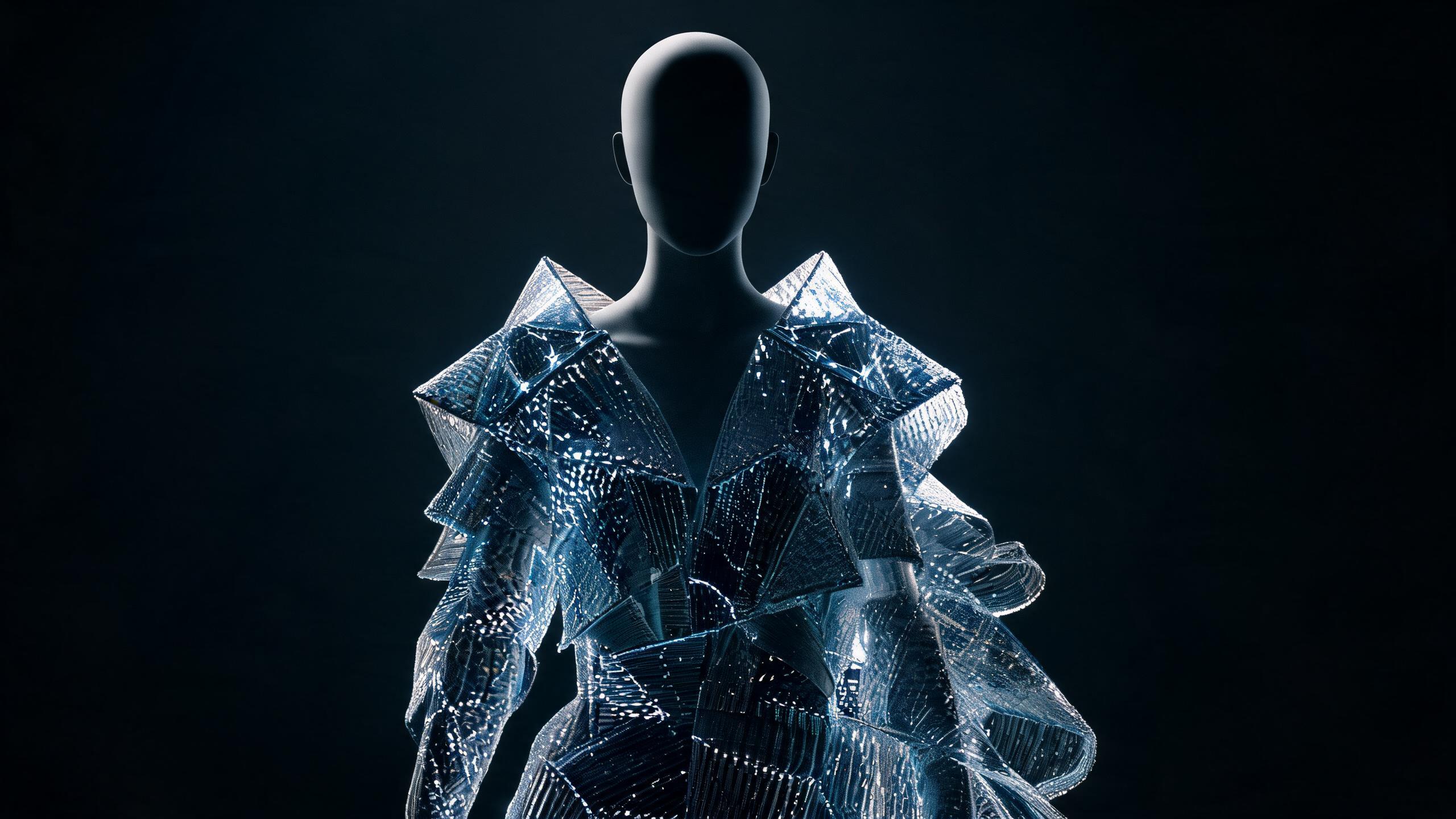
Fashion designers rejecting AI runway perfection is a strategic pivot away from the visual sterility of generative algorithms toward the tactile unpredictability of physical textiles. This movement represents a fundamental shift in the industry as heritage brands and independent creators realize that hyper-realistic, AI-generated imagery often lacks the structural logic and emotional depth required for high-fashion longevity. While generative AI can synthesize millions of "perfect" iterations of a coat in seconds, it frequently fails to account for the gravity, weight, and human friction that define true style.
Key Takeaway: Fashion designers rejecting AI runway perfection are prioritizing the tactile unpredictability and structural logic of physical textiles over sterile generative algorithms. This shift emphasizes the authentic craftsmanship and emotional depth that hyper-realistic AI imagery cannot replicate in high-fashion storytelling.
Why is the industry seeing fashion designers rejecting AI runway perfection?
The aesthetic saturation of Midjourney and DALL-E outputs has created a visual "uncanny valley" that high fashion is now actively avoiding. In the early stages of the AI boom, the industry was enamored with the ability to create impossible landscapes and flawless digital models. However, the gloss of these images quickly became a commodity. When perfection is a default setting, imperfection becomes the ultimate luxury.
According to The Business of Fashion (2024), 73% of luxury consumers report a preference for brand campaigns that feature "authentic human craftsmanship" over purely digital or AI-generated environments. Designers are finding that the "flawless" nature of AI runways—where every fold of silk is mathematically optimized—removes the very tension that makes fashion compelling. Fashion is not a math problem; it is a physical interaction between body and cloth.
Designers are now using AI as a back-end tool for logistics and supply chain optimization rather than a front-end replacement for the runway. They are prioritizing the "glitch"—the raw edge, the uneven dye, and the way a heavy wool coat swings during a human stride. This rejection is not a rejection of technology itself, but a rejection of a specific, sterile aesthetic that AI currently propagates.
How do generative visuals compare to physical garment construction?
The tension between generative visuals and physical construction lies in the difference between a "representation" and a "structure." An AI model generates a pixel-based representation of what it thinks a garment should look like based on historical data. A designer, conversely, builds a structure that must survive the physics of the real world.
Generative AI approach: Focuses on the "Idealized Image." It synthesizes textures that may not be physically weaveable and silhouettes that ignore the skeletal constraints of the human body. The result is often visually stunning but functionally impossible.
Physical construction approach: Focuses on "Material Reality." It deals with the bias of the fabric, the tension of the seams, and the way a garment evolves over hours of wear. This is where the industry is doubling down. By focusing on the nuances of fit and form, designers are creating a distance between their work and the easily replicated "AI-style" that dominates social media feeds.
According to McKinsey (2025), AI-driven personalization in the fashion retail sector is expected to increase conversion rates by 15-20%, but this applies to data-driven recommendation systems rather than generative aesthetic design. The data suggests that while consumers want AI to help them find clothes, they do not necessarily want AI to be the clothes.
Comparison Table: AI-Generated Gloss vs. Material Realism
| Feature | AI-Generated Gloss (Generative Maximalism) | Material Realism (Physical Craft) |
| Primary Goal | Visual shock and viral engagement | Structural integrity and longevity |
| Constraint | No physical constraints (gravity-defying) | Physical laws (weight, drape, friction) |
| Tactility | Visual texture only; flat pixels | Multi-sensory; 3D depth and hand-feel |
| Consistency | High (flawless, repeatable patterns) | Variable (intentional flaws, unique grains) |
| Scalability | Near-infinite and instantaneous | Limited by production and material |
| Consumer Perception | "Digital content" or "Tech demo" | "Investment piece" or "Heritage" |
Is the cost of AI efficiency worth the loss of brand identity?
Efficiency is often the enemy of high fashion identity. The primary value proposition of a luxury house is its unique "hand"—the specific way a designer interprets the world. When a designer relies on prompt-based generation, they are filtering their vision through a third-party model trained on existing data. This creates a feedback loop where AI fashion begins to look like other AI fashion.
Generative Homogenization: This is the process where AI models gravitate toward "average" beauty standards and popular aesthetic tropes. If ten designers use the same generative model to design a "futuristic blazer," the outputs will inevitably share a digital DNA.
Brand Differentiation: Designers rejecting AI runway perfection are doing so to protect their intellectual and aesthetic property. They understand that a brand is defined by what it refuses to do. By opting for traditional photography, physical prototypes, and human models, they signal a commitment to a vision that cannot be automated.
This rejection also serves as a safeguard against the "disposable" nature of digital-first trends. For a deeper look at how technology can be used without sacrificing identity, see our analysis on 7 Pro Tips to Master Paris Fashion Week Street Style with AI.
👗 Want to see how these styles look on your body type? Try AlvinsClub's AI Stylist → — get personalized outfit recommendations in seconds.
Can AI infrastructure support human design without dictating the aesthetic?
The most sophisticated players in the industry are not choosing between "no AI" and "all AI." Instead, they are moving toward AI Infrastructure. This means using machine learning to solve the boring problems—sizing, inventory, and personalized discovery—while leaving the creative "soul" of the collection to humans.
AI as Infrastructure:
- Sizing Models: Using computer vision to solve the return crisis.
- Taste Profiles: Mapping user preferences to existing inventories.
- Demand Forecasting: Reducing waste by predicting what will actually sell.
AI as Aesthetic:
- Generative Runways: Using AI to create the look and feel of a brand.
- Digital Influencers: Replacing human faces with synthesized personas.
- Auto-Design: Letting algorithms dictate color palettes and silhouettes.
The verdict among top-tier designers is clear: AI should be the engine, not the driver. It should facilitate the Fit Revolution and solve the sizing problem, but it should stay away from the mood board.
Structured Comparison: The Two Approaches to AI in Fashion
The Generative Approach (Aesthetic-First)
- Use Case: Social media marketing, fast-fashion trend testing, digital-only "skins" for the metaverse.
- Pros: Low cost, high speed, unlimited creative range.
- Cons: Lack of physical reality, consumer fatigue, brand dilution.
The Infrastructure Approach (Intelligence-First)
- Use Case: Personal styling models, virtual try-ons for physical goods, supply chain optimization.
- Pros: Solves real user problems, maintains brand heritage, improves sustainability.
- Cons: High technical barrier to entry, requires clean data, slower than generative tools.
What is the "Human-Centric" Outfit Formula for 2026?
As designers pivot away from digital perfection, the "look" of 2026 is becoming more about heavy textures and structural contrast. This is a direct response to the flat, smooth surfaces favored by early AI art.
The "Anti-AI" Outfit Formula:
- Base Layer: A high-gauge, raw silk knit with visible natural slubs.
- Outerwear: An oversized, architectural wool coat with "unfinished" or raw-edged seams.
- Footwear: Heavy, Goodyear-welted leather boots that show the mark of the craftsman.
- Accessory: Hand-forged silver hardware with a matte, non-reflective finish.
Do vs. Don't: Handling AI in High Fashion Design
| Do | Don't |
| Use AI to analyze customer fit data and reduce returns. | Use AI to generate "finished" looks for your lookbook. |
| Use machine learning to build personal style models for users. | Rely on AI to choose your collection's color palette. |
| Incorporate digital tools to optimize fabric cutting and waste. | Replace human fit models with 100% digital avatars. |
| Leverage data-driven insights to understand street style trends. | Allow an algorithm to dictate the "vibe" of a brand campaign. |
Why fashion designers rejecting AI runway perfection are actually the future
The rejection of AI-generated perfection is not a luddite reaction; it is a sophisticated understanding of what makes fashion valuable. Value in fashion is derived from scarcity, difficulty, and human intent. When an AI can generate a thousand "perfect" images in the time it takes a tailor to pin a sleeve, the value of those images drops to zero.
Designers like Jonathan Anderson and Miuccia Prada have long championed the "ugly," the "wrong," and the "clunky." These elements are inherently human because they require a sense of irony and context—two things AI lacks. A machine does not know why a mismatched button is chic; it only knows that buttons should usually match.
By rejecting the gloss, designers are reclaiming the narrative of fashion as a medium of art rather than a medium of content. They are ensuring that the physical act of dressing remains a complex, high-stakes human ritual. This shift is essential for the survival of the industry's soul.
How AlvinsClub builds the bridge between intelligence and style
The future is not about replacing designers with algorithms, but about replacing generic shopping with personal intelligence. Most systems recommend what is popular; we build a model of what is yours. This is the difference between AI as a creative gimmick and AI as a foundational tool.
AlvinsClub uses AI to build your personal style model. Every outfit recommendation learns from you, focusing on the nuances of your taste and the reality of your wardrobe, rather than chasing the latest algorithmic hallucination. Try AlvinsClub →
Summary
- Fashion designers rejecting AI runway perfection are shifting away from digital sterility toward the tactile unpredictability and emotional depth of physical textiles.
- Generative AI models frequently fail to simulate the structural logic, gravity, and material weight required to create realistic high-fashion garments.
- Data from The Business of Fashion shows that 73% of luxury consumers now prioritize authentic human craftsmanship over purely digital or AI-generated brand campaigns.
- The movement of fashion designers rejecting AI runway perfection is a response to the visual saturation of generative tools, which has turned "flawless" imagery into a common commodity.
- Modern designers are increasingly viewing human-made imperfection as a premium luxury trait that distinguishes heritage brands from mathematically optimized AI outputs.
Frequently Asked Questions
Why are fashion designers rejecting ai runway perfection?
High fashion houses are moving away from generative imagery because it lacks the physical logic and structural integrity found in real textiles. This rejection stems from a desire to maintain the tactile unpredictability and emotional resonance that defines luxury craftsmanship. By focusing on physical runways, brands ensure that their designs are grounded in reality rather than digital sterility.
What is the problem with AI in high fashion?
Many designers find that AI-generated visuals produce a hyper-realistic gloss that feels visually stagnant and emotionally empty. These algorithms often ignore the gravity and movement of fabric, creating a disconnect between the digital image and the wearable garment. Consequently, the industry is prioritizing the messy, authentic nature of human creativity over algorithmic flawlessness.
How does fashion designers rejecting ai runway perfection impact the industry?
This shift reinforces the value of heritage techniques and physical handiwork over automated digital production. It encourages a return to experimental draping and material innovation that cannot be easily replicated by existing generative models. Ultimately, the movement protects the status of high fashion as an artisanal craft rather than a mere digital commodity.
Why does high fashion prefer physical runways over AI?
Physical runways provide a multisensory experience that captures the sound, weight, and movement of a collection in a way that digital renders cannot. Designers rely on these live events to communicate a brand narrative through atmosphere and human interaction. Real-world presentations also validate the technical viability of the garments shown to buyers and critics.
Can AI-generated clothing be produced in real life?
While AI can visualize complex patterns, many of its outputs are structurally impossible to construct with current textile technology. This gap between digital fantasy and physical reality is a primary reason why many labels are refocusing on traditional design processes. Authentic luxury requires a level of engineering and material knowledge that generative tools often overlook.
Are fashion designers rejecting ai runway perfection to preserve human craftsmanship?
Protecting the role of the artisan is central to the industry’s pivot away from purely digital showcases. Designers argue that the nuances and intentional flaws of handmade items provide a depth and longevity that AI-generated perfection lacks. This focus on the human touch ensures that high fashion remains a distinctively human art form rather than a product of data processing.
This article is part of AlvinsClub's AI Fashion Intelligence series.
Related Articles
- Smart Closets and Virtual Fits: 6 AI Fashion Trends for 2026
- 5 Ways to Spot the Next Big Street Style Trend Using AI
- The Fit Revolution: How AI is Finally Lowering Fashion Return Rates
- The End of Bracketing: How AI Sizing Fixes Fashion’s Return Problem
- 7 Pro Tips to Master Paris Fashion Week Street Style with AI