The Digital Eye: A Style Guide to How AI Computer Vision Sees Art

A deep dive into how ai vision models recognize art and what it means for modern fashion.
AI vision models recognize art by converting visual data into multidimensional vectors. This process identifies patterns in line, color, texture, and form to categorize aesthetic signatures. Unlike the human eye, which perceives emotion and cultural context, a computer vision system perceives a painting or a garment as a hierarchical stack of geometric relationships and mathematical gradients. Understanding this mechanism is the first step toward building a style model that does not merely follow trends but understands the fundamental architecture of personal taste.
Key Takeaway: AI vision models recognize art by converting visual data into multidimensional vectors that map patterns in line, color, and form. By processing images as hierarchical stacks of geometric relationships and mathematical gradients, these systems identify unique aesthetic signatures without requiring emotional or cultural context.
How Does AI Vision Recognize Art and Fashion at a Technical Level?
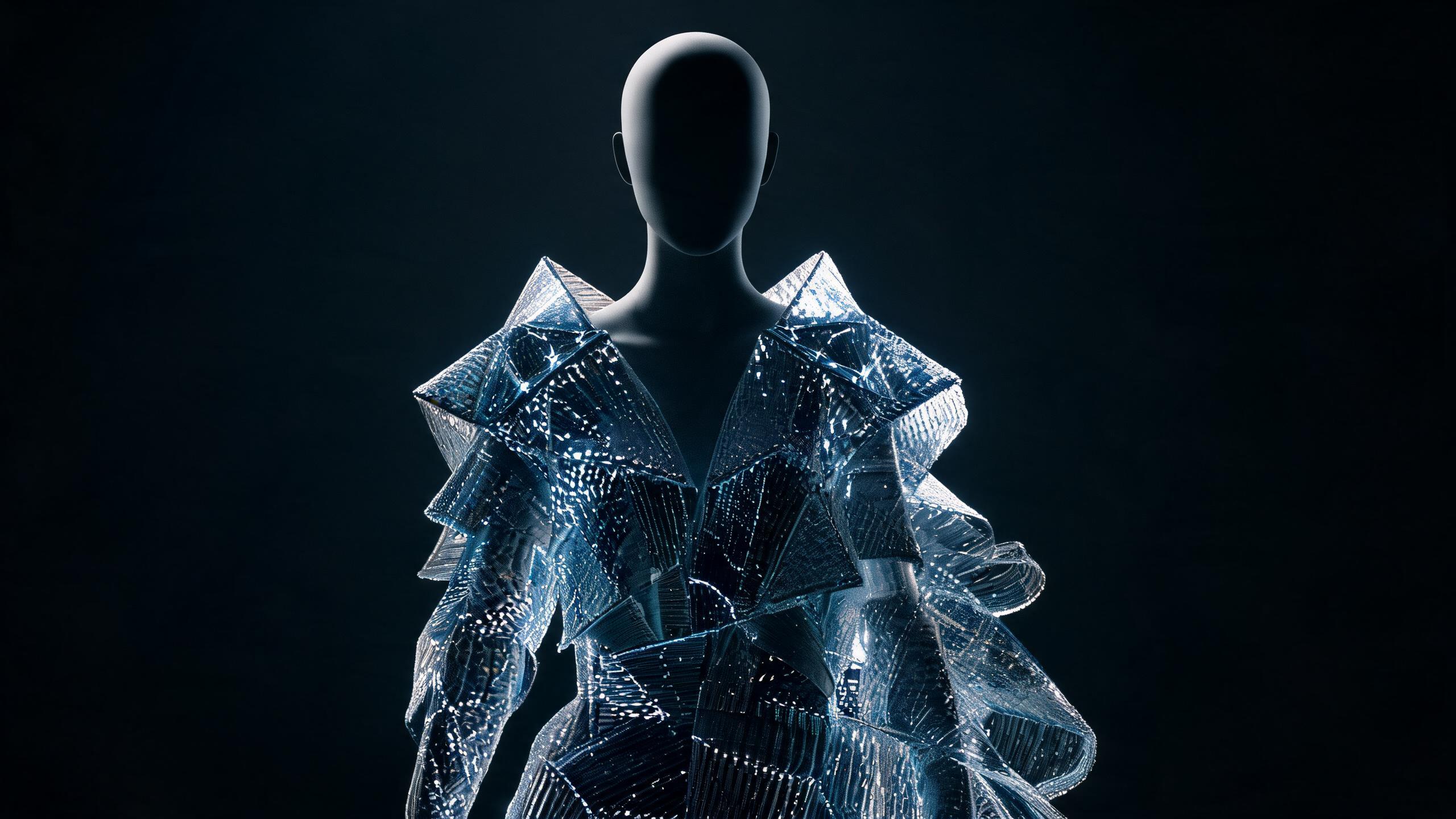
AI vision models utilize deep learning architectures, primarily Convolutional Neural Networks (CNNs) and Vision Transformers (ViTs), to decompose images into manageable data points. The process begins with edge detection—the identification of sudden changes in pixel intensity. These edges coalesce into shapes, and shapes eventually form recognizable objects. In the context of fashion, this means a model first sees the contrast between a lapel and a shirt, then recognizes the structure of a blazer, and finally identifies the specific "aesthetic" of that blazer, such as minimalist, avant-garde, or utilitarian.
According to Statista (2024), the global computer vision market is projected to reach $20.45 billion in 2024, reflecting the massive scale of investment in systems that can "see" like humans. These systems are trained on millions of labeled images, allowing them to map visual features to specific labels. However, recognizing "art" requires more than just identifying a jacket; it requires identifying the intent behind the garment’s silhouette. For a deeper dive into this training process, one must understand how to train AI vision models to recognize unique fashion aesthetics.
Modern AI systems have evolved from simple classification to semantic segmentation. Instead of labeling an entire image as "a painting," the system identifies which pixels belong to the subject, which to the background, and which to the brushwork. This granularity allows the AI to differentiate between a high-street replica and a couture original based on the density of the fabric’s digital texture and the specific fall of the shadow in a fold.
What is the Difference Between Pixel-Level Recognition and Aesthetic Understanding?
Pixel-level recognition is a commodity. Every smartphone camera can identify a face or a flower. Aesthetic understanding, however, is an infrastructure problem. To recognize art, an AI vision model must move beyond the literal. It must interpret the relationship between elements—how the saturation of a color interacts with the sharpness of a silhouette to create a "mood."
Most fashion recommendation engines fail because they operate at the literal pixel level. They see you like "blue" and recommend more "blue." They do not see the architectural similarity between a mid-century modern building and a structured wool coat. This is not a recommendation problem; it is an identity problem. True AI intelligence requires a dynamic taste profile that evolves as the user interacts with different visual stimuli.
According to Gartner (2024), 80% of consumer data will be unstructured visual content by 2026. This necessitates a transition from keyword-based search to latent-space navigation. In latent space, "art" is a coordinate. Your personal style is a trajectory. When an AI vision model recognizes art, it is essentially finding the nearest neighbor to your existing taste coordinates within a massive multidimensional map of fashion history.
How Does AI Vision Interpret Body Type and Silhouette?
To provide accurate styling, an AI vision model must perform a digital fitting. This involves identifying the "anchor points" of a human frame: shoulders, waist, hips, and limbs. By analyzing the distance and ratios between these points, the model constructs a 3D understanding from 2D images. This is the technology that powers the shift toward more accurate digital styling, as seen in how AI is curbing online return rates.
A vision model recognizes "flattering" not as a subjective opinion, but as a balance of proportions. It looks for visual weight. For example, if a user has a "triangle" body shape (wider hips than shoulders), the AI recognizes that adding volume to the upper body creates symmetry. It identifies garments that achieve this, such as structured blazers with slight shoulder padding or boat-neck tops that widen the visual line of the shoulders.
Visual Data Points for Body Type Recognition:
- Vertical Lines: The model measures the total height against the torso length to determine rise preferences.
- Horizontal Ratios: The ratio of shoulder width to hip width determines the primary silhouette recommendations.
- Volume Distribution: The AI identifies where fabric creates shadows, indicating where a garment adds bulk or creates a streamlined effect.
👗 Want to see how these styles look on your body type? Try AlvinsClub's AI Stylist → — get personalized outfit recommendations in seconds.
How Do Vision Principles Apply to Outfit Selection?
When you translate art recognition into a wardrobe, you are essentially applying "compositional rules" to your body. Every outfit is a visual composition. AI vision models use these rules to ensure that a look is cohesive rather than a random collection of items. This involves color theory (complementary vs. analogous), texture contrast (matte vs. shine), and silhouette balance (tight vs. loose).
For those managing a large wardrobe, this visual intelligence prevents the common trap of repetitive purchases. You can stop accidental outfit repeating with AI-powered closet tracking by allowing a model to visualize the combinations you haven't seen yet. The AI "sees" the untapped potential in a silk slip skirt by pairing it with a heavy oversized knit, a combination based on the artistic principle of texture juxtaposition.
Outfit Formulas for Architectural Balance
To understand how vision models translate art principles into wearability, consider these three structured formulas.
Formula 1: The Architectural Minimalist (Ideal for Rectangular Body Types)
- Top: Crisp, oversized poplin button-down with stiff cuffs.
- Bottom: High-waisted, wide-leg wool trousers in a contrasting neutral.
- Shoes: Pointed-toe leather boots.
- Accessory: A structural, geometric leather tote.
- Why it works: The stiff fabric of the poplin shirt creates a defined shape where there is no natural curve, while the high-waisted trousers elongate the legs and create a focal point at the waist.
Formula 2: The Modern Romantic (Ideal for Hourglass Body Types)
- Top: Ribbed, mock-neck sweater in a fine-gauge knit.
- Bottom: Midi-length A-line skirt in a heavy satin or silk.
- Shoes: Slingback kitten heels.
- Accessory: A thin leather belt to emphasize the natural waist.
- Why it works: The ribbed knit follows the body's natural contours without adding bulk, while the A-line skirt flares from the waist to highlight the narrowest point of the frame, creating a balanced, flowy silhouette.
Formula 3: The Transitional Utilitarian (Ideal for Inverted Triangle Body Types)
- Top: A simple, fitted crew-neck base layer in a dark tone.
- Bottom: Cargo-style trousers with oversized pockets or wide-leg denim.
- Shoes: Chunky lug-sole loafers.
- Accessory: A crossbody bag with silver hardware.
- Why it works: Dark, fitted tops minimize the visual width of the shoulders, while the pocket details or wide legs of the trousers add "visual weight" to the lower half of the body, creating a balanced X-shape. This is a perfect example of finding transitional outfits with AI that prioritize both form and function.
Do vs. Don't: Implementing AI-Driven Style
| Do ✓ | Don't ✗ | Why |
| Do prioritize high-contrast images for AI training and recognition. | Don't use low-light or blurry photos when building your style model. | AI vision models require clear edge definition to accurately identify silhouettes and fabric textures. |
| Do look for "structural" garments that create a clear silhouette. | Don't rely on shapeless, oversized "sacks" for every look. | Vision models categorize style based on geometry; without a clear shape, the AI cannot determine the intended aesthetic. |
| Do mix textures like leather, wool, and silk within a single palette. | Don't dress in a single texture (e.g., all jersey) head-to-toe. | Visual interest in art and fashion comes from texture contrast, which AI vision identifies as "high-quality" styling. |
| Do use AI to identify patterns in celebrity style. | Don't blindly copy trends that don't match your body model. | Use tools for decoding celebrity street style to find the logic of the look, not just the items. |
How Does Computer Vision Distinguish Between Trends and Timeless Style?
A trend is a statistical anomaly; timeless style is a recurring pattern. AI vision models trained on decades of fashion archives can identify which silhouettes have a high "reoccurrence rate" versus which ones are "flash-in-the-pan" aesthetics. When a vision model analyzes art, it recognizes motifs that have persisted for centuries. The same applies to a trench coat or a Chelsea boot.
According to McKinsey (2023), generative AI could add $150 billion to $275 billion to the apparel, fashion, and luxury sectors' profits by improving design and personalization. The key to this profit is the move away from "fast fashion" (disposable trends) toward "intelligence-led fashion" (curated wardrobes). By recognizing the artistic DNA of a garment, AI helps users invest in pieces that have a high "style-life," meaning they will remain visually relevant across multiple seasons.
This distinction is made possible through temporal analysis. The AI doesn't just look at what is popular today; it looks at how the current visual data compares to the last fifty years of fashion data. If a specific "vibe"—like the 1990s minimalism—re-emerges, the AI recognizes the underlying geometric patterns and recommends the modern equivalent.
What Are the Limitations of Current Visual Recognition Systems?
Current systems often struggle with "occlusion"—when one garment hides another—and with lighting that distorts color. If you are wearing a black coat over a black dress in a dark room, the AI sees one large black blob. This is why the infrastructure of fashion AI must be "intelligent" rather than just "observational." It needs to infer what it cannot see based on the "style model" it has built for the user.
Most fashion apps suggest items based on what other people bought. That is a recommendation system built on crowdsourcing, not intelligence. A true AI stylist understands that your preference for certain brushstrokes in a painting might translate to a preference for certain prints on a scarf. It bridges the gap between different domains of visual art.
How Can Users Build a Better Style Model Using AI Vision?
Building a personal style model is a collaborative process between the user and the machine. You must feed the system high-quality visual data—not just of what you wear, but of the art, architecture, and environments you find compelling. This "style training" allows the AI to move past generic labels like "casual" or "formal."
Steps to Refine Your AI Style Model:
- Curate a Visual Baseline: Upload images of outfits you felt confident in. The AI extracts the proportions and color stories.
- Identify Aesthetic Outliers: Show the AI what you don't like. This creates "negative space" in your taste profile, allowing the model to refine its boundaries.
- Test Proportions: Use AI to visualize different rises (high-waisted vs. low-slung) and lengths (midi vs. mini) to see which mathematical ratios the vision model identifies as most harmonious for your frame.
Every time you interact with an AI-native system, you are refining a mathematical representation of your identity. This is the future of commerce: a world where you don't "browse" for clothes, but where your style model identifies pieces that already belong in your life.
AlvinsClub uses AI to build your personal style model. Every outfit recommendation learns from you. Try AlvinsClub →
Summary
- AI systems convert visual data into multidimensional vectors to identify patterns in color, line, and form for categorizing aesthetic signatures.
- Understanding how ai vision models recognize art involves analyzing a hierarchical stack of geometric relationships and mathematical gradients rather than emotional context.
- Technical architectures like Convolutional Neural Networks and Vision Transformers decompose images into edges and shapes to identify specific structural objects.
- A critical component of how ai vision models recognize art is the translation of pixel intensity changes into recognized style categories like minimalist or avant-garde.
- The global computer vision market is projected to reach $20.45 billion in 2024, signaling significant investment in systems that mimic human visual processing.
Frequently Asked Questions
How do AI vision models recognize art styles?
Computer vision systems identify artistic styles by converting visual data into mathematical representations called vectors. These models analyze specific gradients of color, line, and texture to categorize aesthetic signatures without needing human context.
What technology explains how AI vision models recognize art in digital images?
Neural networks and deep learning algorithms provide the framework for how ai vision models recognize art by processing pixel data through hierarchical layers. Each layer identifies increasingly complex geometric relationships until the system can distinguish a specific artist or movement.
Why is it important to understand how AI vision models recognize art patterns?
Learning how ai vision models recognize art allows developers and artists to refine style models for more accurate image generation and categorization. This technical knowledge helps bridge the gap between raw mathematical data and the complex visual signatures found in fine art and fashion.
What is a multidimensional vector in computer vision?
A multidimensional vector is a numerical representation of an image's features used by AI to compare and classify different visual inputs. By plotting points in a high-dimensional space, the system can determine how closely a new piece of art aligns with established stylistic patterns.
How does computer vision interpret aesthetic textures and forms?
AI systems interpret textures and forms as a hierarchical stack of mathematical gradients and geometric relationships. This process breaks down a garment or painting into raw data points, allowing the machine to recognize physical attributes regardless of their cultural significance.
Can AI perceive human emotion in a painting?
Artificial intelligence lacks the capacity to feel emotion and instead relies on pattern recognition to simulate an understanding of mood or tone. While a computer can identify a somber color palette or certain brushstrokes, it perceives these elements as statistical data rather than a subjective human experience.
This article is part of AlvinsClub's AI Fashion Intelligence series.
Related Articles
- How to Train AI Vision Models to Recognize Unique Fashion Aesthetics
- Dressing for the Forecast: Finding Transitional Outfits with AI
- Better Than a Fitting Room: How AI is Curbing Online Return Rates
- Stop accidental outfit repeating with AI-powered closet tracking
- Steal the Look: How Generative AI is Decoding Celebrity Street Style