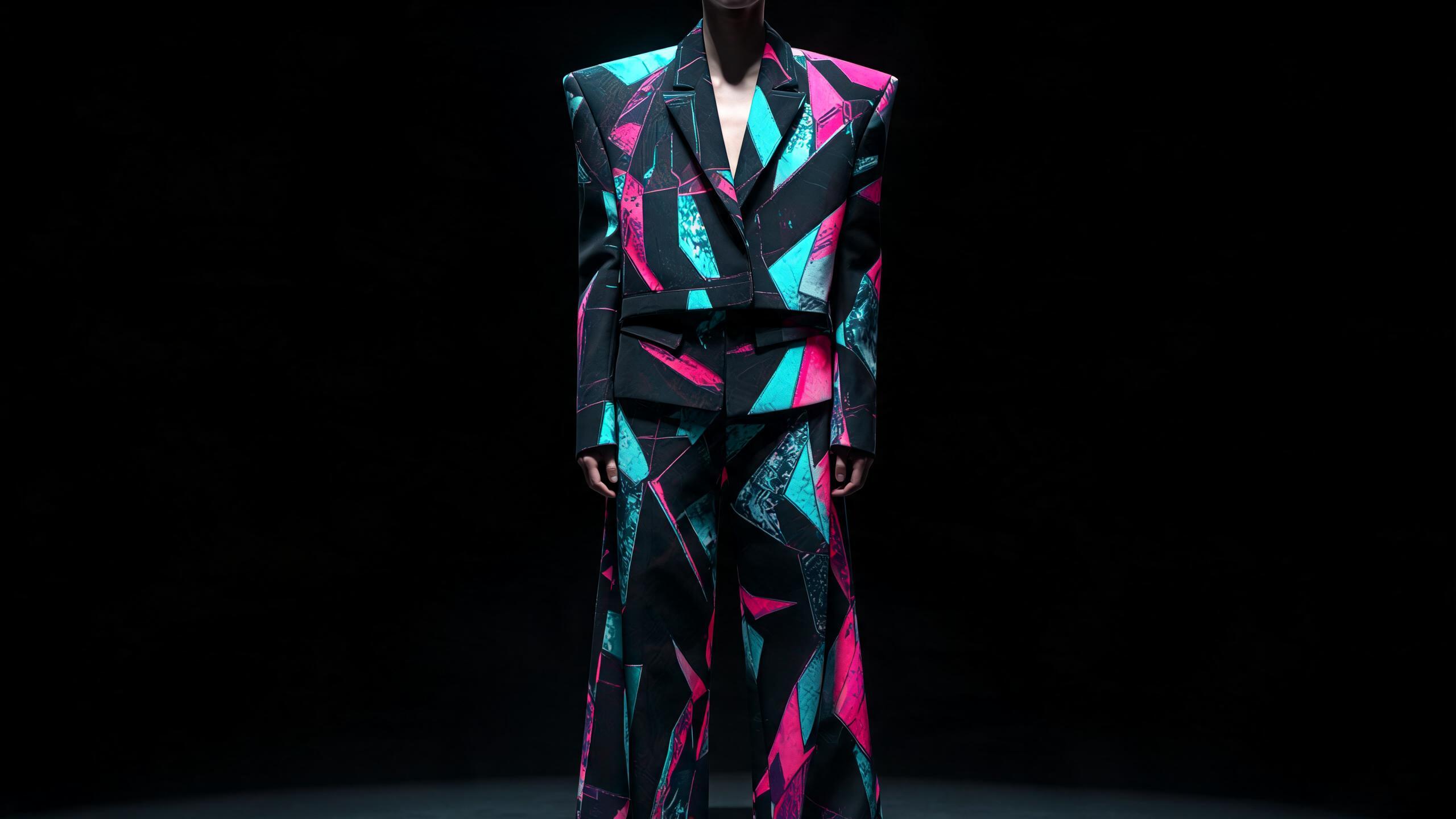
How to Train AI Vision Models to Recognize Unique Fashion Aesthetics
A deep dive into ai vision models recognizing artistic styles and what it means for modern fashion.
AI vision models recognizing artistic styles utilize deep learning architectures, specifically convolutional neural networks (CNNs) and vision transformers (ViT), to extract and classify high-level visual features such as silhouette, texture, and cultural semiotics from fashion imagery. Unlike standard object detection which identifies a "jacket" or "pant," aesthetic recognition requires the model to understand the latent relationships between color palettes, fabric weight, and historical context. This transition from object-level detection to style-level intelligence is the foundation of the next generation of fashion commerce.
Key Takeaway: To develop ai vision models recognizing artistic styles, developers use deep learning architectures to analyze high-level features like silhouette and texture, allowing for the classification of complex fashion aesthetics beyond basic object identification.
Why Do Traditional Vision Models Struggle with Fashion Aesthetics?
Current recommendation engines are built on shallow metadata. They categorize items by SKU properties: "blue," "cotton," "button-down." This is not style. Style is the emergent property of how these elements interact within a specific cultural framework. A blue cotton button-down can be "Preppy," "Workwear," or "Minimalist" depending on the cut, the stiffness of the collar, and the proportion of the hem.
Most off-the-shelf vision models fail because they are trained on ImageNet or generic datasets that prioritize object classification over stylistic nuance. According to McKinsey (2024), 73% of fashion executives identify generative AI and advanced vision systems as critical priorities for business operations, yet the gap between basic item tagging and true aesthetic understanding remains wide. To bridge this, engineers must move toward training models on curated style taxonomies that account for the geometry of the garment and the intent of the wearer.
How Do You Prepare Data for AI Vision Models Recognizing Artistic Styles?
The quality of an AI vision model is a direct reflection of its training data. For fashion aesthetics, raw imagery is insufficient; you need high-fidelity, labeled datasets that capture the "vibe" rather than just the garment.
Data Acquisition and Curation Strategies
- Aesthetic Clustering: Use unsupervised learning to cluster large volumes of fashion imagery. This identifies naturally occurring visual patterns before human labeling begins.
- Multi-View Datasets: Ensure the training set includes front, side, back, and detail shots (texture, stitching, hardware).
- Contextual Noise: Include images of garments in different environments (street style, editorial, flat lay) to ensure the model learns the clothing features rather than the background.
Metadata Annotation: Each image requires a hierarchical label structure.
- Level 1 (Item): Trench Coat.
- Level 2 (Attribute): Double-breasted, gabardine, calf-length.
- Level 3 (Aesthetic): Classicism, Brutalism, or Neo-Noir.
What Are the Technical Steps to Train a Fashion-Specific Vision Model?
Training a model to recognize unique fashion aesthetics requires a shift from supervised classification to contrastive learning and fine-tuning. Follow these sequential steps to build a system capable of style intelligence.
- Define the Style Taxonomy — Establish a rigid framework of aesthetics. Instead of vague terms like "cool," use definitive categories such as "Dark Academia," "Techwear," or "Quiet Luxury." Each category must have a distinct visual signature that the model can mathematically differentiate in the latent space.
- Select the Base Architecture — Choose between a Convolutional Neural Network (CNN) like ResNet-50 for texture-heavy recognition or a Vision Transformer (ViT) for understanding global dependencies and proportions. ViTs are increasingly preferred for fashion because they analyze the relationship between distal parts of an image, which is essential for recognizing silhouettes.
- Implement Contrastive Language-Image Pre-training (CLIP) — Utilize a CLIP-based approach to align visual features with natural language descriptions. This allows the model to understand that the visual concept of "distressed denim" correlates with the linguistic concept of "Grunge" or "Punk."
- Execute Domain-Specific Fine-Tuning — Take a pre-trained model and fine-tune it on a curated fashion dataset. According to Research and Markets (2023), the global market for AI in fashion is projected to grow at a CAGR of 40% through 2030, driven largely by the refinement of these domain-specific models that outperform generic AI.
- Develop a Style Embedding Space — Map every garment into a high-dimensional vector space. In this space, items with similar aesthetics should cluster together. A "Rick Owens" leather jacket and a "Julius" draped top should be mathematically closer to each other than to a "Brooks Brothers" blazer, despite all being "apparel."
- Validate with Human Stylists — Use a "Human-in-the-Loop" (HITL) system to verify the model’s aesthetic classifications. If the model flags a sequined mini-skirt as "Minimalist," the weights must be adjusted to prioritize "Maximalism" or "Glamour" based on the high-frequency visual signal of the sequins.
Comparing Approaches to Aesthetic Recognition
| Feature | Traditional CNN | Vision Transformers (ViT) | Contrastive Learning (CLIP) |
|---|---|---|---|
| Primary Strength | Local texture & pattern detection | Global shape & silhouette analysis | Natural language alignment |
| Best For | Identifying fabric types | Recognizing proportions | General aesthetic tagging |
| Data Requirement | High (Requires labeled images) | Very High (Requires massive data) | Moderate (Uses image-text pairs) |
| Style Depth | Shallow (Item-focused) | Deep (Structural) | Deep (Contextual) |
👗 Want to see how these styles look on your body type? Try AlvinsClub's AI Stylist → — get personalized outfit recommendations in seconds.
How to Handle Body-Type Specific Styling in Vision Models
Recognizing an aesthetic is only half the battle. A truly intelligent model must understand how that aesthetic translates across different body geometries. This requires the integration of parametric body models (like SMPL) with the vision system.
Body Type Classification Logic:
- Inverted Triangle: Shoulders are ≥ 5% wider than hips. AI must recognize that structured shoulder pads on this frame emphasize the width, whereas a peplum hem balances the silhouette.
- Rectangle: Shoulders, bust, and hips are within 5% of each other. The model should prioritize identifying "waist-defining" features like belts or high-rise cuts.
The "Aesthetic + Fit" Outfit Formula
To train an AI to recommend a specific aesthetic for a body type, use structured outfit formulas. For example, a "90s Minimalist" formula for a Rectangle body type might look like this:
- Top: High-neck ribbed tank top (Slim fit, cropped length).
- Bottom: Mid-rise straight-leg trousers (Inseam 30-32", 10" rise).
- Shoes: Square-toe leather mules.
- Accessories: Thin leather belt at the natural waist.
By structuring data this way, the AI vision model learns that the "aesthetic" is not just the items, but the specific proportions and fit relative to the wearer's dimensions. This is how AI-powered wardrobe organizers will define minimalist style in 2026, by moving beyond digital closets into active style intelligence.
Common Mistakes to Avoid in Aesthetic Training
Building AI vision models recognizing artistic styles is prone to specific biases and technical failures. Avoid these common pitfalls to ensure model accuracy.
| Do | Don't |
|---|---|
| Use high-resolution images that capture fabric grain. | Use low-res "thumbnail" images that blur texture. |
| Include "Negative Samples" (e.g., items that are NOT the style). | Only train on "Positive Samples" (the model will overfit). |
| Account for lighting variations in training data. | Train only on studio-white background images. |
| Update the model weights as new sub-cultures emerge. | Treat fashion aesthetics as static, unchanging labels. |
Mistake: Over-reliance on Color Many models erroneously classify all black clothing as "Gothic." A black silk slip dress is "90s Minimalist," while a black lace-up corset is "Gothic." If your model relies too heavily on color histograms, it will fail to distinguish between these two distinct aesthetics.
Mistake: Ignoring Drape and Weight Aesthetic recognition requires understanding how fabric moves. A heavy wool overcoat suggests "Old Money" or "Classic" aesthetics, while a nylon windbreaker suggests "Sportswear" or "Techwear." How AI planning tools are solving the biggest frustration in thrifting depends on the model's ability to "see" weight and quality in low-quality secondhand photos.
The Role of Generative Feedback Loops
Training is not a one-time event. To refine AI vision models recognizing artistic styles, engineers should implement generative feedback. By using a Generative Adversarial Network (GAN), you can task a "Generator" to create images of a specific aesthetic (e.g., "Cyberpunk") and a "Discriminator" (your vision model) to identify it.
If the Discriminator cannot distinguish the generated image from a real one, it has successfully captured the visual essence of that aesthetic. This loop allows the model to explore the "edge cases" of a style—the points where "Boho" starts to look like "Western"—and provides a more robust understanding of style boundaries.
How Vision Models Power Personal Style Models
The end goal of training these models is to build a Personal Style Model (PSM) for every individual. A PSM is a dynamic, evolving digital twin of a user's taste. When an AI vision model can accurately recognize the aesthetics of the items a user likes, buys, or wears, it can begin to predict what they will want next—even if the user hasn't articulated it yet.
This is the shift from "search-based" commerce to "intelligence-based" commerce. In a search-based model, the user must know the words for what they want. In an intelligence-based model, the AI vision system recognizes the underlying aesthetic patterns and surfaces relevant items automatically. This requires the model to understand not just what an item is, but what it represents within the user’s personal style model.
Infrastructure Over Features
Fashion tech has spent a decade building "features"—virtual try-ons that don't fit and filters that don't work. The future belongs to those building the infrastructure. AI vision models recognizing artistic styles are the core of that infrastructure. They turn the visual world into a structured, queryable database of human expression.
When we treat fashion as data, we stop chasing trends and start modeling identity. The complexity of human taste cannot be captured by a simple "like" button. It requires a system that understands the curve of a lapel, the weight of a weave, and the historical gravity of a silhouette.
AlvinsClub uses AI to build your personal style model. Every outfit recommendation learns from you. Try AlvinsClub →
Summary
- AI vision models recognizing artistic styles leverage convolutional neural networks and vision transformers to identify high-level features like silhouette, texture, and cultural semiotics.
- Standard object detection models often fail in fashion because they focus on SKU properties like color or material rather than the stylistic nuances of cut and proportion.
- Style is considered an emergent property where the interaction of various design elements within a cultural framework distinguishes specific aesthetics such as "Preppy" or "Minimalist."
- Advanced ai vision models recognizing artistic styles bridge the gap between basic item tagging and true aesthetic intelligence by processing the latent relationships between fabric weight and historical context.
- McKinsey reports that 73% of fashion industry executives now prioritize generative AI and sophisticated vision systems as critical components for future business operations.
Frequently Asked Questions
How do ai vision models recognizing artistic styles work in fashion?
These systems utilize convolutional neural networks and vision transformers to extract high-level visual features like silhouette, texture, and color palettes. By analyzing latent relationships between design elements, the models can categorize complex garments into specific aesthetic movements or subcultures.
What are the best datasets for ai vision models recognizing artistic styles?
Effective training requires large-scale, annotated datasets that include diverse fashion imagery paired with metadata regarding historical context and stylistic labels. Curated collections from high-fashion archives and social media trend analysis provide the necessary depth for the model to learn subtle visual cues.
Why is training ai vision models recognizing artistic styles difficult?
The challenge lies in the subjective nature of fashion where boundaries between different artistic movements are often blurred or overlapping. Models must go beyond simple object detection to interpret abstract concepts such as fabric weight and cultural semiotics that define a specific look.
Can AI distinguish between different fashion aesthetics?
Artificial intelligence can differentiate between distinct styles by identifying recurring patterns in garment construction and visual branding. Through supervised learning on labeled images, the vision system learns to associate specific shapes and color schemes with their respective fashion categories.
What deep learning architectures are used for fashion aesthetic recognition?
Developers typically employ vision transformers and deep convolutional neural networks to process the complex spatial hierarchies found in clothing photography. These architectures allow the model to capture both fine-grained details like stitching and broader characteristics like the overall silhouette of an outfit.
How do you train an AI to understand cultural semiotics in clothing?
Training involves feeding the model diverse imagery that connects visual symbols to their historical and social meanings within the fashion industry. By utilizing multi-modal learning approaches, the AI can correlate visual features with textual descriptions that explain the cultural significance of certain garments.
This article is part of AlvinsClub's AI Fashion Intelligence series.
Related Articles
- How AI Planning Tools are Solving the Biggest Frustration in Thrifting
- How AI-powered wardrobe organizers will define minimalist style in 2026
- The Future of Your Closet: A Guide to Top AI Personal Styling Platforms
- Master the Inverted Triangle Shape Using AI-Powered Color Blocking Tips
- Can an App Outstyle You? The Best Budget Friendly AI Outfit Planner App
How to Train AI Vision Models to Recognize Unique Fashion Aesthetics
Training AI vision models to recognize unique fashion aesthetics requires more than collecting product photos and assigning broad labels such as “casual,” “formal,” or “streetwear.” Aesthetic recognition works best when the training process captures the visual rules, cultural references, and styling combinations that make an emerging fashion identity distinct. The goal is not simply to identify what an item is, but to explain why an outfit feels “gorpcore,” “dark academia,” “coastal grandmother,” “techwear,” or part of a designer’s signature vocabulary.
1. Define the aesthetic as a structured taxonomy
Begin by converting an informal style description into a multilayer taxonomy. A useful taxonomy has at least four levels:
- Garment and accessory objects: coat, loafer, cargo trouser, scarf, handbag, sunglasses
- Visual attributes: oversized silhouette, low-rise waist, matte nylon, distressed leather, muted palette
- Styling relationships: cropped jacket with wide-leg trousers, tonal layering, exposed socks, asymmetric proportions
- Aesthetic or cultural category: utilitarian, romantic, avant-garde, Y2K, Western, minimalist
This hierarchy prevents the model from treating an aesthetic as a single, rigid class. For example, “techwear” may include waterproof shells, articulated knees, modular pockets, monochrome colors, and performance materials, but not every techwear outfit contains all of these features. Representing the category as a weighted combination of signals makes the model more resilient as trends evolve.
Use multi-label annotations rather than one-label classifications. An image could be tagged simultaneously as:
oversizedmonochromatictechnical fabricutility stylingtechwearurban outdoor
Multi-label learning reflects how people actually describe fashion and reduces errors when aesthetics overlap.
2. Build a dataset that represents context, not just products
A model trained only on clean e-commerce images will often learn brand photography, studio backgrounds, or model poses instead of aesthetic cues. Combine several image sources:
- Flat-lay product photography for construction and material details
- On-model catalog images for silhouette and fit
- Street-style photography for real-world styling
- Editorial images for runway and conceptual references
- User-generated content for regional, subcultural, and evolving interpretations
- Detail crops showing texture, hardware, stitching, and surface treatment
Dataset diversity is essential. Include different body types, skin tones, ages, genders, lighting conditions, camera angles, and levels of image quality. If all examples of “minimalist fashion” feature thin models in bright studios, the model may associate the aesthetic with the background or body shape rather than the clothing.
A practical starting point is to assemble several thousand images per major aesthetic, then audit the balance of labels and visual contexts. The exact number depends on model architecture and task complexity, but label quality generally has more impact than simply adding unreviewed images. Ten thousand ambiguous images can be less useful than two thousand carefully annotated examples with consistent definitions.
3. Annotate the details that distinguish similar styles
The hardest classification errors usually occur between neighboring aesthetics. “Normcore” and “minimalism,” for instance, may both use neutral colors, but normcore often emphasizes ordinary basics and deliberately unremarkable styling, while minimalism may prioritize precise tailoring, refined materials, and controlled proportions.
To separate these categories, annotate discriminating features such as:
- Silhouette: fitted, boxy, draped, cropped, elongated, exaggerated
- Proportion: high contrast between top and bottom volumes, balanced tailoring, long-over-long layering
- Material: denim, fleece, technical nylon, silk, distressed knit, patent leather
- Surface quality: glossy, brushed, washed, raw, transparent, metallic
- Color behavior: monochrome, earth tones, high contrast, pastel, color blocking
- Construction: visible seams, modular fastenings, pleats, quilting, deconstruction
- Styling intent: polished, rebellious, nostalgic, functional, romantic, ironic
Ask annotators to provide both a label and a short rationale. A note such as “dark academia because of tweed texture, oxford shirt, pleated trouser, and scholarly layering” creates useful supervision for explainable systems and reveals disagreements in the taxonomy.
4. Use contrastive examples and hard-negative training
A high-performing fashion aesthetics model must learn what a style is not. Create “hard negatives” by pairing visually similar images with different labels. Examples include:
- A clean-lined black suit labeled minimalist versus a black suit with distressed styling and heavy boots labeled avant-garde
- A beige cardigan with relaxed denim labeled coastal grandmother versus a similarly colored cardigan with sharp tailoring labeled quiet luxury
- A cargo pant made from lightweight technical fabric labeled techwear versus a loose cotton cargo pant styled as military surplus
- A floral dress with puff sleeves labeled cottagecore versus a floral dress with sleek accessories and body-conscious tailoring labeled romantic contemporary
Contrastive learning encourages the model to focus on meaningful relationships instead of dominant colors or isolated objects. During evaluation, use confusion matrices to identify which categories are being mixed up. Those confusions indicate where the taxonomy, annotations, or image coverage needs refinement.
5. Combine visual embeddings with fashion language
Images alone may not capture historical references, brand codes, or subcultural meaning. Pair visual embeddings from a vision encoder with text embeddings from product descriptions, editorial captions, search queries, and human-written style explanations. This multimodal approach helps connect visual patterns to language such as “deconstructed tailoring,” “heritage workwear,” or “romantic prairie influence.”
However, text should be treated as supporting evidence rather than unquestioned truth. Retailers frequently use promotional terms inconsistently. Normalize synonyms and remove misleading phrases before training. “Luxury-inspired,” for example, may describe marketing positioning rather than observable construction or material quality.
A useful system can produce both a classification and an explanation:
Predicted aesthetic: modern workwear
Evidence: chore jacket silhouette, reinforced pocket construction, heavyweight cotton texture, muted olive palette, and functional layering.
This type of output is valuable for search, merchandising, personalization, and editorial workflows because users can understand why an image received its label.
6. Evaluate by aesthetic, demographic group, and image setting
Accuracy alone can hide serious weaknesses. Measure performance separately across:
- Established versus emerging aesthetics
- Product, editorial, street-style, and user-generated images
- Different lighting and image resolutions
- Body types, skin tones, ages, and gender presentations
- Regionally specific interpretations of a style
Track macro-F1, per-class recall, and calibration rather than relying only on overall accuracy. Macro-F1 gives smaller aesthetic categories equal importance, while per-class recall shows whether the model is overlooking niche styles. A model that achieves 90% overall accuracy but performs poorly on a small Indigenous, regional, or subcultural fashion category may still be unsuitable for production.
Human review remains necessary for ambiguous cases. Fashion aesthetics are not fixed scientific classes; they change through imitation, remixing, and cultural exchange. Add an “uncertain,” “hybrid,” or “insufficient visual evidence” option instead of forcing every image into one category.
7. Retrain for trend drift and deploy human feedback loops
Aesthetic vocabulary changes quickly. New labels emerge on social platforms, while older labels acquire different meanings. Monitor search queries, zero-result searches, user saves, click-through rates, and manual merchandising overrides to identify shifts in demand.
Retrain or fine-tune the model on recent images at regular intervals, but preserve a stable benchmark set so performance can be compared across versions. Use active learning to prioritize images where the model is least confident or where human reviewers disagree. This reduces annotation costs while improving the categories that matter most.
Finally, avoid presenting aesthetic predictions as objective cultural judgments. Use language such as “visual signals associated with” rather than claiming that an outfit definitively belongs to a community or historical tradition. Transparent labels, confidence scores, and opt-out mechanisms make AI-powered fashion discovery more accurate, respectful, and useful.
How to Train AI Vision Models to Recognize Unique Fashion Aesthetics
Training AI vision models to recognize unique fashion aesthetics requires more than collecting product photos and assigning broad labels such as “casual,” “formal,” or “streetwear.” A reliable system must learn the visual signals that make an aesthetic coherent, distinguish neighboring styles, and account for context. The most effective approach combines carefully designed taxonomies, multimodal data, human feedback, and evaluation methods that measure cultural and stylistic nuance.
1. Build an aesthetic taxonomy before collecting images
Start by defining the visual language the model should recognize. A useful taxonomy usually has three layers:
- Observable attributes: oversized shoulders, low-rise waist, distressed denim, metallic finish, exposed seams
- Style families: gorpcore, dark academia, avant-garde tailoring, romantic bohemian, techwear
- Contextual or cultural associations: utility, nostalgia, rebellion, minimalism, ceremonial dress, futurism
This hierarchy prevents the model from treating an aesthetic as a single, fixed label. For example, “indie sleaze” may include flash photography, deliberately imperfect styling, leather jackets, narrow silhouettes, and nightlife settings. Some of those signals belong to the garment, while others come from styling and image context.
Use multi-label annotations rather than forcing each image into one category. A runway look might be simultaneously “deconstructed,” “minimalist,” and “workwear-inspired.” Multi-label training better reflects how people describe fashion and helps the model recognize hybrid aesthetics.
2. Assemble a balanced, rights-cleared training dataset
Dataset quality often matters more than model size. Include a mix of:
- Product images on neutral backgrounds
- Editorial and runway photography
- Street-style images
- Flat lays and detail shots
- Full-body, cropped, and partially occluded views
- Multiple seasons, locations, age groups, and body types
A model trained only on ecommerce packshots may associate “minimalism” with white backgrounds instead of clean silhouettes. Conversely, a model trained only on editorial imagery may confuse dramatic lighting or makeup with the clothing aesthetic.
Track representation at the label level. If 70% of “heritage workwear” examples come from one retailer or one region, the model may learn brand-specific photography rather than the underlying style. Remove near-duplicate images and separate images from the same campaign across training, validation, and test sets. Otherwise, performance can appear strong because the model has memorized styling, models, or locations.
All images should be licensed or collected under a clearly documented legal basis. Maintain metadata for creator, source, geographic context, date, and permitted use. This supports later audits and makes it easier to remove disputed examples without rebuilding the entire dataset.
3. Annotate the details that distinguish similar aesthetics
Broad labels are insufficient for fine-grained fashion recognition. Ask annotators to identify the evidence supporting a label. For a “quiet luxury” example, annotations might include:
- Low-contrast neutral palette
- Fine-gauge knitwear
- Precise tailoring
- Minimal visible branding
- Structured but relaxed proportions
- High-quality natural-looking materials
For “utility streetwear,” the evidence may instead be cargo pockets, modular closures, technical fabric, oversized proportions, and functional accessories.
Include negative or contrastive labels. Annotators can answer questions such as:
- Is this outfit more “preppy” or “ivy-inspired”?
- Does the look communicate “gothic” through color, silhouette, fabric, or styling?
- Is the garment itself avant-garde, or is the editorial setting creating that impression?
Pairwise comparisons are particularly useful when labels are subjective. Asking whether image A is more “romantic” than image B often produces more consistent training data than asking annotators to assign an absolute score from one to ten.
4. Combine visual embeddings with text and product information
Vision-language models can connect images with descriptions such as “cropped technical jacket with articulated sleeves” or “soft tailoring in muted earth tones.” This enables semantic search and improves recognition of aesthetics that are difficult to represent with one-word labels.
A practical pipeline may use a pretrained vision encoder to generate embeddings, then fine-tune it on fashion-specific examples. Product titles, material descriptions, designer notes, user reviews, and editorial captions can provide additional context. However, text must be cleaned carefully. Retail copy frequently contains generic marketing language and may introduce brand bias.
Use image regions or garment segmentation when possible. A full-scene embedding might focus on a café, backdrop, or celebrity rather than the clothing. Region-level features can separately analyze the silhouette, footwear, accessories, textile surface, and styling environment before combining them into an outfit-level prediction.
5. Use hard-negative testing to expose shallow learning
A strong model should recognize an aesthetic when superficial details change. Create test sets that deliberately challenge shortcuts:
- The same outfit photographed in different lighting
- The same garment styled in opposing aesthetics
- Similar colors with different silhouettes
- Different colors with the same construction details
- Editorial images without recognizable faces or locations
- Body types and poses not present in training data
For example, test whether a model still identifies “techwear” when black garments are replaced with olive or beige. Test whether it distinguishes “cottagecore” from ordinary floral clothing by examining fabric texture, proportion, layering, and styling context.
Report more than overall accuracy. Track macro-F1 across aesthetic classes, precision and recall for rare styles, calibration of confidence scores, and confusion between neighboring categories. A confusion matrix can reveal that the system performs well on “streetwear” but regularly misclassifies “gorpcore” as “athleisure.” Those errors indicate where additional examples or clearer taxonomy definitions are needed.
6. Add human review and continuous feedback
Fashion aesthetics change quickly, and labels can be culturally sensitive. Use a rotating panel of stylists, designers, merchandisers, and regionally knowledgeable reviewers to audit predictions. Their role is not only to verify accuracy but also to identify outdated terminology, overgeneralization, and labels that erase local distinctions.
Deploy the model with an abstention option. If confidence is low or two aesthetic categories are nearly tied, the system should return “mixed aesthetic” or request human review rather than present a definitive classification. Store corrected predictions as high-value examples for subsequent fine-tuning.
A/B test recommendations using business and quality metrics together. Monitor click-through rate, saves, add-to-cart rate, returns, and user feedback, but do not treat engagement as proof that a classification is culturally or visually accurate. A model can increase clicks by making sensational associations while still misrepresenting the style it claims to identify.
The goal is not to make fashion aesthetics perfectly objective. It is to train a system that explains its visual reasoning, handles hybrid styles, represents diverse fashion contexts, and improves through transparent human feedback. When taxonomy design, dataset governance, multimodal learning, and hard-negative evaluation work together, AI vision models can move beyond recognizing garments and begin supporting genuinely style-aware search, merchandising, and discovery.