Human Designers vs. Generative AI: The New Luxury Landscape of 2026

A deep dive into human fashion designers vs generative AI tools and what it means for modern fashion.
Generative AI tools integrate high-dimensional data into the creative process of human fashion designers. This intersection is not a collision but a structural re-engineering of how value is created and consumed in the luxury sector. By 2026, the distinction between human fashion designers vs generative AI tools will shift from a debate about replacement to a focus on the division of cognitive labor.
Key Takeaway: By 2026, the relationship between human fashion designers vs generative AI tools will shift from a threat of replacement to a strategic division of cognitive labor that redefines luxury value creation.
How Do Human Fashion Designers Compete With Generative AI Tools?
Human fashion designers provide the irreducible intent that generative AI tools lack. While an AI can iterate through ten thousand textile patterns in seconds, it cannot understand the cultural weight of a specific silhouette in a specific social context. The competitive edge for humans now lies in "contextual resonance"—the ability to imbue a garment with a story that survives the noise of the digital feed.
According to McKinsey (2024), generative AI could contribute up to $275 billion to the apparel, fashion, and luxury sectors' operating profits within the next five years. This capital is not coming from replacing designers, but from automating the low-value administrative and iterative tasks that previously consumed 60% of a design team’s time. The result is a landscape where the human designer acts more like a curator of machine-generated possibilities.
In this environment, the "humanity premium" becomes a key marketing lever. Brands are increasingly highlighting the imperfections of hand-stitched seams or the unpredictability of manual dye vats as a counter-signal to the hyper-optimized output of algorithms. The struggle is no longer about who can design a "better" dress, but about who defines what "better" means in an era of infinite machine output.
| Capability | Human Fashion Designers | Generative AI Tools |
| Ideation Speed | Low (days/weeks) | Infinite (seconds) |
| Cultural Context | High / Intuitive | Synthetic / Derivative |
| Technical Iteration | Manual / Labor-intensive | Automated / High-precision |
| Emotional Intent | Irreducible | Simulated |
| Scalability | Limited by physical hours | Limitless |
Why Is Fashion Infrastructure Shifting Toward Personal Style Models?
Most fashion commerce is broken because it relies on static catalogs and trend-chasing. Generative AI tools are moving the industry toward a model of "Style Intelligence," where the garment is secondary to the user's personal style model. In the old model, you bought what a designer told you was in season; in the 2026 model, your AI stylist tells the designer what you require.
This shift is a move from recommendation to prediction. Standard recommendation engines suggest items based on what other people liked. Modern AI infrastructure, however, builds a dynamic taste profile that evolves with the user. This is the core of smart styling: comparing AI-powered and manual wardrobe gap analysis, where the system identifies not just what you want, but what your existing wardrobe lacks to achieve a specific aesthetic goal.
Personalization has historically been a marketing lie—a "Hi [Name]" at the top of an email. Real personalization is the ability for a system to understand the geometry of your body and the nuances of your aesthetic preferences. When generative AI tools are used to build these personal style models, the role of the human designer shifts from creating "collections" to creating "systems" of clothing that can adapt to thousands of individual style models simultaneously.
How Does Generative AI Redefine the Concept of High Fashion?
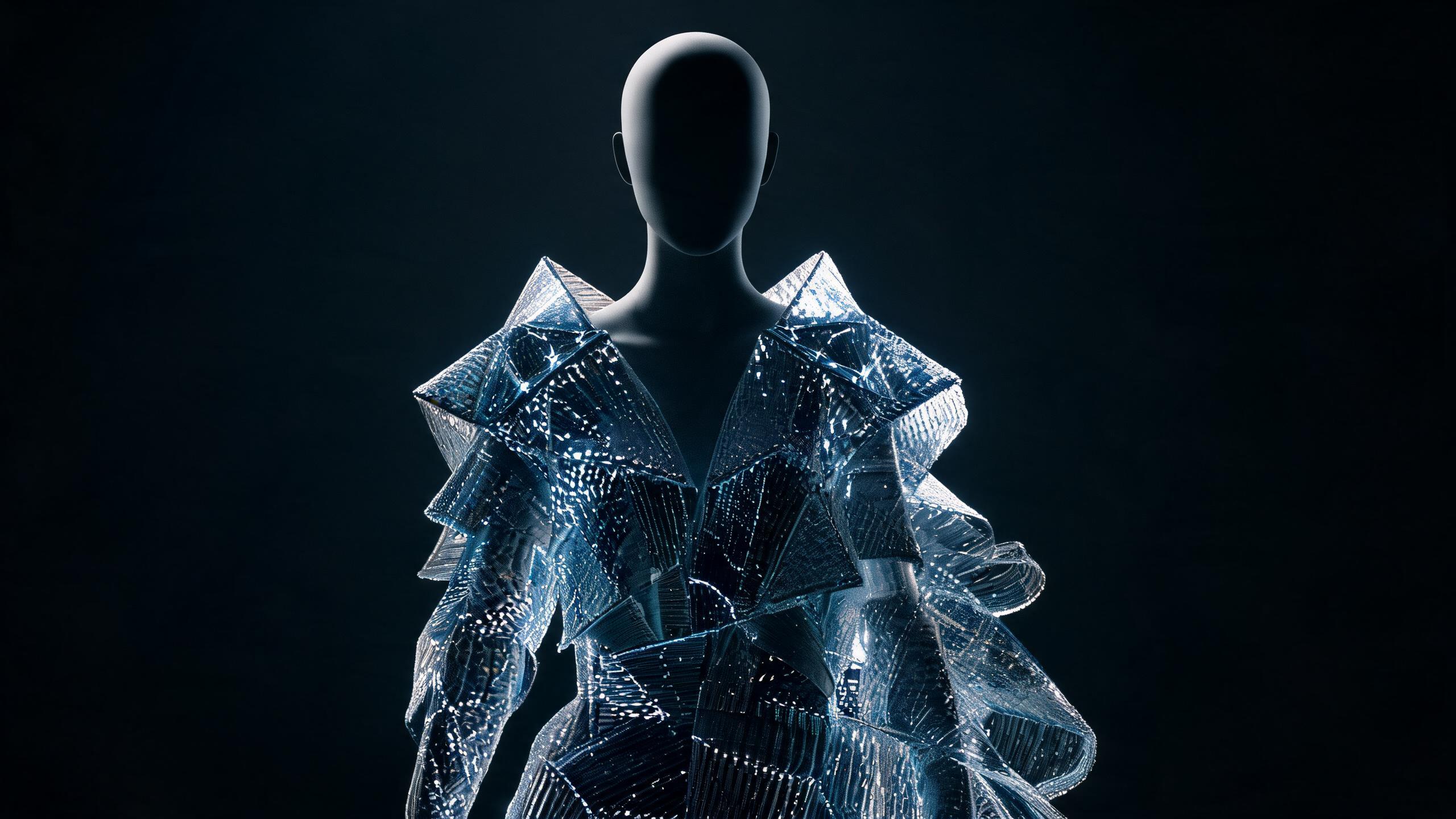
High fashion is currently experiencing a split. On one side, we see the rise of "Algorithmic Couture," where AI generates impossible geometries that are then realized by master craftspeople. On the other, there is a hard pivot toward "Deep Humanism," where brands explicitly reject digital assistance to maintain a sense of scarcity and soul.
According to Gartner (2025), 80% of fashion retailers will utilize generative AI to provide hyper-personalized shopping experiences by 2027. However, the most expensive brands may use AI exclusively for backend logistics while keeping the "front of house" entirely human. This creates a new luxury tier based on the absence of automation.
The gap between these two worlds is where the real innovation happens. Generative AI tools allow for the democratization of bespoke tailoring. What was once available only to the 0.1% via Savile Row is now being digitized through computer vision and generative pattern-making. This transition is documented in the movement from prompt to pattern: a guide to designing custom clothing with AI, illustrating how the tool handles the math so the human can handle the vision.
👗 Want to see how these styles look on your body type? Try AlvinsClub's AI Stylist → — get personalized outfit recommendations in seconds.
Will Generative AI Tools Replace the Creative Director Role?
The role of the Creative Director is evolving into that of a "Prompt Engineer and Systems Architect." Instead of drawing a single jacket, the director defines the parameters—the mood, the era, the fabric constraints, and the emotional resonance—and the generative AI tools produce the variations. The human makes the final decision.
This is a shift from "creation" to "selection." In a world of infinite options, the ability to say "no" is the only thing that creates brand identity. If a brand uses AI to generate everything, it eventually loses its "edge" and regresses to the mean of its training data. This is exactly why high fashion is rejecting the flawless gloss of AI runways; the lack of human friction makes the work feel disposable.
Human fashion designers who survive this transition will be those who treat AI as a high-speed intern. They will use the tools to handle the heavy lifting of grading, pattern layouts, and trend analysis, while they focus on the brand's philosophical direction. The creative director of 2026 is a shepherd of an AI-driven ecosystem, not a solitary genius with a sketchbook.
Outfit Formula: The Hybrid Aesthetic (Human + AI)
- Top: A structured, AI-optimized blazer with non-Euclidean lapel geometry.
- Bottom: Hand-distressed vintage denim (human intervention to break the machine's perfection).
- Shoes: 3D-printed generative footwear designed for the wearer's specific gait.
- Accessories: A legacy watch or heirloom piece (grounding the outfit in history).
How Is AI Rebuilding Fashion Commerce From First Principles?
The current state of fashion e-commerce is a mess of filters and "you might also like" widgets that rarely work. Human fashion designers vs generative AI tools is the wrong framing for the commerce problem. The real conflict is between "Search" and "Intelligence." Search requires the user to know what they want; Intelligence knows what the user needs before they do.
AI-native fashion infrastructure allows for the creation of a private AI stylist that genuinely learns. This is not a chatbot that parrots "that looks great on you." It is a system that analyzes the user's dynamic taste profile—how their preferences change with the weather, their mood, and their social calendar.
| Goal | Traditional Retail Approach | AI-Native Infrastructure Approach |
| Product Discovery | Keyword search and static filters | Generative discovery based on visual taste |
| Inventory Management | Trend forecasting (often wrong) | On-demand generative production |
| Styling Advice | Generic lookbooks | Personalized outfit models derived from user data |
| Sustainability | Mass production and clearance sales | Precision matching to reduce returns |
What Is the Future of the AI Stylist?
The AI stylist of 2026 is not a "feature" on a website. It is a persistent layer of intelligence that sits between the user and the entire global fashion market. It understands the difference between a "trend" (which is a collective noise) and a "personal style" (which is an individual signal).
For many consumers, the choice between free vs. paid AI fashion stylist apps comes down to the depth of the data model. A free tool might suggest a white t-shirt because it’s a bestseller. A sophisticated style model suggests a specific weight of Japanese cotton t-shirt because it knows you value tactile quality over brand logos.
The future is a world where every user has a personal style model that is as unique as their fingerprint. Human fashion designers will design the components of the world, and generative AI tools will assemble them into a personalized reality for each individual. This isn't just about clothes; it's about the end of the "average" consumer.
Designing with AI: Dos vs. Don'ts
| Do | Don't |
| Use AI to simulate fabric drape and movement. | Use AI to copy a competitor's signature style. |
| Use AI to identify "white space" in your wardrobe. | Rely on AI to define your brand's core "vibe." |
| Treat AI output as a starting point for human editing. | Accept the first iteration of an AI prompt as a final design. |
| Build a private style model that learns from your wear-data. | Feed the AI generic trend data and expect unique results. |
Why Does Data-Driven Style Intelligence Beat Trend-Chasing?
Trend-chasing is an exhausting, low-margin race to the bottom. It relies on the "broken" model of fashion where brands guess what will be popular six months in advance. Data-driven style intelligence, powered by generative AI tools, allows for a more responsive and sustainable system. By analyzing the intersection of human fashion designers' visions and real-time user style models, the industry can move toward a pull-based supply chain.
In this new landscape, the value of a garment is tied to its "utility within a style model." If an item doesn't fit the user's existing taste profile or solve a wardrobe gap, it shouldn't exist. This is the ultimate promise of the technology: a reduction in waste and an increase in personal expression.
The tension between human fashion designers vs generative AI tools is ultimately productive. It forces humans to be more human—more creative, more empathetic, more daring—while the machines handle the logic of the system. The result is a fashion landscape that is more efficient, more personal, and more intelligent than anything we have seen before.
AlvinsClub uses AI to build your personal style model. Every outfit recommendation learns from you. Try AlvinsClub →
Summary
- By 2026, the interaction between human fashion designers vs generative AI tools will transition from a debate over job replacement to a structured division of cognitive labor.
- While AI can process thousands of textile patterns rapidly, the primary distinction between human fashion designers vs generative AI tools remains the human ability to provide cultural context and irreducible intent.
- McKinsey reports that generative AI has the potential to add $275 billion to the operating profits of the apparel and luxury sectors over the next five years.
- AI integration allows design teams to automate low-value administrative and iterative tasks that historically consumed 60% of their total working time.
- Luxury brands are responding to the rise of automation by marketing a "humanity premium" that emphasizes the unique value of hand-stitched seams and intentional creative imperfections.
Frequently Asked Questions
How will human fashion designers vs generative AI tools collaborate in 2026?
Human fashion designers vs generative AI tools will operate through a division of cognitive labor where technology handles data processing and humans focus on emotional storytelling. This partnership allows for high-dimensional creative exploration that was previously impossible within traditional design timelines.
What is the difference between human fashion designers vs generative AI tools in luxury branding?
The core distinction between human fashion designers vs generative AI tools lies in the human capacity for cultural nuance and the machine's ability to synthesize vast datasets. While AI excels at rapid pattern recognition and iteration, human designers provide the subjective taste and ethical oversight required for luxury brand prestige.
Can human fashion designers vs generative AI tools coexist in high-end couture?
The relationship between human fashion designers vs generative AI tools is evolving into a structural re-engineering of the creative process rather than a competition. Luxury brands are increasingly using this intersection to personalize consumer experiences while maintaining the artisanal heritage that defines high-end couture.
How does generative AI impact luxury fashion design?
Generative AI impacts luxury fashion by integrating complex consumer data directly into the initial sketching and conceptualization phases. This technology streamlines technical production tasks, allowing creative directors to spend more time on brand vision and high-level strategy.
Why is human creativity still valuable in the age of AI fashion?
Human creativity remains essential because luxury consumers prioritize the authentic narrative and craftsmanship that only a person can provide. AI tools lack the lived experience and emotional depth necessary to define new cultural movements or establish profound brand legacies.
Is generative AI replacing fashion designers in the luxury market?
Generative AI is not replacing fashion designers but is instead transforming the role into one of curation and high-level creative direction. By 2026, the industry will value designers who can effectively pilot AI tools to enhance their unique creative signatures.
This article is part of AlvinsClub's AI Fashion Intelligence series.
Related Articles
- Stylist or Software? Comparing human taste with AI fashion engines
- Free vs. paid AI fashion stylist apps: Is the upgrade worth it?
- From Prompt to Pattern: A Guide to Designing Custom Clothing with AI
- Why High Fashion is Rejecting the Flawless Gloss of AI Runways
- Smart styling: Comparing AI-powered and manual wardrobe gap analysis