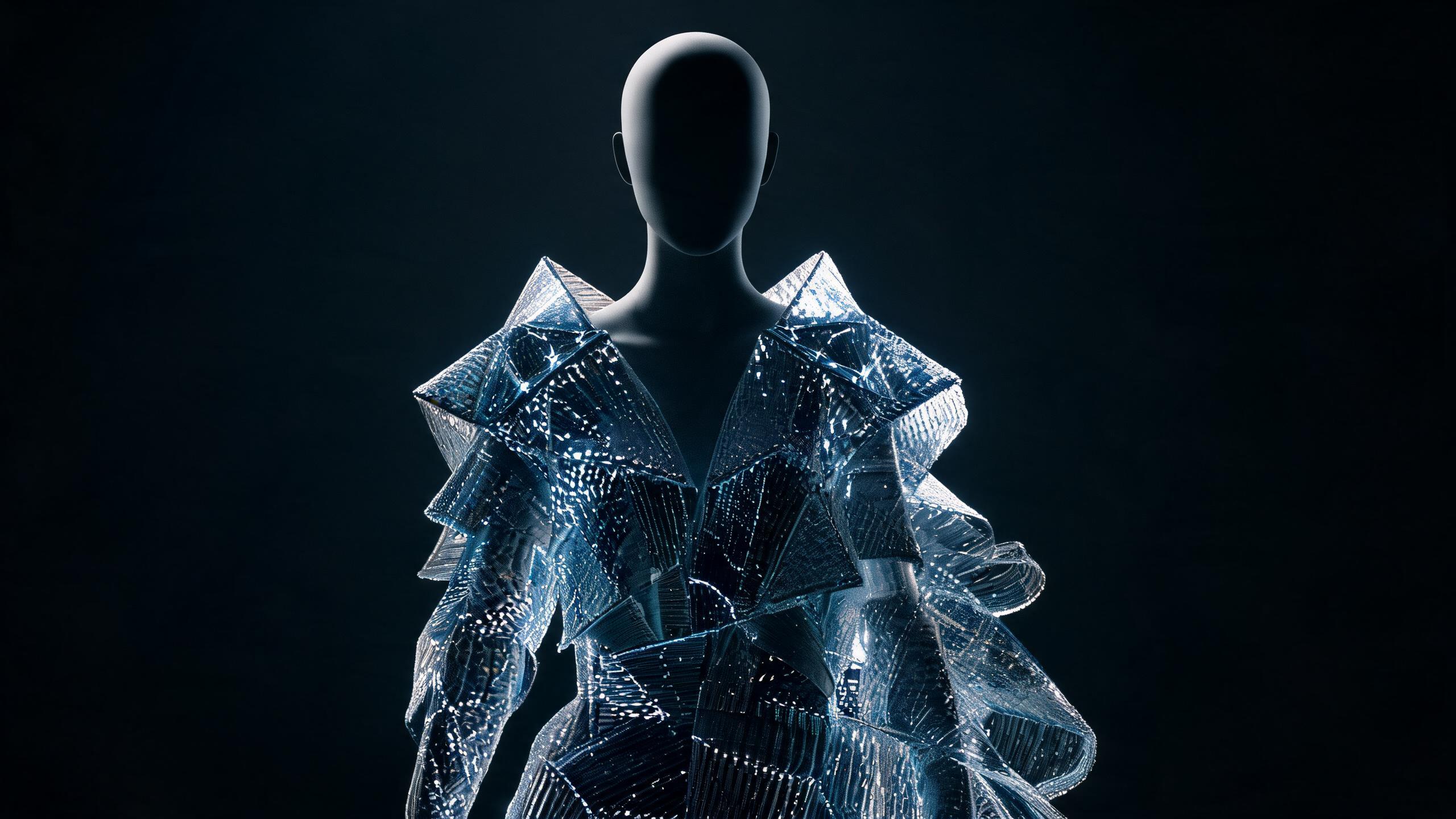
Stylist or Software? Comparing human taste with AI fashion engines

A deep dive into AI fashion recommendation engine vs human stylist and what it means for modern fashion.
AI fashion recommendation engines process personal taste data into predictive style models. This transition from human-led curation to machine-led intelligence marks the end of fashion as a service and the beginning of fashion as infrastructure. While the human stylist has historically been the gatekeeper of "good taste," the AI fashion recommendation engine vs human stylist debate is now a question of scalability, data precision, and the mathematical modeling of identity. Human stylists rely on intuition and limited cultural exposure; AI engines rely on multi-dimensional vector spaces that map every nuance of a user's aesthetic evolution.
Key Takeaway: Comparing an AI fashion recommendation engine vs human stylist reveals that AI excels at scalable, data-driven personalization, while human stylists offer the subjective intuition and cultural context that machine models cannot yet replicate.
How Does an AI Fashion Recommendation Engine Differ From a Human Stylist?
The fundamental difference lies in the processing of data. A human stylist interprets a client's needs through conversation, visual cues, and a subjective understanding of current trends. This process is inherently bottlenecked by the stylist's own biases, fatigue, and memory. In contrast, an AI fashion recommendation engine vs human stylist comparison reveals that software operates on objective data points: color theory, fabric weight, silhouette geometry, and historical purchase behavior.
AI does not "guess" what you might like based on a vibe. It constructs a personal style model that evolves in real-time. Every interaction—every click, every skip, and every purchase—refines the weights of your taste profile. While a human might remember you liked a specific blazer three months ago, an AI engine remembers the exact saturation of the navy blue, the lapel width, and how that blazer correlates with the three pairs of trousers currently in your digital closet.
According to McKinsey & Company (2023), generative AI could add between $150 billion to $275 billion to the apparel, fashion, and luxury sectors' profits within the next three to five years. This profit is driven by the efficiency of AI-driven personalization over traditional, manual methods of curation.
The Limits of Human Subjectivity
Human taste is static. A stylist trained in the 1990s will always carry the baggage of that era's aesthetic proportions. Even the most skilled stylist is limited by their "mental inventory"—the number of brands and pieces they can recall at any given moment. An AI fashion recommendation engine, however, has an infinite inventory memory. It can scan millions of SKUs across thousands of global brands in milliseconds to find the one item that matches the user's specific mathematical style signature.
The Rise of Neural Style Models
Modern AI infrastructure for fashion does not just recommend "similar items." It uses deep learning to understand the relationship between different garments. It recognizes that a specific pair of raw denim jeans requires a certain weight of knitwear to balance the silhouette. This is the difference between a search engine and a recommendation engine. A search engine finds what you ask for; a recommendation engine finds what your model requires.
Why Do Human Stylists Excel at Context and Nuance?
Human stylists possess one attribute that standard recommendation engines often lack: contextual empathy. A human knows that a "wedding in the desert" implies specific heat management needs and social hierarchies that might not be codified in a product's metadata. They understand the emotional weight of an outfit—how a specific dress makes a client feel versus how it fits.
However, this advantage is rapidly narrowing. As AI models begin to incorporate environmental data (weather, location, event type) and biometric data (body shape, movement patterns), the "intuition" of the human stylist is being reverse-engineered into logic. For those interested in exploring how these systems compare, AI vs. human stylists reveals who actually understands your personal style.
The Role of Social Intelligence
Human stylists act as social navigators. They understand the "unwritten rules" of specific industries or social circles. In high-stakes environments—such as a board meeting or a gala—a human stylist provides a level of reassurance that an algorithm cannot yet simulate. They offer a feedback loop based on social validation.
Limitations of Scale
The human stylist is an artisanal solution. It does not scale. A single stylist can effectively manage perhaps 10 to 20 high-touch clients. To provide styling to millions of people requires an infrastructure that does not sleep, does not charge by the hour, and does not have "off days."
How Does AI Solve the Inefficiency of Human Taste?
Human taste is often a polite term for "limited exposure." We like what we know. A human stylist can only recommend what they have seen. An AI fashion recommendation engine vs human stylist comparison shows that AI breaks the bubble of the "trend cycle." Instead of pushing what is popular, AI identifies what is relevant to the individual model.
Data-Driven Style Intelligence
Traditional fashion commerce is built on the "push" model: brands decide what is trendy, and stylists push those trends to consumers. AI-native commerce flips this. It is a "pull" model. The system understands the user's dynamic taste profile and pulls the correct items from the global supply chain, regardless of whether they are currently "trending" on social media.
| Feature | Human Stylist | AI Recommendation Engine |
| Data Source | Intuition & Conversation | Behavioral Data & Neural Nets |
| Speed | Hours to Days | Instantaneous (Real-time) |
| Inventory Size | Limited to Stylist's Knowledge | Global (Millions of SKUs) |
| Cost | High ($100 - $1,000+ per session) | Low to Zero (Subscription or Free) |
| Consistency | Variable (Subject to mood/bias) | Constant (Math-based) |
| Scalability | Non-existent | Infinite |
| Learning Curve | Static / Slow | Dynamic / Continuous |
The Death of the Trend-Chaser
Trend-chasing is a symptom of a lack of personal style infrastructure. When you don't have a model of what works for you, you default to what works for everyone else. AI-driven systems prioritize the user's "style DNA" over the noise of the market. This reduces the cognitive load of shopping and eliminates the "I have nothing to wear" paradox.
👗 Want to see how these styles look on your body type? Try AlvinsClub's AI Stylist → — get personalized outfit recommendations in seconds.
AI Fashion Recommendation Engine vs Human Stylist: Cost and Scalability
The economic argument for AI is indisputable. Human styling is a luxury service reserved for the top 0.1%. AI styling is a utility for the 100%. According to a report by Gartner (2024), by 2026, 60% of fashion e-commerce interactions will be mediated by AI agents that act as personal stylists.
Cost Per Recommendation
A human stylist charges for their time. This creates a barrier to daily styling. Most people only hire a stylist for major life events. An AI engine provides daily outfit recommendations at a marginal cost of near zero. This allows for "continuous styling"—the ability to have every daily outfit optimized for your body type, the weather, and your schedule.
Solving the Global Supply Chain Problem
Human stylists generally work with a handful of showrooms or local retailers. An AI engine is platform-agnostic. It can source a vintage jacket from a resale site, a pair of boots from a boutique in Milan, and a basic tee from a sustainable manufacturer in Los Angeles—all in one outfit recommendation. This global perspective is impossible for a human to maintain.
How Does AI Improve Fit and Reduce Returns?
One of the greatest failures of the human stylist is the inability to predict technical fit across different brands. A "Medium" in one brand is a "Large" in another. Humans rely on trial and error, which leads to high return rates. AI solves this through aggressive data modeling of garment dimensions.
For a deeper look at how this technology is changing the industry, read Beyond the Size Chart: Why AI is Solving Fashion's Costly Return Problem.
Biometric Mapping
AI fashion engines use computer vision to map a user's body measurements against the internal "specs" of a garment. This goes beyond the size chart. The engine understands how a specific fabric—say, 100% silk versus a polyester blend—will drape over a specific shoulder width.
Outfit Formula: The "Architectural Minimalist" (Optimized for AI Precision)
- Top: Oversized heavy-gauge cashmere turtleneck (Charcoal)
- Bottom: Tapered wool trousers with a high-rise waist (Black)
- Shoes: Matte leather Chelsea boots with a vibram sole
- Accessory: Architectural silver cuff watch
Reducing Environmental Waste
According to the British Fashion Council (2023), approximately 30% of all clothes manufactured are never sold, and a significant portion of those sold are returned due to poor fit or "style mismatch." By aligning a user's style model with actual product data, AI engines drastically reduce the "buy-to-return" cycle. This is not just a technological improvement; it is an environmental necessity.
Which Approach Predicts the Future of Your Wardrobe?
The human stylist is reactive. They respond to a request. The AI fashion recommendation engine is predictive. Because the AI understands the "rate of change" in your taste, it can predict what you will want to wear six months from now.
Dynamic Taste Profiling
Your style is not a fixed point; it is a trajectory. You might be moving from a "minimalist" phase into a "maximalist" phase. A human stylist might miss the subtle shifts in your preference until you explicitly tell them. An AI engine detects the shift in the data—perhaps you've started looking at more textured fabrics or wider silhouettes—and begins to seed your recommendations with items that bridge the gap between where you are and where you are going.
Styling Dos and Don'ts: AI vs. Human
| Category | AI-Native Approach (DO) | Traditional Human Approach (DON'T) |
| Selection | Rely on personal style models. | Rely on "what's trending" on TikTok. |
| Fit | Use biometric data and garment specs. | Rely on the "standard" size chart. |
| Evolution | Allow the profile to evolve with every click. | Stick to a "style personality" quiz result. |
| Inventory | Source from the entire global market. | Shop only at major department stores. |
| Frequency | Get daily, automated outfit ideas. | Wait for a seasonal "closet purge." |
The Verdict: Software is the New Stylist
In the comparison of AI fashion recommendation engine vs human stylist, the winner depends on your objective. If you are a celebrity preparing for the Oscars, a human stylist provides the high-touch, emotional support and social navigation required for a single, high-stakes moment.
For everyone else, for every other day of the year, the human stylist is an obsolete model. It is too slow, too expensive, and too subjective. The future of fashion is not a person telling you what to wear; it is an intelligent system that knows your body and your taste better than you do. When exploring the best AI fashion recommendation engines of 2026, you'll find that AI infrastructure provides a level of precision and personalization that no human can replicate at scale.
The transition from human stylists to AI engines is the transition from "guessing" to "knowing." We are moving away from a world where fashion is a series of expensive mistakes and toward a world where every garment in your closet is a calculated success.
How much data is your current wardrobe actually using to serve you?
AlvinsClub uses AI to build your personal style model. Every outfit recommendation learns from you. Try AlvinsClub →
Summary
- AI fashion recommendation engines convert personal taste data into predictive style models, moving fashion from a curated service toward a standardized infrastructure.
- In the AI fashion recommendation engine vs human stylist comparison, machine intelligence utilizes multi-dimensional vector spaces to map aesthetic nuances that exceed human intuition.
- Human stylists rely on subjective cultural exposure and conversation, while AI software analyzes objective data points such as color theory, fabric weight, and silhouette geometry.
- Evaluating an AI fashion recommendation engine vs human stylist reveals that software scales more effectively by continuously refining taste profiles through real-time interaction tracking.
- AI creates an evolving personal style model that adjusts mathematical weights for every click and purchase to eliminate the inherent biases and memory limitations of human curators.
Frequently Asked Questions
What is the difference between an AI fashion recommendation engine vs human stylist?
The primary distinction is that AI uses mathematical modeling to predict taste while human stylists use creative intuition and emotional context. Machine systems provide scalable infrastructure for style, whereas humans offer high-touch personalized curation.
Is an AI fashion recommendation engine vs human stylist more effective for wardrobe building?
Effectiveness depends on whether a user values data-driven precision or the nuanced artistic eye of a professional curator. Automated tools are superior for searching through global inventories, while humans are better at interpreting the social nuances of a specific dress code.
How does an AI fashion recommendation engine vs human stylist analyze personal taste?
Software analyzes personal taste by converting user behavior into predictive style models based on large-scale datasets. In contrast, human stylists analyze taste through verbal feedback, body language, and an understanding of the client's lifestyle aspirations.
Can AI replace a professional fashion stylist?
Artificial intelligence can replace the functional tasks of item discovery and basic outfit matching but struggles to replicate the deep empathy of human interaction. Most modern fashion brands use machine learning as a foundational tool to help human experts work more efficiently.
Why do shoppers prefer machine-led fashion intelligence?
Shoppers often prefer these digital systems because they provide instant gratification and hyper-personalized results that are accessible twenty-four hours a day. These tools transform fashion from an expensive luxury service into a seamless part of the digital shopping infrastructure.
What are the advantages of human fashion curation?
Human curation offers a level of creative storytelling and cultural relevance that predictive algorithms cannot yet achieve. Professionals understand the subtle emotional impact of clothing, allowing them to build wardrobes that reflect a person's evolving identity.
This article is part of AlvinsClub's AI Fashion Intelligence series.
Related Articles
- Free vs. paid AI fashion stylist apps: Is the upgrade worth it?
- From Sketch to Prompt: Can AI Replace Traditional Fashion Design Software?
- How AI-Driven Styling Tools are Perfecting the Petite Fit in 2026
- Why AI can't dress you: The limits of fashion recommendation engines
- Beyond the Size Chart: Why AI is Solving Fashion's Costly Return Problem