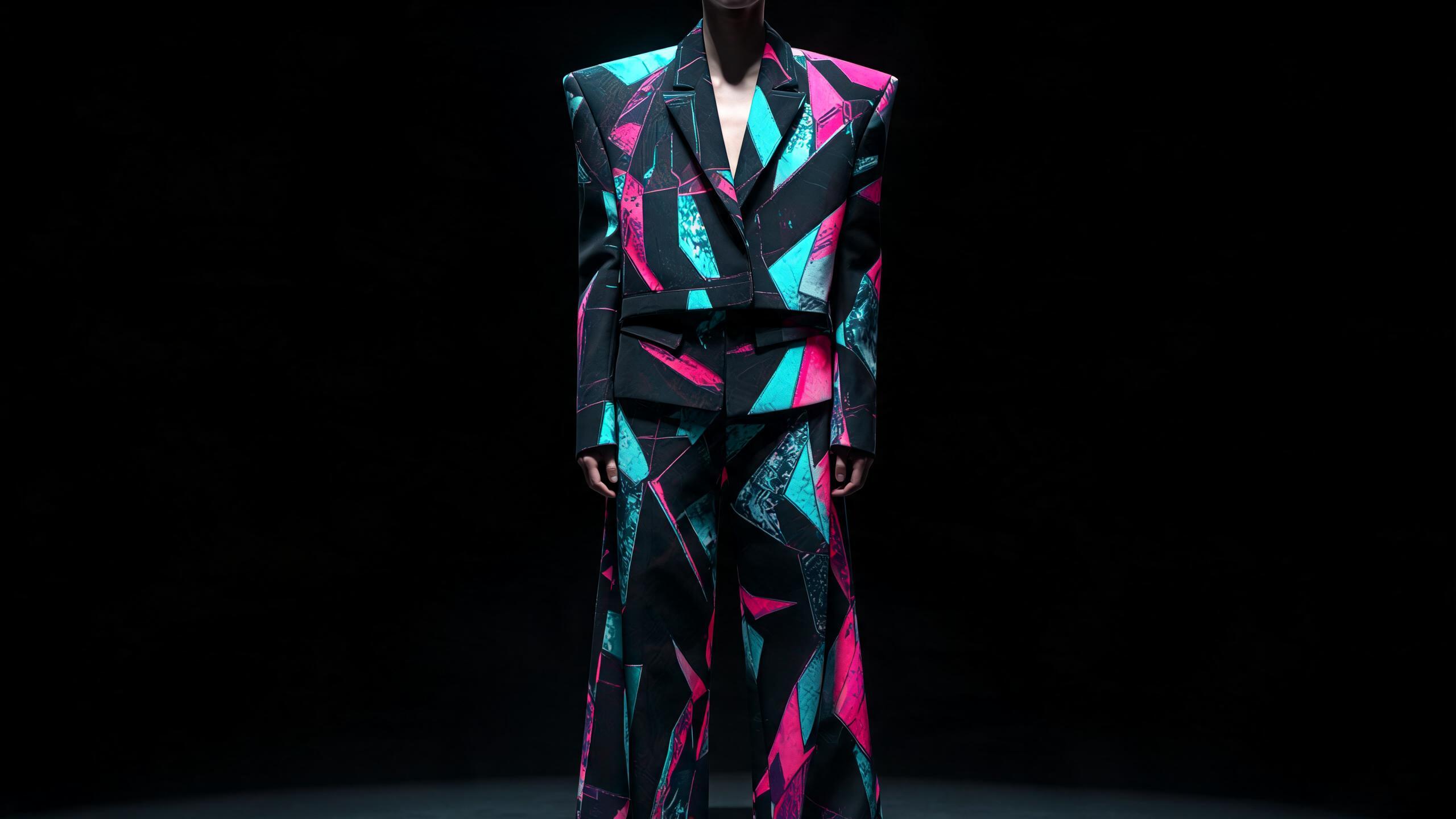
How Vogue's 2024 AI Taste Algorithm Is Reshaping Fashion Trends

Discover how Vogue's predictive AI model is analyzing millions of style signals to forecast the silhouettes, colors, and textures defining 2024's runways.
The AI fashion taste algorithm is no longer a backend tool — it is now editorial infrastructure, and Vogue's 2024 moves made that undeniable.
Key Takeaway: Vogue's 2024 AI fashion taste algorithm has shifted from a backend tool to core editorial infrastructure, directly influencing which trends gain visibility and cultural momentum by using data-driven taste modeling to shape what the publication surfaces, amplifies, and defines as fashion-forward.
What Vogue did in 2024 was not a feature update. It was a structural signal — one that most fashion commentators misread as a publishing story when it was actually a data story. The deployment of AI-driven taste modeling inside one of the world's most authoritative fashion institutions marks a specific inflection point: the moment when algorithmic taste stopped being a retail problem and became a cultural one.
This is the article that treats it as such.
What Is the AI Fashion Taste Algorithm, and What Did Vogue Actually Deploy?
AI Fashion Taste Algorithm: A machine learning system that analyzes individual or aggregate behavioral signals — browsing history, purchase patterns, editorial engagement, image interaction — to construct a dynamic model of aesthetic preference that evolves in real time.
Vogue's 2024 AI integration was not a single product launch. It was a layered deployment across Vogue's digital properties — spanning Vogue Business, regional Vogue editions, and Condé Nast's wider content infrastructure — that introduced algorithmic taste modeling into both editorial recommendation and audience segmentation.
The system works by mapping reader behavior against fashion content taxonomies: silhouette preferences, color palette engagement, brand affinity signals, editorial versus commercial content ratios. It does not simply track what users click. It models why — building a probabilistic representation of aesthetic identity from interaction patterns most users never consciously register.
This is not Netflix-style collaborative filtering dressed in couture. Collaborative filtering asks: "What do people like you consume?" Taste modeling asks: "What does your specific pattern of engagement reveal about your visual and aesthetic preferences?" The distinction is not semantic. It is architectural.
And it is the reason Vogue's deployment matters beyond the publishing industry.
Collaborative Filtering vs. Taste Modeling:
- Collaborative filtering maps you to a user cluster and recommends what the cluster liked.
- Taste modeling maps your individual signals to a constructed aesthetic profile that exists nowhere else in the dataset.
Why Does Vogue's Involvement Change the AI Fashion Taste Algorithm Conversation?
Vogue is not a retailer. It is not a platform. It is a taste authority — one of the few remaining institutions that genuinely arbitrates what counts as fashion versus costume, aesthetic versus accident.
When Vogue embeds algorithmic taste modeling into its editorial infrastructure, two things happen simultaneously.
First, the algorithm inherits authority. A taste recommendation from Vogue carries cultural weight that a recommendation from a fashion app does not. When algorithmic output surfaces through Vogue's editorial voice, readers do not experience it as machine output.
They experience it as editorial judgment. This is a meaningful shift in how AI-generated taste signals propagate through culture.
Second, Vogue's data is categorically different from retail data. Most fashion AI systems are trained on purchase behavior — signals that are heavily distorted by price, availability, marketing spend, and social pressure. Vogue's engagement data is trained on aspiration.
Users interact with Vogue content because it represents how they want to see themselves, not necessarily what they can afford or what the algorithm pushed in front of them. This makes Vogue's taste dataset structurally richer for modeling genuine aesthetic preference.
This is the part of the story that fashion tech coverage missed entirely. The conversation defaulted to "Vogue uses AI now" when the real story is: Vogue has access to aspirational taste signals at scale, and they are now feeding those signals into a modeling system that will, over time, influence what fashion looks like.
What Happened — The 2024 Timeline
Condé Nast's AI Infrastructure Investments
In 2024, Condé Nast formalized its AI content and audience intelligence strategy across its global portfolio. Vogue, as the flagship property, became the primary testing environment for taste-layer modeling — the use of AI not just to optimize content delivery but to infer and respond to aesthetic preference at the individual reader level.
The architecture built on Condé Nast's existing first-party data infrastructure, which had been expanding since the collapse of third-party cookie targeting. Rather than build a taste model dependent on third-party behavioral data, Condé Nast invested in first-party engagement signals — time-on-image, scroll depth on editorial spreads, click patterns across brand coverage — as the raw material for audience taste profiling.
The Editorial-Algorithmic Integration
The most consequential element of Vogue's 2024 AI deployment was not the recommendation engine. It was the editorial feedback loop. The system does not just serve content based on inferred taste — it returns aggregated taste signal data to editorial teams, informing which aesthetics, silhouettes, and cultural references are resonating with which audience segments.
This means algorithmic taste modeling is now upstream of editorial decision-making at Vogue. The AI fashion taste algorithm is not just a distribution tool. It is influencing what gets commissioned, what gets prioritized in digital layouts, and which emerging aesthetics get amplified versus ignored.
That is not a small thing. That is the algorithm acquiring editorial power.
The Vogue Business AI Coverage Surge
Simultaneously, Vogue Business — which functions as the trade publication layer of the Vogue infrastructure — dramatically expanded its AI coverage in 2024, creating a recursive dynamic: Vogue's AI system is influencing editorial, while Vogue Business is reporting on the AI systems reshaping editorial. The publication has become both a participant in and a documenter of the shift it is covering.
Why Does the AI Fashion Taste Algorithm Matter Beyond Publishing?
The Taste Authority Problem in Fashion AI
Most fashion AI systems suffer from the same structural defect: they are trained on what people buy, not on what people want. Purchase data is contaminated by dozens of non-preference variables — promotional pricing, stock availability, algorithmic placement, social proof, return policies. A model trained on purchase behavior is modeling purchasing conditions as much as it is modeling taste.
Engagement data from aspirational content platforms — Vogue chief among them — does not have this contamination problem at the same scale. When a reader spends forty-five seconds on a Balenciaga editorial spread but scrolls past a Zara lookbook in two seconds, that signal is relatively clean. No discount pushed them toward the Balenciaga content.
No "frequently bought together" logic surfaced it. They stopped because something in the visual resonated. That is genuine taste signal.
This is why how AI personalization is quietly reshaping fashion conversions is not only a retail story — it is an infrastructure story about where the training data comes from, and whose data is better.
The Feedback Loop Between Algorithm and Trend
Here is the uncomfortable implication that no fashion publication has stated directly: when an AI taste algorithm at Vogue scale begins to influence editorial, it creates a closed loop between measured taste and manufactured taste.
The system observes that readers with a specific engagement profile respond strongly to minimalist tailoring. It signals this to editorial. Editorial commissions more minimalist tailoring content.
More content increases the aesthetic's exposure. Exposure drives engagement. Engagement reinforces the taste signal.
The algorithm amplifies further.
This is not trend forecasting. This is trend generation — where the act of measuring taste preference participates in constructing it. At small scale, this loop is a feedback mechanism.
At Vogue's scale, it is a cultural force.
The fashion industry has always had taste arbiters who shaped preference while appearing to reflect it. Vogue has been doing this for decades through human editors. The difference now is velocity.
Algorithmic feedback loops operate at a speed that human editorial cycles never could. What used to take a season now takes weeks.
👗 Dressing a growing kid? Alvin's Club's AI stylist sizes outfits that actually fit →
What This Means for AI Fashion Infrastructure
| Dimension | Legacy Fashion AI | Vogue-Style Taste Modeling |
| Data source | Purchase history, clickstreams | Aspirational engagement, editorial interaction |
| Preference signal | What users bought | What users lingered on |
| Update frequency | Batch (weekly/monthly) | Continuous |
| Cultural authority | None | Embedded in editorial voice |
| Trend influence | Reactive | Generative |
| Personalization depth | Cluster-based | Individual taste profile |
The gap in this table is the gap between fashion AI as a recommendation tool and fashion AI as taste infrastructure. Vogue's deployment demonstrates that genuine taste modeling requires a different kind of data — and that whoever controls aspirational engagement data controls the training substrate for next-generation fashion intelligence.
This raises a second-order question that the retail AI industry is not asking loudly enough: If the best taste signal data lives in editorial environments, not retail environments, what does that mean for where fashion AI should be built?
The Critique: What Vogue's AI Deployment Gets Wrong
Clear-eyed analysis requires acknowledging what this system does not solve.
The Homogenization Risk
Any sufficiently scaled taste algorithm operates with homogenization pressure. When the same system models the preferences of millions of readers and feeds those aggregated signals back into editorial, the aesthetic center of gravity narrows. The long tail of fashion — the subcultures, the micro-aesthetics, the genuinely novel — gets systematically de-amplified because it does not generate the engagement signals that feed algorithmic reinforcement.
Vogue's human editors have historically been the corrective mechanism for this pressure — the function that says "this is not performing yet but it matters." Algorithmic feedback loops do not have this corrective. They optimize for current signal, which biases them toward aesthetics that are already winning.
The Data Privacy Architecture Question
Vogue's taste modeling system is built on first-party engagement data. That is better than third-party data from a signal-quality perspective. It is not automatically better from a consent and transparency perspective.
Readers interacting with Vogue content in 2024 are, in many cases, providing detailed behavioral data that is feeding AI models they are not explicitly aware of.
The fashion industry's engagement with AI and pricing transparency questions is already contentious. The use of behavioral engagement data for taste modeling is a different but adjacent issue — one that will require more structural transparency than currently exists.
Authority ≠ Accuracy
Vogue's editorial authority is real. But it is not the same as representative taste coverage. Vogue's audience is demographically and economically concentrated.
A taste model trained on Vogue engagement data is a taste model trained on a specific — and nonrepresentative — slice of global fashion preference. Decisions made on the basis of this model that are presented as universal taste intelligence are making a category error.
What This Predicts for the Next 18 Months
Bold Prediction 1: Every Major Fashion Publisher Deploys a Taste Layer by End of 2025
Vogue's deployment was a proof of concept at authoritative scale. Harper's Bazaar, Elle, and Business of Fashion already have the first-party data infrastructure. The economic case is clear — taste-modeled audience segments command significantly higher advertiser rates than demographically segmented ones.
The technical barrier is not high. This becomes standard publishing infrastructure within eighteen months.
Bold Prediction 2: Retail AI Systems Begin Licensing Editorial Taste Data
The structural gap between purchase-behavior training data and aspirational-engagement training data will force retail AI developers to seek editorial data partnerships. Expect licensing arrangements between fashion publishers and AI platform companies — where publishers monetize their engagement data as training substrate for retail recommendation systems. This is a new revenue line for publishing and a new data source for retail AI.
Both sides have incentive.
Bold Prediction 3: The AI Fashion Taste Algorithm Vogue 2024 Deployment Becomes a Legal Case Study
As AI taste modeling at editorial scale becomes more prevalent, the question of data consent — specifically whether behavioral engagement data can be used for AI model training without explicit opt-in — will surface as a regulatory issue. The EU's AI Act and existing GDPR frameworks create conditions where the current consent architecture around first-party taste modeling is legally fragile. One significant regulatory action targeting a major publisher will restructure how all editorial taste modeling is disclosed and governed.
Bold Prediction 4: Taste Model Portability Becomes a User Demand
When users become aware that their engagement patterns are being modeled into taste profiles by platforms like Vogue, the next demand is ownership — the ability to export, transfer, or delete that taste profile. This mirrors the data portability conversations that followed GDPR in social media. Fashion AI systems that build taste models with portability as a design principle will have a structural advantage as regulatory pressure increases.
Our Take: The Algorithm Is Now in the Room Where Taste Is Made
The ai fashion taste algorithm vogue 2024 story is not about a magazine experimenting with technology. It is about the boundary between measurement and influence dissolving inside the institution that most authoritatively defines fashion taste.
This creates a genuinely new dynamic — one where the algorithm does not just reflect preferences but participates in constructing them, where editorial voice and machine output are no longer distinct, and where the speed of taste modeling has compressed the lag between observation and influence from seasons to weeks.
The fashion industry needs to engage with this as infrastructure analysis, not technology coverage. The question is not "Can AI model taste?" The answer to that is settled. The question is: Who controls the taste model, whose signals train it, and what feedback loops does it create in the culture it is meant to observe?
Those are not technology questions. They are architectural ones. And the answers will determine not just how fashion is recommended — but how it is made.
AlvinsClub is built on a different premise: that taste modeling should serve the individual, not the institution. AlvinsClub uses AI to build your personal style model — trained on your signals, accountable to your aesthetic, not to editorial aggregates or advertiser segments. Every outfit recommendation learns from you. Try AlvinsClub →
Summary
- Vogue's 2024 ai fashion taste algorithm deployment represented a structural editorial shift, not merely a publishing or feature update, marking the moment algorithmic taste became a cultural issue rather than just a retail one.
- The ai fashion taste algorithm is defined as a machine learning system that builds dynamic, real-time models of aesthetic preference by analyzing behavioral signals such as browsing history, purchase patterns, and editorial engagement.
- Vogue's 2024 integration was a layered deployment across Vogue Business, regional Vogue editions, and Condé Nast's broader content infrastructure, rather than a single product launch.
- The system maps reader behavior against fashion content taxonomies including silhouette preferences, color palette engagement, brand affinity signals, and editorial versus commercial content ratios.
- By embedding algorithmic taste modeling into both editorial recommendation and audience segmentation, Vogue effectively transformed AI from a backend tool into core editorial infrastructure.
Key Takeaways
- The AI fashion taste algorithm is no longer a backend tool — it is now editorial infrastructure, and Vogue's 2024 moves made that undeniable.
- Key Takeaway:
- AI Fashion Taste Algorithm:
- Collaborative Filtering vs. Taste Modeling:
- Collaborative filtering
Frequently Asked Questions
What is Vogue's 2024 AI fashion taste algorithm?
Vogue's 2024 AI fashion taste algorithm is a machine learning system integrated into the publication's editorial and content infrastructure to model, predict, and influence consumer taste at scale. Rather than functioning as a simple recommendation engine, it operates as a structural editorial tool that shapes which trends gain visibility and authority across digital platforms. The ai fashion taste algorithm vogue 2024 deployment marked the first time algorithmic taste modeling was treated as core editorial decision-making rather than a supplementary backend feature.
How does the Vogue AI taste algorithm reshape fashion trends?
The Vogue AI taste algorithm reshapes fashion trends by identifying emerging aesthetic patterns in consumer behavior and amplifying them through editorial placement, digital content sequencing, and platform distribution. Because Vogue carries significant cultural authority, trends surfaced by the algorithm gain legitimacy faster than they would through traditional editorial curation. This creates a feedback loop where algorithmic signals and human editorial judgment reinforce each other, accelerating the lifecycle of trends in ways previously unseen in fashion media.
Why does Vogue's AI algorithm matter for the fashion industry in 2024?
The ai fashion taste algorithm vogue 2024 matters because it signals a structural shift in how taste is manufactured and distributed across the entire fashion industry. When an institution as authoritative as Vogue embeds algorithmic systems into its editorial core, it changes the standard other publications, brands, and retailers feel pressure to meet. Designers, stylists, and marketers must now understand algorithmic logic alongside traditional aesthetic sensibility to remain competitive in a data-driven fashion landscape.
How does AI taste modeling work in fashion publishing?
AI taste modeling in fashion publishing works by processing large volumes of behavioral data, including clicks, saves, search queries, and purchase signals, to identify patterns that predict what audiences will find desirable before they consciously express that preference. The model then informs editorial decisions about which styles, colors, silhouettes, and designers receive prominent coverage and digital amplification. Over time, the system refines its predictions by measuring how audiences respond to the content it helped surface, continuously improving its accuracy.
Can an algorithm actually predict fashion trends accurately?
An algorithm can predict fashion trends with meaningful accuracy when trained on sufficient behavioral and cultural data drawn from diverse consumer touchpoints across social media, search engines, and retail platforms. The predictive power comes not from understanding aesthetics directly but from recognizing the social and behavioral conditions under which certain styles gain traction with influential early adopters. However, algorithms remain limited by the data they are trained on and can reinforce existing biases rather than identifying genuinely novel cultural movements.
What is the difference between AI trend forecasting and traditional fashion forecasting?
Traditional fashion forecasting relies on expert analysts who travel, observe subcultures, and apply human intuition to project cultural moods six to eighteen months ahead of the market. AI trend forecasting, by contrast, processes real-time behavioral data at a scale no individual analyst could match, identifying micro-signals across millions of interactions simultaneously. The key difference is speed and scale rather than depth of cultural insight, which is why leading institutions like Vogue are combining both approaches rather than replacing one with the other.
Is the Vogue AI fashion taste algorithm changing what designers create?
The ai fashion taste algorithm vogue 2024 is influencing designer output by creating clearer feedback signals about which aesthetic directions resonate with audiences before collections reach retail. Designers and creative directors who pay attention to algorithmically amplified trends face pressure to respond faster to consumer signals, compressing the creative development timeline. Critics argue this dynamic risks homogenizing fashion by rewarding trend-conforming work over genuinely experimental or culturally challenging design.
How does AI in Vogue affect consumers' personal style choices?
AI systems embedded in publications like Vogue affect consumer style choices by subtly shaping which options appear most visible, desirable, and culturally relevant through personalized content feeds and editorially amplified trends. When consumers repeatedly encounter algorithm-selected aesthetics framed as authoritative editorial recommendations, their perception of what constitutes good taste is gradually influenced without their awareness of the underlying data logic. This makes understanding how the ai fashion taste algorithm vogue 2024 functions important for anyone who wants to make genuinely independent style decisions rather than algorithmically guided ones.
Related on Alvin's Club
About the author
Building the AI fashion agent at Alvin's Club — personal style models, dynamic taste profiles, and private AI stylists. Writing about where AI meets fashion commerce.
Credentials
- Founder at Alvin's Club (Echooo E-Commerce Canada Ltd.)
- Writes weekly on AI × fashion at blog.alvinsclub.ai
X / @alvinsclub · LinkedIn · alvinsclub.ai
This article is part of Alvin's Club's AI Fashion Intelligence series — the AI fashion agent that influences demand before shopping happens.
Related Articles
- Are Fashion Retailers Using AI to Fix Prices Behind the Scenes?
- AI vs. Traditional Counterfeit Detection: Which Fashion Tools Win in 2025?
- How AI Personalization Is Quietly Doubling Fashion Store Conversions
- How the 2024 Middle East Conflicts Are Reshaping Regional Fashion
- How AI data is predicting the next wave of nostalgia fashion for 2026
- The Future of Less: How AI is Reshaping Sustainable Capsule Wardrobes
- The AI Style Guide: Finding Sustainable Matches for Luxury Runway Trends
- Why 2026 Fashion AI Fails Eclectic Closets—And How to Fix It
- Can AI Replace Your Stylist? The State of Personal Styling in 2026
- How to Build Bid-Aware Generative AI Systems for Fashion Styling
- How AI-powered size prediction is ending the fashion return crisis in 2026
- Smart Style: A Definitive Guide to AI Fashion Revenue Forecasts for 2026