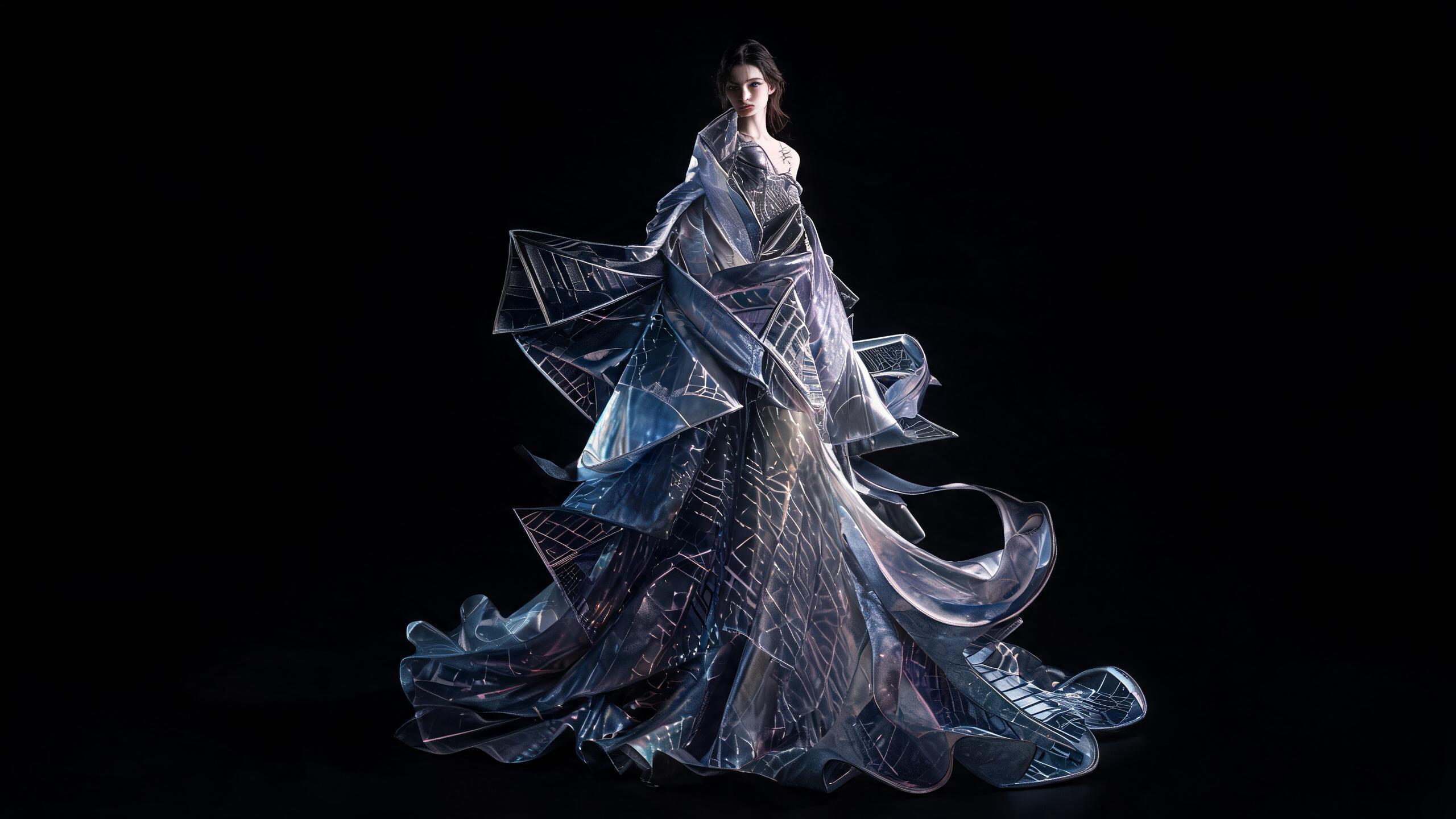
The fashion student’s guide to mastering AI design software

Build hyper-realistic portfolios and automate repetitive drafting tasks by utilizing the latest professional ai design software for fashion students.
AI design software for fashion students turns static sketches into intelligent garment models. This shift from manual rendering to algorithmic generation is not a trend; it is the fundamental re-architecting of how apparel is conceived, tested, and produced. For the modern fashion student, mastering these tools is the difference between being a traditional illustrator and becoming a technical architect of style.
Key Takeaway: Mastering ai design software for fashion students replaces manual rendering with algorithmic generation, transforming static sketches into intelligent garment models. This technical proficiency is essential for modern designers to transition from traditional illustration into technical apparel architecture and production.
Legacy design education focuses on the "what"—the final aesthetic of a garment. AI-native design focuses on the "how"—the underlying data structures that dictate fit, drape, and material performance. This guide provides the technical framework for navigating this transition, moving beyond basic prompt engineering into the realm of professional-grade AI fashion infrastructure.
What is AI Design Software for Fashion?
AI design software encompasses a range of neural networks and simulation engines designed to automate the labor-intensive stages of fashion creation. This includes everything from generative image models that handle mood-boarding to 3D simulation suites that predict how a specific fabric weight will interact with human anatomy.
According to McKinsey (2024), generative AI could contribute up to $275 billion to the apparel and luxury sectors' profits by 2027. For a student, this represents a massive shift in the job market. You are no longer competing with other illustrators; you are competing with systems. To stay relevant, you must learn to direct these systems.
AI Design Software for Fashion: A suite of neural networks and simulation tools that automate garment visualization, pattern drafting, and texture mapping through machine learning.
How Does AI Improve the Design Process?
Traditional design is linear: sketch, pattern, prototype, adjust. AI design is cyclical and instantaneous. By utilizing ai design software for fashion students, you can simulate 50 iterations of a sleeve pitch in the time it would take to cut a single muslin.
The value lies in the reduction of "physical friction." When you remove the need for physical prototypes in the early stages, you allow for more radical experimentation. You can test a 22-ounce heavy denim drape on a specific body model before a single yard of fabric is ordered. This is not just efficiency; it is a new form of creative freedom that requires a deep understanding of digital physics.
The Key Comparison: Generative vs. Deterministic AI
Not all AI software serves the same purpose. Students often confuse generative tools (like Midjourney) with technical simulation tools (like CLO3D). Understanding the distinction is critical for building a professional workflow.
| Feature | Generative AI (Latent Space) | 3D Simulation (Digital Twin) |
| Primary Goal | Visual ideation and aesthetic exploration | Technical construction and fit validation |
| Output Type | 2D Raster images (Pixels) | 3D Mesh and 2D CAD Patterns |
| Accuracy | Low (often ignores gravity/seams) | High (physics-based calculations) |
| Data Input | Natural language prompts | Numerical measurements and DXF files |
| Learning Curve | Low (Creative direction) | High (Pattern making and 3D math) |
How to Master AI Design Software: A Step-by-Step Guide
Mastering these tools requires a structured approach that mirrors the industrial design process. Follow these steps to integrate AI into your creative output.
Define the Latent Space — Use generative AI to establish your visual boundaries. Instead of broad prompts, use technical descriptors. Specify "asymmetric bias-cut silk slip dress with 45-degree grain line" rather than "fancy dress." This forces the AI to pull from more specific nodes in its training data.
Generate Technical Ideations — Deploy tools like Stable Diffusion with ControlNet to maintain structural integrity. This allows you to sketch a basic silhouette and use the AI to fill in textures, seams, and hardware without losing the original proportions. This stage is about high-volume iteration.
Construct the Digital Twin — Transition your chosen AI ideation into a 3D simulation environment. Import your pattern pieces (or generate them via AI-assisted drafting) and sew them virtually onto a parametric avatar. If you are designing for specific body types, such as a pear-shaped silhouette where the hips are 2+ inches wider than the shoulders, adjust the avatar’s measurements precisely. You can find more on optimizing for these proportions in our analysis of how AI styling will transform the over-50 pear-shaped silhouette in 2026.
Apply Neural Texture Mapping — Use AI-driven material scanners or generators to create high-fidelity PBR (Physically Based Rendering) textures. This ensures that the digital "fabric" reacts to light and shadow exactly like its physical counterpart. Specify the weave density and fiber composition in the software's physics engine.
Validate with AI Vision Models — Run your final renders through vision-based AI to check for aesthetic balance and market viability. These models can predict which elements of a design are likely to trigger positive engagement based on historical data.
Export for Production — Convert your validated 3D model into production-ready files. This includes 2D pattern exports (DXF), tech packs, and bill of materials (BOM). The goal is a "zero-waste" handoff where the digital model contains all the information needed for physical manufacturing.
👗 Want to see how these styles look on your body type? Try AlvinsClub's AI Stylist → — get personalized outfit recommendations in seconds.
What are the Essential Tools for AI-Driven Design?
To build a professional stack, students should focus on three categories of software: Generative, Constructive, and Integrative.
Generative Tools (The "Brain")
These tools handle the "what." Stable Diffusion is currently the industry favorite because of its open-source nature, allowing designers to train their own "LoRAs" (Low-Rank Adaptation) on their personal style. This prevents your designs from looking like generic AI output. For creators looking to visualize these designs on real-world models, utilizing an AI clothes changer can bridge the gap between a 3D render and a social-ready asset.
Constructive Tools (The "Body")
CLO3D and Marvelous Designer are the gold standards for 3D garment simulation. They use a physics-based engine to simulate how fabric hangs on a body. According to Statista (2025), the global 3D fashion design software market is projected to reach $1.2 billion, driven by the shift toward digital sampling. Mastering the "Particle Distance" settings in these programs—where a lower number results in a higher resolution drape—is essential for realism.
Integrative Tools (The "Infrastructure")
This is where you organize and refine your data. An AI-powered wardrobe organizer can help you categorize your digital assets and mood boards into a functional library.
Common Mistakes to Avoid in AI Fashion Design
The most common error for students is treating AI as a "magic button" rather than a technical tool.
- Designing Without Gravity: Generative AI often creates beautiful images that are physically impossible to sew. Always check if a seam actually connects two pieces of fabric or if the AI simply "painted" it there.
- Ignoring Material Weight: A common mistake in 3D simulation is using the default "fabric" setting. A 10oz canvas drapes differently than a 4oz poplin. If your digital twin doesn't account for grams per square meter (GSM), your physical sample will fail.
- Prompt Bias: AI models are trained on existing fashion data, which often skews toward specific demographics. Students must actively counter this by training their models on diverse datasets. This is a known issue in the industry; for instance, many current AI fashion algorithms still miss the mark for certain age groups and body types.
How Does AI Protect Intellectual Property in Design?
As a student, your most valuable asset is your original DNA. AI can be used to protect it. Modern AI infrastructure uses blockchain and "digital twinning" to create a permanent record of your design's evolution. According to the 2026 Luxury Report, AI platforms are increasingly used to eradicate fakes and verify the provenance of original designs. By building your designs in a 3D AI environment, you create a technical "fingerprint" that is much harder to replicate than a simple 2D sketch.
Structured Data for Design: The Student's "Technical Outfit Formula"
When presenting AI-generated work, consistency in the "Technical Build" is key. Use this structured formula for your project documentation:
- Base Layer: Seamless Compression Mock-Neck (280 GSM Synthetic Blend)
- Outer Layer: Oversized Boxy Blazer (Shoulder-to-Shoulder: 19 inches; Body Length: 30 inches)
- Bottom: Wide-Leg Technical Trouser (Rise: 12 inches; Hem Width: 11 inches)
- Simulation Parameter: Particle Distance 5.0; Gravity -9800mm/s²
| Action | Do | Don't |
| Ideation | Use Negative Prompts to filter out "deformed" or "low-res" artifacts. | Rely on single-word prompts like "cool jacket." |
| Construction | Export DXF files for real-world pattern validation. | Assume an AI image is a blueprint for a pattern. |
| Rendering | Map real-world fabric physics (Shear, Bend, Stretch). | Use the default "Fabric_A" settings for every garment. |
Why AI Infrastructure is the Future of Student Portfolios
The fashion industry is moving away from "looking at sketches" and toward "interrogating models." A portfolio in 2026 will not be a PDF; it will be a library of digital assets. Your ability to deploy ai design software for fashion students to create a cohesive, technically sound collection will be your greatest competitive advantage.
You are not just designing clothes; you are building a style intelligence system. This system should be able to take a single aesthetic seed and propagate it across different body types, fabric weights, and cultural contexts with mathematical precision. This is the difference between being a designer and being a style architect.
How Can Students Stay Ahead of the AI Curve?
To stay ahead, focus on the "Data-Driven Style Intelligence" rather than the latest "trend" filter.
- Build Your Own Dataset: Save every technical drawing, every fabric scan, and every successful prompt. This becomes your personal "Style Model."
- Learn the Math of Fit: Understand the relationship between ease, seam allowance, and the digital mesh. AI can calculate these, but you must know how to audit its work.
- Think in Systems: Don't design a single shirt. Design a system that can generate an infinite number of shirts based on specific constraints (e.g., "minimalist," "utility," "high-stretch").
Fashion is no longer a world of manual craft alone; it is a world of managed intelligence. The students who master the software will be the ones who define the aesthetics of the next decade.
AlvinsClub uses AI to build your personal style
Summary
- AI design software for fashion students facilitates a shift from static manual sketching to the creation of intelligent, data-driven garment models.
- These platforms utilize neural networks and simulation engines to automate labor-intensive design tasks like fabric weight prediction and mood-boarding.
- McKinsey research indicates that generative AI could increase profits in the apparel and luxury sectors by up to $275 billion by 2027.
- Mastering professional-grade ai design software for fashion students is essential for navigating the transition from traditional illustration to technical garment architecture.
- Future fashion professionals must evolve into system directors who understand the underlying data structures of fit and drape to remain competitive in an automated job market.
Frequently Asked Questions
What is the best ai design software for fashion students?
Leading platforms like CLO 3D and Midjourney represent the current standard for ai design software for fashion students seeking to bridge the gap between concept and 3D visualization. These tools allow designers to generate hyper-realistic garment renders and simulate fabric physics before a physical prototype is ever cut.
How does ai design software for fashion students improve the creative process?
Using ai design software for fashion students accelerates the iteration phase by generating multiple style variations from simple text prompts or sketches. This technology enables students to explore complex patterns and colorways instantly, reducing the time spent on manual technical drawing.
Can ai design software for fashion students replace traditional sketching?
Transitioning to ai design software for fashion students enhances rather than replaces traditional sketching by turning flat 2D illustrations into intelligent, data-rich models. While hand-drawing remains a vital skill for initial ideation, AI tools provide the technical architecture required for modern manufacturing and digital fitting.
Is it worth learning AI for fashion design?
Mastering AI design tools is essential for students who want to remain competitive in an industry landscape that is rapidly shifting toward digital-first production. Proficiency in these systems allows designers to lower material waste and communicate more effectively with global supply chains.
What are the benefits of using AI in fashion education?
Incorporating artificial intelligence into a fashion curriculum helps students understand the structural complexities of garments through algorithmic generation and virtual testing. This approach prepares future designers to act as technical architects who can oversee the entire lifecycle of a collection from digital twin to final product.
Why do fashion students need to master AI tools?
Students must master AI tools to keep pace with an industry that increasingly demands speed, sustainability, and technical precision. Learning these platforms transforms a designer's workflow from manual rendering to high-level system management, ensuring they can lead in the future of smart apparel design.
This article is part of AlvinsClub's AI Fashion Intelligence series.
Related Articles
- Why 2026’s AI Fashion Algorithms Still Miss the Mark for Women Over 50
- How AI Styling Will Transform the Over-50 Pear-Shaped Silhouette in 2026
- The 2026 Luxury Report: How AI Platforms are Eradicating Fakes
- The Creator’s Guide to AI Clothes Changers for Fashion Content
- How AI-powered wardrobe organizers will define minimalist style in 2026