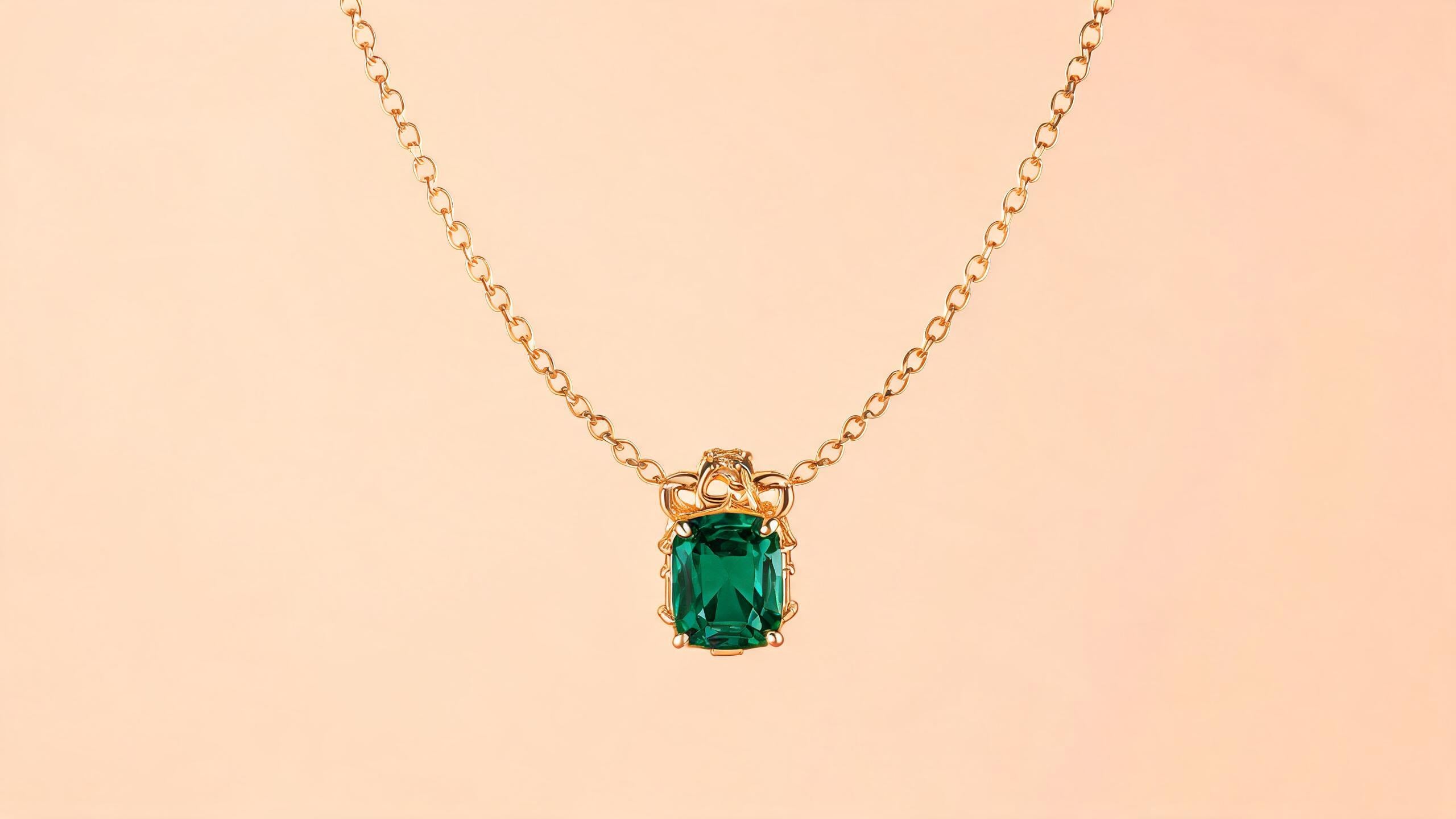
Discover the data-driven AI personalization techniques top fashion retailers use to transform browsing sessions into loyal, high-value purchases.
Fashion e-commerce conversion rate optimization using AI personalization techniques is the discipline of applying machine learning models, behavioral data analysis, and dynamic content systems to transform how individual shoppers experience a fashion store — replacing static, one-size-fits-all product pages with adaptive environments that respond to each user's demonstrated taste, fit profile, and purchase intent.
Key Takeaway: Fashion e-commerce conversion rate optimization using AI personalization techniques works by replacing static product pages with machine learning-driven experiences that adapt to each shopper's behavior and preferences — a shift that measurably doubles conversions by showing the right products to the right customers at the right moment.
The average fashion e-commerce store converts at 1–3%. That number has barely moved in a decade. Meanwhile, AI personalization infrastructure — when built correctly, not bolted on as a feature — is pushing select operators past 6%, 8%, even higher. The gap is not about marketing spend. It is about architecture. Stores that treat personalization as a recommendation widget are leaving most of the opportunity untouched. Stores that rebuild the customer journey around individual taste models are seeing compounding returns that traditional optimization cannot replicate.
This guide covers the mechanisms, the principles, the failures, and the specific techniques that separate real AI-driven conversion gains from the personalization theater that dominates fashion tech right now.
Fashion E-Commerce Conversion Rate Optimization Using AI Personalization Techniques: The systematic application of machine learning models — including collaborative filtering, computer vision, and dynamic taste profiling — to modify the fashion shopping experience in real time based on individual user behavior, stated preferences, and fit data, with the goal of increasing the percentage of visitors who complete a purchase.
Why Is the Fashion Conversion Problem Fundamentally Different from Other E-Commerce?
Fashion is not a commodity vertical. A buyer choosing between two identical USB cables makes a binary utility decision. A buyer choosing between two blazers is making a statement about identity, context, fit, aesthetic alignment, and social signal — simultaneously. Most e-commerce personalization frameworks were built for the USB cable problem. They perform poorly on the blazer problem.
The core failure mode in fashion e-commerce is relevance collapse: the moment a shopper encounters enough irrelevant products, the mental cost of filtering exceeds the perceived reward of continuing. According to Salesforce (2023), 76% of consumers expect companies to understand their needs and expectations, yet fewer than 20% of fashion shoppers report feeling genuinely understood by the platforms they use most. That gap is where conversions die.
AI personalization addresses relevance collapse not by showing fewer products, but by restructuring which products appear, in what order, framed through what aesthetic context, matched against what size and fit model. The mechanism is precise. The result is a session where every touchpoint feels curated, not browsed.
Traditional A/B testing and merchandising rules cannot produce this at scale. A human merchandiser managing product placement for 50,000 SKUs across 500,000 unique user profiles is not a scaling problem — it is an impossibility. AI is not an enhancement to that process. It is the replacement of it.
How Does a Personal Style Model Actually Work in a Fashion Store?
Most fashion apps describe their recommendation engines as "personalized." Almost none of them are running true personal style models. There is a meaningful technical distinction.
Collaborative filtering — the backbone of most fashion recommendation systems — predicts what a user will like based on what similar users liked. It is useful. It is also fundamentally a population model, not a personal one. It answers the question: "What do people like this person buy?" It cannot answer: "What fits this specific person's aesthetic logic?"
A personal style model is different. It builds a multidimensional representation of an individual's taste: color palette preferences, silhouette affinities, fabric sensitivities, occasion-based style switching, price-point comfort zones, and brand aesthetic alignment. It learns not just from purchases, but from dwell time on product images, zoom behavior, abandoned carts, return patterns, and explicit feedback loops.
The inputs that matter most, ranked by signal quality:
- Return data with reason codes — the highest-quality signal in fashion. A return labeled "fit issues" is different from "not as pictured" or "changed my mind." Each maps to a distinct model adjustment.
- Session scroll and hover patterns — where a user pauses, zooms, or repeatedly returns to a product image reveals preference before any transaction occurs.
- Cart abandonment at specific price points — reveals the elasticity boundary of that user's willingness to pay for a given category.
- Outfit saves and wishlist behavior — curated intent signals that reflect aspiration rather than impulse.
- Purchase history with time-decay weighting — recent behavior carries more predictive weight than historical behavior, because style evolves.
The model should be updated continuously, not in batch cycles. A user who just purchased a structured trench coat should see that signal propagate into their recommendation surface within the same session, not in the next week's email campaign.
What Are the Highest-Impact AI Personalization Techniques for Fashion Conversion?
Dynamic Visual Ranking
Product images are not neutral. A leather jacket photographed on a pale-skinned, slim model communicates differently to different shoppers — and that communication directly affects purchase likelihood. Advanced personalization systems use computer vision to re-rank product imagery based on the closest available model-to-shopper demographic alignment.
According to Shopify (2024), product pages that display diverse model imagery relevant to the viewing user's profile see up to 40% higher add-to-cart rates compared to single-model product pages. The mechanism is not representation for its own sake — it is cognitive ease. When a shopper can immediately visualize how a garment translates to their own body type, the mental simulation step is removed, and decision friction drops.
Predictive Size Intelligence
Size uncertainty is one of the top three abandonment triggers in fashion. The standard size chart does nothing to resolve it. AI-driven size prediction models — trained on millions of fit data points, return histories, and body measurement inputs — reduce the cognitive risk of purchase by delivering a specific size recommendation with a confidence score.
This is not a small lever. According to McKinsey & Company (2023), size-related returns account for approximately 22% of all fashion e-commerce returns, each of which costs the retailer an average of $10–$15 in reverse logistics before restocking costs. Eliminating even a fraction of that uncertainty at the point of decision directly increases net conversion value. The downstream impact of size intelligence on return rates is explored in depth here.
Real-Time Outfit Completion
A shopper viewing a product in isolation is a single-item buyer. A shopper viewing a complete outfit is a multi-item buyer. The difference in average order value is not marginal — it is structural.
Outfit completion engines use style-graph models to surface items that complete a coherent look with the anchor product being viewed. The critical distinction from "frequently bought together" logic: outfit completion is aesthetic, not transactional. It answers "what would actually look good with this?" rather than "what did other people accidentally buy at the same time?"
This requires the AI to understand:
- Color theory and palette harmony
- Silhouette balance (a voluminous top pairs with a slim bottom, not another voluminous piece)
- Occasion matching (a blazer paired with tailored trousers, not swim shorts)
- Fabric weight and seasonal coherence
When outfit completion is done correctly, it functions as a digital stylist embedded in the product page. When it is done with basic co-purchase logic, it produces recommendations that actively undermine the user's trust in the platform.
Behavioral Email and Push Personalization
The email open rate for generic fashion newsletters sits at 15–20%. The click-to-purchase rate is effectively noise. Behavioral trigger emails — sent based on specific user actions rather than calendar schedules — operate in a completely different performance bracket.
High-converting behavioral triggers in fashion:
- Back-in-stock for wishlisted items — the user has already declared intent
- Price drop on recently viewed items — reduces the price-sensitivity barrier at a moment of known interest
- Outfit completion prompt — "You bought the blazer. Here's what completes it." sent 72 hours post-purchase
- Style evolution prompt — surfacing new arrivals that match the user's evolving taste model, not last season's purchases
The timing, the product selection, and the visual presentation of each trigger should all be personalized. A generic "new arrivals" email is not behavioral personalization. It is a newsletter with a different subject line.
👗 Want to see how these styles look on your body type? Try AlvinsClub's AI Stylist → — get personalized outfit recommendations in seconds.
Do vs Don't: AI Personalization in Fashion E-Commerce
| Do ✓ | Don't ✗ | Why |
| Build taste models from behavioral signals across the full session | Rely on purchase history alone | Purchase history is a subset of intent; session behavior reveals preference before commitment |
| Update the user's style model in real time within the session | Run batch model updates weekly or monthly | Stale models recommend yesterday's preference to today's shopper |
| Use return reason codes as primary fit-model training data | Treat all returns as equivalent negative signals | The reason for a return carries the signal; the return event alone does not |
| Surface complete outfit compositions, not isolated products | Default to "frequently bought together" co-purchase logic | Co-purchase logic is transactional; outfit logic is aesthetic — they produce different results |
| Display size recommendations with a confidence score and explanation | Show a single recommended size with no context | A confidence score reduces anxiety; an unexplained size recommendation creates it |
| Test personalization layers independently, with holdout groups | Run full-page A/B tests that change multiple variables | Without isolation, you cannot attribute conversion gains to specific mechanisms |
| Re-rank product imagery based on shopper demographics | Show a single model image to all users | Cognitive ease increases when shoppers can self-reference in the product image |
| Personalize the homepage, search results, and PDP simultaneously | Apply personalization only to email campaigns | Personalization that appears only in email is a campaign feature, not an infrastructure build |
| Weight recent behavioral signals higher than historical ones | Treat all historical data as equally predictive | Style evolves; a model built on 24-month-old data reflects who the shopper was, not who they are |
| Build explicit feedback loops (thumbs up/down, style quiz entry points) | Rely exclusively on implicit behavioral signals | Explicit signals accelerate model calibration and reduce cold-start latency |
Outfit Formulas: How AI-Native Styling Logic Translates to Product Recommendations
The test of any fashion AI personalization system is whether it can produce complete, coherent outfit recommendations — not just relevant individual items. These formulas represent the output logic that a well-calibrated outfit completion engine should be able to generate:
Formula 1: Minimalist Workday — Tailored straight-leg trousers in charcoal wool (the straight leg maintains a clean vertical line without excess volume, appropriate for structured office environments) + untucked fitted cotton poplin shirt in off-white (the slight oversize at the hem softens the formality of the trouser without breaking the clean silhouette) + low-heel pointed-toe mule in tan leather (the pointed toe extends the leg line; the low heel keeps the look grounded and functional) + slim leather tote in cognac (a cognac bag bridges the off-white and charcoal without introducing a third competing neutral).
Formula 2: Weekend Architecture — High-waisted wide-leg jeans in dark indigo (high rise anchors the waist and creates proportion; the wide leg in dark denim reads as intentional structure, not casual) + ribbed mock-neck long-sleeve in camel (the mock neck adds vertical line at the center of the body; camel against dark indigo is a low-contrast combination that reads as deliberate palette work) + chunky lug-sole Chelsea boot in black leather (the Chelsea silhouette keeps the ankle clean so the wide-leg hem can break correctly; the lug sole adds weight that grounds the wide-leg volume) + oversized wool coat in oatmeal (the oversized silhouette over wide-leg denim works because both garments have volume that is contained within the same vertical plane — the coat is long enough to treat the wide-leg as part of a unified column).
Formula 3: Evening Minimal — Slip midi skirt in black matte satin (midi length reads formal without trying; matte satin has the drape of luxury with less visual noise than shiny fabrications) + fitted black ribbed long-sleeve top tucked in (all-black top-to-bottom in two textures — ribbed knit and satin — creates tonal contrast without introducing color risk) + squared-toe kitten heel in black suede (the squared toe is a geometric choice that aligns with the structural sensibility of the all-black palette; kitten heel maintains elegance at a wearable scale) + architectural drop earring in gold (a single metal accent point prevents the all-black composition from reading flat; drop earrings create vertical movement at the face without competing with the clean outfit structure).
What Are the Most Common AI Personalization Failures in Fashion E-Commerce?
The Cold-Start Abandonment Problem
Every new user arrives without behavioral data. Most fashion AI systems respond by defaulting to popularity rankings — showing what is trending, what is selling, what is generically appealing. This is a failure of design, not a limitation of AI.
Better cold-start protocol: deploy a micro-preference quiz at session entry, capturing 5–7 aesthetic signals (color preference, occasion priority, fit preference, style archetype) that prime the taste model before any behavioral data exists. This reduces the relevance collapse window from the first session, not the tenth.
Recommendation Loops
A model that only learns from what a user clicks will eventually show only what it already knows the user will click. The system converges on a narrow aesthetic band, the user feels understood in the short term, and then begins to feel bored. The technical term is filter bubble formation. The business impact is churn masked as satisfaction.
Breaking recommendation loops requires deliberate exploration injection — surfacing a small percentage of recommendations (5–10%) that are outside the user's confirmed preference zone but adjacent to their aesthetic edges. This is how taste evolves. An AI system that refuses to show a user anything unfamiliar is not a stylist. It is a mirror.
Personalization That Does Not Survive Navigation
Most fashion platforms apply personalization logic to the homepage and nothing else. The user receives a curated homepage, clicks into a product, and arrives at a generic product detail page with no connection to the personalization layer they just left. Search results are not personalized. Category pages are not personalized. The filter system does not pre-select options relevant to their profile.
This is personalization as theater. Real personalization infrastructure means the entire session is aware of the user's taste model — every ranking, every visual, every size default, every outfit suggestion.
How Does AI Personalization Interact with Fashion Trend Intelligence?
Trend data and personal taste data are not the same thing, and conflating them is a significant source of personalization failure. A system that recommends "what is trending" to everyone is not personalized. It is a slightly more current version of the bestseller list.
The correct integration: trend intelligence should operate as a filter on top of, not a replacement for, personal taste models. The question is never "what is trending?" The question is "what is trending within the aesthetic parameters of this specific user?"
A user with a consistent preference for earth tones and relaxed silhouettes should receive trend intelligence filtered through that lens — not redirected toward whatever maximalist color trend is dominating editorial coverage this quarter. The AI's job is to surface what is new and relevant to them, not what is new and relevant to the industry. For a deeper look at how AI processes trend signals at a macro level, this analysis of nostalgia fashion prediction outlines the underlying data methodology.
Key Comparison: Traditional Fashion Merchandising vs. AI Personalization Infrastructure
| Dimension | Traditional Merchandising | AI Personalization Infrastructure |
| Product ranking logic | Manual curation + bestseller rank | Real-time behavioral scoring per user |
| Size guidance | Generic size chart | Predictive size model trained on fit + return data |
| Outfit recommendations | Manually assembled "shop the look" | Dynamic outfit completion via style-graph model |
| Email triggers | Calendar-based campaigns | Behavioral event triggers with personalized content |
| New user experience | Bestsellers / trending items | Micro-quiz primed taste model |
| Model update frequency | Seasonal or manual | Continuous, within-session |
| Cold-start handling | Default to popularity | Explicit preference capture + rapid model priming |
| Conversion optimization | A/B testing site-wide changes | Personalization layer testing with holdout groups |
| Return reduction | Post-purchase surveys | Predictive size + fit intelligence at decision point |
| Taste evolution | Not tracked | Time-decay weighted model with exploration injection |
What Does the Conversion Data Actually Show?
According to Accenture (2022), 91% of consumers say they are more likely to shop with brands that provide relevant offers and recommendations. In fashion specifically — where the product catalog is vast, sizes are variable, and aesthetic alignment is critical — that preference translates into measurable conversion differences.
The stores that are doubling conversions with AI personalization are not doing one thing differently. They are doing ten things simultaneously, each informed by the same underlying taste model. The homepage is personalized. The category ranking is personalized. The size recommendation is personalized. The outfit completion is personalized. The email trigger is personalized. The search result ranking is personalized.
When all of those layers are coherent — when they all draw from the same model of who this specific user is — the session feels like being assisted by someone who knows your taste. That feeling
Summary
- Fashion e-commerce conversion rate optimization using AI personalization techniques moves beyond static product pages by using machine learning, behavioral data, and dynamic content systems to adapt the store experience to each individual shopper's taste, fit profile, and purchase intent.
- The average fashion e-commerce store converts at only 1–3%, a figure that has remained largely unchanged for a decade despite advances in digital marketing.
- Select operators implementing AI personalization as core architecture — rather than a surface-level feature — are achieving conversion rates of 6%, 8%, or higher, representing a doubling or more of industry averages.
- The critical distinction separating high-performing stores from the rest is architectural: treating personalization as a foundational customer journey system rather than a bolt-on recommendation widget.
- Fashion e-commerce conversion rate optimization using AI personalization techniques relies on specific mechanisms including collaborative filtering, computer vision, and dynamic taste profiling to deliver compounding returns that traditional optimization methods cannot replicate.
Frequently Asked Questions
What is fashion e-commerce conversion rate optimization using AI personalization techniques?
Fashion e-commerce conversion rate optimization using AI personalization techniques is the practice of using machine learning and behavioral data to create shopping experiences that adapt to each individual user's style preferences, size profile, and buying intent. Instead of showing every visitor the same product pages, AI systems analyze signals like browsing patterns, past purchases, and even time spent viewing certain items to surface the most relevant products. This approach directly addresses the gap between average fashion store conversion rates of 1–3% and the much higher rates achievable when shoppers feel the store truly understands their taste.
How does AI personalization increase conversion rates for fashion stores?
AI personalization increases conversion rates by reducing the friction between what a shopper wants and what they actually see on screen, making it far less likely they will leave to search elsewhere. Recommendation engines trained on millions of browsing sessions can predict which products a specific user is most likely to purchase and surface those items at precisely the right moment in the shopping journey. Over time, these models become more accurate as they collect more behavioral data, creating a compounding effect on revenue.
Why does a one-size-fits-all product page hurt fashion e-commerce conversion rates?
A static product page ignores the enormous variation in shopper preferences, body types, budgets, and style sensibilities that define fashion retail, meaning most visitors immediately see content that feels irrelevant to them. When shoppers cannot quickly find items that match their specific taste, they abandon the site rather than invest time scrolling through mismatched inventory. This mismatch between generic presentation and individual expectation is the core reason fashion stores have historically struggled to convert above 3%.
Can small fashion e-commerce stores afford to use AI personalization techniques?
Smaller fashion stores can access AI personalization through third-party platforms and SaaS tools that offer machine learning capabilities without requiring an in-house data science team or enterprise-level infrastructure investment. Many of these tools integrate directly with existing e-commerce platforms like Shopify or WooCommerce and operate on subscription pricing scaled to store size and traffic volume. Fashion e-commerce conversion rate optimization using AI personalization techniques is no longer exclusively a strategy for large retailers with massive tech budgets.
Is it worth investing in AI personalization for fashion e-commerce conversion rate optimization?
Investing in AI personalization for fashion e-commerce conversion rate optimization delivers measurable returns because even a modest lift in conversion rate from 2% to 3% represents a 50% increase in revenue from the same traffic. Studies across retail sectors consistently show that personalized product recommendations account for a significant share of total sales, with some fashion retailers reporting that recommendation widgets alone drive 20–30% of revenue. Given the relatively low cost of modern personalization tools compared to paid traffic acquisition, the return on investment is typically strong even for mid-sized stores.
How does AI personalization use behavioral data to improve fashion store performance?
AI personalization collects and analyzes behavioral signals such as which products a shopper clicks, how long they view an item, what they add to their wishlist, and which size filters they apply to build a dynamic profile of their preferences in real time. These profiles feed into recommendation algorithms that continuously update, so a shopper who browses minimalist white sneakers will immediately begin seeing curated outfits and accessories aligned with that aesthetic. Fashion e-commerce conversion rate optimization using AI personalization techniques depends on this loop of data collection and model refinement to deliver increasingly accurate and revenue-generating shopping experiences.
This article is part of AlvinsClub's AI Fashion Intelligence series.
Related Articles
- How AI-powered size prediction is ending the fashion return crisis in 2026
- How AI data is predicting the next wave of nostalgia fashion for 2026
- How DSW Uses AI to Solve the Paradox of Choice in Shoe Shopping
- The Future of Less: How AI is Reshaping Sustainable Capsule Wardrobes
- Steal the Spotlight: Replicate Celebrity Red Carpet Style via Budget AI
About the author
- Founder building AI-native fashion commerce infrastructure. I design autonomous systems, agent workflows, and automation frameworks that replace manual retail operations. Currently focused on AI-driven commerce infrastructure, multi-agent systems, and scalable automation.
Comments
Join the discussionNo comments yet. Be the first to comment.