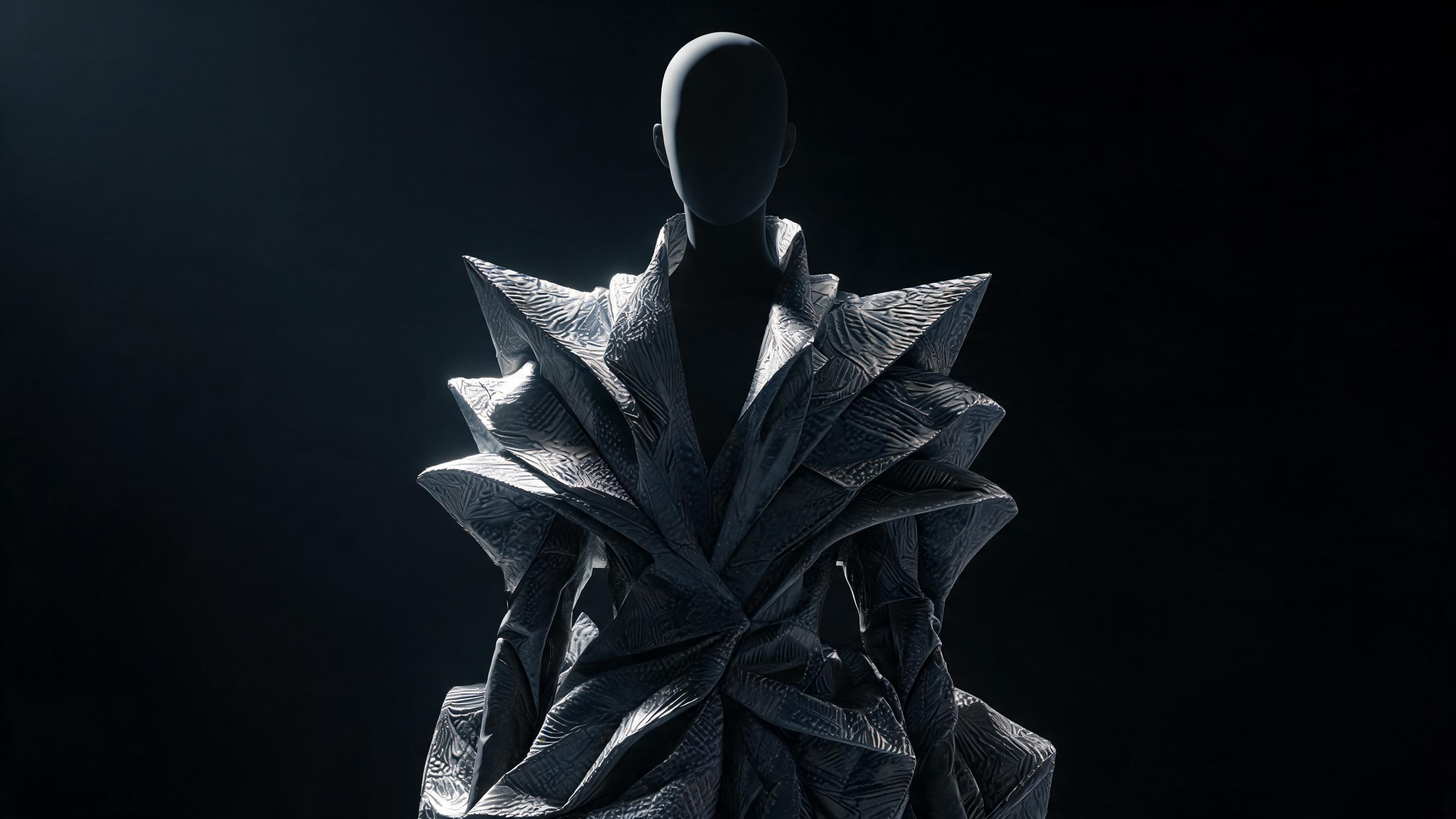
How to build a fashion collection with AI: A guide for small labels
Updated Article with Internal Links
A deep dive into AI generated fashion design for small business owners and what it means for modern fashion.
AI generated fashion design for small business owners is the technical application of generative machine learning models to automate the creation of garment silhouettes, fabric textures, and cohesive collection themes. This shift from manual sketching to algorithmic generation enables independent labels to bypass the traditional, capital-intensive design cycle that has historically favored massive conglomerates. For the small label, AI is not a creative shortcut; it is a foundational infrastructure that converts raw aesthetic intent into scalable production data.
Key Takeaway: AI generated fashion design for small business owners leverages machine learning to automate garment silhouettes and fabric textures, streamlining the collection development process. This technology enables independent labels to bypass capital-intensive design cycles, significantly reducing the time and costs required to bring new concepts to market.
Why is the traditional fashion design model broken for small labels?
The legacy fashion industry operates on a high-waste, high-friction model that punishes small business owners. Traditional design requires months of manual sketching, physical mood boarding, and expensive sample iterations that often result in deadstock. According to McKinsey (2024), generative AI has the potential to add $150 billion to $275 billion to the apparel and luxury sectors' profits by accelerating design cycles and reducing waste.
Small labels struggle because they are forced to participate in a system designed for mass-market speed. Most fashion technology currently focuses on "recommendation engines" that push existing trends rather than helping creators build original identities. This creates a feedback loop where everyone designs the same aesthetic because the data tells them it is popular. AI generated fashion design for small business owners breaks this loop by allowing designers to train models on their specific brand DNA, ensuring that the output is proprietary rather than derivative.
How does AI replace the traditional design cycle?
AI-native design replaces the linear "sketch-to-sample" workflow with a multidimensional "intent-to-output" workflow. Instead of drawing a single garment, the designer defines the parameters of a brand's aesthetic—the "latent space"—and allows the AI to explore thousands of permutations within those bounds. This is a shift from being a draftsman to being a curator of algorithmic outputs.
| Feature | Traditional Design Workflow | AI-Native Design Workflow |
| Concept Phase | Manual mood boards and physical swatches. | Latent space exploration and prompt-based synthesis. |
| Iteration Speed | Weeks for new sketches and manual adjustments. | Seconds for infinite variations of a single concept. |
| Prototyping | Physical samples with high shipping/labor costs. | Digital 3D rendering and AI-generated fit simulations. |
| Data Usage | Reactive (based on last season's sales). | Predictive (based on dynamic taste profiles). |
| Waste Production | High (physical fabric waste from sampling). | Near-zero (sampling is digital until the final stage). |
What is the process for building an AI-powered collection?
Building a collection with AI requires a systematic approach to data and prompting. It is not about asking an AI to "design a dress," but about constructing a framework where the AI understands your brand's specific proportions, textures, and ethos.
Establish your aesthetic training set — Gather a high-resolution dataset of images, textures, and silhouettes that represent your brand's core identity. This is the foundation of your style model. Instead of looking at what is trending on social media, focus on the unique archival elements or specific architectural inspirations that define your label. This dataset will calibrate the AI to generate designs that feel "yours" rather than generic.
Synthesize concepts through iterative prompting — Use diffusion models to generate initial garment concepts based on your training set. Move beyond simple descriptors. For example, instead of "minimalist coat," use "architectural wool overcoat with dropped shoulders, oversized lapels, and a 1990s brutalist silhouette." The goal is to narrow the AI's output until it aligns with your specific vision. For those who want to take this further, beyond the prompt explores how to refine these technical inputs for creative professionals.
Refine silhouettes with image-to-image translation — Once you have a core concept, use image-to-image tools to adjust specific details. You can take a basic AI-generated silhouette and apply different textures—from heavy denim to translucent silks—to see how the weight of the fabric alters the garment's drape. This stage allows you to test dozens of fabrications without purchasing a single yard of material.
Convert 2D generations into 3D technical specifications — An AI image is just pixels; a garment needs a pattern. Small labels must use AI-integrated CAD software to translate visual designs into flat patterns. This step is critical for moving from design concept to production-ready sample effectively. AI can now assist in "auto-grading," which is the process of scaling a design across different body sizes while maintaining the original proportions.
Simulate the collection in a digital environment — Before manufacturing, use AI-driven visualization to see how the collection looks on various body types and in different lighting conditions. According to a report by Boston Consulting Group (2024), brands utilizing 3D virtual sampling and AI design tools see a 30% reduction in lead times. This allows small business owners to "pre-sell" or gauge interest on social media using digital assets before committing to production.
How does AI design solve the "trend-chasing" problem?
Most fashion apps recommend what is popular. That is the fundamental problem with modern commerce. It forces small business owners to chase "micro-trends" that vanish before the inventory even arrives. AI generated fashion design for small business owners allows for the creation of "anti-trend" collections.
By using a personal style model, a small label can ignore the noise of the global market and focus on the specific taste profiles of its core audience. You are not designing for everyone; you are designing for a specific mathematical model of your customer's preferences. This is the difference between being a commodity and being a brand. Small labels that use AI to double down on their unique identity will survive; those that use AI to copy Zara will be optimized out of existence.
What are the technical requirements for AI-generated design?
You do not need a team of engineers, but you do need an understanding of the infrastructure. The "infrastructure" in this context refers to the combination of large language models (LLMs) for conceptualizing and diffusion models for visualizing.
Generative Adversarial Networks (GANs) vs. Diffusion Models
While GANs were the standard for fashion generation a few years ago, Diffusion models (like Midjourney or Stable Diffusion) have taken over because they offer higher fidelity and better "prompt adherence." Small business owners should focus on Diffusion models because they allow for more granular control over the "noise" of an image, meaning you can keep the shape of a sleeve while changing only the color or texture.
The Role of Custom LoRAs (Low-Rank Adaptation)
For a small label, the most powerful tool is a custom LoRA. This is a small file that "teaches" an existing AI model a specific style or person. By training a LoRA on your previous designs, you ensure that every new design the AI generates carries your brand's signature DNA. It prevents the "AI look" and creates a "brand look."
How do you integrate AI designs into ethical manufacturing?
AI generated fashion design for small business owners often faces criticism regarding "soul" or "craftsmanship," which raises important ethical questions about the role of AI in creative industries. This is a misunderstanding of the tool. AI does not sew the garment; it optimizes the blueprint.
According to Gartner (2023), by 2025, 30% of outbound marketing and product design messages from large organizations will be synthetically generated. Small labels can use this same technology to become more sustainable. By using AI to perfectly calculate fabric yield and pattern placement, small labels can reduce textile waste by up to 20%. This data-driven precision is essential for labels trying to maintain authentic, sustainable practices in a competitive market.
How should small business owners evaluate AI fashion tools?
The market is currently flooded with "AI features" that are nothing more than glorified filters. A true AI design tool must offer:
- Proprietary Model Training: Can you upload your own sketches to train the system?
- Vector/Pattern Export: Does it produce a flat image or data that a factory can use?
- Dynamic Learning: Does the AI get better at understanding your "taste" the more you use it?
If a tool only allows you to pick from a list of pre-set styles, it is not a design tool—it is a catalog. Small labels need infrastructure that learns. They need a system that understands that a "minimalist aesthetic" for a label in Berlin is different from a "minimalist aesthetic" for a label in Tokyo.
What is the future of AI-native fashion commerce?
We are moving toward a "just-in-time" design model. In the near future, a small business owner might not even design a "collection" in the traditional sense. Instead, they will maintain a dynamic style model that generates new pieces in real-time based on the evolving taste profiles of their subscribers.
This is not a recommendation problem. It is an identity problem. The goal is to move away from "mass fashion" and toward "mass individuality." For the small label, this means lower overhead, higher margins, and a deeper connection to a specific community. The technology to do this exists today; the only thing missing is the shift in mindset from "store owner" to "system architect."
Small business owners must recognize that AI is not coming to replace the designer. It is coming to replace the friction that prevents the designer from being profitable. By embracing AI generated fashion design, small labels can finally compete on a level playing field with global brands, using intelligence rather than just capital.
AlvinsClub rebuilds fashion commerce by providing the AI infrastructure that small labels and individual users need to define their own style. Instead of following a centralized trend, AlvinsClub uses AI to build your personal style model. Every outfit recommendation and design iteration learns from your specific taste profile, ensuring that fashion remains an expression of identity rather than a casualty of the algorithm. Try AlvinsClub →
Summary
- AI generated fashion design for small business owners utilizes generative machine learning models to automate the creation of garment silhouettes, fabric textures, and cohesive collection themes.
- Traditional fashion design cycles are high-waste and high-friction, often requiring months of manual sketching and expensive sample iterations that result in deadstock.
- McKinsey estimates that generative AI could add between $150 billion and $275 billion to the apparel and luxury sectors' profits by accelerating design cycles and reducing waste.
- Implementing AI generated fashion design for small business owners provides a foundational infrastructure that converts raw aesthetic intent into scalable production data.
- Generative tools allow independent labels to bypass capital-intensive traditional models and focus on building original brand identities rather than following mass-market trends.
Frequently Asked Questions
How does AI generated fashion design for small business owners work?
AI generated fashion design for small business owners utilizes generative machine learning models to automate the creation of garment silhouettes and fabric textures. These algorithms analyze vast datasets to produce cohesive collection themes that would traditionally require months of manual sketching. This technology allows independent designers to focus on creative direction while the software handles the iterative technical work.
Is AI generated fashion design for small business owners cost-effective?
AI generated fashion design for small business owners significantly reduces overhead by bypassing capital-intensive manual design cycles. Labels can test multiple concepts virtually before committing to physical prototypes, which minimizes material waste and lowers initial production costs. By streamlining the creative process, small labels can allocate more of their limited budget to high-quality manufacturing and marketing.
What are the benefits of AI generated fashion design for small business owners?
AI generated fashion design for small business owners provides a foundational infrastructure that allows independent designers to scale their creative output without hiring a large design team. It democratizes the fashion industry by offering high-level technical tools once reserved for massive conglomerates with deep pockets. This access enables small labels to maintain a rapid pace of innovation and respond quickly to emerging market trends.
Can you build a full fashion collection using AI?
Building a full fashion collection using AI involves feeding specific aesthetic parameters into generative software to create a unified series of garments. Designers then curate these algorithmic outputs, refining the textures and silhouettes to ensure the collection meets brand standards and manufacturing requirements. This approach ensures a consistent visual language across all pieces while drastically reducing the time spent on initial drafting.
Why does AI help small fashion labels compete with big brands?
AI helps small fashion labels compete with global conglomerates by leveling the technological playing field through efficient resource management. Small teams can produce professional-grade technical specs and diverse design variations at a fraction of the traditional cost and time. This agility allows boutique brands to release seasonal collections with the same frequency and sophistication as established industry leaders.
What is the best way to start an AI fashion collection?
The best way to start an AI fashion collection is to choose a generative design platform that aligns with your label's aesthetic and technical needs. Designers should begin by uploading mood boards or style references to train the model on their specific brand identity and color palettes. Once the initial silhouettes are generated, the process moves into digital refining and 3D sampling to prepare the files for final production.
This article is part of AlvinsClub's AI Fashion Intelligence series.
Related Articles
- Digital Draping: The Rise of AI-Driven Design in High Fashion
- Code vs. Couture: The Complex Ethics of Generative AI in Fashion
- Digital Perfection: Will AI-Generated Fashion Models Replace Humans?
- How AI will level the playing field for small boutiques by 2026
- The fashion student’s guide to mastering AI design software