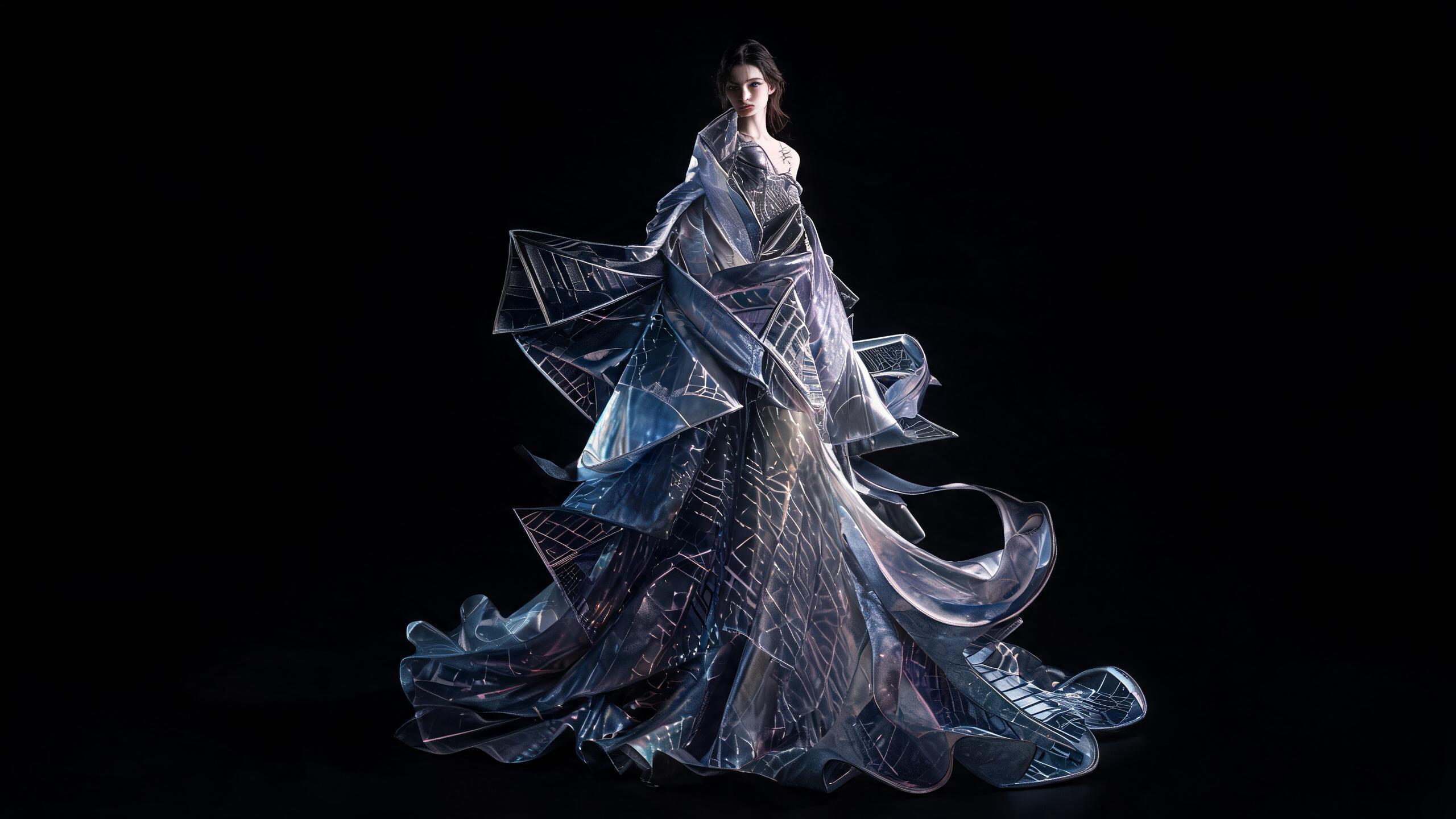
Digital Draping: The Rise of AI-Driven Design in High Fashion

A deep dive into ai driven design in high fashion and what it means for modern fashion.
AI-driven design in high fashion replaces human intuition with computational precision.
Key Takeaway: AI-driven design in high fashion replaces manual prototyping with computational precision to eliminate traditional production bottlenecks. This technology allows designers to bypass linear creative constraints, accelerating the transition from concept to garment to meet the demands of a high-velocity market.
The traditional fashion cycle is failing because it relies on the limited bandwidth of human creative directors. These designers spend months translating moods into sketches, sketches into toiles, and toiles into garments. In a high-velocity market, this linear process is an architectural bottleneck. The recent shift toward ai driven design in high fashion is not a cosmetic update to the industry; it is a total reconstruction of how style is synthesized.
The current move by major luxury houses to integrate generative models into their ateliers marks the end of the "mood board" era. We are entering the era of the style engine. This is not about generating "cool images" to post on social media. It is about using neural networks to understand the structural logic of a brand and projecting that logic into thousands of viable, high-fidelity design iterations.
How Is AI Changing the Architecture of Luxury Design?
For decades, the peak of fashion design was the "drape"—the physical act of pinning fabric to a form to find a silhouette. Digital draping takes this concept into the latent space. By training models on archives of historical patterns, textile physics, and brand-specific aesthetic markers, designers are no longer drawing; they are navigating.
This navigation allows for a level of complexity that the human eye cannot consistently produce. According to McKinsey (2024), generative AI could contribute up to $275 billion to the apparel, fashion, and luxury sectors' operating profits within the next five years. This profit does not come from marketing. It comes from the radical optimization of the design-to-production pipeline.
Traditional high fashion relies on the "Creative Director" as a singular oracle of taste. This model is fragile and unscalable. When a director leaves a house, the brand's identity often fractures. AI-driven design in high fashion codifies that identity into a permanent, evolving model. The brand becomes a living algorithm rather than a personality cult.
The Shift from Static Collections to Dynamic Generative Streams
The fashion industry has been stuck in the "seasonal" trap for over a century. Spring/Summer and Autumn/Winter are remnants of a pre-digital supply chain. AI-driven design allows brands to move toward a model of continuous synthesis.
Instead of one collection every six months, a brand can maintain a dynamic style model that generates new pieces based on real-time data inputs. This includes everything from master-level archival references to shifting urban aesthetic vectors. For a deeper look at how these models function on a consumer level, see our analysis on the ethics of generative AI in fashion design.
Is Human Creativity Being Replaced or Refined?
The consensus in the fashion press is that AI is a "tool for the designer." This is a hedge. In reality, the role of the designer is shifting from "creator" to "curator and constraint-setter." The AI does the heavy lifting of pattern generation, textile simulation, and aesthetic iteration. The human provides the final gatekeeping and the emotional narrative.
Most fashion apps recommend what is popular. They use collaborative filtering to tell you what everyone else is wearing. True AI design does the opposite: it identifies the unique delta between a brand's DNA and a user's personal taste profile. This is the difference between trend-chasing and style-modeling.
| Feature | Traditional High Fashion Design | AI-Driven Design Infrastructure |
| Primary Input | Individual intuition and physical mood boards | Large-scale archival data and latent style vectors |
| Speed to Prototype | Weeks to months (sketching to sample) | Minutes to hours (digital generation to 3D render) |
| Scalability | Limited by the size of the design team | Theoretically infinite iterations |
| Personalization | Mass-market "sizing" only | Individualized geometry and taste profiling |
| Risk Factor | High (inventory based on "guesses") | Low (data-backed design validation) |
Why Does High Fashion Need AI Infrastructure, Not AI Features?
The mistake most luxury brands are making right now is treating AI as a "feature"—a marketing gimmick or a one-off capsule collection designed by a mid-journey prompt. This is a superficial application of a transformative technology.
High fashion requires AI infrastructure. This means a full-stack integration where the brand's entire history—every stitch, every fabric choice, every runway look—is converted into a machine-readable style model. This model then becomes the foundation for all future output. It ensures that even as the brand scales or changes personnel, the core aesthetic remains mathematically consistent.
According to Gartner (2025), 60% of luxury fashion brands will use AI-based design assistants to manage the initial stages of collection development by 2026. However, the brands that win will be those that don't just use "assistants" but build their own proprietary intelligence systems. For those looking to understand the timeline of this shift, explore the 2026 style guide on mastering generative AI in fashion design.
The End of the "Trend" as We Know It
Trends are an artifact of a centralized fashion system where a few editors and designers decided what "the look" was for the season. This was a top-down, one-to-many distribution model. AI-driven design in high fashion enables a many-to-many model.
When design is driven by AI that understands individual taste, the concept of a global trend becomes obsolete. You no longer wear what is "in style"; you wear what is "your style," amplified by the intelligence of a master-level design model. This is the ultimate promise of personalization that the industry has been making for twenty years but has never delivered—until now.
How Does Digital Draping Eliminate Production Waste?
Sustainability in fashion is usually treated as a textile problem (using organic cotton, etc.). It is actually a design and logistics problem. We produce too much of the wrong thing because we don't know what the right thing is.
AI-driven design allows for hyper-accurate digital prototyping. Designers can see how a silk crepe de chine will move on a 3D avatar before a single inch of fabric is cut. This "digital draping" reduces the need for multiple physical samples, which currently account for a massive percentage of fashion's pre-consumer waste.
Furthermore, by moving toward a data-driven design model, brands can predict demand with surgical precision. They aren't designing for a generic "customer persona"; they are designing for a specific, modeled reality. For emerging designers, this technology is the only way to compete with established giants. Learn more about how designers can use AI software to bridge the gap from sketch to sample.
What Is the Gap Between Personalization Promises and Reality?
If you go to a standard luxury e-commerce site today, "personalization" means they show you more of what you recently clicked on. This is primitive. It is a feedback loop that narrows your style rather than expanding it.
Real personalization requires a dynamic taste profile. It requires an AI that understands the underlying "why" behind your preferences. Do you like a specific shoulder structure? A certain weight of knit? A particular ratio of oversized to fitted?
AI-driven design doesn't just show you existing products; it can theoretically modify the design of a product to fit your specific style model. High fashion is currently terrified of this because it threatens the "sanctity" of the designer's vision. But the future of luxury is not a fixed vision; it is a collaborative interface between a brand's intelligence and a consumer's identity.
Does AI Degrade the Value of "Handmade" Luxury?
The common critique is that AI-driven design "cheapens" high fashion. This is an emotional argument, not a logical one. The value of high fashion has always been in the vision and the execution.
A machine can generate a million patterns, but it still requires a sophisticated human (or a sophisticated system) to choose which one has the cultural resonance to matter. AI elevates the "handmade" by removing the "mindless" labor. It allows human artisans to focus on the elements of craft that a machine cannot yet replicate: the soul of the stitch, the nuance of the finish, and the cultural context of the garment.
The Future: Your Personal Style Model Is Your Only Interface
In the next three years, we will stop "browsing" for clothes. Browsing is a legacy behavior born from the necessity of physical stores and static websites. Instead, your personal style model—a digital twin of your taste—will interact directly with the generative design models of fashion houses.
Your AI stylist will navigate the latent spaces of Balenciaga, Saint Laurent, and emerging independent designers to synthesize a wardrobe that is mathematically perfect for your life. This is not a vision of the distant future; the infrastructure is being built now.
Most people think AI in fashion is about robots making clothes. It isn't. It's about data-driven style intelligence replacing guesswork. The rise of ai driven design in high fashion is the first step toward a world where every individual has access to the level of bespoke design previously reserved for the 1%.
According to a 2024 report by Business of Fashion, luxury consumers are increasingly demanding "exclusive" products that feel tailored to their specific lifestyle. AI is the only technology capable of delivering that level of exclusivity at scale. It turns the "ready-to-wear" model into "designed-to-wear."
Will the Fashion Industry Resist This Shift?
The incumbents will resist. They will claim that AI lacks "soul" or "artistry." They said the same thing about the sewing machine, the camera, and the internet. But the economics of AI-driven design are too compelling to ignore.
The brands that survive will be those that stop acting like gatekeepers and start acting like platforms. They will provide the aesthetic "source code," and AI will provide the "execution." This is the only way to remain relevant in a world where consumers are increasingly sophisticated and demand more than just a logo.
High fashion is not about clothes; it is about identity. And identity is the most complex data set there is. Using AI to navigate that complexity is not a choice—it is an inevitability. The "digital drape" is now the only way to capture the fluid, high-speed reality of modern style.
AlvinsClub uses AI to build your personal style model. Every outfit recommendation learns from you. Try AlvinsClub →
What if your clothes were designed for you, not for a mannequin?
Summary
- ai driven design in high fashion replaces slow, linear creative cycles with computational precision to resolve architectural bottlenecks in the garment production process.
- Luxury houses are shifting from manual mood boards to generative style engines that apply neural networks to analyze and project a brand's underlying structural logic.
- Digital draping allows designers to navigate a latent space of possibilities by training models on historical patterns, textile physics, and brand-specific aesthetic markers.
- The adoption of ai driven design in high fashion enables the creation of complex silhouettes and iterations that exceed the consistent output capabilities of human designers.
- Generative models in luxury ateliers function as style engines that synthesize thousands of high-fidelity, viable design iterations based on archival brand data.
Frequently Asked Questions
What is ai driven design in high fashion?
AI-driven design in high fashion refers to the use of machine learning algorithms and computational tools to generate aesthetic patterns, silhouettes, and textile structures. This technology allows brands to process vast amounts of data to predict trends and automate complex draping techniques that were previously done by hand. It effectively bridges the gap between digital concept and physical garment production.
How does ai driven design in high fashion change the creative process?
This technological shift replaces traditional linear sketching and manual prototyping with high-velocity computational precision. Designers can use algorithms to simulate fabric movement and fit in a virtual environment, which drastically reduces the time spent on physical toiles. It moves the designer's role from manual creator to a curator of machine-generated iterations.
Why are luxury brands adopting ai driven design in high fashion?
Luxury houses are adopting these tools to overcome the architectural bottlenecks of the traditional creative cycle and meet the demands of a high-velocity market. By leveraging data-driven insights, brands can maintain exclusivity while accelerating the transition from a mood board to a final runway piece. This process ensures that creative output remains relevant to rapidly changing global consumer tastes.
What are the benefits of using digital draping in garment construction?
Digital draping allows designers to visualize how a garment hangs and moves on a 3D avatar without cutting a single yard of fabric. This process eliminates the need for multiple physical prototypes, saving significant time and resources during the development phase. It provides a highly accurate preview of the final product's drape and structural integrity before manufacturing begins.
Can AI replace creative directors in the fashion industry?
Artificial intelligence serves as a powerful collaborative tool that augments human creativity rather than replacing it entirely. While algorithms can generate thousands of design iterations instantly, human creative directors are still necessary to provide emotional context, brand heritage, and final aesthetic judgment. The synergy between human intuition and machine logic defines the modern design landscape.
How does AI-driven design improve sustainability in fashion?
AI technologies reduce environmental impact by minimizing material waste through precise digital prototyping and optimized pattern cutting. By predicting demand more accurately, brands can produce smaller, more targeted collections, which prevents the overproduction common in the traditional fashion cycle. This shift toward digital-first design supports a more circular and resource-efficient industry.
This article is part of AlvinsClub's AI Fashion Intelligence series.
Related Articles
- The 2026 Style Guide: Mastering Generative AI in Fashion Design
- AI vs. Pinterest: Finding the best high school outfit ideas
- From sketch to sample: Why new fashion brands need AI outfit design tools
- How to use AI stylists to redefine your personal style in your 50s
- Mastering Urban Fashion: A Guide to AI-Driven Street Style Analysis
The Supply Chain Singularity: How AI-Driven Design in High Fashion Is Collapsing the Gap Between Sketch and Store
The conversation around AI in luxury fashion tends to fixate on the glamorous front end—the generative mood boards, the algorithmic draping, the neural network trained on a century of couture archives. What receives far less attention is the operational revolution happening downstream, where AI-driven design in high fashion is fundamentally restructuring the relationship between creative output and physical production. This is where the real economic disruption lives, and for houses serious about competitive positioning in the next decade, it is the more consequential battlefield.
From Design File to Production Order in Hours, Not Months
Traditionally, the journey from a finalized design sketch to a confirmed production order involved a chain of dependencies that could span four to six months: pattern grading, fabric sourcing, supplier negotiation, sample production, and fit correction. Each handoff introduced latency and the compounding risk of miscommunication between creative teams and technical manufacturers.
AI systems are now compressing this chain dramatically. Browzwear and CLO3D—two dominant players in 3D garment simulation—have integrated machine learning layers that allow a design file to be automatically translated into a graded pattern set, stress-tested for structural integrity across multiple body types, and matched against available fabric inventories held by pre-approved suppliers, all within a single workflow session. What this means operationally is that a design approved on a Tuesday in Paris can arrive as a confirmed production order at a manufacturing partner in Portugal or Vietnam by Thursday. Industry analysis from McKinsey's 2023 State of Fashion report noted that brands leveraging end-to-end digital product creation tools were reducing time-to-market by up to 50%, with some digitally mature organizations reporting sample reduction rates exceeding 60%.
For high fashion specifically, where a single sampling round can cost between $8,000 and $25,000 per silhouette depending on material complexity, that reduction is not a marginal efficiency gain—it is a structural repricing of what it costs to take creative risk.
Predictive Materiality: Designing for Fabrics That Don't Exist Yet
One of the more underreported capabilities emerging in this space is AI's role in predictive material design. Luxury houses have always been constrained by what mills can supply within a given season. The sourcing calendar essentially hardcoded creative possibility: if a fabric wasn't available nine months before a show, it wasn't in the collection.
Startups like Bolt Threads and established material science companies are now partnering with fashion AI platforms to invert this relationship. Using generative models trained on the physical properties of existing fabrics—tensile strength, drape coefficient, light behavior, dye absorption rates—these systems can specify the structural parameters of a desired fabric and work backward to identify manufacturing processes capable of producing it. Kering's materials innovation lab has been quietly piloting this approach since 2022, allowing design teams to specify a fabric's aesthetic and performance profile before a single fiber is sourced. The mill becomes a fulfillment partner for a specification, rather than the ceiling of creative possibility.
This represents a genuinely new design primitive. A creative director can now instruct a system to generate a fabric that behaves like duchess satin under direct light but has the breathability coefficient of technical mesh—and receive a manufacturable specification rather than a metaphor.
Personalization at Couture Scale: The Mass-of-One Model
The traditional argument against AI in luxury fashion has been a cultural one: that the value of haute couture is rooted in its irreducible human singularity, the hours of hand stitching, the bespoke fitting appointments, the relationship between a specific atelier worker and a specific client. This argument, while emotionally resonant, misunderstands where AI is actually being applied.
The emerging model is not AI replacing the atelier—it is AI enabling the atelier to serve dramatically more clients at the level of personalization previously reserved for the top 0.1% of customers. Maison Margiela's parent company OTB Group has invested in AI-assisted bespoke configuration tools that allow clients to co-design pieces by manipulating structural parameters—silhouette volume, seam placement, interlining weight—within a brand-constrained design envelope. The AI ensures that every configuration a client selects remains coherent with the house's aesthetic logic and manufacturable within its production infrastructure. Human artisans then execute the finalized specification. The creative authorship is distributed; the craft execution remains human.
This model has measurable commercial implications. Bain & Company's luxury goods tracking data indicates that personalized luxury goods command a 15-35% price premium over equivalent standard offerings, and that Gen Z and millennial luxury consumers rank personalization capability as a top-three purchase driver. AI-driven design in high fashion is not just a production efficiency story—it is a revenue architecture story.
What Designers Actually Need to Know
For creative professionals navigating this transition, three practical orientations matter:
Treat AI as a constraint navigator, not an idea generator. The highest-value application is not asking AI to generate concepts—it is using AI to rapidly identify which concepts are viable within your supply chain, budget, and timeline constraints before committing resources to development.
Invest in proprietary training data now. Houses that begin systematically documenting their design archives, pattern libraries, and production specifications in AI-readable formats today will have a compounding advantage over competitors who treat this as a future consideration. The models trained on your specific aesthetic and production history will be meaningfully more useful than generic tools.
Reframe sampling budgets as model training budgets. Every physical sample your team produces contains structured information about fit, material behavior, and design viability. Organizations that capture this data systematically—rather than treating each sample as a one-time production artifact—are building an asset that improves every subsequent design decision.
The singularity between creative vision and physical output is approaching faster than most of the industry is prepared to acknowledge. The houses that treat AI-driven design in high fashion as an operational infrastructure question—rather than a marketing narrative—will be the ones setting the terms of competition in the collections that follow.