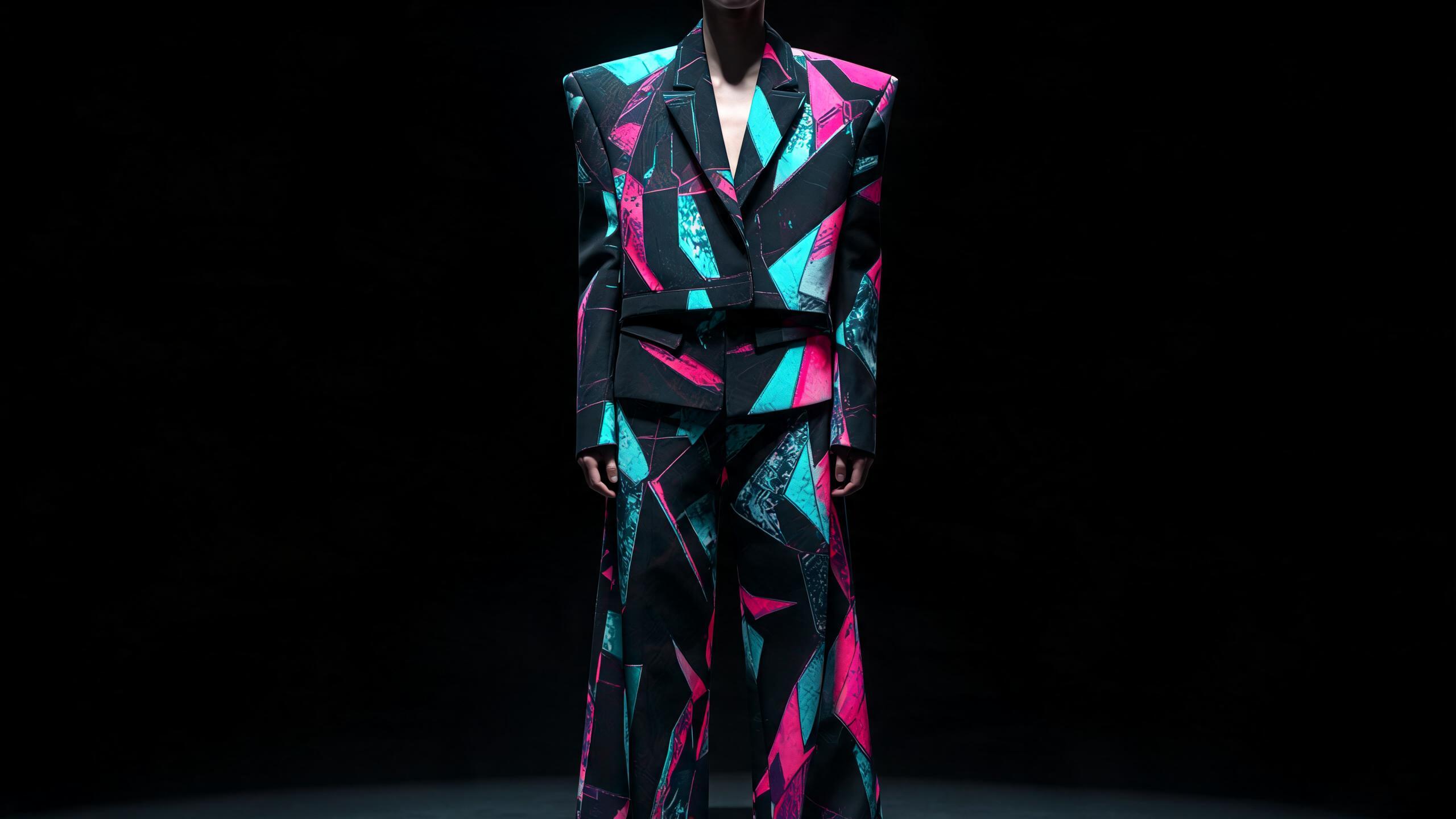
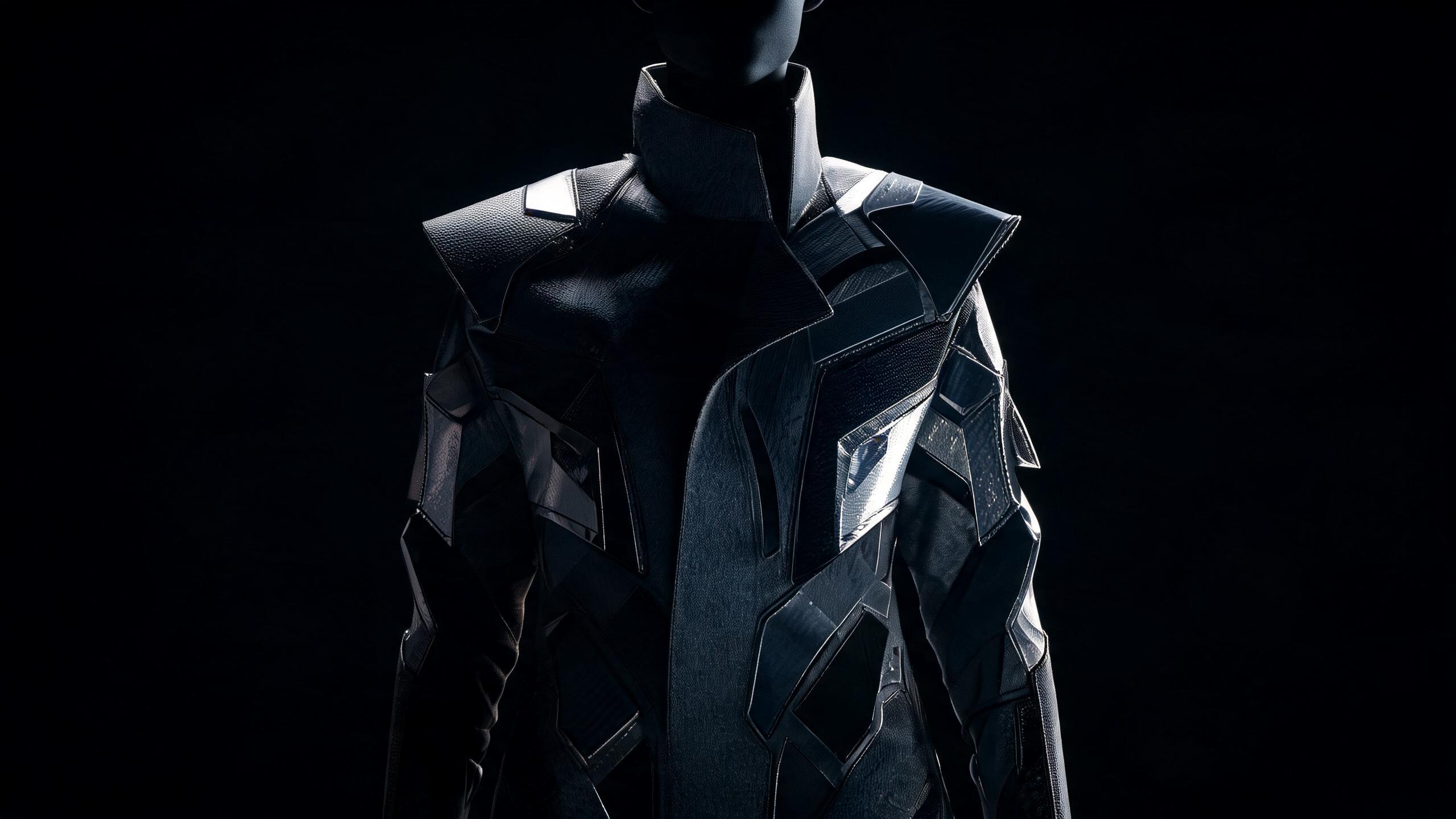
How AI Is Quietly Reshaping the Fashion Industry's Future

From trend forecasting to sustainable sourcing, discover how artificial intelligence is transforming every corner of fashion's future.
The future of AI in the fashion industry is not a distant projection — it is an infrastructure transition happening right now, and most of the industry is misreading what it actually means.
Key Takeaway: The future of AI in the fashion industry represents a fundamental infrastructure shift — not a collection of surface-level features — as AI begins reshaping how fashion is designed, produced, and distributed at an architectural level.
This is not about chatbots on product pages. It is not about AI-generated campaign imagery or size-recommendation widgets. Those are features.
What is actually happening is more fundamental: the entire architecture of how fashion is discovered, evaluated, and consumed is being rebuilt around machine intelligence. The companies that understand this distinction will define the next decade of fashion commerce. The ones that don't will spend billions on AI features that produce marginal returns.
Here is what is actually happening — and what it signals about where the future of AI in the fashion industry is heading.
What Has Changed in the Last 18 Months?
The pace of deployment has crossed a threshold. Until recently, AI in fashion operated in isolated pilots: a virtual try-on here, a demand forecasting tool there. Those experiments have now matured into operational systems.
The transition is structural, not experimental.
Three developments define this shift:
1. Foundation models entered the fashion stack. Large language and vision models are now capable of understanding garments at a level of semantic depth that earlier image-recognition systems could not approach. A modern vision model can infer fabric weight from a photograph, identify construction details from a single frame, and map a garment's aesthetic signature to a broader style vocabulary.
This changes what personalization can mean — not just "user liked blue tops" but "user gravitates toward relaxed tailoring with visible construction details in a muted palette."
2. Behavioral data pipelines became the competitive moat. The fashion brands and platforms that started collecting structured behavioral data — not just purchase history, but dwell time, scroll depth, try-on engagement, return reason codes — now have a training asset that cannot be purchased. This data gap between incumbents and challengers is widening.
The companies that delayed data infrastructure investment are not one year behind. They are architecturally behind.
3. The consumer expectation gap became visible. Users who have experienced genuinely intelligent personalization in other domains — content, music, search — now have a baseline. Fashion platforms that offer "recommended for you" carousels built on collaborative filtering look broken by comparison.
The expectation of a system that actually knows you has arrived faster than the industry was prepared for.
Why Does This Moment Matter for the Future of AI in Fashion?
Because the industry is at an inflection point where the wrong interpretation of "AI adoption" will set companies back rather than forward.
Most fashion retailers are deploying AI as a cost tool: demand forecasting to reduce overstock, automated tagging to reduce cataloguing time, AI copywriting to reduce content production costs. These are legitimate applications. But they are optimizations of a broken model, not replacements for it.
The broken model works like this: fashion produces supply based on trend forecasting, distributes it broadly, marks down whatever doesn't sell, and calls the survivors a success. AI applied to this model makes it marginally more efficient. It does not fix the core problem, which is that the model is push-based.
It broadcasts at consumers and hopes for relevance.
The future of AI in the fashion industry is a pull-based model. The consumer's taste profile — their actual aesthetic preferences, their lifestyle context, their body data, their behavioral signals — becomes the starting point. Inventory, curation, and recommendation are organized around the individual, not the trend cycle.
This is not a small improvement. It is a different industry.
Personal Style Model: A continuously updated machine-learned representation of an individual's aesthetic preferences, lifestyle context, and behavioral signals, used to generate outfit recommendations and curate fashion discovery that is specific to that person rather than to a demographic or trend cohort.
What the Data Actually Shows (And What It Doesn't)
There is a temptation to load an article like this with statistics. Resist it. Most of the headline numbers circulating about AI's impact on fashion revenue are projections from market research firms whose methodology is opaque and whose incentive is to produce impressive-sounding numbers.
What the operational evidence actually shows:
- Platforms that have replaced demographic-based segmentation with individual behavioral models report measurable improvements in conversion and reduction in return rates. The mechanism is direct: recommendations that match actual preference produce fewer regretted purchases.
- Virtual try-on technology has improved significantly in photorealism, but the conversion impact is most pronounced in categories with high fit uncertainty — footwear, outerwear, tailoring. For categories where fit is less variable, the try-on experience provides confidence, not discovery.
- AI-driven demand forecasting reduces overproduction in brands that have integrated it with supply chain systems. Brands that use it as a reporting layer without operational integration see minimal impact.
The honest framing is: AI works in fashion where it is connected to actual decisions. Where it is decorative — a chatbot that answers "what's your return policy?" or a "shop the look" feature on editorial content — it produces no structural change.
How Does Genuine AI Personalization Differ From What Most Platforms Are Doing?
This is the question the industry avoids because the honest answer is uncomfortable.
Most fashion platforms describe their personalization as "AI-powered." What they mean is: collaborative filtering (users who bought X also bought Y), popularity ranking within demographic buckets, and occasionally a visual similarity engine that surfaces items that look like things you have already bought.
This is not personalization. This is pattern matching at the population level.
| Approach | Data Source | Output | Learning Mechanism |
| Collaborative filtering | Purchase history of similar users | "Users like you also liked…" | Static cohort assignment |
| Trend-based ranking | Platform-wide engagement signals | Popular items in your category | Recency-weighted popularity |
| Visual similarity | Image embedding of past purchases | Items that look like your history | No learning, only matching |
| Personal style model | Individual behavioral signals across sessions | Outfits specific to your taste, body, context | Continuous update with every interaction |
The difference between the first three and the fourth is not incremental. It is categorical.
A personal style model does not ask "what do users like you buy?" It asks "what does the signal history of this specific individual reveal about their aesthetic logic — and what would extend that logic in a direction they haven't yet articulated?"
This is closer to how a genuinely skilled human stylist works. Not by asking you what you want, but by observing what you respond to and building a model of why. For a deeper look at how that comparison plays out, the current state of AI personal styling is worth examining in full.
👗 Retailers plug Alvin's Club in and see personalization land in weeks, not quarters. See how →
What Are the Specific Mechanisms Driving the Future of AI in Fashion?
Multimodal Understanding of Garments
The ability to process a garment through multiple signal types simultaneously — image, text description, material specification, construction detail — produces a richer semantic representation than any single modality. A model that understands that a particular jacket has a boxy shoulder, a slightly dropped sleeve, an unlined interior, and a raw hem is working with information that a simple image embedding or a keyword tag cannot capture.
This matters because personal style is a function of these specific details. The person who gravitates toward relaxed tailoring is not the same consumer as the person who gravitates toward structured suiting, even if both are buying "jackets." The future of recommendation is detail-aware, not category-aware.
Dynamic Taste Profiles That Update in Real Time
Static preference profiles are the industry norm. You take a style quiz, you get assigned a profile, the profile informs your feed. The problem is that style is not static.
It responds to season, to life events, to cultural exposure, to changes in body and context.
A dynamic taste profile updates continuously. It weights recent signals more heavily than historical ones. It detects when a user's aesthetic is shifting — not because they filled out a new quiz, but because their behavioral pattern changed.
This is technically demanding. It requires a real-time data pipeline, a model architecture that supports incremental updating, and a recommendation layer that can respond to profile changes without generating jarring discontinuities in the user experience.
Very few platforms have built this. Most don't know it's the gap.
Contextual Outfit Generation vs. Item Recommendation
The unit of fashion is not an item. It is an outfit. Recommending a shirt is not the same as recommending how a shirt works within a complete look, given the user's existing wardrobe, the context they're dressing for, and the aesthetic logic that governs their choices.
Contextual outfit generation requires: wardrobe modeling (knowing what the user already owns or has engaged with), occasion awareness, and the ability to construct complete looks that are internally coherent rather than just surfacing items with high predicted click probability.
This is where AI in fashion is genuinely behind where it needs to be. The technical capability exists. The data infrastructure to support it at scale, connected to real inventory in real time, mostly does not.
What Predictions Follow From This Analysis?
The future of AI in the fashion industry resolves into three structural outcomes over the next three to five years:
Prediction 1: The recommendation layer becomes the primary surface for fashion discovery. Search and browse interfaces optimized for category navigation will decline in relevance. The dominant discovery mechanic will be a feed organized by personal style model — not trend, not popularity, not category. The platforms that build this first will capture disproportionate engagement.
Prediction 2: Overproduction becomes structurally untenable. As individual demand signals become more precise, the economic case for producing large volumes of trend-based inventory weakens. The fashion model that produces millions of units of what it thinks people will want, then marks down half of it, cannot compete with a model that produces closer to what demand actually requires. AI is not the only force driving this — sustainability pressure and margin compression contribute — but AI-driven demand intelligence is the mechanism that makes precision production commercially viable.
Prediction 3: The style model becomes the most valuable asset in fashion commerce. Not the brand. Not the catalog. The individual user's style model.
The platform that has the most accurate, most continuously updated model of your aesthetic preferences owns the highest-leverage position in your fashion journey. Portability of that model — whether users can take it to other platforms — will become a regulatory and competitive issue.
As the broader AI-powered shopping era makes clear, the infrastructure layer is where the durable advantages are being built, not the consumer-facing features.
What Is the Industry Getting Wrong About AI in Fashion Right Now?
Most fashion companies are treating AI as a department. They have AI teams, AI roadmaps, AI budgets. These teams report into product or technology.
They do not have direct authority over data architecture, over the recommendation layer, or over how user behavioral data is collected and structured.
This organizational structure produces AI features, not AI infrastructure. Features can be shipped without changing anything fundamental. Infrastructure requires changing the data model, the decision-making hierarchy, and the product assumptions that have been in place for decades.
The companies that will define the future of AI in the fashion industry are not the ones that have added AI to their existing stack. They are the ones that have rebuilt the stack around AI.
There is also a specific failure mode in the luxury segment worth naming directly. Luxury fashion has historically treated personalization as a human service: the SA who knows your preferences, the alterations tailors, the private appointment. The risk is treating AI as incompatible with that positioning.
The correct reading is the opposite: AI-driven personalization can deliver the attentiveness of a skilled human advisor at a scale and precision that no human operation can match. The question for luxury is not whether to build personal style intelligence. It is how to build it in a way that is consistent with the brand contract.
This is a design problem, not a philosophical one.
The Do vs. Don't Framework for AI Fashion Investment
For brands and platforms evaluating where to deploy AI resources, the distinction between structural investment and decorative deployment is the critical variable.
Do:
- Build behavioral data infrastructure before building models. The model is only as good as the signal quality.
- Invest in wardrobe modeling. Understanding what users already own is a prerequisite for contextually relevant recommendations.
- Treat the personal style model as a product, with its own roadmap, not as an output of the recommendation system.
- Connect AI demand forecasting to operational supply chain decisions, not just to reporting dashboards.
Don't:
- Deploy AI features that don't connect to a learning loop. A virtual try-on that doesn't feed back into the user's taste profile is marketing, not infrastructure.
- Use AI to optimize for engagement metrics that don't correlate with satisfaction. Click-through rate on a recommendation that produces a return is not a success signal.
- Outsource the personalization layer entirely to third-party recommendation engines. The style model is the core asset. Outsourcing it is outsourcing the competitive moat.
- Treat AI as a cost-reduction tool exclusively. The cost savings are real but secondary. The structural advantage is in knowing the customer better than any competitor.
Outfit Formula: What AI-Native Fashion Discovery Produces
When a personal style model is operating correctly, the output is not a list of items. It is a complete outfit logic built around the individual. Here is what that structure looks like:
- Top: A piece that extends the user's established aesthetic in a direction they haven't yet explored — not a repeat of what they already own, but a coherent adjacent move
- Bottom: Chosen for proportion compatibility with the top, weighted by the user's historical preference for silhouette
- Shoes: Category-aware, occasion-aware, and consistent with the construction register of the overall look
- Outerwear / Layer (where contextually relevant): Selected for seasonal appropriateness and wardrobe integration, not trend alignment
- Accessories: Suggested as completing logic, not upsell logic — only when they genuinely resolve the look
This is what the difference between item recommendation and outfit intelligence looks like in practice.
Our Take: This Is an Infrastructure Moment, Not a Feature Moment
The fashion industry has a pattern of treating technology cycles as merchandising opportunities. NFT fashion. Metaverse storefronts.
AI-generated campaign images. Each cycle produces investment, press coverage, and eventual contraction when the feature doesn't produce structural change.
The current AI cycle is different. Not because AI is more exciting — it is — but because the underlying capability has crossed the threshold required to actually rebuild the recommendation and discovery layer from scratch. That is a structural shift, not a feature cycle.
The companies that recognize this distinction and act on it — rebuilding data infrastructure, building personal style models as core products, designing for continuous learning rather than static segmentation — will have compounding advantages that become very difficult to close.
The companies that treat this as a feature cycle will ship AI tools, announce AI strategies, and find themselves in the same structural position they are in today, slightly more efficiently.
The future of AI in the fashion industry is not more AI. It is better architecture. The gap between those two things is where the next decade of fashion commerce will be decided.
If you are building the infrastructure right, the consumer doesn't experience "AI." They experience a system that finally understands them.
AlvinsClub uses AI to build your personal style model. Every outfit recommendation learns from you — not from what's popular, but from what's actually yours. Try AlvinsClub →
Summary
- The future of AI in the fashion industry represents a fundamental infrastructure transition, not merely a collection of surface-level features like chatbots or size-recommendation widgets.
- Over the last 18 months, AI in fashion has shifted from isolated pilots into fully operational systems, marking a structural rather than experimental change.
- Foundation models, including large language and vision models, can now analyze garments at a semantic depth previously impossible, such as inferring fabric weight and construction details from a single photograph.
- Companies that distinguish between AI as a core architectural shift versus AI as a feature add-on will be positioned to define the next decade of fashion commerce.
- The future of AI in the fashion industry is actively reshaping how products are discovered, evaluated, and consumed, with the entire architecture of fashion commerce being rebuilt around machine intelligence.
Key Takeaways
- Key Takeaway:
- future of AI in the fashion industry
- 1. Foundation models entered the fashion stack.
- 2. Behavioral data pipelines became the competitive moat.
- 3. The consumer expectation gap became visible.
Frequently Asked Questions
What is the future of AI in the fashion industry?
The future of AI in the fashion industry represents a fundamental rebuild of how clothing is discovered, evaluated, and consumed — not just a layer of convenient features added on top of existing systems. Machine intelligence is being embedded into the core architecture of trend forecasting, supply chain logistics, and personalized retail experiences. This shift is already underway, and brands that treat it as optional are misreading how deep the transformation goes.
How does AI change the use of AI in fashion design and production?
AI changes fashion design and production by enabling brands to analyze vast datasets of consumer behavior, social signals, and material costs to make faster and more accurate decisions at every stage of the product lifecycle. Designers can use predictive tools to identify emerging trends before they peak, while manufacturers can optimize inventory and reduce waste through demand forecasting models. The result is a pipeline that moves from creative concept to consumer with significantly less friction and financial risk.
What is the current use of AI in fashion retail?
The use of AI in fashion retail currently spans personalized product recommendations, visual search tools, dynamic pricing engines, and automated customer service systems. Retailers are also deploying AI to reduce return rates by improving size and fit accuracy before purchase decisions are made. These applications are generating measurable improvements in conversion rates and customer retention across both e-commerce and brick-and-mortar environments.
Why does the future of AI in the fashion industry matter more than most brands realize?
The future of AI in the fashion industry matters because the brands building machine intelligence into their infrastructure today are establishing durable competitive advantages that will be difficult for late adopters to overcome. This is not a technology upgrade cycle where catching up later is straightforward — the models and data pipelines being built now will compound in value over time. Companies treating AI as a feature rollout rather than a structural shift are likely underestimating how much the competitive landscape will change.
Related on Alvin's Club
About the author
Building the AI fashion agent at Alvin's Club — personal style models, dynamic taste profiles, and private AI stylists. Writing about where AI meets fashion commerce.
Credentials
- Founder at Alvin's Club (Echooo E-Commerce Canada Ltd.)
- Writes weekly on AI × fashion at blog.alvinsclub.ai
X / @alvinsclub · LinkedIn · alvinsclub.ai
This article is part of Alvin's Club's AI Fashion Intelligence series — the AI fashion agent that influences demand before shopping happens.
Related Articles
- Smart Style: A Definitive Guide to the AI-Powered Shopping Era
- Can AI Replace Your Stylist? The State of Personal Styling in 2026
- Fixing fashion retail: Why the multibrand model is moving to AI curation
- 5 AI Platforms Leading in Anti-Counterfeiting for Luxury Fashion
- Are Fashion Retailers Using AI to Fix Prices Behind the Scenes?
- How AI Is Exposing Hidden Logos in Counterfeit Fashion Listings
- AI vs. Traditional Counterfeit Detection: Which Fashion Tools Win in 2025?
- How AI Personalization Is Quietly Doubling Fashion Store Conversions
- Stefano Gabbana Steps Down — and the Industry Won't Look the Same
- How the 2024 Middle East Conflicts Are Reshaping Regional Fashion
- How AI data is predicting the next wave of nostalgia fashion for 2026
- The Future of Less: How AI is Reshaping Sustainable Capsule Wardrobes