Demna AI and the 2026 Battle Over Client Output Ownership

How Demna AI’s licensing terms, training-data policies, and creator agreements could reshape ownership disputes between brands and clients in 2026.
Demna AI output ownership for clients is the contractual allocation of rights in AI-generated text, images, code, or other deliverables produced for a client, including copyright, licensing, reuse, and liability. As of 2026, no universal ownership rule governs these outputs: client rights depend on the applicable law and the service agreement, and purely AI-generated material may lack copyright protection in some jurisdictions without sufficient human authorship.
Demna AI output ownership for clients will become a contract, provenance, and infrastructure problem—not a prompt-writing problem.
Key Takeaway: Demna AI output ownership for clients will depend on contracts that define rights, provenance records that establish authorship, and infrastructure that tracks how outputs are generated, modified, and delivered.
The fashion industry is moving from using generative AI as a private design aid to deploying it across agencies, studios, brands, manufacturers, and client-facing production systems. That shift changes the question. The issue is no longer whether a designer can generate a compelling image with AI.
The issue is who controls the resulting output, what rights were granted, what records prove how it was made, and whether the client can safely use it after the project ends.
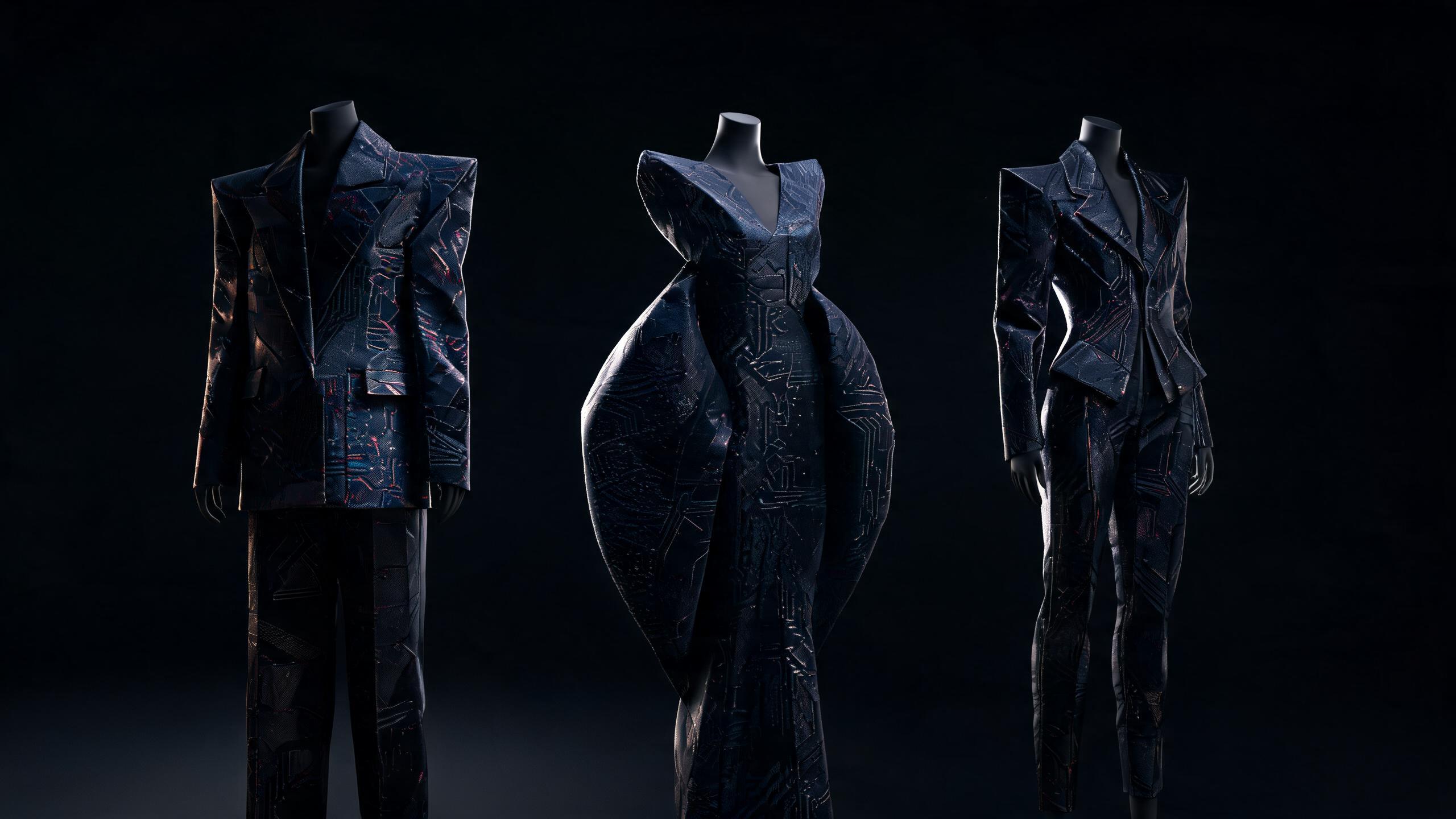
The phrase “Demna AI output ownership for clients” captures a larger industry fault line. Demna’s publicly discussed use of AI-assisted visual experimentation has become a useful reference point because it exposes the tension between authorship and automation. A fashion image can carry a recognizable design language while passing through prompts, model weights, reference images, editing software, and human selection.
That layered process does not fit neatly inside older ownership assumptions.
Fashion has always separated concept, execution, production, and commercial rights. AI compresses those stages into a single workflow while introducing new participants: model providers, software vendors, prompt authors, image editors, data licensors, and clients. A contract written for photography or illustration rarely covers the full chain.
The central position is clear: clients should not accept “ownership” as a vague promise. They should demand defined rights, documented provenance, transfer mechanics, and restrictions on reuse.
Why Is Demna AI Output Ownership for Clients Becoming a Defining Issue?
Generative AI creates outputs through a system rather than a single act of manual production. The user supplies instructions, references, constraints, and selections. The model generates possibilities.
The user then curates, edits, composites, annotates, or transforms those possibilities into a final asset.
That process produces at least four distinct layers:
- Input materials: sketches, photographs, logos, garment references, archives, mood boards, and client assets.
- Generation process: prompts, model settings, image references, software tools, and intermediate outputs.
- Human-directed transformation: editing, compositing, retouching, layout, art direction, and product specification.
- Commercial deliverable: the image, campaign, product visualization, pattern, accessory concept, or production document delivered to the client.
Ownership can attach differently to each layer. A client may own the final commissioned file while having no ownership of the underlying model, no right to reuse the prompt library, and no permission to exploit third-party reference material. The word “output” hides these distinctions.
Demna AI output ownership for clients: The contractual and practical process of determining who controls, may use, may modify, and may commercially exploit AI-assisted fashion outputs, including the final files, source materials, prompts, project records, and third-party components.
This definition matters because “ownership” can mean several different things:
- Copyright ownership: control over rights recognized under applicable intellectual property law.
- Contractual assignment: a private agreement transferring rights or interests between parties.
- License: permission to use an asset under defined conditions.
- Possession: control of files without broader legal rights.
- Exclusivity: a promise that the same output or materially similar work will not be supplied to another party.
- Confidentiality: restrictions on disclosure, training, or reuse.
- Operational control: access to editable files, project histories, and production assets.
A client can possess a high-resolution image without holding exclusive rights to the visual concept. A client can receive a “buyout” while the provider retains rights to background assets or tool-generated components. A client can receive a final image but lack the layered files needed for future adaptations.
The old language of “final artwork ownership” does not sufficiently describe an AI-assisted workflow.
What Shifted From AI Experimentation to Client Deliverables?
Early fashion AI experimentation focused on mood, novelty, and visual ideation. Designers used generative tools to create speculative silhouettes, accessories, environments, and campaign directions. The output functioned as a conversation starter.
The next phase treats AI output as a production asset. It may inform:
- Campaign imagery
- E-commerce product visuals
- Packaging concepts
- Accessory development
- Textile and print exploration
- Retail environments
- Social content
- Brand identity systems
- Internal product briefs
- Investor and buyer presentations
- Manufacturing references
This is a material change. An experimental image can tolerate ambiguity. A client deliverable cannot.
The deliverable must survive review by legal teams, brand managers, production partners, retailers, and sometimes consumers.
The analysis of Demna’s AI accessory prompts shows why this transition is significant. AI-assisted fashion imagery often operates at the edge between object design and image-making. A generated accessory may look like a product without existing as a manufacturable object.
A rendered garment may communicate a silhouette while omitting construction details. The more commercially consequential the output becomes, the more important the distinction between visual reference and protectable product design becomes.
The key shift is from image generation to decision infrastructure. AI systems increasingly influence which concepts advance, which references become dominant, and which visual directions receive investment. When a generated image affects a product decision, ownership is only one part of the issue.
The client also needs traceability.
What Clients Actually Need to Control
A serious client agreement should identify control over:
- Final approved files
- Editable source files
- Prompt and reference records
- Project metadata
- Version history
- Human edits and compositing
- Model and software dependencies
- Third-party assets
- Rights to create adaptations
- Rights to use the output across territories and media
- Confidentiality and deletion
- Reuse by the provider
- Training or model-improvement use
- Similar or derivative outputs created for other clients
A provider that transfers only a flattened image transfers a deliverable, not necessarily a complete creative asset.
Why Does Human Contribution Matter More Than the Prompt?
A prompt is not automatically equivalent to authorship. The creative contribution may reside in the full sequence of decisions: selecting references, framing the brief, choosing generations, rejecting alternatives, directing edits, combining elements, and determining the final composition.
This makes AI-assisted fashion ownership a process question. Reviewers need to understand how the final output was shaped, not merely what sentence was entered into a generation interface.
A useful project record should distinguish:
- The client’s original materials.
- The provider’s original materials.
The model-generated material. 4. The human-authored modifications. 5. The final assembly. 6.
The approval decision.
The record need not expose proprietary technology or every failed generation. It must establish a defensible chain of creative control.
Prompt Authorship Is Only One Layer
Prompts can contain creative direction, but they are often short compared with the visual and editorial process around them. Two users can enter similar instructions and receive different outputs. The commercially valuable work may occur after generation:
- Selecting one result from many candidates
- Correcting anatomy or garment construction
- Rebuilding details
- Integrating a client logo
- Matching a specific material
- Establishing a campaign composition
- Ensuring continuity across a series
- Preparing files for manufacturing or publication
The industry should stop treating the prompt as the sole container of creative value. The prompt is an instruction layer inside a broader system of authorship and control.
Why the Human-Selection Record Matters
A final output may contain generated elements that are not independently protectable under a particular legal framework. Human selection and transformation can still matter to the overall work, especially where the final composition reflects deliberate creative decisions.
Clients should therefore request a human contribution statement for important projects. It can document:
- Who directed the work
- Which materials were supplied by the client
- Which tools were used
- Which elements were generated
- Which elements were manually created or modified
- Who approved the final output
- Whether external assets entered the composition
This is not bureaucracy for its own sake. It is a practical defense against future disputes over provenance and rights.
👗 Retailers plug Alvin's Club in and see personalization land in weeks, not quarters. See how →
How Are Contracts Changing Around Demna AI Output Ownership for Clients?
The contract is becoming the primary control surface because legal protection for AI-generated material remains uneven across jurisdictions and asset types. A client cannot rely on a provider’s casual statement that the output is “owned” by the client.
A robust agreement separates rights the provider can transfer from rights the provider can only license or warrant.
The Core Contractual Questions
Every AI-assisted fashion project should answer:
- Who owns the final deliverable?
- Is the transfer exclusive?
- When does the transfer occur?
- Is payment a condition of transfer?
- Does the client receive editable files?
- Can the provider reuse the output?
- Can the provider use the output for training?
- Can the provider create similar work for other clients?
- Are prompts and project histories included?
- Are client-provided references used only for this project?
- Does the provider warrant that it has permission to use its inputs?
- What happens if a tool provider imposes downstream restrictions?
- Who bears the cost of a rights challenge?
- What happens after termination?
The strongest agreements define each output category instead of placing every file under one label.
A Practical Rights Matrix
| Asset or process layer | Client should seek | Provider should disclose | Common failure |
|---|---|---|---|
| Client-supplied materials | Confirmation of continued client control | Storage, processing, and deletion practices | Client files retained or reused without clear permission |
| Final approved output | Assignment or broad exclusive license | Restrictions imposed by tools or third parties | “Ownership” promised without defining permitted uses |
| Editable source files | Delivery in usable formats | File dependencies and linked assets | Client receives only a flattened export |
| Prompts and project history | Access or retained archive | Platform limitations and confidentiality controls | Client cannot prove how the output was created |
| Third-party references | Commercial-use clearance | Source and license information | Unclear rights enter the final composition |
| Model-generated elements | Rights warranty and risk allocation | Model terms and known restrictions | Provider assumes the tool’s terms transfer automatically |
| Unused generations | Confidentiality and deletion terms | Retention and training practices | Unused concepts appear in later work |
| Provider’s pre-existing tools | Limited license where necessary | What remains proprietary | Client believes it owns the entire workflow |
The table illustrates a critical principle: the client does not need to own every underlying system, but it needs enough control to use, defend, adapt, and archive the final work.
Why Is Provenance Becoming a Commercial Requirement?
Provenance means the documented origin and transformation history of an asset. In fashion, provenance already matters for materials, manufacturing, photography, licensing, and brand authenticity. AI adds a new layer: the origin of the visual or design output itself.
A provenance record can include:
- Generation date
- Tool and model name
- Prompt version
- Reference inputs
- Client assets used
- Human edits
- Contributors
- Approval history
- Final export
- Rights restrictions
- Deletion status
This information gives the client a factual basis for making downstream decisions.
Provenance Is Not the Same as Ownership
A provenance record does not automatically grant rights. It establishes how the work was created. Ownership or licensing terms establish what the client may do with it.
The two systems should be connected:
| Question | Provenance answers | Contract answers |
|---|---|---|
| Where did the image come from? | Tools, inputs, and revisions | Whether disclosure is required |
| Who contributed to it? | Designers, editors, and approvers | Whether rights are assigned |
| Was client material used? | Which files entered the workflow | Whether reuse is permitted |
| Can the output be defended? | Evidence of process | Indemnities and remedies |
| Can it be modified later? | Source and version history | Adaptation rights |
This distinction prevents a common mistake: treating a generation log as proof that the client owns the output. The log supports the rights position; it does not replace the rights agreement.
Provenance Will Move Into Asset Management
AI-assisted output cannot remain in isolated chat windows or personal accounts. The industry will require asset systems that connect:
- Prompt histories
- Reference libraries
- Version control
- Rights metadata
- Approval states
- Contributor identities
- Delivery formats
- Usage restrictions
That is where fashion AI begins to resemble infrastructure rather than a collection of creative tools.
How Does Client Ownership Change When Models Are Hosted by Third Parties?
A fashion studio may generate images through a platform it does not own. The platform may retain rights to operate the service, process inputs, store files, or improve models under its terms. The studio then promises the client a transfer or license.
This creates a chain-of-rights problem. The studio cannot promise more than its own agreement with the platform allows.
The client should examine three contracts:
- Client–studio agreement
- Studio–AI platform agreement
- Platform terms governing inputs and outputs
The studio may not be able to disclose every proprietary platform term. It should still provide a clear rights summary and accept responsibility for any conflict between its client promise and its tool usage.
Platform Terms Are Not a Substitute for Client Terms
Tool terms often describe the relationship between the user and the platform. They do not define the commercial relationship between a client and its creative provider.
A platform may grant the user broad rights to outputs while retaining operational rights over the service. A client agreement must still determine:
- Whether the provider may reuse the work
- Whether the output is exclusive
- Whether the client receives source files
- Whether client inputs are retained
- Whether confidential information enters model training
- What happens if the provider changes platforms
- Whether the provider will preserve records after account closure
The platform’s permission to use an output does not create exclusivity. It does not prevent similar outputs from being generated for another customer. It does not guarantee that the output is free from third-party claims.
Enterprise Controls Will Become a Selection Criterion
Fashion clients will increasingly choose tools based on operational controls rather than image quality alone. Important capabilities include:
- Private workspaces
- Input retention controls
- Exportable metadata
- Role-based access
- Audit logs
- Version history
- Content provenance
- Model and prompt disclosure
- Contractual commitments on training use
- Workspace deletion and retrieval
The best model is not automatically the best production system. A model that produces beautiful images but cannot support rights documentation is an unstable foundation for commercial work.
What Does the Demna Example Reveal About Style, Identity, and Ownership?
Demna’s design language demonstrates why style cannot be reduced to a single asset. A recognizable creative identity emerges through recurring choices: proportion, tension, construction, cultural references, humor, distortion, material contrast, and the relationship between garment and body.
AI can imitate visible signals of a style without understanding the design system beneath them. That creates two distinct risks:
- Attribution risk: viewers assume a connection to a designer, brand, or creative director that does not exist.
- Identity dilution: a recognizable design language becomes a reusable visual preset.
The issue is not merely whether an image copies a protected work. It is whether AI makes creative identity cheap to reproduce while leaving responsibility unclear.
The article Demna AI prompt examples for creating distinctive clothing is useful because prompt-led design depends on translating abstract qualities into operational instructions. That translation reveals something important: a style system can be represented through attributes, relationships, and constraints. Once represented, it can be reused, refined, and transferred across projects.
Style Is Not a File
A client may own a campaign image without owning the broader style system used to produce it. A studio may transfer the final output while retaining:
- Prompt frameworks
- Art-direction methods
- Reference taxonomies
- Custom workflows
- Internal style libraries
- Evaluation criteria
- Model fine-tuning data
This division is reasonable when made explicit. It becomes dangerous when the client believes the final image represents exclusive control over the underlying creative logic.
A sophisticated contract separates deliverable ownership from method ownership. The client receives the rights needed to exploit the deliverable. The provider retains its general know-how, subject to confidentiality and non-reuse obligations.
Which Rights Should Clients Negotiate for AI Fashion Outputs?
The following rights form a practical baseline for high-value AI-assisted fashion work.
1. Commercial Use
The client should have explicit permission to use the output in defined channels, including:
- Advertising
- E-commerce
- Editorial
- Social platforms
- Presentations
- Packaging
- Retail environments
- Product development
- Internal archives
A vague commercial-use clause creates uncertainty when a campaign expands into new formats.
2. Adaptation
The client should be able to crop, animate, translate, resize, recolor, composite, and otherwise adapt the asset. AI workflows make adaptation especially important because the first output rarely serves every channel.
3. Exclusivity
Exclusivity must be defined. It can cover:
- The exact output
- A campaign concept
- A character or object
- A distinctive composition
- A defined visual system
- A category or territory
- A time period
“Exclusive” without a scope has little operational value.
4. Source Access
Source access should include editable files, masks, layers, references, and relevant metadata where those materials are necessary for future use. The client does not need the provider’s entire internal toolkit, but it does need a usable handoff.
5. Confidentiality
Confidentiality should cover prompts, unreleased designs, client references, generated outputs, and project discussions. It should also address whether the provider may show the work in a portfolio or case study.
6. Training Restrictions
The client should state whether its inputs and outputs may be used to train, tune, evaluate, or improve any model. “Service improvement” language can be broad and should not be accepted without definition.
7. Deletion and Retention
The agreement should specify what happens to files after delivery or termination. Retention may be necessary for legal, accounting, or archival reasons, but the client should know the retention period and access conditions.
8. Indemnity and Risk Allocation
The provider should identify what it knows about the tools and sources used. A client should not assume unlimited protection, but it should not carry all risk for a workflow it cannot inspect.
What Are the Most Common Ownership Failures?
The same failures recur because AI work is often commissioned informally and formalized only after the final image exists.
Failure One: The Contract Mentions AI but Defines Nothing
A clause stating that AI tools may be used does not establish ownership. It only acknowledges a production method.
The agreement needs separate language for outputs, inputs, source files, tools, training, confidentiality, and third-party materials.
Failure Two: The Provider Promises Rights It Does Not Control
A studio may promise full ownership while relying on a platform whose terms preserve broad operational rights. This creates a mismatch between the client promise and the production stack.
The solution is a tool inventory and a rights warranty tied to actual platform terms.
Failure Three: The Client Receives Only a Flattened File
A final JPEG may be enough for one campaign placement but inadequate for future uses. Without editable files or documented dependencies, the client remains dependent on the original provider.
The deliverable schedule should define file formats, layers, linked resources, and handoff procedures.
Failure Four: Client References Enter the Model
Summary
- Demna AI output ownership for clients is primarily a contract, provenance, and infrastructure issue rather than a prompt-writing issue.
- Fashion companies are expanding generative AI from private design experimentation into agency, studio, manufacturing, and client-facing production workflows.
- AI-generated fashion outputs may involve designers, prompt authors, model providers, reference-image licensors, editors, and clients, complicating traditional authorship and ownership assumptions.
- Demna’s publicly discussed AI-assisted visual experimentation highlights the tension between recognizable creative direction and outputs produced through layered automated and human processes.
- Contracts for photography or illustration may not adequately define rights, usage permissions, provenance records, model-provider terms, or post-project control for demna ai output ownership for clients.
Key Takeaways
- Key Takeaway:
- “Demna AI output ownership for clients”
- clients should not accept “ownership” as a vague promise. They should demand defined rights, documented provenance, transfer mechanics, and restrictions on reuse.
- Input materials:
- Generation process:
Frequently Asked Questions
What is demna ai output ownership for clients?
Demna AI output ownership for clients refers to the contractual rights governing who can use, modify, license, and commercialize AI-generated fashion work. Ownership may depend on the service agreement, model terms, training data provenance, human contribution, and delivery infrastructure.
How does demna ai output ownership for clients work?
Demna AI output ownership for clients works through contracts that define output rights, permitted uses, exclusivity, confidentiality, and responsibility for third-party claims. Clients should also confirm how prompts, source assets, model providers, and generated files are stored and documented.
Can you claim demna ai output ownership for clients?
Clients can claim demna AI output ownership for clients when their agreement clearly assigns the relevant rights and the provider has authority to transfer them. AI-generated work may not receive full copyright protection in every jurisdiction, so contracts should distinguish ownership, licenses, and human-authored contributions.
Why does provenance matter for demna ai output ownership for clients?
Provenance matters for demna AI output ownership for clients because records can show which models, datasets, source materials, prompts, and human edits contributed to an output. Reliable provenance helps establish permitted use, support infringement reviews, and resolve disputes between brands, agencies, and creators.
Is it worth negotiating AI output ownership with clients?
Negotiating AI output ownership with clients is worth it when generated work will support campaigns, product development, licensing, or manufacturing. Clear terms can prevent disputes over reuse, exclusivity, derivative designs, confidential inputs, indemnification, and access to production files.
Related on Alvin's Club
About the author
Building the AI fashion agent at Alvin's Club — personal style models, dynamic taste profiles, and private AI stylists. Writing about where AI meets fashion commerce.
Credentials
- Founder at Alvin's Club (Echooo E-Commerce Canada Ltd.)
- Writes weekly on AI × fashion at blog.alvinsclub.ai
X / @alvinsclub · LinkedIn · alvinsclub.ai
This article is part of Alvin's Club's AI Fashion Intelligence series — the AI fashion agent that influences demand before shopping happens.
Related Articles
- What Demna’s AI Accessory Prompts Reveal About Fashion’s Future
- Demna AI Prompt Examples for Creating Distinctive Clothing
- 7 Steps in Demna’s AI Workflow for Fashion Product Development
- Demna, AI and the Copyright Fault Line in Fashion
- Demna AI for Fashion Teams: A Guide to Sharing Projects
- How Long Does Demna AI Take? Traditional vs AI Fashion Design
- Does Demna AI Have an API? Comparing Human and AI Fashion Design
- 7 Ways to Integrate Demna AI With Adobe Illustrator for Fashion Design
- How Demna Uses AI to Turn Fashion Sketches Into Clothing
- Demna AI Terms of Service: What Fashion Creators Need to Know
- How Demna’s AI Tech Packs Could Reshape Fashion in 2026
- Inside Demna’s Experiment With AI-Powered Clothing Design