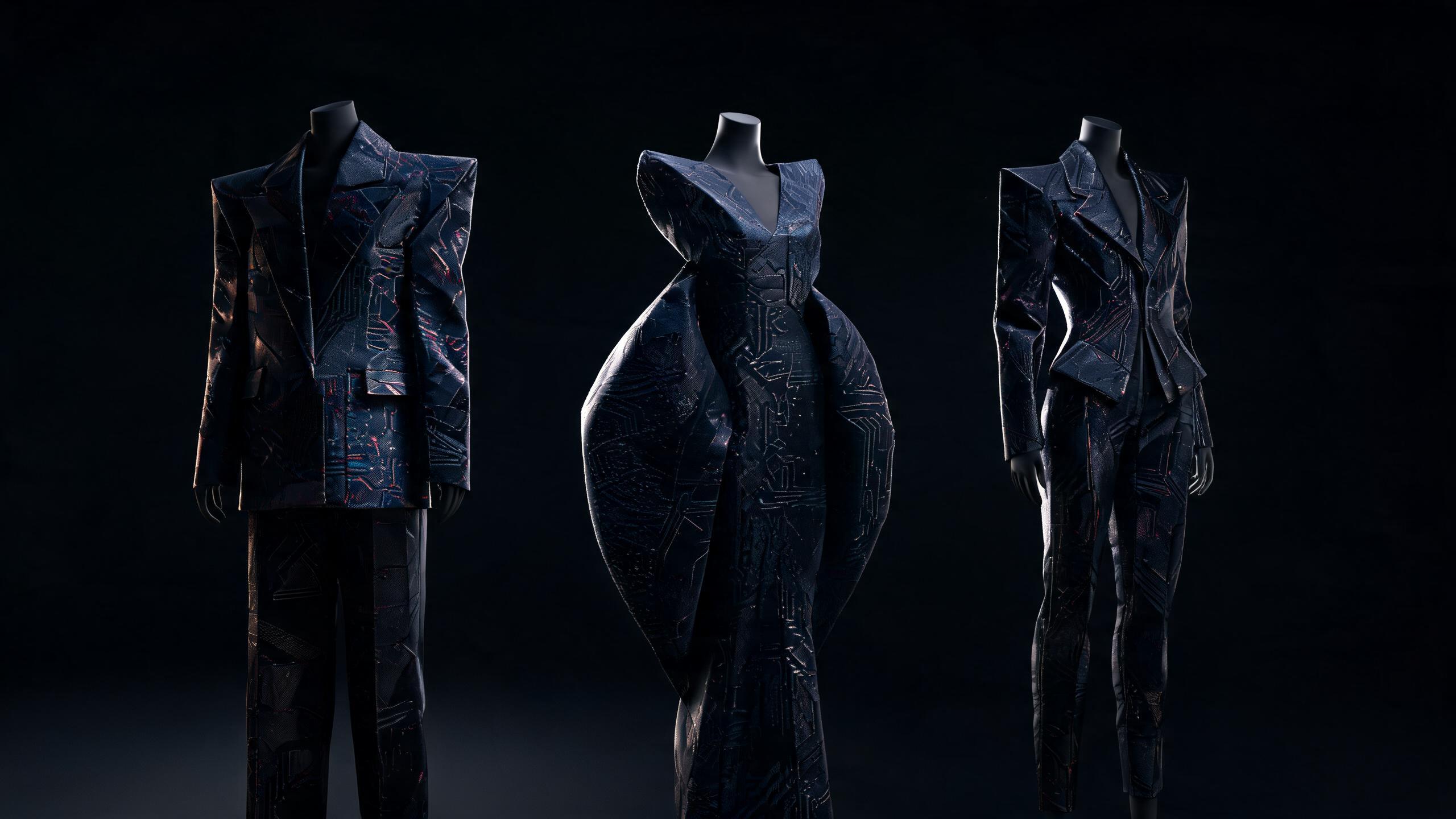
Demna AI for Fashion Teams: A Guide to Sharing Projects

Learn how Demna AI teams can organize shared workspaces, assign creative tasks, manage permissions, and streamline collaborative fashion projects.
Demna AI can teams share projects refers to the platform’s ability to let fashion teams collaborate on and share project work within a centralized workspace. Team members can access shared design assets, prompts, outputs, and project context according to the permissions configured by the workspace administrator.
Demna AI project sharing is the practice of organizing, permissioning, reviewing, and versioning AI-assisted fashion work so teams can develop a coherent design outcome without losing authorship or context.
Key Takeaway: Demna AI can teams share projects through organized workspaces with permissions, reviews, and version control, allowing designers to collaborate on AI-assisted fashion work while preserving authorship and project context.
What Does “Demna AI Can Teams Share Projects” Actually Mean?
The phrase “demna ai can teams share projects” points to a practical question: can a fashion team use an AI design workspace collaboratively, or does each person work in an isolated account?
The answer requires more precision than a simple yes or no. Project sharing has several distinct layers:
- Asset sharing: Can teammates access generated images, sketches, prompts, references, and exports?
- Workspace sharing: Can several people work inside the same project area?
- Role-based access: Can owners control who views, edits, comments on, or exports work?
- Version history: Can the team identify which prompt, reference, or model produced each result?
- Commercial permissions: Can the team determine whether shared outputs are approved for client, editorial, or production use?
- Context preservation: Can someone understand why an image exists, rather than seeing only the final file?
A team needs all six layers to collaborate safely. Sending generated images through chat solves only asset sharing. It does not create a reliable design system.
Shared AI fashion project: A structured workspace where multiple collaborators can access creative assets, preserve generation context, review iterations, manage permissions, and track decisions across the life of a fashion project.
The central principle is simple: share the project, not just the image. A generated image without its prompt, references, revision history, and usage status is an orphaned asset. It may look finished while remaining impossible to reproduce, evaluate, or approve.
This distinction matters because AI-assisted fashion work moves through several transformations. A designer may begin with a written concept, generate silhouettes, edit a reference image, translate a sketch into a garment visualization, and then adapt the result into a technical direction. Every transformation adds context that the next teammate needs.
For teams working with Demna AI or similar AI-native fashion tools, project sharing should therefore be treated as a workflow design problem. The objective is not merely to give more people access. The objective is to make creative reasoning visible without making the process slow.
Why Do Fashion Teams Need a Formal Sharing System?
Most fashion collaboration systems were designed for static files. AI design systems produce generative states: prompts, seeds, reference weights, model settings, edits, selected outputs, discarded alternatives, and human decisions.
A conventional file structure might contain:
Collection/
├── Moodboard/
├── Sketches/
├── CAD/
└── Final/
An AI-native project needs additional layers:
Collection/
├── 00_Brief/
├── 01_References/
├── 02_Prompt_Studies/
├── 03_Generation_Batches/
├── 04_Selected_Directions/
├── 05_Human_Edits/
├── 06_Tech_Translation/
├── 07_Review_Notes/
├── 08_Approved_Exports/
└── 09_Rights_and_Usage/
The difference is not administrative decoration. It changes how the team evaluates work.
A final image can hide critical facts:
- Was the silhouette intentionally designed or accidentally produced?
- Was the model trained or conditioned on a protected reference?
- Did the team approve the garment construction, or only the mood?
- Was the image edited after generation?
- Does the output represent an actual production direction?
- Can another designer reproduce the visual language without copying the exact artifact?
Without answers, collaboration becomes visual guessing.
AI-generated outputs are ambiguous by default
A human sketch usually has a clear author and revision chain. An AI-generated output may combine:
- A text prompt written by one person
- Reference images selected by another
- A model or preset chosen by a third
- Manual retouching performed by a fourth
- Color correction completed by a fifth
The file itself rarely communicates this chain. Teams must create that structure deliberately.
Fashion projects contain different kinds of truth
A visual can be successful in one sense and unusable in another. For example:
| Evaluation layer | Question |
|---|---|
| Conceptual | Does the image express the collection idea? |
| Visual | Are proportion, texture, and color convincing? |
| Technical | Can the garment be drafted and constructed? |
| Commercial | Does the product fit the target assortment? |
| Legal and operational | Can the team use the references and outputs appropriately? |
| Brand | Does the result belong to the label’s visual language? |
A shared project lets reviewers assess the right layer at the right stage. A shared image often encourages everyone to judge everything at once.
Collaboration must preserve disagreement
A strong system does not erase conflicting opinions. It records them.
If a creative director approves a silhouette but a technical designer flags an impossible sleeve construction, both observations should remain visible. The system should distinguish:
- Approved direction
- Open question
- Technical constraint
- Alternative proposal
- Rejected route
- Decision owner
This is especially important when AI accelerates option generation. More options do not create better decisions automatically. The team needs a way to explain why one option survived and another did not.
How Should a Team Structure a Demna AI Project?
A shared project should be organized around decisions, not merely file types.
Start with a project brief
Every project should begin with a short brief containing:
- Collection or campaign name
- Intended audience
- Garment category
- Design objective
- Visual references
- Non-negotiable brand codes
- Technical constraints
- Review date
- Decision owner
- Usage scope
The brief should distinguish between direction and inspiration.
For example:
- Direction: exaggerated shoulder line, compressed waist, low-saturation charcoal palette
- Inspiration: brutalist architecture, archival uniforms, industrial protective wear
This distinction prevents the team from treating every reference as an instruction.
Use a naming convention that exposes status
A strong naming system reduces ambiguity without requiring someone to open every file.
Use a format such as:
PROJECT_CATEGORY_DIRECTION_VERSION_STATUS_OWNER
Example:
FW26_OUTERWEAR_SHOULDER_VOLUME_V03_REVIEWED_MIRA
Recommended status labels:
DRAFTIN_REVIEWSELECTEDTECH_CHECKAPPROVEDARCHIVEDREJECTED
Avoid labels such as final-final, new, latest, or use-this. They encode urgency, not information.
Separate visual exploration from production translation
AI-generated images often communicate mood before they communicate construction. Keep the following stages distinct:
- Exploration: broad visual search across shape, attitude, proportion, and material.
- Selection: narrowing to a small number of coherent directions.
- Interpretation: identifying what the image is actually saying.
- Technical translation: converting visual intent into pattern, fabric, trim, and construction decisions.
- Approval: confirming the direction for the next stage.
This separation prevents a common mistake: treating a photorealistic image as proof that the garment is technically resolved.
Preserve prompt and reference context
Each selected output should include a compact record:
Prompt:
“Long protective coat with compressed waist, sculptural shoulder architecture,
matte bonded wool, high collar, concealed closure, severe monochrome styling.”

References:
- Ref_07: industrial workwear proportion
- Ref_11: architectural shoulder line
- Ref_14: matte bonded textile surface

Intent:
Create a protective outer layer with a rigid upper body and controlled lower volume.

Human edits:
- Reduced shoulder height
- Removed decorative strap
- Corrected hand anatomy
- Changed hem from mid-calf to ankle

Next action:
Test sleeve mobility and front closure construction.
This record is more valuable than a long prompt alone. It captures the designer’s reasoning and identifies what must survive if the image changes.
Maintain a decision log
A decision log should answer four questions:
- What changed?
- Who made the decision?
Why was it made? 4. What does the decision affect?
Example:
| Version | Decision | Reason | Impact |
|---|---|---|---|
| V02 | Retain high collar | Supports protective character | Requires closure and neck comfort review |
| V03 | Reduce shoulder projection | Improves wearability | Alters sleeve head and arm mobility |
| V04 | Replace glossy nylon with matte wool blend | Aligns with collection surface language | Requires new drape and weight testing |
The log stops the team from repeating old debates. It also creates a bridge between creative review and technical development.
👗 Want authenticated, AI-curated fashion? Shop with Alvin's Club →
What Permission Model Should Fashion Teams Use?
Permission design should follow the principle of minimum necessary access. Not every collaborator needs the ability to edit prompts, delete generations, export source files, or invite external users.
A practical role model includes:
| Role | View | Comment | Generate | Edit project structure | Export | Manage access |
|---|---|---|---|---|---|---|
| Creative director | Yes | Yes | Optional | Yes | Yes | Yes |
| Lead designer | Yes | Yes | Yes | Yes | Yes | Optional |
| Design contributor | Yes | Yes | Yes | Limited | Limited | No |
| Technical designer | Yes | Yes | Optional | Limited | Yes | No |
| Client or external reviewer | Selected assets | Yes | No | No | No | No |
| Production partner | Approved technical assets | Yes | No | No | Limited | No |
The exact labels will vary by platform, but the principle remains stable: separate creative contribution from administrative control.
Use project-level permissions for internal work
Internal projects can usually support broader access because the team already shares a working relationship. Even then, destructive actions should remain restricted.
Limit the ability to:
- Delete source assets
- Change project ownership
- Modify access rules
- Export unapproved work
- Overwrite selected outputs
- Remove decision history
Use curated review spaces for external stakeholders
External clients, manufacturing partners, and editorial collaborators should not automatically receive the full project.
Create a review layer containing:
- Selected images
- Brief context
- Specific review questions
- Visible version numbers
- Approval status
- Comment fields
- No access to discarded experiments or confidential references
A client should not need to inspect every rejected generation to approve a silhouette. A manufacturer should not need access to exploratory campaign imagery unrelated to construction.
Treat export as a controlled event
Export changes the status of an asset. It creates a copy that may circulate outside the project.
Record:
- Exported file name
- Export date
- Exporting user
- Resolution
- Intended recipient
- Usage scope
- Whether the file is approved or exploratory
This is especially important when the same image exists in several states. “Exported” should not mean “approved.”
How Should Teams Review AI-Generated Fashion Work?
AI makes visual review faster but less reliable if the review criteria remain vague.
A productive review separates visual response from design judgment.
Review the image in four passes
Pass one: silhouette
Ignore color, face, styling, and surface effects. Ask:
- Is the proportion intentional?
- Where is the visual center of gravity?
- Does the garment expand, compress, elongate, or interrupt the body?
- Is volume distributed above, at, or below the waist?
- Does the silhouette express the brief?
Silhouette is the most transferable information in a fashion image. It survives changes in fabric, styling, and presentation.
Pass two: construction logic
Inspect:
- Seam placement
- Closure position
- Sleeve attachment
- Collar behavior
- Pocket scale
- Hem treatment
- Layer interaction
- Movement implications
AI imagery often produces persuasive but contradictory construction. A pocket may disappear into a seam. A closure may not connect across the body.
A sleeve may attach without enough ease.
Flag these as translation problems, not automatic failures. The team must decide whether the contradiction is an accidental artifact or a useful conceptual prompt.
Pass three: material behavior
Ask whether the depicted material supports the silhouette.
- Does a stiff fabric hold the proposed volume?
- Does a fluid fabric create the claimed compression?
- Does the surface reflect light consistently?
- Does the fabric weight match the fold pattern?
- Does the textile appear bonded, woven, knitted, coated, or synthetic?
A rigid shoulder in soft jersey requires either internal support or a different interpretation. The AI image can suggest the effect, but the team must specify the material system.
Pass four: brand and assortment fit
A strong image can still be wrong for the collection.
Review:
- Relationship to existing brand codes
- Compatibility with adjacent looks
- Price and fabrication implications
- Gender and size-range considerations
- Editorial versus commercial function
- Repeatability across a product group
The goal is not to reject novelty. The goal is to distinguish useful deviation from visual noise.
Use review questions, not general reactions
Replace “What do you think?” with questions such as:
- Which proportion should survive into the next iteration?
- Is the shoulder volume structural or merely photographic?
- Does the high collar create identity, or does it obscure the face?
- Which detail is essential to the design and which is decorative?
- What must be tested in fabric before approval?
- Can this idea generate three related garments without repetition?
Specific questions produce actionable comments. General reactions create comment volume without direction.
Identify the decision type
Every review comment should be tagged as one of the following:
- Keep: preserve this attribute
- Change: modify a defined attribute
- Test: validate through fabric, pattern, or image variation
- Reject: remove the direction
- Clarify: resolve an ambiguous design intention
This classification reduces the risk of treating a preference as a requirement.
What Makes a Strong Shared Prompt System?
A prompt is not a design brief, but teams often use it as one. A shared prompt system should describe both visual attributes and decision intent.
Build prompts in layers
A useful fashion prompt contains several layers:
- Garment category: coat, tailored trouser, knit dress, technical vest
- Silhouette: narrow, cocoon, column, A-line, cropped, elongated
- Proportion: high waist, dropped shoulder, extended hem, compressed torso
- Construction: double-breasted, raglan sleeve, welt pocket, modular panel
- Material: bonded wool, washed denim, compact jersey, coated cotton
- Surface: matte, brushed, translucent, rippled, dry hand
- Color: controlled palette with named relationships
- Styling: footwear, layering, accessories, pose
- Presentation: studio, runway, street, technical flat, editorial
- Exclusions: unwanted details, incorrect anatomy, decorative noise
Example:
Garment: ankle-length protective wool coat
Silhouette: elongated column with controlled cocoon volume through the back
Proportion: dropped shoulder, high collar, narrow lower opening
Construction: concealed front closure, inset sleeve, deep side vents
Material: dense matte bonded wool with minimal surface sheen
Palette: carbon, smoke grey, muted oxidized green
Styling: straight trouser, low-profile leather shoe, no visible logo
Presentation: neutral studio, full-body front three-quarter view
Exclude: military insignia, unnecessary straps, glossy nylon, exaggerated body anatomy
The prompt should be accompanied by a human interpretation:
The coat should feel protective without looking tactical. The volume belongs to the back and shoulder, while the front remains visually controlled.
That sentence helps reviewers understand the design logic even when the generation changes.
Create a shared vocabulary
Teams lose time when they use the same word differently. Define terms such as:
- Oversized
- Sculptural
- Relaxed
- Architectural
- Severe
- Fluid
- Protective
- Minimal
- Tailored
- Raw
For example, “oversized” could mean:
- Increased ease through the body
- Extended shoulder width
- Longer sleeve length
- Lower armhole
- Enlarged garment volume without changing hem length
A shared vocabulary makes prompts more repeatable and review comments more precise.
Version prompts separately from outputs
If the image changes, the prompt may not be the only cause. Track:
- Prompt version
- Reference set
- Model or preset
- Image-to-image strength
- Seed or reproducibility parameter, where available
- Manual edits
- Upscaling or enhancement steps
This is the minimum record required to understand why a result changed.
How Can Teams Prevent AI Fashion Projects From Becoming Chaotic?
The main threat is not too much creativity. It is unbounded branching.
A single concept can produce hundreds of images. Without a selection protocol, the team confuses output volume with progress.
Use a funnel model
Move through five stages:
- Divergence: generate a broad range of possibilities.
- Clustering: group outputs by silhouette, material, and visual language.
- Selection: choose a limited number of directions.
- Refinement: iterate only on selected directions.
- Translation: convert the direction into design and production information.
The team should not refine every attractive image. It should refine the smallest set that represents the collection’s actual needs.
Score outputs against the brief
A simple qualitative scorecard can include:
| Criterion | Question |
|---|---|
| Silhouette | Does the shape express the intended proportion? |
| Distinctiveness | Does it add a recognizable point of view? |
| Coherence | Does it belong with the rest of the collection? |
| Feasibility | Can the idea be translated into a garment? |
| Adaptability | Can the principle extend across categories? |
| Clarity | Can another person understand the design intent? |
Use a defined scale if the team benefits from one, but do not mistake numerical scoring for judgment. The purpose is to make criteria visible, not to outsource taste to arithmetic.
Cap the number of active directions
Once the project reaches selection, archive excess directions. Keep them available for reference, but remove them from the active workspace.
An active board should contain:
- Current concept
- Previous approved concept
- Open alternatives
- Technical questions
- Next decisions
It should not contain every generation ever produced.
Separate inspiration from evidence
An AI image can be evidence of a visual possibility. It is not evidence of:
- A workable pattern
- A tested material
- A viable cost
- A complete size range
- A production-ready finish
- A commercially validated product
Label images according to what they prove:
MOOD_REFERENCESILHOUETTE_STUDYMATERIAL_HYPOTHESISSTYLING_DIRECTIONTECH_TRANSLATIONAPPROVED_PRODUCT_DIRECTION
This prevents a compelling visual from acquiring authority it has not earned.
What Are the Most Common Mistakes When Sharing Demna AI Projects?
Mistake one: sharing only flattened images
A flattened image hides the creative system behind it. Teammates cannot see the prompt, reference relationship, or manual intervention.
Correction: attach a generation card to every selected output.
Mistake two: allowing unrestricted editing
When everyone can modify project structure, the project loses a stable source of truth.
Correction: give contributors generation and comment access while restricting structural changes to project owners
Summary
- Demna AI project sharing organizes permissions, reviews, versions, and creative context so fashion teams can develop coherent designs without losing authorship.
- The question “demna ai can teams share projects” involves more than image access, including shared workspaces, role-based permissions, version history, commercial approvals, and preserved context.
- Teams can share generated images, sketches, prompts, references, and exports, but file sharing alone does not provide a reliable collaborative design system.
- Role-based access should distinguish between teammates who can view, edit, comment on, or export AI-assisted fashion work.
- Version history and commercial-permission records help teams identify how outputs were created and whether they are approved for client, editorial, or production use.
Key Takeaways
- Key Takeaway:
- “demna ai can teams share projects”
- Asset sharing:
- Workspace sharing:
- Role-based access:
Frequently Asked Questions
Can Demna AI teams share projects?
Demna AI can support shared projects when the platform provides workspace collaboration, user permissions, and project access controls. Teams should confirm whether their plan includes shared workspaces, collaborative editing, and version history before adopting it for production work.
How does Demna AI project sharing work for fashion teams?
Demna AI project sharing typically works by inviting team members to a workspace and assigning roles for viewing, editing, commenting, or managing files. A clear permission structure helps designers, creative directors, and reviewers collaborate without losing authorship or project context.
Can you share Demna AI projects with clients or external collaborators?
You can share Demna AI projects with clients or external collaborators if the workspace supports guest access, shareable links, or controlled exports. Review access settings carefully so confidential references, unreleased designs, and internal prompts are not exposed unintentionally.
Is it worth using Demna AI for team-based fashion projects?
Demna AI is worth considering for team-based fashion projects when it centralizes concepts, references, feedback, and revisions in one place. Its value depends on collaboration features such as version control, permissions, review workflows, and reliable file organization.
Why does Demna AI project sharing matter for fashion teams?
Demna AI project sharing matters because fashion development involves multiple contributors, rapid iterations, and sensitive creative decisions. A shared system preserves design context and authorship while reducing duplicated work, unclear approvals, and lost versions.
Related on Alvin's Club
About the author
Building the AI fashion agent at Alvin's Club — personal style models, dynamic taste profiles, and private AI stylists. Writing about where AI meets fashion commerce.
Credentials
- Founder at Alvin's Club (Echooo E-Commerce Canada Ltd.)
- Writes weekly on AI × fashion at blog.alvinsclub.ai
X / @alvinsclub · LinkedIn · alvinsclub.ai
This article is part of Alvin's Club's AI Fashion Intelligence series — the AI fashion agent that influences demand before shopping happens.
Related Articles
- Can Demna AI Edit Photos? A Practical Guide for Fashion Creators
- 7 Ways to Integrate Demna AI With Adobe Illustrator for Fashion Design
- How Demna Uses AI to Turn Fashion Sketches Into Clothing
- Demna AI Terms of Service: What Fashion Creators Need to Know
- How Demna’s AI Tech Packs Could Reshape Fashion in 2026
- Inside Demna’s Experiment With AI-Powered Clothing Design
- Can Demna AI Replace Photoshop in Fashion Design?
- 7 Demna-Inspired AI Fashion Design Workflow Templates
- How to Upscale Demna AI-Generated Fashion Images
- Demna AI Training Data Sources: A Practical Fashion Tech Guide
- The 2026 Guide to Sharper, More Stylish Demna AI Outputs
- Demna AI Mobile App Availability: The Best Fashion Tools Compared