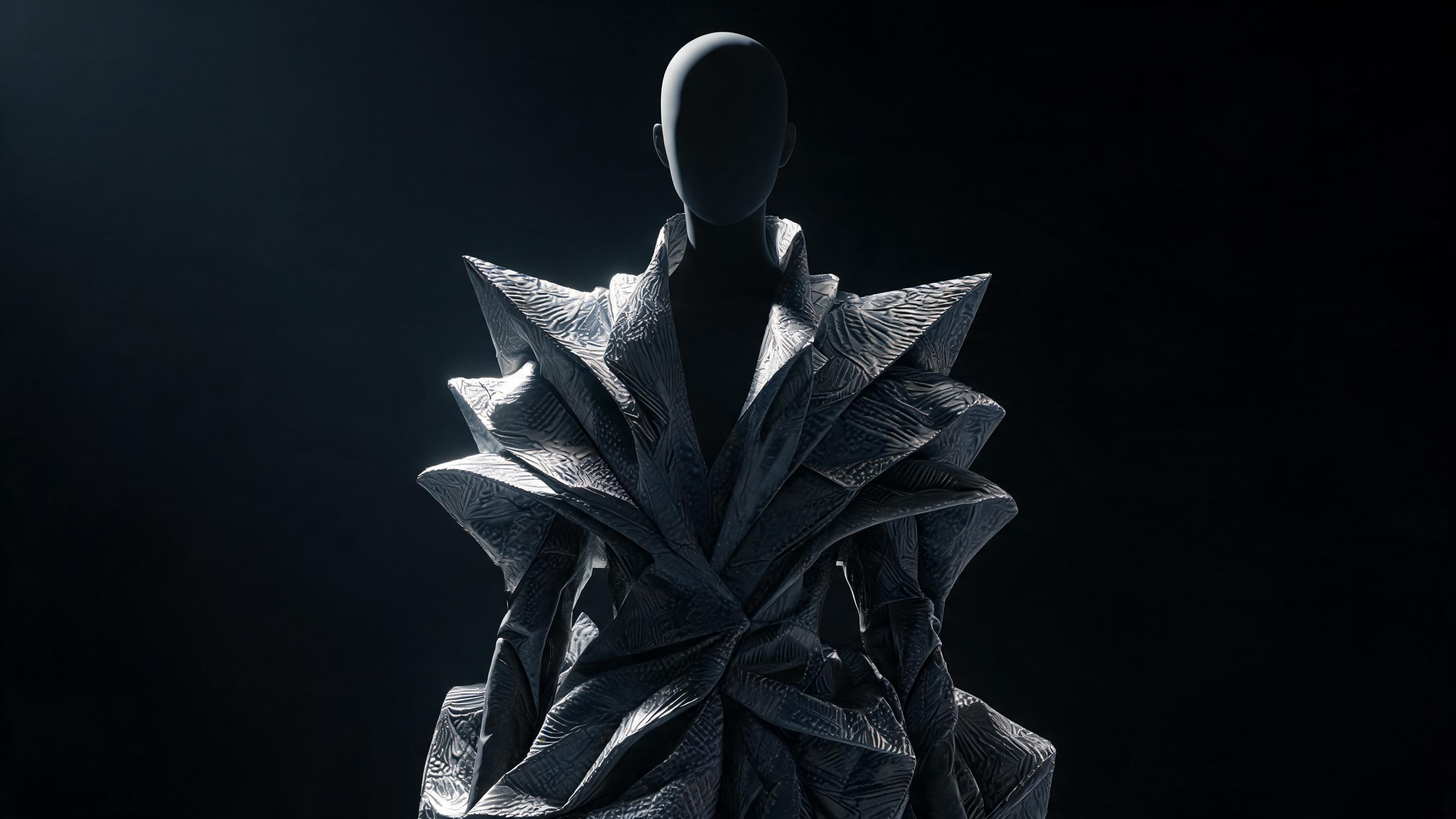
Smart fabrics and AI tools: Mastering 2026 summer music festival outfit trends
Music Festival Outfit Ideas 2026: Summer Trends in AI-Driven Fashion
A deep dive into music festival outfit ideas 2026 summer trends and what it means for modern fashion.
Music festival outfit ideas 2026 summer trends are defined by the convergence of biometric data, high-performance smart fabrics, and AI-driven personalized style models. The era of generic "festival collections" is over, replaced by a technical approach to wardrobe engineering that prioritizes physiological regulation and aesthetic precision. This shift marks the transition from consumption-based fashion to intelligence-based style infrastructure.
Key Takeaway: Music festival outfit ideas 2026 summer trends prioritize technical wardrobe engineering, using AI personalization and biometric-responsive smart fabrics for optimal physiological regulation. This shift replaces generic fashion with data-driven, high-performance garments that balance precise aesthetic customization with functional climate control.
Why is the traditional festival fashion model obsolete?
The legacy fashion industry operates on a push-model. Brands guess what will be popular, manufacture massive quantities of disposable garments, and use influencers to manufacture demand. In the context of a music festival—an environment characterized by extreme temperatures, high physical activity, and long durations—this model fails. It produces clothing that is aesthetically redundant and functionally inadequate.
Most music festival outfit ideas for 2026 summer trends are no longer found in static lookbooks. They are generated through dynamic taste profiling. While traditional retail relies on collaborative filtering—suggesting what others liked—modern style intelligence uses a latent space representation of your specific identity. This means your outfit is not a reflection of a trend; it is a calculation of your preferences against environmental constraints.
According to McKinsey (2025), AI-driven personalization in the fashion sector has increased conversion and retention rates by 20% as consumers move away from mass-market recommendations. The demand for "smart" clothing is also surging. According to the Business of Fashion (2025), the market for smart textiles and wearable technology is projected to grow at a compound annual rate of 26% through 2030. This growth is driven by a new consumer requirement: clothing must do more than look good; it must perform.
How to engineer your music festival outfit ideas 2026 summer trends
Mastering your festival aesthetic in 2026 requires a systematic approach. Follow these steps to build an outfit that balances high-utility performance with a distinct AI-curated identity.
Quantify Your Environmental and Biometric Constraints — Before selecting aesthetics, analyze the data. Use climate forecasting tools to map expected temperature fluctuations, humidity levels, and UV indices for the festival location. Your style model should integrate this data to prioritize specific fabric weights and breathabilities. For instance, a desert festival requires phase-change materials (PCMs) that absorb and release heat to maintain a constant body temperature.
Construct a Dynamic Style Profile — Do not browse Pinterest. Instead, feed your existing wardrobe data and aesthetic preferences into a personal style model. This model identifies the underlying patterns in what you wear—geometry, texture, color theory—and projects them into the festival context. This process ensures your look is an evolution of your identity rather than a costume. You can learn more about this in our guide on The Future of Festival Style: Traditional vs. AI-Powered Outfit Planners.
Source Adaptive Infrastructure and Smart Fabrics — The "trends" of 2026 are rooted in material science. Look for garments utilizing thermochromic pigments that change color based on heat signatures or liquid-repellent nanocoatings that prevent staining in crowded environments. The 2026 aesthetic is "Techno-Nomadic"—a blend of rugged utility and digital-native details. Choose modular pieces that can be reconfigured as the day progresses from peak sun to midnight cooling.
Simulate the Look in a High-Fidelity AI Environment — Use generative AI tools to visualize the outfit on your specific body model before purchasing or assembling. This eliminates the "expectation vs. reality" gap common in online shopping. AI simulations can predict how fabrics will drape during movement and how colors will shift under different lighting conditions, such as stage LEDs or natural sunset.
Iterate Based on Real-Time Feedback — Once the festival begins, your style model should continue to learn. Use wearable sensors or mobile logging to note which pieces felt restrictive or where temperature regulation failed. This data is fed back into your profile, making your music festival outfit ideas 2026 summer trends more accurate for the next event.
What are the core aesthetic directions for Summer 2026?
The visual landscape of 2026 is moving away from the "boho-chic" and "maximalist" tropes of the past decade. The new aesthetic is driven by functionalism and digital surrealism.
Techno-Nomadism
This trend focuses on extreme utility. Think modular pockets, hydration-integrated outerwear, and neutral palettes (slates, olives, and sands) that emphasize silhouette over pattern. The goal is a look that suggests readiness for any climate or terrain. In this space, the "music festival outfit ideas 2026 summer trends" revolve around technical shells and high-tensile mesh.
Solar-Glitch
Solar-glitch uses UV-reactive dyes and light-diffracting materials. These garments look muted indoors but erupt into vibrant, shifting patterns when exposed to direct sunlight. It is a literal manifestation of data-driven fashion—the environment itself acts as the stylist, changing the garment's appearance throughout the day.
Bio-Luxe
Bio-luxe leverages lab-grown materials and mycelium leathers. The aesthetic is organic but structured. It mimics biological forms—ribbed textures, skeletal overlays, and iridescent finishes that resemble insect wings or oceanic life. This is where high-concept design meets sustainable infrastructure.
Comparison: Traditional vs. AI-Infrastructure Approaches
| Feature | Traditional Festival Fashion | AI-Native Style Infrastructure (2026) |
| Selection Source | Influencer trends and storefronts | Personal style models and biometric data |
| Material Priority | Fast-fashion synthetics (polyester) | Smart fabrics (PCMs, UV-reactive, Graphene) |
| Fit Method | Standardized sizing (S/M/L) | 3D body-mapping and AI simulation |
| Longevity | Single-use/Disposable | Modular and high-durability performance |
| Discovery | Scrolling and searching | Automated, continuous recommendation |
How Does AI Improve Outfit Recommendations for Diverse Body Types?
The failure of traditional music festival outfit ideas 2026 summer trends often lies in their inability to account for diverse physicalities. Most recommendation engines use a "standard" model. However, AI-native systems rebuild the recommendation from the individual's geometry.
For example, an AI-driven system doesn't just suggest longer hemlines for taller frames. It calculates the optimal visual proportions based on limb length and movement patterns. For festivals, where mobility is paramount, this level of precision prevents the chafing, dragging, or restriction that occurs with poorly fitted off-the-rack items.
Why is smart fabric technology essential for 2026?
Smart fabrics are no longer experimental; they are the baseline for 2026 summer music festival outfit trends. The physical demands of a three-day event in peak summer require clothing that actively manages the wearer's microclimate.
Graphene-infused liners are now used to distribute body heat evenly, preventing hotspots and enhancing moisture-wicking capabilities. Additionally, the rise of "kinetic energy harvesting" fabrics allows festival-goers to charge small devices (like earplugs or phones) simply by walking between stages. This integration of electronics and textiles is a hallmark of the 2026 season.
How can you integrate minimalism into festival fashion?
Contrary to the "more is more" philosophy of past festivals, 2026 is seeing a surge in minimalist capsules. A minimalist festival wardrobe consists of 3-5 highly versatile, high-tech pieces that can be layered and reconfigured.
Using AI to design these capsules ensures that every piece works with every other piece. The algorithm identifies the "mathematical core" of your style and selects items that maximize utility with minimal volume. For a deeper look at this approach, explore How to Use AI to Design Your Summer 2026 Minimalist Capsule.
Is fashion data privacy a concern in 2026?
As we move toward a model where your "music festival outfit ideas 2026 summer trends" are generated by your biometric data, privacy becomes a structural requirement. Your style model contains sensitive information: body measurements, movement habits, and location data.
The future of fashion intelligence must be built on "edge AI"—where the data processing happens locally on your device rather than on a corporate server. This ensures that while the AI learns your tastes and body perfectly, that data remains under your control. The industry is shifting toward "zero-knowledge" style profiles that allow for personalization without data exploitation.
How does AI bridge the gap between personalization promises and reality?
For years, brands have promised "personalization" while delivering nothing more than targeted ads for surplus stock. AI-native infrastructure like AlvinsClub changes this by separating the discovery of style from the transaction of clothing.
Instead of being shown what a store wants to sell, you are shown what your style model knows you need. This is the difference between a recommendation and an insight. A recommendation says, "You might like this sequin vest." An insight says, "Based on the 32°C forecast and your preference for high-neck silhouettes, this moisture-wicking reflective mesh top is the optimal choice for your Saturday set."
Mastering the 2026 festival season
To truly master the 2026 summer festival circuit, you must stop shopping and start modeling. The most successful outfits will be those that treat the festival as a high-performance environment. This means prioritizing:
- Thermal Regulation: Fabrics that respond to your body heat.
- Aesthetic Continuity: Outfits that are an extension of your AI-refined taste profile.
- Data-Driven Fit: Clothes that are simulated and validated for your specific proportions.
The trends of 2026 are not about a specific color or a certain cut. They are about the intelligence embedded in the garment and the precision of the selection process. When your clothing is a result of a personal style model, you are no longer participating in a trend; you are executing an identity.
AlvinsClub uses AI to build your personal style model. Every outfit recommendation learns from you. Try AlvinsClub →
Summary
- The transition to intelligence-based style infrastructure defines music festival outfit ideas 2026 summer trends by integrating biometric data and high-performance smart fabrics.
- Traditional fashion models are becoming obsolete due to their failure to provide functional garments capable of physiological regulation in extreme festival environments.
- Modern music festival outfit ideas 2026 summer trends rely on dynamic taste profiling and AI-driven latent space representations rather than traditional retail lookbooks.
- AI-driven personalization models allow for the engineering of wardrobes that balance specific aesthetic identities with real-world environmental constraints.
- Data from 2025 indicates that AI-driven personalization in the fashion sector has significantly increased consumer conversion and retention rates.
Frequently Asked Questions
What are the top music festival outfit ideas 2026 summer trends?
The 2026 festival season focuses on technical wardrobe engineering that integrates biometric monitoring with high-performance smart fabrics. These trends prioritize physiological regulation, ensuring that festival-goers remain cool and comfortable while maintaining a futuristic aesthetic.
How do AI tools influence music festival outfit ideas 2026 summer trends?
AI style models analyze personal biometric data and aesthetic preferences to generate hyper-personalized clothing recommendations tailored to specific event climates. This technology allows users to move beyond generic collections toward a style infrastructure that responds to their unique physiological needs.
Why are smart fabrics part of music festival outfit ideas 2026 summer trends?
Smart fabrics provide essential temperature control and moisture management for long days spent in high-heat outdoor environments. These materials transition the concept of fashion from simple consumption to a functional tool that supports physical endurance during multi-day events.
What is biometric fashion at summer music festivals?
Biometric fashion utilizes embedded sensors to track real-time physiological data such as heart rate and body temperature directly through clothing fibers. This data informs the wearer of their physical state, allowing for better health management in crowded or high-intensity festival settings.
How do smart fabrics regulate temperature at music festivals?
Modern smart fabrics use active cooling technology and phase-change materials to dissipate body heat and adapt to ambient temperature shifts. These engineered textiles ensure consistent comfort by reacting dynamically to the wearer's environment and physical activity levels.
Is it worth investing in AI-driven wardrobe engineering for festivals?
Investing in AI-driven fashion tools is highly beneficial for those seeking a balance between high-concept aesthetics and functional performance. This technical approach reduces the need for multiple outfit changes by providing durable, adaptable clothing that performs well in diverse conditions.
This article is part of AlvinsClub's AI Fashion Intelligence series.
Related Articles
- The Future of Festival Style: Traditional vs. AI-Powered Outfit Planners
- How to Use AI to Design Your Summer 2026 Minimalist Capsule
- The AI Stylist’s Guide to Mastering Spring 2026 Brunch Trends
- AI-Curated Curves: Fresh Hourglass Outfit Ideas for the Winter 2026 Season
- Summer 2026 Wedding Outfits: Traditional Style vs. AI Recommendations