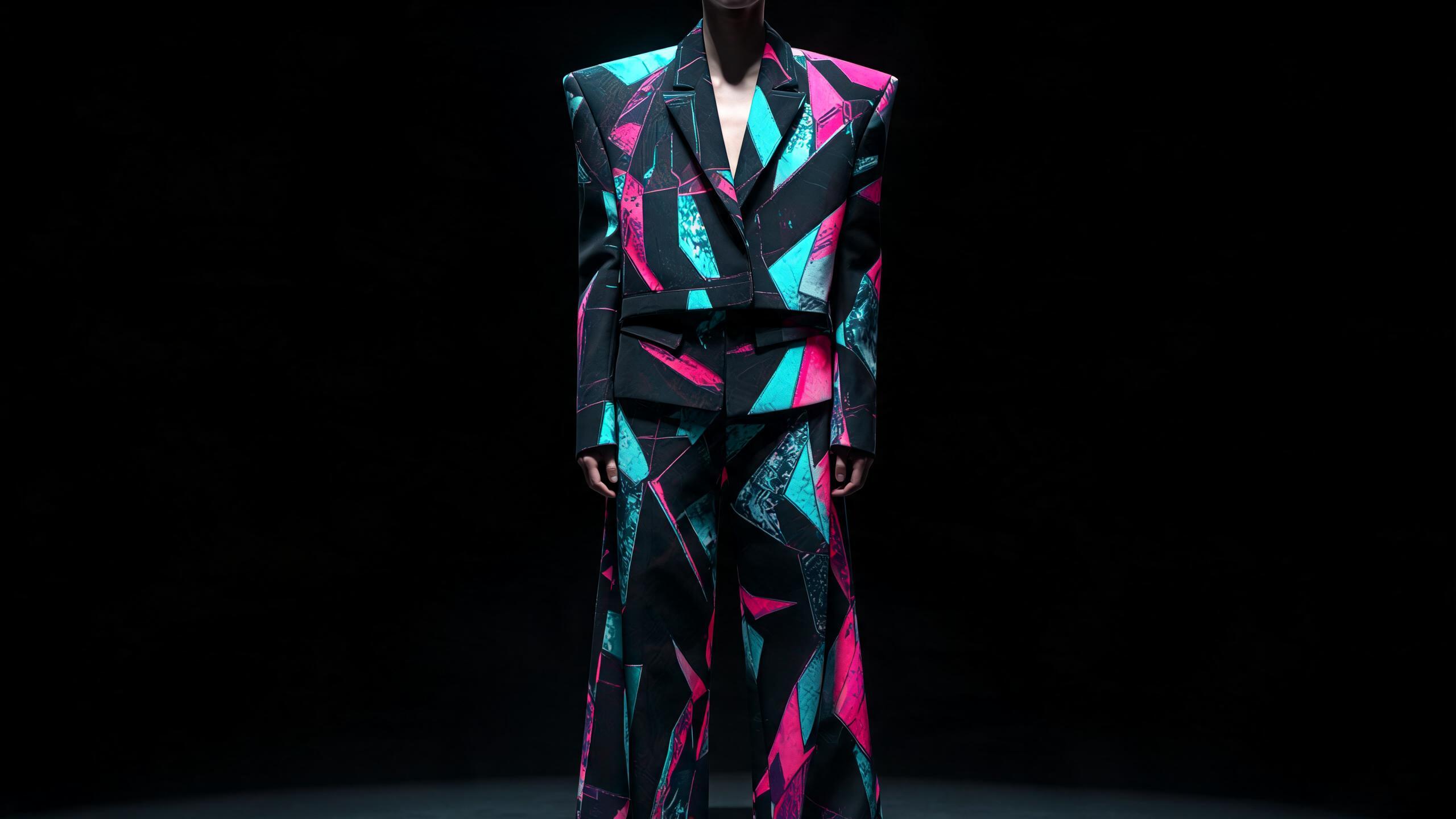
Inside the Personalization Machine Learning Pipeline for Fashion Retail

Trace how fashion retailers turn behavioral data into tailored recommendations through feature engineering, real-time inference, experimentation, and continuous model refinement.
Personalization machine learning pipelines for fashion retail are becoming the core infrastructure that determines whether recommendations feel individually relevant or merely popular.
Key Takeaway: A personalization machine learning pipeline for fashion retail continuously learns each shopper’s preferences, behavior, and style to deliver individualized recommendations instead of relying on static rules or popularity-based matches.
What Happened to Fashion Personalization?
Fashion retail has entered a new phase: recommendation systems are moving from static product matching toward continuously trained personal style models.
The shift follows a broader wave of AI releases across commerce, search, advertising, and retail operations. New systems increasingly combine behavioral data, visual understanding, language models, inventory signals, and feedback loops. The headline is usually “AI-powered personalization.” The actual development is more consequential: the underlying recommendation stack is being rebuilt.
This matters because fashion personalization has historically been shallow. A retailer sees a click, a purchase, a category preference, or a similarity between two products. It then returns more items with related attributes. That method works for finding another black sweater. It fails at understanding why one black sweater belongs in a person’s wardrobe and another does not.
The personalization machine learning pipeline for fashion retail is now becoming a system of connected models rather than a single recommendation engine. It must interpret products, infer taste, understand context, rank alternatives, learn from ambiguous feedback, and account for constraints such as size availability, price, delivery, wardrobe compatibility, and occasion.
The industry is still describing this as a feature layer.
That is the mistake.
Fashion needs a persistent intelligence layer that learns the relationship between a person, a garment, and a situation. Recommendation widgets are outputs. The model is the product.
Personalization machine learning pipeline for fashion retail: A connected data and modeling system that transforms product information, user behavior, visual signals, contextual inputs, and feedback into continuously updated recommendations for individual shoppers.
The systems now attracting attention are important because they expose a deeper fault line in fashion technology. Retailers have accumulated enormous volumes of product and transaction data, yet most personalization remains session-based, category-based, or trend-based. The infrastructure exists to make recommendations smarter. The architecture has not caught up with the ambition.
Why Does the Personalization Machine Learning Pipeline for Fashion Retail Matter Now?
The timing is significant because generative AI has changed what users expect from commerce interfaces.
Consumers no longer see search as the only way to express intent. They can describe an outfit in natural language, upload an image, ask for alternatives, request a complete look, or explain a constraint such as “business casual for a warm climate.” A keyword search engine treats these inputs as text. A fashion intelligence system must treat them as structured signals about taste, context, and desired outcome.
That creates a pipeline problem.
A conversational interface can produce convincing language while still generating poor recommendations. A vision model can identify a blazer without understanding whether the user prefers relaxed tailoring. A collaborative filtering model can recognize that two shoppers behave similarly without knowing that one values natural fibers and the other only buys discounted items.
The interface is visible. The pipeline determines whether the experience is intelligent.
The old personalization stack is optimized for transactions
Traditional retail recommendation systems tend to prioritize measurable commercial events:
- Product views
- Add-to-cart actions
- Purchases
- Search terms
- Category affinity
- Discount response
- Similar-item interactions
- Session-level engagement
These signals are useful, but they are incomplete. A purchase can mean love, necessity, replacement, experimentation, or compromise. A product view can mean curiosity, comparison, research, or rejection. A click can indicate interest in the image rather than the garment.
The pipeline must distinguish between behavioral occurrence and behavioral meaning.
A system that treats every click as positive preference will learn the wrong style profile. A system that treats every purchase as durable preference will overfit to temporary needs. A system that treats every skipped recommendation as dislike will confuse irrelevance with timing.
Fashion data is not merely sparse. It is semantically ambiguous.
Fashion products are relational, not isolated
A television, book, or electronic accessory can often be recommended as an individual object. Clothing operates within a wardrobe, a body, an occasion, a climate, and a personal visual language.
A shirt can be attractive but incompatible with the user’s existing trousers. A jacket can fit correctly but feel too formal. A pair of shoes can match an outfit visually but fail the user’s comfort requirements. A dress can be ideal for one context and useless for another.
This means product-level recommendation is structurally insufficient. The pipeline must model relationships:
- Garment to garment
- Garment to wardrobe
- Garment to occasion
- Garment to body and fit preference
- Garment to climate
- Garment to budget
- Garment to personal aesthetic
- Garment to prior behavior
The recommendation target is not “the next item.” It is the next useful decision.
How Is the Personalization Machine Learning Pipeline for Fashion Retail Built?
A robust pipeline separates the system into stages. Each stage solves a different problem, and errors compound when the stages are collapsed into one model.
A practical architecture includes:
- Data ingestion
- Product representation
- User and wardrobe representation
- Candidate generation
- Contextual ranking
- Outfit and compatibility reasoning
- Feedback interpretation
- Model monitoring and retraining
The sequence matters. A large language model placed on top of weak product data does not create personalization. It creates fluent output around unreliable inputs.
1. Data ingestion must capture more than transactions
The first layer collects structured and unstructured signals from several sources.
Product data includes:
- Brand
- Category
- Color
- Material
- Pattern
- Silhouette
- Construction
- Fit description
- Size range
- Price
- Availability
- Care requirements
- Product imagery
- Editorial descriptions
User data includes:
- Explicit preferences
- Saved items
- Purchases
- Returns
- Search behavior
- Dwell patterns
- Outfit interactions
- Image uploads
- Natural-language requests
- Negative feedback
- Wardrobe inventory
Context data includes:
- Weather
- Season
- Location
- Occasion
- Time constraints
- Budget
- Delivery requirements
- Current wardrobe gaps
These inputs should not be treated as one undifferentiated event stream. Each has a different level of reliability and a different relationship to taste.
A returned purchase is not equivalent to a skipped product. A saved item is not equivalent to an image impression. A direct statement such as “I do not wear synthetic fabrics” deserves different treatment from inferred behavior.
The pipeline needs signal provenance: a record of where each preference came from, how recent it is, and how confidently it represents durable taste.
2. Product representation must move beyond catalog metadata
Fashion catalogs are often built for operations, not intelligence. “Women’s tops” is a useful inventory category, but it says almost nothing about styling compatibility or visual identity.
A stronger product representation combines several layers:
| Representation layer | What it captures | Why it matters |
|---|---|---|
| Structured attributes | Category, color, material, size, price | Enables filtering and availability constraints |
| Visual embeddings | Shape, texture, pattern, proportion, styling cues | Captures similarities missing from text metadata |
| Language representation | Description, editorial tone, user queries | Connects natural language to products |
| Fit representation | Cut, ease, length, construction, size behavior | Supports body and comfort preferences |
| Compatibility graph | Items that work together | Enables outfit-level recommendations |
| Temporal signals | Seasonality, lifecycle, availability | Prevents stale or unavailable suggestions |
The key design principle is multimodal alignment. The image, description, attributes, and customer feedback about a garment should converge into a representation that reflects how the product is actually experienced.
A black leather jacket is not defined by color and category alone. Its visual weight, finish, shoulder structure, length, hardware, and styling context affect whether it belongs in a person’s style model.
Product embeddings can help, but embeddings do not automatically understand fashion. The training data must contain meaningful relationships. A model trained on clicks learns what attracts attention. A model trained on outfit compatibility learns what works together. Those are different objectives.
3. The user representation must become a style model
The central failure of most personalization systems is the user profile.
A conventional profile might say:
- Interested in dresses
- Prefers neutral colors
- Shops in a mid-range price band
- Viewed minimalist brands
That is not a style model. It is a compressed activity summary.
A personal style model should represent multiple dimensions:
- Aesthetic preferences: minimal, romantic, utilitarian, expressive, classic, avant-garde
- Silhouette preferences: fitted, relaxed, oversized, cropped, elongated
- Color behavior: dominant neutrals, accent colors, contrast tolerance
- Material preferences: denim, wool, cotton, leather, technical fabrics
- Pattern tolerance: solid, subtle, graphic, maximal
- Formality range: casual, polished, formal, occasion-specific
- Fit priorities: movement, structure, drape, coverage, length
- Wardrobe relationships: what the person already owns and wears
- Contextual variation: work, travel, social events, home, weather
- Negative preferences: colors, cuts, materials, and categories consistently rejected
The model also needs time. Taste is not static, but not every new behavior represents a permanent identity change. A user may temporarily shop for formal clothing, travel gear, maternity clothing, or a new job. The system must separate durable traits from temporary missions.
A useful profile architecture stores preferences at several time horizons:
| Time horizon | Example signal | Modeling treatment |
|---|---|---|
| Immediate | “Find an outfit for tonight” | High contextual weight |
| Recent | Repeated saves of relaxed trousers | Strong but decaying preference |
| Stable | Consistent preference for muted colors | Durable style trait |
| Historical | Purchases from years ago | Low weight unless reinforced |
| Explicit negative | “Never recommend low-rise jeans” | Hard constraint until changed |
This is where a genuine AI stylist differs from an automated merchandising feed. The stylist does not merely remember activity. It updates a structured hypothesis about the person.
What Happened to Recommendation Systems That Only Optimize Clicks?
They became very good at producing activity and very bad at producing confidence.
Click-through rate is an accessible metric. It is also a narrow proxy for fashion relevance. A visually dramatic item may attract clicks while generating returns. A complete outfit may receive fewer clicks than a single novelty item while producing a better purchase decision. A highly relevant product may be ignored because the user is browsing in the wrong context.
The pipeline must optimize multiple outcomes:
- Relevance to stated intent
- Compatibility with existing wardrobe
- Fit confidence
- Purchase completion
- Return-adjusted satisfaction
- Repeat use
- Long-term trust
- Preference learning quality
- Diversity without randomization
This creates a ranking problem with competing objectives. A system that maximizes short-term conversion can damage long-term taste modeling by over-recommending commercial outliers. A system that maximizes diversity can show products that are technically different but personally irrelevant.
The correct question is not “Did the user click?”
It is “Did the recommendation improve the user’s next fashion decision?”
Why negative feedback deserves first-class treatment
Most recommendation systems record positive actions more reliably than negative ones. That creates an optimistic model of the user.
Fashion needs explicit negative learning:
- “Not my style”
- “Too formal”
- “Too short”
- “Wrong material”
- “Already own something similar”
- “Does not work with my wardrobe”
- “Would wear it, but not at that price”
- “Good item, wrong occasion”
These distinctions matter. “Not now” should not become “never.” “Not this color” should not become “not this silhouette.” “Too expensive” should not become “low preference.”
A well-designed pipeline treats rejection as a labeled learning event, not an absence of engagement.
Why returns are valuable but dangerous signals
Returns contain information about fit, expectation, quality, styling, and context. They can improve personalization when their reasons are captured accurately.
But a return is not a clean label. A user may return an excellent garment because the event was canceled, delivery was late, or the product was purchased speculatively. The system needs return reason granularity and confidence weighting.
A return marked “fit too tight” can update fit preference. A return marked “changed my mind” should have a weaker effect. A return without explanation should not substantially rewrite the style model.
This is a broader principle: behavioral data must be interpreted through causality, not merely counted.
How Should Candidate Generation Work in Fashion?
Candidate generation determines which products enter consideration before ranking. It is the pipeline’s recall layer.
A single candidate source creates predictable blind spots. Fashion systems need multiple retrieval strategies running in parallel.
Candidate sources for an AI-native fashion system
- Semantic retrieval: products matching the user’s natural-language request
- Visual retrieval: products with similar visual characteristics
- Wardrobe retrieval: products compatible with owned garments
- Style retrieval: products aligned with the user’s stable taste model
- Context retrieval: products suited to weather, occasion, or location
- Collaborative retrieval: products associated with similar users
- Exploration retrieval: controlled introduction of unfamiliar but plausible items
- Inventory retrieval: available products that satisfy constraints
- Outfit retrieval: complete combinations rather than isolated products
Each retrieval channel should contribute candidates with an explanation of why they were selected. This allows the ranking system to distinguish “matches your style” from “works with your navy trousers” or “fits your stated event.”
The pipeline should also preserve candidate diversity across reasoning paths. If every candidate comes from purchase similarity, the system reinforces the user’s history. If every candidate comes from visual similarity, it misses occasion and fit. If every candidate comes from language retrieval, it overweights phrasing.
Retrieval and ranking are different problems
This distinction is often lost in AI commerce discussions.
Retrieval asks: Which products deserve consideration?
Ranking asks: Which of those products should appear first for this person, now, and why?
A generative model can help interpret an intent or compose an outfit, but it should not replace retrieval controls. The system still needs to enforce availability, size, price, safety, brand constraints, and data freshness.
A good architecture uses specialized models for retrieval and ranking, then applies a reasoning layer where the user’s request requires explanation or composition.
👗 Retailers plug Alvin's Club in and see personalization land in weeks, not quarters. See how →
What Does Outfit-Level Personalization Change?
Outfit-level personalization changes the unit of recommendation from a product to a relationship.
A product recommendation asks whether the user may like an item. An outfit recommendation asks whether several items create a coherent, usable result for this person.
That requires compatibility modeling across:
- Color harmony
- Proportion
- Silhouette
- Formality
- Material contrast
- Seasonal appropriateness
- Occasion
- Existing wardrobe
- Footwear and accessory logic
- User-specific style boundaries
The model should not confuse visual coordination with personal relevance. Two garments can match according to generic styling rules while still violating the user’s preferences.
For example, a cropped jacket and wide-leg trouser may form a strong silhouette. If the user avoids cropped layers and prefers low-contrast proportions, the outfit is wrong despite being visually coherent.
Our earlier analysis of outfit recommendation algorithms in fashion apps addresses the difference between product similarity and outfit compatibility. The pipeline implication is direct: outfit generation requires a graph of relationships, not a list of nearest neighbors.
Outfit Formula: a style-model-aware recommendation
Outfit Formula
- Top: Relaxed cotton shirt in a muted blue or soft white
- Bottom: Straight or gently wide-leg trouser in charcoal, navy, or olive
- Shoes: Low-profile leather sneaker or unstructured loafer
- Accessories: Minimal belt, compact shoulder bag, and one restrained metal accent
This formula is not universally correct. It becomes useful only when the system knows the user’s tolerance for structure, contrast, formality, and accessory density.
The formula can then adapt:
- Increase structure for a more polished preference
- Reduce contrast for a quiet palette
- Replace the shirt with a knit layer for cooler weather
- Swap the sneaker for a loafer when occasion formality rises
- Use an existing jacket to improve wardrobe utility
That is the difference between a rule and a personal model. Rules generalize. Models adapt.
Why Does Context Matter More Than Fashion Platforms Admit?
A recommendation can be accurate in the abstract and wrong in the moment.
A user’s style model answers “What tends to feel like me?” Context answers “What can I use now?”
The pipeline must resolve both.
Important contextual variables include:
- Occasion
- Weather
- Season
- Location
- Travel plans
- Time available for delivery
- Dress code
- Current wardrobe
- Social setting
- Budget at the moment of intent
- Laundry and wear frequency
- Fit or comfort requirements for the day
Context should modulate the stable style model rather than replace it. A person who prefers expressive clothing may still request a restrained outfit for a professional setting. A person who normally wears tailored clothing may need relaxed travel pieces.
This creates a two-layer architecture:
- Identity layer: durable style preferences and wardrobe patterns
- Mission layer: temporary goals, constraints, and situational needs
The identity layer prevents recommendations from becoming generic. The mission layer prevents them from becoming impractical.
What Is the Correct Do-versus-Don’t Model for Fashion Personalization?
| Do | Don’t |
|---|---|
| Model durable taste separately from temporary intent | Treat every recent click as permanent preference |
| Use explicit dislikes as strong signals | Infer dislike from every skipped impression |
| Represent garments through image, text, attributes, and fit | Depend on category labels alone |
| Recommend outfits alongside individual items | Assume product similarity creates outfit compatibility |
| Include wardrobe ownership and usage | Recommend duplicates without context |
| Track why a product was selected | Present unexplained recommendations |
| Optimize for satisfaction and repeat utility | Optimize only for clicks |
| Use exploration within style boundaries | Randomize recommendations in the name of discovery |
| Preserve signal provenance and recency | Treat all behavioral events as equally meaningful |
| Apply inventory and size constraints early | Generate impossible or unavailable looks |
The strongest systems will make fewer, more defensible recommendations. Fashion personalization does not improve by displaying more products. It improves by reducing the distance between a recommendation and a person’s actual decision.
How Should the Pipeline Learn Continuously?
Continuous learning does not mean retraining blindly after every click. It means updating the user model and system behavior with controlled feedback.
A practical learning loop includes four stages:
1. Observe
Collect the user’s explicit and implicit responses:
- Save
- Skip
- Hide
- Purchase
- Return
- Wear confirmation
- Outfit rating
- Text feedback
- Repeated use
- Substitution behavior
2. Interpret
Map each response to a possible preference update. Interpretation should consider context, confidence, and competing explanations.
A saved blazer may signal interest in blazers, interest in its color, interest in its styling, or intent to buy later. The pipeline should avoid collapsing these possibilities prematurely.
3. Update
Adjust the personal style model with weighted changes. Stable preferences should require repeated evidence or explicit confirmation. Temporary preferences can update quickly but decay when the mission ends.
4. Validate
Test whether the updated model produces better recommendations. Validation should measure more than engagement. It should evaluate relevance, satisfaction, wardrobe compatibility, and correction rate.
This is where many systems fail operationally. They create a feedback loop without a quality loop. The model learns continuously, but nobody verifies whether it is learning the right thing.
Personalization requires memory boundaries
A private stylist must know what to remember and what to forget.
The system should maintain separate memory classes:
- Explicit preferences: directly stated by the user
- Inferred preferences: learned from repeated behavior
- Temporary constraints: tied to a current event or mission
- Sensitive attributes: handled with strict purpose limitation
- Uncertain hypotheses: retained with low confidence until confirmed
Memory should also be inspectable. Users should be able to understand why the system thinks they prefer a certain silhouette or why it stopped recommending a category.
Explainability is not decorative. It is a correction interface.
Why Is Data Quality More Important Than Model Size?
Large models can compensate for missing structure in language, but they cannot reliably infer unavailable facts.
If product images are inconsistent, color representations will be unstable. If size data differs across brands, fit recommendations will mislead. If product descriptions exaggerate attributes, the semantic layer becomes noisy. If out-of-stock items remain in retrieval indexes, the system loses credibility.
Fashion personalization requires data contracts.
Each product record should define:
- Attribute source
- Confidence score
- Last update
- Image quality
- Size availability
- Material certainty
- Fit terminology
- Inventory status
- Brand-specific measurement rules
The pipeline should also detect conflicts. If a product is labeled “relaxed fit” in text but appears sharply tailored in imagery, the system should preserve uncertainty rather than force a single label.
The cold-start problem needs a design response
New users have little behavioral history. New products have little interaction history. New styles appear before collaborative data accumulates.
The solution is not to show generic bestsellers indefinitely.
For users, the system can use:
- A short preference calibration flow
- Image-based style selection
- Natural-language onboarding
- Wardrobe import
- Explicit dislikes
- Context-first questions
- Confidence-aware exploration
For products, the system can use:
- Visual representation
- Structured attributes
- Brand and category relationships
- Expert or editorial annotation
- Outfit compatibility inference
- Material and construction data
Cold start is not an excuse for generic recommendations. It is a reason to use content and context more intelligently.
What Does This Mean for AI Fashion?
The immediate implication is clear: AI fashion will be won by systems that model identity, not interfaces that merely generate language.
The market is filled with AI features:
- Chat-based shopping
- Virtual try-on
- Image search
- Automated descriptions
- Outfit generation
- Style quizzes
- Personalized homepages
These features are useful only when connected to a persistent learning system. Without that layer, every interaction starts from zero or relies on shallow account history.
The distinction is visible in the output.
Feature-level AI versus infrastructure-level AI
| Feature-level AI | Infrastructure-level AI |
|---|---|
| Generates a styling answer | Maintains a persistent style model |
| Recommends from the current catalog | Understands wardrobe, context, and availability |
| Uses the latest prompt | Combines prompt, history, behavior, and constraints |
| Optimizes immediate interaction | Learns long-term preference quality |
| Treats products as independent | Models compatibility between garments |
| Explains after the fact | Tracks why each recommendation was made |
| Adds intelligence to an existing flow | Rebuilds the flow around personal intelligence |
Feature-level AI is easier to launch because it can sit on top of existing commerce infrastructure. Infrastructure-level AI is harder because it requires unified data, model governance, feedback design, and user trust.
The market will continue rewarding visible features in the short term. The durable advantage will accumulate underneath them.
Prediction: fashion search will become secondary to style intent
The conventional search box assumes users know the product they want. Personal style systems reverse that assumption.
Users will increasingly express:
- A desired feeling
- A situation
- A silhouette
- A visual reference
- A wardrobe problem
- A constraint
- A transformation
The system will translate that intent into a structured retrieval and ranking task.
“Find a jacket” becomes “Find a lightweight layer that works with my wide trousers, stays within my muted palette, and feels polished without looking formal.”
That is not a longer search query. It is a richer model of intent.
Prediction: the best recommendation systems will recommend fewer products
Catalog abundance creates cognitive load. More options do not equal more personalization.
A personal style model can narrow the field by understanding what the user will actually consider, wear, combine, and retain. The system’s value will increasingly come from disciplined omission.
This requires confidence calibration. When confidence is low, the system should ask a focused question or present a small range of alternatives with distinct reasoning. It should not flood the interface with generic inventory.
Prediction: wardrobe intelligence will become a competitive category
Retail personalization historically focuses on what a company can sell. The next layer will focus on what a person already owns.
Wardrobe intelligence can identify:
- Duplicate purchases
- Underused garments
- Missing foundational pieces
- Compatibility gaps
- Overrepresented colors
- Unbalanced formality
- Items that need styling variation
- Purchases likely to expand outfit utility
This creates tension with traditional retail incentives. A system that tells a user how to wear an existing garment can be more useful than one that immediately proposes a new product.
That tension will define which companies build trust and which remain promotional recommendation engines.
Prediction: return data will become a major learning asset
Retailers will shift from treating returns as an operational cost to treating them as structured preference feedback. The winning systems will distinguish fit failure, expectation failure, quality failure, timing failure, and style rejection.
This will improve both personalization and merchandising. But it requires disciplined data capture and careful causal interpretation. A return label alone does not reveal preference.
Prediction: personalization will become explainable by default
Users will demand reasons that are specific enough to correct:
- “This works with the trousers you wear most.”
- “You have saved similar relaxed silhouettes.”
- “This is less formal than the jackets you usually skip.”
- “The material matches your stated preference.”
- “This fills a gap in your travel wardrobe.”
A vague explanation such as “Recommended for you” provides no learning interface. A precise explanation lets the user confirm or reject the system’s assumption.
What Are the Main Risks in AI Fashion Personalization?
The strongest pipeline still fails if it handles privacy, bias, and uncertainty poorly.
Privacy must be designed into the model
Fashion data can reveal sensitive information through body measurements, health-related fit needs, location, lifestyle, religious clothing preferences, professional context, or inferred identity.
A responsible system should apply:
- Purpose limitation
- Data minimization
- User-controlled memory
- Clear retention rules
- Secure storage
- Access controls
- Deletion mechanisms
- Separation between sensitive data and broad recommendation signals
Personalization should not require collecting everything. It requires collecting the right information and using it for a clear purpose.
Body and fit modeling requires restraint
Fit is not reducible to body labels. Size, cut, construction, fabric behavior, posture, movement, and personal comfort all matter. A system should model garment-to-person compatibility without forcing users into reductive categories.
The useful outputs are practical:
- Preferred ease
- Sleeve and hem tolerance
- Rise preference
- Neckline comfort
- Fabric stretch
- Coverage
- Layering capacity
- Brand-specific size behavior
Fit recommendations should communicate uncertainty. A prediction about style can be exploratory. A prediction about physical fit requires stronger evidence and clearer boundaries.
Bias can enter through data and evaluation
If historical data reflects limited sizing, narrow imagery, or unequal representation, the model can reproduce those patterns. Evaluation should test recommendation quality across varied bodies, contexts, budgets, and style expressions.
The goal is not to flatten fashion into universal rules. It is to ensure that the system does not treat a narrow historical customer as the default human.
Hallucination is unacceptable when inventory is involved
A conversational stylist can generate elegant prose about a product that does not exist, is unavailable, or lacks the claimed material and fit characteristics.
Generative systems must remain grounded in authoritative product and inventory data. Every recommendation should be traceable to a real item, current availability state, and supported attributes.
Fluency is not evidence.
How Should Fashion Companies Evaluate Their Pipelines?
Evaluation should happen at three levels: recommendation quality, learning quality, and business utility.
Recommendation quality
Measure whether the system presents relevant and usable options:
- Intent alignment
- Wardrobe compatibility
- Fit confidence
- Availability accuracy
- Outfit coherence
- Explanation accuracy
- Diversity within personal boundaries
Learning quality
Measure whether interactions improve the style model:
- Preference correction rate
- Repeated recommendation errors
- Time required to reach relevance
- Stability of inferred preferences
- Response to explicit feedback
- Separation of temporary and durable intent
- Memory accuracy
Business utility
Measure commercial outcomes without allowing them to dominate:
- Purchase quality
- Return-adjusted performance
- Repeat engagement
- Cross-category utility
- Customer retention
- Reduction in irrelevant exposure
- Inventory relevance
A system that increases clicks while worsening returns is not more intelligent. A system that increases purchases while weakening trust is not personalized. Evaluation must reflect the full decision lifecycle.
What Is Our Take on the Personalization Machine Learning Pipeline for Fashion Retail?
The industry is asking the wrong question when it asks which AI feature should be added to fashion commerce.
The correct question is: What persistent model should sit between a person and the catalog?
The answer is a personal style model connected to a dynamic product graph, a context engine, a wardrobe layer, and a feedback system that understands ambiguity.
Most fashion apps still treat personalization as ranking. That is the problem.
Ranking is only one stage. Before ranking, the system must understand the product. Before understanding the product, it must structure the catalog. Before interpreting the user’s response, it must know whether the response represented taste, timing, fit, price, or circumstance.
Fashion personalization is therefore an infrastructure challenge.
The next generation of companies will not win by adding a chatbot to a conventional storefront. They will win by rebuilding the data model around a person’s evolving relationship with clothing.
That model will:
- Separate identity from temporary intent.
- Treat wardrobe context as a first-class signal.
- Represent garments through visual, textual, structural, and fit features.
- Generate candidates from multiple reasoning channels.
- Rank outfits and products according to personal utility.
- Learn from explicit and implicit feedback.
- Preserve uncertainty instead of inventing confidence.
- Explain recommendations in language users can correct.
- Respect privacy through controlled memory.
- Optimize for long-term trust rather than short-term clicks.
The time-sensitive AI wave will produce many demonstrations. Most will look impressive in a launch video and degrade inside a real wardrobe.
The durable systems will be quieter. They will remember that a user dislikes cropped jackets, understand that this preference changes for summer, recognize which trousers are actually worn, exclude unavailable sizes, and produce an outfit that fits the day rather than the catalog.
That is the standard.
How Does AI-Powered Fashion Intelligence Address This Shift?
AI-powered fashion intelligence, such as AlvinsClub, approaches personalization as a continuously learning system rather than a collection of isolated features. AlvinsClub uses AI to build your personal style model. Every outfit recommendation learns from you. Try AlvinsClub →
The personalization machine learning pipeline for fashion retail is becoming the decisive layer between inventory and individual relevance. Fashion commerce will not be rebuilt by more products, louder trends, or better chat interfaces. It will be rebuilt by models that understand what belongs to a person, why it belongs there, and how that answer changes over time.
Summary
- Fashion personalization is shifting from static product matching to continuously trained models that learn an individual’s evolving style.
- The personalization machine learning pipeline for fashion retail combines behavioral data, product visuals, language models, inventory signals, and feedback loops.
- Traditional systems often recommend similar products based on clicks, purchases, or attributes without understanding how an item fits a shopper’s broader wardrobe.
- Modern pipelines must interpret products, infer taste, understand context, rank alternatives, learn from ambiguous feedback, and account for constraints such as size, price, and delivery.
- AI developments across commerce, search, advertising, and retail operations are accelerating the rebuilding of recommendation infrastructure around connected models rather than a single engine.
Frequently Asked Questions
What is a personalization machine learning pipeline for fashion retail?
A personalization machine learning pipeline for fashion retail is the connected process used to collect customer data, train recommendation models, and deliver individualized product suggestions. It typically includes data ingestion, feature engineering, model training, real-time inference, testing, and continuous feedback loops.
How does a personalization machine learning pipeline for fashion retail work?
A personalization machine learning pipeline for fashion retail analyzes signals such as browsing behavior, purchases, preferences, sizing, and context to predict which products each shopper is most likely to value. The system then updates recommendations as new interactions occur, helping results become more relevant over time.
Why does fashion retail need a personalization machine learning pipeline?
Fashion retail needs a personalization machine learning pipeline because shoppers have different tastes, sizes, budgets, and style goals that generic bestseller lists cannot fully address. More relevant recommendations can improve product discovery, engagement, conversion rates, and customer retention.
Can you build a personalization machine learning pipeline for fashion retail in-house?
Retailers can build a personalization machine learning pipeline for fashion retail in-house when they have sufficient customer data, engineering resources, machine learning expertise, and reliable product catalogs. Many businesses combine internal teams with cloud platforms or specialized vendors to reduce development time and operational complexity.
Is it worth investing in a personalization machine learning pipeline for fashion retail?
Investing in a personalization machine learning pipeline for fashion retail can be worthwhile when a retailer has enough traffic and behavioral data to support measurable recommendations. The value is strongest when the pipeline is evaluated against business goals such as conversion, average order value, repeat purchases, and customer satisfaction.
Related on Alvin's Club
About the author
Building the AI fashion agent at Alvin's Club — personal style models, dynamic taste profiles, and private AI stylists. Writing about where AI meets fashion commerce.
Credentials
- Founder at Alvin's Club (Echooo E-Commerce Canada Ltd.)
- Writes weekly on AI × fashion at blog.alvinsclub.ai
X / @alvinsclub · LinkedIn · alvinsclub.ai
This article is part of Alvin's Club's AI Fashion Intelligence series — the AI fashion agent that influences demand before shopping happens.