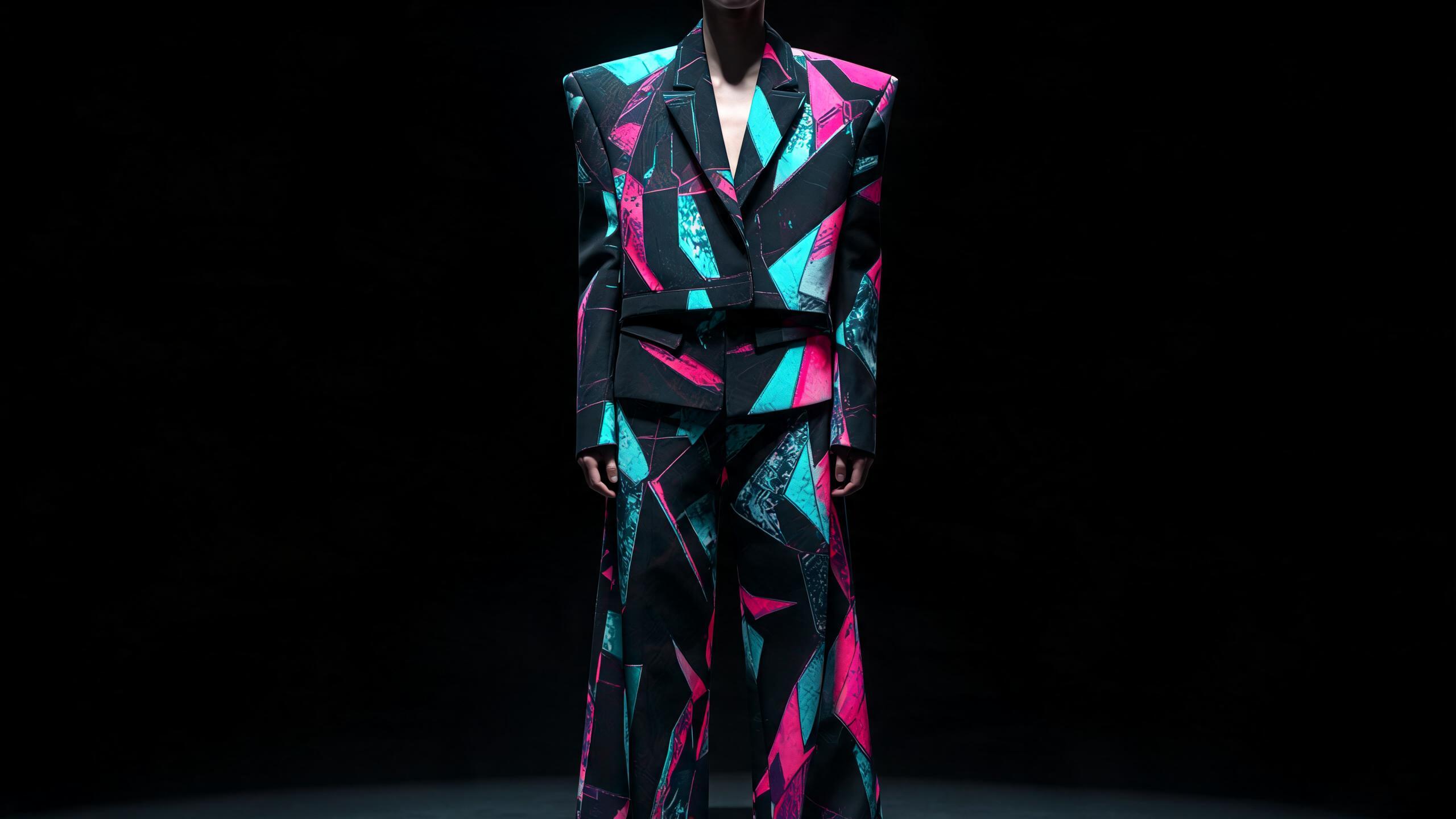
The Ultimate Guide to Outfit Recommendation Algorithms in Fashion Apps

Compare recommendation approaches, personalization signals, and styling capabilities to identify the best algorithm for building smarter, more engaging fashion apps.
Outfit recommendation algorithm comparison for personalized fashion apps reveals a fundamental divide: most systems optimize for product similarity, while genuinely useful platforms model personal taste, context, proportion, and behavior together.
Key Takeaway: An outfit recommendation algorithm comparison for personalized fashion apps shows that the most effective systems combine product similarity with personal taste, occasion, body proportions, and behavioral data to generate complete, contextually relevant outfits.
The best outfit recommendation algorithm does not simply identify garments that resemble what a user clicked. It builds a working representation of why a person chooses certain clothes, how those choices change across situations, and which combinations are likely to feel coherent when worn together.
This distinction matters because fashion is not a single-item prediction problem. A user rarely wants “another black jacket.” They want a black jacket that works with their existing trousers, fits their preferred silhouette, suits a specific setting, accommodates local weather, and feels consistent with an evolving identity.
Outfit recommendation algorithm: A computational system that selects and assembles clothing based on a user’s style preferences, wardrobe context, body and fit requirements, occasion, environment, and behavioral feedback.
A strong system treats each recommendation as a complete decision: what to wear, why it works, and how it fits the user’s personal style model.
Why Does Outfit Recommendation Algorithm Comparison Matter?
Fashion applications often describe search, ranking, personalization, and styling as if they were interchangeable. They are not.
A search engine retrieves products matching explicit terms such as “linen blazer” or “black midi skirt.” A ranking system orders those products according to popularity, margin, inventory, or engagement. A recommendation system predicts what a user may interact with next. An outfit recommendation system must solve a harder problem: it must compose several compatible items under personal and situational constraints.
The difference can be expressed through the following progression:
- Product retrieval: Find garments matching a query.
- Product recommendation: Predict which individual garment a user may prefer.
- Personalized ranking: Order garments using user behavior and business rules.
- Outfit recommendation: Assemble compatible garments into a complete look.
- Personal style intelligence: Learn the user’s stable preferences, changing contexts, and reasons for accepting or rejecting an outfit.
The old fashion-app model usually stops at stage three. It calls a feed “personalized” because a user’s recent clicks influence the product order. That is behavioral targeting, not a complete understanding of style.
What Does a Personalized Fashion App Need to Understand?
A useful outfit engine needs several layers of information:
- Aesthetic preference: Minimal, romantic, utilitarian, tailored, relaxed, maximalist, and other style dimensions.
- Silhouette preference: Fitted, straight, oversized, cropped, elongated, structured, fluid, or layered.
- Color behavior: Preferred neutrals, accent colors, contrast tolerance, and seasonal shifts.
- Material preference: Denim, wool, silk, cotton, leather, technical fabrics, and tactile sensitivities.
- Fit requirements: Rise, sleeve length, inseam, shoulder structure, ease, and garment proportions.
- Context: Work, travel, evening, weather, formality, movement, and dress code.
- Wardrobe compatibility: What the user already owns and how often pieces combine successfully.
- Feedback quality: Whether a user saved, wore, dismissed, returned, or repeatedly avoided a recommendation.
Without these layers, the app makes plausible-looking guesses that fail in actual use.
How Do Outfit Recommendation Algorithms Work?
An outfit recommendation algorithm typically combines retrieval, user modeling, compatibility prediction, constraint handling, and ranking.
1. Candidate Retrieval
The system first retrieves garments that satisfy broad requirements. These can include category, color, price range, availability, size, season, and occasion.
Candidate retrieval should be generous enough to preserve discovery but precise enough to avoid overwhelming the user. A system that retrieves only visually similar items becomes repetitive. A system that retrieves every possible product creates noise.
A useful retrieval layer combines several sources:
- Content-based retrieval: Uses garment attributes, images, text, and materials.
- Behavioral retrieval: Uses interactions from the individual user.
- Collaborative retrieval: Uses patterns from users with related preferences.
- Wardrobe retrieval: Finds combinations with garments already owned.
- Contextual retrieval: Filters by weather, location, occasion, and time of day.
2. Personal Style Modeling
The personal style model converts raw behavior into interpretable preferences.
A click is weak evidence. A saved outfit, completed purchase, repeated wear, positive rating, and long-term wardrobe integration are stronger signals. The system should also distinguish between curiosity behavior and intent behavior. A user may click a sequined dress because it is visually interesting without wanting to wear one.
A mature model separates preferences into at least three categories:
| Preference layer | What it represents | Example |
|---|---|---|
| Stable preference | Long-term style identity | Prefers clean tailoring and muted colors |
| Contextual preference | Situation-specific behavior | Dresses more formally for client meetings |
| Temporary preference | Short-term exploration | Currently interested in olive green |
| Constraint | Requirement or limitation | Avoids wool, needs petite inseams |
| Negative preference | Repeated rejection pattern | Rejects low-rise trousers regardless of color |
This structure prevents a temporary experiment from permanently redefining a person’s style.
3. Garment Representation
Every clothing item needs a structured representation beyond its product title.
Useful garment attributes include:
- Category and subcategory
- Cut and silhouette
- Length
- Rise
- Sleeve shape
- Neckline
- Closure
- Fabric composition
- Surface texture
- Pattern scale
- Color and contrast level
- Formality
- Seasonality
- Layering role
- Body-proportion effect
- Care requirements
- Size and fit information
Images add another layer. Computer vision models can identify visual characteristics that product descriptions omit, such as shoulder width, drape, hem shape, contrast, and pattern density.
However, visual recognition is not enough. A system can identify a cropped jacket without understanding whether a user prefers cropped jackets with high-rise bottoms or dislikes exposed waistlines. The useful representation links garment properties to personal fit and styling outcomes.
4. Outfit Compatibility Modeling
Outfit generation requires compatibility between items, not just individual relevance.
A blazer may be highly relevant to a user but incompatible with a particular blouse because the sleeve volumes conflict. Two colors may individually match the user’s palette but create excessive contrast when worn together. A skirt may suit the user’s preferred silhouette but fail the context because it cannot support the required movement.
Compatibility models evaluate relationships such as:
- Color harmony
- Silhouette balance
- Proportion
- Formality
- Material interaction
- Pattern scale
- Layering feasibility
- Seasonal coherence
- Occasion suitability
- Wardrobe integration
The system can represent an outfit as a graph. Each garment is a node, while edges represent compatibility scores. A complete outfit is a high-quality subgraph satisfying constraints across all selected pieces.
5. Constraint Handling
Fashion recommendations operate under hard and soft constraints.
Hard constraints should eliminate an option:
- Item unavailable in the user’s size
- Weather unsuitable for the fabric
- Dress code violation
- Required garment category missing
- User-specific material restriction
- Incompatible wardrobe item
Soft constraints should influence ranking:
- User usually prefers neutral colors
- User often chooses relaxed fits
- User is exploring brighter accents
- User tends to avoid high-contrast outfits
- User prefers low-maintenance fabrics
Treating every preference as an absolute rule makes the system rigid. Treating every requirement as a weak preference produces unusable recommendations. The algorithm needs a clear hierarchy.
6. Ranking and Explanation
The final ranking should optimize more than click probability.
A useful scoring function can conceptually combine:
- Personal relevance
- Outfit coherence
- Fit confidence
- Context suitability
- Wardrobe compatibility
- Novelty
- Availability
- Confidence in the underlying data
The explanation layer then translates the result into a human-readable reason:
- “The high-rise trouser balances the cropped jacket and preserves your preferred elongated line.”
- “The muted green introduces color without exceeding your usual contrast range.”
- “The cotton poplin keeps the structure of the look while avoiding the wool fabrics you typically reject.”
Explanations are not decorative. They make feedback more precise. A user can reject an outfit because of the color, rise, fabric, or occasion rather than simply dismissing the entire result.
👗 Meet the AI stylist that learns your taste — not the trend cycle. Try Alvin's Club →
What Is the Best Outfit Recommendation Algorithm for Personalized Fashion Apps?
There is no universally best model. The best architecture depends on the job the application needs to perform.
For fashion, a hybrid system is generally stronger than a single algorithmic approach because no single data source captures style completely.
Key Comparison: Outfit Recommendation Algorithm Approaches
| Approach | Primary signal | Strength | Failure mode | Best use |
|---|---|---|---|---|
| Content-based | Garment attributes and visual features | Works for new users and new products | Repeats familiar styles | Initial discovery |
| Collaborative filtering | Similar users’ behavior | Finds unexpected products | Weak for cold-start users and niche tastes | Preference expansion |
| Rule-based styling | Explicit fashion and fit rules | Transparent and controllable | Can feel rigid or generic | Constraints and safety checks |
| Deep visual compatibility | Image and outfit relationships | Captures visual coordination | Needs high-quality training data | Outfit assembly |
| Context-aware recommendation | Weather, occasion, schedule, location | Makes recommendations practical | Context data can be incomplete | Daily outfit planning |
| Generative styling | Produces complete combinations and explanations | Flexible and conversational | Can hallucinate availability or fit | Stylist interaction |
| Hybrid personal style model | Combines behavior, content, constraints, and context | Best representation of individual style | More complex to build and evaluate | AI-native fashion intelligence |
Why Content-Based Systems Are Not Enough
Content-based systems identify similarity. If a user interacts with wide-leg black trousers, the system retrieves more wide-leg black trousers.
This creates a familiar failure: visual sameness without wardrobe usefulness. The user receives products that resemble past interactions but does not receive new outfit structures, proportion changes, or contextually relevant combinations.
Content-based retrieval remains essential, especially for new products, but it should be one input into a larger model.
Why Collaborative Filtering Breaks in Fashion
Collaborative filtering assumes that users with similar behavior will prefer similar products. This works effectively for certain categories where preference is relatively stable and the item can be evaluated independently.
Fashion is more relational. Two people can like the same cream cardigan but style it differently because they prefer different proportions, color contrasts, and levels of formality. Collaborative filtering can surface discovery, but it should not define a user’s style identity.
Why Rule-Based Systems Still Matter
Rules are often dismissed as old-fashioned, but they remain valuable for constraints and explainability.
A rule can prevent an algorithm from recommending:
- A heavy wool coat in unsuitable heat
- A cropped top with low-rise trousers when the user has rejected exposed-waist styling
- A formal satin blouse with casual athletic shorts for a work setting
- A garment unavailable in the user’s required size
- A high-maintenance piece for a user who consistently chooses easy-care clothing
Rules should not generate every outfit. They should protect the system from obvious errors while learned models handle nuance.
How Should a Fashion App Build a Personal Style Model?
A personal style model should be dynamic, layered, and evidence-based.
Start with Explicit Signals
Onboarding questions remain useful when they are specific. Asking “What is your style?” produces vague answers. Asking whether the user prefers a fluid or structured blazer, a narrow or wide trouser leg, or low-contrast versus high-contrast outfits produces actionable information.
Useful onboarding signals include:
- Preferred silhouettes
- Common occasions
- Garment categories used frequently
- Colors avoided
- Fabric sensitivities
- Typical fit challenges
- Climate
- Lifestyle and movement needs
- Existing wardrobe priorities
The goal is not to create a permanent label. It is to establish an initial hypothesis.
Learn from Implicit Signals
The system should observe:
- Which recommendations are saved
- Which outfits are opened in detail
- Which items are compared
- Which pieces are purchased
- Which garments are returned
- Which outfits are marked as worn
- Which recommendations are dismissed quickly
- Whether a user repeatedly edits the same part of an outfit
Edits are particularly informative. If a user consistently replaces shoes while accepting tops and bottoms, the model should infer that footwear recommendations require refinement rather than treating the entire outfit as a failure.
Distinguish Preference from Availability
A user may never wear a particular garment because it is absent from their wardrobe, not because they dislike it.
This distinction requires careful interpretation:
- No interaction is not the same as rejection.
- A product view without a save may indicate curiosity.
- A return may indicate fit failure rather than aesthetic rejection.
- A purchase may reflect a specific event rather than general preference.
- Repeated use is stronger evidence than a single transaction.
The model should assign confidence levels to inferred preferences and update them gradually.
Model Negative Preferences Explicitly
Many fashion systems learn only what users like. This is incomplete.
Negative preferences often determine recommendation quality:
- Dislikes oversized shoulders
- Avoids ankle-length skirts
- Rejects synthetic shine
- Does not wear open-toe shoes
- Prefers sleeves covering the upper arm
- Avoids low-rise trousers
- Finds large prints visually overwhelming
A negative preference should carry context. A user may reject a low-rise trouser in everyday wear but accept it for a specific evening look. The model needs a conditional representation rather than a permanent prohibition.
How Do Body Proportions Affect Outfit Recommendations?
Body-aware recommendations should focus on proportion, garment geometry, and personal fit goals rather than simplistic body-type labels.
A body type is not a fixed style instruction. It is a set of relationships between shoulders, waist, hips, torso, legs, garment length, and desired visual emphasis. Two people with similar measurements can prefer entirely different silhouettes.
The algorithm should ask what the wearer wants to achieve:
- Create a longer vertical line
- Add structure to soft fabrics
- Balance shoulder and hip volume
- Define the waist
- Reduce visual interruption at the torso
- Add movement below the waist
- Preserve a relaxed, low-definition silhouette
How Specific Cuts Change Proportion
- High-rise trousers visually lengthen the lower body by placing the waistband closer to the natural waist.
- Mid-rise trousers create a balanced transition for users who find high rises restrictive or low rises too shortening.
- Wide-leg trousers add volume through the lower half and work best when the hem reaches the shoe with minimal pooling.
- Tapered trousers reduce volume toward the ankle and create a cleaner line for structured or compact outfits.
- Cropped jackets emphasize the waist and pair effectively with high-rise bottoms to avoid a visually shortened torso.
- Longline blazers extend the vertical line but can overwhelm a smaller frame if the shoulder width and sleeve length are excessive.
- A-line skirts widen gradually from the waist, creating visual balance when the wearer wants more volume below a narrow waist.
- Bias-cut skirts follow the body without rigid structure, creating fluid movement while preserving a close line through the hips.
- Straight-leg jeans provide a stable vertical column and often work across a wide range of proportions.
- Boat necklines broaden the visual shoulder line, while V-necks draw the eye vertically toward the center of the torso.
- Raglan sleeves soften the shoulder boundary, whereas structured set-in sleeves create a clearer shoulder line.
- Monochromatic outfits reduce horizontal interruptions and create visual continuity.
- Contrasting tops and bottoms create a horizontal division that can be intentional but should align with the user’s proportion goals.
A recommendation system should describe these effects without implying that one body shape is superior. The objective is accurate styling, not correction.
What Should a Body-Aware Outfit Formula Include?
Outfit Formula 1: Structured Office Column
Top: Ivory silk-blend blouse with a pointed collar, moderate drape, and tucked front
Bottom: High-rise charcoal wide-leg trousers with a flat front and full-length hem
Layer: Single-breasted navy blazer with a defined shoulder and a slightly cropped length
Shoes: Pointed-toe leather slingbacks with a low block heel
Accessories: Structured top-handle tote and narrow metal watch
Why it works: The high-rise waistband and full-length trouser create a continuous lower-body line. The slightly cropped blazer ends near the natural waist, keeping the torso proportionate instead of allowing the long jacket to obscure the trouser rise. The pointed toe extends the visual direction of the leg, while the moderate shoulder structure adds definition without excessive bulk.
Outfit Formula 2: Soft Weekend Balance
Top: Fine-gauge cotton crew-neck sweater with a relaxed but not oversized fit
Bottom: A-line midi skirt in matte cotton twill, fitted at the natural waist
Shoes: Low-profile leather sneakers with a slightly raised sole
Accessories: Crossbody bag worn at the upper hip and small hoop earrings
Why it works: The A-line skirt adds controlled volume below the waist, creating balance without relying on a tight top. The sweater’s fine gauge prevents unnecessary bulk at the torso, while the natural-waist placement gives the outfit a clear anchor. The midi hem should fall below the fullest part of the calf or near the ankle, depending on the wearer’s preferred leg line.
Outfit Formula 3: Evening Proportion with Fluidity
Top: Black square-neck knit top with elbow-length sleeves and close fit
Bottom: Bias-cut satin midi skirt in deep bronze
Shoes: Almond-toe ankle boots with a slim shaft
Accessories: Minimal shoulder bag and long pendant necklace
Why it works: The square neckline creates a defined upper frame, while the close fit prevents the satin skirt’s movement from becoming visually unbalanced. The bias cut follows the body rather than adding rigid width, and the slim boot shaft keeps the line uninterrupted beneath the midi hem. The pendant reinforces vertical direction without competing with the neckline.
How Should Clothing Recommendations Adapt to Different Proportion Goals?
A personalized app should avoid generic advice such as “dress for your body type.” It should translate the user’s goals into measurable garment relationships.
| Proportion goal | Specific recommendation | Why it works |
|---|---|---|
| Lengthen the lower body | High-rise trousers with a full-length hem and shoes close to the trouser color | Extends the visual line from waist to toe |
| Define the waist | Cropped jacket ending at the natural waist over a tucked blouse | Establishes a clear horizontal anchor |
| Add lower-body volume | A-line midi skirt or pleated trouser with controlled fullness | Adds shape below the waist |
| Reduce shoulder emphasis | Soft raglan sleeve, open neckline, and darker upper-layer color | Softens the shoulder boundary |
| Create shoulder structure | Set-in sleeve blazer with moderate padding | Adds a deliberate upper frame |
| Minimize torso interruption | Tonal top and bottom with a low-contrast belt | Preserves visual continuity |
| Keep a relaxed silhouette | Straight-cut garments with moderate ease and fluid fabric | Avoids forced waist definition while maintaining shape |
| Accommodate a shorter torso | Mid-rise bottoms, open neckline, and shorter untucked layers | Reduces crowding around the waist and ribcage |
These are starting points, not rigid rules. The user’s preference should override abstract proportion logic when the model has strong evidence of that preference.
What Are the Best Practices for Outfit Recommendation Algorithms?
Use Outfit-Level Feedback
Item-level feedback is insufficient. A user may like each garment separately but dislike the assembled look.
Capture feedback at multiple levels:
Summary
- Outfit recommendation algorithm comparison for personalized fashion apps distinguishes product-similarity systems from platforms that model personal taste, context, proportions, and behavior together.
- An effective outfit recommendation algorithm predicts complete, coherent outfits rather than merely suggesting garments resembling previously clicked products.
- Personalized recommendations should account for existing wardrobe items, preferred silhouette, body and fit requirements, occasion, weather, and local environment.
- Fashion apps should separate search, ranking, personalization, and styling because these functions solve different recommendation problems.
- The strongest systems explain why an outfit works and continuously refine a user’s evolving style identity through behavioral feedback.
Frequently Asked Questions
What is an outfit recommendation algorithm?
An outfit recommendation algorithm uses artificial intelligence and fashion data to suggest clothing combinations tailored to a user’s preferences, wardrobe, body proportions, and context. Unlike basic product recommendation systems, advanced algorithms evaluate how individual items work together as complete outfits.
How does an outfit recommendation algorithm work in personalized fashion apps?
An outfit recommendation algorithm analyzes inputs such as browsing behavior, purchases, saved items, color preferences, garment attributes, weather, occasion, and fit feedback. It then ranks compatible outfit combinations using machine learning models that improve as the user interacts with the app.
What is the difference in an outfit recommendation algorithm comparison for personalized fashion apps?
An outfit recommendation algorithm comparison for personalized fashion apps typically evaluates product similarity, collaborative filtering, knowledge-based rules, and hybrid AI systems. The strongest platforms combine these methods with personal taste, context, proportions, and behavioral data instead of recommending items based only on visual similarity.
How accurate is an outfit recommendation algorithm?
An outfit recommendation algorithm can be highly accurate when it uses detailed user data and receives meaningful feedback about fit, style, occasion, and satisfaction. Accuracy decreases when the system relies only on clicks or generic demographic profiles without understanding why a user prefers particular outfits.
Is it worth using an outfit recommendation algorithm comparison for personalized fashion apps?
An outfit recommendation algorithm comparison for personalized fashion apps is worth using when selecting technology for a fashion marketplace, styling service, or wardrobe app. Comparing personalization depth, explainability, cold-start performance, scalability, and conversion impact helps identify systems that create useful complete looks rather than isolated product suggestions.
Can an outfit recommendation algorithm account for body shape and clothing proportions?
An outfit recommendation algorithm can account for body shape and clothing proportions when the app collects accurate measurements, fit preferences, garment dimensions, and user feedback. These signals help the system recommend silhouettes, lengths, layering combinations, and sizes that are more likely to feel comfortable and flattering.
Why does an outfit recommendation algorithm recommend clothes I do not like?
An outfit recommendation algorithm may recommend unwanted clothes because it has insufficient feedback, overweights recent clicks, or mistakes visual similarity for personal preference. Providing explicit likes and dislikes, rejecting recommendations, updating size and style settings, and rating complete outfits can help the system learn more accurately.
Related on Alvin's Club
- See outfits tailored to your body type
- Browse featured fashion brands
- Meet the AI stylist that learns your taste
About the author
Building the AI fashion agent at Alvin's Club — personal style models, dynamic taste profiles, and private AI stylists. Writing about where AI meets fashion commerce.
Credentials
- Founder at Alvin's Club (Echooo E-Commerce Canada Ltd.)
- Writes weekly on AI × fashion at blog.alvinsclub.ai
X / @alvinsclub · LinkedIn · alvinsclub.ai
This article is part of Alvin's Club's AI Fashion Intelligence series — the AI fashion agent that influences demand before shopping happens.