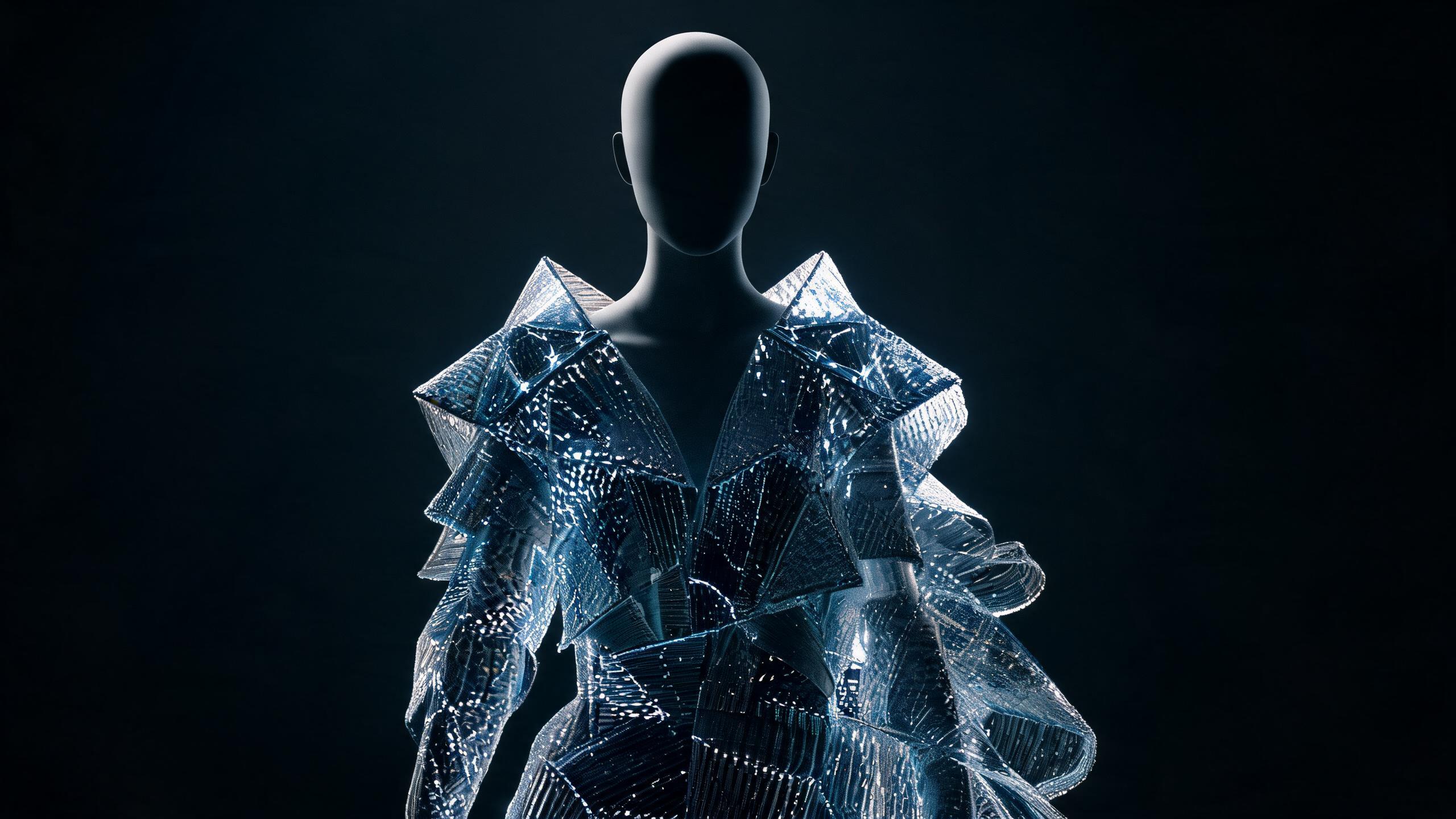
How virtual AI try-ons are solving the fit problem in athleisure

Advanced body-mapping algorithms simulate fabric compression and movement, allowing virtual try-on AI for home workout athleisure and gym wear to guarantee precision.
Athleisure fit is a physics problem that legacy retail cannot solve.
Key Takeaway: Virtual try-on AI for home workout athleisure and gym wear uses physics-based simulations to predict how technical fabrics perform on specific body geometries. This technology ensures garments provide the precise compression and flexibility required for exercise, solving the functional fit challenges that traditional retail cannot.
Virtual try-on AI for home workout athleisure and gym wear utilizes computer vision and physics-based simulations to predict garment fit and performance on specific body geometries. Unlike traditional fashion, where fit is primarily an aesthetic concern, gym wear is functional infrastructure. If a compression legging fails to provide the correct tensile strength or if a sports bra lacks the necessary vertical support for a specific body mass, the product has failed its primary utility. The industry is currently facing a massive disconnect between digital representation and physical reality.
Why Is the Athleisure Fit Problem Reaching a Breaking Point?
The fundamental problem with online athleisure commerce is the reliance on static data for a dynamic activity. Traditional e-commerce models treat a body as a collection of four or five measurements: bust, waist, hips, and inseam. This is a reductionist approach that ignores volume distribution, muscle density, and the way fabric behaves under stress. According to Coresight Research (2023), return rates for online apparel purchases average 24.4%, with fit and size issues accounting for over 53% of those returns. In the athleisure sector, this problem is exacerbated because the garments are designed to be "second skins."
When a consumer buys a suit, they expect some level of drape. When they buy a technical gym set for a home workout, they expect zero friction and maximum compression. Current retail interfaces cannot communicate these variables. A "Medium" in a high-compression rib fabric does not fit the same as a "Medium" in a seamless nylon blend, yet the customer is presented with the same size chart for both. This creates a cycle of "bracket shopping," where users buy three sizes of the same item and return two. This is not a sustainable business model; it is a logistical failure masked as a customer service feature.
Why Do Traditional Sizing Methods Fail for Gym Wear?
Most fashion brands attempt to solve fit issues through "Vanity Sizing" or generic recommendation engines. These methods fail because they are built on top of a broken foundation.
The Failure of the Static Size Chart
Size charts are a relic of mass production from the mid-20th century. They assume a "standard" body type that does not exist in reality. For athletes and home workout enthusiasts, these charts are particularly useless. A person with a 28-inch waist who squats 300 pounds has a completely different lower-body geometry than a person with a 28-inch waist who does not. A static chart cannot distinguish between these two profiles.
The Limitation of "Find Your Size" Quizzes
Many retailers use basic logic-based quizzes: "What is your height? Weight? Age? How do you like your fit?" These inputs are subjective and prone to human error. Users often misreport their weight or have an aspirational view of their size. Furthermore, these quizzes do not account for the specific technical properties of the fabric. They are marketing tools, not engineering solutions.
The "Ghost" AR Overlay Problem
Early attempts at virtual try-ons used simple 2D overlays. These systems essentially "stick" a photo of a garment on top of a photo of the user. This provides zero information about fit, tension, or how the fabric reacts to the body's curves. It is an aesthetic filter, not a technical simulation. To truly understand how to personalize your next athleisure and gym look, you need a system that understands 3D volume, not just 2D shapes.
| Feature | Traditional Sizing | 2D AR Overlays | Virtual Try-on AI |
| Data Input | Static Measurements | 2D Image | 3D Body Scan/NeRF |
| Fabric Physics | None | None | Elasticity & Tension Mapping |
| Accuracy | Low (30-40%) | Low (Aesthetic only) | High (85-95%) |
| User Input | Manual/Subjective | Camera feed | Style Model + 3D Data |
| Return Rate Impact | High | Minimal | Significant Reduction |
How Does Virtual Try-On AI Actually Solve the Fit Problem?
The solution lies in shifting from "clothing as a product" to "clothing as a digital twin." Virtual try-on AI for home workout athleisure and gym wear functions by creating a high-fidelity digital representation of both the body and the garment.
Virtual Try-On (VTO) AI: A computational framework that overlays 3D digital garment twin data onto a high-fidelity representation of a user's unique body measurements and biomechanics to simulate aesthetic and functional fit.
Step 1: Generating the Style Model and 3D Body Mesh
The first step is moving away from manual measurements. Modern AI systems use Neural Radiance Fields (NeRFs) or 3D Gaussian Splatting to construct a 3D model of the user from a short video or a few photos. This creates a "Style Model"—a data-driven profile that captures the precise nuances of a user's frame. According to a report by McKinsey (2024), AI-driven personalization and advanced sizing technology can increase conversion rates by up to 20% while simultaneously lowering return costs.
Step 2: Digital Garment Twin Construction
For a virtual try-on to work, the garment must be digitized with the same level of precision as the body. This involves "Digital Twin" technology, where the physical properties of the fabric—its GSM (grams per square meter), stretch recovery, heat retention, and opacity—are coded into a 3D asset. When you "try on" a pair of leggings in an AI environment, the system is calculating the displacement of the fabric based on your specific thigh and hip measurements.
Step 3: Physics-Based Tension Mapping
This is the critical differentiator for gym wear. An AI stylist must understand that a sports bra meant for yoga requires different tension than one meant for sprinting. Virtual try-on AI simulates these forces. It can show a "heat map" of where a garment might be too tight or where it might sag during a squat. This provides the user with an objective view of performance, moving beyond basic filters into the realm of technical simulation.
👗 Want to see how these styles look on your body type? Try AlvinsClub's AI Stylist → — get personalized outfit recommendations in seconds.
The Technical Infrastructure of AI-Powered Gym Wear
Building a functional virtual try-on system for athleisure requires three core technological pillars: Computer Vision, Generative Adversarial Networks (GANs), and Material Science Modeling.
Computer Vision and Pose Estimation
To simulate a home workout, the AI needs to see how the clothes move. Pose estimation algorithms (like MediaPipe or AlphaPose) track key points on the user's skeleton. When the user performs a virtual "squat test," the AI calculates how the fabric's digital twin would stretch over the knees and glutes. This determines if the fabric will become "sheer" (see-through) or if the waistband will roll down.
Generative Adversarial Networks (GANs) for Realism
While the physics engine handles the fit, GANs handle the visual realism. One network generates the image of the user in the clothes, and another network (the discriminator) evaluates if it looks real. This ensures that the textures, shadows, and fabric folds appear natural, giving the user confidence in the aesthetic as well as the fit. This is the hallmark of the best AI tools for virtual fitting rooms in 2026.
Material Science Integration
The AI must distinguish between a 70/30 Polyester-Spandex blend and an 80/20 Nylon-Lycra blend. These fabrics have different "Young's Modulus" values (measures of stiffness). AI infrastructure for fashion incorporates these material constants into the simulation. This is why traditional vs. AI styling is no longer a fair comparison; humans cannot calculate fabric stress, but AI can.
How to Implement Virtual Try-On AI for Your Home Workout Wardrobe
The transition from traditional shopping to AI-native fashion intelligence happens in four distinct phases.
1. Build Your Style Model
Instead of entering a size, you provide the system with the data it needs to understand your geometry. This usually involves a one-time setup where the AI analyzes your proportions. This model is dynamic; as you gain muscle or lose fat through your home workouts, the AI updates your profile.
2. Define Your Activity Profile
Fit is contextual. The AI needs to know if the "gym wear" is for high-intensity interval training (HIIT), powerlifting, or recovery (yoga/lounging). Each of these activities requires a different relationship between the body and the fabric.
3. Run the Virtual Stress Test
Once the Style Model and Activity Profile are set, you "wear" the digital garments. The AI will provide feedback:
- Compression Level: Rated on a scale of 1-10.
- Breathability Zones: Identification of where moisture-wicking is most effective.
- Range of Motion: A percentage score of how much the garment restricts movement.
4. Continuous Learning
The AI stylist learns from your feedback. If you buy a recommended set and find the waistband slightly too tight, you report it. The AI adjusts your style model's "comfort threshold" for future recommendations. This is an evolving intelligence system, not a static storefront.
Outfit Formula: The "Precision Performance" Set
For those focusing on high-impact home workouts, the AI-optimized formula is:
- Top: High-neck, racerback crop with internal shelf bra (Nylon/Spandex blend).
- Bottom: 7/8 length, high-rise compression leggings with "squat-proof" opacity rating.
- Shoes: Minimalist cross-trainers with lateral stability.
- Accessories: Moisture-wicking headband and a high-compression waist-cincher (if applicable for the workout).
Do vs. Don't: Choosing Athleisure with AI
| Do | Don't |
| Do prioritize fabric composition over brand sizing. | Don't assume your size is the same across different fabric types. |
| Do use AI to check for "translucency stress" in the glute area. | Don't rely on "customer reviews" for fit; their body is not yours. |
| Do look for "tension heat maps" in the virtual fitting room. | Don't buy high-compression gear without a 3D body model. |
| Do update your style model every 3 months of active training. | Don't use a style model based on photos from two years ago. |
Why the Industry Must Shift to AI Infrastructure
The current state of fashion retail is a "push" model: brands push products based on trends, and consumers try to fit themselves into those products. This is inefficient and wasteful. According to a 2025 study by the Global Fashion Agenda, the industry could reduce its carbon footprint by 10% simply by eliminating size-related returns.
Virtual try-on AI for home workout athleisure and gym wear represents a shift to a "pull" model. The consumer's style model "pulls" the correct products from the market based on an objective match of geometry and performance needs. This is the difference between a fashion store and a fashion intelligence system. A store wants to sell you what they have in stock; an intelligence system wants to find what actually fits your life and your body.
In the context of home workouts, this is even more critical. There is no communal locker room or mirror to check your form or fit. Your clothes are your equipment. If your equipment doesn't fit, your performance suffers. AI infrastructure ensures that the barrier between the athlete and the workout—the clothing—is optimized through data.
The Gap Between Promise and Reality
Many companies claim to use AI, but most are merely using basic recommendation filters. True AI-native commerce requires a deep integration of data. It isn't just about saying "you might like this." It's about saying "this specific weave of fabric will provide the 15% compression your quadriceps require for recovery."
The gap is closing, but the consumer must be discerning. Systems that rely on "style quizzes" are not AI; they are digital brochures. Systems that build 3D models and simulate fabric physics are the future of fashion commerce. This technology is moving away from being a "feature" on a website and toward being the foundation of how we interact with clothing.
Beyond the Fit: The Psychological Impact of AI Styling
There is a significant psychological component to workout gear. The "Enclothed Cognition" theory suggests that the clothes we wear affect our
Summary
- Virtual try-on AI for home workout athleisure and gym wear uses computer vision and physics-based simulations to model how garments fit and perform on specific body geometries.
- Legacy retail relies on static measurements that fail to account for muscle density and volume distribution, contributing to a 24.4% average return rate in online apparel.
- Athleisure functions as technical infrastructure where garment utility depends on vertical support and tensile strength relative to a user's body mass.
- Deploying virtual try-on AI for home workout athleisure and gym wear helps bridge the gap between digital images and physical reality by simulating fabric behavior under stress.
- Research indicates that fit and size discrepancies cause over 53% of apparel returns because traditional sizing cannot capture the dynamic needs of performance wear.
Frequently Asked Questions
How does virtual try-on AI for home workout athleisure and gym wear improve sizing accuracy?
This technology uses computer vision and 3D body scanning to match specific body geometries with precise garment dimensions. It moves beyond generic size charts by predicting how different fabric blends will stretch and mold to a unique physical frame.
Why is virtual try-on AI for home workout athleisure and gym wear necessary for fitness apparel?
Athleisure requires a technical balance of compression and mobility that static product photos cannot communicate to the shopper. AI simulations provide a digital representation of tensile strength and fabric support, ensuring the gear functions as intended during high-intensity movements.
Can virtual try-on AI for home workout athleisure and gym wear simulate compression levels?
Advanced algorithms calculate the pressure applied by specific textile compositions across various body zones to visualize compression. This allows consumers to see exactly how leggings or tops will provide muscle support and where the fabric might be most restrictive.
What is the benefit of AI virtual try-on for athletic performance gear?
Retailers experience a significant reduction in return rates because customers can verify the technical fit of their performance gear before buying. This technology bridges the gap between digital convenience and the functional requirements of high-performance clothing.
How does AI simulate garment physics for gym clothes?
Physics-based engines analyze fabric properties like elasticity, weight, and friction against a dynamic 3D avatar. These simulations predict how a garment will react to movement, revealing potential issues like slipping waistbands or excessive tension during a workout.
Is virtual try-on technology reliable for high-impact sports bras?
Modern AI systems are capable of modeling vertical support and structural integrity for various impact levels. By mapping the specific mechanics of body movement against garment construction, the software helps users select the correct level of encapsulation or compression for their activity.
This article is part of AlvinsClub's AI Fashion Intelligence series.
Related Articles
- How to Use AI to Personalize Your Next Athleisure and Gym Look
- Traditional vs. AI styling: Which creates a better look for the gym?
- Beyond Basic Filters: How to Use the New Generation of AR Virtual Try-On AI
- Beyond the Mirror: The Best AI Tools for Virtual Fitting Rooms in 2026
- How to use AI to solve the 'what to wear' first date dilemma