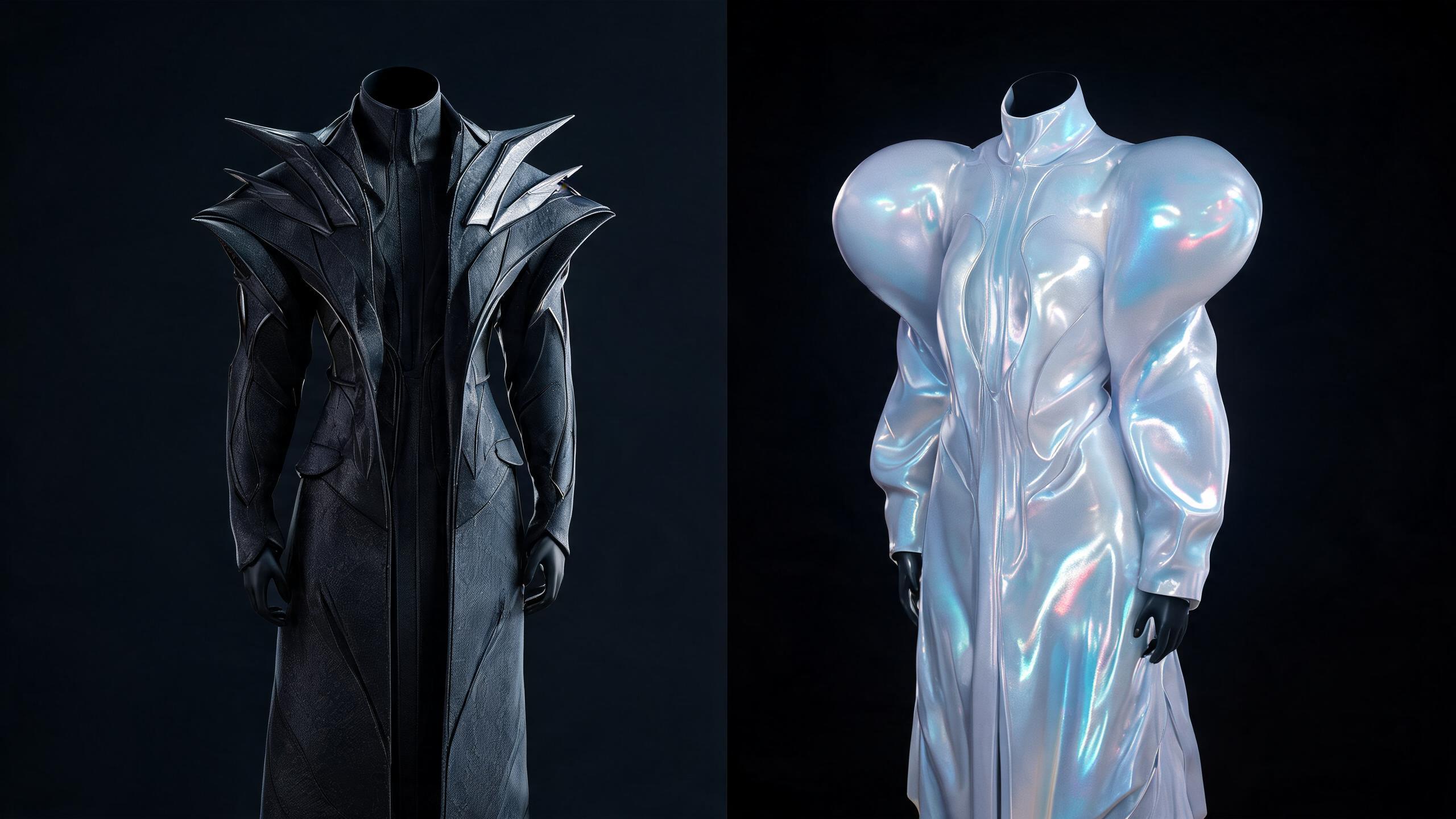
Learn how Demna AI’s visual comparison tools reveal differences in silhouette, color, styling, and overall outfit impact.
Demna AI compare outfits side by side is a visual comparison feature that displays two outfit images in a synchronized layout for evaluating differences in clothing, color, fit, styling, and accessories. It supports direct comparison of two looks at once, enabling users to assess specific visual attributes without switching between separate views.
How to Compare Outfits Side by Side in Demna AI
Key Takeaway: Demna AI compare outfits side by side by evaluating complete looks against the same style profile, occasion, fit requirements, and visual criteria, making it easier to determine which outfit best suits your proportions, wardrobe, and intended setting.
Comparing outfits side by side in Demna AI means evaluating two or more complete looks against the same style profile, occasion, fit requirements, and visual criteria. The process replaces vague preference with structured comparison, helping you identify which outfit actually works for your proportions, wardrobe, and intended setting.
Choosing between outfits is harder than it appears. A single garment can look compelling in isolation while failing when combined with the rest of the look. A jacket may have the right silhouette but overwhelm the shoes.
A pair of trousers may photograph well but create an awkward break with the selected top. A color may feel exciting until the complete outfit is considered under the lighting and context where you plan to wear it.
Demna AI is useful when you treat comparison as a system rather than a popularity contest. The goal is not to ask which outfit is objectively better. The goal is to determine which outfit better matches your personal style model, body proportions, occasion, comfort requirements, and desired visual effect.
This guide explains how to compare outfits side by side in Demna AI, how to prepare stronger inputs, how to interpret the comparison, and how to avoid common mistakes that make AI styling results less reliable.
Side-by-side outfit comparison: A structured method for evaluating complete looks under identical criteria, including silhouette, color relationships, proportion, occasion suitability, garment compatibility, and alignment with an individual’s taste profile.
Why Does Side-by-Side Outfit Comparison Matter?
Most fashion interfaces compare products, not outfits. They show one shirt beside another, one pair of trousers beside another, or one jacket beside another. That approach isolates garments from the context that determines whether they work.
A complete outfit is a relationship between pieces. Its success depends on interactions such as:
- The visual weight of the top relative to the bottom.
- The contrast between shoes and trousers.
- The relationship between jacket length and leg line.
- The balance between fitted and relaxed garments.
- The alignment between color intensity and personal taste.
- The level of formality across every piece.
- The suitability of the outfit for a specific environment.
Demna AI should be used to compare systems of clothing, not isolated items.
This distinction matters because two outfits can contain similar garments while producing completely different results. Consider these two combinations:
- Cropped boxy jacket, high-rise straight trousers, slim leather shoes.
- Long relaxed jacket, low-rise wide trousers, substantial sneakers.
Both may contain neutral colors and simple shapes. The first creates a sharper, more compact silhouette. The second creates a longer, looser, more continuous volume.
Neither is automatically superior. The correct choice depends on the wearer’s proportions, preferred visual language, and context.
Side-by-side comparison makes those differences visible. It also creates a more useful feedback loop. Instead of saying, “I like the second one,” you can identify why:
- The second outfit has less waist emphasis.
- The trouser hem is wider.
- The footwear carries more visual weight.
- The color contrast is lower.
- The overall silhouette feels more relaxed.
- The outfit resembles previous looks you repeatedly choose.
That level of feedback gives an AI stylist better information about your preferences.
What Can Demna AI Compare Between Two Outfits?
A useful comparison includes more than color and general attractiveness. Ask Demna AI to evaluate the following dimensions separately.
Silhouette
Silhouette is the outline created by the entire outfit. It includes width, length, volume, and the location of visual emphasis.
Useful questions include:
- Which outfit creates a longer vertical line?
- Which look adds width at the shoulders?
- Which outfit emphasizes the waist?
- Does the top volume balance the trouser volume?
- Does the jacket end at a visually useful point?
- Does the hem shape support the footwear?
A silhouette comparison is more informative than saying one outfit “looks better.” It explains what the outfit is doing visually.
Proportion
Proportion describes the relationship between garment lengths and body dimensions. It does not require a specific body type to be useful.
Pay attention to:
- Jacket length relative to torso length.
- Trouser rise relative to the top’s hem.
- Inseam relative to shoe height.
- Shoulder width relative to hip width.
- Sleeve length relative to wrist and hand exposure.
- Trouser width relative to upper-body volume.
For example, if your hips are more than approximately 2 inches wider than your shoulders, a comparison can examine whether each outfit visually balances that difference through shoulder structure, top volume, color placement, or hem shape. The measurement is a styling input, not a rule about what you should wear.
Color Relationship
Demna AI can compare outfits by examining the relationship between colors rather than treating each garment as an independent shade.
Ask it to analyze:
- Contrast level.
- Warm and cool balance.
- Saturation.
- Dark-to-light distribution.
- Whether the shoes repeat or interrupt the palette.
- Whether accessories connect the colors.
- Whether one garment attracts too much attention.
A black jacket, pale trousers, and dark shoes create a different visual pathway from a navy jacket, mid-wash denim, and white sneakers. The difference is not simply color preference. It affects how the eye travels through the outfit.
Formality
An outfit fails when its pieces operate at different levels of formality without intention. A refined wool trouser paired with a highly technical running shoe creates a different message from the same trouser paired with a minimalist leather sneaker.
Compare:
- Fabric refinement.
- Construction.
- Surface finish.
- Footwear structure.
- Hardware.
- Layering.
- Compatibility with the environment.
A side-by-side comparison should identify whether one outfit is more coherent for the requested occasion or whether the contrast is deliberate and controlled.
Fit and Comfort
Visual styling is incomplete without practical fit. Compare whether each look allows normal movement and whether the garments are likely to produce friction during wear.
Relevant inputs include:
- Shoulder seam placement.
- Chest and upper-arm ease.
- Trouser rise.
- Seat and thigh room.
- Knee width.
- Hem opening.
- Sleeve mobility.
- Layering capacity.
- Fabric stretch.
- Weight and breathability.
A look that photographs well but restricts movement is not a successful recommendation for a full day of wear.
How Do You Prepare Your Style Profile Before Comparing Outfits?
The quality of an AI comparison depends on the quality of the personal context provided. If Demna AI receives no information about your preferences, it can evaluate visual coherence but cannot reliably determine whether the outfit is yours.
Start with the information that remains stable across many styling decisions.
Record Your Core Measurements
Use a flexible tape measure and record measurements over light clothing. Keep the tape level and avoid pulling it tightly.
Useful measurements include:
- Height.
- Shoulder width.
- Chest or bust circumference.
- Natural waist circumference.
- Full hip circumference.
- Inseam.
- Preferred trouser rise.
- Footwear size.
- Typical jacket size.
For clothing comparison, body measurements are only part of the input. Garment measurements often matter more for final fit.
Record preferred specifications such as:
- High rise: generally reaches near the natural waist.
- Mid rise: sits between the natural waist and the upper hip.
- Low rise: sits closer to the hip.
- Straight trouser hem: maintains a relatively consistent leg width.
- Wide trouser hem: creates a stronger horizontal finish and usually requires proportional footwear.
- Cropped jacket: ends around the high hip or above, depending on the design.
- Extended jacket: covers more of the seat and lengthens the upper-body line.
These descriptions are more useful than relying on labels such as “relaxed” or “oversized,” which vary across brands.
Define Your Style Preferences as Behaviors
Avoid vague labels alone. “Minimalist,” “classic,” or “edgy” can mean different things to different people.
Describe what you repeatedly do:
- Prefer low-contrast outfits.
- Choose structured outerwear over soft tailoring.
- Avoid visible logos.
- Wear high-rise trousers.
- Prefer straight or wide legs.
- Choose matte fabrics.
- Like one strong accent color.
- Avoid cropped tops.
- Prefer substantial shoes.
- Dress with a consistent dark base.
This language gives Demna AI usable signals. A personal style model should represent repeated behavior, not a generic category.
Identify Your Fit Priorities
List what matters most when deciding whether an outfit works. Examples include:
- Shoulder structure.
- Freedom through the thigh.
High-rise trousers. 4. Longer sleeves. 5. A clean trouser break. 6.
Room for layering. 7. Minimal waist emphasis. 8. Lightweight fabrics. 9.
Supportive footwear.
Rank these priorities. If comfort through the hips matters more than a narrow silhouette, the comparison should reflect that priority.
Define the Occasion Precisely
“Casual” is not specific enough. Use an occasion description such as:
- Creative office with relaxed tailoring.
- Outdoor dinner in cool weather.
- Travel day involving extended walking.
- Evening event requiring dark, refined clothing.
- Weekend errands with a polished appearance.
- Formal meeting with no tie requirement.
The same outfit can be excellent for one environment and inappropriate for another.
👗 Want to see how these styles look on your body type? Try Alvin's Club's AI Stylist → — personalized outfits in seconds.
How Do You Compare Outfits Side by Side in Demna AI?
Use the following sequence as the primary workflow. Keep the inputs consistent so the comparison evaluates the outfits rather than changing conditions between them.
Choose Your Style Profile — Select the profile that best represents your current preferences, proportions, and fit priorities. If your taste has changed, update the profile before comparing rather than forcing new choices through outdated settings.
Define the Occasion — Specify where, when, and how the outfit will be worn. Include weather, movement, dress expectations, and the duration of wear.
Add Outfit One — Upload the first complete look or add each garment individually. Include the top, bottom, shoes, outer layer, and accessories whenever possible.
Add Outfit Two — Upload or build the second look using the same level of detail. Missing accessories or footwear can distort the comparison because those pieces affect proportion and formality.
Standardize the Comparison Conditions — Request the same pose, camera angle, background, lighting, and garment presentation for both outfits. Side-by-side analysis becomes weaker when one look is shown in a mirror photo and the other in a studio image.
Select Comparison Criteria — Ask Demna AI to compare silhouette, proportion, color, formality, comfort, versatility, and alignment with your style profile. Separate these criteria instead of asking for one general winner.
Request a Structured Verdict — Ask for a table showing the strengths, weaknesses, risks, and best use case for each outfit. Require a final recommendation based on your stated priorities.
Review the Explanation — Read the reasoning behind the recommendation. Look for specific observations about garment length, volume, color placement, and compatibility rather than generic praise.
Test the Recommendation Against Your Wardrobe — Check whether the selected outfit works with existing garments and shoes. A theoretically strong outfit that depends on unavailable pieces has limited practical value.
Provide Feedback — Tell Demna AI what you accepted, rejected, changed, or wore. Explain the reason, such as “the trousers felt too wide” or “the lower contrast felt more like me.”
Save the Result — Store the winning outfit and your feedback so future comparisons reflect actual decisions rather than only stated preferences.
Recompare After Adjustments — Change one variable at a time, such as trouser rise, shoe volume, jacket length, or color contrast. This reveals which component drives the result.
What Should You Write in the Comparison Prompt?
A precise prompt produces a more useful comparison. Include the objective, context, criteria, and output format.
Use a prompt like this:
Compare Outfit A and Outfit B side by side for a creative office in cool weather. My shoulders are 17 inches wide, my hips are 39 inches, and I prefer high-rise trousers with a straight or moderately wide leg. I prioritize comfort, low-to-medium contrast, and structured outerwear.
Evaluate silhouette, proportion, color balance, formality, movement, footwear compatibility, and repeat-wear potential. Identify one strength and one risk for each outfit, then recommend one based on my priorities. Explain the decision with specific garment details.
This prompt is stronger than:
Which outfit looks better?
The first prompt defines the decision. The second invites a generic reaction.
How Should You Standardize Outfit Images?
Image quality affects visual comparison. Demna AI can evaluate style relationships more consistently when the images follow the same format.
Use the Same Presentation for Both Looks
Aim for:
- Same body or mannequin.
- Same camera distance.
- Same pose.
- Same lighting.
- Same background.
- Same crop.
- Same footwear visibility.
- Same garment styling.
- Same level of tucking or layering.
If you are comparing digital outfit renderings, keep the rendering style identical. If you are comparing photographs, avoid judging one outfit from a close-up and the other from a full-body image.
Show the Full Silhouette
A cropped image prevents analysis of critical relationships. Include the complete outfit from head to footwear when possible.
The lower half matters because:
- Trouser length changes perceived height.
- Shoe volume affects the hem.
- Sock visibility affects formality.
- A long coat can conceal the relationship between top and bottom.
- The full silhouette reveals whether the look is top-heavy or bottom-heavy.
Photograph Garments Flat When Fit Is the Question
A flat-lay image can communicate color and item compatibility, but it cannot reliably communicate how the garments shape the body. Use worn images or accurate garment renderings when evaluating proportion.
For garments photographed flat, include:
- Front view.
- Back view when relevant.
- Exact measurements.
- Fabric weight.
- Stretch information.
- Closure position.
- Hem width.
- Rise measurement.
- Inseam.
Visual comparison and measurement comparison should support each other.
How Do You Evaluate Proportions for Different Body Shapes?
Body shape categories are simplifications. Measurements and garment relationships are more useful than assigning yourself a fixed type. Still, proportional analysis can help you identify what each outfit emphasizes.
If Your Shoulders Are Narrower Than Your Hips
If your hips are 2 or more inches wider than your shoulders, compare whether each outfit creates balance through the upper body.
Useful design variables include:
- Moderate shoulder structure.
- Horizontal necklines.
- Layered outerwear.
- Lighter or brighter tops.
- Darker trousers.
- Trouser legs with enough width to avoid clinging.
- Jackets ending above the widest part of the hip or extending clearly past it.
Avoid evaluating balance through rigid rules. A deliberately oversized lower half can work if the upper body has enough structure and the footwear supports the volume.
If Your Shoulders Are Wider Than Your Hips
Compare whether the lower half has enough visual weight to support the upper body.
Useful variables include:
- Midweight or wide-leg trousers.
- Larger patch pockets.
- Lighter lower-body colors.
- Shoes with visible volume.
- Less exaggerated shoulder padding.
- Jackets that do not end abruptly at the waist.
A narrow trouser with a heavily structured jacket can create a strong inverted-triangle effect. That may be intentional, but Demna AI should identify it rather than treating it as accidental.
If Your Torso Is Long Relative to Your Legs
Compare the location of the waist and the length of the top.
Potentially useful variables include:
- High-rise trousers.
- Cropped or waist-length jackets.
- Tonal lower-body dressing.
- Minimal contrast between trousers and shoes.
- Tucked tops.
- Shorter visible shirt tails.
For a cleaner result, compare the vertical line rather than relying on height claims. A trouser rise around 11 to 12 inches may create a different visual balance from an 8 to 9 inch rise, but the correct measurement depends on the garment and body.
If Your Legs Are Long Relative to Your Torso
Compare whether a longer top or lower-rise trouser creates better balance.
Potential variables include:
- Longer overshirts.
- Jackets extending toward the upper thigh.
- Mid-rise trousers.
- Stronger horizontal contrast at the waist.
- Cuffed or cropped trousers.
- Layered tops with visible hem separation.
The goal is not to hide proportions. The goal is to control where the outfit creates visual breaks.
What Clothing Specifications Should You Compare?
Generic fit labels hide the information that actually determines how an outfit behaves. Use concrete garment specifications when comparing two looks.
Trousers
Compare:
- Rise height.
- Waist placement.
- Front pleats.
- Thigh width.
- Knee width.
- Hem width.
- Inseam.
- Break at the shoe.
- Fabric drape.
- Waistband construction.
A 12-inch high-rise trouser with a 9-inch hem creates a different silhouette from a 9-inch mid-rise trouser with a 7-inch hem. The difference affects both proportion and movement.
Jackets
Compare:
- Shoulder width.
- Chest ease.
- Jacket length.
- Button or closure position.
- Sleeve length.
- Lapel width.
- Hem shape.
- Pocket placement.
- Lining and fabric weight.
A jacket that ends at the high hip can create a compact silhouette. A jacket extending below the seat creates more vertical continuity and may work better with a narrow lower half.
Shirts and Tops
Compare:
- Collar scale.
- Body length.
- Sleeve width.
- Shoulder drop.
- Hem shape.
- Tuckability.
- Fabric opacity.
- Drape.
A boxy shirt with a straight hem interacts differently with high-rise trousers than a slim shirt with a curved hem. Ask Demna AI to explain the interaction.
Shoes
Compare:
- Toe shape.
- Sole thickness.
- Upper height.
- Color contrast.
- Visual mass.
- Heel height.
- Surface finish.
A 35-millimeter sole and a slim leather sole can create noticeably different relationships with the same trouser hem. Footwear is often the hidden reason one outfit feels balanced and another feels unfinished.
What Is an Outfit Formula for Side-by-Side Testing?
Use an outfit formula to isolate the variables you want to test. Keep three pieces stable and change one or two pieces.
Outfit Formula: Structured Low-Contrast Workwear
- Top: Fine-gauge knit or crisp shirt with a moderate body width.
- Bottom: High-rise straight trousers, approximately 11 to 12 inches in rise, with a 7.5 to 8.5 inch hem.
- Shoes: Minimal leather sneaker or narrow-profile loafer with a low-contrast finish.
- Accessories: Compact shoulder bag, restrained belt, and one metal detail.
To test the effect of silhouette, keep the top and shoes constant while comparing:
- Outfit A: Straight trousers with a clean break.
- Outfit B: Wider trousers with a slight break.
- Outfit C: Cropped trousers with visible ankle.
Ask Demna AI to compare only the intended variable first. Then ask for a broader evaluation. This prevents multiple changes from obscuring the cause of the result.
Outfit Formula: Relaxed Evening Contrast
- Top: Fluid dark shirt or lightweight knit.
- Bottom: Mid- to high-rise wide trousers with controlled drape.
- Shoes: Substantial leather shoe or low-profile boot.
- Accessories: Small structured bag and minimal jewelry.
For this formula, compare whether the shoes carry enough visual weight to support the hem width. A wide trouser with a delicate shoe can look visually unstable unless the contrast is deliberate.
How Should You Read Demna AI’s Comparison Output?
Treat the recommendation as analysis, not a command. The most useful output identifies trade-offs.
Ask Demna
Summary
- Demna AI compares complete outfits against consistent criteria such as personal style, occasion, fit, proportions, comfort, and visual effect.
- The demna ai compare outfits side by side process evaluates how garments work together rather than judging individual pieces in isolation.
- Side-by-side comparison helps identify issues involving silhouette, color relationships, garment proportions, footwear coordination, and overall outfit balance.
- Demna AI should be treated as a structured decision-making tool that determines which look better fits the wearer’s needs, not which outfit is objectively superior.
- Stronger inputs and consistent comparison conditions improve the reliability of Demna AI outfit recommendations and reduce misleading styling results.
Key Takeaways
- Key Takeaway:
- Comparing outfits side by side in Demna AI means evaluating two or more complete looks against the same style profile, occasion, fit requirements, and visual criteria.
- Side-by-side outfit comparison:
- Demna AI should be used to compare systems of clothing, not isolated items.
- Choose Your Style Profile
Frequently Asked Questions
What is the best way to compare outfits side by side in Demna AI?
The best way to compare outfits side by side in Demna AI is to evaluate each look using the same style profile, occasion, fit preferences, and visual criteria. Consistent comparison makes it easier to identify the outfit that best suits your proportions, wardrobe, and intended setting.
How does Demna AI compare outfits side by side?
Demna AI compares outfits side by side by analyzing visual details such as color balance, silhouette, proportions, styling, and suitability for the occasion. It can turn subjective outfit choices into a structured comparison based on your selected preferences and requirements.
Can you compare two outfits side by side in Demna AI?
You can compare two outfits side by side in Demna AI by uploading or presenting both complete looks and applying the same evaluation criteria to each. Reviewing the results together helps reveal differences that may be difficult to notice when viewing one outfit at a time.
Why does comparing outfits side by side improve styling decisions?
Comparing outfits side by side improves styling decisions because it shows how each complete look performs against the same standards. This approach prevents one attractive garment or detail from overshadowing problems with fit, coordination, comfort, or appropriateness.
Is it worth using Demna AI to compare outfits side by side?
Using Demna AI to compare outfits side by side can be worthwhile when you are choosing between similar looks or preparing for an important occasion. Its structured feedback provides an additional perspective on fit, proportions, color harmony, and overall styling beyond personal first impressions.
What should you compare when using Demna AI for outfits?
When using Demna AI for outfits, compare fit, silhouette, proportions, color coordination, comfort, versatility, and suitability for the occasion. Assessing the same factors for every look creates a fair comparison and makes the final choice more practical.
How accurate is Demna AI compare outfits side by side analysis?
Demna AI compare outfits side by side analysis can provide useful visual guidance, but its recommendations depend on image quality, pose, lighting, and the accuracy of your style preferences. Treat the results as decision-making support and combine them with your own judgment about comfort, confidence, and real-world wearability.
Related on Alvin's Club
- See outfits tailored to your body type
- Meet the AI stylist that learns your taste
- Get AI-picked outfits for every occasion
About the author
Building the AI fashion agent at Alvin's Club — personal style models, dynamic taste profiles, and private AI stylists. Writing about where AI meets fashion commerce.
Credentials
- Founder at Alvin's Club (Echooo E-Commerce Canada Ltd.)
- Writes weekly on AI × fashion at blog.alvinsclub.ai
X / @alvinsclub · LinkedIn · alvinsclub.ai
This article is part of Alvin's Club's AI Fashion Intelligence series — the AI fashion agent that influences demand before shopping happens.
Related Articles
- Demna AI vs Traditional Styling: Creating Outfits From Your Wishlist
- Can Demna AI Create the Perfect Outfit for Any Occasion?
- How Demna AI Compares Different Versions of a Fashion Design
- The Best AI Stylist Apps for Comparing Outfits
- Demna, AI, and the Rise of Measurement-Driven Fashion in 2026
- Demna AI vs Traditional Styling: Finding Your Missing Wardrobe Pieces
- Demna AI Style Profile Setup: A Practical Guide for Fashion
- Can Demna’s AI Handle Clothing Size Changes?
- How to Protect Your Data When Using Demna AI for Fashion
- Demna AI Outfit Feedback: Traditional Styling vs Machine Learning
- How Demna AI Removes Backgrounds from Clothing Photos
- How to Use Demna AI to Style Multiple Wardrobes
About the author
- Founder building AI-native fashion commerce infrastructure. I design autonomous systems, agent workflows, and automation frameworks that replace manual retail operations. Currently focused on AI-driven commerce infrastructure, multi-agent systems, and scalable automation.
Comments
Join the discussionNo comments yet. Be the first to comment.