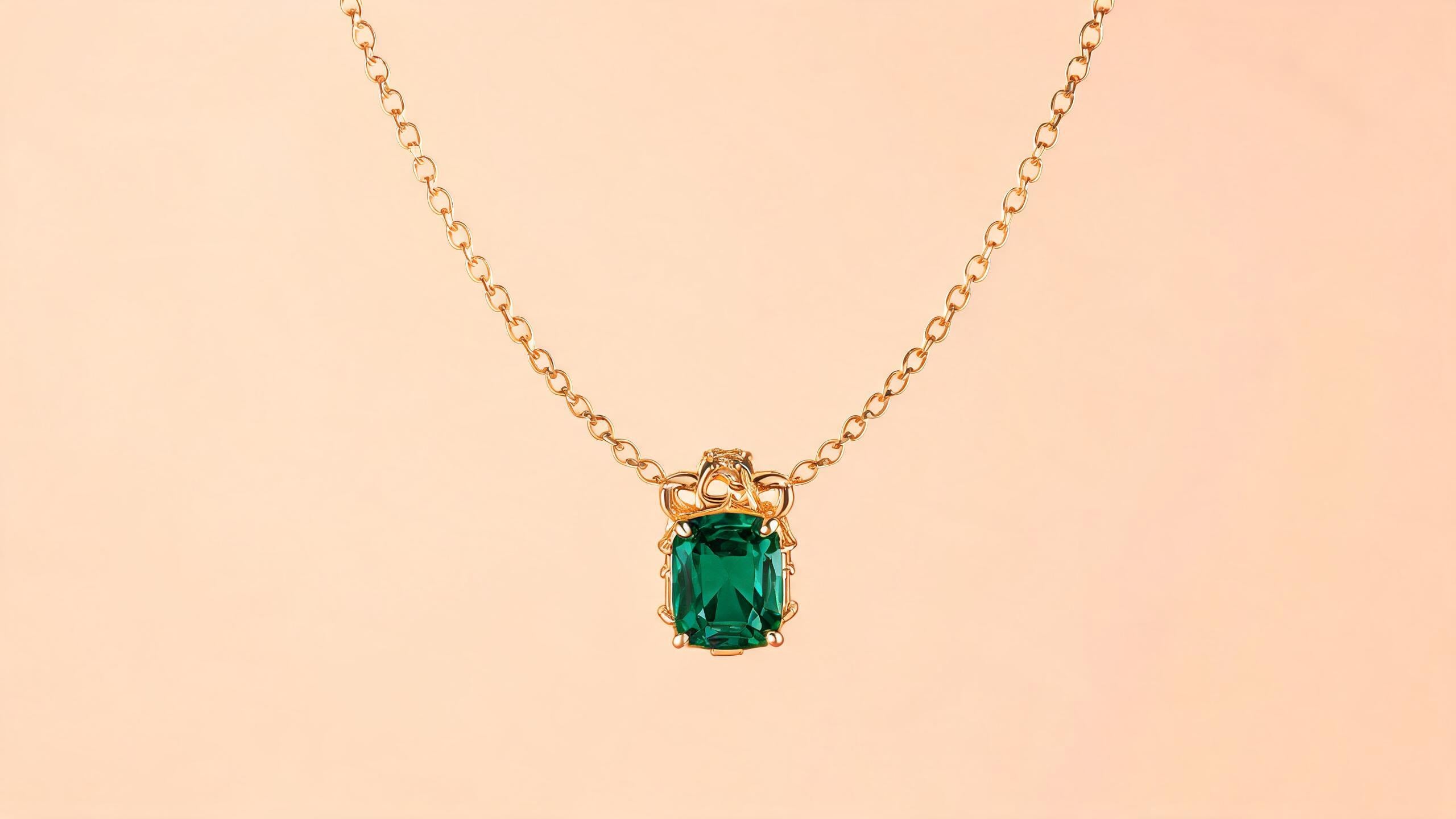
Learn how Demna AI isolates garments, preserves fine details, and creates clean, studio-ready product images in seconds.
Demna AI remove background from clothing photos is an AI-powered image-editing function that separates garments and models from their original backgrounds and replaces them with transparency, solid color, or a selected scene. It uses automated subject segmentation to preserve garment edges, details, and silhouettes, enabling product images with consistent backgrounds for e-commerce catalogs.
How Demna AI Removes Backgrounds from Clothing Photos
Key Takeaway: Demna AI removes backgrounds from clothing photos by using computer vision and segmentation models to identify garment edges, separate the clothing from its surroundings, and generate a transparent or replacement background.
Demna AI removes backgrounds from clothing photos by separating garments from their surroundings with computer vision, segmentation models, and image-generation tools.
That capability looks simple. It is not.
A background remover does more than erase pixels around a shirt. It decides where the garment ends, whether a translucent sleeve belongs to the garment, how to preserve a loose hem, and what to do with shadows, straps, fringe, reflective fabric, and overlapping accessories. In fashion, those decisions determine whether an image remains useful for styling, cataloging, resale, recommendation, or design analysis.
The search interest around demna ai remove background from clothing photos reflects a larger shift: people no longer want AI merely to generate fashion images. They want AI to understand existing clothing as structured visual data.
That is the important story.
Demna AI’s background-removal workflow matters because it turns messy fashion photography into machine-readable inventory. It converts garments from contextual images into reusable objects. Once a jacket, sneaker, dress, or bag is isolated, the image becomes easier to analyze, compare, classify, recolor, recommend, and place into an outfit system.
My position is direct: background removal is not a cosmetic editing feature. It is the first layer of AI fashion infrastructure.
What Does “Demna AI Remove Background from Clothing Photos” Actually Mean?
The phrase describes a computer-vision workflow that identifies clothing in a photograph and removes or replaces the surrounding background.
A typical process includes:
- Image ingestion: The system receives a clothing photo from a camera roll, product catalog, social platform, or resale listing.
- Object detection: The model identifies likely garments and accessories.
- Semantic segmentation: The system assigns pixels to categories such as shirt, trousers, shoe, skin, hair, furniture, or background.
- Boundary refinement: The model improves edges around collars, hems, sleeves, laces, and fabric details.
- Background removal: Pixels outside the selected garment are made transparent or replaced.
- Output normalization: The isolated item is cropped, centered, resized, and saved for later use.
AI clothing background removal: The use of computer-vision segmentation and image-processing models to isolate garments or accessories from their original surroundings, producing a transparent or replacement background while preserving the item’s shape and visual details.
The output is commonly a transparent PNG, a clean product image, or an isolated garment layer that another AI system can inspect.
This distinction matters. A basic photo editor removes a background because a user draws around an object. An AI fashion system removes a background because it builds a representation of the garment’s visual identity.
Those are different levels of intelligence.
What Happened With Demna AI’s Clothing Image Workflow?
The current attention around Demna AI centers on a recognizable use case: extracting fashion objects from images so they can be reused in a cleaner, more structured visual format.
The workflow fits a wider set of Demna AI experiments involving fashion images, clothing design, visual manipulation, and garment-focused generation. Related coverage has examined how Demna AI makes fashion cutouts with transparent backgrounds, but the background-removal function deserves a more technical reading than “one-click editing.”
The notable development is not that a model can produce a clean cutout. Many image tools can do that. The development is that clothing is becoming the primary unit of analysis.
Traditional fashion imagery is built around scenes:
- A model wears a jacket.
- A room establishes mood.
- Lighting creates atmosphere.
- Accessories overlap the garment.
- The body affects how fabric drapes.
- Background objects create visual noise.
A fashion intelligence system needs to separate these layers. It must identify the jacket without confusing the body, recognize the trousers without absorbing the chair behind them, and preserve the silhouette without importing the model’s identity into the garment representation.
Demna AI’s relevance comes from this decomposition. It treats the photograph not as a finished image, but as a source of components.
That is a much more consequential approach.
Why the Background Is a Problem for Fashion AI
A conventional image-recognition model can often identify a shirt in a room. A useful fashion system needs to answer harder questions:
- Which pixels belong to the shirt?
- Is the shirt tucked into the trousers?
- Is the dark region a shadow or a second garment?
- Is the sleeve folded or occluded?
- Does the fabric have a glossy finish?
- Is the garment oversized because of its cut or because of the camera angle?
- Does the visible color represent the fabric or the lighting?
- Is the object a coat, overshirt, blazer, or lightweight jacket?
- Can the item be combined with pieces already in a person’s closet?
Background removal is the first step toward answering these questions reliably.
Without isolation, the system sees a blended scene. With isolation, it can create a garment-level representation that supports downstream tasks.
The cutout is therefore not the final product. It is the input layer for:
- Garment classification
- Attribute extraction
- Color and texture analysis
- Silhouette analysis
- Closet digitization
- Outfit compatibility scoring
- Visual search
- Resale listing creation
- Virtual styling
- Design reference retrieval
This is why the current search wave deserves attention. Users are searching for an editing action, but the underlying demand is for fashion objects that AI can understand.
Why Does Demna AI Removing Clothing Backgrounds Matter?
Background removal matters because fashion systems fail when they confuse context with preference.
A person may photograph a black coat against a black sofa. A standard visual model can misread the coat’s edges. A person may upload a mirror selfie where the garment is partly hidden by a phone.
A product may appear on a mannequin with a distracting studio background. A resale listing may show the item on a bedroom floor.
The clothing remains useful to a human. The image becomes difficult for a machine.
Isolation reduces that ambiguity.
It Converts Images Into Fashion Data
A clothing photo contains multiple types of information:
| Layer | Example | Why it matters |
|---|---|---|
| Garment | Oversized wool coat | Core item identity |
| Shape | Long, relaxed, double-breasted | Silhouette and fit signals |
| Surface | Brushed, matte, reflective | Material and visual texture |
| Color | Charcoal, cream, muted red | Palette compatibility |
| Context | Street, studio, bedroom | Useful but secondary |
| Person | Body, pose, face | Often irrelevant to garment matching |
| Lighting | Warm indoor light | Can distort color interpretation |
Background removal separates the garment layer from the contextual layers.
That separation improves data quality. A model can compare a coat to another coat without allowing the room, pose, or model identity to dominate the similarity calculation.
It Makes Closet Digitization More Accurate
A personal digital closet starts with images. If those images are inconsistent, every recommendation built on top of them becomes less reliable.
Consider three closet entries:
- A blazer photographed on a white product page
- Jeans photographed in a dim bedroom
- Sneakers photographed on a sidewalk
A visual system that compares raw images may interpret the backgrounds as meaningful features. A system that isolates each item can focus on the actual clothing.
This does not solve every problem. The model still needs to estimate color under different lighting, distinguish garment structure, and understand condition. But clean segmentation removes one major source of noise.
Our guide to AI outfit recommendations from closet photos makes the larger point: closet intelligence depends on turning personal images into structured, usable representations rather than treating them as isolated snapshots.
It Supports Better Search
Fashion search often begins with a vague visual question:
- Find something like this jacket.
- Show me trousers that work with these shoes.
- Which pieces in my closet match this color?
- What outerwear has a similar silhouette?
- Find a version of this item without the branding.
A clean garment representation makes visual retrieval more precise.
The system can index the item by:
- Dominant and secondary colors
- Garment category
- Length
- Cut
- Collar or neckline
- Sleeve structure
- Texture
- Pattern
- Hardware
- Formality
- Seasonality
- Relationship to other garments
The background itself contributes little to most of these queries. Removing it allows the index to prioritize fashion attributes.
It Separates Style From Social Context
Fashion imagery frequently carries social signals that overpower the garment:
- A recognizable location
- A specific influencer
- A luxury storefront
- A celebrity face
- A particular editorial aesthetic
- A cultural or subcultural association
Those signals can be useful for trend analysis. They are dangerous when a system claims to understand personal taste.
If a person saves a look because they like the coat, a model should not assume they want the location, pose, or status signal. Background removal helps isolate the object of interest.
This leads to a broader principle:
Personalization should model what a person chooses, not merely the scenes attached to their choices.
👗 Retailers plug Alvin's Club in and see personalization land in weeks, not quarters. See how →
How Does Demna AI Remove Backgrounds From Clothing Photos?
The most effective systems combine several techniques rather than relying on a single magic model.
1. Object Detection Finds Candidate Garments
Object detection identifies regions likely to contain clothing.
The model may label:
- Top
- Dress
- Pants
- Skirt
- Outerwear
- Shoes
- Bag
- Hat
- Accessory
Detection creates a bounding box, but a box is not enough. It includes background pixels around the item and cannot represent complex contours.
A box can locate a coat. It cannot accurately describe the gap between the sleeve and torso, the opening beneath a hem, or the negative space around a bag handle.
2. Segmentation Assigns Pixels to the Item
Segmentation operates at a finer level. Instead of asking where the object is, it asks which pixels belong to it.
This is particularly important for clothing because garments have irregular boundaries:
- Open jackets expose the shirt beneath.
- Lace and mesh contain transparent regions.
- Fringes create thin, repeated edges.
- Oversized sleeves create folds and gaps.
- Long coats overlap shoes and trousers.
- White clothing disappears against bright backgrounds.
- Black clothing loses detail in dark scenes.
A strong model generates a mask that follows the garment’s actual visible boundary.
3. Matting Refines Soft Edges
Segmentation often produces hard masks. Fashion photography requires more nuanced edge handling.
Matting estimates partial transparency at boundary pixels. This helps preserve:
- Fine hair-like fibers
- Sheer materials
- Feathered trim
- Loose threads
- Semi-transparent fabric
- Soft shadows
- Motion blur
- Fine straps
The challenge is deciding what to preserve. A garment shadow may help communicate volume, but it may also be background contamination. A transparent sleeve may belong to the item, while the skin visible behind it does not.
This is where fashion-specific training becomes important.
4. Depth and Occlusion Models Resolve Overlap
Clothing rarely appears as a clean isolated object. It overlaps with the body, other garments, furniture, and accessories.
A model needs to infer depth:
- Is the scarf in front of the coat?
- Is the shirt under the blazer?
- Is the hand covering the sleeve?
- Is the bag worn over the jacket or held beside it?
- Is the shoe partly hidden by trousers?
- Is the belt part of the outfit or part of the background?
This is not simply a boundary problem. It is a scene-composition problem.
The best output may require several masks rather than one:
- Full outfit mask
- Outerwear mask
Top mask 4. Bottom mask 5. Footwear mask 6.
Accessories mask 7. Body mask 8. Background mask
That layered representation is more valuable than a flattened cutout because it supports outfit-level reasoning.
5. Generative Models Repair Missing or Unclear Regions
Generative image models can infer or reconstruct areas that are partially hidden. This introduces both power and risk.
If a sleeve is hidden behind a bag, a generative model can create a plausible continuation. If a garment edge is cropped, it can extend the image. If the background contains visual clutter, it can replace it with a neutral field.
But inferred pixels are not the same as observed pixels.
A system intended for fashion intelligence must preserve this distinction. It should identify:
- Observed garment content: Directly visible in the source
- Refined content: Edge or shadow interpretation
- Inferred content: Generated or reconstructed by the model
Blurring these categories creates inaccurate closet data. A generated button, pocket, seam, or pattern can influence future recommendations even though it never existed in the original garment.
That is unacceptable for a system that claims to learn personal style.
What Are the Hardest Clothing Backgrounds for AI?
Background removal performs best when the subject and background have strong contrast, clean edges, and minimal overlap. Fashion images often violate all three conditions.
Reflective and Glossy Fabrics
Leather, satin, patent materials, metallic textiles, and sequins reflect the environment. Their visible color changes across the surface, and highlights may resemble background pixels.
A matte black hoodie is relatively straightforward. A black patent jacket photographed under studio lights is not.
The model must distinguish:
- Garment color
- Specular highlight
- Reflected environment
- Cast shadow
- Actual hole or opening
A poor mask can erase reflective sections or retain parts of the studio.
Transparent and Semi-Transparent Materials
Sheer dresses, mesh tops, lace, organza, and fine knitwear produce ambiguous boundaries.
The system must preserve the garment while allowing the correct underlying layers to remain visible. A binary foreground/background decision loses important information.
A better output stores alpha values and possibly material labels. The image then retains not just the outer silhouette but the fabric’s visual behavior.
Similar Garment and Background Colors
A cream sweater against a cream wall creates weak visual contrast. A dark coat against a dark vehicle creates the same problem.
Color alone cannot solve the segmentation task. The model must use:
- Texture
- Edge continuity
- Depth
- Fold structure
- Lighting gradients
- Human pose
- Garment priors
This is one reason fashion-specific models outperform generic background removers on difficult clothing images.
Layered Outfits
Layering increases ambiguity.
A shirt under an open cardigan may have a clear boundary. A tonal outfit with a tank, overshirt, jacket, and scarf can become a single visual mass.
For recommendations, the distinction matters. The system should know whether the person owns one long black layer or several separate pieces.
A background remover that produces one combined silhouette is visually clean but semantically incomplete.
Accessories and Body Occlusion
Hands cover sleeves. Hair covers collars. Bags cover side seams.
Jewelry crosses necklines. These elements can be mistaken for parts of the garment or removed along with it.
A useful model needs category-aware segmentation. It should understand that a hand is not a sleeve, even when both share color and position.
How Is AI Background Removal Different From Manual Editing?
Manual editing remains valuable for high-stakes imagery, but AI changes the economics and the scale of the process.
| Approach | Strength | Weakness | Best use |
|---|---|---|---|
| Manual clipping path | Precise control | Slow and expensive | Premium catalog images |
| Basic automatic remover | Fast and accessible | Weak on complex garments | Simple product photos |
| AI segmentation | Strong object-level understanding | Can fail on unusual shapes | Closet and catalog ingestion |
| AI matting | Better soft-edge preservation | More computationally demanding | Sheer, fuzzy, reflective fabrics |
| Generative cleanup | Repairs incomplete or messy images | Can invent visual details | Presentation and creative editing |
| Layered fashion parsing | Supports garment-level analysis | Requires specialized training | Personal style intelligence |
The mistake is treating these approaches as interchangeable.
A product catalog may prioritize visual polish. A closet system should prioritize semantic accuracy. A design tool may prioritize editable layers.
A resale platform may prioritize speed and clear item presentation.
The right pipeline depends on the downstream task.
When Manual Editing Still Wins
Manual editing remains superior when:
- The image is used for luxury campaign work.
- Product color must be exact.
- Legal or archival accuracy matters.
- The garment contains unusual construction.
- The item has complex transparency.
- A human must approve every edge.
- The image will represent a product commercially.
AI can produce a strong first pass, but quality control still matters.
When AI Wins
AI wins when the system must process a personal wardrobe at scale.
A person does not want to manually trace every sleeve, remove every bedroom background, and align every shoe. The value lies in reducing friction so the closet becomes usable.
That changes the design objective from “perfect image editing” to “reliable structured understanding.”
A ninety-percent cutout with accurate garment attributes can be more useful than a perfect cutout with no metadata. Conversely, a visually beautiful cutout that misclassifies a jacket as a shirt creates downstream errors.
The output must be judged by what the system can do next.
Why Is Background Removal Foundational to AI Fashion Commerce?
Fashion commerce still treats product images as presentation assets. AI-native commerce treats them as data objects.
That difference changes the architecture.
A conventional product page stores:
- Product title
- Price
- Brand
- Inventory status
- Size
- Product photographs
- Description
An AI-native fashion system needs more:
- Visual garment embeddings
- Material signals
- Silhouette representation
- Color relationships
- Layering compatibility
- Occasion fit
- User-specific relevance
- Confidence scores
- Image provenance
- Preference history
- Feedback signals
Background removal improves the first layer of that representation.
From Image Asset to Garment Object
A raw photo is a document. An isolated garment is an object.
An object can be:
- Indexed
- Compared
- Clustered
- Retrieved
- Tagged
- Matched
- Recombined
- Scored against personal preferences
This object-based structure supports a more intelligent fashion system.
Imagine a user uploads ten outfit photos. The system isolates the garments, identifies repeated silhouettes, detects preferred color relationships, and distinguishes aspirational saves from frequently worn pieces.
That cannot happen reliably if the model sees only full scenes.
From Product Similarity to Outfit Compatibility
Most fashion recommendation systems focus on item similarity:
- Similar black shoes
- Similar denim jacket
- Similar floral dress
But personal styling depends on compatibility, not similarity.
A recommendation engine should understand that:
- A cropped jacket may work with high-rise trousers.
- A wide-leg trouser may require a specific shoe proportion.
- A textured knit may pair better with a clean, low-detail bottom.
- A formal blazer may be more useful in a person’s wardrobe than another casual jacket.
- A garment can match a user’s taste but fail their climate, routine, or existing closet.
Isolated garments give the system a clearer basis for compatibility modeling.
From Trend Recognition to Taste Modeling
Trend systems ask what is popular. Personal style systems ask what persists for one person.
That requires measuring repeated signals across images:
- Preferred proportions
- Recurring colors
- Tolerance for pattern
- Formality range
- Layering behavior
- Shoe profile
- Accessory density
- Fabric preferences
- Contrast level
- Fit preferences
Background removal improves the consistency of those signals.
A person may save editorial images with dramatic backgrounds, but their actual preference may be the restrained tailoring of the coat. The model must separate the style object from the editorial atmosphere.
What Does This Mean for Personal
Summary
- Demna AI removes backgrounds from clothing photos using computer vision, segmentation models, and image-generation tools to separate garments from their surroundings.
- The system must identify complex garment boundaries, including translucent sleeves, loose hems, shadows, straps, fringe, reflective fabrics, and overlapping accessories.
- Interest in “demna ai remove background from clothing photos” reflects demand for AI that understands existing clothing as structured visual data, not merely as generated imagery.
- Background removal converts contextual fashion photographs into isolated, reusable garment objects that are easier to classify, compare, recolor, recommend, and analyze.
- Demna AI’s workflow positions background removal as foundational fashion infrastructure rather than a purely cosmetic image-editing feature.
Key Takeaways
- Key Takeaway:
- Demna AI removes backgrounds from clothing photos by separating garments from their surroundings with computer vision, segmentation models, and image-generation tools.
- demna ai remove background from clothing photos
- background removal is not a cosmetic editing feature. It is the first layer of AI fashion infrastructure.
- Image ingestion:
Frequently Asked Questions
What is Demna AI remove background from clothing photos?
Demna AI remove background from clothing photos refers to using artificial intelligence to isolate garments from their original surroundings. The tool identifies clothing edges, separates the item from the background, and creates a transparent or replacement backdrop.
How does Demna AI remove backgrounds from clothing photos?
Demna AI removes backgrounds from clothing photos by analyzing the image with computer vision and segmentation models. It detects garment boundaries while attempting to preserve details such as sleeves, hems, straps, fringe, and soft shadows.
Can you use Demna AI to remove the background from product clothing images?
You can use Demna AI to isolate shirts, dresses, jackets, trousers, and other apparel from product photos. After processing, the clothing can be placed on a transparent, white, or custom background for ecommerce listings and marketing materials.
Is it worth using Demna AI to remove backgrounds from clothing photos?
Demna AI can be worth using when you need faster, more consistent clothing images without manual photo editing. It is especially useful for catalogs and online stores, although complex edges, translucent fabrics, and overlapping garments may still require review.
Why does Demna AI sometimes remove parts of clothing with the background?
Demna AI may remove parts of a garment when the clothing blends into the background or contains low-contrast details. Shadows, loose threads, transparent materials, and patterned edges can make segmentation more difficult and may require a higher-quality source image or manual correction.
How accurate is Demna AI remove background from clothing photos?
Demna AI remove background from clothing photos can produce accurate results when the garment is clearly visible and well separated from its surroundings. Accuracy may decrease with wrinkles, dark clothing on dark backgrounds, reflective fabrics, fine fringe, and accessories that overlap the item.
Related on Alvin's Club
About the author
Building the AI fashion agent at Alvin's Club — personal style models, dynamic taste profiles, and private AI stylists. Writing about where AI meets fashion commerce.
Credentials
- Founder at Alvin's Club (Echooo E-Commerce Canada Ltd.)
- Writes weekly on AI × fashion at blog.alvinsclub.ai
X / @alvinsclub · LinkedIn · alvinsclub.ai
This article is part of Alvin's Club's AI Fashion Intelligence series — the AI fashion agent that influences demand before shopping happens.
Related Articles
- Demna AI’s Image Deletions Reveal Fashion Tech’s Privacy Shift
- The Definitive Guide to AI Outfit Recommendations From Closet Photos
- How Demna AI Makes Fashion Cutouts With Transparent Backgrounds
- How Demna Uses AI to Turn Fashion Sketches Into Clothing
- Inside Demna’s Experiment With AI-Powered Clothing Design
- Can Demna AI Edit Photos? A Practical Guide for Fashion Creators
- Demna AI Prompt Examples for Creating Distinctive Clothing
- How to Use Demna AI to Style Multiple Wardrobes
- Demna AI in 2026: Supported Countries and Currencies Explained
- Can Demna AI Create the Perfect Outfit for Any Occasion?
- 7 Demna AI Alternatives for Professional Fashion Stylists
- 5 Smart Demna AI Integrations for More Personalized Style Shopping
About the author
- Founder building AI-native fashion commerce infrastructure. I design autonomous systems, agent workflows, and automation frameworks that replace manual retail operations. Currently focused on AI-driven commerce infrastructure, multi-agent systems, and scalable automation.
Comments
Join the discussionNo comments yet. Be the first to comment.