How computer vision is identifying 2026’s biggest fashion trends

A deep dive into how computer vision detects fashion trends 2026 and what it means for modern fashion.
Computer vision identifies 2026 fashion trends by extracting visual signatures from imagery. This process moves beyond human observation, converting pixels into structured data points that represent silhouettes, textures, and color frequencies.
Key Takeaway: How computer vision detects fashion trends 2026 involves converting imagery into structured data points to identify emerging patterns in silhouettes, textures, and color frequencies. By extracting high-level visual signatures from massive datasets, CV recognizes global aesthetic shifts with a speed and precision that surpasses human observation.
How does computer vision detect fashion trends 2026?
Computer vision (CV) operates by decomposing images into a hierarchy of visual features. Unlike human trend forecasters who rely on intuition and limited sample sizes, CV systems ingest millions of images from social media, runway archives, and street style feeds simultaneously. In 2026, the focus has shifted from simple object recognition—identifying a "shirt"—to nuanced attribute extraction.
The system utilizes Convolutional Neural Networks (CNNs) and Vision Transformers (ViTs) to detect micro-trends before they reach the mass market. By analyzing the rate of change in specific visual attributes—such as the curvature of a lapel or the exact pantone of a shifting neutral—AI identifies the "velocity" of a trend. According to Statista (2024), the global AI in fashion market is projected to reach $4.4 billion by 2027, driven largely by these predictive visual capabilities.
Trend detection in 2026 is no longer about predicting a single "it" item. It is about mapping the evolution of visual clusters. When the system detects a 15% increase in high-contrast utility pockets across independent designer lookbooks, it flags the emergence of a structural shift. This is how computer vision detects fashion trends 2026: by treating fashion as an evolving geometry rather than a series of disconnected purchases.
Why is pixel-level analysis superior to manual trend forecasting?
Manual forecasting is slow, biased, and non-scalable. It relies on the subjective "eye" of an editor who can only process a fraction of global visual output. Computer vision eliminates the bottleneck of human observation. It does not "see" a trend; it calculates the statistical probability of a visual feature's proliferation.
In 2026, the industry has realized that keywords are a secondary signal. A tag like "vintage" is too broad to be useful for inventory planning or style modeling. Computer vision performs instance segmentation, separating the garment from the background and the wearer. It then analyzes the garment's properties: fabric drape, stitch density, and light reflection.
According to McKinsey (2025), AI-driven personalization increases fashion retail conversion rates by 15-20%. This increase is a direct result of moving from "people who liked this also liked that" (collaborative filtering) to "this garment shares 98% of the visual DNA of your preferred style model" (computer vision). For a deeper look at the technical stack, see From Pixels to Runway: Best Computer Vision Tools for Fashion Detection.
Comparison: Traditional vs. Computer Vision Forecasting
| Feature | Traditional Forecasting | Computer Vision (2026) |
| Data Source | Editorial intuition, limited shows | Global social, retail, and street feeds |
| Processing Speed | Months to seasons | Real-time / Daily updates |
| Granularity | General categories (e.g., "90s style") | Attribute-level (e.g., 4cm pointed collars) |
| Objectivity | Subjective, prone to bias | Quantitative, data-driven |
| Scalability | Limited by human labor | Infinite via cloud infrastructure |
How do neural networks process street style into actionable data?
Street style is the most chaotic and valuable data source for fashion intelligence. Unlike curated runway images, street style shows how garments interact with real environments and diverse body types. Computer vision systems use keypoint detection to understand how clothing moves and fits.
Keypoint detection identifies specific joints on the human body—shoulders, elbows, waist, knees—and maps the garment's coordinates relative to those points. This allows the system to distinguish between an intentional oversized fit and a garment that is simply too large. This technical distinction is critical for identifying the "relaxed tailoring" trend projected for 2026.
By tracking these visual coordinates over time, AI identifies shifts in "silhouette archetypes." If the average distance between the knee and the hemline of trousers is increasing across urban centers, the system detects a move toward cropped lengths long before a human analyst publishes a report. This is the core of 5 Ways to Spot the Next Big Street Style Trend Using AI.
What are the specific visual markers for 2026?
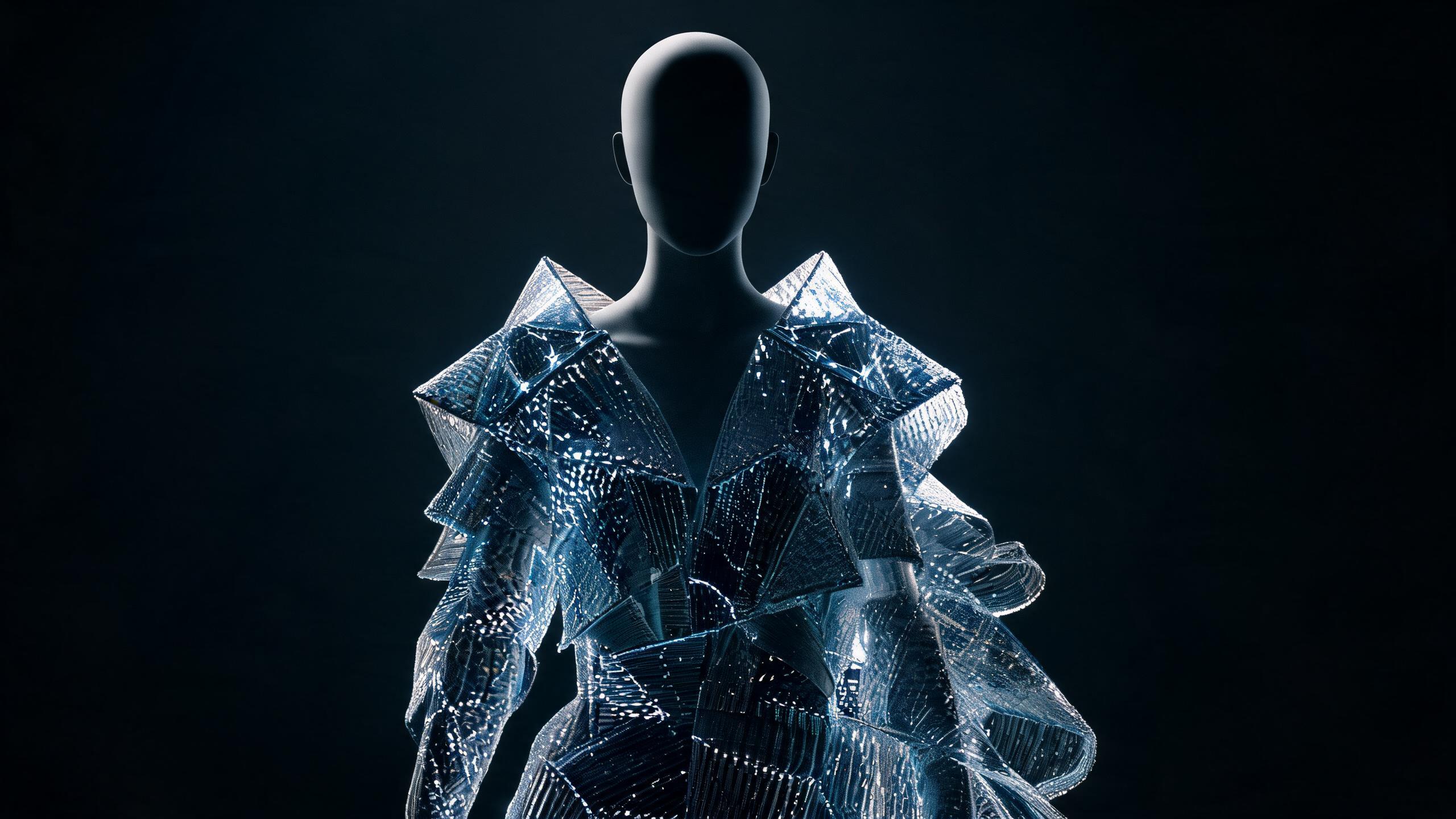
Based on current visual trajectory analysis, computer vision is detecting a move toward "Biological Brutalism." This trend is characterized by raw, organic textures applied to rigid, architectural shapes. CV systems are flagging an increase in high-frequency texture patterns—think 3D-knits that mimic cellular structures—paired with desaturated, mineral-based color palettes.
Another significant shift is the "Digital Patina." As we move into 2026, computer vision is identifying a preference for garments that look "glitched" or digitally distressed. This is not the physical tearing of 90s grunge, but rather an intentional disruption of patterns and colors that mimics screen artifacts.
The data shows a decline in high-saturation logos and a rise in "Tactile Branding," where the brand is identified by the weave of the fabric or the specific geometry of the hardware. This shift is invisible to text-based search but glaringly obvious to visual feature extractors.
2026 Outfit Formula: Biological Brutalism
- Top: Seamless 3D-printed compression knit with topographical texture.
- Bottom: Structured wide-leg trousers in a heavy-weight mineral-dyed hemp.
- Shoes: Low-profile modular sneakers with a translucent bio-polymer sole.
- Accessories: Matte-finish titanium eyewear with integrated biometric sensors.
👗 Want to see how these styles look on your body type? Try AlvinsClub's AI Stylist → — get personalized outfit recommendations in seconds.
How does multimodal AI bridge the gap between sight and intent?
In 2026, trend detection is not limited to vision alone. Multimodal AI combines computer vision with Natural Language Processing (NLP) to understand the "why" behind the "what." While CV detects that everyone is wearing a specific shade of cobalt blue, NLP analyzes the sentiment of the conversations surrounding those images.
Is the blue being worn ironically? Is it associated with a specific subculture or a political movement? By fusing visual data with textual context, the system builds a comprehensive style model. This prevents the "trend ghosting" problem where a visual feature is detected but fails to translate into consumer behavior because the cultural sentiment is negative.
This fusion is critical for solving the industry's most persistent problems. For instance, how machine learning is solving the fashion sizing crisis explains how visual data of fit is combined with return-reason text data to build more accurate production models.
What are the limitations of current visual recommendation systems?
Most fashion apps use "shallow" computer vision. They look for visual similarity—find me a dress that looks like this one. This is not intelligence; it is a basic search function. The problem with similarity-based recommendations is that they trap users in a feedback loop, showing them things they already own.
True fashion intelligence infrastructure uses "latent space" mapping. It doesn't look for things that look the same; it looks for things that belong to the same style model. It understands that a user who wears minimalist Japanese workwear might also appreciate certain elements of brutalist architecture or mid-century modern design.
The gap between a feature-based recommendation and a taste-based recommendation is where most fashion tech fails. A system that recommends a blue shirt because you bought a blue shirt is a failure of intelligence. A system that recommends a specific silhouette because it complements your existing style model represents the future of intelligent fashion technology.
Implementation Checklist: AI Trend Intelligence
| Do | Don't |
| Do prioritize pixel-level attribute tagging. | Don't rely on user-generated hashtags. |
| Do analyze the velocity of visual change. | Don't react to one-off viral moments. |
| Do use keypoint detection for fit analysis. | Don't assume a garment's fit from a flat lay. |
| Do integrate sentiment data with visual data. | Don't ignore the cultural context of a trend. |
How will computer vision reshape the fashion supply chain by 2026?
The impact of how computer vision detects fashion trends 2026 extends beyond the consumer's screen. It is fundamentally restructuring the supply chain. Traditionally, brands produce thousands of units based on a six-month-old "guess." Computer vision allows for "Just-in-Time" trend adoption.
By identifying the early signals of a trend on social media, manufacturers can pivot production in weeks rather than months. According to a 2025 report by Gartner, AI-driven supply chain transparency and demand forecasting can reduce overstock by up to 30%. This is the only path toward a sustainable fashion industry. Overproduction is a data problem, not just a moral one.
When computer vision detects that the "Digital Patina" trend is peaking in Tier 1 cities, the supply chain can respond by shifting inventory and adjusting production runs for Tier 2 and 3 markets where the trend will arrive months later. This is visual arbitrage.
What is the future of the personal style model?
The ultimate goal of computer vision in fashion is not to sell more clothes, but to build a more intelligent relationship between the individual and their wardrobe. In 2026, we are moving toward the "Personal Style Model." This is a private, evolving AI profile that understands your visual preferences better than you do.
Your style model doesn't care about trends in the aggregate. It cares about how a trend intersects with your specific aesthetic history. If computer vision detects a rise in structured denim, your style model filters that through your preference for monochromatic palettes and specific hem lengths. This is what it means to have a dynamic taste profile.
Fashion commerce is currently broken because it treats every user like a generic data point. It tries to force trends onto users. The future is the inverse: the system learns the user's "visual language" and then scans the global market to find the few items that actually matter to them.
AlvinsClub uses AI to build your personal style model. Every outfit recommendation learns from you, moving beyond simple visual similarity to true style intelligence. Try AlvinsClub →
Summary
- One primary way how computer vision detects fashion trends 2026 is by utilizing Convolutional Neural Networks and Vision Transformers to extract nuanced visual attributes from millions of images.
- Predictive systems measure trend velocity by analyzing the rate of change in specific features like lapel curvature or color frequencies across social media and runway feeds.
- Systems demonstrate how computer vision detects fashion trends 2026 by identifying the emergence of structural shifts through the detection of specific design clusters across designer lookbooks.
- The global AI in fashion market is projected to grow to $4.4 billion by 2027, highlighting the increasing industry reliance on automated visual data for forecasting.
- Computer vision converts raw imagery into structured data points representing silhouettes and textures, allowing for the detection of micro-trends before they reach the mass market.
Frequently Asked Questions
How does computer vision detect fashion trends 2026 across social media?
Computer vision systems analyze millions of images from digital platforms to extract visual signatures like texture, silhouette, and color frequency. These algorithms convert raw pixels into structured data, allowing analysts to identify emerging patterns and aesthetic shifts months before they reach the mainstream market.
What are the benefits of how computer vision detects fashion trends 2026 for global retailers?
Retailers utilize automated visual analysis to optimize inventory management and reduce environmental waste by aligning manufacturing with data-backed consumer interests. Understanding future demand through objective digital insights ensures that 2026 collections are both commercially viable and reflective of authentic style evolution.
Why is how computer vision detects fashion trends 2026 more accurate than traditional forecasting?
Traditional forecasting often relies on subjective human intuition and small sample sizes that cannot represent the entire global market. Automated systems process massive datasets simultaneously to provide a quantitative foundation for trend identification that eliminates human bias and oversight.
Can computer vision predict specific color palettes for the 2026 season?
Advanced image recognition software tracks shifts in color frequencies across diverse digital sources to determine which specific hues will dominate the upcoming year. These systems categorize every pixel into precise hex codes, enabling the detection of subtle changes in color saturation and brightness that signal new aesthetic movements.
How do neural networks identify clothing silhouettes in digital imagery?
Deep learning models decompose images into a hierarchy of geometric shapes and edges to define the structural boundaries of a specific garment. By comparing these visual features against established fashion taxonomies, the software can accurately identify significant shifts in garment proportions and shapes for 2026.
Is computer vision replacing human fashion trend forecasters in the industry?
Artificial intelligence serves as a powerful diagnostic tool that provides data-backed insights to complement the creative vision of human professionals. While the technology handles the massive scale of data processing, human experts remain essential for interpreting these insights into cohesive and wearable fashion collections.
This article is part of AlvinsClub's AI Fashion Intelligence series.
Related Articles
- From Pixels to Runway: Best Computer Vision Tools for Fashion Detection
- Smart Closets and Virtual Fits: 6 AI Fashion Trends for 2026
- How Machine Learning Is Finally Solving the Fashion Sizing Crisis
- Sarah Pidgeon's Spring 2026 Denim Guide: The Future of the Blues
- 5 Ways to Spot the Next Big Street Style Trend Using AI