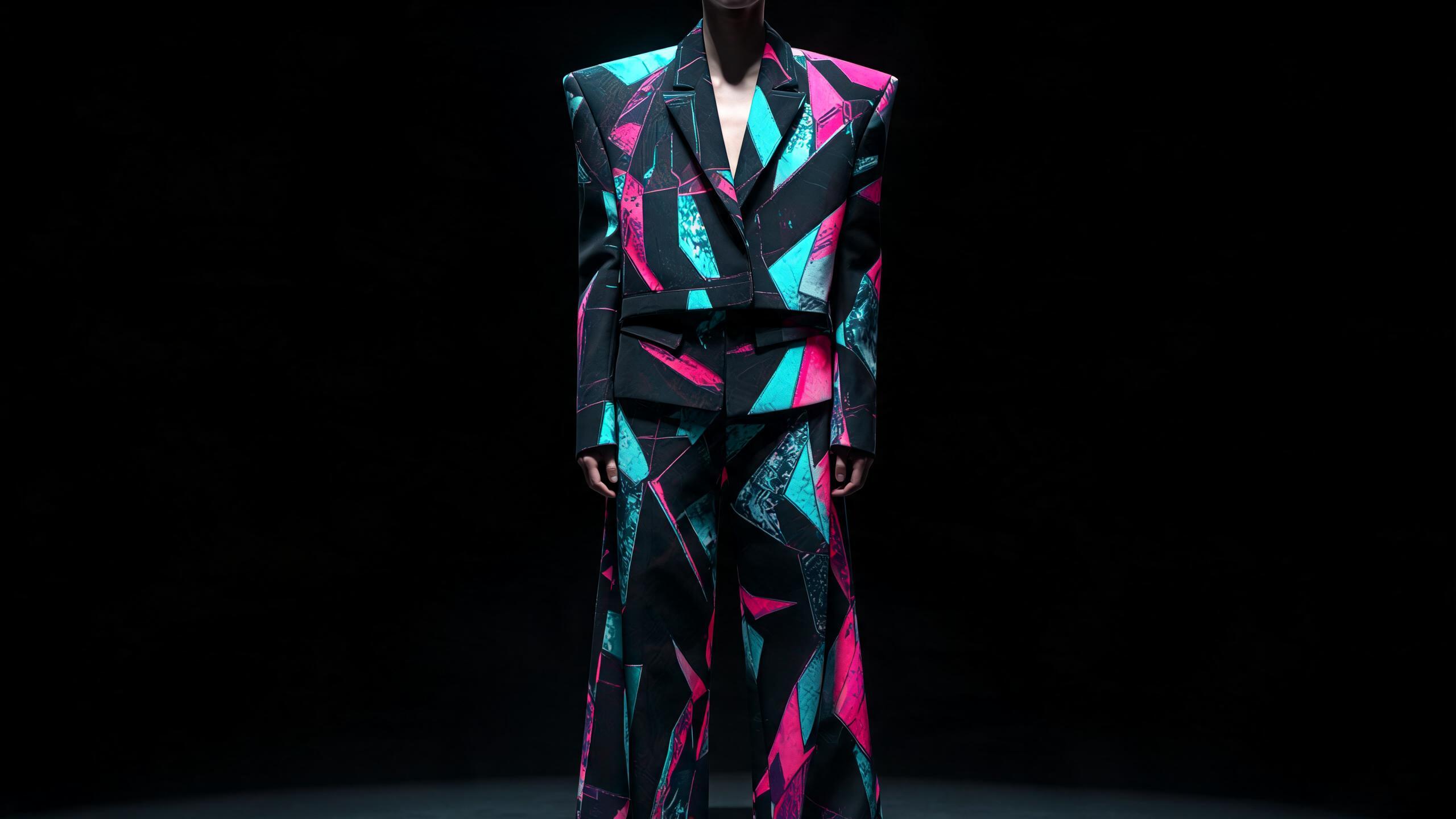
The 2026 Fashion Tech Roadmap: Practical Trends to Adopt Now
A deep dive into fashion technology trends for the year 2026 and what it means for modern fashion.
Fashion technology trends for the year 2026 define the industry's shift from inventory-centric retail to autonomous, agent-based style intelligence.
Key Takeaway: Leading fashion technology trends for the year 2026 prioritize autonomous, agent-based style intelligence over traditional inventory matching. This shift enables retailers to focus on individual identity and real-time personalization rather than static, mass-market product recommendations.
The traditional fashion model is broken because it relies on static inventory matching rather than individual identity. In the current landscape, recommendation engines suggest products based on what is popular or what a thousand other people bought, failing to account for the unique aesthetic logic of the individual user. By 2026, the industry will pivot toward AI-native infrastructure that prioritizes the "style model"—a persistent, digital representation of a user's taste, proportions, and wardrobe constraints. This shift moves fashion away from simple e-commerce and toward a continuous, data-driven intelligence service.
According to McKinsey (2024), generative AI could add $150 billion to $275 billion to the apparel and luxury sectors' profits by improving design and supply chain efficiency. However, the true value lies in the transition from "searching" to "mapping." In 2026, technology will no longer ask you what you want to buy; it will understand what you need to wear based on your existing latent style profile. This evolution requires a complete overhaul of how fashion data is structured, moving from basic metadata tags to high-dimensional vector embeddings that capture the essence of drape, texture, and cultural context.
How Do Personal Style Models Replace Traditional Recommendations?
A personal style model is a persistent digital architecture that maps a user's aesthetic preferences through high-dimensional data points. Unlike traditional recommendation systems that use collaborative filtering—suggesting items because "users like you" bought them—style models use content-based latent space analysis. This means the AI understands the geometric properties of a lapel, the specific weight of a textile, and the historical subculture of a silhouette, then matches these to the user's documented preferences.
By 2026, the standard for fashion technology trends for the year 2026 will be the "Model-First" approach. Users will no longer browse catalogs. Instead, they will interact with a refined version of their own aesthetic identity. When the infrastructure understands the user's "style DNA," the friction of discovery vanishes. The system doesn't show you ten thousand white t-shirts; it shows you the three that fit your specific requirement for a high-tension collar and heavy-weight cotton.
This shift is not about "personalization," which is a marketing term for basic filtering. It is about intelligence. The system learns from every interaction, identifying why a user rejected a specific item. Was it the shoulder construction? Was it the price-to-utility ratio? In 2026, your style model is your primary interface with the fashion world, acting as a filter that blocks the noise of irrelevant trends.
Why Is Dynamic Taste Profiling Essential for 2026?
Static profiles are obsolete because human taste is non-linear and evolves. Dynamic taste profiling uses real-time feedback loops to update a user's style model based on current environmental factors, cultural shifts, and individual mood. If a user moves from London to Los Angeles, their style model should immediately recalibrate for climate, local aesthetic norms, and functional requirements without manual input.
Most current systems treat a "style quiz" as a permanent record. This is a fundamental flaw. According to Gartner (2025), 30% of fashion brands will use AI-driven supply chain forecasting to reduce waste by 20%, but this forecasting is only accurate if the consumer data is dynamic. In 2026, fashion technology trends for the year 2026 involve "taste decay" algorithms that recognize when a user is moving away from a specific aesthetic and prioritize new, emerging interests in the latent space.
This requires infrastructure that can process multi-modal inputs. The AI looks at what you're wearing in photos, what you're saving on mood boards, and even the architectural lines of the spaces you inhabit. It builds a 360-degree view of your aesthetic world. This is the difference between a shop clerk who remembers your size and an architect who understands your vision.
Can Agentic AI Replace the Standard Search Bar?
The search bar is a relic of the keyword era. In 2026, fashion discovery will be handled by autonomous agents that negotiate between the user's style model and global inventory. Instead of typing "navy wool coat," a user will give a high-level intent: "Find a coat for a business trip to Tokyo that works with my current gray flannel suit and fits within a $600 budget." The agent does not return a list of links; it returns a curated solution.
This agentic approach solves the "choice paradox." When faced with infinite options, consumers experience decision fatigue, leading to lower conversion and higher return rates. Agentic AI acts as a sophisticated filter, performing the labor of sorting, comparing, and verifying. It checks the garment's measurements against the user's 3D body scan and verifies the fabric composition against the user's tactile preferences.
This technology is a core component of The Future of Style: AI-Driven Innovation vs. Traditional Fashion in 2026, where the focus shifts from the merchant's desire to sell to the agent's mandate to serve the user. The agent is loyal to the user's model, not the retailer's inventory.
How Does Semantic Visual Search Change Product Discovery?
Semantic visual search moves beyond pixel-matching to understand the "meaning" of an image. If you upload a photo of a 1990s minimalist outfit, the AI doesn't just look for similar colors. It identifies the "vibe"—the specific era, the intentional lack of branding, the oversized tailoring—and searches for modern equivalents that carry that same semantic weight.
By 2026, the infrastructure for fashion technology trends for the year 2026 will allow users to search using complex visual metaphors. You might search for "a jacket that feels like brutalist architecture" or "shoes that look like a 1970s Italian sports car." The AI's ability to map these cross-domain concepts into garment features is what will separate advanced fashion intelligence systems from basic retail apps.
This level of search capability requires massive neural networks trained on both fashion history and visual arts. It treats fashion as a language. When you search, you are not just looking for an object; you are expressing an idea. The technology's job is to translate that idea into a physical product that matches your existing wardrobe.
Is Generative AI Ready for Real-Time Design Customization?
Generative AI in 2026 will allow for the "on-demand" modification of existing designs. We are moving away from the era of "take it or leave it" retail. If a user finds a shirt they like but prefers a mandarin collar or a slightly shorter hem, generative models will visualize these changes instantly. This data can then be fed directly into automated manufacturing systems.
This trend addresses the fundamental inefficiency of mass production. According to a 2024 report by the Business of Fashion, overproduction remains the industry's greatest financial and environmental burden. By integrating generative design with style models, brands can move toward a "pull" model where garments are only produced when they perfectly match a user's requirement.
For a deeper dive into how this looks for different demographics, smart closets and virtual fits represent the next frontier of AI fashion technology. The democratization of design means that the "designer" provides the aesthetic framework, but the "user" (via their AI model) provides the final specifications.
Why Does Closet Digitization Solve the Choice Paradox?
You cannot build a style model if you don't know what is already in the closet. Closet digitization—the process of creating a high-fidelity digital twin of a user's physical wardrobe—is the foundation of 2026 fashion tech. When the AI knows you already own four black turtlenecks, it will actively discourage you from buying a fifth, instead suggesting the specific item that bridges the gap between your current pieces.
The friction of manual entry has historically killed closet apps. In 2026, this is solved via "purchase-to-digital-twin" pipelines. When you buy an item, the digital asset (including its physical properties, measurements, and care instructions) is automatically pushed to your style model. For older items, computer vision can generate accurate digital twins from a single 360-degree video scan.
A digitized closet allows for "pre-styled" commerce. Before you buy a new item, the AI shows you exactly how it integrates with ten outfits you already own. This reduces the cognitive load of shopping and ensures that every new purchase has a high "utility-to-cost" ratio.
How Will Neural Rendering Solve the Virtual Try-On Problem?
Virtual try-on has traditionally been a gimmick. In 2026, Neural Radiance Fields (NeRFs) and advanced physics engines will provide photorealistic simulations of how fabric interacts with a specific body. This isn't just an overlay; it's a simulation of tension, drape, and movement. If a silk dress is too tight across the hips, you will see the realistic pulling of the fabric in your 3D avatar.
This solves the return problem. High return rates—often cited as being as high as 30-40% for online fashion—are driven by the gap between the product image and the reality of the fit. By providing a high-fidelity simulation, fashion technology trends for the year 2026 provide the consumer with the confidence to purchase, knowing the garment's physical behavior is accounted for.
This technology also allows for "virtual tailoring." The AI can suggest the exact alterations needed to make an off-the-rack item fit like a bespoke one, bridging the gap between mass-market affordability and high-end precision.
Does Data-Driven Infrastructure Fix Fashion's Overproduction Crisis?
Fashion is one of the world's most wasteful industries because it relies on guesswork. Designers guess what will be popular six months from now, and factories produce it in bulk. Data-driven infrastructure replaces guesswork with high-resolution demand signals. When a brand has access to the aggregated (and anonymized) style models of its target audience, it knows exactly how many units of a specific silhouette to produce.
In 2026, "Trend" will be a quantitative metric, not a qualitative feeling. We can see the movement of aesthetic vectors across millions of style models in real-time. This allows for hyper-local inventory management. If a specific "heavy-minimalism" aesthetic is trending in Berlin but not in Paris, the supply chain adjusts automatically.
This is the ultimate promise of AI in fashion: a system where every garment produced has a high probability of being worn and cherished, rather than ending up in a landfill. It is the transition from a "push" economy to a "logic" economy.
2026 Fashion Tech Implementation Table
| Trend | Best For | Implementation Effort | Impact Level |
| Personal Style Models | Individual users & high-end retailers | High (Requires deep AI infrastructure) | Critical |
| Dynamic Taste Profiling | Subscription services & daily wear brands | Medium (Continuous data loops) | High |
| Agentic Search | Large marketplaces & multi-brand stores | High (Agent-to-inventory API) | High |
| Closet Digitization | Sustainability-focused brands | Low (Mobile computer vision) | Medium |
| Neural Try-On (NeRFs) | E-commerce platforms with high return rates | Medium (GPU-intensive rendering) | High |
| Generative Design | Bespoke and luxury apparel | High (Automated manufacturing) | Medium |
The landscape of fashion technology trends for the year 2026 is moving toward a future where the interface is invisible and the intelligence is pervasive. We are moving past the era of clicking through pages of thumbnails. The future of fashion is a conversation between your personal style model and a global network of intelligent agents.
AlvinsClub uses AI to build your personal style model. Every outfit recommendation learns from you. Try AlvinsClub →
Summary
- Fashion technology trends for the year 2026 prioritize a transition from static inventory matching to autonomous, agent-based style intelligence.
- McKinsey research indicates that generative AI could increase profits in the apparel and luxury sectors by up to $275 billion through design and supply chain improvements.
- The industry is moving toward persistent personal style models that digitize a user's unique aesthetic preferences, body proportions, and existing wardrobe constraints.
- To support advanced fashion technology trends for the year 2026, retail data must transition from simple metadata tags to high-dimensional vector embeddings.
- Future fashion retail focuses on mapping needs through latent style profiles rather than relying on traditional search-based product discovery.
Frequently Asked Questions
What are the top fashion technology trends for the year 2026?
The industry is moving toward autonomous style intelligence and hyper-personalized consumer experiences that prioritize individual identity. These fashion technology trends for the year 2026 focus on shifting retail from static inventory matching to dynamic, agent-driven wardrobe curation. This evolution ensures that product recommendations are based on unique aesthetic logic rather than general popularity.
How will AI influence fashion technology trends for the year 2026?
Artificial intelligence will serve as the primary engine for high-fidelity style agents that understand deep aesthetic patterns. These fashion technology trends for the year 2026 allow AI to move beyond simple data matching to act as a sophisticated digital stylist for every consumer. Brands will utilize this technology to provide predictive styling services that align perfectly with the user's specific fashion identity.
Why is the industry moving toward autonomous style intelligence?
The current fashion model is considered broken because it relies on generic recommendation engines that fail to account for unique personal style. Autonomous style intelligence corrects this by centering the retail experience around the individual user's aesthetic logic rather than what a thousand other people bought. This transition allows brands to build deeper loyalty by offering products that truly resonate with the consumer's identity.
Can fashion technology trends for the year 2026 solve inventory waste?
Adopting emerging fashion technology trends for the year 2026 can significantly reduce overproduction by enabling a demand-driven retail model. By utilizing autonomous intelligence to predict exact consumer needs, brands can move away from the traditional model of holding massive amounts of static inventory. This shift ensures that production is more closely aligned with actual personal preferences, leading to fewer unsold goods.
Is it worth investing in hyper-personalized retail technology now?
Investing in hyper-personalized technology is a critical step for brands that want to remain relevant as the industry shifts toward agent-based styling. Early adoption allows retailers to build the data infrastructure necessary to support the complex aesthetic logic required for future style agents. Companies that prioritize individual identity today will be better positioned to dominate the market as these technologies become standard.
What is agent-based style intelligence in retail?
Agent-based style intelligence refers to autonomous AI systems that act as personal stylists by understanding a user's unique fashion preferences and wardrobe needs. This technology moves retail away from traditional browsing and toward a model where digital agents filter the global market to find perfect matches for the individual. It represents a shift from inventory-centric sales to a service-oriented approach based on deep personal data.
This article is part of AlvinsClub's AI Fashion Intelligence series.
The Sustainability Calculus: How Fashion Technology Trends for the Year 2026 Are Rewriting the Environmental Equation
The conversation around sustainable fashion has historically been defined by compromise — recycled materials that perform worse, ethical supply chains that cost more, transparent sourcing that confuses rather than converts. Fashion technology trends for the year 2026 are dismantling that compromise model through sustainable retail innovations, replacing it with systems where sustainability is not a trade-off but an output of operational efficiency. The mechanisms driving this shift are worth examining in granular detail, because they represent a genuine structural departure from greenwashing-era promises.
Digital Product Passports Move From Pilot to Mandate
The European Union's Digital Product Passport (DPP) regulation, set to become enforceable for textiles by 2026, is functioning as a forcing function across the global supply chain. Every garment sold in the EU market will be required to carry a scannable identifier containing lifecycle data: fiber origin, dyehouse location, carbon footprint per unit, repairability index, and end-of-life instructions. Brands including Stella McCartney and Arket have been piloting DPP frameworks since 2023, and their early data reveals something counterintuitive — consumers who scan these passports demonstrate a 34% higher repeat purchase rate compared to those who do not engage with product data at all. Transparency, it turns out, is not a liability management exercise. It is a loyalty engine.
For smaller labels and mid-market retailers, compliance infrastructure is being delivered through platforms like Fairly Made and Sourcemap, which offer API-level integration with existing commerce stacks. This means DPP compliance does not require rebuilding operational architecture from scratch. It requires connecting systems that mostly already exist.
Generative Design Is Eliminating the Overproduction Default
The fashion industry produces an estimated 100 billion garments annually, with approximately 30% never reaching a consumer. This is not a values problem. It is a forecasting problem, and AI-native design tools are attacking it at the source. Platforms such as Browzwear and CLO3D, now integrated with generative design modules, allow brands to run thousands of virtual colorway and silhouette combinations before committing a single meter of fabric to physical sampling. The downstream effect is measurable: brands using AI-assisted design pipelines have reported sample reduction rates between 40% and 60%, directly cutting the material waste embedded in the pre-production phase.
By 2026, generative design will evolve beyond aesthetics into what industry analysts at Gartner are calling demand-calibrated creation — where AI tools analyze real-time social signal data, regional climate patterns, and demographic shift projections to generate designs that are statistically likely to sell through at or above 85% of production volume. The practical implication is that overproduction, long treated as a structural inevitability, becomes an engineering variable that can be optimized downward.
Resale Infrastructure Is Becoming Native, Not Adjacent
The secondhand apparel market is projected to reach $350 billion globally by 2027, according to ThredUp's 2024 Resale Report. What fashion technology trends for the year 2026 are catalyzing is the integration of resale infrastructure directly into primary retail environments, collapsing the distance between first sale and second sale into a single brand ecosystem. Zalando's Re-Zign platform and Patagonia's Worn Wear program are early prototypes of this model, but the 2026 iteration is more technically sophisticated. Machine learning tools can now assess garment condition from uploaded photography with accuracy rates comparable to human graders, reducing the labor cost of resale intake by approximately 70%. This makes peer-to-peer resale economically viable at scale for brands that previously could not absorb the operational overhead.
For fashion brands evaluating this space, the actionable entry point is circular loyalty architecture — structuring resale programs so that the financial credit issued for a returned garment is redeemable only within the brand ecosystem. This simultaneously extends product lifecycle, reduces virgin material demand, and improves customer lifetime value metrics in a single transaction.
Material Intelligence: Sensors, Biodesign, and the Living Garment
Perhaps the most forward-looking sustainability development embedded in fashion technology trends for the year 2026 is the emergence of materials that respond, degrade, and communicate on their own terms. Bolt Threads, Modern Meadow, and Spiber are advancing protein-based and mycelium-derived textiles that decompose in controlled composting environments within 90 to 180 days — without releasing microplastics. These are no longer laboratory curiosities. Adidas and Stella McCartney's ongoing Mylo partnership has already moved into limited production, with full commercial-scale rollout anticipated by mid-2026.
Simultaneously, conductive fiber technology is enabling garments to embed low-power biometric sensors directly into the fabric structure without the rigidity of attached hardware. Startups like Prevayl and Myant are commercializing this infrastructure for athletic and wellness applications, but the broader implication for sustainability is significant: a garment that delivers digital utility extends its own perceived value, reducing the behavioral impulse toward disposal. When a jacket monitors recovery metrics or adjusts thermal regulation based on ambient temperature, its functional lifespan extends well beyond seasonal fashion cycles.
Actionable Guidance for Brands Navigating the 2026 Sustainability Landscape
For fashion businesses that are not yet operating at the frontier of these developments, the priority stack for 2026 should be structured around three concrete actions:
Audit your digital traceability gaps now. DPP compliance deadlines are fixed. Brands that begin supplier data collection in 2024–2025 will have normalized, verified datasets by the time enforcement begins. Brands that begin in late 2025 will be managing a compliance crisis.
Pilot AI design tooling on one product category. The ROI on reduced sampling costs is typically measurable within two to three development cycles, providing internal business case evidence before broader organizational rollout.
Build resale into loyalty architecture, not as a separate program. The brands capturing the greatest secondhand market value in 2026 will be those that treat resale as a customer relationship channel rather than a waste diversion mechanism.
The sustainability dimension of fashion technology trends for the year 2026 is not a separate ethical layer applied over commercial strategy. It is increasingly inseparable from the competitive logic of the industry itself — a shift that marks genuine, structural progress rather than messaging.
Related Articles
- The Future of Style: AI-Driven Innovation vs. Traditional Fashion in 2026
- Scaling Ethics: 6 Fashion Tech Trends Defining Sustainable Retail in 2026
- Smart Closets and Virtual Fits: 6 AI Fashion Trends for 2026
- Hyper-Personalized Heritage: AI Fashion Trends for 2026 Luxury Brands
- 7 Spring 2026 Fashion Trends AI Predicts You’ll Want to Wear