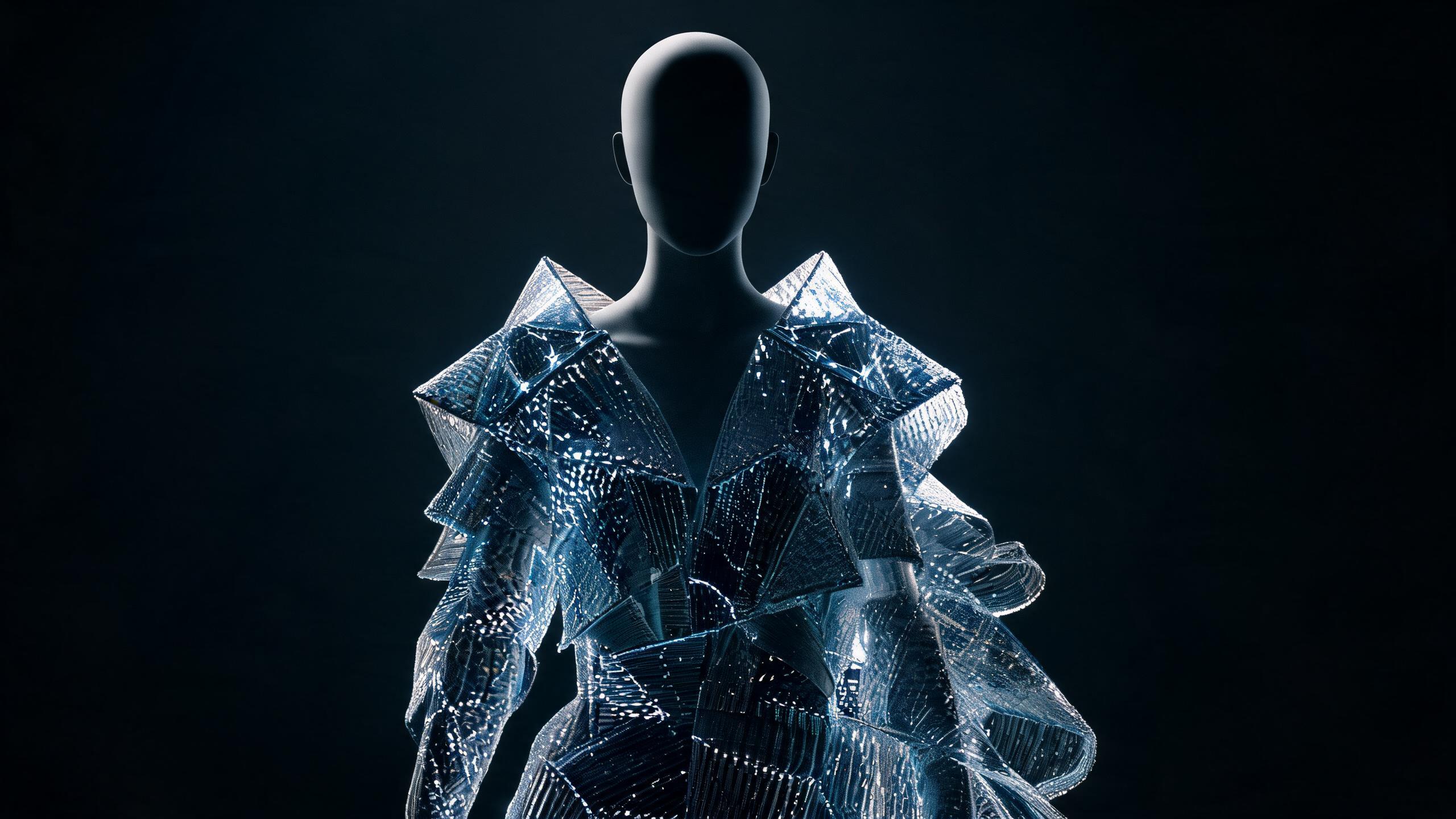
Smart Closets and Virtual Fits: 6 AI Fashion Trends for 2026

A deep dive into AI fashion trends to watch in 2026 and what it means for modern fashion.
AI fashion trends to watch in 2026 will shift from generative image creation to the industrial-scale deployment of personalized style models. The era of generic recommendation carousels is ending. In its place, AI infrastructure is emerging to treat individual taste as a compute problem rather than a marketing one.
Key Takeaway: The primary AI fashion trends to watch in 2026 focus on the industrial-scale deployment of personalized style models and virtual fittings, shifting the industry from generic recommendations to data-driven systems that treat individual taste as a compute problem.
According to McKinsey (2024), generative AI could add between $150 billion and $275 billion to the apparel, fashion, and luxury sectors' profits by 2027. This value will not come from AI-generated marketing imagery, but from the fundamental restructuring of how products are discovered, fitted, and owned. According to Gartner (2025), 40% of leading fashion retailers will deploy advanced AI-driven virtual fit tools to reduce returns by 30% or more.
The fashion industry has historically relied on broad demographic personas and seasonal cycles. This model is inefficient. By 2026, the focus will move toward the Personal Style Model (PSM)—a private, evolving data layer that understands a user's proportions, aesthetic preferences, and lifestyle constraints better than any human stylist.
How will Personal Style Models replace traditional shopping filters?
Personal Style Models are the foundation of 2026 fashion intelligence. A PSM is a machine learning model trained on your specific wardrobe, purchase history, and aesthetic feedback. It does not look for "men’s navy blazers"; it identifies garments that align with the specific visual weights, textures, and silhouettes you have previously validated.
Most fashion platforms today use keyword-based tagging. This is a 20-year-old technology that fails to capture the nuance of style. A PSM understands the "why" behind a choice, allowing the system to surface items that match a user's specific subculture or functional requirements without requiring the user to learn industry jargon. This is a shift from search-based commerce to discovery-based intelligence.
Term: Latent Style Representation — A mathematical mapping of fashion items based on visual and tactile features rather than text descriptions, allowing AI to find "visually similar" items across different brands.
Why is Latent Space Search superior to keyword filtering?
Traditional search engines are limited by the metadata assigned to an item. If a merchant forgets to tag a shirt as "minimalist," it will never show up in a minimalist search. AI-driven latent search bypasses this by analyzing the raw visual data of the garment. It understands drape, collar height, and fabric sheen through computer vision.
By 2026, search bars will disappear in favor of "style queries." You will not type "black boots." You will provide a reference image or a mood, and the AI will scan global inventory to find items that inhabit the same mathematical space. This is how you spot the next big street style trend using AI before it hits the mainstream: by tracking the movement of silhouettes in the latent space of social media and runway data.
Outfit Formula: The 2026 "Tech-Minimalist" Uniform
- Top: Seamless, 3D-knit merino base layer in obsidian.
- Bottom: Water-repellent, articulated technical trousers with internal cinch systems.
- Shoes: Modular, 3D-printed sole sneakers with recycled mesh uppers.
- Accessories: Minimalist biometric ring in matte titanium.
Can Smart Closets solve the "nothing to wear" problem?
A smart closet is not a physical device, but a digital inventory system powered by AI. By 2026, your "wardrobe" will exist as a high-fidelity digital twin. AI infrastructure will track every item you own, its wear frequency, and its compatibility with new potential purchases. This eliminates the "orphan garment" problem—buying an item that matches nothing else in your closet.
These systems use predictive logic to suggest daily outfits based on your calendar, the local weather, and your recent style evolution. If you have a high-stakes meeting at 10:00 AM and it is raining, the AI does not just suggest a suit; it suggests the specific suit that fits your current body data and pairs it with the correct waterproof outerwear. This level of beyond basic filters ensures that your closet is an active asset rather than a pile of unused fabric.
How does Kinematic Virtual Fitting change the retail experience?
Virtual try-on (VTO) has been a gimmick for years. In 2026, it becomes infrastructure. Kinematic VTO uses physics-based simulation to show how a fabric will actually move, stretch, and bunch on your specific 3D body scan. It is the difference between a static overlay and a realistic digital twin.
This technology is the primary driver in lowering fashion return rates. When a user can see that a size Medium will pull across the shoulders but a Large will be too long in the sleeves, the "bracket buying" behavior (ordering multiple sizes to return most) disappears. This is not just a convenience; it is a necessity for the economic survival of e-commerce brands facing rising logistics costs.
| Feature | 2024 Virtual Try-On | 2026 Virtual Fit Models |
| Accuracy | Static 2D overlay | 3D Kinematic simulation |
| Physics | None (Flat images) | Fabric weight and tension mapped |
| Personalization | Basic height/weight input | Full 3D biometric scan |
| Goal | Visualizing the "look" | Validating the "fit" |
👗 Want to see how these styles look on your body type? Try AlvinsClub's AI Stylist → — get personalized outfit recommendations in seconds.
What is Real-time Local Trend Extraction?
Trends no longer move in four-season cycles. They move in micro-bursts localized to specific cities or online subcultures. By 2026, AI systems will analyze geographic data to identify "hyper-local aesthetics." An AI model can detect that a specific shade of green is trending in East London three weeks before it reaches the rest of the UK.
For the consumer, this means recommendations that are contextually aware. If you are traveling from Tokyo to New York, your AI stylist will adjust your packing list and recommendation feed to align with the localized style DNA of your destination. This is style intelligence that understands environment, not just fashion.
How will AI-mediated circularity change garment resale?
The resale market is currently plagued by friction: manual photography, authentication concerns, and pricing uncertainty. AI fashion trends to watch in 2026 include the automation of the entire secondary market. Your smart closet will already have the high-res assets and metadata for every item you own.
When you are ready to move on from a piece, the AI identifies the optimal time to sell based on current market demand. It handles the listing, the pricing, and even the authentication via digital product passports (DPPs). This turns your wardrobe into a liquid asset. AI does not just help you buy; it manages the entire lifecycle of the garment.
Why is Dynamic Taste Profiling the end of "Style Quizzes"?
Static style quizzes are useless because taste is not static. It is a moving target. Dynamic taste profiling uses reinforcement learning to update your style model every time you interact with a piece of content or a garment. If you start showing interest in more structured silhouettes, the model shifts its weights in real-time.
By 2026, your AI stylist will know you have entered a "minimalist phase" before you have even articulated it. It notices the subtle shift in the items you dwell on or the colors you interact with. This is the difference between an algorithm that follows you and a model that evolves with you. It is the future of luxury fashion retail in 2026.
How does AI-driven design language synthesis work?
Designers are beginning to use AI to synthesize new design languages by blending disparate influences. In 2026, this will trickle down to the consumer level. You will be able to ask your AI to "reimagine this vintage coat with a modern, technical edge." The system can then find a tailor or a 3D-printing service to modify an existing garment or create a new one.
This blurs the line between consumer and creator. When AI can understand the underlying "grammar" of a brand’s design language—the specific curves, seam placements, and material choices—it can help users customize their wardrobe to a degree previously reserved for bespoke tailoring.
What is the role of Predictive Wardrobe Maintenance?
AI in 2026 will extend into the physical care of clothing. By tracking wear data and material composition, AI systems will predict when a garment needs professional cleaning, repair, or pilling removal. It will alert you before a seam fails or a fabric degrades.
This is part of the shift toward "quiet luxury" and durability. AI infrastructure rewards quality over quantity by helping users maintain what they own. It can even connect you to local repair artisans who specialize in the specific materials of your garment, creating a data-driven maintenance ecosystem.
How will Autonomous Styling Infrastructure replace human stylists?
The human stylist is a luxury few can afford. Autonomous styling infrastructure provides that same level of expertise at a marginal cost. By 2026, these systems will not just suggest clothes; they will explain the "why." They will use color theory, golden ratio proportions, and historical context to justify an outfit recommendation.
This is not about "trends." It is about the logic of aesthetics. If an AI suggests a specific trouser length, it is because it has calculated the visual break that best complements your height and shoe choice. This is data-driven style intelligence that educates the user rather than just selling to them.
Do vs. Don't: 2026 AI Fashion Strategy
| Do | Don't |
| Focus on building a private, high-fidelity Style Model. | Rely on public trend lists or "popular" sections. |
| Use 3D kinematic fit data to eliminate returns. | Trust 2D size charts or "true to size" labels. |
| Prioritize AI-mediated circularity for wardrobe liquidty. | Buy "disposable" fashion with no resale value. |
| Invest in infrastructure that learns from your behavior. | Use apps with static filters and manual tagging. |
Comparison of AI Fashion Implementation Strategies
| Strategy | Best For | Technical Effort | Impact on UX |
| Personal Style Models | Individualized Curation | High | Transformative |
| Latent Search | Visual Discovery | Medium | High Efficiency |
| Kinematic VTO | Reducing Returns | High | Maximum Trust |
| Smart Closets | Inventory Management | Medium | High Utility |
| Local Trend Extraction | Contextual Relevance | Low | High Freshness |
The transition to AI-native fashion commerce is not a choice; it is a structural necessity. The current model of "mass-production followed by mass-marketing" is too wasteful to survive. 2026 will be defined by systems that understand the individual better than the crowd.
AlvinsClub uses AI to build your personal style model. Every outfit recommendation learns from you, ensuring your digital wardrobe is as intelligent as the rest of your life. Try AlvinsClub →
Summary
- The shift from generative image creation to the industrial-scale deployment of Personal Style Models is among the primary AI fashion trends to watch in 2026.
- Generative AI is estimated to add between $150 billion and $275 billion to the profits of the apparel and luxury sectors by 2027 through fundamental shifts in product discovery.
- Industry analysts predict that 40% of leading retailers will implement virtual fit tools as part of the AI fashion trends to watch in 2026 to lower return rates by at least 30%.
- Personal Style Models serve as private machine learning layers that replace traditional search filters by analyzing a user's specific proportions, aesthetic preferences, and wardrobe history.
- The industry is transitioning toward individualized intelligence that moves beyond broad demographic personas to address specific visual weights and lifestyle constraints.
Frequently Asked Questions
What are the top AI fashion trends to watch in 2026?
AI fashion trends to watch in 2026 focus on the deployment of personalized style models and the integration of smart closet technology into daily life. These innovations shift the industry from generic recommendations toward sophisticated systems that analyze individual taste as a complex data problem. This transition is expected to generate significant revenue for global apparel and luxury sectors by optimizing consumer engagement.
How does a smart closet work with artificial intelligence?
Smart closets utilize computer vision and machine learning algorithms to catalog every item in a user's wardrobe for automated outfit planning. The AI analyzes historical wear patterns and current weather data to suggest the most appropriate combinations for any given day. Over time, these systems identify which items are underutilized, helping consumers make more sustainable and informed fashion choices.
What are virtual fits in the apparel industry?
Virtual fits use 3D body scanning and augmented reality to show consumers how clothing will actually look and hang on their unique frames. This technology reduces the uncertainty of online shopping by providing a highly accurate digital representation of size and drape. By 2026, virtual fitting rooms will be an essential tool for retailers looking to minimize high return rates and improve customer satisfaction.
Why are AI fashion trends to watch in 2026 focused on personalization?
The focus of AI fashion trends to watch in 2026 is moving toward personalization because consumers now demand shopping experiences tailored specifically to their aesthetic. Generative AI allows brands to process vast amounts of individual data to predict unique style preferences rather than relying on broad marketing segments. This shift enables the fashion industry to treat personal taste as a scalable technological solution rather than a traditional promotional challenge.
Can AI predict individual style preferences for luxury shoppers?
Artificial intelligence predicts luxury style preferences by analyzing deep aesthetic data and previous purchasing behavior to forecast future desires. High-end brands use these models to offer hyper-relevant product suggestions that maintain the feeling of a bespoke personal shopping experience. This predictive capability allows luxury houses to manage inventory more effectively while strengthening the bond with their elite clientele.
How will AI fashion trends to watch in 2026 impact the global retail market?
The AI fashion trends to watch in 2026 will drive massive growth in the retail sector by adding hundreds of billions of dollars in potential profit. These trends enable companies to transition from mass-market strategies to infrastructure-based models that prioritize individual customer data. As these AI systems become more prevalent, they will fundamentally change how fashion is produced, marketed, and consumed on a global scale.
This article is part of AlvinsClub's AI Fashion Intelligence series.
Related Articles
- 5 Ways to Spot the Next Big Street Style Trend Using AI
- Beyond the Boutique: The AI-Driven Future of Luxury Fashion Retail in 2026
- The Fit Revolution: How AI is Finally Lowering Fashion Return Rates
- Decoding the Red Carpet: What AI Reveals About Met Gala Style
- Beyond Basic Filters: 6 Ways to Improve Fashion AI Recommendations