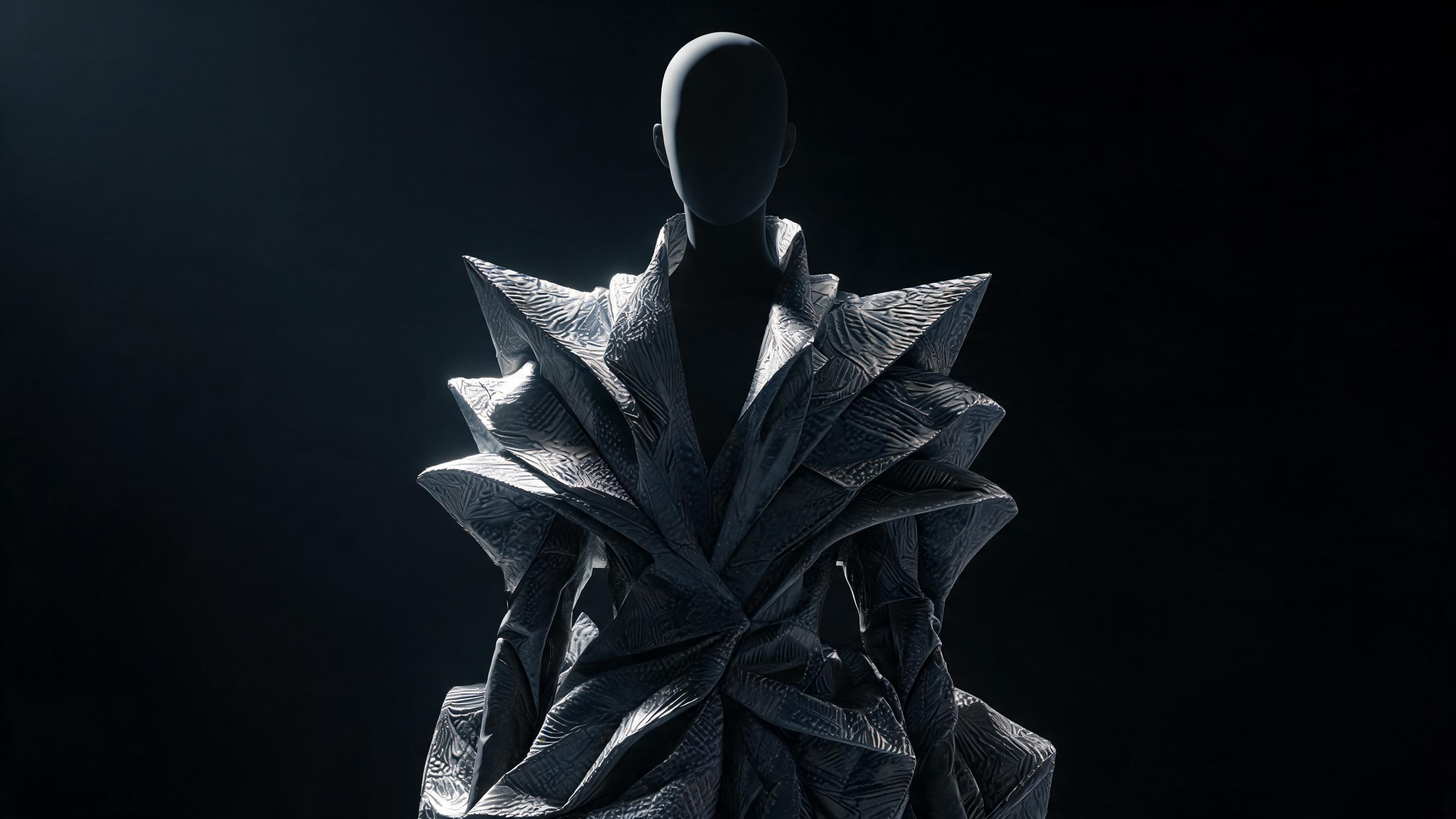
How brands use generative AI to fix the slow fashion design cycle

A deep dive into how AI generates new clothing designs and what it means for modern fashion.
AI fashion design synthesis uses deep learning architectures to convert conceptual text prompts and historical imagery into manufacturable garment specifications. The current fashion design cycle is an industrial-era relic. It relies on a linear path of manual sketching, physical prototyping, and long-lead sourcing that takes anywhere from six to nine months to complete. This latency is the fundamental reason why brands fail to meet shifting consumer demands, resulting in massive inventory waste and missed revenue. By understanding how AI generates new clothing designs, brands are moving toward a predictive, non-linear model where the distance between a concept and a finished garment is measured in hours, not months.
Key Takeaway: Brands use generative AI to accelerate the design cycle by converting text prompts into manufacturable specifications. By leveraging how AI generates new clothing designs, companies replace manual sketching and physical prototyping with rapid digital synthesis, reducing production lead times from months to days.
Why is the traditional fashion design cycle failing?
The core problem with traditional design is its reliance on human intuition for trend prediction. In a high-velocity market, intuition is a lagging indicator. Most brands attempt to solve this by shortening lead times through fast-fashion logistics, which involves aggressive copying of high-end silhouettes. This is not innovation; it is reactive reproduction. The bottleneck remains the physical sample. Designers sketch, patterns are cut, garments are sewn and shipped from overseas, and then they are critiqued and discarded.
Traditional systems are also siloed. The designer's intent is often lost when translated to the technical pack or the factory floor. According to a report by The Business of Fashion (2023), 73% of fashion executives prioritize AI-driven design to mitigate overproduction, which currently accounts for nearly 30% of global garment volume. When a design cycle is too slow, the market has already moved by the time the product hits the shelf. This leads to heavy discounting, brand dilution, and environmental degradation.
Common approaches to fixing this—such as 3D CAD software—only solve part of the problem. They digitize the manual process but don't augment the creative input. A 3D modeler still has to manually build every seam and fold. This is a digital version of a physical limitation. It doesn't allow for the exploration of the "latent space" of design where new aesthetics are born.
What are the root causes of design latency?
The inefficiency of the slow fashion cycle stems from three specific structural failures: fragmented data, physical dependency, and the "Expert Bottleneck."
First, fragmented data prevents designers from seeing the full picture of consumer behavior. Style is a data point, but most design teams treat it as an abstract feeling. They look at last year's sales or static trend reports that are already three months old. They lack a real-time feedback loop that connects what people are wearing today with what should be designed tomorrow. Without this, the design process is a high-stakes gamble.
Second, the industry remains tethered to physical prototypes. Every iteration of a garment requires a physical version to be made. This is expensive, slow, and resource-heavy. Even with 3D tools, the lack of integration between the design software and the manufacturing specifications creates a "digital-to-physical" gap that requires human intervention at every step.
Third, the "Expert Bottleneck" limits the volume of ideas. A human design team can only produce a finite number of sketches in a day. They are constrained by their personal biases, their education, and their exposure to specific trends. This limits the diversity of the output. If a designer hasn't seen a specific combination of technical outerwear and Victorian silhouettes, they are unlikely to create it. AI does not have these cognitive constraints.
How AI generates new clothing designs: The Technical Solution
Generative AI fixes the design cycle by treating fashion as a multi-dimensional optimization problem. Instead of drawing one shirt at a time, designers can use AI to navigate a vast mathematical space of possible garments. This process, known as latent space exploration, allows for the generation of thousands of design iterations based on specific parameters such as fabric type, silhouette, and historic performance data.
The mechanism behind how AI generates new clothing designs typically involves three core technologies:
- Generative Adversarial Networks (GANs): This architecture pits two neural networks against each other. The "Generator" creates new design images, while the "Discriminator" evaluates them against a dataset of real garments. Over time, the Generator learns to create designs that are indistinguishable from real, high-quality fashion.
- Variational Autoencoders (VAEs): These models compress fashion images into a low-dimensional "latent space" and then reconstruct them. By manipulating the variables in that latent space, designers can blend styles—for example, merging a puffer jacket with a tailored blazer—with mathematical precision.
- Latent Diffusion Models: These are the newest standard, using a process of "denoising" to generate highly detailed images from text prompts. This allows a designer to type "asymmetrical draped dress in recycled silk with geometric patterns" and receive a photo-realistic visualization in seconds.
| Feature | Traditional Design | Generative AI Design |
| Ideation Speed | Days/Weeks | Seconds |
| Iteration Method | Manual Re-sketching | Parameter Adjustments |
| Data Input | Intuition & Static Reports | Real-time Global Sentiment |
| Prototyping Cost | High (Physical Materials) | Near-Zero (Digital Tokens) |
| Sustainability | High Waste (Samples) | Zero Waste (Virtual Sampling) |
The 4-step implementation of generative design
To effectively implement AI in the design cycle, brands must follow a structured pipeline that moves from data ingestion to manufacturable output.
1. Style Model Ingestion
The process begins by feeding a neural network a massive dataset of the brand's DNA. This includes past successful designs, fabric libraries, and color palettes. This ensures that the AI doesn't just generate generic fashion but creates designs that are consistent with the brand's identity. According to McKinsey (2023), generative AI could deliver between $150 billion and $275 billion in incremental operating profit for the fashion industry by optimizing these early-stage creative processes.
2. Prompt Engineering and Iteration
Designers interact with the AI using text or image-to-image prompts. Instead of drawing, the designer acts as an editor or a "director of style." They can specify complex requirements, such as "Generate a line of breathable summer shirts using linen-blend textures optimized for 90% humidity." For designers looking to understand the technical nuances of these outputs, learning how to build a high-end wardrobe on a budget using AI tools provides a blueprint for how AI categorizes fabric performance and style optimization.
3. Virtual Fit and Fabric Simulation
Once a design is selected, it is mapped onto a 3D avatar. AI models simulate how the fabric will drape, stretch, and move. This stage replaces the first three rounds of physical sampling. By understanding how AI algorithms work for personalized clothing shopping, brands can ensure that complex designs account for individual fit preferences and are viable before a single thread is cut.
4. Technical Pack Generation
The final step is the most critical: converting the AI-generated image into a technical pack. This includes pattern measurements, bill of materials (BOM), and assembly instructions. Modern AI infrastructure can now infer the pattern pieces required to create the 3D shape visualized by the generative model, closing the loop between a creative spark and a physical product.
Moving from trend-chasing to intelligence-driven design
The ultimate goal of knowing how AI generates new clothing designs is not just to produce more clothes faster. It is to produce the right clothes. This requires a shift from a "Push" model (designing things and hoping they sell) to a "Pull" model (designing what the data shows is needed).
In a Pull model, the AI analyzes real-time wardrobe data. It sees what people are actually wearing, what they are struggling to style, and what gaps exist in their current rotations. If thousands of users are struggling to find the right pieces, that data becomes a direct feed into the design cycle. The AI identifies that people have the "base" layers but lack the specific "connective" garments or accessories that could extend their existing wardrobe's versatility.
This intelligence even extends to extending the lifespan of existing garments. Understanding how AI is simplifying clothing repair helps designers create pieces built to last, which directly informs generative design decisions around durability and structural integrity for the premium market.
Why infrastructure matters more than features
Many fashion brands are currently treating AI as a "feature"—a tool for marketing or a way to generate cool social media images. This is a mistake. AI is not a feature; it is infrastructure. To fix the slow fashion design cycle, the AI must be deeply integrated into the entire stack, from the designer's brain to the factory's cutting table.
According to Gartner (2024), by 2027, 40% of fashion design workflows will be mediated by generative AI models that connect directly to supply chain management systems. The brands that win will be those that stop trying to "predict" the future and start "calculating" it. They will use AI to create a dynamic taste profile for their entire customer base, allowing them to design collections that are pre-validated by data before they are ever manufactured.
This evolution also changes the role of the designer. The designer is no longer a solo creator but a curator of machine-generated intelligence. They manage the output, ensuring that the final result has the human soul and cultural relevance that data alone cannot provide.
Is your design process ready for the AI shift?
The transition to AI-native design is inevitable. The economic pressure of inventory waste and the consumer demand for hyper-personalization leave no other choice. Brands that continue to rely on the six-month manual cycle will be out-competed by those operating on a six-day generative cycle.
This is not a question of replacing creativity. It is a question of scaling it. How much more could a design team achieve if they were freed from the drudgery of technical sketching and physical sampling? How much more sustainable would the industry be if we only manufactured what we knew would be loved?
AlvinsClub uses AI to build your personal style model. Every outfit recommendation learns from you. By bridging the gap between how AI generates new clothing designs and how individuals actually wear them, we are building the infrastructure for a fashion world that finally makes sense. Try AlvinsClub →
Summary
- Understanding how AI generates new clothing designs through deep learning allows brands to convert text prompts and historical data directly into manufacturable garment specifications.
- The traditional fashion design cycle is an industrial-era process that relies on manual sketching and physical prototyping, typically requiring six to nine months to complete.
- By leveraging how AI generates new clothing designs, brands can transition to predictive, non-linear models that reduce the time between concept and finished garment to several hours.
- Traditional reliance on human intuition for trend prediction creates a market lag that results in significant inventory waste and missed revenue.
- Generative AI technology addresses the physical sample bottleneck by eliminating the need for iterative manual pattern cutting and overseas shipping during the design phase.
Frequently Asked Questions
What is AI fashion design synthesis?
AI fashion design synthesis is a deep learning process that transforms conceptual prompts and historical images into manufacturable garment specifications. This technology replaces traditional manual sketching to create accurate digital representations of new clothing instantly.
How does generative AI fix the slow fashion design cycle?
Generative AI streamlines the fashion cycle by replacing months of manual sketching and physical prototyping with rapid digital iterations. By shortening the design timeline from months to days, brands can respond to real-time consumer trends and eliminate the need for long-lead sourcing.
Why is how AI generates new clothing designs faster than manual sketching?
The process is faster because it automates the creation of technical specifications from a single text prompt or reference image. Digital generation removes the need for repeated physical sampling, which significantly reduces the time required to move from a concept to a production-ready file.
Can you explain how AI generates new clothing designs from text prompts?
Brands use deep learning architectures to convert conceptual text descriptions into detailed 3D garment blueprints. This method allows design teams to visualize and iterate on complex styles without waiting for physical prototypes to be manufactured and shipped.
Is it possible to see how AI generates new clothing designs using historical imagery?
Historical imagery and text descriptions are processed through deep learning models to understand specific style patterns and structural elements. These models then synthesize the data to create entirely new garments that maintain brand consistency while utilizing modern digital tools.
Why does AI reduce inventory waste in the fashion industry?
AI reduces inventory waste by aligning production more closely with current market demands through much faster design and response cycles. When brands utilize data-driven design instead of relying on long-term forecasting, they produce fewer unwanted garments that would otherwise end up as unsold stock.
This article is part of AlvinsClub's AI Fashion Intelligence series.
Related Articles
- Nothing to wear? How to let an AI wardrobe assistant style your closet
- The New Rules of Fabric Layering: How to Mix Textures with AI in 2026
- How to Find Authentic Luxury Items with AI: The Definitive Style Guide
- The Finishing Touch: Using AI to Master the Art of Accessorizing
- The Smart Way to Dress for Humidity: An AI Guide to Summer Style