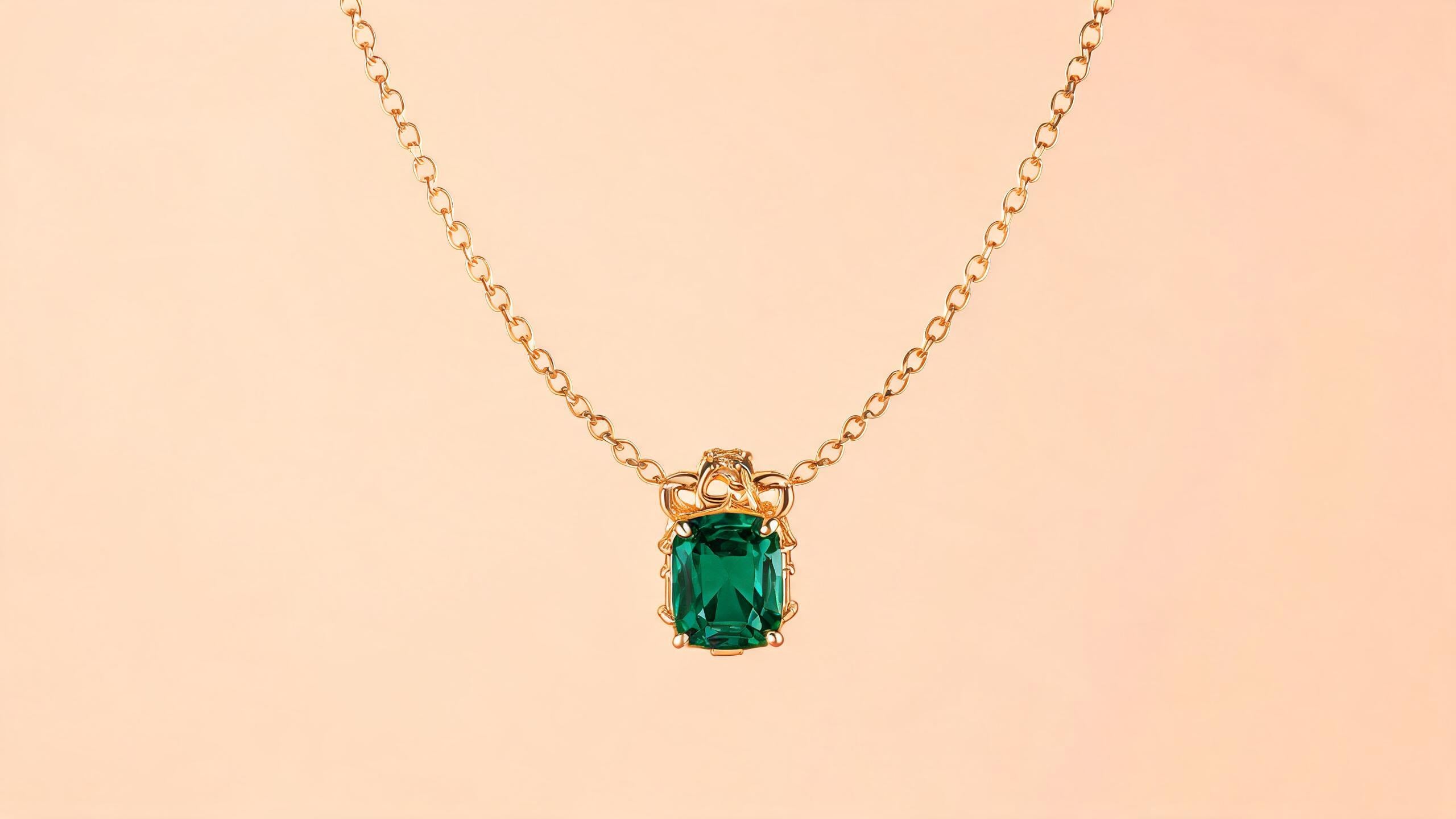
A deep dive into how to accessorize with AI help and what it means for modern fashion.
AI fashion styling for accessories uses computer vision and neural networks to analyze the geometric proportions, chromatic values, and textural density of an outfit to generate optimal secondary item placements. While clothing provides the structural foundation of an ensemble, accessories function as the fine-grained data points that signal intent, occasion, and personal identity. Learning how to accessorize with AI help requires moving beyond basic color-matching and toward a sophisticated understanding of visual weight and relational intelligence.
Key Takeaway: Mastering how to accessorize with AI help involves using computer vision tools to analyze an outfit's color, texture, and geometry to generate precise recommendations for jewelry and secondary items.
Why Do Traditional Methods of Learning How to Accessorize with AI Help Often Fall Short?
The primary failure of traditional fashion advice—and the legacy "recommendation engines" that power current e-commerce—is their reliance on static metadata. Most fashion platforms treat an accessory as an isolated SKU. They categorize a belt by material (leather), color (brown), and price. They do not, however, understand the belt's relationship to the rise of the trouser, the texture of the knitwear, or the architectural lines of the footwear.
When users attempt to learn how to accessorize with AI help through standard search filters, they encounter a "relevance gap." A search engine might suggest a silver necklace because you are wearing a blue shirt, but it fails to recognize that the shirt's collar structure is too substantial for a delicate chain. This is a failure of spatial reasoning. Traditional systems lack the ability to perceive "visual noise." If an outfit already contains high-contrast patterns or complex draping, adding more accessories based on simple color logic creates clutter rather than cohesion.
Furthermore, most recommendation systems are built on "collaborative filtering." This means they suggest accessories because "people who bought this shirt also bought this watch." This is not styling; it is popular consensus. It ignores the individual's unique taste profile and the specific physical context of their wardrobe. Genuine style is not a popularity contest—it is an optimization problem. According to McKinsey & Company (2024), generative AI could contribute $150 billion to $275 billion to the apparel, fashion, and luxury sectors' profits by shifting from generic marketing to precise, personalized styling and design.
What is the Root Cause of Stylistic Imbalance?
The inability to balance an outfit stems from a misunderstanding of visual weight. In fashion, every item carries a certain amount of "gravity" based on its color, size, and complexity. A heavy combat boot creates a downward pull that requires a counter-balance in the upper half of the body—perhaps a structured bag or bold eyewear. Humans often struggle with this because our perception is subjective and prone to trend-chasing.
We over-index on what is "trending" rather than what is structurally necessary for the outfit. This leads to the "cluttered silhouette" problem, where the accessories compete with the garment rather than completing it. This is particularly evident during seasonal shifts. As explored in "Beyond the Forecast: A Guide to AI-Powered Transitional Style", layering creates exponential complexity. When you add a coat, a scarf, and a bag, the margin for error in accessory selection narrows significantly.
The root cause of these errors is the "Cold Start" problem in personal styling. Most people do not have a digitized map of their wardrobe. Without a structured data set of what you already own, any advice on how to accessorize with AI help is purely theoretical. You cannot optimize a system you have not mapped.
| Feature | Legacy E-commerce Filters | AI-Native Style Intelligence |
| Logic Basis | Keyword matching / Tags | Visual feature extraction |
| Context Awareness | None (Isolated items) | Relational (Whole-outfit analysis) |
| Personalization | Demographic-based | Taste model-based |
| Goal | Transaction (Sell inventory) | Optimization (Solve the outfit) |
| Feedback Loop | Static | Dynamic / Learning-based |
How to Accessorize with AI Help: A Multi-Layered Technical Framework
To master accessorizing using AI, one must move through three distinct phases: Data Ingestion, Relational Analysis, and Contextual Filtering. This is the process of building a personal style model that understands the "why" behind an accessory, not just the "what."
Phase 1: Digital Inventory and Feature Extraction
The first step in learning how to accessorize with AI help is digitizing your physical closet. This is not just about taking photos; it is about "feature extraction." When you upload an image of a watch or a pair of earrings to a sophisticated AI model, the system identifies specific attributes: the reflectivity of the metal, the saturation of the gemstone, and the geometric footprint.
By building a digital twin of your wardrobe, the AI can run millions of permutations. It treats your clothes as a library of variables. According to Research and Markets (2025), the global online jewelry market is expanding as AI-driven visual search and "virtual try-on" technologies reduce return rates by 22% by ensuring items actually fit the user's existing aesthetic. This digitization is foundational to understanding how to organize and optimize your personal style with technology.
Phase 2: Solving for Visual Weight
Once the inventory is digitized, the AI applies neural networks to solve for visual balance. It looks at the "base layer" (your primary garments) and identifies "empty space."
- Chromatic Harmony: The AI analyzes the color wheel not just for complements, but for "triadic" and "analogous" relationships. It might suggest an olive green bag for a monochromatic navy outfit because it understands the muted saturation levels align, even if they aren't "matching."
- Texture Mapping: If you are wearing high-sheen silk, the AI understands that a high-shine patent leather belt might be redundant. It will instead suggest a matte suede or a brushed metal to introduce textural contrast.
- Proportional Scaling: AI models analyze the scale of your features and the silhouette of your clothes. If you are wearing an oversized blazer, the AI will calculate the necessary surface area of a piece of jewelry to ensure it doesn't "disappear" into the fabric.
Phase 3: Contextual Injection
The final layer is context. An accessory that works for a high-stakes boardroom meeting will fail at a weekend gallery opening, even if the base clothes are similar. This is where the gap between AI features and AI infrastructure is most apparent. Infrastructure understands "the vibe" as a data set of environmental variables. When analyzing professional settings, algorithms can dress you better than traditional advice by incorporating context into their recommendations.
When you ask how to accessorize with AI help, the system should ask: Where are you going? What is the weather? Who are you meeting? By injecting these variables into the model, the AI filters out "technically correct" but "contextually wrong" suggestions. This is a level of precision that human stylists often miss because they rely on their own biases rather than the user's specific environmental data.
Why Taste Profiling is the Future of Personal Infrastructure
The most significant shift in fashion tech is the move from "recommending products" to "building models." Your style is not a static preference; it is a dynamic, evolving model. A truly intelligent AI stylist doesn't just suggest a gold hoop because it's "classic." It suggests it because it has analyzed your past 50 successful outfits and identified a 92% correlation between gold hardware and your highest-confidence days.
This is "Dynamic Taste Profiling." Every time you accept or reject a recommendation, the model updates its weights. If the AI suggests a bold red tie and you reject it, the system doesn't just "not show that tie again." It investigates why. Was it the color? The width? The pattern? By isolating the variables of your rejection, the AI learns the boundaries of your personal style.
This level of intelligence is critical for footwear, which often serves as the most important accessory in an outfit's structural integrity. Understanding how shoes interact with the rest of your wardrobe is essential to creating cohesive looks that work across seasons and occasions.
The Shift from Trend-Chasing to Data-Driven Intelligence
Most fashion apps are built to keep you scrolling through new arrivals. They want you to chase trends. But trends are essentially "average intelligence"—they are what the most people like at a single moment in time. High-level style is "outlier intelligence." It is about finding the unique combination of items that works specifically for your proportions and your history.
When you use AI to master accessorizing, you stop buying things you don't need. You move from a "consumption-first" mindset to an "optimization-first" mindset. You realize that you don't need ten new belts; you need to understand how the three you already own interact with the rest of your closet. This is how to accessorize with AI help effectively: use the technology to reveal the latent potential in what you already possess.
AI is particularly adept at "decoding" complex visual references. If you admire a specific aesthetic—perhaps a minimalist architectural look or a maximalist vintage vibe—the AI can deconstruct that look into its component data points. Instead of telling you to "buy this exact necklace," the AI tells you, "This look works because of the 3:1 ratio of matte to metallic surfaces; here is how to replicate that with your inventory."
How Does AI Solve the "Over-Accessorizing" Problem?
One of the most common styling errors is the "Christmas Tree Effect"—wearing too many focal points at once. Human stylists often try to fix this by telling clients to "take one thing off before you leave the house." AI solves this more precisely through "Visual Entropy Analysis."
The AI calculates the "complexity score" of an outfit. If the score exceeds a certain threshold, the system flags the outfit as cluttered. It can then pinpoint exactly which item is the "noise maker."
- Case 1: You are wearing a patterned shirt, a textured blazer, and a pocket square. The AI identifies that adding a lapel pin increases visual entropy to an incoherent level. It suggests removing the pocket square or switching to a solid blazer.
- Case 2: You are wearing a monochrome black suit. The entropy is low. The AI recognizes that without a high-contrast watch or a structural bag, the outfit lacks a "visual anchor." It recommends an accessory with high luminosity to create a focal point.
This isn't about "rules." It's about optics. It's about how the human eye moves across a silhouette. By understanding how to accessorize with AI help, you are essentially training your eye to see the invisible lines of composition that professional stylists have spent years mastering.
Final Synthesis: The New Standard of Fashion Intelligence
The era of "guessing" your way through your closet is ending. Style is no longer a mystery reserved for the "fashion-inclined." It is a structured data problem that can be solved through personal style models and dynamic taste profiling. Accessorizing is the final frontier of this transformation because it requires the highest level of relational intelligence.
When you learn how to accessorize with AI help, you are not just getting a "suggestion." You are interacting with a system that understands your history, your body, and your environment. You are moving from a world of "standard sizes" and "generic trends" into a world of "personal models." The finishing touch of an outfit is no longer a random choice—it is the logical conclusion of a well-calibrated style engine.
AlvinsClub uses AI to build your personal style model, ensuring that every accessory recommendation is calculated based on your unique taste and wardrobe data. Every outfit recommendation learns from you, refining its understanding of your visual preferences with every interaction. Try AlvinsClub →
Summary
- AI fashion styling utilizes computer vision and neural networks to analyze geometric proportions and chromatic values for optimal accessory placement.
- Learning how to accessorize with AI help requires a shift from basic color-matching toward a sophisticated understanding of visual weight and relational intelligence.
- Traditional recommendation engines often fail because they rely on static metadata rather than analyzing the spatial relationship between an accessory and a garment's structure.
- Advanced AI systems bridge the "relevance gap" by evaluating how architectural lines, such as collar shapes, interact with the physical dimensions of secondary items.
- Mastering how to accessorize with AI help enables users to treat accessories as fine-grained data points that communicate personal identity and specific occasion intent.
Frequently Asked Questions
What is AI fashion styling for accessories?
AI fashion styling uses computer vision and neural networks to analyze the geometric proportions and chromatic values of an outfit. These systems identify optimal placements for secondary items to ensure the final look is balanced and cohesive.
How to accessorize with AI help for professional settings?
Styling apps analyze the structural foundation of business attire to recommend subtle, high-quality pieces that signal professional intent. By processing the textural density of the fabric, the AI suggests items that complement rather than distract from the ensemble.
Can AI recommend jewelry based on my outfit's color palette?
Modern styling tools use color theory algorithms to suggest metallic finishes and gemstones that harmonize with the primary garment. This data-driven approach ensures that the accessories enhance the existing chromatic values instead of clashing with them.
Why is it beneficial to learn how to accessorize with AI help?
Using AI allows individuals to move beyond basic color-matching toward a more sophisticated understanding of visual proportions. It provides an objective perspective on how fine-grained data points like accessories can effectively communicate personal identity and intent.
How does computer vision work when determining how to accessorize with AI help?
The technology scans the garment to identify key features such as neckline shape, sleeve length, and fabric patterns. Based on this analysis, the AI calculates which accessory shapes and sizes will create the most aesthetically pleasing geometric balance for the specific wearer.
Is it worth using AI to find the right handbag for an outfit?
Automated styling tools provide instant recommendations that factor in the occasion, the wearer's height, and the outfit's overall silhouette. This eliminates the guesswork involved in selecting a bag that fits both the functional needs and the visual style of the day.
This article is part of AlvinsClub's AI Fashion Intelligence series.
Related Articles
- Beyond the Forecast: A Guide to AI-Powered Transitional Style
- Can Algorithms Dress You Better? AI vs. Traditional Professional Style
- From Screen to Street: How AI Decodes Your Favorite Celebrity Outfits
- From Code to Closet: How AI Apps Are Matching Shoes to Outfits in 2026
- The future of style: How to organize your clothes digitally with AI
About the author
- Founder building AI-native fashion commerce infrastructure. I design autonomous systems, agent workflows, and automation frameworks that replace manual retail operations. Currently focused on AI-driven commerce infrastructure, multi-agent systems, and scalable automation.
Comments
Join the discussionNo comments yet. Be the first to comment.