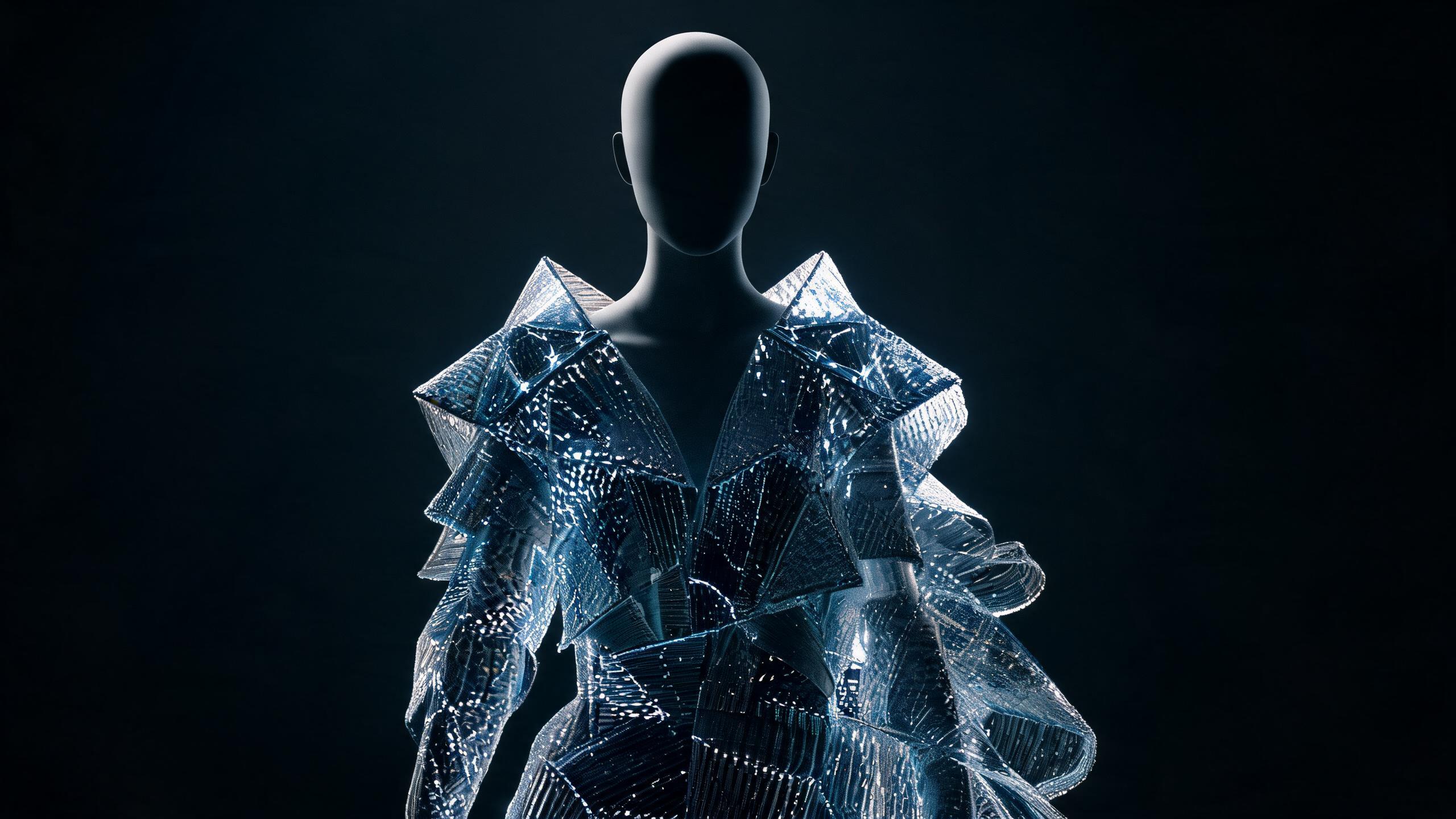
How AI Is Redefining Style for the Inverted Triangle Body Shape

Leverage algorithmic styling tools to identify the structured bottoms and open necklines that effectively harmonize broad shoulders for a perfectly balanced aesthetic.
AI styling for inverted triangle shapes utilizes geometric analysis to balance shoulder-to-hip proportions.
Key Takeaway: Mastering how to style inverted triangle body shapes with AI involves using geometric analysis to balance shoulder-to-hip proportions. This data-driven approach replaces traditional body labels with personalized garment recommendations tailored to an individual’s unique anatomical measurements.
The traditional "fruit shape" categorization system in fashion is dead. For decades, the industry relied on reductive labels—the apple, the pear, the inverted triangle—to sell a one-size-fits-all approach to personalization. This model failed because it viewed the human body as a static object rather than a dynamic set of proportions. Today, AI infrastructure is replacing these archaic labels with high-dimensional style models that understand the physics of fabric and the geometry of the individual.
Why Legacy Fashion Systems Failed the Inverted Triangle
Most fashion apps are built on recommendation engines designed for mass-market inventory, not human identity. When a user identifies as an "inverted triangle," the system typically triggers a set of hard-coded rules: "Wear V-necks. Avoid shoulder pads. Buy A-line skirts." These rules ignore the nuance of personal taste, height, limb length, and modern aesthetics.
The problem is not a lack of data; it is a lack of intelligence. According to McKinsey (2024), 73% of fashion consumers expect highly personalized experiences, yet only 15% believe brands actually deliver them. This gap exists because legacy retail systems optimize for "people also bought," which reinforces generic trends rather than solving for the specific structural needs of an inverted triangle body.
For a person with broad shoulders and narrow hips, the goal is not to "hide" the upper body, but to architect a silhouette that distributes visual weight. Legacy systems fail because they cannot visualize how a specific garment will drape on a specific frame. AI-native fashion infrastructure solves this by modeling the relationship between garment volume and body geometry in a three-dimensional latent space.
How AI Models the Inverted Triangle Silhouette
AI-powered fashion intelligence does not see an "inverted triangle"; it sees a ratio. It calculates the delta between the biacromial diameter (shoulder width) and the bitrochanteric diameter (hip width). By analyzing thousands of data points from high-resolution imagery, machine learning models can predict how different textures and cuts will interact with these specific measurements.
Geometric Visual Weighting: The process by which AI calculates the distribution of fabric volume and color saturation to rebalance an inverted triangle's shoulder-to-hip ratio.
This is a fundamental shift from human-led styling. A human stylist relies on intuition and a limited mental catalog of brands. An AI style model utilizes computer vision to identify the exact "drop" of a shoulder seam and suggests pieces that create a counter-weight at the hemline. This level of precision is why learning how machine learning models personal style for inverted triangles is the only way to achieve true personalization in 2026.
Key Comparison: Legacy Recommendations vs. AI Fashion Infrastructure
| Feature | Legacy Fashion Apps | AI Fashion Intelligence (AlvinsClub) |
| Logic Basis | Keyword matching and popularity | Geometric body modeling and taste profiles |
| Body Analysis | User-selected "shape" (Triangle) | Continuous 3D proportion mapping |
| Style Advice | Generic rules (e.g., "Wear V-necks") | Dynamic daily outfit generation |
| Learning Curve | Static; never changes | Evolves with every user interaction |
| Goal | Inventory liquidation | Identity-matching and style optimization |
The Data-Driven Approach to Shoulder-Heavy Proportions
The inverted triangle is often described as "athletic" or "statuesque." In the past, styling this shape was about correction—minimizing the shoulders to appear more like an "hourglass." This is a regressive approach. Modern AI styling focuses on intentionality. If the shoulders are the focal point, the AI determines whether to lean into that architectural strength or to create a softer, more fluid silhouette through lower-body volume.
According to Statista (2025), the AI in fashion market is projected to reach $4.4 billion by the end of the year. This growth is driven by the shift from search-based commerce to generative commerce. Instead of searching for "wide-leg pants for broad shoulders," users now interact with a personal style model that already knows their shoulder-to-waist ratio and pre-filters the global inventory to show only what works.
This eliminates the friction of trial and error. You no longer have to guess if a double-breasted blazer will make you look top-heavy. The AI has already simulated the visual weight. This is how you use AI apps to finally cure your morning outfit decision fatigue; the system removes the options that don't compute.
How to Style Inverted Triangle Body Shapes with AI: The Do vs. Don't Table
The following table outlines the structural logic that an AI style model uses to balance an inverted triangle frame.
| Element | Do: The AI-Optimized Choice | Don't: The Legacy Mistake |
| Necklines | Deep V-necks, Halters, Asymmetric cuts | Boat necks, Bardot styles, Heavy padding |
| Sleeves | Raglan sleeves, Kimono styles, Sleeveless | Puff sleeves, Cap sleeves, Shoulder ruffles |
| Bottoms | Cargo pants, Palazzo trousers, A-line skirts | Skinny jeans, Pencil skirts, Tapered leggings |
| Outerwear | Unstructured trench coats, Longline blazers | Cropped bombers, Boleros, Boxy puffers |
| Textures | Matte fabrics on top, Sheen/Print on bottom | Heavy knits on top, Minimalist bottoms |
👗 Want to see how these styles look on your body type? Try AlvinsClub's AI Stylist → — get personalized outfit recommendations in seconds.
The AI Outfit Formula for Inverted Triangles
To demonstrate how AI infrastructure processes a style recommendation, we can break down a high-performance "outfit formula" designed for the inverted triangle shape. This is not a trend; it is a mathematical solution to a proportion problem.
The "Architectural Balance" Formula:
- Top: A dark-toned, matte, racerback silk camisole. (Reduces horizontal visual weight across the shoulders).
- Bottom: High-waisted, wide-leg linen trousers in a lighter sand tone. (Adds volume and light to the lower half to match the shoulder width).
- Layer: A hip-length, open-front cardigan with vertical ribbing. (Creates two vertical lines down the torso, breaking up the width of the chest).
- Footwear: Chunky-soled loafers or platform boots. (Anchors the look with visual weight at the floor level).
- Accessory: A crossbody bag that hits at the hip. (Draws the eye downward and adds three-dimensional volume to the narrowest part of the lower body).
Why Fashion Needs AI Infrastructure, Not AI Features
Most "AI stylists" currently on the market are just chatbots wrapped around a basic search engine. They don't understand the nuance of an inverted triangle because they don't have a persistent model of the user. They are features, not infrastructure.
Real AI fashion intelligence requires a style model that learns. When you reject a recommendation, the model should ask why. Was the shoulder seam too high? Was the fabric too stiff for your frame? Over time, the AI builds a high-fidelity map of your "Taste Profile." This profile is more valuable than any "personal shopper" because it is data-driven, objective, and available 24/7.
The old model of commerce was: "Here is what we made, please buy it." The AI model of commerce is: "Here is who you are, this is what fits your model."
What This Means for the Future of Retail
In the next 24 months, the concept of "browsing" for clothes will become obsolete. For the inverted triangle individual, this means an end to the frustration of ordering ten items and returning nine because the shoulders were too tight or the hips were too flat.
According to a report by Gartner (2025), generative AI will be responsible for 30% of all outbound marketing messages from fashion brands by 2026. However, the brands that win will be those that use AI to solve the "fit-to-identity" problem. This involves using synthetic data to model how clothes look on diverse body types—including the inverted triangle—before a single garment is even manufactured.
The "inverted triangle" is not a problem to be solved; it is a set of parameters to be optimized. AI is the only tool capable of doing this at scale. While everyone else is chasing the next viral trend, we are building the infrastructure that understands the geometry of your style.
Our Take: The End of "Body Type" Anxiety
The term "Inverted Triangle" will eventually disappear from the fashion lexicon, replaced by precise, individualized data points. You won't shop for your "body type." You will shop for your "style model."
This shift will democratize high-level tailoring. Previously, only those who could afford bespoke clothing had garments perfectly balanced for their specific proportions. AI infrastructure brings that level of precision to every user. It allows you to replicate celebrity looks with 2026 AI by translating the proportions of a red-carpet outfit onto your specific inverted triangle frame.
The future of fashion is not about more clothes. It is about better intelligence.
How AI Improves Outfit Recommendations for Inverted Triangles?
AI improves recommendations by moving beyond the superficial. It uses Latent Space Analysis to understand the "essence" of a garment—its weight, its drape, its visual noise—and compares that to the "essence" of your body.
For the inverted triangle, this means the AI can detect when a specific blazer has a "soft shoulder" versus a "structured shoulder" and prioritize the former. It can see that a specific pair of jeans has a "tapered hem" and flag it as a "don't" because it will make the hips look narrower. This is not magic; it is computer vision and predictive modeling.
Bold Predictions for AI Fashion
- Zero-Return Commerce: By 2027, AI style models will reduce return rates for inverted triangle shapes by 60% through precise shoulder-to-hip modeling.
- Dynamic Pricing for Fit: Brands will begin to price items based on "fit probability," where AI gives you a discount on items it knows are mathematically perfect for your proportions.
- The Rise of the "Personal Style Model": Every consumer will own a private, encrypted style model that they carry with them across different shopping platforms.
Your Style Is Not a Trend. It's a Model.
Most fashion apps recommend what’s popular. We recommend what’s yours. The industry has spent a century trying to force people into categories that don't fit. We are building the infrastructure to make sure the clothes finally fit the person.
If you have an inverted triangle body shape, you don't need another list of "tips." You need an AI stylist that actually learns your proportions, your preferences, and your lifestyle. This is the difference between a fashion store and fashion intelligence.
AlvinsClub uses AI to build your personal style model. Every outfit recommendation learns from you. Try AlvinsClub →
Summary
- AI technology replaces traditional body-shape labels with high-dimensional models that use geometric analysis to balance shoulder-to-hip proportions.
- Legacy fashion systems often fail consumers with broad shoulders because they rely on hard-coded rules instead of analyzing personal height, limb length, and fabric physics.
- Modern retail software demonstrates how to style inverted triangle body shapes with AI by prioritizing individual structural data over generic inventory recommendations.
- While 73% of consumers expect personalized experiences, McKinsey reports that only 15% believe brands are currently delivering on that expectation.
- Innovative fashion models show how to style inverted triangle body shapes with AI by moving beyond reductive "fruit shape" labels to solve for specific structural needs.
Frequently Asked Questions
How to style inverted triangle body shapes with AI to achieve visual balance?
AI styling tools use geometric analysis to recommend garments that add volume to the lower body while softening the shoulder line. These algorithms process individual measurements to provide personalized garment suggestions that create a more balanced silhouette.
Why is learning how to style inverted triangle body shapes with AI better than using traditional body shape charts?
Traditional fashion rules often rely on static labels that fail to account for unique dynamic proportions and individual movement. AI infrastructure replaces these archaic models by calculating precise mathematical ratios to ensure clothing fits the actual human form rather than a generic category.
Can mobile apps teach me how to style inverted triangle body shapes with AI?
Virtual styling assistants use advanced machine learning to analyze photos and measurements for highly accurate wardrobe recommendations. This technology identifies specific cuts and fabrics that redirect visual focus away from the shoulders toward the hips and legs automatically.
What is the main benefit of using AI for an inverted triangle figure?
Using artificial intelligence for this specific silhouette allows for a mathematical approach to balancing broader shoulders with narrower hips. Data-driven tools identify the exact hemline lengths and necklines required to create an hourglass illusion without the guesswork of manual shopping.
How does AI technology analyze shoulder-to-hip proportions?
The software utilizes computer vision to map specific points on the body and calculate the ratio between the upper and lower frame. By comparing these metrics against thousands of digital garment patterns, the AI identifies which pieces will best distribute visual weight for the user.
Is it worth using AI-driven fashion apps for personalized styling?
Utilizing specialized algorithms for personal styling saves significant time and reduces the frequency of clothing returns due to poor fit. These data-driven platforms offer a level of precision that traditional retail categories cannot provide when managing complex body measurements.
This article is part of AlvinsClub's AI Fashion Intelligence series.
Related Articles
- From Paparazzi to Purchase: Replicating Celebrity Looks with 2026 AI
- How to Use AI Apps to Finally Cure Your Morning Outfit Decision Fatigue
- 7 Actionable Ways to Use AI to Find Your Best Pear-Shaped Outfits
- How Machine Learning Models Personal Style for Inverted Triangles
- Why 2026 Fashion AI Fails Eclectic Closets—And How to Fix It