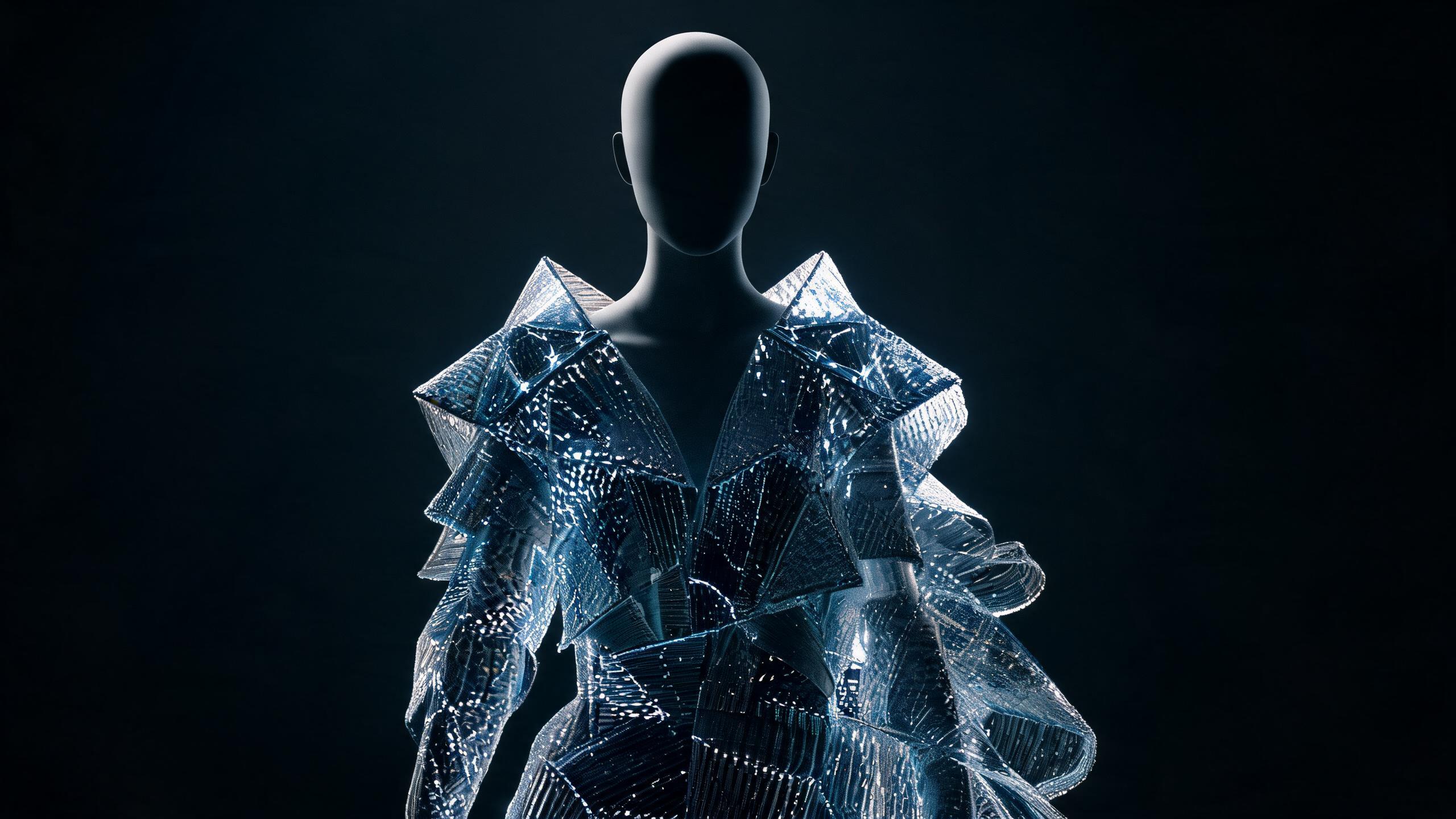
Evening Out Party Outfit Styling AI Assistant — What You Need To Know
A deep dive into evening out party outfit styling AI assistant and what it means for modern fashion.
Your style is not a trend. It's a model.
The current state of fashion commerce is a failure of architecture. For decades, the industry has relied on a discovery model built on manual search and primitive metadata. You enter a store or an app, type "black dress," and the system returns a list of items tagged with those keywords. This is not intelligence; it is a digital filing cabinet. When you are looking for an evening out party outfit styling AI assistant, you are not looking for a faster way to browse a catalog. You are looking for a system that understands the intersection of your identity, the specific context of an event, and the shifting geometry of global aesthetics.
The shift we are witnessing is the transition from search-based commerce to model-based intelligence. In the legacy model, the burden of curation is on the user. In the AI-native model, the burden shifts to the infrastructure. This is the fundamental difference between a tool that filters inventory and a system that builds a personal style model.
The Collapse of the Search-Bar Paradigm
Search is a high-friction activity. It requires the user to know exactly what they want before they see it. In the context of evening wear, this is a paradox. Most people do not know the specific garment they need; they know the feeling they want to project or the social atmosphere they need to navigate. A search bar cannot process "architectural but effortless for a gallery opening in Chelsea."
The legacy approach uses collaborative filtering—recommending what other people bought. If ten people bought a specific sequined skirt, the system assumes you want it too. This is how trends become homogenized and why every "party" section on every major retail site looks identical. It rewards the average.
An evening out party outfit styling AI assistant built on modern infrastructure ignores what is popular in favor of what is relevant to the individual. It replaces the search bar with a latent space representation of your taste. Instead of matching keywords, it matches visual features, silhouettes, and cultural signifiers. The search bar is a relic of a pre-intelligent web.
Beyond Metadata: The Era of Visual Feature Extraction
The primary bottleneck in fashion tech has always been data quality. Most retailers rely on human-entered metadata: color, material, sleeve length. Humans are inconsistent, and metadata is reductive. A "silk midi dress" could be a conservative slip or a radical piece of avant-garde evening wear. The tags are the same; the style is worlds apart.
True style intelligence requires deep computer vision and visual feature extraction. An AI must be able to "see" the drape of a fabric, the sharp edge of a lapel, and the specific subcultural heritage of a silhouette. When we build a personal style model, we are training the system to recognize these nuances.
For an evening out party outfit styling AI assistant, this level of granularity is non-negotiable. Evening wear is defined by its details—the way light hits a specific texture or the tension between a structured blazer and a soft inner layer. If the AI cannot distinguish between a 1990s minimalist aesthetic and a 2020s maximalist trend, it is not a stylist. It is a database.
The Evening Wear Stress Test: High Stakes and High Fidelity
Why focus on evening wear? Because the stakes are higher. Daytime dressing is often functional, governed by utility and routine. Evening wear is performative. It is where identity is most aggressively expressed and where the "fear of getting it wrong" is most acute.
This makes the evening category the ultimate stress test for any evening out party outfit styling AI assistant. A system that can navigate the complexities of a black-tie gala, an underground club, and a high-stakes dinner party is a system that understands the social fabric of fashion.
The shift here is from "recommendation" to "simulation." Future-oriented AI systems do not just show you a product; they simulate how that product fits into your existing wardrobe and your specific life. They calculate the probability of a garment resonating with your established taste profile while introducing just enough "style drift" to keep the look evolving.
Understanding the Latent Space of Personal Taste
Taste is not static. It is a dynamic, evolving coordinate in a multi-dimensional space. Most fashion apps treat your style as a set of checkboxes: "I like Boho," "I like Minimalist." This is a fundamental misunderstanding of how humans relate to clothing.
A personal style model maps your preferences as a vector. As you interact with different aesthetics, the model updates. If you suddenly show interest in sharp tailoring for your evening outings, the system should understand that this isn't a random outlier, but a shift in your taste trajectory.
This is where the evening out party outfit styling AI assistant becomes a true partner. It tracks the "velocity" of your style. It knows when you are bored with your current look before you do. It identifies the gap between what you own and what you are becoming. This is data-driven style intelligence, and it is the only way to escape the cycle of trend-chasing.
The Death of the Trend Cycle
The fashion industry has long been addicted to the "trend cycle"—a top-down mechanism where brands decide what is "in" and consumers follow. AI infrastructure reverses this flow. When every user has a personal style model, the concept of a universal trend disappears.
We are moving toward a post-trend era. In this world, the evening out party outfit styling AI assistant doesn't tell you what everyone else is wearing; it tells you what you should be wearing to express your specific identity in a specific moment. This is the fragmentation of fashion into millions of individual niches.
This shift is a direct threat to traditional retail models that rely on mass-market consensus. When intelligence is decentralized and personalized, the power shifts from the brand to the model. The brand becomes a supplier of raw material; the AI becomes the curator of identity.
Why Infrastructure Matters More Than Features
The market is currently flooded with "AI stylists" that are nothing more than wrappers around ChatGPT. These are features, not infrastructure. A chatbot that can talk about fashion but has no deep integration into your taste data or a real-time inventory engine is a toy.
Building a genuine evening out party outfit styling AI assistant requires a full-stack approach. It requires:
- A proprietary computer vision pipeline for garment analysis.
- A dynamic taste profiling engine that learns from every interaction.
- A recommendation system that balances "exploit" (giving you what you know you like) with "explore" (introducing new concepts).
- A seamless integration between style intelligence and commerce.
Without this infrastructure, "AI fashion" is just marketing. It is a new interface on an old, broken system.
The Gap Between Personalization and Reality
Every fashion brand claims to offer personalization. Usually, this means they put your name in an email and show you items similar to your last purchase. This is the lowest form of personalization. It is reactive, not predictive.
Real personalization is about understanding the "why" behind a choice. Why did you choose that specific blazer for your last night out? Was it the fabric? The silhouette? The brand's cultural capital? An intelligent system decomposes your choices into their constituent features to understand the underlying logic of your taste.
This is the promise of an evening out party outfit styling AI assistant. It doesn't just see a purchase; it sees a data point in an ongoing narrative of self-expression. It understands that your choice of a party outfit is a strategic decision made within a social context.
The Infrastructure of Identity
We are entering an era where your digital twin—a model of your preferences, measurements, and aspirations—will do the heavy lifting of discovery. You will not browse the web for clothes. Your style model will negotiate with the world's inventory on your behalf.
The evening out party outfit styling AI assistant is the first iteration of this personal infrastructure. It is the end of the "infinite scroll." It is the end of the "what should I wear?" anxiety. It is the beginning of a world where fashion is not something you buy, but something you inhabit through the lens of your own intelligence.
The question is no longer whether AI will change fashion commerce. The question is whether you want to continue using search filters from 2010 or if you want to build a model that understands who you are. The legacy model is designed to sell inventory. The AI-native model is designed to solve for you.
Fashion has always been about the tension between the individual and the collective. For the first time in history, we have the technology to resolve that tension in favor of the individual. This is not a "game-changer." This is the construction of a new foundation for how we present ourselves to the world.
AlvinsClub uses AI to build your personal style model. Every outfit recommendation learns from you. Try AlvinsClub →
Related Articles
- 10 Best AI For Styling Evening Out Party Outfits Tips You Need to Know
- 10 Evening Party Outfit Styling For Pear Shaped Bodies Tips You Need to Know
- Traditional vs AI-Powered Brunch Outfit Ideas For Spring Using AI Assistant: Which Approach Wins?
- Why AI Wardrobe Assistant That Tracks Outfit History Fails (And How to Fix It)
- How AI is Curating the Next Wave of Chic Brunch Outfits for Women