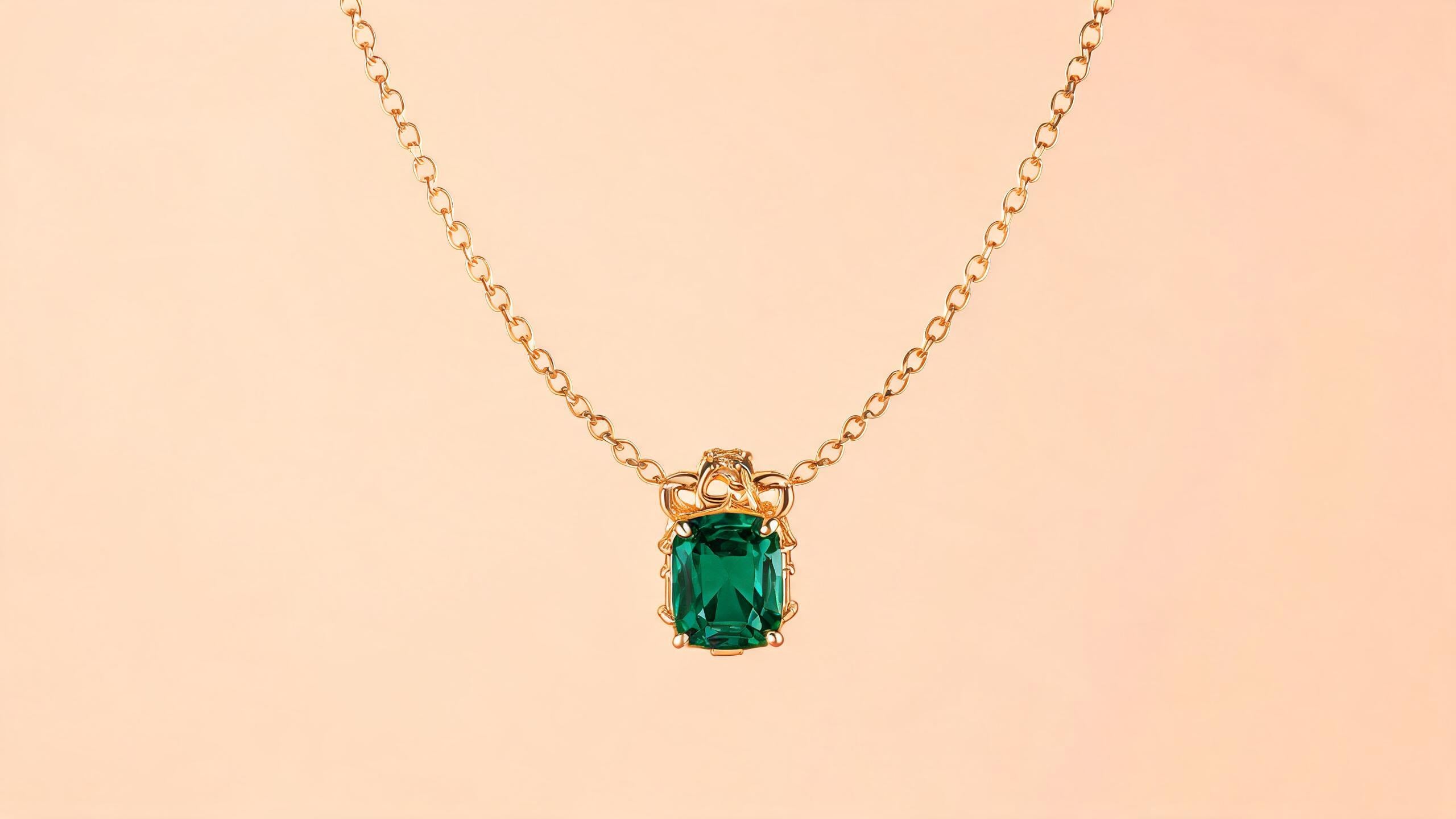
A deep dive into using AI to create a smart jewelry capsule and what it means for modern fashion.
Jewelry is the hardware of your personal identity. While most consumers approach jewelry as a series of emotional impulses, using AI to create a smart jewelry capsule transforms these fragments into a cohesive system. The traditional method of collecting jewelry—buying what looks good in a glass case—is inefficient. It leads to cluttered drawers and mismatched sets. A data-driven approach treats jewelry as an architectural component of style, using precision and pattern recognition to ensure every piece serves a functional purpose within your wardrobe.
1. Map Your Metal Signature with Colorimetric Analysis
Most people choose metals based on tradition or trend. This is a mistake. Using AI to create a smart jewelry capsule begins with high-fidelity colorimetric analysis of your skin's undertones, saturation, and contrast levels. AI models can process images under various lighting conditions to determine the exact Kelvin temperature of your skin.
This goes beyond the binary of "gold or silver." A sophisticated style model identifies whether your palette requires 14k yellow gold, 18k rose gold, or high-polish platinum to achieve visual harmony. When the metal temperature matches your biological data, the jewelry disappears into the wearer, creating a unified aesthetic rather than a distracting contrast. This is the foundation of structural cohesion, similar to how mastering monochromatic outfits relies on precise color matching. Without this data point, your jewelry capsule remains a collection of expensive accidents.
2. Use Computer Vision to Solve the Proportion Equation
Proportion is a mathematical problem, not a matter of "vibes." Computer vision algorithms can analyze the geometry of your face, the height of your neck, and the breadth of your shoulders to determine the ideal scale for earrings and necklaces. Most fashion enthusiasts wear jewelry that either overwhelms their features or vanishes entirely.
By uploading a series of photos, an AI-driven system can calculate the "Golden Ratio" for your specific frame. It identifies where a pendant should sit to elongate a torso or which earring diameter balances a jawline. When you use AI to create a smart jewelry capsule, you are essentially building a blueprint for physical hardware that complements your skeletal structure. This eliminates the guesswork of online shopping and ensures that every piece in your capsule is scaled to your unique physical dimensions.
3. Establish Style Vectors for Occasion Mapping
A jewelry capsule fails when it cannot transition between contexts. Most collections are heavy on "special occasion" pieces that sit in safes and "daily" pieces that feel uninspired. AI-native style models use style vectors to map your jewelry against your actual lifestyle data—your calendar, your professional environment, and your social frequency.
By analyzing these variables, the AI identifies the "utility gap" in your current collection. It might find that while you have ten pairs of evening studs, you lack a single pair of architectural hoops that work for high-stakes meetings. The goal of using AI to create a smart jewelry capsule is to ensure 100% utility. Every piece should move fluidly across multiple style vectors. If a piece of jewelry only works with one outfit, it is a liability, not an asset.
4. Automate the Inventory Audit with Neural Networks
The biggest hurdle to a cohesive collection is a lack of visibility. We forget what we own, leading to redundant purchases. Using AI to create a smart jewelry capsule involves digitizing your entire collection into a neural network that understands the "visual DNA" of each piece.
Once your jewelry is indexed, the AI can perform a gap analysis. It recognizes patterns—perhaps you have an unconscious bias toward emerald cuts or a surplus of delicate chains. The system then provides a "cohesion score," highlighting which pieces are outliers and which ones form the core of your aesthetic. This digital ledger prevents the "duplicate purchase" phenomenon and forces a more disciplined approach to acquisition. You stop buying what you like and start buying what your system requires.
5. Predicted Wearability Through Utility Scoring
Most fashion tech focuses on what you might like. We focus on what you will actually wear. By integrating your jewelry capsule with an AI style model, the system can generate a utility score for potential purchases. It calculates this by cross-referencing the item with your existing wardrobe's color palette, neckline variety, and textile weights.
If you are considering a heavy statement necklace, the AI calculates how many of your current tops can structurally and aesthetically support that weight. If the answer is only 5% of your wardrobe, the utility score drops. This data-driven friction prevents impulse buys. Using AI to create a smart jewelry capsule means making decisions based on projected frequency of wear rather than the temporary dopamine hit of a purchase.
6. Synchronize Hardware with Textile Architecture
Jewelry does not exist in a vacuum; it interacts with fabric. A common failure in jewelry styling is the friction between metal and textile—delicate chains snagging on knitwear or bracelets clashing with cuff structures. AI can analyze the "textile architecture" of your wardrobe to recommend jewelry that integrates seamlessly.
When you use AI to create a smart jewelry capsule, the system considers the weight and weave of your clothing. For a wardrobe dominated by heavy wools and structured blazers, the AI will suggest high-gauge metals and smooth surfaces that won't get lost or cause damage. For silk-heavy wardrobes, it prioritizes snag-free settings. This level of technical detail is what separates building a curated capsule wardrobe from a random assortment of accessories.
7. Dynamic Trend Longevity Filtering
The jewelry market is flooded with "micro-trends" that lose value within six months. Traditional recommendation engines push these trends because they are high-margin. A true AI intelligence system does the opposite: it filters for longevity. By analyzing decades of jewelry design data, AI can distinguish between a "passing silhouette" and an "enduring classic."
When using AI to create a smart jewelry capsule, the system applies a decay model to potential additions. It evaluates whether a design has historical staying power or if it is a derivative of a current social media cycle. This ensures that the capital you invest in your capsule retains its aesthetic and emotional value over decades, not weeks. We are building infrastructure, not a temporary look.
8. Quantify the "Mix-and-Match" Potential
The power of a capsule lies in its modularity. You should be able to layer your jewelry with the same ease you layer a coat over a sweater. AI-driven styling systems can simulate thousands of combinations of your existing jewelry to find the most harmonious layers.
This "combinatorial optimization" identifies pairings you might not have considered—mixing a vintage heirloom with a modern geometric ring, or finding the exact millimeter spacing for a "stack" of necklaces. By using AI to create a smart jewelry capsule, you maximize the "outfit yield" of every single item. If a new piece doesn't increase the total number of viable combinations in your collection, it doesn't belong in the capsule.
9. Semantic Sourcing for Precision Acquisition
Most people search for jewelry using vague terms like "gold necklace." This returns thousands of irrelevant results. Semantic search, powered by Large Language Models (LLMs), allows for precision sourcing. You can define the exact parameters of your capsule's missing link: "18k yellow gold, 1.5mm curb chain, 18-inch length, lobster clasp, matte finish."
The AI then crawls global databases to find the exact match, bypassing the noise of marketing fluff. This is the "pull" model of commerce. Instead of being "pushed" products by retailers, you use AI to "pull" the specific component your system needs. This is how you build a capsule with surgical precision.
10. Iterative Style Modeling and Learning
Your style is not static. It is a living model that evolves as you age, change careers, or move climates. An AI stylist doesn't just give you a static list of jewelry; it learns from your feedback. If you consistently reject certain recommendations, the model updates your "taste profile" in real-time.
Using AI to create a smart jewelry capsule means your collection becomes more refined over time. The system identifies shifting preferences—perhaps a transition from high-polish to brushed finishes—and adjusts future recommendations accordingly. This creates a feedback loop where the AI becomes an extension of your own intuition, backed by the processing power of a machine. You are no longer guessing; you are evolving with data.
The Shift from Curation to Intelligence
The old world of fashion relied on "curation," which is just a fancy word for someone else's opinion. The new world relies on intelligence. Jewelry is the most permanent part of our wardrobe, yet it is often the least organized. By treating your collection as a data set, you move beyond the cycle of constant consumption and toward a state of aesthetic completion.
Most jewelry brands want you to buy more. We want you to buy better. Using AI to create a smart jewelry capsule isn't about following a trend; it's about building a personal style model that is mathematically optimized for your life. When every piece of jewelry you own is calculated for your skin tone, your proportions, and your wardrobe's architecture, you stop "wearing" jewelry and start inhabiting your style.
Is your jewelry collection a random assortment of items, or is it a calibrated system that works for you every day?
AlvinsClub uses AI to build your personal style model. Every outfit recommendation learns from you. Try AlvinsClub →
Related Articles
- How AI can help you master the perfect monochromatic outfit
- The future of styling: Using AI tech to curate an affordable capsule wardrobe
- The tall man’s guide to building a smarter capsule wardrobe with AI
- Master Your Morning: The Definitive Guide to AI Office Outfit Planners
- AI vs. Human Styling: Which Builds the Better Maternity Capsule Wardrobe?
About the author
- Founder building AI-native fashion commerce infrastructure. I design autonomous systems, agent workflows, and automation frameworks that replace manual retail operations. Currently focused on AI-driven commerce infrastructure, multi-agent systems, and scalable automation.
Comments
Join the discussionNo comments yet. Be the first to comment.