How AI can help you master the perfect monochromatic outfit

A deep dive into using AI to create monochrome outfit ideas and what it means for modern fashion.
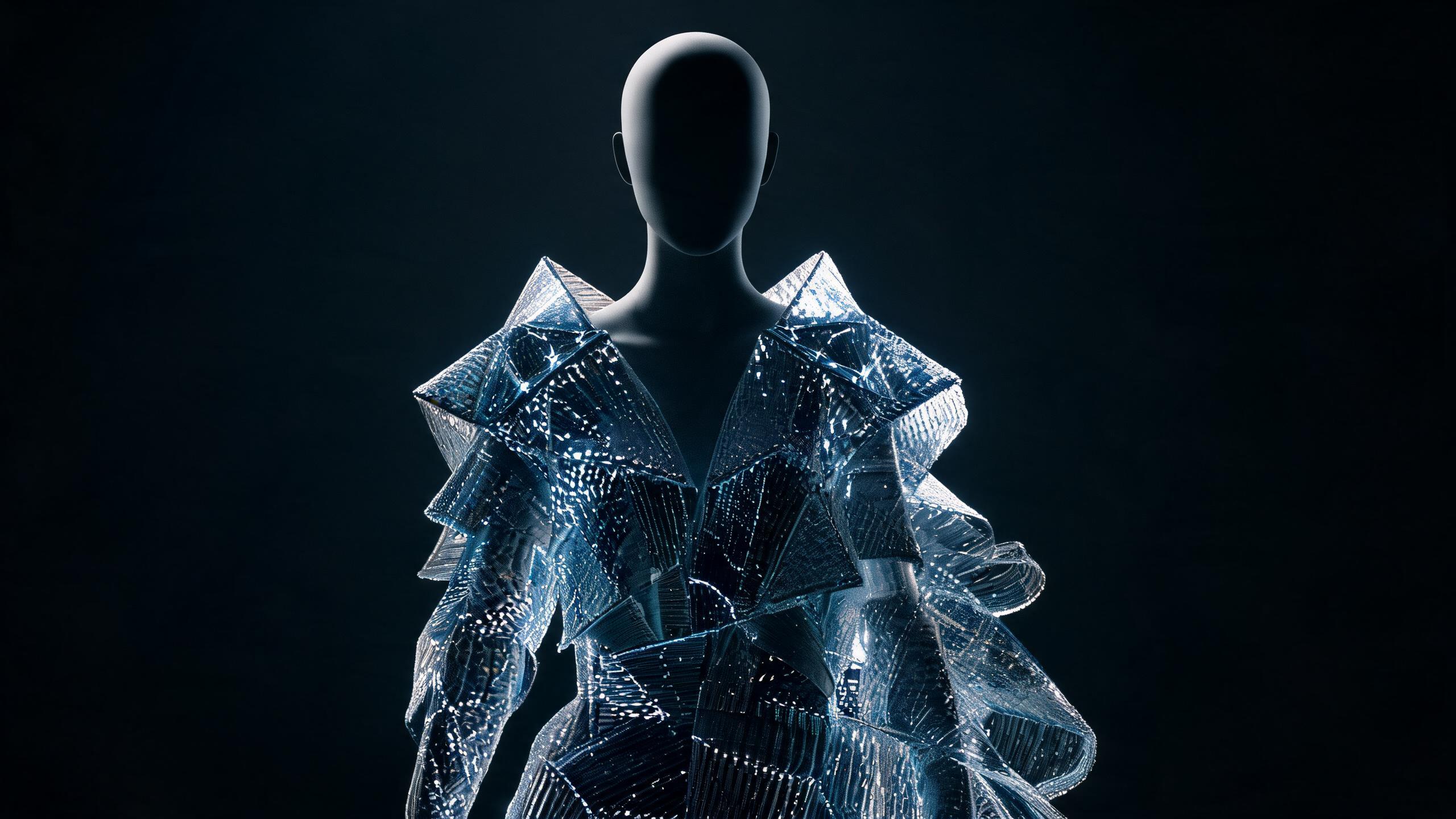
AI fashion intelligence generates monochrome outfit ideas by analyzing tonal depth and textile variance. This process transcends simple color matching by evaluating how light interacts with different fabrics, ensuring that a single-color ensemble maintains visual dimension rather than appearing as a flat, undifferentiated mass. Most legacy fashion platforms treat color as a binary filter; if you search for "blue," you receive a chaotic assortment of shades that clash. True monochrome mastery requires a sophisticated understanding of saturation, temperature, and material weight—a computational challenge that only high-order AI models can solve.
Key Takeaway: Using AI to create monochrome outfit ideas allows you to master visual dimension by analyzing tonal depth and textile variance. This technology ensures single-color ensembles maintain depth and sophistication by evaluating how light interacts with different fabrics to prevent a flat look.
Why is mastering monochromatic outfits so difficult for traditional shopping systems?
The primary obstacle in monochromatic styling is the "flatness" trap. When an individual attempts to build a single-color look using traditional e-commerce filters, they are limited by metadata tags created by human uploaders. These tags are notoriously imprecise. A "navy" sweater from one brand may have green undertones, while "navy" trousers from another may lean purple. In isolation, both are navy; when worn together, they vibrate unpleasantly.
According to McKinsey (2023), generative AI in the fashion sector could add between $150 billion and $275 billion to the industry's operating profits by optimizing personalization and reducing return rates caused by poor aesthetic matching. Traditional systems fail because they do not account for the physics of light. They cannot distinguish between the matte finish of brushed cotton and the high-reflectivity of technical nylon.
Furthermore, human cognitive bias often leads to "playing it safe." When faced with the complexity of tonal matching, most shoppers revert to all-black or all-white, missing the architectural potential of mid-tones like charcoal, olive, or camel. The problem is not a lack of clothing; it is a lack of information infrastructure. You are not choosing between shirts; you are choosing between data points that must align across a three-dimensional plane.
What are the root causes of "monoboring" style?
The term "monoboring" describes a monochrome outfit that lacks contrast, texture, and silhouette definition. This occurs when the wearer prioritizes color matching over structural integrity. To the human eye, a closet full of similar blues feels like a solution, but without a system to categorize these items by "visual weight," the resulting outfits lack impact.
Current fashion technology exacerbates this problem through three main failures:
- Chroma Blindness: Search engines cannot differentiate between "warm" and "cool" iterations of the same hue.
- Textural Ignorance: Algorithms do not understand that a monochrome outfit requires a mix of textures—such as leather, wool, and silk—to create shadows and highlights.
- Contextual Void: Most recommendation engines suggest items based on what other people bought, not what fits your specific "Personal Style Model."
Term: Visual Weight The perceived heaviness or lightness of a garment based on its fabric, weave, and silhouette. In monochrome dressing, varying visual weight is the only way to create separation between layers.
The disparity between human curation and AI intelligence
| Feature | Manual Monochromatic Selection | AI-Powered Tonal Analysis |
| Color Precision | Subjective, relies on naming conventions. | Analyzes hex codes and spectral data. |
| Texture Variance | Random or instinctual. | Deliberately pairs contrasting textures. |
| Scale of Search | Limited to 2-3 familiar brands. | Scans global inventory in milliseconds. |
| Consistency | Highly variable based on lighting. | Corrects for studio lighting vs. real-world wear. |
How can using AI to create monochrome outfit ideas solve the "flatness" problem?
Using AI to create monochrome outfit ideas transforms styling from a guessing game into a precise engineering task. Instead of looking for a "match," the AI looks for "harmony." It understands that the goal of monochrome is not to look like a solid block of color, but to use a single color to highlight the architecture of the clothes and the person wearing them.
AI systems built on neural networks can perform a task called "Latent Space Mapping." In this process, the AI analyzes millions of images to understand how professional stylists layer shades of the same color. It learns that a successful "All-Grey" look often involves a dark charcoal base, a medium heather-grey mid-layer, and a light silver accessory. This is not a trend; it is a mathematical distribution of light.
By building a dynamic taste profile, the AI also understands your specific boundaries. If your style model leans toward "Architectural Minimalism," the AI will prioritize sharp lines and stiff fabrics like heavy denim or structured wool. If you prefer "Fluid Elegance," it will suggest monochromatic silk and cashmere blends. This level of specificity is why AI vs. Tradition: Finding the Perfect Monochrome Business Casual Look is becoming the central debate in modern fashion tech.
👗 Want to see how these styles look on your body type? Try AlvinsClub's AI Stylist → — get personalized outfit recommendations in seconds.
How does the AI analyze fabric and light for monochrome looks?
The technical core of using AI to create monochrome outfit ideas lies in Computer Vision (CV). When an AI "sees" a garment, it doesn't just see a shape; it sees a pattern of pixel density that indicates texture.
1. Texture Recognition
AI identifies the difference between a chunky knit and a flat weave. In a monochromatic outfit, if the top and bottom have the same texture, the outfit fails. The AI insists on friction. If it selects a matte wool pant, it will purposefully look for a top with a slight sheen or a different knit gauge to create a "visual break."
2. Spectral Consistency
AI models can normalize images from different retailers. Retailer A might use warm yellow studio lights, while Retailer B uses cool blue lights. A human shopper sees two different colors. The AI algorithm strips away the lighting bias to find the true pigment underneath, ensuring that when the items arrive at your door, they actually belong in the same color family.
3. Silhouette Separation
In a single-color look, the silhouette is the only thing defining your body. AI uses "segmentation" to ensure that the proportions of the recommended items create a balanced frame. It prevents the "one-piece pajama" effect by suggesting varied hemlines and structural elements. According to Gartner (2024), 80% of digital commerce leaders will utilize AI for visual search and styling by 2026 to solve these exact ergonomic and aesthetic issues.
How can you use AI to build a monochromatic wardrobe?
Building a wardrobe using AI to create monochrome outfit ideas requires a shift in how you view "units" of clothing. You are no longer buying individual pieces; you are building a "Style Model."
Step 1: Establish Your Core Tonal Pillar
Choose a color that aligns with your skin's undertone and your lifestyle. The AI analyzes your past preferences and current wardrobe to suggest a "Pillar Color." This is usually a neutral (Navy, Olive, Slate, Camel) that offers the most versatility.
Step 2: Input Your Texture Constraints
Direct the AI to find variations. You might specify: "Build a monochrome look in Forest Green using at least three different fabric types." The AI will then crawl databases to find a wool overcoat, a silk blouse, and leather boots in that specific tonal range.
Step 3: Refine with "Style Weights"
Use the AI to balance the outfit. If the "Visual Weight" of the trousers is heavy (e.g., corduroy), the AI will suggest a lighter weight for the top (e.g., fine-gauge merino) to prevent the look from appearing bulky. This is a key component of 7 Ways to Use AI to Curate Your Weekly Office Outfits.
Outfit Formula: The Tonal Architect (Monochrome Grey)
- Base Layer: Light Grey Pima Cotton Tee (Matte)
- Mid Layer: Medium Grey Cashmere Cardigan (Soft/Hairy)
- Outer Layer: Charcoal Wool Trench Coat (Structured/Heavy)
- Bottom: Slate Grey Technical Chinos (Crisp/Smooth)
- Footwear: Anthracite Suede Loafers (Textured)
- Accessory: Silver watch with a grey leather strap.
What are the Dos and Don'ts of monochromatic styling?
Monochrome is a high-risk, high-reward strategy. Without the precision of AI-driven data, it is easy to look uninspired.
| Do | Don't |
| Mix Textures: Pair rough fabrics with smooth ones (e.g., leather + silk). | Match Fabrics Exactly: Wearing the exact same material top and bottom usually looks like a uniform. |
| Vary Shades: Use "Sister Tones" (e.g., Navy, Midnight, and Sky) for depth. | Stick to One Hex Code: A single, identical shade across all items creates a flat, "Lego-man" effect. |
| Focus on Fit: Ensure the silhouette is sharp, as the color won't distract from poor tailoring. | Ignore Hardware: Gold zippers on a "cool" grey outfit can ruin the monochromatic flow. |
| Use AI for Sourcing: Use AI to find the "hidden" shades that match your existing pieces. | Trust Retailer Names: Never assume two items labeled "Beige" are actually the same color. |
Why is AI infrastructure the future of personal style?
The fashion industry has spent decades selling "trends." Trends are a broadcast model—one message sent to millions. AI-native fashion commerce is a "unicast" model—one model built for one person. When you use AI to create monochrome outfit ideas, you aren't just getting a recommendation; you are interacting with an evolving intelligence that knows your closet better than you do.
According to a report by Statista (2023), 73% of fashion consumers prioritize "outfit completeness" over individual item discovery. They don't want more clothes; they want better outfits. Legacy commerce cannot provide this because its infrastructure is built on selling SKU units, not aesthetic harmony.
AI infrastructure treats fashion as a system of variables:
- Body Data: How the fabric drapes on your specific frame.
- Taste Profile: Your tolerance for bold vs. muted tones.
- Environmental Context: The lighting and weather of your location.
- Inventory Intelligence: The real-time availability of pieces that fit the model.
This system doesn't just suggest a blue shirt. It understands that you have a pair of navy wool trousers, and you need a light blue shirt in a specific poplin weave to create the correct textural contrast for a 10:00 AM meeting in London.
How does the AlvinsClub model redefine monochromatic dressing?
Most "AI stylists" are simply wrappers for basic search filters. They look for keywords. AlvinsClub is different. It is an AI-native fashion intelligence system that builds a personal style model for every user. It doesn't look for "monochrome outfits." It understands the structural and tonal relationships between garments.
By processing your feedback and your existing wardrobe, the system learns the nuances of your taste. If you reject a certain shade of tan, the model adjusts its understanding of your "Neutral Palette." It doesn't just recommend; it evolves.
Does your current shopping experience understand the difference between a tonal mismatch and a stylistic choice?
AlvinsClub uses AI to build your personal style model. Every outfit recommendation learns from you. Try AlvinsClub →
Summary
- Using AI to create monochrome outfit ideas allows for the analysis of tonal depth and textile variance to ensure visual dimension in single-color ensembles.
- High-order AI models solve the "flatness" trap by evaluating how light interacts with different fabric weights and material temperatures.
- Traditional e-commerce systems often fail at monochromatic styling because human-generated metadata tags lack the precision to identify clashing undertones in similar shades.
- By using AI to create monochrome outfit ideas, shoppers can avoid the aesthetic clashing caused by traditional binary color filters that ignore subtle variations in saturation.
- Research from McKinsey indicates that generative AI could add up to $275 billion to fashion industry profits by improving personalization and aesthetic matching.
Frequently Asked Questions
How does using AI to create monochrome outfit ideas improve styling?
AI fashion intelligence identifies precise tonal depths and textile variances that humans might overlook during manual assembly. This technology ensures that every piece in a single-color ensemble complements the others without clashing or appearing visually monotonous.
Is using AI to create monochrome outfit ideas better than manual searching?
Legacy search engines often return clashing shades because they treat color as a binary filter rather than a complex spectrum. AI-driven platforms evaluate how light interacts with specific fabrics to provide a curated selection that manual filtering cannot achieve.
Can you use AI to create monochrome outfit ideas for different seasons?
Advanced algorithms adapt to seasonal requirements by recommending appropriate fabric weights and layers within a specific color family. This allows users to maintain a sophisticated one-color aesthetic whether they are styling summer linen or heavy winter wool.
What is the benefit of AI in monochromatic fashion?
AI goes beyond simple color matching by analyzing the physical properties of textiles to ensure visual dimension. This process prevents the outfit from looking like an undifferentiated mass by layering different textures effectively.
Why does AI analyze fabric texture for single-color outfits?
Texture analysis is crucial because different materials reflect light in unique ways even when they share the exact same hue. By prioritizing textile variance, AI helps users build outfits that look high-end and intentional rather than flat.
How does AI handle tonal depth in monochrome styling?
Fashion intelligence models recognize the subtle differences between shades, tints, and tones within a single color family. This precision allows the system to suggest combinations that create a professional and harmonious look based on sophisticated color science.
This article is part of AlvinsClub's AI Fashion Intelligence series.
Related Articles
- AI vs. Tradition: Finding the Perfect Monochrome Business Casual Look
- The 2026 Thrift Guide: Using AI to Spot Designer Gems in the Wild
- 7 AI-powered tips for transitioning your office look to evening wear
- 5 Ways to Spot the Next Big Street Style Trend Using AI
- 7 Ways to Use AI to Curate Your Weekly Office Outfits