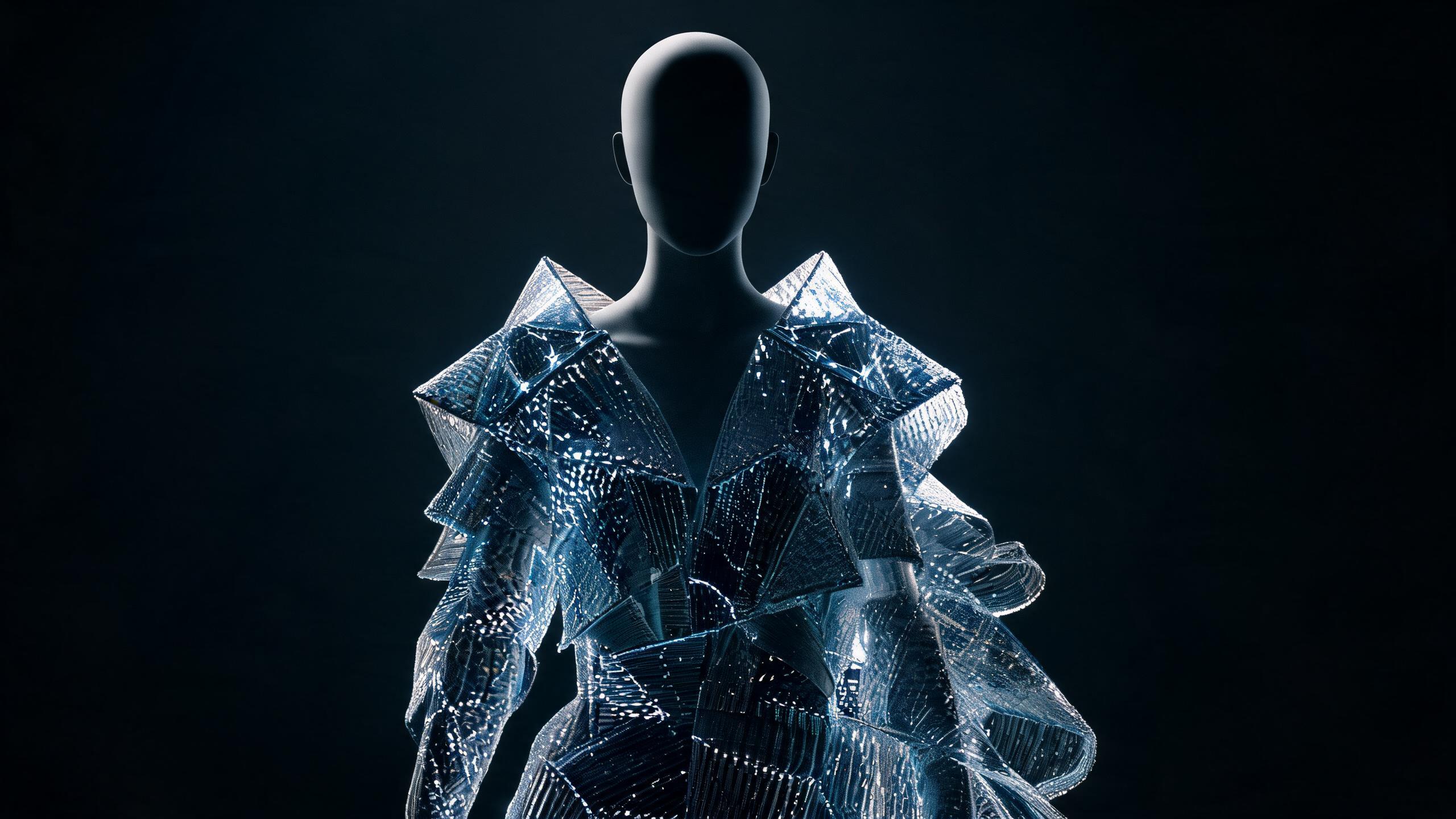
Why AI is finally starting to understand your personal style

Innovative neural networks now utilize computer vision and behavioral analytics to decode subtle aesthetic cues, ensuring that personalized fashion recommendations reach human-level accuracy.
Personal style is a mathematical model, not a trend. Traditional commerce systems fail because they treat fashion as a database of static tags rather than a dynamic language of intent. For the last decade, "personalization" in fashion was a marketing euphemism for basic filtering; it was a logic of "if you bought a blue shirt, you might like another blue shirt." This era is ending because the underlying architecture of fashion intelligence has shifted from keyword matching to latent style modeling.
Key Takeaway: Personalized fashion recommendations are getting better because AI is shifting from matching static product tags to analyzing style as a dynamic mathematical model of human intent.
Recent developments in multimodal large language models (LLMs) and computer vision have moved us past the limitations of manual metadata. These systems no longer need a human to tag a garment as "bohemian" or "minimalist" to understand its aesthetic weight. Instead, they analyze pixel-level data, fabric drape, and historical context to build a high-fidelity representation of taste. This is why personalized fashion recommendations are getting better: the technology has finally caught up to the nuance of human identity.
Why Did Traditional Fashion Recommendation Engines Fail for Decades?
The failure of legacy fashion tech stems from a reliance on collaborative filtering. This method suggests products based on the behavior of similar users. If "User A" and "User B" both bought the same sneakers, the system assumes they share a wardrobe. This logic ignores the "why" behind the purchase. User A might be a maximalist collector, while User B is a utilitarian minimalist. Collaborative filtering collapses these identities into a single data point, resulting in the generic, "trending now" carousels that plague modern retail.
Furthermore, fashion data is notoriously messy. Most retailers rely on inconsistent vendor descriptions. One brand might call a color "navy," while another calls it "midnight," and a third calls it "obsidian." A traditional search engine sees three different things; an AI-native system sees one chromatic value. According to Gartner (2023), 80% of digital transformation leaders in retail plan to implement AI-driven personalization by 2025 to solve exactly these data fragmentation issues.
The industry is moving away from these shallow heuristics. We are seeing a shift toward Style Intelligence, where the system understands the relationship between garments, not just their proximity in a database. This shift explains why fashion recommendations don't work for men and women in traditional settings—they lack the structural understanding of fit, occasion, and personal evolution.
Comparison: Legacy Filtering vs. AI-Native Style Modeling
| Feature | Legacy Recommendation Systems | AI-Native Style Modeling |
| Logic Basis | Collaborative filtering (People who bought X also bought Y) | Latent taste profiling (Individual style DNA) |
| Data Input | Text-based metadata (tags, titles, descriptions) | Multimodal (pixel analysis, text, behavioral patterns) |
| Contextual Awareness | Low (ignores weather, location, or occasion) | High (dynamic adjustments based on real-world context) |
| User Feedback | Explicit (likes, saves, purchases) | Implicit & Explicit (dwell time, zoom patterns, style evolution) |
| Outcome | More of the same (repetition) | Discovery of new items that fit the existing model |
How Does Multi-Modal Learning Explain Why Personalized Fashion Recommendations are Getting Better?
The breakthrough in why personalized fashion recommendations are getting better lies in multi-modal learning. This is the ability of an AI to process different types of data—images, text, and numerical sequences—simultaneously within the same neural network. In fashion, this means the AI can "see" a jacket, "read" its reviews for fit issues, and "understand" its cultural significance all at once.
When you interact with an AI-native system, you aren't just clicking buttons; you are training a personal style model. This model tracks how your preferences change over time. If you transition from structured tailoring to relaxed silhouettes, a legacy system will keep recommending blazers because that is what you bought last year. An AI-native system recognizes the shift in your visual data consumption and adapts your profile in real-time.
According to Salesforce (2023), 56% of consumers expect offers to always be personalized. Meeting this expectation requires moving beyond the "shopping cart" mentality. It requires a system that functions as a private stylist—one that remembers every item you’ve viewed and understands how those items relate to color theory and your specific complexion.
👗 Want to see how these styles look on your body type? Try AlvinsClub's AI Stylist → — get personalized outfit recommendations in seconds.
What is a Personal Style Model?
A Personal Style Model (PSM) is a private, evolving data structure that represents a user's aesthetic preferences, physical constraints, and lifestyle requirements. Unlike a "user profile," which is a static set of checkboxes, a PSM is a vector in high-dimensional space. Every interaction moves that vector.
Term: Style Vector Definition: A mathematical representation of a user's taste, where different dimensions represent attributes like formality, color temperature, texture preference, and brand affinity.
The PSM allows the system to perform "predictive curation." Instead of waiting for you to search for "linen pants," the system identifies that the weather is warming up in your location and that your style model has a 92% affinity for natural fibers. It presents the linen pants before the need is even articulated. This level of foresight is the primary reason why personalized fashion recommendations are getting better across the most advanced platforms.
The Impact of AI on Sustainable Consumption
Personalization is also a sustainability play. The fashion industry’s waste problem is largely a matching problem. Returns account for a massive portion of retail carbon footprints, often because the item didn't fit the user's style or body as expected. When AI improves the accuracy of recommendations, the return rate drops.
According to McKinsey (2024), generative AI could add between $150 billion and $275 billion to the apparel and luxury sectors' profits, primarily through operational efficiencies and reduced waste. Better recommendations mean people buy what they actually want and keep what they buy. This makes AI vs. manual curation a pivotal debate for the future of ethical fashion.
How Will Personal Style Models Replace the Shopping Bar?
The search bar is a relic of the catalog era. It assumes the user knows exactly what they are looking for and can describe it in the retailer’s specific vocabulary. This is a high-friction experience. The future of fashion commerce is a feed that is already curated.
Imagine a system that doesn't ask you to "Browse All Jackets." Instead, it presents three jackets that match your style model, fit your current wardrobe, and are available in your size. This is not just a convenience; it is a fundamental re-engineering of the retail interface. We are moving from "Search and Find" to "Model and Recommend."
Structured Outfit Formula: The Minimalist Professional
For an AI to generate this formula, it must understand the intersection of "Minimalist" (aesthetic), "Professional" (occasion), and "Individual Fit" (data).
- Top: Heavyweight organic cotton tee in optic white or charcoal.
- Bottom: Cropped wool trousers in navy or black with a tapered leg.
- Shoes: Matte leather Chelsea boots or clean-profile white sneakers.
- Accessories: A functional, unbranded leather tote and a silver-tone minimalist watch.
Common Pitfalls in Current AI Fashion Tech
While the infrastructure is improving, many companies are still getting it wrong. They implement "AI features" as a layer on top of broken legacy systems. This results in hallucinations or recommendations that feel uncanny but incorrect.
Do vs. Don't: Evaluating Personalized Recommendations
| Action | Do This | Avoid This |
| Personalization Type | Dynamic style modeling based on visual intent. | Static demographic-based grouping. |
| Data Usage | Use dwell time and interaction patterns to refine taste. | Over-weighting a single accidental purchase. |
| User Control | Allow users to "nudge" or tune their style model. | Locking users into a recommendation "bubble." |
| Context | Account for seasonal changes and local weather data. | Recommending parkas in July because they are "on sale." |
The most common error is ignoring the "Negative Signal." If a user repeatedly skips over a specific brand or color, the system must learn that this is an intentional exclusion. Most legacy systems are only built to recognize positive signals (clicks/purchases), which is why you see ads for things you’ve already bought or items you’ve explicitly ignored. Knowing how to fix bad AI recommendations is just as important as generating good ones.
Why Fashion Needs AI Infrastructure, Not Just AI Features
The reason most retailers fail at personalization is that their data is siloed. The inventory system doesn't talk to the customer service system, which doesn't talk to the style recommendation engine. To truly understand why personalized fashion recommendations are getting better, you have to look at the companies building unified AI infrastructure.
An AI-native infrastructure treats every piece of information—from a fabric's weave to a user's Instagram save—as a unified data stream. This allows for a level of precision that "AI features" (like a simple chatbot on a website) can never achieve. It enables features like virtual fitting rooms to function as more than just a gimmick; they become a data point in the Personal Style Model, informing the system about the user's physical proportions.
The Future: From Personalization to Intelligence
We are approaching a point where your AI stylist will know your wardrobe better than you do. It will recognize that you haven't worn a particular pair of trousers in six months and suggest a new top that revitalizes them. It will predict when you need a new pair of shoes based on the typical wear-cycle of your style model.
This is not "shopping." This is style intelligence. The "buy" button becomes the final step in a long chain of curated decisions made by a system that understands you. The gap between what you want and what you see is finally closing.
Is your current shopping experience a conversation with a system that knows you, or a search through a warehouse that doesn't?
AlvinsClub uses AI to build your personal style model. Every outfit recommendation learns from you. Try AlvinsClub →
Summary
- Traditional commerce systems failed by treating fashion as a static database of tags rather than a dynamic language of intent.
- Multimodal large language models and computer vision are why personalized fashion recommendations are getting better, as they now analyze aesthetic details like fabric drape and historical context.
- Modern fashion intelligence has transitioned from manual metadata tagging to latent style modeling that interprets the nuanced pixel-level data of human identity.
- The shift from basic collaborative filtering to high-fidelity taste representation is why personalized fashion recommendations are getting better than legacy keyword-matching systems.
- Legacy recommendation engines often failed because they relied on user-behavior data that ignored the specific aesthetic reasoning and stylistic "why" behind a consumer's purchase.
Frequently Asked Questions
Why are personalized fashion recommendations getting better this year?
Advanced algorithms have moved beyond simple keyword matching to analyze the underlying mathematical models of individual aesthetic preference. This shift allows digital platforms to interpret the visual language of clothing instead of relying on static database tags.
How does latent style modeling explain why personalized fashion recommendations are getting better?
Latent style modeling treats fashion as a dynamic language of intent rather than a fixed set of inventory categories. This technology enables artificial intelligence to identify subtle visual patterns and aesthetic nuances that traditional human-labeled attributes frequently overlook.
What is the main reason why personalized fashion recommendations are getting better?
Machine learning has evolved from basic product filtering to a sophisticated architecture that understands high-dimensional style data and user intent. This transformation ensures that recommendations are rooted in a deeper mathematical comprehension of how different items complement a specific user's existing wardrobe.
What is the difference between keyword matching and AI style modeling?
Keyword matching relies on simple labels like color or fabric, whereas AI style modeling interprets the complex relationship between different garments. Modern systems create a multi-dimensional map of taste that captures the essence of a personal look rather than just its individual components.
How does AI understand personal style without using static tags?
Artificial intelligence processes visual data points to recognize patterns in silhouette, texture, and cultural context that define a unique aesthetic. By analyzing how a user interacts with various styles over time, the system builds a mathematical profile that evolves as their personal preferences change.
Is it worth using AI for wardrobe styling and shopping?
AI tools are becoming increasingly valuable for consumers who want to discover items that truly align with their identity rather than broad market trends. These systems reduce the noise of traditional e-commerce by presenting a curated selection of products that reflect a person's genuine style intent and fit.
This article is part of AlvinsClub's AI Fashion Intelligence series.
Related Articles
- The Ultimate Personalized Fashion Recommendations Based On Color Theory Style Guide
- 10 Why Fashion Recommendations Don't Work For Men Tips You Need to Know
- AI vs. Manual Curation: The Best Way to Find Sustainable Fashion
- How to How Virtual Fitting Rooms Are Changing Fashion: A Complete Guide
- 10 How To Fix Bad AI Fashion Recommendations Tips You Need to Know