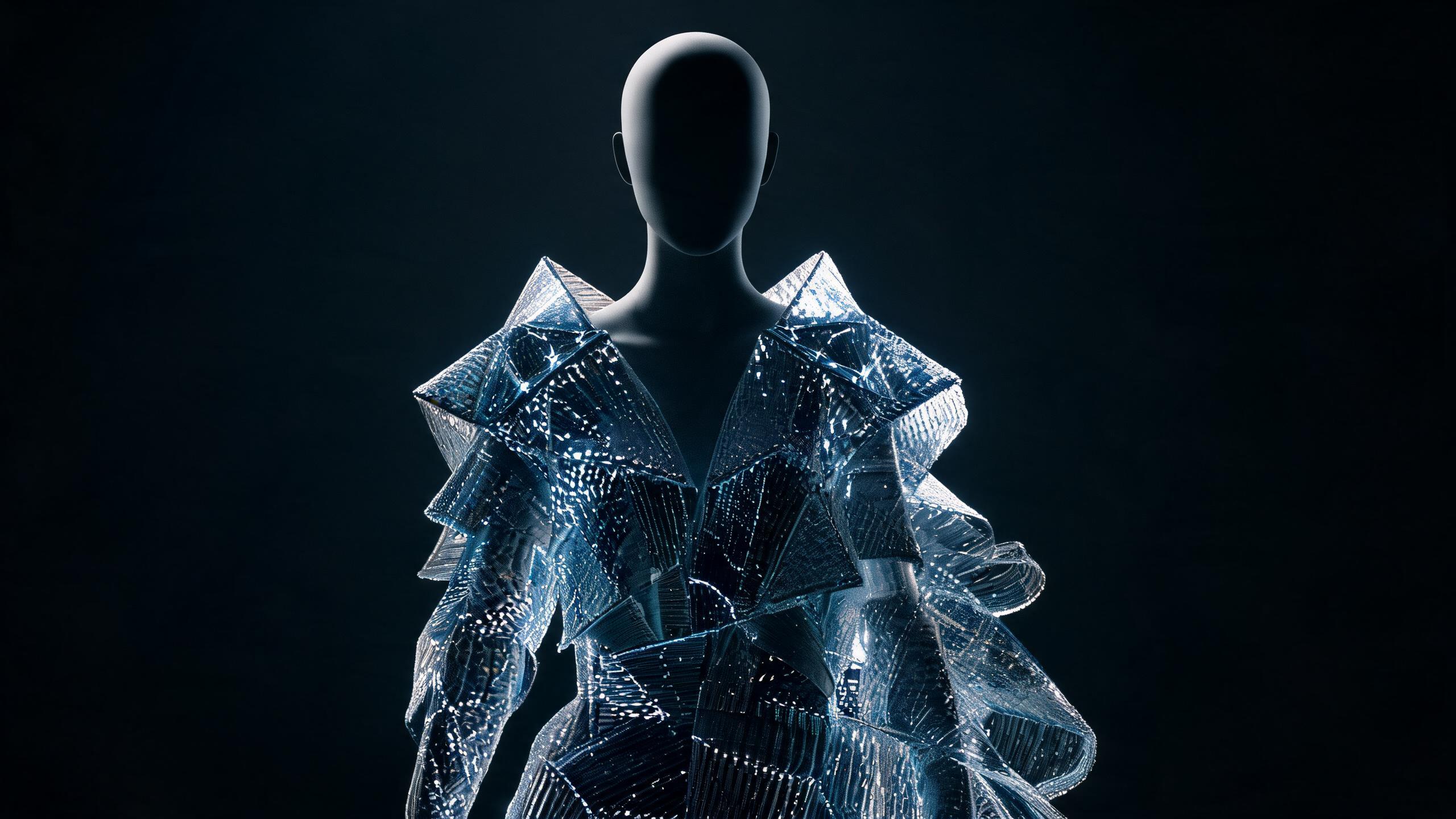
The Ultimate Personalized AI Fashion Advice For Different Body Shapes Style Guide
A deep dive into personalized AI fashion advice for different body shapes and what it means for modern fashion.
Your body is not a fruit. It is a spatial dataset.
Traditional fashion advice relies on crude metaphors—apples, pears, rectangles—to categorize human anatomy. This approach is a relic of 20th-century mass-market retail, designed to funnel diverse human forms into a few manageable buckets for the sake of inventory turnover. It fails because it ignores the nuances of skeletal structure, muscle distribution, and the physics of how different fabrics interact with a three-dimensional form in motion. True personalization does not come from a static label; it comes from a dynamic model that understands the relationship between garment architecture and biological proportions.
The shift from manual styling to personalized AI fashion advice for different body shapes represents a fundamental move from guessing to calculation. We are moving away from "flattering" as an aesthetic judgment and toward "alignment" as a technical requirement. When an AI system analyzes your body shape, it isn't looking for flaws to hide. It is calculating volumes, lines, and weights to create a balanced visual profile.
Beyond the Fruit: Why Traditional Body Typing Fails
Standard retail categorization is inherently flawed because it assumes static ratios. Two people labeled as "hourglass" can have vastly different shoulder widths, torso lengths, and heights. A recommendation engine that suggests the same wrap dress to both individuals is not providing personalization; it is executing a script.
Legacy systems use filters. They filter for "waist-defining" or "v-neck" based on a single data point. This is a linear solution to a multi-dimensional problem. Personalized AI fashion advice for different body shapes requires a system that understands the interplay of variables. It needs to know that a heavy wool coat interacts differently with a "pear" shape than a silk trench, even if the silhouette of both garments is technically the same.
The old model of styling focuses on "hiding" what are perceived as imbalances. The AI-native model focuses on architectural integrity. It asks: How do we use fabric and structure to create the desired visual intent? This is not about vanity; it is about the precise application of style intelligence to the human form.
The Geometry of Style: Personalized AI Fashion Advice for Different Body Shapes
To build a style model that works, we must deconstruct the body into geometric zones. AI looks at the relationship between the biacromial diameter (shoulder width), the waist circumference, and the trochanteric width (hips). By analyzing these as vectors rather than static points, the system can predict how a garment will drape before you even put it on.
Architecture for the Inverted Triangle
The inverted triangle is characterized by a dominant shoulder line that tapers down to narrower hips. Traditional advice tells you to "soften" the shoulders. AI-driven intelligence suggests balancing the visual weight through structural anchors at the hemline.
- The Logic: You are dealing with a top-heavy distribution of visual mass. To achieve equilibrium, the system prioritizes garments that add volume or "noise" to the lower half of the body.
- Tactical Application: Wide-leg trousers in heavy-gauge fabrics like denim or corduroy create a counter-balance to broad shoulders. A-line skirts with structured pleats provide the necessary volume to match the upper-body width.
- The Error: Wearing thin, tapered leggings with an oversized blazer. This exacerbates the taper and creates a top-heavy silhouette that lacks grounding. AI identifies this as a failure in visual tension.
Balancing the Pear via Visual Tension
The pear shape (triangular) features a hip line that is wider than the shoulder line. Most recommendation engines suggest "drawing the eye upward." While correct in theory, it is often executed poorly with distracting patterns or ruffles.
- The Logic: The goal is to extend the shoulder line horizontally to align with the hips. This is a problem of horizontal vectors.
- Tactical Application: Boat necks, square necklines, and structured shoulder pads are the primary tools here. A tailored blazer with sharp, defined shoulders creates a rectangular frame that encompasses the wider hips, resulting in a streamlined vertical line.
- The Error: Using flimsy, unconstructed tops that collapse inward. When the shoulder line collapses, the hips appear disproportionately wide by comparison. Personalized AI fashion advice for different body shapes emphasizes the need for structural integrity in the upper garment.
Structural Engineering for Rectangular Frames
When the shoulders, waist, and hips are roughly aligned, the body presents as a rectangular column. The challenge here is not balance, but the creation of focal points.
- The Logic: This is about breaking up a continuous vertical line to create interest and perceived dimension.
- Tactical Application: Color-blocking, belts, and layered textures are used to interrupt the eye. High-waisted trousers paired with a cropped jacket create an artificial waistline, effectively re-modeling the body’s proportions through garment intersection.
- The Error: Wearing long, shapeless shift dresses or oversized tunics without a point of interruption. This turns the body into a monolithic block, losing the nuance of the frame.
The Role of Materiality and Physics in Shape Modeling
Body shape is only half of the equation; the other half is the material. A "personal style model" must account for the mechanical properties of fabric. AI-native fashion systems understand that weight, drape, and elasticity are not just descriptors—they are functional variables.
For individuals with softer, rounded silhouettes (often categorized as oval or round), the goal is often to provide the structure that the biological form lacks. This is where AI intelligence outperforms a human stylist. A human might say "wear black because it's slimming." The AI says "wear high-twist wool or heavy-weight crepe because these fabrics resist the body's natural curves and hold their own architectural shape."
Specific Material Recommendations Based on Body Dynamics:
- High-Density Fabrics: Gabardine, heavy denim, and bonded scuba. These are ideal for creating a "scaffolding" effect on the body. They ignore the underlying shape and impose a new one.
- Fluid Fabrics: Silk slip, rayon, and fine jerseys. These are high-risk for certain shapes because they reveal the exact topography of the body. An AI stylist calculates the "cling factor" relative to your measurements.
- Textured Fabrics: Tweed, bouclé, and chunky knits. These add "noise" and volume. They are tools for adding mass to areas that need balancing.
Common Failures in Legacy Fashion Recommendation Systems
The current state of fashion tech is dominated by collaborative filtering. If a user with a "medium" profile bought a specific dress, the system recommends that dress to other "medium" users. This is not intelligence; it is a popularity contest.
The failure of this model is evident in the high return rates of global e-commerce. A garment doesn't fit because the size was wrong; it doesn't "fit" because the architectural logic of the garment contradicted the architectural logic of the body.
Legacy systems fail because they lack:
- 3D Spatial Awareness: They treat garments as 2D images.
- Material Intelligence: They don't account for how a fabric’s GSM (grams per square meter) affects its silhouette on a specific shape.
- Dynamic Learning: They don't learn from why you disliked a recommendation. If you reject a skirt because it made your hips feel too wide, a legacy system might just show you a different skirt in a different color. A style model learns to adjust the "volume" variable in its next calculation.
What It Means to Have an AI Stylist That Genuinely Learns
An AI stylist should not be a static search engine. It should be a private infrastructure that evolves alongside your body and your taste. If you lose weight, gain muscle, or simply change your preference for how tight a garment should feel, the model must recalibrate.
This is the difference between "personalization" and "intelligence." Personalization is a name at the top of an email. Intelligence is the system recognizing that your shoulder-to-hip ratio has shifted and therefore your ideal trouser silhouette has moved from a straight leg to a subtle flare.
Personalized AI fashion advice for different body shapes is ultimately about reducing the cognitive load of dressing. When the system understands the physics of your body, you no longer have to wonder if something will look good. The math has already been done. You are left with the creative part: choosing the intent.
Data-Driven Style Intelligence vs. Trend-Chasing
The industry wants you to chase trends because trends expire. An AI-native style model ignores expiration dates. It focuses on the permanent data of your anatomy and the timeless principles of proportion.
When you look at style through the lens of data-driven intelligence, you realize that most "fashion rules" are just poorly articulated versions of geometric principles. "Vertical stripes make you look taller" is just a way of saying "uninterrupted vertical lines decrease perceived horizontal width."
By moving away from these clichés and toward a model-based approach, you gain control. You are no longer a consumer being marketed to; you are a user interacting with a system designed to optimize your visual identity.
Building a Dynamic Taste Profile for Your Specific Anatomy
The final layer of this infrastructure is your taste profile. Body shape dictates the "how," but taste dictates the "what." A person with a rectangular shape might want to lean into the androgenous, linear nature of their frame rather than trying to create curves.
An intelligent system recognizes this intent. It doesn't force every "pear" into a waist-cinching dress if that user’s taste profile skews toward avant-garde, oversized Japanese silhouettes. The AI balances the physical requirements of the body shape with the aesthetic requirements of the user's identity.
This intersection of biological data and aesthetic preference is where the future of fashion commerce lives. We are exiting the era of the "store" and entering the era of the "intelligence layer." In this new world, you don't go shopping. You consult your model.
AlvinsClub uses AI to build your personal style model. Every outfit recommendation learns from you. Try AlvinsClub →
Related Articles
- The Ultimate AI Personalized Outfit Recommendations For Body Type Style Guide
- Most Accurate AI For Personalized Outfit Recommendations: What's Changing in 2026
- The Ultimate Personalized AI Fashion Assistant Vs Manual Style Boards Style Guide
- How AI Stylists Pick Outfits For Body Type: What's Changing in 2026
- The Ultimate AI Body Scanning Fashion Fitting Trends Retail Style Guide