Traditional vs AI-Powered Milan Fashion Week Identity Design Trends: Which Approach Wins?
A deep dive into milan fashion week identity design trends and what it means for modern fashion.
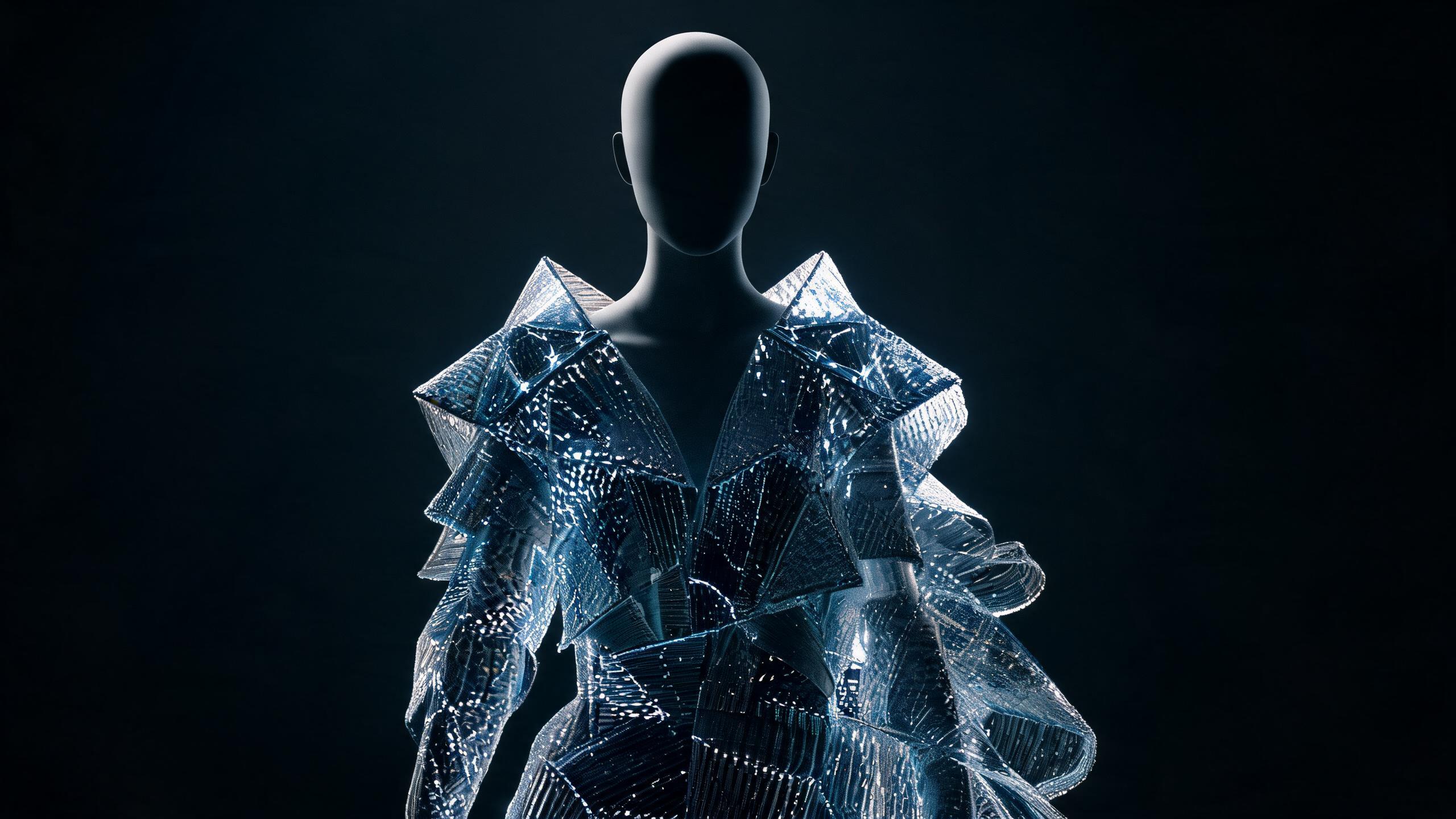
Style is no longer a seasonal event; it is a computation. For decades, the global fashion industry has looked to Milan as the definitive arbiter of aesthetic authority. Every February and September, the world waits for a handful of creative directors to dictate the visual language of the next six months. This is the traditional model of Milan fashion week identity design trends—a top-down, centralized broadcast of taste. But this model is breaking. As we move deeper into the era of algorithmic commerce, a new approach is emerging: AI-powered identity design. This is not about robots designing clothes; it is about building high-fidelity style models that understand the nuances of Italian craftsmanship better than any human mood board.
The tension between these two methodologies defines the current state of fashion. On one side, we have the heritage of the "Made in Italy" label, rooted in physical archives and the intuition of legendary designers. On the other, we have generative intelligence and dynamic taste profiling that can predict, iterate, and personalize fashion at a scale humans cannot touch. To understand which approach wins, we must look past the glamour of the runway and examine the underlying infrastructure of how style is created and consumed.
Archive Preservation vs. Latent Space Exploration
The traditional approach to Milan fashion week identity design trends is fundamentally retrospective. Brands like Prada, Gucci, and Versace maintain massive physical archives—tempels of fabric and pattern that serve as the "DNA" for every new collection. Designers spend months mining these archives to find a thread of continuity that can be repackaged for the modern market. The process is slow, expensive, and limited by the human capacity to remember and synthesize history. It relies on the "Creative Director" as a singular bottleneck for all aesthetic decisions.
AI-powered identity design replaces the archive with the latent space. By training neural networks on the entirety of a brand’s visual history, AI can identify the mathematical signatures of a Milanese aesthetic—the specific curvature of a lapel, the precise saturation of a Mediterranean blue, or the weight of a silk drape. Instead of a designer looking at a vintage coat and guessing how to modernize it, an AI model can explore thousands of permutations within that brand’s latent space in seconds. This is not "copying" the past; it is understanding the deep structure of the identity. The AI approach wins here because it removes the friction of manual research and allows for a more rigorous exploration of what a brand’s identity can actually become.
The Creative Director vs. The Personal Style Model
In the traditional Milanese model, the Creative Director is the king. They design for a "muse" or an idealized version of a customer. When you buy into Milan fashion week identity design trends, you are buying into someone else’s vision of who you should be. This creates a disconnect. The clothes on the runway often fail to translate to the daily lives of the people buying them because the identity is static. It is a costume, not a reflection of the self. This is why the traditional retail model results in billions of dollars of unsold inventory every year; the "trends" dictated from the top don't align with the reality of the individual.
AI-powered fashion shifts the focus from the designer to the user. Instead of a singular identity broadcast to millions, AI enables the creation of a Personal Style Model for every individual. This model ingests data from your wardrobe, your physical proportions, your lifestyle, and your evolving tastes. It then filters the vast output of Milan Fashion Week through your specific identity. The AI does not ask "what is trending?"; it asks "how does this Milanese aesthetic integrate into your existing style model?" This approach treats fashion as a private intelligence service rather than a public performance. The winner is clear: an identity that adapts to you is infinitely more valuable than one you have to adapt to.
Mass Trend Cycles vs. Precision Recommendation
The traditional fashion cycle is built on obsolescence. Milan fashion week identity design trends are engineered to die so that new ones can be sold. This cycle of "in and out" is a byproduct of a low-intelligence distribution system. Because brands cannot predict what an individual wants, they must create mass "trends" to force a collective desire. This is why every store looks the same every six months. It is an inefficient, waste-heavy system that relies on marketing heat rather than actual utility or aesthetic resonance.
AI-powered systems operate on precision, not mass appeal. By using dynamic taste profiling, an AI-native fashion system can identify the specific elements of a Milanese collection—perhaps a particular textile innovation or a structural silhouette—that match a user’s long-term style trajectory. This eliminates the need for "trends" altogether. Recommendation systems in the old model were just "people who bought this also bought this" filters. In the AI-powered model, the recommendation is a generative act. The system understands the "why" behind your preferences. If Milan is leaning into 1970s neo-tailoring, the AI knows exactly which 5% of that trend is relevant to your style model and ignores the rest.
Production Efficiency and Environmental Identity
We cannot discuss Milan fashion week identity design trends without discussing the environmental cost of the traditional model. The "Made in Italy" prestige often masks a supply chain that is still remarkably primitive. Samples are made, shipped, rejected, and remade. Overproduction is the industry’s greatest shame. Traditional identity design is tied to the physical production of "lookbooks" and physical prototypes that may never see the light of day. It is a high-waste, high-latency process that is increasingly difficult to justify.
AI-powered identity design allows for a "digital-first" workflow. Brands can test aesthetic identities in virtual environments, gauging the resonance of a design with specific taste clusters before a single yard of fabric is cut. Furthermore, for the consumer, an AI stylist reduces the "buy-and-return" cycle that plagues e-commerce. When a system understands your personal style model with 99% accuracy, the "mistake purchase" disappears. The AI approach wins because it aligns aesthetic identity with planetary boundaries. It is the only way to maintain the luxury of Milanese design without the bankruptcy of the traditional production model.
Comparison Summary: Traditional vs. AI-Powered
| Dimension | Traditional Approach | AI-Powered Approach |
| Creative Source | Human intuition and physical archives | Latent space exploration and data models |
| Identity Flow | Top-down (Designer to Consumer) | Bottom-up (User-centric Style Models) |
| Velocity | Seasonal (6-month cycles) | Real-time (Continuous evolution) |
| Accuracy | Low (High returns/unsold stock) | High (Dynamic taste profiling) |
| Sustainability | Low (Resource intensive) | High (Precision-led, digital-first) |
The Pros and Cons of Tradition
The traditional approach to Milanese identity design is not without merit. It offers a level of human storytelling and tactile romance that AI cannot yet fully simulate. There is a "soul" to a hand-sketched design that resonates with our lizard brains. However, the cons are becoming insurmountable: high costs, slow response to culture, and a fundamental inability to provide true personalization. Tradition is a luxury for the few; it is a failing business model for the many.
The Pros and Cons of AI
The AI-powered approach offers a vision of fashion that is more intelligent, more personal, and more sustainable. It empowers the user to be the curator of their own identity. The primary risk is a potential loss of "creative friction"—the unexpected, jarring designs that human designers sometimes produce by accident. However, when AI is treated as infrastructure rather than just a feature, it becomes a tool that enhances human creativity rather than replacing it. It allows us to move from "following a trend" to "evolving a style."
The Verdict: Why the AI Model Wins
The winner is not a specific brand or a specific designer. The winner is the system that can manage the most complexity with the least friction. Traditional fashion design is a 19th-century process trying to survive in a 21st-century economy. It is too slow, too broad, and too disconnected from the individual.
Milan fashion week identity design trends will continue to be a source of aesthetic inspiration, but the delivery of that inspiration must be AI-native. We are moving toward a world where your "style" is a persistent data object—a model that lives in the cloud and interacts with the world’s fashion intelligence on your behalf. This model doesn't care about what is "trending" in a vacuum; it cares about what is right for you. The future of fashion is not a runway show you watch on a screen; it is a private stylist that knows you better than you know yourself.
The traditional model treats you as a consumer. The AI model treats you as an identity. In the battle for the future of Milanese style, intelligence always beats intuition at scale.
Most fashion platforms are still stuck in the old model, trying to sell you trends through a search bar. They are digital versions of a physical store. AlvinsClub is different. We have built the infrastructure for the future of style. AlvinsClub uses AI to build your personal style model. Every outfit recommendation learns from you, turning the global noise of fashion into a private, evolving signal. Try AlvinsClub →
Related Articles
- Gucci Milan Fashion Week Runway Highlights: What's Changing in 2026
- Generative AI For Custom Clothing Design Trends: What's Changing in 2026
- Traditional vs AI-Powered London Fashion Week Beauty Marketing Tips: Which Approach Wins?
- The Ultimate Andrew Mukamal Method Dressing Fashion Trends Style Guide
- How Generative AI Is Changing Fashion Design 2025: What's Changing in 2026