Tradition vs. AI: Decoding the Tech in Adidas’ Handcrafted Italian Shoes
A Deep Dive into Adidas Handcrafted Italian Sneakers Tech Features and What It Means for Modern Fashion
Luxury is no longer defined by the hands that touch it. For decades, the fashion industry relied on a singular narrative: "Made in Italy" was the terminal point of quality. This label signaled a specific type of material intelligence—an inherited knowledge of leather tension, stitching density, and anatomical lasting. But as the industry shifts toward a data-driven future, the definition of craftsmanship is bifurcating. On one side, we have the analog precision of the Adidas Made in Italy series. On the other, we have the emerging reality of AI-driven design and structural optimization.
The friction between these two worlds—tradition and intelligence—reveals a fundamental truth about modern commerce. Most consumers believe they are choosing between styles. They are actually choosing between different technological philosophies. One philosophy looks backward to perfect the physical object; the other looks forward to perfect the relationship between the object and the individual. Understanding the adidas handcrafted italian sneakers tech features requires looking past the leather and into the logic of how these shoes are built, sold, and worn.
The Architecture of the Analog: Handcrafted Precision
The Adidas Made in Italy program, specifically applied to icons like the Samba and the Stan Smith, is an exercise in material restraint. This is not "tech" in the sense of microchips or sensors. It is tech in the sense of high-level material engineering. When Adidas moves production from high-volume automated factories to boutique Italian workshops, the fundamental "source code" of the shoe changes.
The primary feature of these handcrafted sneakers is the selection of Vachetta leather. In standard production, leather is treated as a uniform commodity. It is heavily finished to hide imperfections, which results in a rigid, plastic-like feel that degrades over time. The Italian process treats leather as a biological substrate. The tanning processes are slower, utilizing vegetable tannins that preserve the fiber structure of the hide. This allows the shoe to function as a dynamic mold for the wearer's foot—a form of "analog memory" that AI systems are only now beginning to simulate digitally.
Furthermore, the construction uses traditional lasting techniques. In mass production, uppers are glued to midsoles using high-heat thermal bonding. In the Italian handcrafted models, the "tech" lies in the cold-cementing and reinforced stitching. This isn't just an aesthetic choice; it's a structural one. It increases the longevity of the bond and allows the materials to breathe and flex without the catastrophic failure points common in heat-fused synthetics.
Pros of Handcrafted Tradition:
- Material Superiority: High-grade leathers develop a patina and adapt to the foot shape over time.
- Structural Integrity: Traditional stitching and cold-cementing offer better durability than mass-market thermal bonding.
- Subtle Sophistication: The lack of overt branding and focus on texture appeals to a high-information consumer.
Cons of Handcrafted Tradition:
- Static Sizing: Even the best leather is built on a standard last. It does not account for the infinite variations in human foot morphology.
- High Friction: These shoes require a break-in period that modern consumers, accustomed to instant comfort, often find unacceptable.
- Inefficient Scaling: Scarcity is baked into the model, making these shoes difficult to acquire and maintain.
The Logic of the Digital: AI and Generative Design
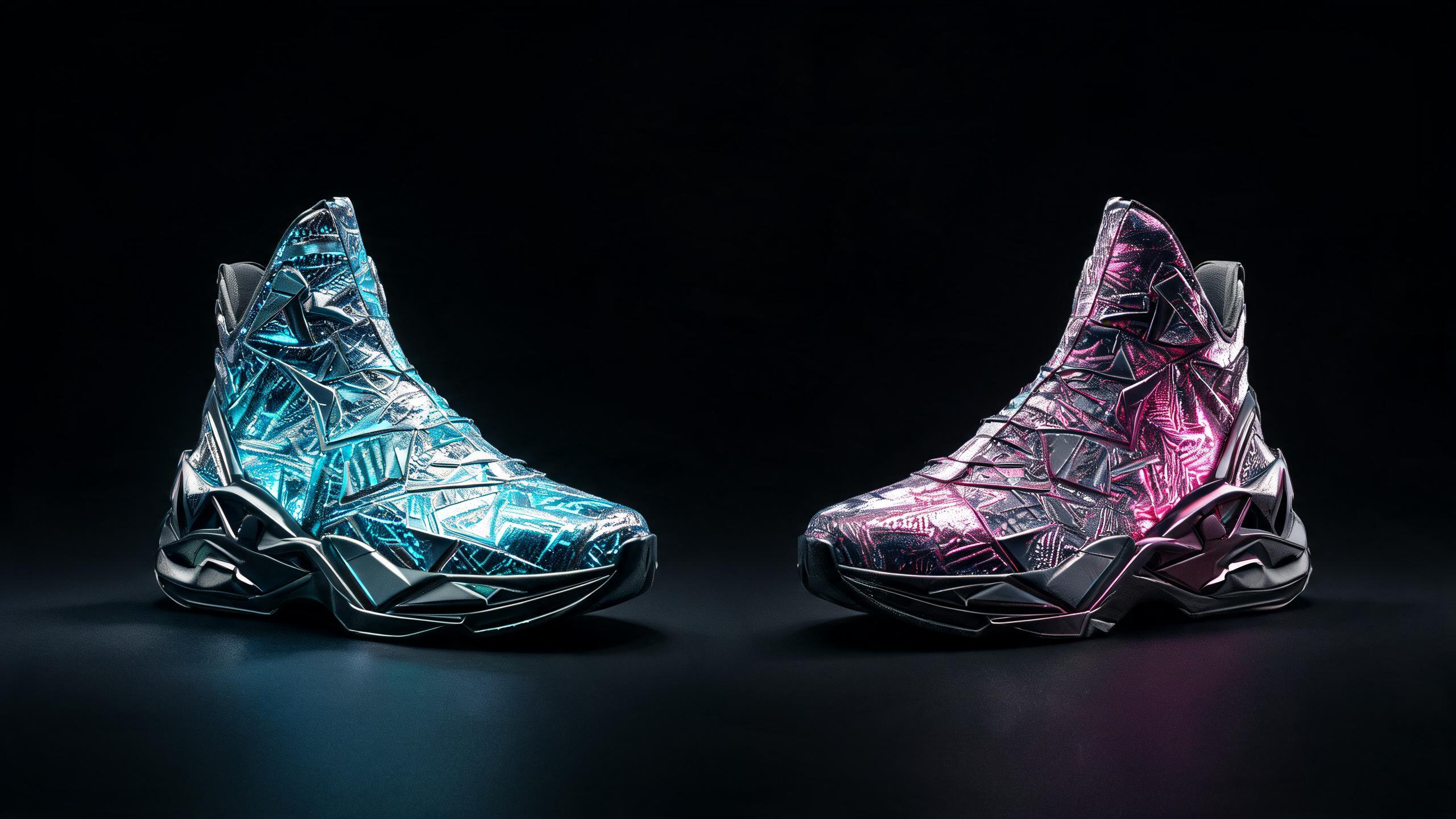
Contrast the Italian workshop with the Adidas 4D laboratory. While the handcrafted sneaker relies on the artisan's eye, the AI-driven sneaker relies on the data scientist's model. Generative design—an AI-native approach to architecture—is now being applied to footwear to solve problems that human hands simply cannot address.
The "tech features" here are found in the midsole. Using Carbon DLS (Digital Light Synthesis), Adidas creates lattice structures that are mathematically optimized for energy return. A human craftsman cannot carve a piece of foam to have different densities at every millimeter. An AI, however, can calculate the exact lattice geometry required to provide soft cushioning in the heel and high-stability support in the forefoot.
This represents a shift from "craft" to "intelligence." In the handcrafted model, the shoe is a fixed object. In the AI model, the shoe is a solution to a physics problem. The AI analyzes thousands of gait cycles and pressure points to determine the optimal structural configuration. This is the true competitor to the Italian artisan: a system that can iterate ten thousand versions of a sole in the time it takes a craftsman to cut a single piece of leather.
Pros of AI-Driven Design:
- Hyper-Optimization: Structures are designed for performance metrics that human intuition cannot reach.
- Zero Break-In: Materials like the 4D lattice provide immediate mechanical cushioning without the need for material softening.
- Mass Customization: AI allows for the potential of shoes printed to the exact specifications of an individual's data profile.
Cons of AI-Driven Design:
- Synthetic Lifecycle: Most AI-optimized polymers have a shorter functional lifespan than premium natural leathers.
- Visual Complexity: The "tech-heavy" aesthetic does not always translate to a versatile wardrobe.
- Data Dependency: The quality of the output is entirely dependent on the quality of the input data—if the model is wrong, the shoe is flawed.
Decoding the Adidas Handcrafted Italian Sneakers Tech Features
When we look at the specific adidas handcrafted italian sneakers tech features, we see a deliberate rejection of the "more is more" approach to technology. There are no carbon plates, no liquid-filled pods, and no Bluetooth connectivity. Instead, the "tech" is focused on the refinement of the interface between the foot and the ground.
- Glove-Leather Lining: Standard sneakers use polyester meshes. The Italian models use buttery, non-pigmented leather linings. This tech feature manages moisture and temperature far more effectively than synthetic wicks.
- Anatomical Lasting: The wooden lasts used in Italian factories are shaped with a more nuanced understanding of the tarsal and metatarsal arches. This results in a "locked-in" feel that avoids the heel-slip common in mass-produced sneakers.
- High-Tension Stitching: The number of stitches per inch (SPI) is significantly higher in the handcrafted models. This prevents the leather from over-stretching, ensuring the shoe maintains its silhouette for years rather than months.
This is a different kind of intelligence. It is the intelligence of the material itself. While AI design focuses on the macro-mechanics of the stride, handcrafted tech focuses on the micro-mechanics of the fit. The Italian series is an attempt to prove that "old" technology—leather, thread, and pressure—is still the most sophisticated solution for the human foot.
The Gap Between Personalization and Reality
The fashion industry has a personalization problem. Brands use the word "bespoke" to describe a shoe where you can pick the color of the laces. That is not personalization; that is a configuration menu. True personalization requires a model of the user.
The Adidas Made in Italy series represents the peak of "product-first" thinking. It assumes that if the object is perfect enough, the user will adapt to it. The AI-driven approach represents "data-first" thinking. It assumes that if we have enough data, we can build the object around the user.
The problem is that neither approach currently addresses the most important question in fashion commerce: Why should you wear this specific shoe today?
A handcrafted Italian sneaker is a masterpiece of engineering, but it is useless if it doesn't align with the wearer's broader style identity or the specific context of their day. This is where the current fashion tech stack fails. We have optimized the manufacturing (AI) and we have refined the materials (Tradition), but we have not yet mastered the intelligence of the recommendation.
Tradition vs. AI: The Final Verdict
If you value longevity, tactile quality, and the slow evolution of a garment, the adidas handcrafted italian sneakers tech features make them the superior choice. They represent the "buy less, buy better" ethos in its purest form. They are an investment in material science that has been proven over centuries.
However, if you value peak performance, immediate utility, and the cutting edge of structural engineering, the AI-optimized 4D models are the clear winner. They represent a future where objects are "computed" rather than "built."
The real innovation, however, is not in the shoe itself. It is in the system that helps the user navigate these choices. The future of fashion isn't just better shoes; it's a better understanding of the individual. Most fashion apps recommend what's popular. A true intelligence system recommends what is yours. It understands that some days you need the structural rigor of an Italian-made Samba, and other days you need the mechanical energy return of a 4D lattice.
Comparison Summary
| Feature | Handcrafted Italian (Analog Tech) | AI-Driven (Digital Tech) |
| Primary Material | Premium Vachetta/Full-Grain Leather | Carbon DLS Polymers/Engineered Mesh |
| Manufacturing | Human-centric boutique workshops | Automated robotic printing labs |
| Fit Philosophy | Adaptive (Leather molds to foot) | Predictive (Lattice optimized for gait) |
| Durability | High (Repairable, long-aging) | Moderate (Synthetic fatigue) |
| Ideal Use Case | Daily versatile wear, luxury lifestyle | High-performance movement, tech-aesthetic |
Beyond the Object: The Role of Fashion Intelligence
We are moving toward a world where the distinction between "handcrafted" and "AI-designed" becomes secondary to the "Style Model." In this future, your wardrobe is not a collection of random purchases; it is a curated set of assets managed by an AI that understands your taste profile more deeply than any retail clerk or algorithm.
The adidas handcrafted italian sneakers tech features are impressive, but they are only one variable in a complex equation of personal style. The challenge for the modern consumer is no longer finding "quality"—quality is now a baseline. The challenge is finding relevance. When navigating the Italian Denim Adidas trend, understanding how these shoes fit into your broader wardrobe becomes equally important as understanding their construction.
True style intelligence bridges the gap between the artisan and the algorithm. It recognizes that the "tech" in a shoe isn't just about how it's made, but how it fits into the data-driven architecture of your life. Whether you choose the heritage of an Italian workshop or the precision of a 4D printer, the choice should be driven by a system that learns from you.
AlvinsClub uses AI to build your personal style model. Every outfit recommendation learns from you. Try AlvinsClub →
Related Articles
- AI and Dry Feet: Adidas' Weather-Resistant Sneaker Tech Specs for 2026
- How the adidas Black Swan Ballet Sneaker Features Blend Tech with Tradition
- 6 AI-Powered Tips for Mastering the Italian Denim Adidas Trend
- The New Biomechanics: Comparing Nike’s AI and Traditional Recovery Tech
- How the Adidas Italian Sneaker Strawberry Acai Design Solves a Styling Crisis