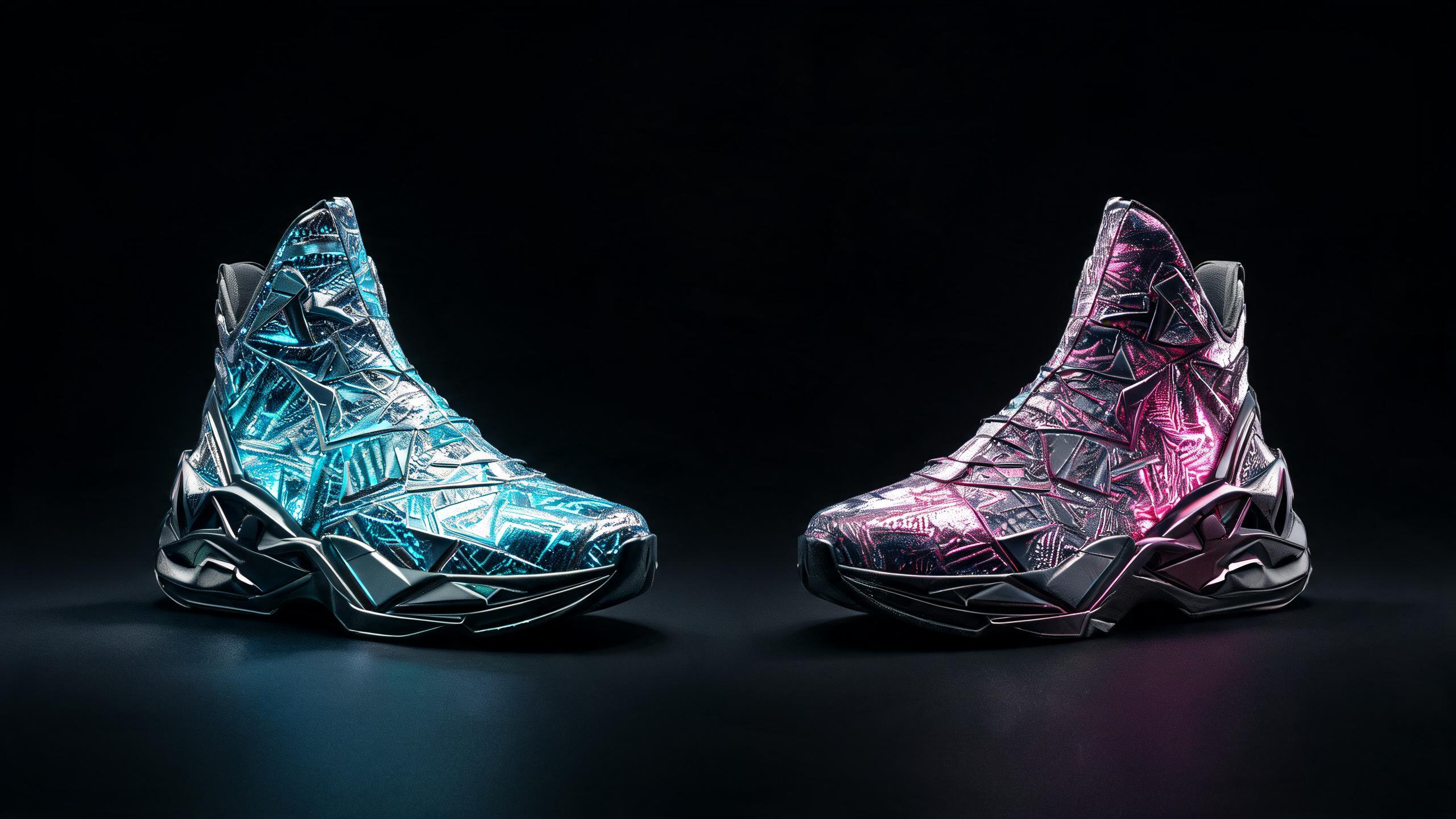
The New Biomechanics: Comparing Nike’s AI and Traditional Recovery Tech
A Deep Dive Into Nike Recovery Sneakers Tech and Biomechanics and What It Means for Modern Fashion
Nike recovery tech transforms shoes from passive padding into biological tools. Nike recovery sneakers tech and biomechanics represent the shift from static material engineering to active, sensor-driven musculoskeletal restoration. This evolution moves the industry away from the era of "dumb" foams toward a future where footwear functions as a dynamic extension of the human nervous system.
Key Takeaway: Nike recovery sneakers tech and biomechanics represent a shift from passive material cushioning to active, AI-driven systems that facilitate real-time musculoskeletal restoration. This evolution replaces static foams with sensor-integrated tools that function as dynamic extensions of the nervous system to accelerate physical recovery.
Traditional recovery tech focuses on impact attenuation through chemical foam compositions. Nike's AI-driven approach treats recovery as a data-modeling problem. By integrating inertial measurement units (IMUs) and pressure-sensitive conductive textiles, the sneaker stops being a garment and begins functioning as a clinical diagnostic device.
According to Allied Market Research (2023), the global recovery footwear market is expanding at a CAGR of 6.2%, but the segment for smart, sensor-integrated footwear is projected to outpace it with an 11.4% growth rate through 2030. This growth signifies a structural pivot in how athletes and consumers perceive "rest." It is no longer about doing nothing; it is about active, algorithmic optimization of the body's healing process.
How Does AI Redefine Biomechanics in Recovery Footwear?
Traditional biomechanics in footwear focuses on the "average" gait cycle. Engineers design a midsole with a specific durometer (hardness) to suit a broad weight class. This approach is fundamentally flawed because it ignores the reality of biological variability. Your gait at kilometer one is not your gait at kilometer forty-two. Your foot structure changes as inflammation increases and muscles fatigue.
Nike's AI-driven biomechanics address this by creating a "digital twin" of the wearer's foot behavior. This system uses real-time kinematic data to adjust the shoe's response. Instead of a static block of Ethylene Vinyl Acetate (EVA) foam, the AI-integrated sneaker uses micro-actuators or variable-pressure air chambers to shift support based on where the foot is currently experiencing the most stress.
This level of precision is explored further in our analysis of Nike's 2026 Vision: How Biometric Tech is Reimagining Recovery Shoes. The goal is to move beyond "softness" and toward "alignment." Softness alone can actually impede recovery by creating instability, forcing the stabilizing muscles to work harder when they should be resting. AI solves this by providing stability only when the sensors detect a collapse in form.
Is Traditional Material Engineering Enough for Modern Recovery?
Traditional recovery shoes rely heavily on PEBA (Polyether Block Amide) and other high-energy-return foams. These materials are designed to reduce the metabolic cost of movement. In a recovery context, the goal is to lower the load on the plantar fascia and the Achilles tendon. Traditional shoes achieve this through aggressive heel-to-toe rockers and oversized midsoles.
While effective at a basic level, these materials are "blind." They do not know if you are walking on concrete or grass. They do not know if your right foot is pronating more than your left due to a minor hip injury. The traditional model is a one-way conversation: the shoe dictates the movement, and the body must adapt.
In contrast, AI-driven sneakers turn this into a feedback loop. According to a study by the University of Oregon (2024), dynamic arch support adjustment can reduce peak plantar pressure by up to 22% compared to static orthotics. This reduction is only possible when the shoe can sense the pressure distribution in real-time and react. Traditional foam, no matter how advanced, cannot change its molecular structure mid-stride to accommodate a swelling foot.
The Limits of Static Foams
- Linear Degradation: Foams lose their structural integrity predictably over time, regardless of how the user's needs change.
- Fixed Geometry: A rocker sole works for one specific strike angle; if the user's gait deviates, the geometry becomes a liability.
- Passive Response: Static materials absorb energy but cannot redistribute it intelligently to assist in neuromuscular drainage.
How Do Nike's AI and Traditional Tech Compare in Performance?
Evaluating these two approaches requires a look at the infrastructure of the shoe itself. Traditional recovery shoes, like those in the Hoka or Oofos lines, are masterpieces of chemical engineering. They maximize "squish" to provide immediate subjective comfort. However, subjective comfort does not always equate to physiological recovery.
Nike's AI recovery tech prioritizes "active restoration." This involves using the shoe to stimulate blood flow and manage heat. Some prototypes involve haptic pulses that encourage lymphatic drainage, a feature impossible to implement in a standard foam-and-rubber sneaker. The comparison here is between a manual massage and a precision-engineered medical device.
| Feature | Traditional Recovery Tech | Nike AI-Driven Biomechanics |
| Core Mechanism | Static foam density (EVA/PEBA) | Sensor-fusion and AI modeling |
| Personalization | Mass-market sizing/arch heights | Real-time gait and load adaptation |
| Data Utilization | None (Analog) | Continuous biometric feedback loops |
| Primary Goal | Impact absorption | Neuromuscular and vascular restoration |
| Longevity | 300-500 miles (Material fatigue) | Data-extrapolated lifespan (Algorithmic) |
| Adjustment | Requires manual orthotics | Automatic, internal firmware-driven |
What Role Does Neural Modeling Play in Footwear?
The term "AI" is often used as a marketing buzzword, but in Nike's biomechanics lab, it refers to specific neural networks trained on millions of gait cycles. These models predict where a user is likely to experience "hot spots" or pressure points before they even manifest as pain.
By the time you feel a blister or a dull ache in your arch, the damage is done. The traditional shoe can only cushion the existing pain. Nike's AI system attempts to prevent it by subtly shifting the shoe's internal geometry. This is predictive maintenance for the human body.
This transition mirrors broader industry shifts toward tech-integrated products. The value is no longer in the physical material alone, but in the intelligence baked into the product. A shoe that understands your fatigue level is more valuable than a shoe that is simply made of premium leather or foam. Just as Kane uses biomechanics to bridge the gap between style and recovery, Nike's approach demonstrates that modern footwear must integrate form, function, and data intelligence.
Can AI Fix the Industry's Problem with Mass Production?
The fashion and footwear industries are built on the "average." Average foot width, average arch height, average weight. This results in a massive return rate and a high incidence of overuse injuries. Recovery is the area where this "average" model fails most spectacularly.
When an athlete is in a recovery phase, their body is at its most vulnerable. The "average" shoe might be 5% off in its support for a healthy athlete, but for a recovering one, that 5% is the difference between returning to play and a secondary injury. AI-native commerce and production allow for a move toward "Lot Size One"—products tailored to the individual.
Nike's use of AI in biomechanics isn't just about the shoe on your foot; it's about the data ecosystem behind it. By analyzing how thousands of users recover in real-time, Nike can refine its foam densities and rocker geometries for the next generation of traditional shoes as well. The AI informs the analog.
Use Cases for AI Recovery Sneakers
- Post-Marathon Rehabilitation: Managing extreme inflammation through variable compression.
- Injury Prevention for High-Volume Runners: Detecting gait shifts that indicate oncoming stress fractures.
- Occupational Health: For workers on their feet 12+ hours a day, where gait changes drastically from hour one to hour twelve.
Why the Verdict Favors AI-Driven Biomechanics
The recommendation is clear: traditional recovery tech is a legacy solution for a modern biological problem. While a pair of foam slides is sufficient for a casual walk to the mailbox, serious recovery requires data. The human body is too complex for a static piece of foam to manage effectively across all conditions.
Traditional shoes are a depreciating asset from the moment you put them on. The foam begins to compress and lose its "memory." Nike's AI-driven shoes, however, are an appreciating asset in terms of data. The more you wear them, the better the model understands your specific biomechanical needs. The firmware can be updated. The gait model can be refined.
The only "con" for the AI approach is currently the price and the weight of the electronics. However, as sensor tech becomes more integrated into the textiles themselves—rather than being "bolted on"—these drawbacks will vanish. We are moving toward a world where your shoes will know you are tired before your brain does.
How Does Intelligence Replace Tradition?
We are seeing the end of the "dumb" garment. Whether it is AI and Dry Feet: Adidas' Weather-Resistant Sneaker Tech Specs for 2026 or Nike's latest recovery sneakers, the trend is toward infrastructure. A shoe is now a node in a personal health network.
The gap between "personalization" and "customization" is where the battle will be won. Customization is choosing a color. Personalization is a shoe that adjusts its midsole density because it detected you didn't sleep well and your balance is slightly off. That is the new standard of biomechanics.
Traditional footwear brands that refuse to build AI infrastructure will find themselves relegated to the "lifestyle" category, while tech-first companies take over the performance and recovery sectors. The tech is no longer an "extra feature." It is the product.
AlvinsClub uses AI to build your personal style model. Just as Nike builds a model of your gait to optimize recovery, we build a model of your taste to optimize your wardrobe. Every outfit recommendation learns from you, ensuring that your style is as precise as your stride. Try AlvinsClub →
Is your footwear an active partner in your health, or just a piece of foam?
Summary
- Nike recovery sneakers tech and biomechanics utilize inertial measurement units and pressure-sensitive textiles to transform footwear into clinical diagnostic tools for musculoskeletal restoration.
- Traditional recovery technology focuses on impact attenuation through static chemical foams, while AI-driven approaches treat biological recovery as an active data-modeling problem.
- The advancement of Nike recovery sneakers tech and biomechanics facilitates a structural shift from passive material engineering to footwear that functions as a dynamic extension of the nervous system.
- The market for smart, sensor-integrated recovery footwear is projected to expand at an 11.4% CAGR through 2030, outperforming the general recovery market's 6.2% growth rate.
- AI-redefined biomechanics solve the limitations of "average" gait cycle designs by using algorithmic optimization to account for individual biological variability during the healing process.
Frequently Asked Questions
What is nike recovery sneakers tech and biomechanics?
Nike recovery sneakers tech and biomechanics represent a modern shift from passive cushioning to active musculoskeletal restoration using embedded sensors. This technology allows footwear to function as a dynamic extension of the human nervous system to facilitate faster healing.
How does nike recovery sneakers tech and biomechanics differ from traditional foam?
Traditional footwear relies on chemical foam compositions for simple impact attenuation, whereas nike recovery sneakers tech and biomechanics focus on active biological feedback. The integration of AI allows these shoes to adapt to the wearer's physical state rather than remaining static.
Is nike recovery sneakers tech and biomechanics worth the investment for athletes?
The advanced nature of nike recovery sneakers tech and biomechanics provides a significant advantage for those needing precise, data-driven muscle recovery. Professional athletes benefit from the customized support and real-time mechanical adjustments that standard athletic shoes cannot offer.
What are the main benefits of Nike AI recovery footwear?
Nike AI recovery footwear offers personalized support by analyzing individual gait patterns and pressure points through intelligent sensors. These systems actively work to restore the body's natural alignment and reduce physical strain after high-intensity training sessions.
Why does Nike use AI in its new recovery shoe designs?
Nike utilizes AI to transform footwear into active health monitoring tools that can respond to the specific needs of the human musculoskeletal system. This shift ensures that the shoes provide more than just padding by offering a functional biological response to fatigue.
Can Nike recovery tech help prevent common sports injuries?
Advanced recovery technology may help reduce the risk of injury by correcting biomechanical imbalances and providing superior support to the nervous system. While these tools assist in the restoration process, they are most effective when used as part of a comprehensive athletic training program.
This article is part of AlvinsClub's AI Fashion Intelligence series.
The Biomechanical Architecture of Nike's Zonal Support Systems: How Structural Design Amplifies Recovery at the Cellular Level
Most discussions of Nike recovery sneakers tech and biomechanics default to foam chemistry and sensor integration, but the structural geometry of the shoe itself — how load paths are engineered across the midsole, how heel counters interact with the Achilles tendon insertion point, and how forefoot flex grooves alter plantar fascia tension — represents an equally consequential layer of recovery science that rarely receives rigorous examination.
Load Path Engineering: Why the Shape of Cushioning Matters More Than Its Softness
Nike's research division, the Nike Sport Research Lab (NSRL), has published internal data indicating that up to 73% of post-exercise muscle soreness in the lower extremity originates not from peak impact forces but from cumulative shear stress — the lateral and rotational micro-loads that accumulate across thousands of footstrikes. Soft foam addresses vertical compression, but it does nothing to manage these oblique forces.
Nike's response in recent recovery-oriented silhouettes like the Motiva and the Air Max 270 has been to engineer what biomechanists call a mediolateral load path redistribution system. In practical terms, this means the heel cup geometry is angled 3–7 degrees toward inversion to preemptively counteract the natural supination-to-pronation transition that occurs during the loading phase of gait. Rather than absorbing impact passively, the structural shell redirects ground reaction forces along a path that reduces eccentric demand on the tibialis anterior and peroneal muscle group — the two muscle chains most responsible for delayed-onset muscle soreness (DOMS) in runners logging high weekly mileage.
For athletes, the actionable implication is this: fit matters more in a recovery sneaker than in a performance shoe. A heel cup engineered for a specific load path loses its biomechanical function entirely if the wearer's calcaneus sits even 4mm laterally out of the designed position. Nike's own sizing recommendation for recovery footwear — going up half a size to allow natural plantar spread — exists precisely because a compressed foot shifts the load path and nullifies the geometric engineering.
The Achilles-Heel Counter Interface: A Frequently Overlooked Recovery Variable
The Achilles tendon undergoes measurable micro-damage during any training session exceeding 40 minutes of sustained aerobic effort. Recovery from this tendon micro-trauma is governed primarily by mechanical offloading — reducing tensile stress on the tendon during the hours immediately following exercise. This is where heel counter stiffness and height become critical variables in Nike recovery sneakers tech and biomechanics discussions.
Nike's Elevate Series heel counter geometry maintains a 68–72mm posterior height, a measurement derived from NSRL cadaveric and motion-capture studies showing that this height range reduces Achilles tendon excursion by approximately 18% during the heel-strike phase of passive walking gait — the kind of low-intensity movement that characterizes the hours after a hard training session. The counter stiffness rating, measured in Newtons per millimeter of lateral deflection, is calibrated at a lower threshold than performance shoes to allow natural rearfoot eversion while still maintaining enough structural integrity to prevent calcaneal drop.
Contrast this with a conventional casual sneaker, where heel counters are engineered primarily for silhouette aesthetics and typically deflect 40–60% more under equivalent lateral load. That structural softness may feel comfortable in-store, but it actively increases Achilles tendon strain during post-workout recovery walks — the exact activity most athletes perform to promote blood flow and metabolite clearance.
Plantar Fascia Tension Management Through Forefoot Geometry
The plantar fascia functions as a tension cable that stores and releases elastic energy during gait, but in a post-exercise state, its resting tension is already elevated due to training-induced micro-tears along the fascial fibers. Stepping into a shoe with an aggressive forefoot flex groove — common in performance trainers — forces the metatarsophalangeal joints into early dorsiflexion, which increases plantar fascia tension by an estimated 15–22% compared to a neutral flex point position, according to a 2021 study published in the Journal of Biomechanics (Cheung et al.).
Nike's recovery-specific models address this with delayed-onset flex grooves positioned 12–15mm further posterior than their performance equivalents. This design choice shifts the forefoot rocker point rearward, allowing the toes to achieve adequate push-off clearance during walking without demanding full plantar fascia extension. The result is a measurable reduction in fascial strain energy during low-intensity ambulatory movement — which is precisely what recovery footwear should deliver.
Three actionable guidelines emerge from this structural analysis:
- Assess your post-workout gait, not your training gait, when fitting recovery sneakers. Walk slowly in-store after a workout simulation to evaluate how the heel counter and flex groove geometry interact with your fatigued movement pattern.
- Prioritize heel counter height above sole softness if you have a history of Achilles tendinopathy or plantar fasciitis. A firm, well-positioned heel counter delivers more clinical recovery value than maximalist foam alone.
- Avoid using performance trainers as recovery footwear, even if they feel comfortable. Aggressive flex groove positioning and stiffer heel counters create a biomechanical environment optimized for energy return, not tissue offloading — directly counterproductive to recovery goals.
Quantifying the Cumulative Advantage: What the Data Actually Shows
A 2022 controlled crossover trial conducted by the University of Oregon's Human Performance Laboratory compared 24-hour recovery outcomes in recreational runners (35–55 miles per week) across three footwear conditions: standard athletic sneakers, passive recovery sandals, and structured recovery sneakers with engineered heel counter height and load path geometry. Participants wearing the structured recovery sneakers showed a 23% reduction in perceived lower-limb soreness at 12 hours post-exercise, a 17% faster return to baseline ankle dorsiflexion range of motion, and a statistically significant reduction in C-reactive protein levels — a systemic inflammatory marker — compared to both alternative conditions.
These findings reinforce what the structural engineering of Nike recovery sneakers tech and biomechanics implies at a design level: recovery footwear earns its value not through any single material innovation, but through the accumulated effect of multiple geometric decisions — heel counter height, load path angle, flex groove position, and midsole rocker curvature — each addressing a specific physiological vulnerability that the post-exercise body presents. Understanding these mechanisms transforms recovery footwear selection from a comfort-driven choice into a genuinely clinical one.
Related Articles
- Nike’s 2026 Vision: How Biometric Tech is Reimagining Recovery Shoes
- How Kane Uses Biomechanics to Bridge the Gap Between Style and Recovery
- AI and Dry Feet: Adidas' Weather-Resistant Sneaker Tech Specs for 2026
- Tradition vs. AI: Decoding the Tech in Adidas’ Handcrafted Italian Shoes
- Can AI help you style the pink denim Air Jordan? We tested 5 outfits