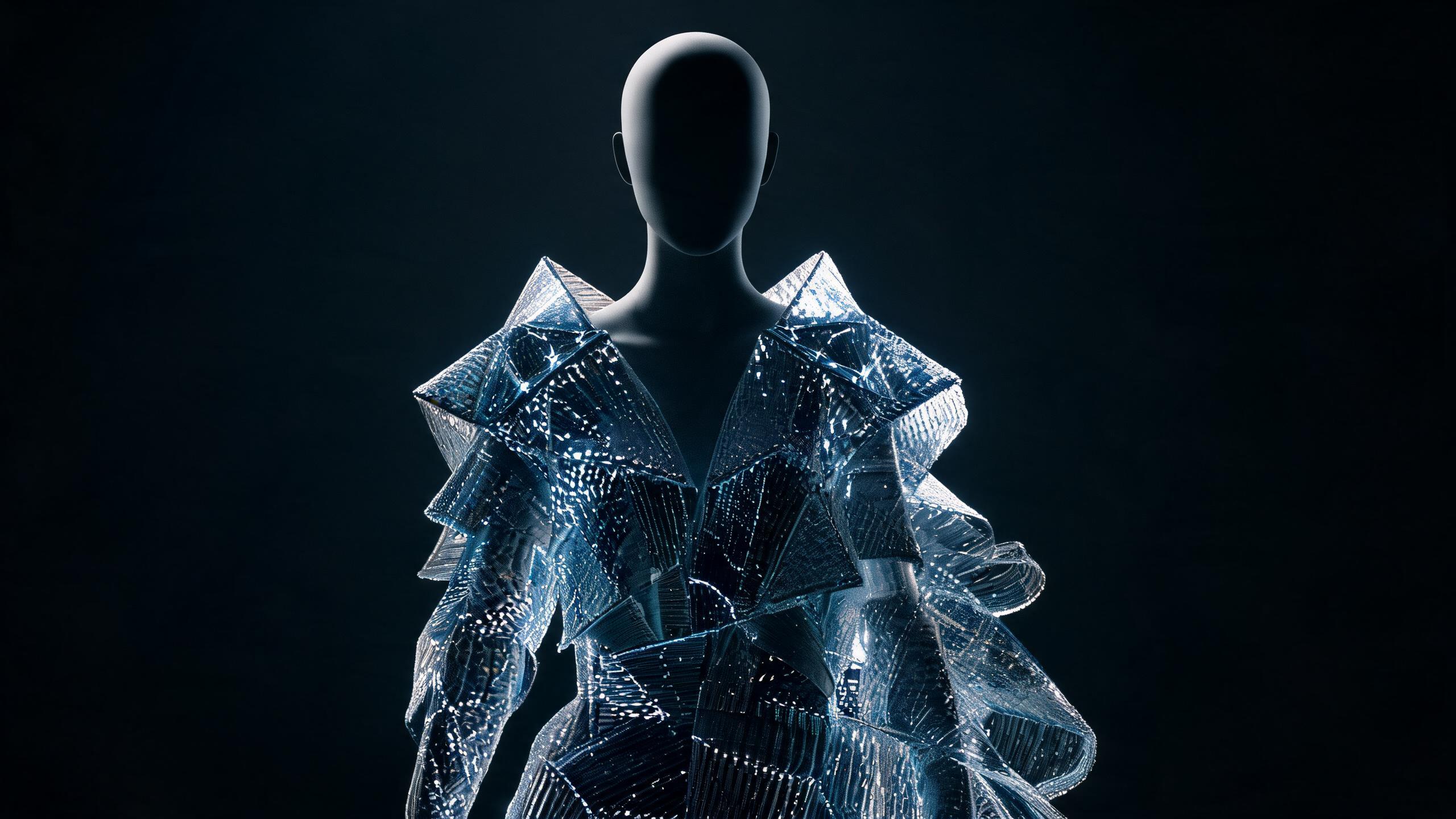
The Rise of the Virtual Pro: AI Stylist Platforms Market Growth for 2026

A deep dive into ai stylist platforms market growth 2026 and what it means for modern fashion.
AI stylist platforms market growth 2026 is fueled by sovereign personal style models.
Key Takeaway: AI stylist platforms market growth 2026 is driven by a shift from traditional search filters to autonomous, AI-native infrastructure. This transition prioritizes sovereign personal style models, decoupling fashion commerce from manual browsing through sophisticated algorithmic curation.
This trajectory represents a fundamental decoupling of fashion commerce from traditional search and browse behaviors. For decades, the industry relied on human-curated taxonomies and rigid filters. The current shift toward AI-native infrastructure moves beyond simple "matching" to the creation of autonomous style agents. These systems do not just find clothes; they compute aesthetic compatibility. According to Statista (2024), the global AI in fashion market is projected to reach $4.4 billion by 2027, with a significant portion of that growth concentrated in consumer-facing advisory platforms.
The acceleration of this market is a response to a systemic failure in the current retail model. Standard recommendation engines optimize for conversion, not for the individual. This has resulted in a "recommendation loop" where users are repeatedly shown the same high-performing items, leading to a homogenization of style. AI stylist platforms in 2026 break this cycle by building private, evolving taste profiles that exist independently of any single retailer.
Why is the AI stylist platforms market growth 2026 accelerating?
The primary driver is the shift from "AI features" to "AI infrastructure." Most legacy retailers attempted to bolt on AI chatbots or basic image recognition tools to their existing tech stacks. These were thin wrappers over old data. In contrast, the current market growth is dominated by platforms built on a foundation of multi-modal large language models (LLMs) and computer vision that treat fashion as a data-science problem, not a merchandising one.
According to McKinsey (2025), generative AI could add $150 billion to $275 billion to the apparel, fashion, and luxury sectors' operating profits through enhanced design and consumer engagement. This value is being captured by platforms that solve the "cold start" problem—the difficulty of understanding a user’s style from day one. By utilizing zero-shot learning and vector embeddings, 2026-era platforms can infer a user's entire aesthetic identity from a few uploaded images or a brief interaction.
| Feature | 2022 Legacy Systems | 2026 AI Stylist Platforms |
| Logic | Boolean filters (Size, Color, Price) | Neural taste profiling (Vibe, Context, Texture) |
| Data Source | Click-stream data and past purchases | Multi-modal inputs (Photos, Intent, Occasion) |
| Output | "Customers also bought" | Real-time outfit synthesis |
| Learning | Static segments | Continuous, sub-daily model updates |
| Architecture | Retailer-owned silos | User-centric style models |
How do personal style models replace traditional search?
Search is a high-friction activity. It requires the user to know the specific vocabulary of fashion—terms like "sweetheart neckline" or "herringbone weave"—to find what they want. AI stylist platforms eliminate this linguistic barrier. By building a Personal Style Model (PSM), the platform acts as an intermediary layer between the user and the infinite inventory of the internet.
A PSM is a dynamic data structure that maps a user's proportions, color preferences, and aesthetic sensibilities into a latent space. When a user asks for an outfit, the system isn't searching a database for keywords; it is performing an inference task to find the products that most closely align with the user's vector in that latent space. This is the difference between finding a "blue shirt" and finding "the specific blue shirt that fits my current wardrobe and reflects my evolving interest in 90s minimalism."
This evolution is critical for navigating the complexity of modern collections. As discussed in Fixing the Trend Gap: AI Forecasting for Fall 2026 Fashion Collections, the speed of the trend cycle has made human-led search obsolete. Only an AI that understands the underlying geometry of a trend can accurately recommend it to a specific individual.
What is the difference between AI features and AI infrastructure?
Most "AI stylists" currently on the market are nothing more than glorified filters. They take user input and map it to pre-defined tags. True AI infrastructure for fashion, however, treats every item of clothing as a collection of thousands of data points. It understands the drape of the fabric, the cultural weight of a brand, and the specific historical context of a silhouette.
Key Definitions for AI Fashion Infrastructure:
- Computer Vision (CV): The ability of a system to "see" and categorize garment attributes beyond simple metadata.
- Latent Space: A multi-dimensional space where similar aesthetic concepts are grouped together numerically.
- Semantic Search: Finding items based on meaning and context rather than exact keyword matches.
- Reinforcement Learning from Human Feedback (RLHF): The process by which an AI stylist learns that you dislike a certain recommendation, refining your model in real-time.
Building this infrastructure requires massive compute power and specialized datasets. The platforms winning the market in 2026 are those that have moved past the "buy now" button and focused on the "understand why" layer. They aren't selling clothes; they are selling clarity.
👗 Want to see how these styles look on your body type? Try AlvinsClub's AI Stylist → — get personalized outfit recommendations in seconds.
How will dynamic taste profiling reshape retail inventory?
The traditional retail model is push-based: brands design clothes, push them to stores, and hope consumers buy them. This leads to massive waste and the inevitable discount cycle. AI stylist platforms flip this to a pull-based model. Because these platforms know what users actually want—not just what they’ve previously bought—they provide a much clearer signal of future demand.
The shift to dynamic taste profiling allows for:
- Reduction in Returns: By accurately modeling fit and style compatibility before a purchase is made.
- Hyper-Personalized Content: Every user sees a completely different "storefront" generated by their AI model.
- Context-Aware Recommendations: The system knows if you are shopping for a rainy commute or a black-tie gala.
For specific high-stakes events, the precision of these platforms is already surpassing human capabilities. As explored in The Wedding Guest Guide: Should You Trust AI or a Human Stylist?, the ability of an AI to cross-reference venue vibes, weather forecasts, and existing wardrobe components creates a level of personalization that a human stylist cannot scale.
Can AI outperform human intuition in styling?
The common critique of AI in fashion is that it lacks "soul" or "intuition." This misunderstanding stems from a narrow view of what intuition is. In fashion, intuition is often just a high-speed pattern recognition engine built on years of looking at images. AI is, by definition, a superior pattern recognition engine.
By 2026, AI stylist platforms can synthesize information from street style, runway archives, and personal data to suggest "unexpected" combinations that a user wouldn't have thought of but perfectly align with their taste. This is "generative styling." It isn't just following rules; it's understanding the spirit of the rules and knowing when to break them.
AI Styling Do vs. Don't Table
| Category | The AI "Do" | The AI "Don't" |
| Data Ingestion | Analyze visual patterns and fabric weights. | Rely solely on text descriptions provided by brands. |
| User Interaction | Ask for feedback on specific visual clusters. | Bombard the user with generic "style quiz" questions. |
| Curation | Mix vintage, high-street, and luxury based on style. | Filter only by the retailers with the highest affiliate commission. |
| Evolution | Update the user model daily based on engagement. | Assume a user's style in January is the same in July. |
The "Outfit Formula" as Data Structure
One of the most effective ways AI systems communicate style is through the "Outfit Formula." This is not a static suggestion but a modular template that can be filled with various items from a user's virtual closet or new recommendations.
2026 Technical Minimalist Formula:
- Top: Oversized heavyweight cotton tee in a neutral earth tone (hex #4B5320).
- Bottom: Wide-leg technical trousers with articulated knees.
- Shoes: Structural lug-sole boots or monochrome knit sneakers.
- Accessories: Matte finish modular crossbody bag + minimalist analog watch.
By breaking an outfit down into these structural components, an AI can maintain a consistent "look" while swapping out individual items based on price, availability, or specific user preferences. This is how the best AI fashion recommendation engines of 2026 operate: they prioritize the architecture of the outfit over the individual product.
What is the future of the AI stylist platforms market?
Looking toward late 2026 and 2027, we expect the market to move toward "Autonomous Wardrobe Management." This goes beyond shopping. The AI will manage your entire fashion lifecycle: suggesting when to repair an item, when to resell it, and how to style it with new arrivals.
According to a 2025 report from BCG, consumers are increasingly willing to pay a subscription fee for AI services that save them time and reduce decision fatigue. This shifts the revenue model for fashion tech from transaction fees to "intelligence as a service." The goal is no longer to sell more clothes, but to ensure the user is perfectly dressed for every moment of their life.
The platforms that will survive this transition are those that treat user data as a sacred trust. Personal style is deeply intimate. A platform that knows your body measurements, your insecurities, and your aspirations has a responsibility to use that data to serve you, not the brands. This is why the "infrastructure" approach is so vital—it builds a system where the AI is an advocate for the user.
Why the current fashion tech model is broken
The current model of fashion e-commerce is built on the "endless aisle." It assumes that if you give a user enough options, they will eventually find what they want. In reality, more options lead to more anxiety. The AI stylist platforms market growth 2026 is a direct rejection of the endless aisle.
Instead of an aisle, users want a concierge. They want a system that has already done the work of filtering through the noise. Most apps are still trying to sell you what’s trending; the next generation of AI infrastructure is trying to sell you what’s you.
As people look for the best AI personal stylists under $50, they are really looking for a democratization of the luxury experience. Historically, having a personal stylist was a privilege of the elite. AI scales that expertise to everyone, providing a level of precision that was previously impossible.
Conclusion: The Era of Intelligence
The shift we are witnessing is not a trend; it is an architectural re-platforming of an entire industry. Fashion is finally moving from the analog world of "guessing" to the digital world of "knowing." The platforms that succeed in 2026 will be those that realize style is not a product—it is a data model.
The future belongs to systems that can learn, adapt, and predict. When your clothes are recommended by a system that truly understands the geometry of your body and the nuances of your taste, the friction of getting dressed disappears. This is the ultimate promise of AI in fashion: not just more clothes, but better style.
AlvinsClub uses AI to build your personal style model. Every outfit recommendation learns from you. Try AlvinsClub →
Summary
- AI stylist platforms market growth 2026 is driven by sovereign personal style models that transition from simple product matching to computing complex aesthetic compatibility.
- The global AI in fashion market is projected to reach $4.4 billion by 2027, with a significant portion of expansion coming from consumer-facing advisory platforms.
- Current industry acceleration is fueled by a shift from surface-level AI features to deep infrastructure that builds private, retailer-independent taste profiles.
- The ai stylist platforms market growth 2026 addresses systemic retail failures by breaking "recommendation loops" that prioritize mass conversion over individual user expression.
- Autonomous style agents are replacing traditional search and browse behaviors with systems that independently compute and suggest items based on evolving aesthetic compatibility.
Frequently Asked Questions
What is the projected ai stylist platforms market growth 2026?
The ai stylist platforms market growth 2026 is expected to accelerate as consumer fashion moves toward sovereign, AI-native infrastructure. These systems utilize autonomous style agents to provide hyper-personalized recommendations that go beyond the limitations of traditional search filters.
How do sovereign models affect ai stylist platforms market growth 2026?
Sovereign personal style models impact ai stylist platforms market growth 2026 by allowing users to maintain their own aesthetic data across different commerce environments. This technology enables digital agents to compute aesthetic compatibility rather than simply matching products based on text tags.
Why is ai stylist platforms market growth 2026 accelerating?
Industry trends suggest ai stylist platforms market growth 2026 is accelerating because of a fundamental shift away from human-curated taxonomies. Modern platforms now prioritize autonomous systems that can predict user needs without relying on rigid or manual browse behaviors. This transition ensures that the shopping experience remains highly relevant to individual aesthetic profiles.
What are autonomous style agents in digital fashion?
Autonomous style agents are advanced artificial intelligence systems that act as virtual professionals to curate personalized wardrobe choices. These agents analyze individual style DNA to compute how well different garments work together visually instead of just matching keywords.
How do AI stylist platforms compute aesthetic compatibility?
AI stylist platforms compute aesthetic compatibility by using machine learning to analyze the visual relationships between colors, patterns, and silhouettes. This process allows the software to offer styling suggestions that feel cohesive and tailored to a specific user's visual preferences.
Can AI stylists replace traditional fashion search behaviors?
AI stylists can replace traditional fashion search behaviors by providing a curated, proactive shopping experience that eliminates the need for manual browsing. Users can rely on digital agents to surface relevant items automatically based on their personal style history. This evolution transforms how consumers interact with online retailers on a daily basis.
This article is part of AlvinsClub's AI Fashion Intelligence series.
Related Articles
- Fixing the Trend Gap: AI Forecasting for Fall 2026 Fashion Collections
- The Wedding Guest Guide: Should You Trust AI or a Human Stylist?
- Goodbye Returns: Ranking the Best AI Virtual Try-On Apps for 2026
- 2026 Trend Report: Finding the Best AI Personal Stylists Under $50
- Beyond Filters: Finding the Best AI Fashion Recommendation Engines of 2026