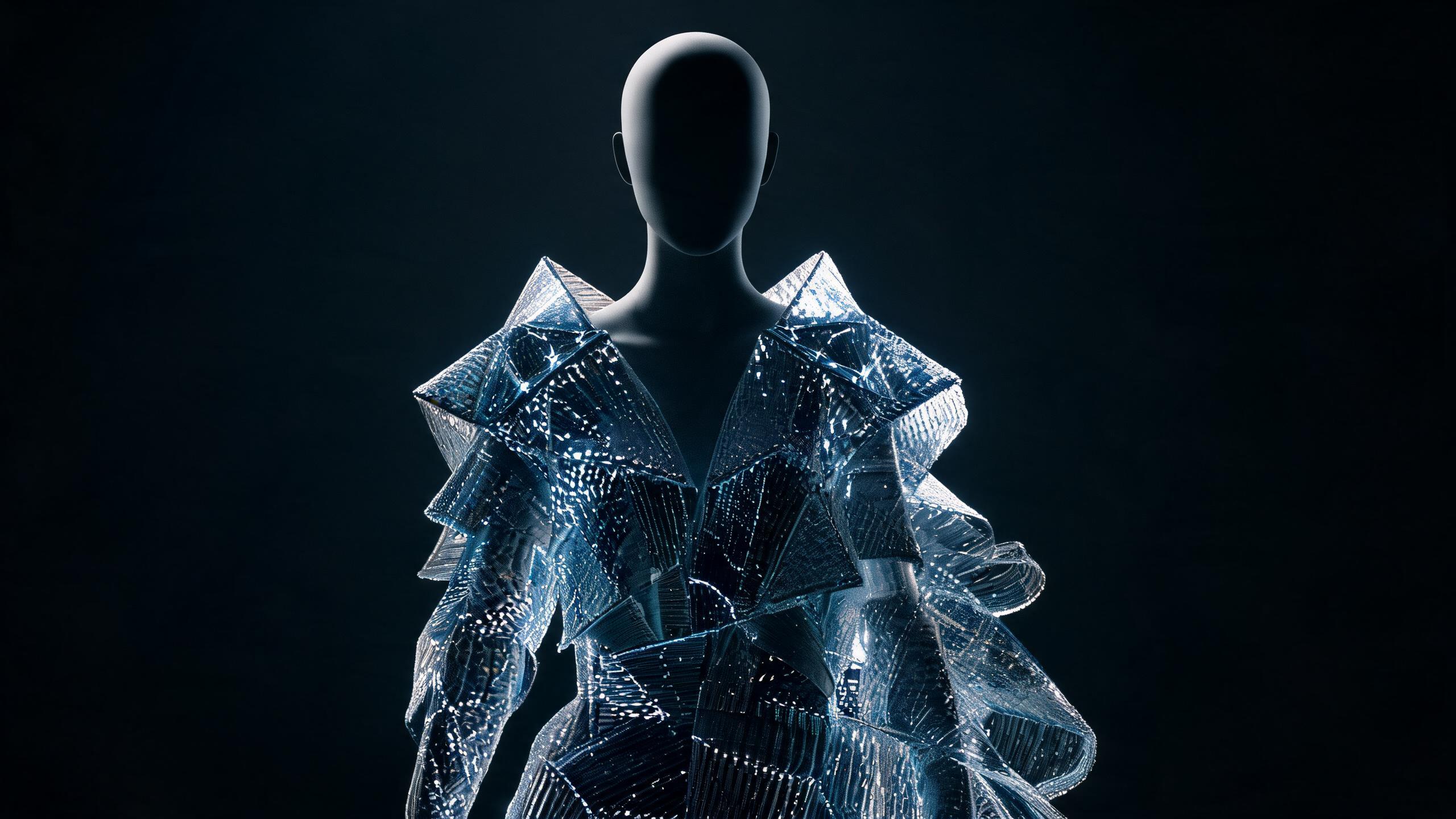
Decoding the 2026 Aesthetic: An AI Guide to Future Street Style

A deep dive into how AI predicts 2026 street style trends and what it means for modern fashion.
AI fashion styling uses machine learning algorithms to generate personalized outfit recommendations by analyzing massive datasets of visual social media, retail movement, and individual taste profiles to determine how AI predicts 2026 street style trends.
Key Takeaway: Machine learning algorithms define how AI predicts 2026 street style trends by analyzing massive datasets of social media visuals, retail movements, and individual taste profiles. This technology identifies emerging aesthetic patterns in real-time, replacing traditional fashion forecasting with objective, data-driven consumer insights.
The traditional fashion cycle is dead. For decades, trend forecasting relied on "tastemakers" and seasonal runway shows to dictate what the public would wear six months later. This top-down model has been rendered obsolete by the speed of digital culture. In 2026, street style is no longer a reaction to luxury houses; it is a real-time manifestation of algorithmic feedback loops. Understanding how AI predicts 2026 street style trends requires a shift from viewing fashion as an art form to viewing it as a data-driven infrastructure.
How Does AI Predict 2026 Street Style Trends?
AI systems predict future aesthetics by moving beyond simple historical analysis. While legacy retailers look at last year’s sales data, advanced fashion intelligence systems utilize computer vision to "read" millions of images from global hubs—Tokyo, Berlin, Seoul, and New York—identifying emerging silhouettes, color clusters, and fabric densities before they reach the mainstream.
According to Grand View Research (2024), the global AI in fashion market is projected to reach $14.65 billion by 2030, representing a shift toward hyper-personalized, predictive commerce. These systems do not just guess what will be popular; they model the probability of a trend's adoption based on cultural velocity and consumer sentiment.
By identifying "latent variables"—the subtle commonalities between disparate niche subcultures—AI can forecast the convergence of styles. For 2026, this means the merger of high-performance technical wear and soft, organic silhouettes, a trend AI identifies through the increasing overlap of outdoor-lifestyle search terms and luxury minimalist visual data.
| Technology Component | Function in Trend Prediction | Impact on 2026 Street Style |
| Computer Vision | Scans social feeds and street photography to categorize hem lengths, textures, and fits. | Identification of "Micro-Silhouettes" before they become mass-market. |
| Natural Language Processing (NLP) | Analyzes aesthetic discourse in forums and comments to gauge sentiment. | Understanding if a trend is "ironic" or a long-term wardrobe shift. |
| Predictive Modeling | Maps the lifecycle of colors and materials using historical adoption rates. | Precise forecasting of the 2026 palette (e.g., "Synthesized Earth Tones"). |
| Dynamic Taste Profiling | Learns individual user preferences to filter global trends into personal style. | The end of the "one-size-fits-all" trend. |
Why the Old Model of Trend Adoption is Obsolete
The old model followed a linear path: Runway → Magazine → Celebrity → High Street. This is a centralized system that cannot keep up with an AI-native world. Today, trends are decentralized and multidirectional. A specific styling hack from a creator in Seoul can become a global standard within 48 hours.
The problem with most fashion platforms is that they still treat users as passive recipients of "what's trending." They push popular items regardless of whether those items align with the user’s existing wardrobe or physical proportions. This is not intelligence; it is inventory clearance.
A true AI-native system rebuilds the experience around the user’s personal style model. Instead of asking "What is everyone wearing?" the system asks "Given what the world is wearing, what is the optimal evolution of YOUR style?" This distinction is critical for navigating the 2026 aesthetic, which is defined by high-frequency personalization rather than mass-market conformity. For a deeper look at the tools driving this change, see our guide on Predicting the Pulse: A Guide to AI Street Style Tools for 2026.
What Defines the 2026 Street Style Aesthetic?
The AI-predicted aesthetic for 2026 is "Technical Minimalism." This is not the "Quiet Luxury" of previous years, which focused on heritage and status. Technical Minimalism focuses on utility, adaptability, and architectural integrity.
According to McKinsey (2023), generative AI could add $150 billion to $275 billion to the apparel and luxury sectors' profits by streamlining design and personalization. This economic shift manifests in 2026 through clothes that are "smart" in their construction. We are seeing a move toward:
- Kinetic Tailoring: Suits and outerwear designed for high mobility, using 4-way stretch synthetic blends that mimic the look of traditional wool.
- Modular Layers: Garments that can be disassembled or reconfigured based on environmental needs.
- Monochromatic Textures: The 2026 palette is muted—think greyscale, deep navy, and "industrial moss"—but depth is created through high-contrast textures like matte nylons paired with heavy, brushed mohair.
👗 Want to see how these styles look on your body type? Try AlvinsClub's AI Stylist → — get personalized outfit recommendations in seconds.
Do vs Don't: Navigating 2026 Trends
Understanding the data is one thing; applying it to a personal style model is another. To master 2026 street style, one must balance technical precision with human imperfection.
| Do ✓ | Don't ✗ | Why |
| Invest in structured tech-fabrics. Look for bonded seams and water-resistant finishes in classic shapes like the trench or the blazer. | Avoid "fast-fashion" interpretations of tech-wear. Shiny, thin polyesters that mimic the look without the function. | The 2026 aesthetic relies on the physical "weight" and drape of high-quality materials to look expensive and intentional. |
| Embrace the "Architecture Over Brand" rule. Choose pieces based on their silhouette and how they interact with your body type. | Logomania. Big logos are data-noise. They date quickly and interrupt the visual flow of a personalized model. | AI-driven style focuses on geometry and proportion. Visible branding breaks the "clean" data signal of a well-curated outfit. |
| Use AI to solve fit issues. Use tools that map your specific measurements to garment specifications. | Guess your size based on "Standard" charts. Every brand's "Medium" is different, leading to high return rates and poor styling. | Precision is the hallmark of 2026. For more on this, read How AI is finally solving the accuracy problem in online sizing. |
| Mix organic and synthetic. Pair a heavy cotton-canvas trouser with a sleek, compressive technical base layer. | Full "Cosplay" outfits. Avoid going 100% "Gorpcore" or 100% "Cyberpunk." | 2026 street style is about synthesis. Total looks feel like costumes; hybrid looks feel like the future. |
2026 Outfit Formulas: The AI-Generated Standard
To understand how AI predicts 2026 street style trends, we must look at the specific "formulas" the system generates. These are not just "looks"; they are structural blueprints for dressing.
Formula 1: The Infrastructure Layer
The Look: Cropped technical bomber + ultra-high-waisted wide-leg trousers + chunky lug-sole boots + crossbody utility bag.
- The Bomber: Should be cropped at the natural waist to elongate the legs. A heavy nylon or recycled polyester provides the necessary "shell" structure.
- The Trousers: Look for deep pleats and a structured waistband. The wide leg creates a column-like effect that balances the bulk of the jacket.
- The Boots: A heavy sole anchors the wide trouser leg, preventing the fabric from "swallowing" the foot.
- Visual Impact: This formula creates a "T-shape" silhouette that emphasizes height and architectural presence.
Formula 2: The Digital Minimalist
The Look: Mock-neck compression knit + oversized unstructured blazer + straight-leg raw denim + pointed-toe tech-sneakers.
- The Knit: A high-gauge, tight-fitting mock neck acts as a sleek base. It reduces bulk under the oversized outer layer.
- The Blazer: Should have soft shoulders and no interior lining, allowing it to drape like a cardigan while maintaining the silhouette of a jacket.
- The Denim: Raw, dark-wash denim adds a "grounding" organic texture to the synthetic knit. A straight leg provides a neutral vertical line.
- Visual Impact: This balances the "hard" lines of the blazer with the "soft" elasticity of the knit, a core principle of 5 Ways to Use AI Modeling to Perfect Your Personal Style in 2026.
Formula 3: The Adaptive Commuter
The Look: Longline waterproof mac coat + slim-tapered technical cargos + seamless base layer + minimalist leather sneakers.
- The Mac Coat: A length that hits mid-calf provides a dramatic vertical line that flatters almost every body type by creating a singular visual block.
- The Cargos: Tapered at the ankle to show the shape of the leg, preventing the long coat from looking like a "tent."
- The Sneakers: Low profile and monochromatic to maintain the "clean" finish of the outfit.
- Visual Impact: This is the peak of utility-chic—designed for movement but visually indistinguishable from high-end tailoring.
Why Personal Style Models Outperform Generic Trends
The core failure of current fashion commerce is the "Recommendation Gap." Most apps show you what is popular (trend-chasing) rather than what is relevant (style-intelligence). If an AI predicts that neon green is "trending," but your personal taste profile is rooted in Earth tones and structured silhouettes, that prediction is useless to you.
True AI fashion infrastructure, like the system we are building at AlvinsClub, creates a Dynamic Taste Profile. This is a live model of your preferences that evolves every time you interact with an outfit. It understands that your style in 2026 isn't a static choice—it's a response to your environment, your body data, and your evolving aesthetic maturity.
By analyzing how AI predicts 2026 street style trends, we see that the future isn't about everyone wearing the same "it-item." It is about the "democratization of the stylist." In the past, only the elite had access to professionals who could filter the chaos of the fashion world into a coherent personal brand. In 2026, the AI stylist performs this function at scale, ensuring that the global trend data is always filtered through the lens of the individual.
How to Prepare Your Wardrobe for 2026
To future-proof your closet, stop buying "pieces" and start buying "systems." Every item should serve a structural purpose. Ask yourself:
- Does this garment have a defined silhouette that complements my body model?
- Is the fabric high-performance or high-quality organic?
- Can this piece integrate into multiple outfit formulas?
The transition to AI-driven street style means we will see fewer "micro-trends" that disappear in weeks and more "aesthetic shifts" that last for years. By focusing on the principles of Technical Minimalism and using AI tools to perfect fit and selection, you move from being a consumer of trends to a curator of your own style model.
For more insights into the data-driven evolution of fashion, explore How AI is Decoding Street Style: The Definitive Guide to Modern Trends.
AlvinsClub uses AI to build your personal style model. Every outfit recommendation learns from you. Try AlvinsClub →
Summary
- AI fashion intelligence systems utilize computer vision to analyze millions of images from global style hubs like Tokyo and Berlin to identify emerging silhouettes and fabric densities.
- A core component of how AI predicts 2026 street style trends is the use of machine learning to process real-time algorithmic feedback loops rather than relying on traditional seasonal runway shows.
- Grand View Research projects the global AI in fashion market will reach $14.65 billion by 2030, marking a significant transition toward hyper-personalized predictive commerce.
- Understanding how AI predicts 2026 street style trends requires a shift from viewing fashion as an art form to a data-driven infrastructure that models the probability of aesthetic adoption.
- These advanced systems analyze massive datasets of visual social media and retail movement to determine mainstream trend trajectories before they reach legacy retailers.
Frequently Asked Questions
Why does understanding how AI predicts 2026 street style trends matter for retailers?
Retailers use these algorithmic insights to optimize inventory management and reduce waste by producing only what the data suggests will be in high demand. Learning the mechanics of predictive modeling helps brands stay competitive in a market that no longer follows traditional seasonal cycles.
What is the predicted 2026 aesthetic for urban fashion?
The 2026 aesthetic is expected to blend high-tech utility with sustainable fabrics and hyper-personalized silhouettes influenced by digital subcultures. This style focuses on adaptive clothing that bridges the gap between physical reality and virtual identities in the metaverse.
How does technology influence how AI predicts 2026 street style trends?
Artificial intelligence uses high-speed processing to analyze petabytes of fashion data from retail shifts and online behavior. This technological integration allows algorithms to identify subtle shifts in consumer taste years before they become mainstream.
Can you explain how AI predicts 2026 street style trends using social media?
AI platforms scrape visual content from social networks to monitor how early adopters are styling specific pieces in real time. This computational process enables the software to calculate the lifecycle of a trend and predict its peak popularity with high precision.
Is it worth using AI for future fashion forecasting?
Integrating artificial intelligence into forecasting is highly valuable because it reduces financial risk by aligning production with actual consumer interest. While the initial investment in data tools is significant, the long-term savings from reduced inventory waste make it essential for modern brands.
How does machine learning identify future fashion cycles?
Machine learning models detect micro-trends by scanning thousands of daily images and identifying recurring colors and shapes before they reach the mainstream. By tracking the velocity of these visual elements, the technology can determine which styles will dominate the urban landscape in the coming years.
This article is part of AlvinsClub's AI Fashion Intelligence series.
Related Articles
- Predicting the Pulse: A Guide to AI Street Style Tools for 2026
- How AI is Decoding Street Style: The Definitive Guide to Modern Trends
- 5 Ways to Spot the Next Big Street Style Trend Using AI
- How AI is finally solving the accuracy problem in online sizing
- 5 Ways to Use AI Modeling to Perfect Your Personal Style in 2026