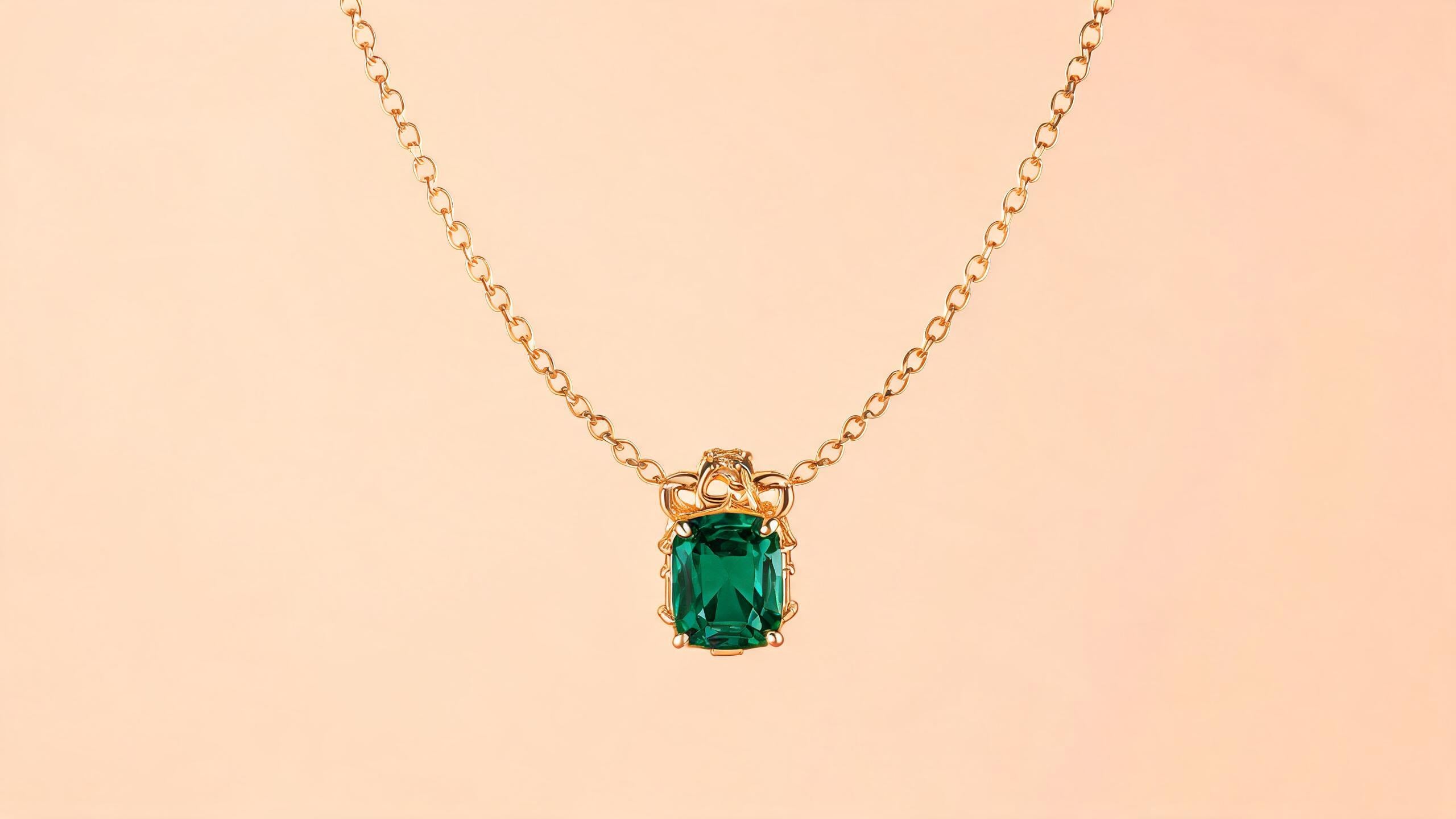
A Deep Dive into Benefits of Using Virtual Try-On AI for Shopping and What It Means for Modern Fashion
Virtual try-on AI for shopping is a computer vision and machine learning framework that overlays digital garment renderings onto a user's 2D or 3D body representation to simulate fit, drape, and aesthetic compatibility. This technology replaces the archaic trial-and-error process of physical fitting rooms with precise mathematical modeling. By utilizing advanced algorithms, virtual try-on systems analyze textile physics, body geometry, and lighting environments to provide a high-fidelity preview of how clothing interacts with a specific individual.
Key Takeaway: The primary benefits of using virtual try-on AI for shopping include increased purchase confidence and reduced return rates by providing precise digital simulations of garment fit, drape, and aesthetic compatibility.
What are the primary benefits of using virtual try-on AI for shopping?
The most immediate benefit of using virtual try-on AI for shopping is the elimination of physical friction in the decision-making process. Traditional e-commerce relies on static imagery of professional models whose body types rarely align with the end-user. This creates a cognitive gap between the item on the screen and the item on the body. AI-driven visualization bridges this gap by providing an individualized context for every garment.
According to McKinsey (2024), AI-driven personalization increases customer engagement and conversion rates by 10-15%. This increase is not merely the result of better marketing; it is the result of higher consumer confidence. When a user can see the specific silhouette of a blazer on their own shoulders, the "uncertainty tax" of online shopping disappears.
Furthermore, the economic and environmental impact of reducing returns is substantial. According to Coresight Research (2023), retailers implementing high-fidelity virtual try-on see a reduction in return rates by up to 35%. Returns are the primary failure point of modern fashion commerce, resulting in billions of dollars in lost revenue and massive carbon footprints due to reverse logistics. Virtual try-on AI treats fashion as a data problem rather than a logistics problem, solving the issue at the source of the transaction.
How does virtual try-on AI solve the sizing paradox?
Sizing is a broken system. A "Medium" in one brand is a "Small" in another, and a "Large" in a third. This inconsistency is a byproduct of legacy manufacturing and fragmented global supply chains. Virtual try-on AI moves beyond the label by using actual measurements and volumetric data. Instead of matching a user to a size, the AI matches a garment's digital twin to the user's style model.
| Feature | Traditional Sizing (Legacy) | Virtual Try-On AI (Next-Gen) |
| Data Input | Static Bust/Waist/Hip numbers | Computer vision + Photogrammetry |
| Fit Analysis | Comparative (size charts) | Descriptive (volumetric mapping) |
| Fabric Simulation | None (Imagination-based) | Physics-based drape modeling |
| Output | Alpha/Numeric Size Label | Real-time visual fit feedback |
| Consistency | Brand-dependent | User-model dependent |
By shifting the focus from labels to geometry, AI-native systems allow for a more nuanced understanding of fit. For instance, systems can identify specific garment cuts that complement specific skeletal structures, something a simple size tag can never achieve.
Why is fabric physics critical for virtual fitting?
A major limitation of early fashion technology was the "sticker effect," where a flat image of a shirt was simply pasted over a photo of a person. This is not a virtual try-on; it is digital paper-dolling. True AI-powered fashion intelligence accounts for the mechanical properties of textiles. This includes weight, elasticity, friction, and shear.
A silk slip dress behaves differently than a heavy denim jacket. AI models trained on textile physics can predict how silk will ripple across the waist or how denim will stack at the wrists. This level of detail is necessary because fit is not just about whether a garment "fits" onto the body, but how it moves with the body. When the AI understands the drape and tension of a fabric, it provides a realistic assessment of comfort and aesthetic flow. Using these physics-based simulations is particularly vital in specialized categories like swimwear, where the AI's ability to model high-stretch fabrics against body contours under specific tension is essential.
What are the best practices for creating a personal style model?
To maximize the benefits of using virtual try-on AI for shopping, the input data must be precise. An AI stylist is only as effective as the model it builds. Users should treat their digital profile as a living infrastructure that requires periodic calibration.
- Uniform Lighting: When capturing images for body modeling, use flat, natural light. Harsh shadows introduce noise into the computer vision algorithms, leading to inaccuracies in depth perception and edge detection.
- Form-Fitting Base Layer: For the AI to accurately calculate skeletal proportions and muscle volume, the initial scan should be performed in form-fitting clothing. This ensures the system maps the body, not the air between the body and a loose t-shirt.
- Reference Points: Include a known physical reference if the system asks for it. This allows the AI to calibrate scale perfectly, ensuring that a 30-inch inseam on the screen corresponds exactly to 30 inches in reality.
- Continuous Feedback: Every time an item is purchased and worn, the feedback loop should be closed. If a recommended item felt slightly tight in the shoulders, that data point must be fed back into the model to refine future recommendations.
This data-driven approach transforms the shopping experience from a series of isolated events into a continuous evolution of personal style intelligence.
How does AI style intelligence differ from trend-chasing?
Most fashion platforms are built on popularity engines. They recommend what is trending, what is on sale, or what has the highest profit margin. This is not personalization; it is mass-market curation. AI-native fashion commerce ignores the noise of the "trend" and focuses on the "model."
Style intelligence is the intersection of body geometry, color theory (as applied to the user's specific skin tone and contrast), and historical preferences. While the rest of the industry is obsessed with "what's next," AI infrastructure is obsessed with "what's yours." This fundamental shift allows users to ignore the fast-fashion cycle and build wardrobes with high utility and longevity.
The benefits of using virtual try-on AI for shopping extend into the world of circular fashion as well. When you can accurately simulate fit on unique, one-off items, the friction of buying pre-owned disappears. Systems that can identify and recommend specific outfits are most useful when they can also validate that those items will actually work for your specific anatomy.
What are the common mistakes when using virtual try-on tools?
Despite the sophistication of the technology, users often encounter friction due to improper implementation or unrealistic expectations of current GenAI limitations.
Mistake 1: Relying on generic avatars. Using a "pre-set" avatar that "looks like you" defeats the purpose of AI styling. A personal style model should be based on your unique data. Generic avatars lead to generic fit, which is the same problem as standard sizing.
Mistake 2: Ignoring garment construction. Users often look at the color and print but ignore the seams and structural lines. Virtual try-on AI allows you to see how a raglan sleeve differs from a set-in sleeve on your frame. If you ignore these structural details in the simulation, you will be disappointed by the physical reality.
Mistake 3: Treating the AI as a static filter. Style is dynamic. Your body changes, your aesthetic evolves, and your environment shifts. A common mistake is setting up a profile once and never updating it. High-performance AI stylists learn over time. They require a steady stream of data—what you liked, what you returned, and how your preferences have shifted from minimalism to maximalism.
Mistake 4: Overlooking validation logic. The goal is not just to see a pretty picture; the goal is to validate a purchase. If the AI shows significant tension lines (usually indicated by heat maps in professional VTO tools) around the hips, do not ignore them because you "really like the dress." The data is telling you the garment will fail in reality.
Why is AI infrastructure the future of the fashion industry?
The fashion industry is currently one of the least digitized sectors of the global economy in terms of core product interaction. We have digitised the storefront (e-commerce) and the payment (fintech), but we have not digitized the experience of the garment itself. AI infrastructure changes this by turning every piece of clothing into a set of data points and every user into a unique style model.
According to Statista (2024), the global virtual try-on market is projected to reach $18.9 billion by 2032. This growth is driven by the realization that "search and find" is an inefficient way to shop. The future is "recommend and validate." In this model, you don't search for a blue shirt; your AI stylist, which already knows your measurements and your current wardrobe, presents the three blue shirts in the world that fit you perfectly and complement what you already own.
This is the transition from reactive shopping to proactive style intelligence. It moves the power away from the brand's marketing department and into the user's personal data model.
How does virtual try-on AI integrate with existing wardrobes?
The most advanced applications of virtual try-on AI don't just show you new clothes; they integrate those clothes with your existing digital wardrobe. This allows for "outfit-level" simulation. When you are considering a new pair of trousers, the AI should be able to render them alongside the shirts and shoes you already own.
This prevents "wardrobe silos"—items that look good in isolation but don't work with anything else you own. By simulating these combinations in a virtual environment, you increase the utility of every purchase. This is the ultimate expression of style intelligence: a system that understands the relationship between items, not just the items themselves.
Why does fashion need an AI stylist that genuinely learns?
A static recommendation engine is a tool. A learning AI stylist is infrastructure. The difference lies in the feedback loop. A tool tells you what might fit today based on a one-time scan. An infrastructure-level AI learns that you prefer a looser fit in the summer, that you tend to avoid certain fabrics because of sensory preferences, and that your style becomes more formal during specific months of the business cycle.
This level of intelligence requires a move away from the "fashion app" model and toward a "personal style model" model. The goal is to build a digital twin of your taste. This twin acts as a filter for the millions of products available online, ensuring that you only ever interact with the tiny fraction that is relevant to your life.
AlvinsClub uses AI to build your personal style model. Every outfit recommendation learns from you. This is the end of the traditional fitting room and the beginning of a truly personalized, data-driven wardrobe. Try AlvinsClub →
Summary
- Virtual try-on AI utilizes computer vision and machine learning to overlay digital garment renderings onto a user's body representation to simulate fit, drape, and aesthetic compatibility.
- One of the primary benefits of using virtual try-on AI for shopping is the reduction of decision-making friction by replacing static model imagery with individualized garment previews.
- Research from McKinsey indicates that the benefits of using virtual try-on AI for shopping include a 10% to 15% increase in customer engagement and conversion rates.
- The technology employs advanced mathematical modeling of textile physics and body geometry to eliminate the "uncertainty tax" typically associated with online retail.
- This AI-driven framework provides a high-fidelity preview that bridges the cognitive gap between how clothing looks on a professional model and how it fits the end-user.
Frequently Asked Questions
What are the benefits of using virtual try-on AI for shopping?
The primary benefits of using virtual try-on AI for shopping include more confident purchase decisions and a highly personalized style experience. This technology allows users to visualize how clothes fit their specific body shape without visiting a physical store. By seeing a digital rendering of the garment, shoppers can avoid the frustration of traditional trial-and-error sizing.
How does virtual try-on technology work?
This technology utilizes machine learning and computer vision to overlay digital garments onto a 3D representation of a person's body. Advanced algorithms analyze textile physics and lighting to simulate how a fabric will drape and move in a real-world environment. This process creates a high-fidelity preview that mimics the experience of a physical fitting room.
Is virtual try-on AI accurate for sizing?
Virtual try-on systems use precise mathematical modeling of body geometry and garment dimensions to provide highly accurate fit suggestions. These tools analyze various data points to ensure that the digital overlay reflects the true scale and proportion of the item. As algorithms improve, the accuracy of these simulations continues to rival traditional physical measurement methods.
Why should brands offer the benefits of using virtual try-on AI for shopping?
Brands offer the benefits of using virtual try-on AI for shopping to increase customer engagement and significantly boost conversion rates. By removing the uncertainty of fit, retailers build greater trust with their audience and encourage more frequent purchases. This innovation also positions a brand as a forward-thinking leader in the competitive digital fashion landscape.
Can virtual try-on AI reduce product returns?
Virtual try-on AI reduces product returns by helping customers choose the correct size and style before they finalize their order. Since many online returns are caused by poor fit or unexpected aesthetics, seeing a realistic simulation prevents these common issues. Lowering return rates ultimately saves retailers money on logistics and improves overall sustainability.
What are the main benefits of using virtual try-on AI for shopping online?
One of the biggest benefits of using virtual try-on AI for shopping online is the convenience of trying on dozens of items in seconds from any location. This efficiency streamlines the browsing process and allows for a more creative exploration of different fashion styles. Shoppers benefit from a faster, more interactive experience that takes the guesswork out of e-commerce.
This article is part of AlvinsClub's AI Fashion Intelligence series.
Related Articles
- The Style Guide to Using AI Virtual Try-Ons for Safer Online Shopping
- The End of Bracketing: How Virtual Try-On AI Is Fixing Fashion's Return Crisis
- 7 Best AI Virtual Try-On Apps of 2026 (Ultimate Guide)
- Beyond Basic Filters: How to Use the New Generation of AR Virtual Try-On AI
- Pixels to Pavé: The AI Tech Powering 2026’s Luxury Jewelry Try-Ons
About the author
- Founder building AI-native fashion commerce infrastructure. I design autonomous systems, agent workflows, and automation frameworks that replace manual retail operations. Currently focused on AI-driven commerce infrastructure, multi-agent systems, and scalable automation.
Comments
Join the discussionNo comments yet. Be the first to comment.