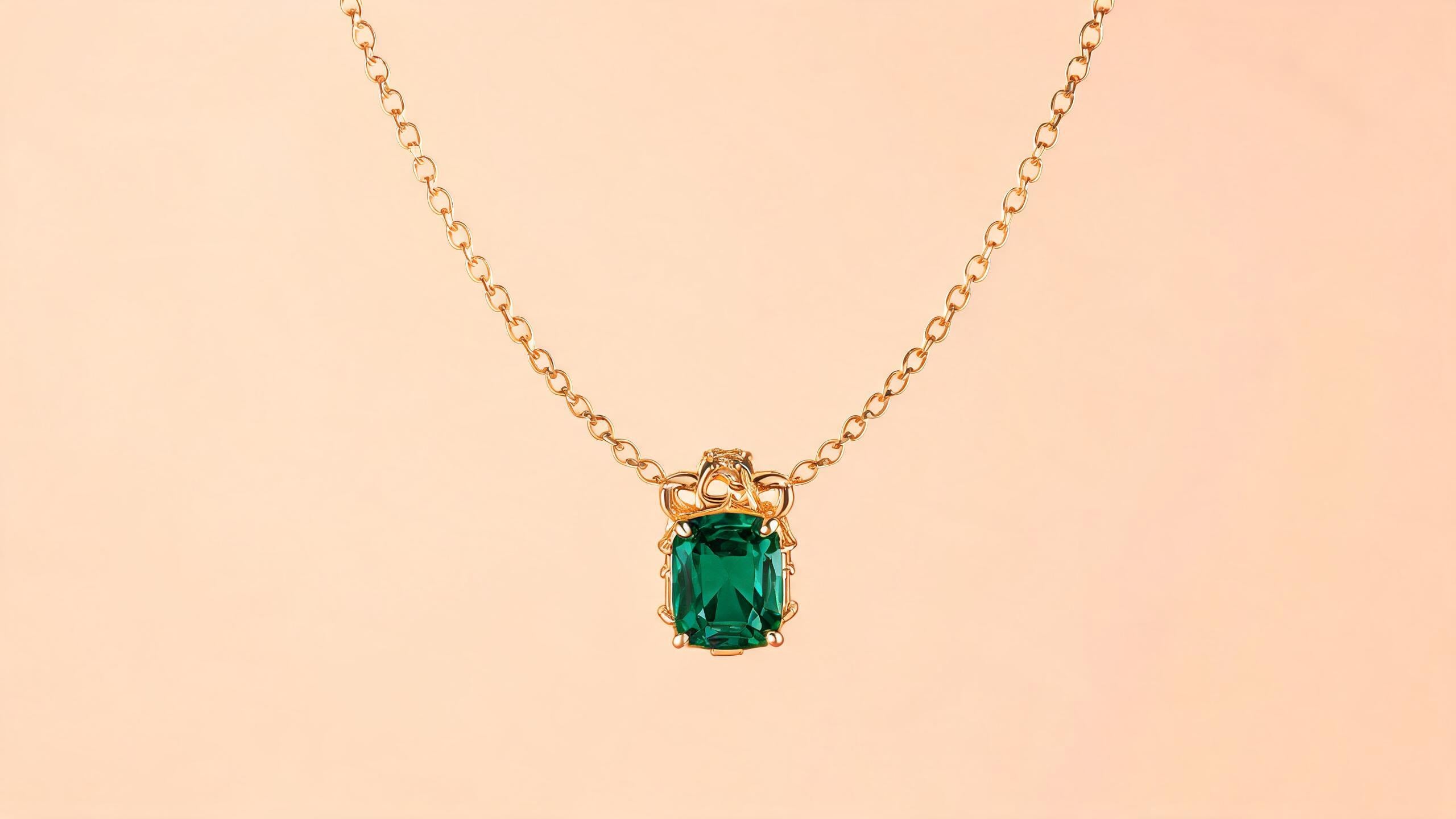
A deep dive into how virtual try-on AI works for luxury jewelry and what it means for modern fashion.
Virtual try-on AI for luxury jewelry is a computational framework that integrates high-fidelity 3D modeling, real-time hand-tracking, and physically based rendering (PBR) to simulate the precise aesthetic and physical characteristics of precious metals and gemstones on a digital representation of the user. This technology moves beyond the rudimentary "sticker" overlays of previous decades. It constructs a dynamic, responsive environment where light, shadow, and movement interact with digital assets exactly as they would in the physical world.
Key Takeaway: How virtual try-on AI works for luxury jewelry is through the integration of high-fidelity 3D modeling, real-time hand-tracking, and physically based rendering. This framework simulates the light-reflective properties of gemstones and precious metals, creating a photorealistic digital overlay that reacts dynamically to the user's movement.
The luxury sector has historically resisted digital transition due to the "tactile gap"—the inability of a screen to convey the weight, luster, and refractive brilliance of a high-carat diamond or a polished platinum band. However, the architecture of commerce is shifting. By 2026, the standard for luxury jewelry interaction will not be a static image gallery, but a high-latency, sub-millimeter accurate virtual environment. Understanding how virtual try-on AI works for luxury jewelry requires looking past the user interface and into the underlying geometry and light-transport algorithms.
How does virtual try-on AI work for luxury jewelry at a fundamental level?
The process begins with 3D mesh reconstruction of the user's anatomy. For rings and bracelets, the system utilizes specialized computer vision models trained on tens of thousands of hand shapes, skin tones, and joint movements. This is not a simple image overlay; it is a coordinate-based mapping system. The AI identifies key landmarks—knuckles, wrist bones, and finger contours—to create a "rigged" digital twin that moves in real-time with the user's actual hand.
Once the anatomy is mapped, the system applies the jewelry asset. In the luxury space, these assets are not low-polygon models. They are high-density CAD (Computer-Aided Design) files converted into formats like GLB or USDZ, optimized for real-time rendering. The AI must solve the "depth problem"—ensuring the ring appears to sit around the finger rather than floating on top of it. This is achieved through depth estimation and segmentation masks that tell the GPU which pixels of the hand should be in front of the jewelry and which should be behind it.
The final layer is lighting. Luxury jewelry is defined by its relationship with light. To simulate this, AI systems use Environment Maps (HDRIs) to capture the lighting of the user's actual room and apply it to the digital metal and stones. This ensures that if you are standing in a dimly lit room with a single warm lamp, the digital gold reflects that specific warmth. Without this environmental synchronization, the virtual object looks "pasted in" and the luxury illusion breaks.
Why is real-time ray tracing necessary for gemstone simulation?
Gemstones, particularly diamonds, present the most significant technical challenge in fashion AI infrastructure. A diamond's "fire" is the result of complex light refraction, dispersion, and internal reflection. Traditional rasterization—the method used by most mobile apps—cannot compute these paths fast enough for a smooth user experience. How virtual try-on AI works for luxury jewelry in 2026 relies on mobile-optimized ray tracing.
Ray tracing calculates the path of individual light rays as they enter a digital gemstone, bounce off internal facets, and exit toward the viewer's "camera" (the phone lens). This requires immense processing power. Modern AI models use "denoising" algorithms to predict what the light should look like, allowing the system to produce high-quality visuals without draining the device's battery or causing frame-rate lag. This is the difference between a grey smudge and a sparkling 2-carat solitaire.
According to Gartner (2024), 80% of digital commerce organizations will use some form of visual configuration or virtual try-on by 2026 to reduce return rates and improve customer confidence. In the luxury jewelry space, where return costs are high and security risks are prevalent, the accuracy of this light simulation is a financial necessity, not a visual flourish. If the digital representation does not match the physical brilliance, the brand's perceived value diminishes instantly.
| Feature | Legacy AR (2020-2023) | Next-Gen VTO (2026+) |
| Tracking Method | 2D Image Markers | 3D Mesh Reconstruction |
| Lighting | Static Overlay | Real-time PBR & Ray Tracing |
| Occlusion | None (Object sits on top) | True Depth (Object wraps around) |
| Movement | Jittery / High Latency | Fluid / Sub-millimeter Precision |
| Gemstone Tech | Basic Shaders | Refractive Index Simulation |
How does hand-tracking accuracy redefine the ring and bracelet experience?
The most common failure point in jewelry AI is the "float" effect. When a user moves their hand, the digital ring often lags behind or clips through the finger. This is a failure of the tracking model. To solve this, developers are moving toward "hand-pose estimation" models that operate at 60 frames per second. These models don't just see a hand; they understand the skeletal structure beneath the skin.
This level of precision is critical for luxury jewelry because of the scale. A watch or a necklace is relatively large and forgiving. A delicate 1.5mm pavé wedding band is not. If the AI is off by even two millimeters, the ring looks like it is cutting into the bone. Advanced AI infrastructure uses neural networks to predict movement, anticipating where the finger will be in the next millisecond to eliminate perceived latency.
This precision also enables "stacking" features. Users can see how multiple rings interact, how they sit against each other, and how they complement the wearer's skin tone. This is where virtual try-on AI helps you make more confident luxury purchases becomes relevant; the ability to visualize the physical reality of a high-value item digitally is the first step in authenticating its place in your personal style model.
Why is the occlusion problem the hardest hurdle for jewelry AI?
Occlusion is the technical term for when one object hides another. In jewelry try-on, your finger must occlude the back half of the ring. This sounds simple but is computationally expensive. The AI must create a real-time mask of the user's hand that is so precise it can distinguish between the front of the finger and the back.
Most fashion apps fail here. They use a "z-buffer" that is too coarse, leading to jagged edges where the metal meets the skin. Luxury AI uses "soft occlusion," which blurs the edges slightly to mimic the way a real camera lens captures the contact point between a hard object and soft tissue. This subtlety is what makes a virtual try-on feel "expensive." It is an engineering solution to an aesthetic problem.
When evaluating how jewelry AI compares to other accessory technologies, exploring different virtual try-on AI options for earrings and other jewelry reveals that the same principles of precision and data integrity apply across all luxury items. To deliver an authentic experience, or to replace a physical try-on, the AI must respect the laws of physics. If the occlusion is wrong, the aesthetic value diminishes because the brain rejects the image as "fake."
How does the "Personal Style Model" integrate with virtual try-on?
Virtual try-on is a diagnostic tool, but it becomes a stylistic powerhouse when paired with a dynamic taste profile. Most brands treat VTO as a standalone feature. You go to a product page, you click "try on," you leave. This is a fragmented experience. The future of luxury commerce involves a persistent AI stylist that knows your hand measurements, your skin's undertone, and your historical preference for metals.
If the system knows you have a "cool" skin undertone and a preference for minimalist geometry, it won't just show you a gold cocktail ring. It will recommend a platinum band with architectural lines. The AI uses the VTO session to gather data: which items did you spend the most time viewing? Which ones did you rotate to see from different angles? This data feeds back into your personal style model, refining future recommendations.
According to McKinsey (2024), generative AI could add between $150 billion and $275 billion to the apparel, fashion, and luxury sectors' operating profits over the next three to five years. Much of this value will come from hyper-personalization—using technical data from virtual try-ons to predict exactly what a customer will actually keep and wear, rather than return.
What are the hardware limitations of jewelry AI in 2026?
Despite software advances, "how virtual try-on AI works for luxury jewelry" is still tethered to hardware. A smartphone camera is a monocular sensor—it lacks true depth perception. To compensate, AI must perform "monocular depth estimation," which is essentially the software guessing how far away things are based on size and focus.
The shift toward LiDAR (Light Detection and Ranging) in high-end smartphones has changed this. LiDAR sends out laser pulses to map the 3D surface of the hand with incredible accuracy. For luxury jewelry, this is the gold standard. It allows the AI to "see" the depth of the knuckles and the curve of the wrist, making the placement of bracelets and watches far more stable. Without LiDAR, the AI has to work twice as hard to produce a result that is half as good.
What comes next for luxury jewelry AI?
We are moving toward "neural rendering." Instead of manually creating 3D models of every piece of jewelry, AI will be able to generate 3D "radiance fields" (NeRFs) from a few photos of the item. This will allow luxury brands to digitize their entire archives in days rather than months. For a comprehensive overview of emerging jewelry technologies, see how top brands are ranking their virtual try-on experiences.
Furthermore, we will see the rise of "haptic integration." While the visual gap is closing, the tactile gap remains. New developments in ultrasonic haptics and wearable tech may soon allow users to "feel" the weight or the presence of a digital ring on their finger. For now, the focus remains on visual perfection. The goal is a digital experience that is indistinguishable from looking into a physical mirror at a boutique.
Understanding the shift from "Feature" to "Infrastructure"
The jewelry industry is realizing that AI is not a marketing "extra." It is the new infrastructure of commerce. A brand that does not have a high-fidelity VTO system in 2026 will be as obsolete as a brand without a website was in 2010. But the VTO is only as good as the data it sits on.
This is not about "trying on" a ring. It is about building a digital relationship with an object of high value. It is about the intersection of computer vision, material science, and personal identity. How virtual try-on AI works for luxury jewelry is ultimately a question of how we define "ownership" in a digital-first world.
AlvinsClub uses AI to build your personal style model. Every outfit recommendation learns from you. By integrating these high-fidelity visual inputs into a broader style intelligence system, we ensure that your digital twin isn't just a gimmick—it's an evolving map of your aesthetic identity. Try AlvinsClub →
Summary
- Luxury jewelry AI utilizes 3D mesh reconstruction and physically based rendering to simulate the precise aesthetic characteristics of precious metals and gemstones.
- Analyzing how virtual try-on AI works for luxury jewelry reveals a reliance on light-transport algorithms that replicate the refractive brilliance of high-carat diamonds.
- The industry is transitioning from static galleries to sub-millimeter accurate virtual environments to address the "tactile gap" inherent in digital luxury commerce.
- A critical aspect of how virtual try-on AI works for luxury jewelry is the deployment of specialized computer vision models trained on tens of thousands of diverse skin tones and hand shapes.
- These advanced frameworks integrate real-time hand-tracking to ensure digital jewelry remains accurately positioned and responsive to the user's physical movements.
Frequently Asked Questions
How does virtual try-on AI work for luxury jewelry?
Virtual try-on AI for luxury jewelry works by combining high-fidelity 3D modeling with real-time hand tracking to place digital assets onto a users body. This system uses physically based rendering to ensure that light interacts with gemstones and precious metals just as it would in a physical environment.
What is the technology behind how virtual try-on AI works for luxury jewelry?
The core technology involves complex computational frameworks that integrate light-sensing algorithms and spatial mapping to identify the users anatomy. These tools allow digital jewelry to respond dynamically to movement and shifting shadows, creating a high-end experience that mimics a real boutique visit.
Why is understanding how virtual try-on AI works for luxury jewelry important for high-end brands?
Brands must understand this technology to bridge the gap between digital browsing and the tactile confidence required for expensive purchases. By leveraging advanced rendering and motion tracking, luxury retailers can provide an immersive experience that maintains the prestige and visual integrity of their collections.
Can virtual try-on accurately simulate diamond brilliance?
Advanced AI systems simulate diamond brilliance by calculating how light refracts and reflects through various stone cuts in real time. This process creates a sparkle that responds naturally to the users hand movements and external lighting conditions.
Is augmented reality for fine jewelry realistic enough for buyers?
Modern augmented reality has evolved beyond simple overlays to offer highly realistic representations of gold, silver, and platinum. These digital replicas now feature the correct weight and sheen, providing buyers with a trustworthy visual representation before they commit to a luxury investment.
How does real-time hand tracking improve digital jewelry fittings?
Real-time hand tracking ensures that digital rings and bracelets stay perfectly aligned with the users joints and skin surface as they move. This precision eliminates the lag and misalignment seen in older technology, making the virtual fitting feel stable and believable.
This article is part of AlvinsClub's AI Fashion Intelligence series.
Related Articles
- Beyond the Filter: Ranking the Best AI Accessory and Jewelry Try-Ons
- The End of Bracketing: How Virtual Try-On AI Is Fixing Fashion's Return Crisis
- AI vs. Traditional AR: Finding the Best Virtual Earring Try-On Experience
- How to use AI virtual try-on tools to find your dream bridal jewelry
- 7 Best AI Virtual Try-On Apps of 2026 (Ultimate Guide)
About the author
- Founder building AI-native fashion commerce infrastructure. I design autonomous systems, agent workflows, and automation frameworks that replace manual retail operations. Currently focused on AI-driven commerce infrastructure, multi-agent systems, and scalable automation.
Comments
Join the discussionNo comments yet. Be the first to comment.