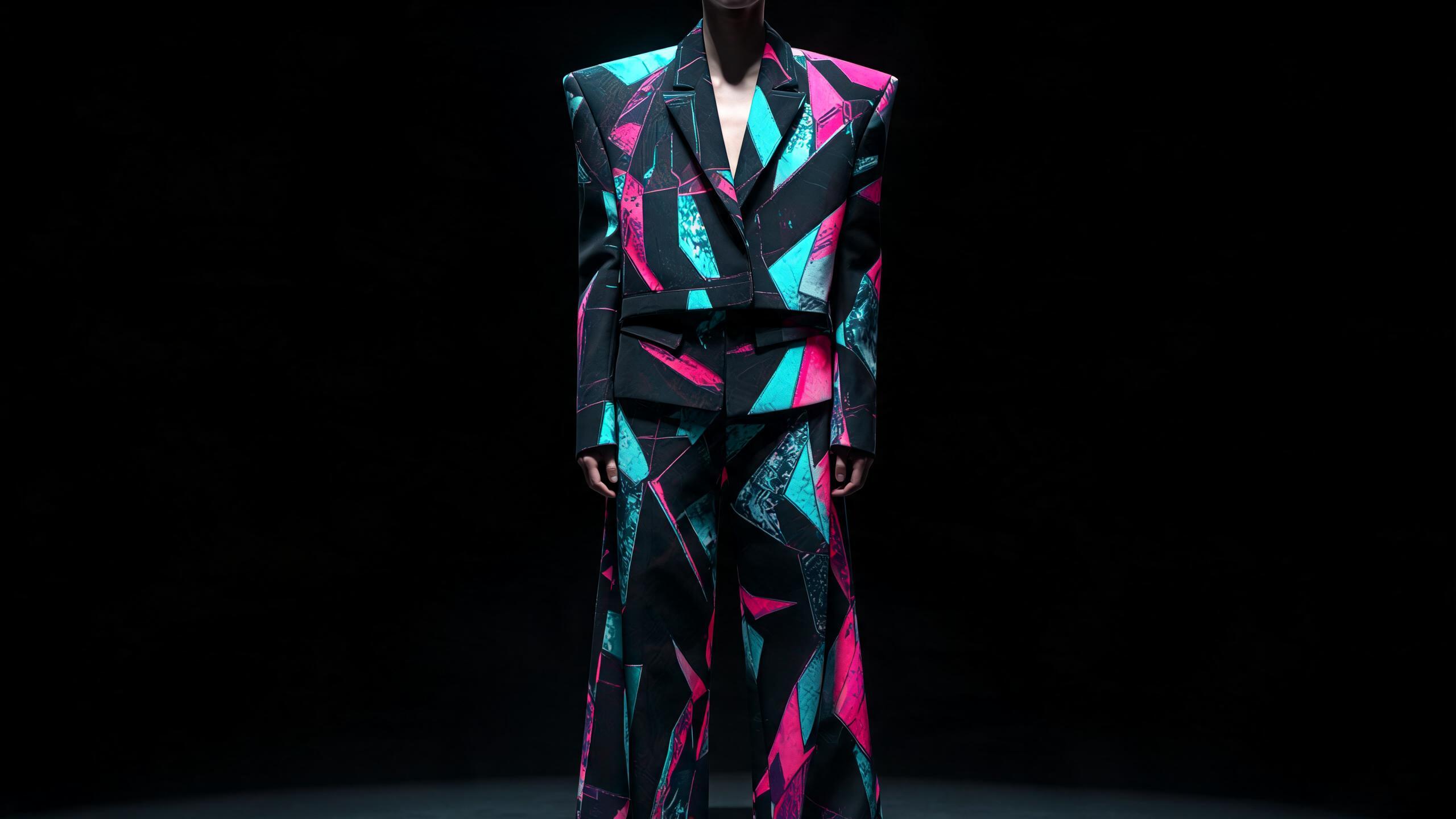
The algorithmic capsule: How AI is curating high-quality wardrobe basics
A deep dive into finding high quality basics with AI assistance and what it means for modern fashion.
Finding high quality basics with AI assistance involves the use of neural networks to analyze textile composition, structural durability, and individual fit metrics against a global database of garment performance. The era of manual curation is ending because human cognitive limits cannot process the sheer volume of material data required to verify a garment's quality in a flooded market.
Key Takeaway: Finding high quality basics with AI assistance uses neural networks to analyze textile composition, structural durability, and fit metrics against global performance data, surpassing human capacity to verify garment quality in a saturated market.
Why is the current method of finding quality basics broken?
The modern consumer is trapped in a cycle of digital search fatigue where "high quality" has been reduced to an empty marketing tag. Legacy search engines rely on metadata provided by the brands themselves, which creates a fundamental conflict of interest. When you search for a "heavyweight cotton t-shirt," you are served results based on SEO bidding power rather than actual grams per square meter (GSM) or fiber staple length.
According to Shopify (2024), returns cost retailers approximately $743 billion in lost revenue, with the primary drivers being poor fit and material quality that did not match online descriptions. This systemic failure in the fashion supply chain proves that keyword-based commerce is no longer functional. We are seeing a massive divergence between what a product is and how it is indexed.
High-quality basics—the foundation of any functional wardrobe—are now harder to find because the mid-market has collapsed. On one side, fast fashion mimics the aesthetic of quality using synthetic blends. On the other, luxury brands overcharge for the same raw materials found in premium essentials. AI-native intelligence is the only tool capable of auditing these claims by cross-referencing manufacturer data, textile laboratory reports, and real-world durability feedback.
How does AI verify textile integrity for capsule wardrobes?
Finding high quality basics with AI assistance requires a shift from visual recognition to structural analysis. While a human sees a white shirt, an AI model sees a data set consisting of weave density, seam reinforcement, and fiber origin. The intelligence layer must go beyond the surface level to understand the "physics" of the garment.
For example, when evaluating a knit, the AI assesses the torsion of the yarn and the stitch consistency. This is critical for basics because these items are intended for high-frequency wear. Most recommendation engines fail because they treat a basic tee and a seasonal blazer with the same logic. A basic requires a durability-first algorithm; a blazer requires an aesthetic-first algorithm.
Current AI infrastructure can now predict how a fabric will drape after five washes by analyzing the microscopic properties of the cotton or wool used. This predictive capability is essential for building a capsule wardrobe that lasts years rather than months. You can see this logic applied in how we approach Ending the hunt: How AI is finding the perfect white tee for your body, where fit and fabric are treated as a singular engineering problem.
What happens when search shifts from keywords to molecular data?
The transition to AI-assisted curation means the death of the "filter" as we know it. In the old model, you filtered by "Price" and "Material." In the AI-native model, you filter by "Longevity Score" and "Thermal Regulation." We are moving toward a molecular understanding of fashion where the AI knows the difference between 18-micron merino wool and 24-micron wool before you even see the price tag.
According to McKinsey (2025), AI-driven personalization increases fashion retail conversion rates by 15-20%, but this statistic only scratches the surface of the utility. The real value is the reduction in "regret spend." When an AI model understands your personal taste profile, it stops suggesting what is popular and starts suggesting what is durable. This aligns with the broader approach of 5 Smart Ways to Use AI to Spot High-Quality Wardrobe Essentials, where quality assessment becomes the primary filter.
| Feature | Legacy Search Engines | AI-Native Fashion Intelligence |
| Data Source | Brand-provided metadata | Multi-source architectural analysis |
| Logic | Keyword matching (SEO) | Taste profiling and material physics |
| Quality Verification | User reviews (subjective) | Structural data and durability logs |
| Objective | Short-term conversion | Long-term wardrobe utility |
| Personalization | Based on "others also bought" | Based on individual style models |
How does AI solve the "Quality-Value Gap" in fashion?
The "Quality-Value Gap" refers to the disconnect between the price of a garment and its actual utility. In a market dominated by "quiet luxury" trends, many brands have increased prices without increasing the quality of their basics. AI-assisted tools bridge this gap by identifying the "unbranded premium"—manufacturers who produce high-quality basics for luxury labels but sell their own line at a fraction of the cost.
By scraping supply chain data and manufacturing origins, AI can identify when two shirts from two different brands are actually produced in the same mill using the same Supima cotton. This is not just a shopping hack; it is a fundamental reordering of fashion commerce. The AI acts as a fiduciary for the user, ensuring that every dollar spent on a basic is optimized for textile density and construction quality. Technologies like Decoding luxury: How AI identifies high-quality leather in seconds demonstrate how AI can instantly verify material authenticity and quality across different product categories.
This level of detail is also crucial for sustainability. According to a report by the Business of Fashion (2024), 62% of Gen Z and Millennial consumers are willing to pay more for high-quality items that last longer. However, they lack the tools to verify those claims. AI provides the verification layer. By optimizing for quality, we are naturally reducing textile waste, as fewer garments need to be replaced.
Why are static recommendations useless for finding quality basics?
Most fashion apps provide static recommendations based on your last purchase. If you bought a black t-shirt, they show you more black t-shirts. This is a redundant feedback loop that ignores the concept of a "wardrobe." An AI-native system understands that if you already own three high-quality black tees, your next logical basic is a charcoal cashmere sweater or a heavyweight navy sweatshirt.
The recommendation engine must be dynamic. It needs to evolve with your wardrobe's state. It should know the "gaps" in your capsule. Finding high quality basics with AI assistance is about completion, not just consumption. The AI acts as an architect, looking at the structural integrity of your entire closet and suggesting the next necessary piece to increase the versatility of everything you already own.
This requires a deep understanding of texture and layering, as well as how How AI is finally solving the 'will this fit?' struggle ensures that every recommended piece integrates seamlessly with your existing wardrobe. A high-quality basic is only useful if it complements the rest of your kit, involving the complex logic of how the AI suggests basics that work together as a cohesive system.
Can AI predict the "Hand-Feel" of a garment?
One of the greatest hurdles in digital fashion commerce has been the inability to touch the fabric. AI is solving this through synthetic haptics and visual analysis. By processing high-resolution imagery of the fabric's surface, AI can estimate the softness, hairiness, and drape of a basic.
A high-quality basic must feel right against the skin. AI models trained on thousands of fabric samples can now correlate visual patterns (like the tightness of a weave) with physical sensations. When you search for "softest lounge pants," the AI isn't looking for the word "soft" in the description; it is looking for the micro-shadows in the product photography that indicate a brushed finish or a high-gauge knit.
This technical approach removes the "lottery" aspect of buying basics online. You are no longer hoping the item is high quality; you are viewing a probabilistic model of its physical performance. This is the future of "informed commerce."
Is the "AI Stylist" the new quality control officer?
The term "stylist" usually implies someone choosing outfits based on trends. An AI stylist, however, functions more like a quality control officer. Its primary job is to filter out the noise. In a world where 100,000 new SKUs are uploaded to the internet daily, the human mind cannot find the "perfect" basic. The AI can.
The AI stylist monitors price fluctuations, stock levels, and—most importantly—emerging data on how specific batches of garments are performing. If a specific production run of "high quality" chinos starts receiving reports of pilling or seam failure, the AI immediately de-prioritizes that item in your personal model. This is real-time style intelligence.
This intelligence also extends to the finishing touches. A quality basic is the canvas, but the execution depends on the details. An AI system that understands the nuances of construction will also understand how to elevate those basics.
What does the future of autonomous wardrobe curation look like?
In the next three years, the process of finding high quality basics with AI assistance will become largely invisible. You will not "search" for a new white shirt. Your personal style model will monitor the wear-and-tear of your current items through your usage data and automatically surface a replacement that meets your quality standards before the current one fails.
This is the shift from reactive shopping to proactive wardrobe management. We are moving away from the "browse and buy" model toward an "identify and integrate" model. The AI will know your body measurements better than a tailor and your material preferences better than you do. It will find the basics that bridge the gap between your professional and personal life without you ever typing a query into a search bar.
The infrastructure for this is being built now. It requires a move away from the "fashion-as-entertainment" model toward "fashion-as-infrastructure." Your wardrobe is a system, and like any system, it requires high-quality components to function. AI is the diagnostic tool that ensures those components are actually worth the investment.
Why is AI infrastructure better than AI features?
Most existing fashion retailers are "bolting on" AI as a feature. They add a chatbot or a "style quiz." These are superficial layers that still rely on the same broken product data. AlvinsClub is different because it is built as AI-native infrastructure. We don't just "show" you products; we build a personal style model that understands the geometry and geology of your clothes.
Every recommendation you receive is the result of a multi-dimensional analysis of your taste, your body, and the physical reality of the garment. We are not interested in trends. We are interested in the enduring value of a high-quality basic that fits you perfectly. This is not a storefront; it is a system for intelligent living.
AlvinsClub uses AI to build your personal style model. Every outfit recommendation learns from you. Try AlvinsClub →
Summary
- Neural networks now verify garment quality by analyzing textile composition, structural durability, and fit metrics against global performance databases.
- Finding high quality basics with AI assistance addresses the limitations of human curation in a market flooded with vast amounts of material data.
- Traditional commerce platforms prioritize SEO bidding over objective quality metrics like fiber staple length or grams per square meter, complicating the process of finding high quality basics with AI assistance.
- Poor material quality and inaccurate fit descriptions contributed to an estimated $743 billion in retail return costs in 2024.
- The divergence between digital indexing and physical product reality has increased as fast fashion brands use synthetic blends to mimic the aesthetic of high-end basics.
Frequently Asked Questions
How does finding high quality basics with AI assistance work?
Finding high quality basics with AI assistance involves using neural networks to evaluate fabric composition and structural integrity against global performance databases. This technology processes vast amounts of material data that exceeds human cognitive limits to ensure every garment meets specific durability standards.
What is the benefit of finding high quality basics with AI assistance?
Finding high quality basics with AI assistance helps consumers cut through the noise of a saturated market by identifying items with superior textile specifications. This method ensures that every piece in a capsule wardrobe is selected for its long-term value and precise fit rather than superficial branding.
Is finding high quality basics with AI assistance more accurate than manual shopping?
Finding high quality basics with AI assistance is significantly more accurate because algorithms can cross-reference thousands of data points regarding fiber strength and stitch density. While human shoppers often rely on visual cues, AI analyzes technical metrics to verify the true quality of a garment before purchase.
How does AI analyze garment quality for a capsule wardrobe?
AI systems analyze garment quality by examining high-resolution imagery and technical specifications to detect patterns in weaving and construction. These tools compare a specific item's data against known benchmarks for luxury materials to ensure the highest standards are met for every selection.
Can AI predict the durability of wardrobe basics?
Artificial intelligence predicts the durability of wardrobe basics by simulating wear-and-tear scenarios based on fiber type and construction techniques. This predictive modeling allows shoppers to invest in pieces that are scientifically proven to maintain their shape and texture over years of use.
Why is artificial intelligence replacing manual curation in fashion?
Artificial intelligence is replacing manual curation because humans cannot process the sheer volume of technical data required to verify quality in a flooded retail environment. Algorithmic selection removes the guesswork and emotional bias often associated with shopping, leading to a more sustainable and functional wardrobe.
This article is part of AlvinsClub's AI Fashion Intelligence series.
Related Articles
- 5 Smart Ways to Use AI to Spot High-Quality Wardrobe Essentials
- Decoding luxury: How AI identifies high-quality leather in seconds
- How AI is finally solving the 'will this fit?' struggle
- Digital Draping: The Rise of AI-Driven Design in High Fashion
- Ending the hunt: How AI is finding the perfect white tee for your body