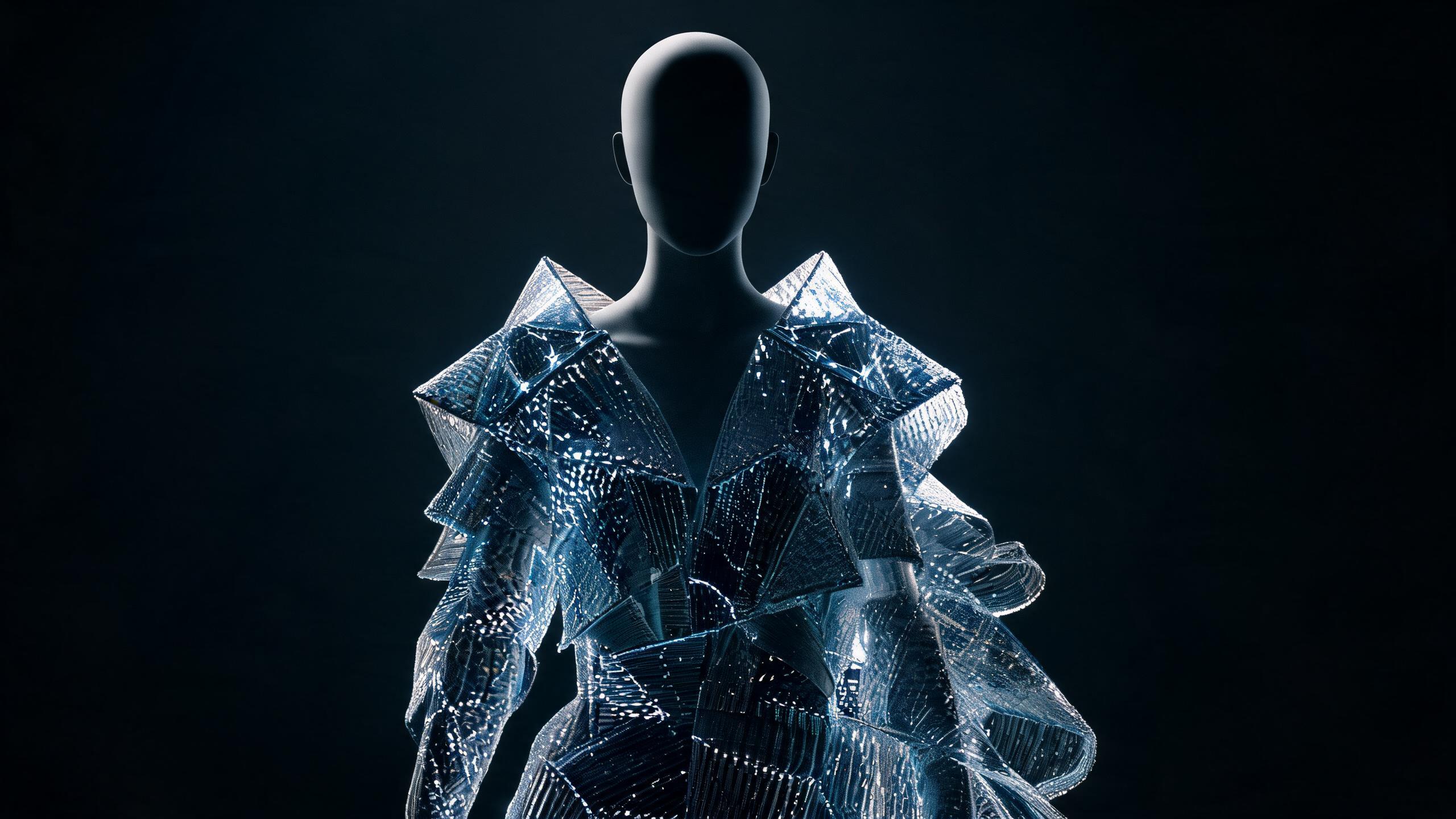
Why AI can’t dress you: The limits of fashion recommendation engines

A deep dive into why fashion recommendation engines fail customers and what it means for modern fashion.
Fashion recommendation engines fail customers because they prioritize inventory turnover over individual identity. Most existing systems operate on a logic of collaborative filtering—if User A bought a linen shirt, and User B bought that same shirt plus a pair of loafers, the system assumes User A also wants those loafers. This is not style intelligence; it is a statistical probability of proximity. The industry is currently facing a reckoning as these legacy algorithms produce generic feeds that alienate the modern consumer.
Key Takeaway: Fashion recommendation engines fail customers because they prioritize inventory turnover and statistical probability over individual identity. These systems rely on collaborative filtering to predict purchases based on proximity rather than interpreting the nuanced, creative elements of a person's unique style.
Why fashion recommendation engines fail customers today?
The primary reason fashion recommendation engines fail customers is the reliance on rigid metadata rather than visual and behavioral intelligence. When a system categorizes a garment simply as a "blue cotton button-down," it ignores the nuance of drape, the cultural context of the silhouette, and the specific aesthetic intent of the wearer. Traditional engines are built to clear warehouses, not to build wardrobes. According to McKinsey (2024), while 71% of consumers expect personalized interactions, the majority of retail AI implementations result in a 10-15% abandonment rate because recommendations feel repetitive or irrelevant.
This failure stems from the "Cold Start Problem" and the "Echo Chamber Effect." Legacy systems require massive amounts of historical purchase data to make a guess. If you haven't bought from a brand before, the system has no idea who you are. Once you do buy, it traps you in a loop of similar items. If you buy one black blazer for a funeral, the algorithm assumes your entire personality is now "black blazers." It lacks the cognitive ability to understand that a purchase is often a one-time utility, not a permanent style shift.
The current market is seeing a massive shift in consumer sentiment. As noted in The Style Gap: Why Fashion Recommendation Engines Get It Wrong, the gap between what a user actually wants to wear and what an algorithm suggests is widening. This is because style is dynamic, but retail databases are static.
The technical debt of legacy fashion AI
Most fashion platforms are built on infrastructure designed in the early 2010s. These systems use "Hard Rules" (e.g., if temperature > 70°F, suggest shorts). This is fundamentally different from a "Style Model." A style model understands that a user in New York wears "summer clothes" differently than a user in Los Angeles.
| Feature | Legacy Recommendation Engines | AI-Native Style Models |
| Data Source | Transactional history / Metadata | Visual vectors / Real-time behavior |
| Logic | Collaborative filtering (Crowd-based) | Personal style modeling (Individual-based) |
| Goal | Inventory liquidation | Aesthetic alignment |
| Adaptability | Slow (requires new purchase data) | Instant (adapts to daily browsing) |
| Context | Basic (Weather/Category) | Deep (Occasion/Mood/Proportion) |
How does AI improve outfit recommendations?
Real AI does not recommend products; it models taste. This requires moving away from text-based tags and toward vector-based visual representations. In an AI-native infrastructure, every garment is converted into a multi-dimensional mathematical representation (a vector). This vector captures the essence of the piece—its texture, its structural rigidity, its "vibe"—in a way that a human tagger never could.
When a system understands a garment as a vector, it can compare it to the user's "Personal Style Model." This model is a living digital twin of the user's aesthetic preferences. It evolves every time you interact with an image, discard a suggestion, or upload a photo of an outfit you love. This is the difference between Smart AI vs. basic rules.
According to Gartner (2023), 80% of marketers will abandon their current personalization efforts by 2025 due to a lack of ROI from "traditional" recommendation tactics. The survivors will be those who treat style as a computer vision problem, not a database query problem.
The 2026 Pivot: From search to synthesis
We are moving toward an era of generative commerce and AI-driven styling recommendations. In this model, the AI doesn't just find a shirt that exists in a catalog; it understands the "Style DNA" of the user and synthesizes daily outfit recommendations based on that DNA. This solves the frustration of the "endless scroll." Instead of showing you 500 pairs of jeans, the system shows you the one pair that fits your specific style model, styled three different ways for your specific calendar events.
Term Definitions for the New Fashion Infrastructure:
- Style Vector: A mathematical representation of an aesthetic, capturing nuances like "minimalism," "brutalism," or "soft tailoring."
- Latent Space: The digital "map" where AI plots clothing items based on their visual similarities rather than their price tags.
- Dynamic Taste Profile: A user profile that updates in real-time, recognizing that a person's style in January is rarely their style in July.
👗 Want to see how these styles look on your body type? Try AlvinsClub's AI Stylist → — get personalized outfit recommendations in seconds.
What are the limits of "Digital Closets"?
Many startups have attempted to solve the fashion problem by asking users to photograph their entire closet. This is a friction-heavy failure. Most users will never spend six hours cataloging their wardrobe. Furthermore, a photo of a wrinkled shirt on a hanger provides poor data for an AI.
The future of fashion intelligence lies in "bridging the gap" between what you own and what you want. This is discussed in detail in Beyond the photo: Why digital closets fail and how to bridge the gap. Instead of manual entry, AI infrastructure should infer your closet through your purchase history, your browsing intent, and high-fidelity style quizzes that map your visual preferences.
Outfit Formula: The "Structured Minimalist" Logic
To understand how an AI stylist should actually "think," look at this structured outfit formula. This isn't a random selection; it's a calculation of proportions and textures.
- Top: Oversized heavy-weight cotton tee (Matte texture, structured drop-shoulder).
- Bottom: Straight-leg wool trousers (High-waisted, charcoal grey).
- Shoes: Technical leather sneakers (Minimalist branding, off-white).
- Accessories: Silver architectural ring + 15-inch laptop sleeve (Cognac leather).
An AI that understands this formula knows that replacing the trousers with cargo pants changes the "Style Vector" entirely. A legacy engine would see both as "pants" and make the swap. An AI-native model would recognize the disruption in silhouette and veto the recommendation. Understanding these nuances is part of why AI styling algorithms struggle with specific body types like the inverted triangle shape, as proportion calculation remains a critical challenge.
Why your style feed feels generic?
Most algorithms are tuned for "Safety." They recommend items that are popular across the entire platform because those items have the highest probability of being "fine" for everyone. This results in the homogenization of style. If everyone is being recommended the same "trending" Sambas or quilted jackets, individual style dies.
To outsmart these algorithms, the infrastructure must prioritize "Discovery" over "Popularity." It must find the "long tail" of fashion—the items that are perfect for you but might be irrelevant to 99% of other users. This is why Your Style Feed Feels Generic and how to fix it by feeding the AI higher-quality intent data.
Styling Logic: Do vs. Don't for Recommendation AI
| Feature | DO (AI Intelligence) | DON'T (Legacy Rules) |
| Color Matching | Use complementary color theory and tonal layering. | Match exact hex codes (e.g., "blue with blue"). |
| Sizing | Account for "intended fit" (oversized vs. slim). | Rely solely on the numerical size tag. |
| Context | Recommend based on the user's specific geographic weather. | Recommend "Winter" clothes based on the month of December globally. |
| Trend Cycle | Identify early aesthetic shifts in the latent space. | Wait for a "trending" keyword to reach peak volume. |
The bold prediction: The end of "Searching" for clothes
By 2026, the concept of a "search bar" in fashion commerce will be obsolete. Searching implies that the user knows exactly what they want and that they are responsible for finding it. This is a high-friction experience.
In the next iteration of fashion commerce, the "Personal Style Model" will act as a filter for the entire internet. You won't go to five different sites to find a jacket. Your AI stylist, which has been learning your preferences daily, will present a curated selection of jackets from across the web, already filtered for your fit, your aesthetic, and your current wardrobe's compatibility.
This is not a convenience feature; it is a fundamental shift in how human beings interact with objects. We are moving from "Consumer as Searcher" to "Consumer as Curator."
What this means for the industry
Retailers who continue to use basic recommendation carousels will see their conversion rates plummet. The "Amazon-ification" of fashion—where everything is a commodity—is failing because fashion is emotional and identity-driven. To succeed, platforms must build infrastructure that respects the complexity of human taste.
This involves:
- Zero-Party Data: Asking users about their style aspirations, not just their past purchases.
- Visual Intelligence: Training models on high-fashion editorials and street style, not just product catalog shots.
- Feedback Loops: Every time a user swipes left on a recommendation, the model must understand why. Was it the color? The price? The lapel width?
A new infrastructure for fashion
The failure of fashion recommendation engines is a failure of imagination. The industry tried to sell clothes using the same logic used to sell dish soap. But you don't wear your identity on your dishwasher; you wear it on your back.
Fashion needs a dedicated intelligence layer. This layer sits between the massive, messy world of global inventory and the highly specific, evolving needs of the individual. It requires a system that doesn't just "see" a product, but understands its place in a wardrobe. It requires an AI that genuinely learns.
AlvinsClub uses AI to build your personal style model. Every outfit recommendation learns from you. Try AlvinsClub →
Summary
- Current systems illustrate why fashion recommendation engines fail customers by prioritizing statistical inventory turnover and collaborative filtering over personal aesthetic identity.
- McKinsey (2024) data indicates that 71% of consumers expect personalized interactions, yet legacy AI results in 10-15% abandonment rates due to repetitive suggestions.
- Traditional recommendation engines often rely on rigid metadata like color and fabric while ignoring critical aesthetic nuances such as silhouette, drape, and cultural context.
- The "Echo Chamber Effect" is a primary reason why fashion recommendation engines fail customers because it limits style exploration to a user's narrow historical purchase data.
- AI-driven fashion tools struggle with the "Cold Start Problem," which prevents them from providing accurate wardrobe suggestions to users without significant prior transaction history.
Frequently Asked Questions
Why does inventory turnover explain why fashion recommendation engines fail customers?
Inventory turnover drives algorithms to prioritize stock availability over the individual style preferences of the shopper. This focus on clearing warehouse space results in generic recommendations that do not align with a person's unique identity.
What is the primary reason why fashion recommendation engines fail customers?
The primary reason for this failure is that most engines use collaborative filtering to predict purchases based on what others have bought. This method ignores the complex and subjective nature of personal fashion and replaces it with simple statistical probability.
How does data bias show why fashion recommendation engines fail customers?
Data bias shows this failure by forcing users into rigid categories based on limited historical purchase behavior rather than evolving tastes. This approach restricts the variety of clothing suggested and prevents customers from discovering items that truly reflect their personality.
Can you use AI to build a truly personal wardrobe?
You can use AI to find specific items or price comparisons, but it cannot currently replicate the intuition of a human stylist. Genuine style requires an understanding of cultural context and emotional expression that current algorithms are unable to process.
Is it worth using a fashion recommendation engine for styling?
These engines are worth using for quick product discovery, but they are not effective for building a meaningful personal brand. Most shoppers find that the suggestions become repetitive because the system lacks the ability to understand creative flair.
How does collaborative filtering work in retail?
Collaborative filtering works by analyzing broad datasets of user behavior to find patterns and similarities between different shoppers. While this helps retailers increase turnover, it often fails to provide the personalized experience that modern fashion consumers expect.
This article is part of AlvinsClub's AI Fashion Intelligence series.
Related Articles
- Smart AI vs. basic rules: Why most fashion engines give bad results
- The Style Gap: Why Fashion Recommendation Engines Get It Wrong
- Beyond the photo: Why digital closets fail and how to bridge the gap
- Why Your Style Feed Feels Generic: How to Outsmart Fashion Algorithms
- The 2026 Pivot: Fixing the Flaws in Fashion Recommendation AI