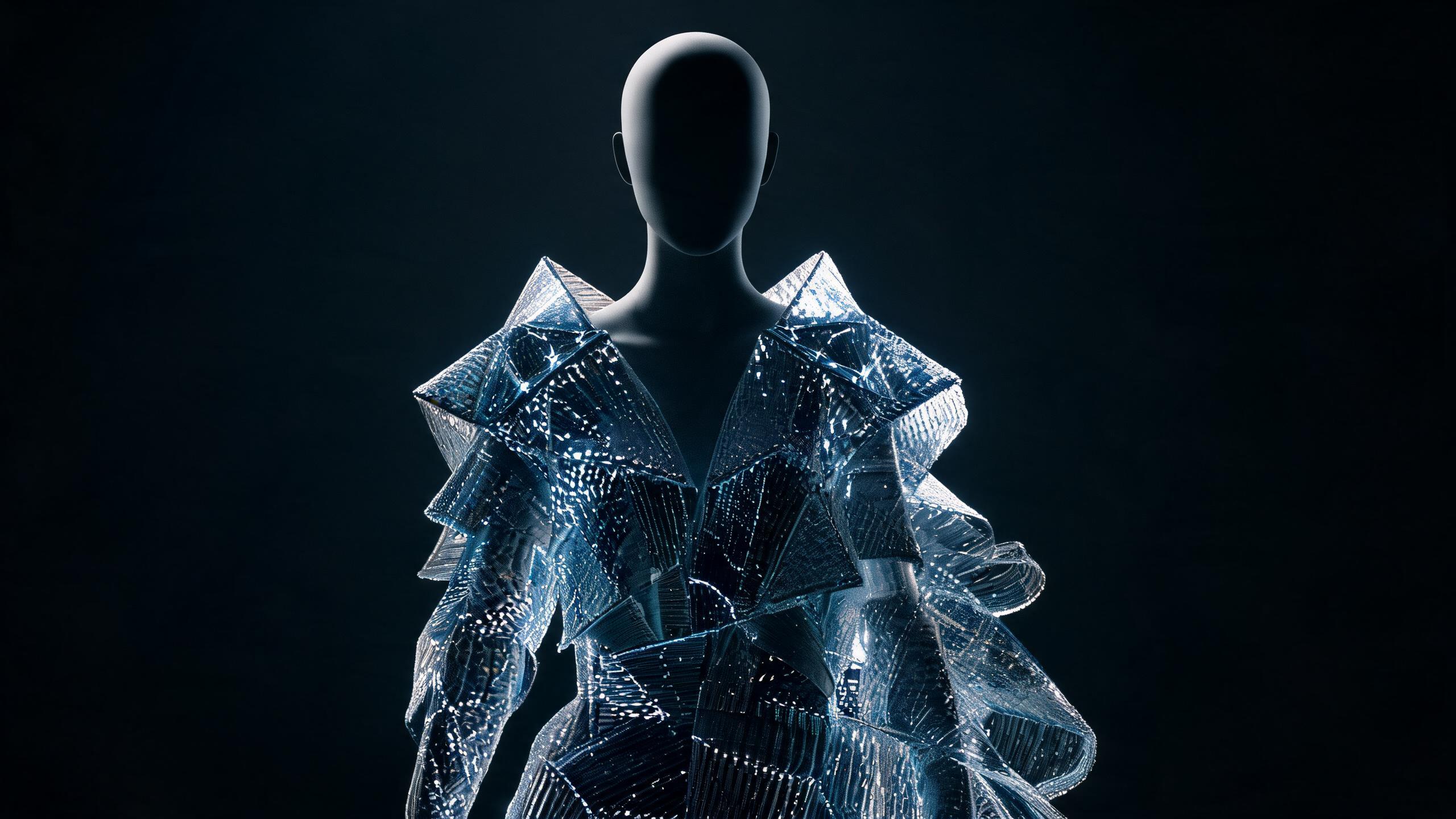
How to Use Generative AI to Design Your Music Festival Outfits

A deep dive into how to plan music festival outfits with AI and what it means for modern fashion.
AI music festival planning is the application of machine learning algorithms to synchronize individual biometric data, personal taste vectors, and environmental constraints into cohesive aesthetic outputs. It replaces the traditional, friction-heavy process of manual trend-chasing with a data-driven approach to personal style. By utilizing generative models, users can simulate how specific silhouettes, fabrics, and color palettes will perform in high-utility environments like outdoor concerts. This shift moves fashion from a reactive consumption model to a predictive intelligence model.
Key Takeaway: Learn how to plan music festival outfits with AI by using generative models to synchronize personal style data and environmental constraints into cohesive aesthetic outputs. This data-driven approach automates the design process, allowing for the simulation of specific silhouettes and textures prior to physical assembly.
How to plan music festival outfits with AI for maximum utility and aesthetic coherence?
The traditional approach to festival fashion relies on social media inspiration, which often results in a homogenized "costume" rather than a personal style statement. Planning with AI begins by treating your wardrobe as a dataset. You are not looking for what is popular; you are looking for what is optimal for your personal style model. According to McKinsey (2024), generative AI in fashion is projected to add between $150 billion and $275 billion to the apparel sector’s operating profits by optimizing design and personalization processes.
To plan effectively, the AI must ingest three primary data layers:
- The Environmental Layer: Weather patterns, dust levels, and terrain.
- The Biometric Layer: Body measurements and proportions.
- The Identity Layer: Historical style preferences and desired aesthetic deviations.
Most users fail because they treat AI as a search engine. In reality, it is a simulator. When you ask how to plan music festival outfits with AI, you are asking for a system to calculate the intersection of durability and expression. This requires a shift from browsing to prompting, using specific technical parameters rather than vague descriptors.
Why traditional recommendation engines fail at festival styling?
Most e-commerce platforms use collaborative filtering—recommending what others bought. This is the antithesis of festival fashion, which thrives on individualization. These systems are built to move inventory, not to solve for the user’s identity. According to Gartner (2023), 30% of global retailers will transition to generative AI for digital product creation and marketing by 2027, precisely because the old "customers who bought this also liked" model is reaching its performance ceiling.
Festival environments demand a unique balance of high-performance fabrics and high-concept aesthetics. A standard recommendation engine cannot account for the thermal regulation needed for a desert festival or the range of motion required for twelve hours of movement. An AI-native approach analyzes the technical specifications of a garment—such as breathability, tensile strength, and moisture-wicking properties—and maps them against your style profile.
How Does Generative AI Solve the "Costume" Problem?
The "costume" problem occurs when a festival attendee wears something that feels disconnected from their daily identity. Generative AI solves this through Taste Profiling. By analyzing your existing style model, the AI can suggest festival-appropriate iterations that feel like an evolution rather than a disguise. For example, if your model leans toward minimalism, the AI will not suggest neon sequins; it will suggest structural, technical fabrics in architectural cuts.
Key Terms in AI Fashion Intelligence
- Taste Vector: A mathematical representation of a user's aesthetic preferences across dimensions like color, texture, and silhouette.
- Latent Space: The multidimensional space where an AI model stores and organizes fashion concepts.
- Style Model: A persistent digital identity that evolves as the AI learns from a user's feedback and selections.
- Diffusion Model: The underlying architecture used to generate high-fidelity images of outfits based on text or image prompts.
What Are the Technical Steps to Building an AI Festival Wardrobe?
Planning begins with a clean dataset. If your style model is cluttered with trends you no longer value, the output will be suboptimal. You must curate your inputs to ensure the AI understands your current aesthetic trajectory. This is similar to how to use AI to transition your office wear into evening outfits, where the core identity remains stable while the utility shifts.
Step 1: Data Ingestion
Upload high-resolution images of your favorite pieces. The AI identifies patterns in your choices—specific hemlines, fabric weights, and color saturation levels. It builds a baseline for what you consider "comfortable" and "expressive."
Step 2: Constraint Mapping
Input the festival's parameters. A desert festival in August requires different technical specifications than a rainy forest festival in October. You are defining the "operating environment" for your outfits.
Step 3: Iterative Generation
Use generative tools to visualize combinations. Instead of physically trying on dozens of items, you simulate them. You can prompt the AI to "Show a tech-wear iteration of my style model suited for 90-degree heat and high dust."
Step 4: Prototyping and Sourcing
Once the AI generates a visual concept, use image-to-product mapping to find the physical garments. This ensures that the final look is grounded in reality, bypassing the high return rates often seen in traditional fashion tech.
👗 Want to see how these styles look on your body type? Try AlvinsClub's AI Stylist → — get personalized outfit recommendations in seconds.
Do vs Don't: Designing Festival Outfits with AI
Designing for a festival requires a balance of aesthetic risk and physical logic. Use this table to audit your AI-generated suggestions.
| Do ✓ | Don't ✗ | Why |
| Prioritize Technical Fabrics: Use AI to find moisture-wicking and UV-resistant materials. | Ignore Fabric Composition: Do not choose aesthetics over breathability in high-heat environments. | Heat stroke and discomfort will override any aesthetic benefit. |
| Scale Proportions: Use AI to simulate how oversized pieces interact with your body type. | Follow "One Size Fits All" Trends: Avoid buying items just because they are trending on social media. | Mass-market trends ignore individual biometric data, leading to poor fit. |
| Layer for Utility: Generate looks that include modular pieces (removable sleeves, packable shells). | Over-Accessorize: Avoid items that restrict movement or become a burden after several hours. | Festival days are long; every gram of weight and every restriction of movement compounds. |
| Simulate Lighting: Use AI to see how fabrics look under stage lights and at night. | Assume Daylight Accuracy: Don't forget that festival fashion is often viewed in low-light or artificial light. | Reflective or high-contrast fabrics perform differently in nocturnal environments. |
Three AI-Generated Outfit Formulas for Festival Season
These formulas are designed by prioritizing geometry and utility. Each item is selected for its ability to balance the body and withstand the festival environment.
Formula 1: The Technical Minimalist (Optimized for Heat)
- Top: Cropped, high-neck compression tank in a silver reflective technical knit. The high neck provides sun protection for the chest, while the cropped length allows for maximum airflow.
- Bottom: High-waisted, wide-leg ripstop nylon cargos with adjustable toggle hems. The high-rise waist defines the midsection, while the wide-leg silhouette creates a chimney effect, pulling cool air up from the ground.
- Shoes: Lug-sole technical sandals with multi-point adjustable straps. The heavy sole provides stability on uneven terrain and adds visual weight to balance the wide-leg trousers.
- Accessories: Transparent PVC chest rig for essentials + wraparound aerodynamic sunglasses.
Formula 2: The Structural Bohemian (Optimized for Dust/Wind)
- Top: Asymmetrical laser-cut bodysuit in a moisture-wicking recycled blend. The asymmetry draws the eye across the torso, creating a dynamic visual that breaks up the body's midline.
- Bottom: Tiered A-line maxi skirt in a lightweight, semi-sheer mesh with built-in boy shorts. The A-line shape adds volume below the waist, which is particularly effective for balancing an inverted triangle body type.
- Shoes: Mid-calf combat boots in treated vegan leather. The height protects ankles from dust, and the structured leather keeps the foot secure during long periods of standing.
- Accessories: Oversized linen pashmina (for dust masking) + wide leather utility belt to cinch the waist and provide attachment points for water.
Formula 3: The Neo-Goth Cyber (Optimized for Night/Transition)
- Top: Long-sleeve mesh "second-skin" top with a thermal-reactive print. The mesh allows for cooling, while the long sleeves protect against the evening temperature drop.
- Bottom: Micro-mini skirt in structured bonded jersey with an architectural side slit. The stiff fabric maintains its shape, and the side slit increases mobility while elongating the leg line.
- Shoes: Platform sneakers with a high-traction rubber outsole. Platforms provide a height advantage for visibility in crowds without the instability of a heel.
- Accessories: Integrated LED piping on a harness + modular waist bag.
How Does Body Geometry Impact AI Outfit Generation?
AI does not see "flaws"; it sees coordinates. When you use AI to plan your outfits, you must provide accurate biometric data to ensure the silhouettes generated are anatomically harmonious.
- A-line Skirts: These create visual balance by adding volume below a narrow waist, which is essential for pear or hourglass shapes to maintain symmetry.
- High-Rise Trousers: By placing the waistband at the narrowest part of the torso, high-rise cuts elongate the lower body and provide a secure fit for high-activity movements.
- Structured Shoulders: For those with narrower frames, structured or padded shoulders in vests and jackets create a "V" taper that balances wider hips.
- Cropped Hemlines: These work with high-waisted bottoms to shorten the torso and lengthen the legs, a key tactic in "golden ratio" styling.
According to Statista (2023), personalization strategies that account for specific user biometrics increase conversion rates by 10-15% and significantly reduce the likelihood of returns. This is why AI infrastructure is superior to manual shopping: it solves for the physical reality of the wearer before it solves for the aesthetic preference.
How to Prompt an AI for Festival Specifics?
The quality of your festival outfit depends on the specificity of your prompts. Avoid subjective words like "cool" or "pretty." Use technical language that describes texture, light interaction, and silhouette.
Ineffective Prompt: "Show me a cool Coachella outfit." Effective Prompt: "Generate a festival outfit for a 5'7" female with a 28-inch waist. Style: Cyberpunk-industrial. Items: High-waisted technical cargo shorts in matte black, a silver holographic crop top with architectural shoulder detail, and platform combat boots. Material constraints: breathable, sweat-wicking, and dust-resistant. Environment: 95-degree desert heat."
By being specific about the rise, the fabric finish (matte vs. holographic), and the environmental constraints, you force the AI to simulate a viable solution rather than a generic image. This process is identical to using AI to curate your weekly office outfits—it requires a clear understanding of the day's "mission."
Why Fashion Needs AI Infrastructure, Not AI Features
The current state of fashion tech is cluttered with "AI features"—chatbots that don't remember your name and virtual try-ons that look like paper dolls. This is not intelligence. True AI fashion commerce is infrastructure-based. It is a system that lives with you, learns from every "no" and every "yes," and eventually predicts your needs before you articulate them.
For festivals, this infrastructure is critical. A festival is a high-stress environment for clothing. It tests the limits of what you can wear. When you plan with a system that understands your personal style model, you aren't just buying clothes; you are deploying an optimized kit.
Is your current festival planning process based on data, or is it based on the fear of being underdressed?
AlvinsClub uses AI to build your personal style model. Every outfit recommendation learns from you. Try AlvinsClub →
Summary
- Generative AI uses machine learning to synchronize biometric data, personal taste, and environmental constraints for optimized fashion outputs.
- Research from McKinsey indicates that generative AI is projected to increase fashion industry operating profits by $150 billion to $275 billion through enhanced personalization.
- A core strategy for how to plan music festival outfits with AI involves converting a personal wardrobe into a dataset to generate optimal style models rather than chasing social media trends.
- Effective AI planning requires the ingestion of three distinct data layers consisting of environmental conditions, biometric measurements, and historical identity preferences.
- Learning how to plan music festival outfits with AI enables users to simulate the performance of specific fabrics and silhouettes within high-utility environments like outdoor concerts.
Frequently Asked Questions
What is generative AI for festival fashion?
Generative AI for festival fashion uses machine learning models to analyze personal style preferences and biometric data to create custom clothing designs. These tools help users visualize complex aesthetic combinations and functional gear before making any physical purchases.
How to plan music festival outfits with AI effectively?
You can begin by inputting your preferred aesthetic themes and environmental factors into a generative design platform to receive tailored visual concepts. This digital approach streamlines the creative process by eliminating the need for manual mood boards and trend research.
Is it worth using AI for concert wardrobe styling?
Using artificial intelligence for styling is highly beneficial for those who want to ensure their clothing is both visually striking and practical for outdoor environments. The technology allows for precise simulations of how different fabrics and silhouettes will look and perform during a live event.
Can you learn how to plan music festival outfits with AI for free?
Many accessible generative platforms offer basic features that allow users to experiment with style prompts and image generation at no initial cost. These tools provide a low-barrier entry point for fans looking to modernize their fashion planning process using data-driven insights.
Why does AI-driven outfit planning improve the festival experience?
Automating the design process reduces the stress of manual shopping and ensures that every piece in a wardrobe coordinates perfectly with a specific theme. It allows attendees to focus on the event itself rather than worrying about last-minute styling conflicts or impractical garment choices.
How does a user know how to plan music festival outfits with AI for specific weather?
Users can input specific environmental constraints like temperature and humidity into the AI model to receive recommendations for appropriate fabrics and layers. This ensures that the generated designs are not only fashionable but also functional for the specific climate of the concert venue.
This article is part of AlvinsClub's AI Fashion Intelligence series.
Related Articles
- Mastering Proportions: How to Dress an Inverted Triangle Body for Festivals
- The Fit Revolution: How AI is Finally Lowering Fashion Return Rates
- 7 Ways to Use AI to Curate Your Weekly Office Outfits
- 5 Pro Tips for Analyzing Red Carpet Looks with AI Tools
- How to Use AI to Transition Your Office Wear into Evening Outfits